


Numbers 32:23
- וְאִםve·'imand ifH518Conj-w ¦ PrtParticle Conditionalוְandאִםif
- לֹאlo'notH3808NegParticle Negative
- תַעֲשׂוּןta·'a·Sunyou will do !H6213V-Qal-Imperf-2mp ¦ SfxVerb Qal Imperfect 2nd Plural Masculineתַעֲשׂוּyou will doן!
- כֵּןKenthusH3651AdvAdverb
- הִנֵּהhi·Nehthere!H2009PrtParticle Interjection
- חֲטָאתֶםcha·ta·Temyou have sinnedH2398V-Qal-Perf-2mpVerb Qal Perfect 2nd Plural Masculine
- לַיהוָהla·Yah·wehto YahwehH3068Prep-l ¦ N-properNoun Proper TitleלַtoיהוָהYahweh
- וּדְעוּu·de·'Uand knowH3045Conj-w ¦ V-Qal-Imp-2mpVerb Qal Imperative 2nd Plural Masculineוּandדְעוּknow
- חַטַּאתְכֶםcha·tat·Khemyour sinH2403N-fsc ¦ 2mpNoun Singular Feminine Constructחַטַּאתְsinכֶםyour
- אֲשֶׁר'a·SherthatH834RelParticle Relative
- תִּמְצָאtim·Tza'it will findH4672V-Qal-Imperf-3fsVerb Qal Imperfect 3rd Singular Feminine
- אֶתְכֶם'et·Khem<obj.> youH853DirObjM ¦ 2mpParticle Object Indicatorאֶתְ<obj.>כֶםyou
English is a literal word-by-word gloss of the Hebrew, not the KJV's wording. Why?
This is the original text the KJV's translators worked from — each Hebrew word with its own literal English meaning in this verse, prepared by scholars at Tyndale House, Cambridge. The KJV translates whole sentences, not word by word, so its wording differs: one Hebrew word can become several English words, and the KJV may choose “the LORD” where the gloss reads “Yahweh”. Both are faithful — they answer different questions. For the KJV's own rendering, switch to the KJV text.
Details
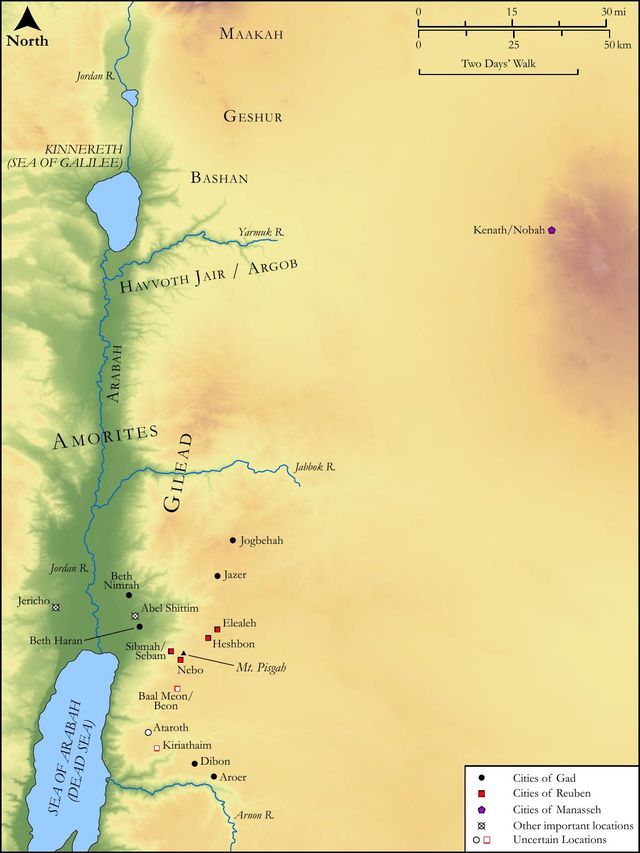
See on the biblical-era map
Study this verse
Continue studying Numbers 32:23 across the web’s major study libraries — every link below opens this exact verse, chapter, or book on the destination site.
Read & Compare
 BibleGatewayThis verse in more than 200 translations and 70 languages.
 Bible.comThe YouVersion reader — hundreds of translations, reading plans, and highlights.
 ESV.orgCrossway's official English Standard Version reader.
 NET BibleThe NET translation with 60,000+ translators' notes on every rendering decision.
 STEP BibleTyndale House's free study tool — original text, vocabulary, and scholarly resources.
 BibliaLogos Bible Software's free web reader.
 USCCBThe New American Bible (Revised Edition) with the U.S. bishops' study notes.
Commentaries
 BibleHub CommentariesDozens of classic commentaries on this verse, gathered on one page.
 StudyLightMore than 100 commentary sets — the largest collection on the web.
 BibleRefPlain-English commentary on what this verse means, verse by verse.
 Enduring WordDavid Guzik's free commentary on this chapter, widely used by Bible teachers.
 Bible Study ToolsVerse commentary alongside Greek and Hebrew study aids.
Original Language & Research
- BibleHub InterlinearThe verse word by word — original language, transliteration, and English.
- BibleHub LexiconEvery word's original-language definition and Strong's entry.
 Blue Letter BibleDeep-study tools — Strong's numbers, concordance, and word studies.
 SefariaThe Hebrew text with Rashi and centuries of Jewish commentary.
Sermons, Hymns & Audio


TrulyRandomVerse is not affiliated with these sites and doesn’t control their content. They’re linked because they’re genuinely useful.
Summary
Numbers 32:23 delivers a profound and timeless warning from Moses to the tribes of Reuben and Gad, and the half-tribe of Manasseh, regarding their solemn pledge to assist the other Israelite tribes in conquering the land of Canaan. This verse underscores the divine principle that a promise made before God is a sacred covenant, and failure to fulfill such a commitment constitutes a direct sin against the LORD, inevitably leading to the exposure and consequences of that transgression. It serves as a powerful reminder of divine accountability and the inescapable nature of sin's repercussions.
Context
ShowHideLiterary Context
This verse is situated within a crucial dialogue between Moses and the tribes of Reuben and Gad, and the half-tribe of Manasseh, as recorded in Numbers 32. Having arrived on the plains of Moab, east of the Jordan River, and witnessing the defeat of Sihon and Og, these tribes, possessing large herds, requested to settle in the fertile Transjordan region rather than cross into Canaan with the rest of Israel. Moses initially reacted with strong disapproval, fearing a repetition of the faithless report of the spies that led to forty years of wilderness wandering (Numbers 13:32 and Numbers 14:34). However, the tribes clarified their intent, pledging to build fortified cities for their families and folds, but then to arm themselves and go ahead of the other Israelites, fighting alongside them until the entire land of Canaan was subdued for all twelve tribes. Only then would they return to their inheritance east of the Jordan. Moses accepted this conditional offer, outlining the terms of their agreement. Verse 23 serves as Moses's stern concluding admonition, emphasizing the divine consequences should they renege on their word.
Historical & Cultural Context
The setting is the brink of the conquest of Canaan, approximately 1400 BC, with the Israelites encamped on the plains of Moab. The concept of tribal unity was paramount for the successful invasion and settlement of the Promised Land, a land promised by God to Abraham's descendants (Genesis 12:7). The request of Reuben and Gad threatened this unity and the corporate commitment to God's plan. In ancient Near Eastern cultures, oaths and vows made before a deity were considered extremely binding, carrying severe repercussions if broken. A promise made "before the LORD" (as implied in their pledge in Numbers 32:20) was not merely a human contract but a sacred covenant, a direct commitment to God Himself. The pastoral lifestyle of these tribes, with their extensive livestock, explains their desire for the rich grazing lands of Gilead and Bashan.
Key Themes
ShowHideThis verse powerfully contributes to several overarching themes within the book of Numbers and the Pentateuch. Firstly, it highlights Divine Accountability, emphasizing that God holds His people responsible for their words and actions, especially promises made in His name. Secondly, it underscores the Inevitability of Consequences for Sin, a foundational biblical truth that wrongdoing, whether hidden or overt, carries inherent repercussions that cannot be perpetually evaded. The phrase "your sin will find you out" becomes a proverbial statement for this principle. Thirdly, it stresses the importance of Integrity and Faithfulness to one's word and to the covenant community. Failure to uphold commitments is not just a breach of human trust but a direct act of rebellion against the divine will and a violation of the covenant relationship. This theme resonates throughout Israel's history, where obedience and disobedience consistently led to blessing or judgment, as seen in the broader narrative of Deuteronomy.
Exposition and Analysis
ShowHideKey Word Analysis
ShowHideThis verb (H2398) is a primitive root meaning "to miss the mark" or "to go astray," which fittingly describes a failure to meet a divine expectation or standard. The Strong's definition expands this to include "to fall short," "to forfeit," and "to offend." In this context, Moses declares that the tribes' potential failure to fulfill their solemn pledge is not merely a breach of human agreement but a direct offense against the LORD, signifying a moral failure and a violation of the covenant relationship. It is an act of missing the mark of divine faithfulness.
This noun (H2403) derived from ḥāṭāʼ refers to "an offense" or "habitual sinfulness," but also critically includes "its penalty, occasion, sacrifice, or expiation." When Moses states "your sin will find you out," he is referring not just to the act of transgression itself but to the inherent consequences and penalties associated with it. This highlights that sin, by its very nature, carries a debt and will eventually lead to its due recompense or exposure, whether through judgment or the need for expiation.
The verb "find" (H4672) means "to come forth to," "to appear or exist," or "to attain." In the context of "your sin will find you out," it conveys the idea that the sin will inevitably "appear" or "be present" in its consequences. It implies that the repercussions of the transgression will manifest, come to light, or catch up with the perpetrator. This is not merely a passive discovery but an active manifestation where the inherent nature of the sin leads to its unavoidable encounter with justice or its natural, often painful, outworking.
Verse Breakdown
ShowHide"But if ye will not do so"
This clause directly references the conditional agreement Moses made with Reuben, Gad, and the half-tribe of Manasseh. "Do so" refers to their solemn pledge to cross the Jordan River armed, lead the charge, and fight alongside the other tribes until the entire land of Canaan was subdued and distributed. It sets up the stark choice and the ensuing consequences of disobedience.
"behold, ye have sinned against the LORD"
This is the core declaration of the verse. Moses elevates their potential failure from a mere human breach of contract to a direct offense against God. A promise made "before the LORD" (as in Numbers 32:20) becomes a sacred vow, and breaking it is an act of rebellion against the divine authority and a violation of the covenant. It underscores God's involvement and ultimate judgment in human affairs.
"and be sure your sin will find you out"
This powerful, proverbial statement serves as a timeless warning. It conveys the inescapable reality that sin, regardless of attempts to conceal it, will inevitably lead to its discovery and the suffering of its consequences. This is not necessarily an immediate, miraculous exposure, but rather the natural, often painful, outworking of unrighteousness, coupled with God's ultimate justice and omniscience. It implies that the consequences of sin are inherent to the act itself and will eventually manifest.
Literary Devices
ShowHideNumbers 32:23 employs several potent literary devices to convey its message. The most prominent is the Proverbial Statement found in the phrase "your sin will find you out." This pithy, memorable expression transcends its immediate context to become a universal truth about the inescapable nature of consequences for wrongdoing. The verse also utilizes a Conditional Clause ("But if ye will not do so..."), which clearly delineates the choice presented to the tribes and the direct, inevitable outcome of their potential disobedience. Moses's tone is one of Direct Admonition, a stern and authoritative warning from a divinely appointed leader to his people. There is also a subtle element of Personification in "your sin will find you out," as sin is given an active, almost sentient quality, implying that it carries within itself the mechanism of its own revelation. This reinforces the idea that consequences are not merely imposed externally but are inherent to the nature of sin itself.
Theological and Thematic Connections
ShowHideNumbers 32:23 encapsulates a fundamental theological truth about God's character and the nature of sin: God is omniscient and just, and no sin can truly remain hidden from Him or escape its due consequences. This principle is deeply woven into the fabric of biblical theology, affirming that while God is merciful and forgiving, He is also righteous and holds humanity accountable for their actions. The verse highlights the futility of attempting to evade divine scrutiny and the inherent self-destructive power of sin. It teaches that integrity, especially in promises made before God, is not merely a social nicety but a spiritual imperative, as breaches of trust are ultimately transgressions against the divine order. The consequences of sin, whether immediate or delayed, are an inevitable outworking of God's moral governance of the universe, designed to lead to repentance or to demonstrate His righteousness.
Reflection and Application
ShowHideFor believers today, Numbers 32:23 serves as a powerful and enduring reminder of the importance of integrity, accountability, and the reality of spiritual consequences. It challenges us to take seriously every promise we make, especially those made to God in prayer, worship, or through vows like marriage or baptism. The verse compels us to live authentically, recognizing that there is no true hiding place from God's all-seeing eye. Any attempt to conceal sin or evade responsibility is ultimately futile, as our transgressions carry inherent consequences that will eventually manifest, whether in our conscience, relationships, or through divine discipline. This truth should not lead to despair but to a profound sense of urgency for confession, repentance, and living in faithful obedience. Understanding that "our sin will find us out" motivates us to walk in the light, seeking forgiveness and striving for a life that honors God in every word and deed, knowing that true freedom comes from living transparently before Him.
Questions for Reflection
ShowHideFAQ
ShowHideDoes "your sin will find you out" mean God actively exposes every hidden sin, or that consequences are inherent?
ShowHideIt encompasses both. While God, in His omniscience and justice, is fully aware of all hidden sins and can choose to expose them, the phrase also powerfully conveys the idea that sin carries within itself the seeds of its own consequences. These consequences, whether internal (guilt, spiritual deadness) or external (broken relationships, natural repercussions, divine discipline), inevitably lead to the manifestation or "finding out" of the sin. It's not just about a divine detective, but about the very nature of unrighteousness to be self-destructive and to eventually reveal itself through its effects. This principle is echoed in passages like Romans 6:23, which states that "the wages of sin is death," indicating an inherent outcome.
Is this verse only about keeping promises, or does it apply more broadly to all sin?
ShowHideWhile the immediate context is Moses's warning to the tribes about keeping their promise, the statement "your sin will find you out" functions as a universal, proverbial truth applicable to all forms of sin. The principle that wrongdoing has inevitable consequences is a recurring theme throughout Scripture (e.g., Proverbs 11:21). Whether a sin is a broken promise, a lie, an act of injustice, or a secret transgression, its nature is to create a debt and to lead to repercussions that will eventually surface.
How does this verse relate to God's forgiveness?
ShowHideNumbers 32:23 emphasizes the reality and inevitability of consequences for sin, highlighting God's justice. However, it does not negate God's mercy and forgiveness. For believers, through faith in Jesus Christ, the penalty of sin (eternal separation from God) is fully paid and forgiven (Romans 8:1). Yet, even after forgiveness, the natural consequences of our actions in this life may still manifest. For example, a lie may still damage trust, even if confessed and forgiven. The verse serves as a sober reminder of sin's seriousness, which should drive us to repentance and to appreciate the profound grace of God that offers cleansing and reconciliation, as promised in 1 John 1:9.
Christ-Centered Fulfillment
ShowHideNumbers 32:23, with its stark warning that "your sin will find you out," finds its ultimate and most profound fulfillment in the person and work of Jesus Christ. While the verse highlights the inescapable nature of sin's consequences for the unrepentant, Christ Himself became the one whom sin "found out" in the most devastating way imaginable. On the cross, Jesus, who knew no sin, became sin for us (2 Corinthians 5:21), bearing the full weight of humanity's transgressions and their inevitable consequences. He absorbed the divine judgment that our sins deserved, so that for those who believe in Him, sin no longer "finds them out" unto eternal condemnation.
The light of Christ exposes all sin, not to condemn those who turn to Him, but to reveal the need for His saving grace. He is the Lamb of God who takes away the sin of the world (John 1:29), meaning He became the ultimate sin-bearer, allowing the consequences of sin to "find Him out" in our place. Therefore, for the believer, while the natural repercussions of past actions may still occur in this life, the eternal sting of sin's discovery—separation from God—has been disarmed by His sacrifice. The truth of Numbers 32:23 thus drives us to the cross, where the justice of God and the mercy of God meet, and where the ultimate "finding out" of sin resulted in our redemption (Isaiah 53:5-6).