


Numbers 32:24
- בְּנוּbe·nubuildH1129V-Qal-Imp-2mpVerb Qal Imperative 2nd Plural Masculine
- לָכֶםla·Khemfor <the> yourselvesPrep-l ¦ 2mpSuffix Personal 2nd Plural Masculineלָfor <the>כֶםyourselves
- עָרִים'a·RimcitiesH5892N-mpNoun Plural Masculine Absolute
- לְטַפְּכֶםle·ta·pe·Khemfor your little one[s]H2945Prep-l ¦ N-msc ¦ 2mpNoun Singular Masculine Constructלְforטַפְּlittle one[s]כֶםyour
- וּגְדֵרֹתu·ge·de·Rotand foldsH1448Conj-w ¦ N-fpNoun Plural Feminine Absoluteוּandגְדֵרֹתfolds
- לְצֹנַאֲכֶםle·tzo·na·'a·Khemfor your sheepH6792Prep-l ¦ N-msc ¦ 2mpNoun Singular Masculine Constructלְforצֹנַאֲsheepכֶםyour
- וְהַיֹּצֵאve·hai·yo·Tze'and the [thing which] has gone outH3318Conj-w ¦ Art ¦ V-Qal-Prtcpl-msVerb Qal Participle Singular Masculine Absoluteוְandהַtheיֹּצֵא[thing which] has gone out
- מִפִּיכֶםmi·pi·Khemfrom your mouthH6310Prep-m ¦ N-msc ¦ 2mpNoun Singular Masculine Constructמִfromפִּיmouthכֶםyour
- תַּעֲשׂוּta·'a·Suyou will doH6213V-Qal-Imperf-2mpVerb Qal Imperfect 2nd Plural Masculine
English is a literal word-by-word gloss of the Hebrew, not the KJV's wording. Why?
This is the original text the KJV's translators worked from — each Hebrew word with its own literal English meaning in this verse, prepared by scholars at Tyndale House, Cambridge. The KJV translates whole sentences, not word by word, so its wording differs: one Hebrew word can become several English words, and the KJV may choose “the LORD” where the gloss reads “Yahweh”. Both are faithful — they answer different questions. For the KJV's own rendering, switch to the KJV text.
Details
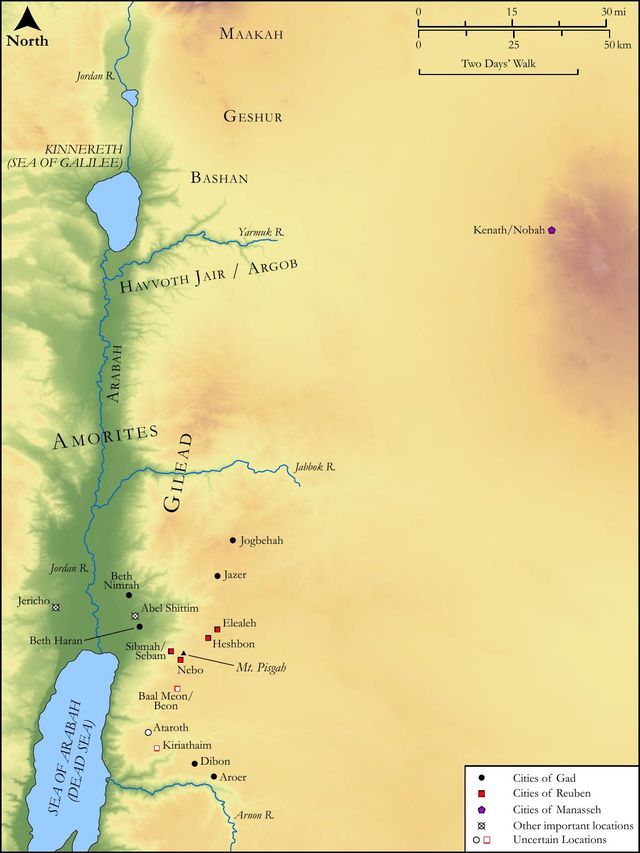
See on the biblical-era map
Study this verse
Continue studying Numbers 32:24 across the web’s major study libraries — every link below opens this exact verse, chapter, or book on the destination site.
Read & Compare
 BibleGatewayThis verse in more than 200 translations and 70 languages.
 Bible.comThe YouVersion reader — hundreds of translations, reading plans, and highlights.
 ESV.orgCrossway's official English Standard Version reader.
 NET BibleThe NET translation with 60,000+ translators' notes on every rendering decision.
 STEP BibleTyndale House's free study tool — original text, vocabulary, and scholarly resources.
 BibliaLogos Bible Software's free web reader.
 USCCBThe New American Bible (Revised Edition) with the U.S. bishops' study notes.
Commentaries
 BibleHub CommentariesDozens of classic commentaries on this verse, gathered on one page.
 StudyLightMore than 100 commentary sets — the largest collection on the web.
 BibleRefPlain-English commentary on what this verse means, verse by verse.
 Enduring WordDavid Guzik's free commentary on this chapter, widely used by Bible teachers.
 Bible Study ToolsVerse commentary alongside Greek and Hebrew study aids.
Original Language & Research
- BibleHub InterlinearThe verse word by word — original language, transliteration, and English.
- BibleHub LexiconEvery word's original-language definition and Strong's entry.
 Blue Letter BibleDeep-study tools — Strong's numbers, concordance, and word studies.
 SefariaThe Hebrew text with Rashi and centuries of Jewish commentary.
Sermons, Hymns & Audio


TrulyRandomVerse is not affiliated with these sites and doesn’t control their content. They’re linked because they’re genuinely useful.
Summary
Numbers 32:24 encapsulates Moses' crucial instructions to the tribes of Reuben and Gad, and the half-tribe of Manasseh, concerning their settlement east of the Jordan River. It mandates that they first establish secure provisions for their families and flocks, then fulfill their solemn vow to join the other Israelite tribes in the conquest of Canaan. This verse powerfully underscores the divine expectation for integrity in speech, balancing personal well-being with communal responsibility, and the sacred obligation to honor one's commitments.
Context
ShowHideLiterary Context
This verse is a pivotal moment in the negotiation between Moses and the Transjordanian tribes (Reuben, Gad, and the half-tribe of Manasseh). Having seen the fertile lands of Gilead and Bashan, ideal for their numerous livestock, these tribes requested to settle there rather than cross the Jordan into Canaan with the rest of Israel. Moses initially reacted with strong disapproval, fearing a repetition of the rebellion at Kadesh-Barnea, where the people's lack of faith led to forty years of wandering (see the account in Numbers 14). The tribes then pledged to build secure cities for their families and folds for their sheep, and crucially, to send their armed men across the Jordan to fight alongside their brethren until the entire land of Canaan was subdued. Numbers 32:24 represents Moses' conditional acceptance of their proposal, emphasizing the non-negotiable requirement that they fulfill their spoken promise. This agreement sets the stage for their future actions, particularly their participation in the conquest under Joshua's leadership, as later recounted in Joshua's instructions to the tribes.
Historical & Cultural Context
In the ancient Near East, a spoken word or vow carried immense weight and was often considered as binding as a written contract. This was particularly true within the covenantal framework of Israelite society, where God Himself was characterized as a promise-keeping God (e.g., Deuteronomy 7:9). The act of "proceeding out of your mouth" (Hebrew: motza piykha) was not a casual utterance but a solemn declaration, often made before witnesses and implicitly, before God. Furthermore, the concept of communal solidarity was paramount for the nomadic and semi-nomadic tribes of Israel. Their survival and success depended on mutual support and shared responsibility, especially in military endeavors. Moses' insistence on their participation in the conquest was not merely about military strength but about maintaining the unity and shared destiny of the twelve tribes as the people of God. The building of "cities" and "folds" also reflects the practical necessities of establishing settled life in a new territory, providing security against both human and animal threats.
Key Themes
ShowHideNumbers 32:24 contributes significantly to several overarching themes within the book of Numbers and the Pentateuch. Firstly, it highlights the theme of Divine Faithfulness and Human Responsibility. While God had promised the land, its possession required human obedience and effort, including the commitment of all tribes to the common goal. Secondly, the verse powerfully underscores the Sanctity of Vows and the Importance of Integrity. Moses' command, "do that which hath proceeded out of your mouth," echoes broader biblical principles about the binding nature of spoken commitments, a theme deeply rooted in Israel's covenant relationship with Yahweh (see the laws concerning vows). Thirdly, it addresses the theme of Balancing Personal Interest with Communal Obligation. While the tribes of Reuben and Gad sought a desirable outcome for themselves, Moses ensured that their personal gain would not come at the expense of the collective well-being and mission of the entire nation of Israel. Their willingness to fight alongside their brethren until the conquest was complete demonstrated this crucial balance, ensuring the unity necessary for fulfilling God's promise to Israel (see the tribes' proposal to Moses).
Exposition and Analysis
ShowHideKey Word Analysis
ShowHideReferring to a family, mostly used collectively in the singular for children. This term emphasizes the most vulnerable members of the community—the young and dependent. Moses' command to "build cities for your little ones" highlights the primary responsibility of providing security and stability for future generations, underscoring a pastoral concern for their well-being before any other endeavor.
A primitive root meaning "to do or make, in the broadest sense and widest application." In this imperative context, it signifies an active, intentional, and complete fulfillment of an obligation. It is not merely a suggestion but a direct command to perform the promised action, emphasizing the necessity of translating spoken commitment into concrete deeds.
Referring to the mouth, whether literal or figurative, particularly speech. In the phrase "that which hath proceeded out of your mouth," peh functions as a metonymy for "word," "utterance," or "vow." It underscores the solemnity and binding nature of verbal commitments in ancient Israelite culture, where a spoken promise was considered a sacred bond, carrying the full weight of the speaker's integrity and responsibility.
Verse Breakdown
ShowHide"Build you cities for your little ones"
This clause sets the immediate priority for the Transjordanian tribes: to establish secure, fortified settlements for their families. "Cities" implies more than mere encampments; it suggests permanent, defensible structures designed to protect their most vulnerable members—their children—from external threats and provide a stable home base. This command reveals Moses' practical wisdom and pastoral heart, ensuring the welfare of their dependents before military engagement.
"and folds for your sheep"
Following the provision for their families, this clause addresses the protection of their livelihood. "Folds" (Hebrew: gᵉdêrâh, H1448, meaning an enclosure, especially for flocks) were essential for safeguarding their vast herds, which constituted their primary wealth and sustenance. This directive highlights the importance of responsible stewardship of their economic resources and the practical planning required for their long-term stability and prosperity in the newly acquired territory.
"and do that which hath proceeded out of your mouth"
This is the central, conditional imperative of the verse, tying their right to settle east of the Jordan to their integrity. It demands the complete fulfillment of the solemn vow they made to Moses: that their armed men would cross the Jordan and fight alongside the other tribes until the conquest of Canaan was complete. This clause transforms their verbal commitment into a binding obligation, emphasizing the paramount importance of faithfulness, accountability, and the sanctity of a spoken word before God and the community.
Literary Devices
ShowHideNumbers 32:24 employs several significant literary devices that amplify its message. The most prominent is the Imperative Mood, seen in the verbs "Build" and "do." This direct command structure conveys Moses' authority and the non-negotiable nature of his stipulations, reflecting the divine authority he wielded in guiding Israel. There is also a clear use of Parallelism in the initial clauses, "Build you cities for your little ones, and folds for your sheep," which juxtaposes the care for human life with the care for livelihood, both fundamental aspects of their new settlement and demonstrating a holistic concern for their well-being. Furthermore, the phrase "that which hath proceeded out of your mouth" serves as a powerful Metonymy, where "mouth" stands for the "word" or "vow" itself. This highlights the profound significance and binding nature of spoken commitments in the biblical worldview, emphasizing integrity as a cornerstone of covenant relationship. The entire verse functions as a concise summary of a Conditional Covenant, where the tribes' desired outcome (settlement) is contingent upon their fulfillment of their promise (participation in the conquest), illustrating the principle of reciprocal obligation within God's dealings with His people.
Theological and Thematic Connections
ShowHideNumbers 32:24 is a profound theological statement on the nature of promises and the integrity required of God's people. It teaches that words are not mere sounds but carry moral and spiritual weight, especially when uttered as a commitment. This principle is deeply embedded in the biblical understanding of covenant, where God's own faithfulness to His word serves as the ultimate model. Just as God keeps His promises, so too are His people called to be trustworthy in their speech and actions, reflecting His character to the world. The verse also underscores the importance of communal responsibility, reminding us that individual blessings often come with collective obligations, and that true prosperity involves contributing to the well-being and mission of the broader community.
Reflection and Application
ShowHideNumbers 32:24 offers timeless wisdom for contemporary believers, urging us to consider the profound weight of our words and commitments. In a world where promises are often lightly made and easily broken, this verse calls us to cultivate a deep sense of integrity, ensuring that our "yes" means yes and our "no" means no. This applies to personal relationships, professional dealings, and especially to our vows before God, whether in baptism, marriage, or service. Beyond individual integrity, the verse also challenges us to balance our personal aspirations and needs with our responsibilities to the wider community. Just as the tribes were called to secure their own future while also contributing to the national conquest, we are reminded that our faith journey is not solely individualistic but involves active participation in the body of Christ and contribution to the common good. We are called to be diligent in providing for our families and stewarding our resources, but never at the expense of our shared mission and mutual support within the family of God.
Questions for Reflection
ShowHideFAQ
ShowHideWhy was Moses so insistent on the tribes fulfilling their promise, even after granting them their land?
ShowHideMoses' insistence stemmed from several critical reasons, deeply rooted in the theological and practical realities of Israel's journey. Firstly, it was about integrity and the sanctity of a vow. In the biblical worldview, a spoken promise, especially one made before God and the community, carried immense weight and was binding (see Numbers 30:2). To renege would be a sin against God and a betrayal of trust. Secondly, it was crucial for national unity and shared responsibility. The conquest of Canaan was a collective endeavor, a fulfillment of God's promise to all twelve tribes. If Reuben and Gad had settled prematurely without contributing, it would have created division, discouraged the other tribes, and potentially jeopardized the entire mission (as Moses initially feared, echoing the failure in Numbers 14). Their participation was vital not just for military strength but for maintaining the spiritual and communal solidarity of Israel. Moses ensured that their personal blessing (fertile land) did not exempt them from their covenantal obligations to the whole people of God.
Christ-Centered Fulfillment
ShowHideNumbers 32:24, with its emphasis on the binding nature of a spoken word and the fulfillment of promises, finds its ultimate and most profound fulfillment in the person and work of Jesus Christ. He is the embodiment of perfect integrity, whose every word was truth and whose every promise was perfectly kept. Unlike the conditional promises of men, Christ's promises are "yes and amen" (see 2 Corinthians 1:20), guaranteed by His divine nature and His finished work on the cross. Where the tribes of Reuben and Gad were commanded to "do that which hath proceeded out of your mouth," Christ perfectly fulfilled all that proceeded from the Father's mouth, obediently accomplishing the divine will for salvation (see John 4:34). His life, death, and resurrection are the ultimate demonstration of God's faithfulness to His covenant promises, particularly the promise of a redeemer who would defeat sin and death (see Genesis 3:15). Furthermore, the call for the tribes to provide security for their "little ones" and "folds" foreshadows Christ as the Good Shepherd who lays down His life for His sheep, providing ultimate security and eternal life for His people (see John 10:11). In Christ, the themes of integrity, provision, and communal responsibility are perfectly realized, as He not only keeps His word but also empowers His church to live in unity and fulfill its mission, drawing all people to Himself (see Ephesians 4:1-3).