


Numbers 32:16
- וַיִּגְּשׁוּvai·yi·ge·Shuand they drew nearH5066Conj-w ¦ V-Qal-ConsecImperf-3mpVerb Qal Consecutive Imperfect 3rd Plural Masculineוַandיִּגְּשׁוּthey drew near
- אֵלָיו'e·Lavto himH413Prep ¦ 3msPreposition Definiteאֵלָיtoוhim
- וַיֹּאמְרוּvai·yo·me·Ruand they saidH559Conj-w ¦ V-Qal-ConsecImperf-3mpVerb Qal Consecutive Imperfect 3rd Plural Masculineוַandיֹּאמְרוּthey said
- גִּדְרֹתgid·Rotfolds ofH1448N-fpcNoun Plural Feminine Construct
- צֹאןtzonsheepH6629N-csNoun Singular common gender Absolute
- נִבְנֶהniv·Nehwe will buildH1129V-Qal-Imperf-1cpVerb Qal Imperfect 1st Plural common gender
- לְמִקְנֵנוּle·mik·Ne·nufor our livestockH4735Prep-l ¦ N-msc ¦ 1cpNoun Singular Masculine Constructלְforמִקְנֵlivestockנוּour
- פֹּהPohhereH6311AdvAdverb
- וְעָרִיםve·'a·Rimand citiesH5892Conj-w ¦ N-mpNoun Plural Masculine Absoluteוְandעָרִיםcities
- לְטַפֵּנוּle·ta·Pe·nufor our little one[s]H2945Prep-l ¦ N-msc ¦ 1cpNoun Singular Masculine Constructלְforטַפֵּlittle one[s]נוּour
English is a literal word-by-word gloss of the Hebrew, not the KJV's wording. Why?
This is the original text the KJV's translators worked from — each Hebrew word with its own literal English meaning in this verse, prepared by scholars at Tyndale House, Cambridge. The KJV translates whole sentences, not word by word, so its wording differs: one Hebrew word can become several English words, and the KJV may choose “the LORD” where the gloss reads “Yahweh”. Both are faithful — they answer different questions. For the KJV's own rendering, switch to the KJV text.
Details
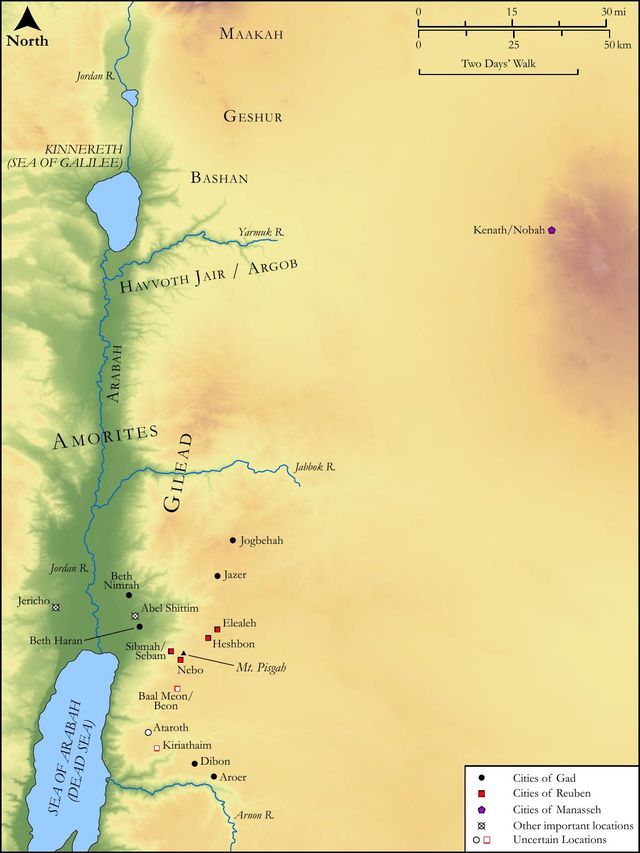
See on the biblical-era map
Study this verse
Continue studying Numbers 32:16 across the web’s major study libraries — every link below opens this exact verse, chapter, or book on the destination site.
Read & Compare
 BibleGatewayThis verse in more than 200 translations and 70 languages.
 Bible.comThe YouVersion reader — hundreds of translations, reading plans, and highlights.
 ESV.orgCrossway's official English Standard Version reader.
 NET BibleThe NET translation with 60,000+ translators' notes on every rendering decision.
 STEP BibleTyndale House's free study tool — original text, vocabulary, and scholarly resources.
 BibliaLogos Bible Software's free web reader.
 USCCBThe New American Bible (Revised Edition) with the U.S. bishops' study notes.
Commentaries
 BibleHub CommentariesDozens of classic commentaries on this verse, gathered on one page.
 StudyLightMore than 100 commentary sets — the largest collection on the web.
 BibleRefPlain-English commentary on what this verse means, verse by verse.
 Enduring WordDavid Guzik's free commentary on this chapter, widely used by Bible teachers.
 Bible Study ToolsVerse commentary alongside Greek and Hebrew study aids.
Original Language & Research
- BibleHub InterlinearThe verse word by word — original language, transliteration, and English.
- BibleHub LexiconEvery word's original-language definition and Strong's entry.
 Blue Letter BibleDeep-study tools — Strong's numbers, concordance, and word studies.
 SefariaThe Hebrew text with Rashi and centuries of Jewish commentary.
Sermons, Hymns & Audio


TrulyRandomVerse is not affiliated with these sites and doesn’t control their content. They’re linked because they’re genuinely useful.
Summary
Numbers 32:16 presents the pivotal and reassuring proposal from the tribes of Reuben and Gad, joined by half of the tribe of Manasseh, to Moses and the Israelite leadership. Following Moses' stern rebuke concerning their initial desire to settle east of the Jordan, this verse outlines their immediate and well-considered counter-offer: they would first construct secure sheepfolds for their abundant livestock and fortified cities for their families. Crucially, their armed men would then cross the Jordan with the rest of Israel to participate fully in the conquest of Canaan, demonstrating a profound commitment to both their tribal needs and the corporate responsibility of the nation.
Context
ShowHideLiterary Context
Numbers 32:16 marks a crucial turning point in the tense dialogue between Moses and the Transjordanian tribes (Reuben, Gad, and half of Manasseh). The preceding verses (Numbers 32:1-5) detail their request for the fertile lands of Gilead and Bashan, east of the Jordan, due to their vast herds. Moses' initial response, spanning Numbers 32:6-15, is a severe reprimand, drawing a direct and chilling parallel to the disastrous rebellion at Kadesh-Barnea that resulted in forty years of wilderness wandering and the death of an entire generation. He fears their desire to settle prematurely will discourage the other tribes and provoke God's wrath, just as the previous generation's lack of faith did. Verse 16 is the tribes' immediate, strategic, and conciliatory reply, meticulously crafted to alleviate Moses' profound fears by outlining a practical, two-part plan that prioritizes the national conquest while simultaneously securing their families and possessions. This proposal effectively sets the stage for Moses' conditional approval in Numbers 32:20-23.
Historical & Cultural Context
The request of Reuben and Gad, and their subsequent proposal in this verse, must be understood within the intricate framework of ancient Israelite tribal society and their predominantly nomadic, pastoral economy. Land was far more than mere property; it was a sacred inheritance, a divine gift, and the very foundation of identity, security, and covenantal blessing. These tribes possessed immense herds of livestock, and the lands of Gilead and Bashan were renowned for their lush, abundant pastures, making them exceptionally desirable for their pastoral livelihood. Central to Israelite identity was the concept of corporate responsibility: the entire nation was bound by covenant to conquer and inherit the land promised by God. For two tribes to potentially opt out of this collective conquest would have been perceived as a grave dereliction of duty, threatening to weaken the entire nation's resolve, invite divine displeasure, and fracture the nascent national unity. Furthermore, the Jordan River served as a profound geographical and symbolic boundary, marking the sacred entrance into the promised land of Canaan proper. Settling east of it carried significant implications for their future integration, security, and participation in the life of the unified nation.
Key Themes
ShowHideNumbers 32:16 powerfully illuminates several foundational themes. Firstly, Commitment and Corporate Responsibility are central, as the tribes endeavor to balance their immediate tribal needs (securing their families and livestock) with their overarching national and covenantal obligation to participate fully in the conquest of Canaan. Their proposal demonstrates a mature understanding that individual prosperity should never come at the expense of communal duty or the divine mission. Secondly, Strategic Planning and Foresight are vividly evident in their detailed, two-part offer: first, building essential infrastructure for security, then joining the fight. This pragmatic and well-reasoned approach highlights their desire to be seen as proactive problem-solvers rather than as shirking their responsibilities. Thirdly, the theme of Negotiation and Reassurance is paramount. The tribes are not merely making a request but actively engaging in a sophisticated dialogue designed to directly address Moses' specific fears and earn his trust. Their willingness to fight alongside their brethren, as promised here and later faithfully fulfilled (Joshua 4:12-13), was absolutely crucial for securing Moses' eventual conditional approval and maintaining the fragile unity of the burgeoning nation.
Exposition and Analysis
ShowHideKey Word Analysis
ShowHideThis primitive root (H1129) signifies the act of construction, both literally and figuratively. In this context, it refers to the physical erection of sheepfolds and cities, underscoring the tribes' tangible commitment to establishing a permanent and secure presence in the Transjordan region. The act of "building" implies effort, investment, and a long-term vision, directly countering any suspicion that they sought only temporary gain or would abandon their post.
This feminine noun (H1448) denotes an enclosure, specifically one designed for flocks. It refers to the stone pens or protective structures built to safeguard sheep and goats from predators and thieves. The immediate mention of "sheepfolds" highlights the primary economic activity and wealth of the tribes of Reuben and Gad—their vast herds. Prioritizing these structures signifies their intention to secure their livelihood and valuable assets, emphasizing practicality and a desire for stability in their new territory.
This term (H2945) refers collectively to the young children and dependents within a family or community. Their inclusion in the proposal underscores the tribes' profound concern for the safety, well-being, and future of their most vulnerable members. By prioritizing the protection of their "little ones" alongside their cattle, they are appealing to Moses' pastoral heart and demonstrating that their desire for the land is rooted in responsible care for their families, not merely selfish gain or avoidance of duty.
Verse Breakdown
ShowHide"And they came near unto him, and said,"
This opening phrase conveys a deliberate, respectful, yet resolute approach. After Moses' intense and public rebuke, the tribes do not retreat or become defensive. Instead, they engage directly and immediately, demonstrating their resolve and their readiness to address his concerns head-on. Their "coming near" suggests a posture of earnestness, humility, and a genuine desire to bridge the gap created by Moses' suspicion and to regain his trust.
"We will build sheepfolds here for our cattle,"
This constitutes the first, foundational part of their two-pronged proposal. It directly addresses their primary economic interest and the initial reason for their request for the fertile land east of the Jordan. The active verb "build" implies immediate, tangible action to secure their immense wealth in livestock. The adverb "here" emphasizes their commitment to this specific territory, signaling their intention to establish a permanent base for their extensive pastoral operations, ensuring the safety and productivity of their herds.
"and cities for our little ones:"
This is the second, equally vital component of their comprehensive proposal. It demonstrates their paramount concern for the safety, security, and future of their families. Building "cities" (referring to fortified towns or settlements) for their children signifies a long-term commitment to settling the land and providing a secure, stable environment for the next generation. This clause directly counters Moses' fear that they would abandon their responsibilities to the larger community, showing they would first ensure the safety of their most vulnerable members before undertaking any other national duty.
Literary Devices
ShowHideThe passage employs Pragmatism as a dominant literary device, showcasing the tribes' highly practical and solution-oriented approach to a difficult and potentially divisive negotiation. Rather than merely defending their initial request or expressing remorse, they immediately present a concrete, actionable plan that addresses Moses' core anxieties. There is also a clear instance of Parallelism in their stated intentions: "sheepfolds here for our cattle" is structurally balanced with "and cities for our little ones." This creates a rhythmic and memorable structure that highlights their dual priorities of securing their livelihood and protecting their families. This pragmatic and structured response serves as a potent form of Reassurance, directly alleviating Moses' profound anxieties about their commitment to the national cause. The very act of "building" signifies a tangible, active commitment, contrasting sharply with any perceived passive desire for land or evasion of duty.
Theological and Thematic Connections
ShowHideNumbers 32:16 profoundly underscores theological principles related to corporate responsibility, faithful stewardship, and the delicate yet essential balance between individual blessings and communal obligations. The tribes' willingness to first secure their own families and possessions, yet then commit to joining the fight for the entire nation, reflects a deep understanding of the covenantal relationship: individual prosperity and well-being are inextricably intertwined with the health, obedience, and divine favor bestowed upon the entire community. Their proactive solution demonstrates a mature approach to conflict resolution and a commitment to integrity, acknowledging the validity of Moses' concerns while proposing a way forward that honors both their specific tribal needs and the overarching national mission. This pivotal moment highlights the indispensable importance of trust within leadership and among the body of believers, where promises made must be promises kept for the sake of unity, divine blessing, and the successful execution of God's purposes.
Reflection and Application
ShowHideNumbers 32:16 offers timeless wisdom for navigating the complexities of life, particularly in balancing personal aspirations with communal responsibilities. It challenges us to consider thoughtfully how our individual desires, needs, and blessings intersect with the greater good of our family, church, or society. The tribes' proactive problem-solving, rather than mere defensiveness or complaint, teaches us the invaluable lesson of offering constructive solutions that genuinely address legitimate concerns, thereby fostering trust, collaboration, and unity. Their commitment to securing their families first, and then joining the fight, reminds us that while personal and familial well-being is vitally important, it should never become an excuse to shirk our duties to the broader community or to the collective mission God has entrusted to us. Integrity in our promises, especially in negotiations or agreements, is paramount, as powerfully demonstrated by the tribes' eventual and faithful fulfillment of their word. This verse calls us to be people of our word, committed to both our personal spheres and the larger body of Christ.
Questions for Reflection
ShowHideFAQ
ShowHideWhy was Moses so initially angry with Reuben and Gad's request?
ShowHideMoses' anger stemmed from a deep-seated fear that the tribes of Reuben and Gad were repeating the grievous sin of the previous generation at Kadesh-Barnea. In that instance, the Israelites, disheartened by the negative report of the spies, refused to enter the Promised Land, leading directly to God's judgment of forty years of wilderness wandering and the death of that entire faithless generation. Moses perceived the tribes' desire to settle east of the Jordan as a potential act of cowardice, selfishness, or a lack of faith, which could easily discourage the other tribes and provoke God's wrath once more, thereby jeopardizing the entire divine mission of conquering Canaan. He feared their actions would undermine national unity and the collective faith in God's unwavering promise.
Did the tribes of Reuben and Gad fulfill their promise to fight with the other tribes?
ShowHideYes, they absolutely did. The book of Joshua explicitly records their remarkable faithfulness to their word. In Joshua 1:12-18, Joshua reminds them of their solemn commitment, and they unequivocally affirm their readiness to fight. Later, in Joshua 4:12-13, it is explicitly stated that "about forty thousand ready for war passed over before the Lord for battle, to the plains of Jericho." They fought valiantly alongside their brethren throughout the arduous conquest of Canaan, demonstrating exceptional integrity and unwavering commitment to their word, before finally returning to their inheritance east of the Jordan, as comprehensively recorded in Joshua 22.
Christ-Centered Fulfillment
ShowHideNumbers 32:16, though a narrative of tribal negotiation and practical planning, finds profound Christ-centered fulfillment in the person and redemptive work of Jesus. The tribes' desire for security and inheritance, their willingness to sacrifice for the greater good of the nation, and their eventual faithful fulfillment of a promise, all point to deeper spiritual realities in Christ. Jesus is the ultimate "sheepfold" and "city" for His people, providing perfect, eternal security and an incorruptible inheritance. He declares, "My sheep hear my voice, and I know them, and they follow me: And I give unto them eternal life; and they shall never perish, neither shall any man pluck them out of my hand" (John 10:27-28), establishing a spiritual "sheepfold" where believers are eternally safe and secure. Furthermore, Jesus prepares an eternal "city" for His "little ones"—all who believe in Him. He promised His disciples, "In my Father's house are many mansions: if it were not so, I would have told you. I go to prepare a place for you" (John 14:2-3), speaking of the heavenly Jerusalem, our ultimate and perfectly secure dwelling. Unlike the tribes who first secured their own before joining the fight, Christ reversed this order: He first went to the cross, making the ultimate, self-sacrificial atonement for His "little ones" (humanity), thereby securing their salvation and eternal inheritance through His precious blood. His boundless, self-giving commitment to the Father's will and His people's redemption far surpasses the integrity of Reuben and Gad, fulfilling the deepest human need for security, belonging, and an eternal home in the ultimate "promised land" of God's eternal kingdom. Through His finished work on the cross, we receive an "inheritance incorruptible, and undefiled, and that fadeth not away, reserved in heaven for you" (1 Peter 1:4), a glorious gift secured not by our building or efforts, but by His ultimate, perfect sacrifice.