


Numbers 34:22
Bible text: King James Version (1769 Blayney text) · Public domain
Bible text: Berean Standard Bible · Public domain
Bible text: American Standard Version (1901) · Public domain
Bible text: World English Bible, Messianic edition · Public domain
Bible text: Geneva Bible (1599) · Public domain
Bible text: Young's Literal Translation · Public domain
- וּלְמַטֵּהu·le·ma·Tehand of [the] tribe ofH4294Conj-w ¦ Prep-l ¦ N-mscNoun Singular Masculine Constructוּandלְofמַטֵּה[the] tribe of
- בְנֵיve·nei[the] descendants ofH1121N-mpcNoun Plural Masculine Construct
- דָןdanDanH1835N-properNoun Proper Location
- נָשִׂיאna·Si'a leaderH5387N-msNoun Singular Masculine Absolute
- בֻּקִּיbu·KiBukkiH1231N-proper-mNoun Proper Masculine
- בֶּןben[the] son ofH1121N-mscNoun Singular Masculine Construct
- יָגְלִיya·ge·LiJogliH3020N-proper-mNoun Proper Masculine
English is a literal word-by-word gloss of the Hebrew, not the KJV's wording. Why?
This is the original text the KJV's translators worked from — each Hebrew word with its own literal English meaning in this verse, prepared by scholars at Tyndale House, Cambridge. The KJV translates whole sentences, not word by word, so its wording differs: one Hebrew word can become several English words, and the KJV may choose “the LORD” where the gloss reads “Yahweh”. Both are faithful — they answer different questions. For the KJV's own rendering, switch to the KJV text.
Details
See on the biblical-era map
Study this verse
Continue studying Numbers 34:22 across the web’s major study libraries — every link below opens this exact verse, chapter, or book on the destination site.
Read & Compare
 BibleGatewayThis verse in more than 200 translations and 70 languages.
 Bible.comThe YouVersion reader — hundreds of translations, reading plans, and highlights.
 ESV.orgCrossway's official English Standard Version reader.
 NET BibleThe NET translation with 60,000+ translators' notes on every rendering decision.
 STEP BibleTyndale House's free study tool — original text, vocabulary, and scholarly resources.
 BibliaLogos Bible Software's free web reader.
 USCCBThe New American Bible (Revised Edition) with the U.S. bishops' study notes.
Commentaries
 BibleHub CommentariesDozens of classic commentaries on this verse, gathered on one page.
 StudyLightMore than 100 commentary sets — the largest collection on the web.
 BibleRefPlain-English commentary on what this verse means, verse by verse.
 Enduring WordDavid Guzik's free commentary on this chapter, widely used by Bible teachers.
 Bible Study ToolsVerse commentary alongside Greek and Hebrew study aids.
Original Language & Research
- BibleHub InterlinearThe verse word by word — original language, transliteration, and English.
- BibleHub LexiconEvery word's original-language definition and Strong's entry.
 Blue Letter BibleDeep-study tools — Strong's numbers, concordance, and word studies.
 SefariaThe Hebrew text with Rashi and centuries of Jewish commentary.
Sermons, Hymns & Audio


TrulyRandomVerse is not affiliated with these sites and doesn’t control their content. They’re linked because they’re genuinely useful.
Summary
Numbers 34:22 introduces Bukki, son of Jogli, who is designated as the prince of the tribe of Dan. This specific mention is part of a divinely ordained roster of tribal leaders appointed to assist Eleazar the priest and Joshua in the meticulous and equitable distribution of the Promised Land among the twelve tribes of Israel. The verse, therefore, highlights God's precise and orderly fulfillment of His covenant promises, emphasizing the importance of delegated authority and the structured preparation for Israel's settlement in Canaan.
Context
ShowHideLiterary Context
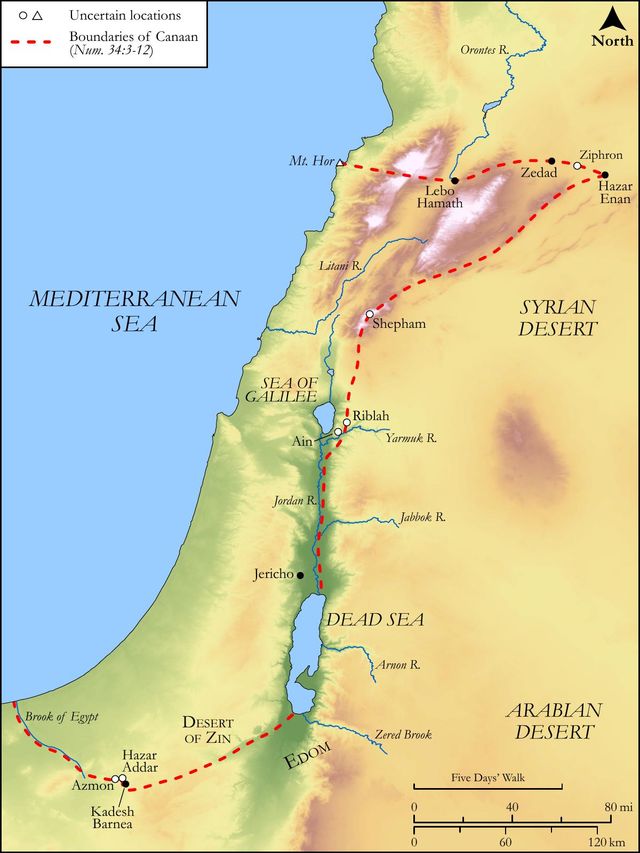
Numbers 34:22 is embedded within a highly detailed and administrative section of the book of Numbers, specifically in chapters 33 and 34. Chapter 33 provides a retrospective account of the Israelites' forty-year wilderness journey, concluding with their arrival on the plains of Moab, directly opposite Jericho, poised to enter the Promised Land. Chapter 34 then shifts focus to meticulously define the precise geographical boundaries of the land they are to inherit, establishing the tangible scope of God's covenant promise. Following this crucial geographical delineation (Numbers 34:1-15), the text transitions to list the specific individuals chosen by God to oversee the land's division (Numbers 34:16-29). This roster includes Eleazar the priest, Joshua, and one divinely appointed prince from each of the nine and a half tribes destined to receive their inheritance west of the Jordan. Numbers 34:22, therefore, functions as a singular, yet vital, entry within this comprehensive list, underscoring the divine order, meticulous preparation, and the principle of delegated authority essential for Israel's successful transition from nomadic wanderers to a settled nation.
Historical & Cultural Context
The historical setting for Numbers 34 is the pivotal moment just prior to Israel's entry into Canaan, marking the culmination of their wilderness sojourn. This period represented a monumental transition from a transient, wilderness existence to a settled, agrarian society. The division of the land was not merely a logistical exercise but a foundational act for the nascent nation, establishing tribal identities, legal rights, economic stability, and the fulfillment of ancestral promises. In Israel, land ownership was inextricably linked to identity, lineage, and covenant fidelity. The role of a "prince" (nasi') was far from nominal; these were authoritative leaders, often heads of prominent ancestral houses or major clans, chosen to represent their tribe's interests, ensure justice, and facilitate the orderly distribution of land. The meticulous naming of each leader, including Bukki of Dan, underscored the divine authority underpinning the entire process, the importance of orderly governance, and the sacred nature of the land inheritance.
Key Themes
ShowHideThis verse, within its broader literary and historical framework, powerfully contributes to several significant theological and narrative themes. Firstly, it highlights the Divine Ordination of Leadership, demonstrating God's active and direct involvement in appointing specific individuals for critical tasks. This emphasizes that effective leadership in God's economy is not self-appointed but divinely sanctioned and equipped, as seen throughout Israel's history with figures like Moses and Joshua. Secondly, the passage underscores the Fulfillment of God's Promises. After centuries, the covenant made with Abraham regarding the land (e.g., Genesis 15:18-21) was on the precipice of realization, with God providing both the means and the men to accomplish it. The detailed preparations emphasize God's unwavering faithfulness and meticulousness in bringing His word to pass. Thirdly, the listing of tribal leaders reinforces the Importance of Tribal Identity and Inheritance. Each tribe, including Dan, possessed a distinct identity and was destined to receive a specific portion of the land, which was crucial for maintaining the social, economic, and religious structure of Israel, as later elaborated in Joshua 13-19.
Exposition and Analysis
ShowHideKey Word Analysis
ShowHideThe Hebrew term נָשִׂיא (nâsîyʼ) is derived from the root נָשָׂא (nāśāʾ), meaning "to lift up" or "to bear." Thus, a nâsîyʼ is literally "an exalted one," signifying a person of high rank, dignity, and authority. In the Pentateuch, nâsîyʼ is frequently used to denote a tribal chief, leader, or head of a family, often associated with specific administrative, military, or representative functions (e.g., Numbers 1:16). Bukki, as a nâsîyʼ, was not merely a figurehead but an authoritative leader entrusted with a critical and divinely sanctioned role in the land's distribution for the tribe of Dan.
The name דָּן (Dân) means "judge" or "he has judged," reflecting the declaration of Rachel's servant Bilhah upon his birth: "God has judged me... and has also heard my voice and given me a son" (Genesis 30:6). Dan was one of the twelve tribes of Israel, descended from Jacob's fifth son. The tribe of Dan is notable for its initial inheritance being too small or difficult to secure, leading to their later migration northward and conquest of Laish, which they renamed Dan (e.g., Judges 18:29). In Numbers 34:22, the mention of Bukki as the prince of Dan signifies the tribe's continued inclusion and importance in the national inheritance scheme despite later challenges and changes in their territorial disposition.
Verse Breakdown
ShowHide"And the prince of the tribe of the children of Dan"
This opening clause precisely identifies the specific tribal entity for which a leader is being designated. The phrase "children of Dan" emphasizes the collective lineage and inherited identity of the descendants of Dan, who are to receive their designated portion of the Promised Land. The appointment of a "prince" (nâsîyʼ) underscores the structured, hierarchical nature of Israelite society and the paramount importance of delegated authority in the execution of God's meticulously planned distribution of the land.
"Bukki the son of Jogli"
This provides the specific name and patronymic of the individual chosen by divine decree. Bukki, identified by his father Jogli, is the divinely appointed leader for the tribe of Dan in this crucial administrative task. The inclusion of the father's name (patronymic) is a common biblical practice that establishes lineage, precisely identifies the individual within the tribal and familial structure, and lends credibility and authority to the person's role. This detail highlights the meticulousness of God's plan, where specific individuals are known, chosen, and named for specific, vital tasks within His overarching purposes.
Literary Devices
ShowHideThe primary literary device at play in Numbers 34:22, and indeed throughout the entire section of Numbers 34:16-29, is Enumeration or List-Making. This systematic cataloging of tribal leaders serves a crucial function: it emphasizes the divine order, meticulous planning, and comprehensive nature of God's involvement in the land's distribution. Each entry, such as that of Bukki, is a distinct unit within a larger, divinely sanctioned roster, reinforcing the idea that no detail is overlooked in God's administrative process for His covenant people. Furthermore, the consistent use of Patronymics (e.g., "Bukki the son of Jogli") is a recurring literary feature in biblical genealogies and lists of appointed officials. This device provides specific identification, establishes lineage, and underscores the historical grounding and authenticity of the individuals mentioned, linking them firmly to their ancestral heritage and tribal identity. The precise naming of individuals for specific roles also conveys a powerful sense of Divine Appointment and accountability, highlighting that these leaders were not self-selected but chosen by God for His purposes.
Theological and Thematic Connections
ShowHideNumbers 34:22, though seemingly a simple administrative record, profoundly illustrates God's unwavering commitment to order, justice, and the meticulous fulfillment of His covenant promises. The divine appointment of specific leaders for the land's distribution underscores that God's grand redemptive plan is not chaotic but unfolds through structured, human agency empowered by His Spirit. This passage reminds us that God is intimately involved in the details of His people's lives, meticulously planning for their future and ensuring the just and equitable distribution of His blessings. It reflects His faithfulness and the equity of His provisions, foreshadowing the New Testament concept of spiritual inheritance and the ordered functioning of the body of Christ under divine leadership.
Reflection and Application
ShowHideThe seemingly mundane listing of names in Numbers 34:22 carries profound implications for our understanding of God's character and our role within His purposes. It reveals a God who is not distant or disorganized but intimately involved in the details of His people's lives, meticulously planning for their future and ensuring the just distribution of His blessings. This verse reminds us that God's grand plans are often executed through the faithful service of specific, appointed individuals. Just as Bukki was entrusted with a vital role in securing the physical inheritance for Dan, we too are called to be diligent and faithful stewards of the spiritual inheritance and responsibilities God has given us within His kingdom. Every role, no matter how seemingly small or administrative, contributes to the larger tapestry of God's redemptive work, emphasizing that every member of God's family has a unique and valued place in His divine order, and is accountable for the stewardship entrusted to them.
Questions for Reflection
ShowHideFAQ
ShowHideWhy is it important for the Bible to list specific names like Bukki, son of Jogli, in what seems like a simple administrative record?
ShowHideThe inclusion of specific names like Bukki, son of Jogli, is crucial for several reasons. Firstly, it lends historical authenticity and verifiability to the biblical narrative, grounding the events in real individuals and their lineages. These lists were vital for establishing tribal identity, land claims, and legal rights in ancient Israel. Secondly, it underscores God's meticulousness and personal involvement in the details of His plan. God is not dealing with an anonymous mass but with specific individuals whom He knows, chooses, and empowers for His purposes. This demonstrates divine order and accountability in leadership. Finally, it highlights the importance of every individual's role within God's grand design, showing that even seemingly minor figures contribute to the fulfillment of God's covenant promises, as seen in the broader context of the division of the land in Joshua 13-19.
What was the significance of the "prince" (nasi') in ancient Israel, and what does Bukki's role tell us about leadership?
ShowHideThe nasi' (prince) was a highly significant figure in ancient Israelite society, often serving as a tribal chief or head of a major clan. The term implies one who is "lifted up" or holds a position of authority and responsibility. In the context of Numbers 34, these princes were not merely ceremonial figures but were divinely appointed to work alongside Eleazar and Joshua in the critical task of dividing the Promised Land. Bukki's role as nasi' of Dan indicates that he was a trusted and authoritative leader within his tribe, responsible for representing their interests and ensuring a just inheritance. This tells us that God values orderly leadership, delegation of authority, and the faithful execution of specific tasks by chosen individuals. It reflects the principle that God works through human instruments to accomplish His divine will, emphasizing the importance of integrity and faithfulness in those entrusted with leadership, as exemplified by the selection process described in Numbers 34:16-29.
Christ-Centered Fulfillment
ShowHideWhile Numbers 34:22 directly concerns the earthly inheritance of Israel, it profoundly points to a deeper, spiritual fulfillment in Christ. The meticulous divine appointment of Bukki and other tribal princes for the distribution of the earthly Promised Land foreshadows the ultimate divine appointment of Jesus Christ as the true and eternal "Prince" (Hebrew: Sar, a related concept to nasi') and King over God's people. Just as these Old Testament leaders were instrumental in securing a physical inheritance for their tribes, Christ secures for all believers a heavenly and eternal inheritance that is incorruptible, undefiled, and unfading, kept in heaven (e.g., 1 Peter 1:3-4). He is the one through whom all spiritual blessings are distributed, and through whom we receive "an inheritance among all those who are sanctified" (e.g., Acts 26:18). Furthermore, Christ, as the head of His body, the Church, meticulously equips and appoints leaders and spiritual gifts for the edification and orderly functioning of His people, ensuring that each member receives their spiritual portion and fulfills their unique role within His kingdom (e.g., Ephesians 4:11-16). Thus, Bukki's appointment, a testament to God's faithfulness in fulfilling ancient promises, ultimately finds its grandest expression in the person and work of Jesus, who is the ultimate dispenser of God's grace and the guarantor of our eternal inheritance.