


Numbers 34:21
Bible text: King James Version (1769 Blayney text) · Public domain
Bible text: Berean Standard Bible · Public domain
Bible text: American Standard Version (1901) · Public domain
Bible text: World English Bible, Messianic edition · Public domain
Bible text: Geneva Bible (1599) · Public domain
Bible text: Young's Literal Translation · Public domain
- לְמַטֵּהle·ma·Tehof [the] tribe ofH4294Prep-l ¦ N-mscNoun Singular Masculine Constructלְofמַטֵּה[the] tribe of
- בִנְיָמִןvin·ya·MinBenjaminH1144N-proper-mNoun Proper Masculine
- אֱלִידָד'e·li·DadElidadH449N-proper-mNoun Proper Masculine
- בֶּןben[the] son ofH1121N-mscNoun Singular Masculine Construct
- כִּסְלוֹןkis·LonChislonH3692N-proper-mNoun Proper Masculine
English is a literal word-by-word gloss of the Hebrew, not the KJV's wording. Why?
This is the original text the KJV's translators worked from — each Hebrew word with its own literal English meaning in this verse, prepared by scholars at Tyndale House, Cambridge. The KJV translates whole sentences, not word by word, so its wording differs: one Hebrew word can become several English words, and the KJV may choose “the LORD” where the gloss reads “Yahweh”. Both are faithful — they answer different questions. For the KJV's own rendering, switch to the KJV text.
Details
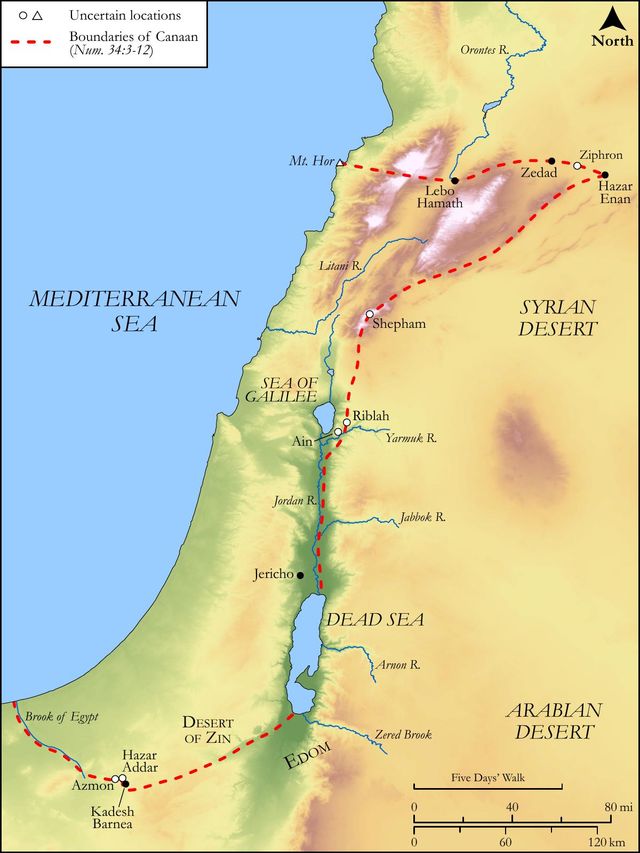
See on the biblical-era map
Study this verse
Continue studying Numbers 34:21 across the web’s major study libraries — every link below opens this exact verse, chapter, or book on the destination site.
Read & Compare
 BibleGatewayThis verse in more than 200 translations and 70 languages.
 Bible.comThe YouVersion reader — hundreds of translations, reading plans, and highlights.
 ESV.orgCrossway's official English Standard Version reader.
 NET BibleThe NET translation with 60,000+ translators' notes on every rendering decision.
 STEP BibleTyndale House's free study tool — original text, vocabulary, and scholarly resources.
 BibliaLogos Bible Software's free web reader.
 USCCBThe New American Bible (Revised Edition) with the U.S. bishops' study notes.
Commentaries
 BibleHub CommentariesDozens of classic commentaries on this verse, gathered on one page.
 StudyLightMore than 100 commentary sets — the largest collection on the web.
 BibleRefPlain-English commentary on what this verse means, verse by verse.
 Enduring WordDavid Guzik's free commentary on this chapter, widely used by Bible teachers.
 Bible Study ToolsVerse commentary alongside Greek and Hebrew study aids.
Original Language & Research
- BibleHub InterlinearThe verse word by word — original language, transliteration, and English.
- BibleHub LexiconEvery word's original-language definition and Strong's entry.
 Blue Letter BibleDeep-study tools — Strong's numbers, concordance, and word studies.
 SefariaThe Hebrew text with Rashi and centuries of Jewish commentary.
Sermons, Hymns & Audio


TrulyRandomVerse is not affiliated with these sites and doesn’t control their content. They’re linked because they’re genuinely useful.
Summary
Numbers 34:21 precisely identifies Elidad, son of Chislon, as the divinely appointed leader from the tribe of Benjamin, chosen to assist in the meticulous and equitable distribution of the Promised Land among the Israelite tribes. This verse is part of a larger administrative decree from God, underscoring His detailed oversight and unwavering faithfulness in fulfilling His ancient covenant promises to Israel regarding their inheritance in Canaan. It highlights the importance of specific, divinely sanctioned leadership in executing God's sovereign purposes for His people, ensuring order and justice in the foundational act of national settlement.
Context
ShowHideLiterary Context
Numbers 34:21 is situated within a highly administrative and prescriptive section of the Book of Numbers, specifically detailing the boundaries of the Promised Land and the individuals appointed to oversee its division. Chapters 33 and 34 mark a significant transition, moving from Israel's wilderness wanderings and preparations for conquest to the practical arrangements for settling in Canaan. Verses 1-15 meticulously outline the precise geographical borders of the land, emphasizing its divine designation and the fulfillment of God's promise. Following this, verses 16-29 list the specific leaders—one from each tribe—who, alongside Eleazar the priest and Joshua, were to execute this monumental task. Elidad, son of Chislon, is named as Benjamin's representative, highlighting the meticulous nature of God's plan for the distribution of the land, ensuring that each tribe received its rightful inheritance as commanded in Numbers 26:53-56. This detailed listing underscores the seriousness and divine authority behind the impending settlement, emphasizing that the land was a divine gift to be administered with precision.
Historical & Cultural Context
The historical setting is the cusp of Israel's entry into the Promised Land, following forty years of wilderness wandering. This period was pivotal, marking the transition from a nomadic existence to a settled agricultural society. The division of land was not merely an administrative act but a foundational event for the nation, establishing tribal territories and solidifying their identity as a people rooted in God's covenant promises. Culturally, land ownership was intrinsically linked to identity, lineage, and economic stability in Israel. The meticulous appointment of leaders like Elidad ensured a fair and orderly process, preventing disputes and reinforcing the tribal structure. This process was a direct fulfillment of God's ancient pledge to Abraham, reiterated to Isaac and Jacob, that their descendants would inherit the land of Canaan, as seen in Genesis 12:7. The selection of specific individuals by divine decree also reflects the hierarchical and divinely appointed leadership structure prevalent in ancient Israelite society, where spiritual and administrative authority often converged to execute God's will.
Key Themes
ShowHideThis verse, within its broader context, contributes to several overarching themes. First, it powerfully illustrates Divine Order and Meticulous Planning, revealing God's absolute precision in executing His purposes, down to the appointment of specific individuals for specific tasks. This is a God who orchestrates every detail. Second, it signifies the Fulfillment of Promise, as the detailed arrangements for land division underscore the imminent realization of God's centuries-old covenant pledge to grant Israel the land of Canaan, demonstrating His unwavering faithfulness. Third, it highlights the theme of Leadership and Responsibility, showcasing how divinely appointed individuals like Elidad bore significant responsibility in administering God's will for their respective tribes, emphasizing the importance of faithful stewardship in God's kingdom. Finally, it reinforces Tribal Identity and Inheritance, as the naming of a distinct leader for each tribe reaffirms the unique identity and specific portion of the land designated for each of the twelve tribes, ensuring their distinct heritage within the larger nation of Israel, as foreshadowed in Genesis 49. These themes collectively paint a picture of a sovereign God who meticulously brings His promises to pass through human agency.
Exposition and Analysis
ShowHideKey Word Analysis
ShowHideFrom the root meaning "to extend" or "to stretch out," this word literally refers to a "branch" or "rod." Figuratively, it denotes a "tribe," emphasizing the idea of a familial lineage extending from a common ancestor, like branches from a tree. In this context, it highlights the distinct, yet interconnected, divisions of Israel, each with its own identity and designated inheritance, reinforcing the structured nature of the nation's organization.
Meaning "son of the right hand" or "son of my strength," Benjamin was the youngest son of Jacob and Rachel. The tribe descended from him, though initially small, held a significant place in Israelite history, including providing Israel's first king, Saul. The identification of Elidad as "of the tribe of Benjamin" is not merely a geographical marker but places him within a specific lineage with its own unique history, characteristics, and a divinely appointed portion of the Promised Land, underscoring the importance of tribal identity in the land distribution.
This name means "God of (his) love" or "God is a friend." While the text provides no biographical details about Elidad, the meaning of his name subtly points to a theological truth: those chosen for God's work are often those upon whom His favor rests. It suggests a divine selection rooted in God's benevolent disposition, rather than solely human merit. In this context, Elidad's very name could be seen as a quiet affirmation of God's loving hand in the meticulous details of His plan for Israel, implying a divine relationship with the one appointed.
Derived from a root meaning "to be confident" or "to hope," Chislon's name, as Elidad's father, might represent the aspirations or character of the family from which Elidad hailed. It could signify a lineage known for its steadfastness, trust, or a spirit of hope, qualities that would be highly valued in a leader tasked with the crucial responsibility of land distribution. Although not directly theological in this verse, the name contributes to the sense of a divinely ordered and trustworthy lineage chosen for a significant role, reflecting the importance of family reputation in Israel.
Verse Breakdown
ShowHide"Of the tribe of Benjamin"
This introductory phrase immediately establishes the tribal affiliation of the individual to be named. It signifies that the following person, Elidad, is not just an arbitrary individual but a representative chosen specifically from and for the tribe of Benjamin. This highlights the structured and tribal-centric nature of the land distribution, where each of the twelve tribes was to receive its distinct inheritance, necessitating a representative from each to ensure fairness and adherence to divine instruction.
"Elidad the son of Chislon"
This clause provides the specific identity of the appointed leader. "Elidad" is the individual's given name, and "the son of Chislon" provides his paternal lineage, a common and crucial method of identification in ancient Hebrew society. This precise naming underscores the divine attention to detail and accountability in the process. It is not just "a man" from Benjamin, but a specifically named individual, Elidad, whose identity is further confirmed by his father's name, Chislon, ensuring clarity and legitimacy in his role as a divinely sanctioned commissioner for the land division. The use of the patronymic also reinforces the importance of family and lineage in Israelite society.
Literary Devices
ShowHideNumbers 34:21, though brief and seemingly administrative, employs several subtle literary devices that enhance its meaning and impact within the larger narrative. The primary device is Listing, as this verse is part of an extensive catalog of divinely appointed leaders for the land division (Numbers 34:19-29). This comprehensive listing throughout Numbers 34 (and other parts of the Pentateuch) serves to emphasize God's meticulousness and the divine order inherent in His plans, demonstrating that His promises are fulfilled with precision. The repetition of the formula "Of the tribe of X, Y the son of Z" across these verses creates a rhythmic Parallelism that reinforces the systematic and comprehensive nature of the appointments, highlighting the uniformity of God's approach to each tribe. Furthermore, the inclusion of specific names and patronymics (e.g., "Elidad the son of Chislon") is a form of Genealogy/Lineage, which was paramount in ancient Israelite society for establishing identity, tribal affiliation, and legitimacy, especially in matters of inheritance and leadership. This precise identification lends an air of Verisimilitude and historical authenticity to the narrative, grounding the divine decree in tangible, identifiable individuals. The very act of naming these commissioners also serves as a subtle form of Foreshadowing, signaling the imminent fulfillment of God's promise of land and the transition from wilderness wandering to settled inheritance, building anticipation for the book of Joshua.
Theological and Thematic Connections
ShowHideNumbers 34:21, though a simple listing, profoundly illustrates God's faithfulness and meticulousness in fulfilling His covenant promises. It reveals that God's grand plans are not vague aspirations but are executed with divine precision, involving specific individuals, detailed instructions, and an unwavering commitment to His word. The appointment of Elidad and others underscores that God works through human agents, empowering and commissioning them for His purposes. This divine orchestration ensures that the inheritance promised centuries ago to Abraham would be distributed justly and orderly, solidifying Israel's identity as a nation rooted in God's sovereign design. It also highlights the principle of stewardship, as these leaders were entrusted with the immense responsibility of allocating the divine inheritance, demonstrating that God delegates significant tasks to His chosen servants.
Reflection and Application
ShowHideNumbers 34:21, seemingly a dry administrative detail, offers rich insights for contemporary believers. It reminds us that God is a God of order, precision, and faithfulness, meticulously overseeing even the smallest details of His grand redemptive plan. Just as Elidad was chosen for a specific, vital role in the distribution of Israel's physical inheritance, so too are believers today called to embrace their unique, divinely appointed roles within God's spiritual kingdom. We are all stewards of various gifts, resources, and responsibilities, whether in our families, churches, workplaces, or communities. This verse encourages us to recognize the significance of every task, no matter how seemingly mundane, when it contributes to God's overarching purposes. It challenges us to serve with the same diligence and integrity expected of Elidad, trusting that God's faithfulness will bring His promises to fruition in our lives and through our service. Our lives, like Israel's inheritance, are a gift from God, to be managed with wisdom and in accordance with His will, reflecting His order and purpose in all we do.
Questions for Reflection
ShowHideFAQ
ShowHideWhy is such a seemingly minor detail, like a name, included in Scripture?
ShowHideThe inclusion of specific names like Elidad and Chislon, even in what appears to be a mere administrative list, is highly significant for several reasons. First, it underscores the historical authenticity and meticulous nature of the biblical narrative. These are not generic figures but identifiable individuals, grounding the divine commands in real-world execution. Second, it highlights God's attention to detail and divine order. His plans are not vague but precise, involving specific people for specific tasks. This demonstrates His sovereignty over every aspect of His people's lives and their inheritance. Third, it emphasizes the importance of individual responsibility and leadership within God's larger plan. Elidad was not just a name; he was a divinely appointed commissioner with a crucial role in ensuring the equitable distribution of the Promised Land, a foundational event for the nation of Israel. This detail reminds us that every person, even those in seemingly administrative roles, plays a part in God's unfolding purposes, as seen throughout the detailed instructions for the tabernacle or the Levitical service in Exodus 25 and Numbers 3.
What was the specific role of Elidad and the other appointed leaders?
ShowHideElidad, along with the other eleven tribal leaders named in Numbers 34:19-29, was appointed as a commissioner responsible for overseeing the precise and equitable distribution of the Promised Land among the tribes of Israel. This was not a ceremonial role but a highly practical and administrative one. They were to work alongside Eleazar the priest and Joshua, the new leader, to ensure that the land was divided by lot, as commanded by God in Numbers 26:53-56. Their responsibilities would have included surveying the land, resolving disputes, and ensuring that each tribe received its designated inheritance according to the divine instructions. This was a critical task for establishing the nation of Israel in its new homeland, ensuring order, justice, and the fulfillment of God's covenant promises, thereby laying the groundwork for their national identity and stability.
Does this verse have any relevance for Christians today?
ShowHideAbsolutely. While Numbers 34:21 details an administrative act in ancient Israel, its underlying principles offer profound relevance for Christians today. It speaks to God's faithfulness in fulfilling His promises, reminding us that if God was meticulous in providing a physical inheritance for Israel, He is certainly faithful to provide for our spiritual inheritance in Christ. It highlights the importance of divine order and specific roles within God's kingdom; just as Elidad had a unique task, every believer is gifted and called to serve God in specific ways within the body of Christ, as emphasized in 1 Corinthians 12:4-7. Furthermore, it underscores the principle of stewardship—Elidad was a steward of Israel's land, and we are called to be faithful stewards of the blessings, resources, and spiritual gifts God has entrusted to us, whether in our personal lives, families, or the church, as encouraged in 1 Peter 4:10. The verse ultimately points to a God who cares about details and ensures His purposes are perfectly executed, providing a model for our own diligent service.
Christ-Centered Fulfillment
ShowHideWhile Numbers 34:21 specifically names Elidad as a commissioner for the division of the earthly inheritance of Benjamin, it subtly points forward to the ultimate "Son of the Right Hand" and the true inheritance found in Christ. The very act of meticulously dividing a promised land foreshadows the spiritual inheritance and eternal rest that believers receive through Jesus. Just as Elidad was a divinely appointed leader to bring Israel into their physical possession, Christ is the ultimate divinely appointed leader, the "Lamb of God, who takes away the sin of the world!" (John 1:29), who leads His people into their eternal spiritual inheritance. The earthly land of Canaan, though a significant fulfillment of God's promise, was but a shadow of the greater, heavenly reality. Through Christ, believers are granted an "inheritance incorruptible, and undefiled, and that fades not away, reserved in heaven" (1 Peter 1:4). He is the one who establishes the true divine order, not just over a piece of land, but over all creation, bringing ultimate peace and rest to those who trust in Him, a rest far surpassing the temporary rest found in Canaan (Hebrews 4:9-10). The detailed planning and faithful execution seen in Numbers 34 find their ultimate culmination in the perfect, redemptive work of Jesus, who secures for His people a spiritual kingdom and an eternal dwelling far surpassing any earthly territory, a new heaven and new earth where God Himself dwells with His people (Revelation 21:1-4).