


Numbers 32:34
- וַיִּבְנוּvai·yiv·Nuand they builtH1129Conj-w ¦ V-Qal-ConsecImperf-3mpVerb Qal Consecutive Imperfect 3rd Plural Masculineוַandיִּבְנוּthey built
- בְנֵיve·nei[the] descendants ofH1121N-mpcNoun Plural Masculine Construct
- גָדGadGadH1410N-proper-mNoun Proper Masculine
- אֶת'et<obj.>H853DirObjMParticle Object Indicator
- דִּיבֹןdi·VonDibonH1769N-properNoun Proper Location
- וְאֶתve·'Etand <obj.>H853Conj-w ¦ DirObjMParticle Object Indicatorוְandאֶת<obj.>
- עֲטָרֹת'a·ta·RotAtarothH5852N-properNoun Proper Location
- וְאֵתve·'Etand <obj.>H853Conj-w ¦ DirObjMParticle Object Indicatorוְandאֵת<obj.>
- עֲרֹעֵר'a·ro·'ErAroerH6177N-properNoun Proper Location
English is a literal word-by-word gloss of the Hebrew, not the KJV's wording. Why?
This is the original text the KJV's translators worked from — each Hebrew word with its own literal English meaning in this verse, prepared by scholars at Tyndale House, Cambridge. The KJV translates whole sentences, not word by word, so its wording differs: one Hebrew word can become several English words, and the KJV may choose “the LORD” where the gloss reads “Yahweh”. Both are faithful — they answer different questions. For the KJV's own rendering, switch to the KJV text.
Details
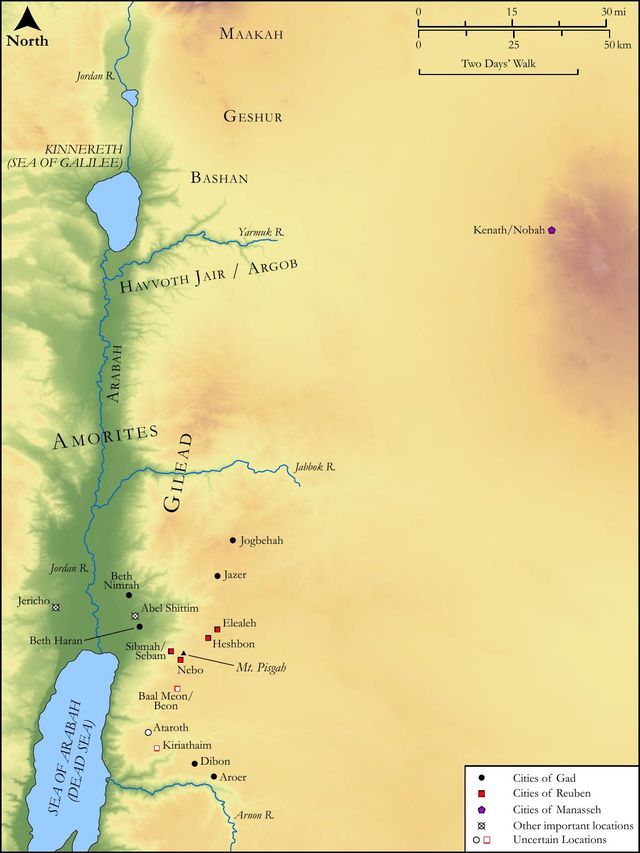
See on the biblical-era map
Study this verse
Continue studying Numbers 32:34 across the web’s major study libraries — every link below opens this exact verse, chapter, or book on the destination site.
Read & Compare
 BibleGatewayThis verse in more than 200 translations and 70 languages.
 Bible.comThe YouVersion reader — hundreds of translations, reading plans, and highlights.
 ESV.orgCrossway's official English Standard Version reader.
 NET BibleThe NET translation with 60,000+ translators' notes on every rendering decision.
 STEP BibleTyndale House's free study tool — original text, vocabulary, and scholarly resources.
 BibliaLogos Bible Software's free web reader.
 USCCBThe New American Bible (Revised Edition) with the U.S. bishops' study notes.
Commentaries
 BibleHub CommentariesDozens of classic commentaries on this verse, gathered on one page.
 StudyLightMore than 100 commentary sets — the largest collection on the web.
 BibleRefPlain-English commentary on what this verse means, verse by verse.
 Enduring WordDavid Guzik's free commentary on this chapter, widely used by Bible teachers.
 Bible Study ToolsVerse commentary alongside Greek and Hebrew study aids.
Original Language & Research
- BibleHub InterlinearThe verse word by word — original language, transliteration, and English.
- BibleHub LexiconEvery word's original-language definition and Strong's entry.
 Blue Letter BibleDeep-study tools — Strong's numbers, concordance, and word studies.
 SefariaThe Hebrew text with Rashi and centuries of Jewish commentary.
Sermons, Hymns & Audio


TrulyRandomVerse is not affiliated with these sites and doesn’t control their content. They’re linked because they’re genuinely useful.
Summary
Numbers 32:34 records a pivotal moment in the settlement of the Transjordan, detailing how the tribe of Gad actively "built" or fortified the cities of Dibon, Ataroth, and Aroer. This action serves as a tangible demonstration of their commitment to the agreement made with Moses, securing their allotted inheritance east of the Jordan River and establishing a permanent presence for their families and flocks before assisting the other tribes in the conquest of Canaan. It underscores their diligence and faithfulness in fulfilling their part of the covenant.
Context
ShowHideLiterary Context
Numbers 32:34 is situated within the broader narrative of the tribes of Reuben and Gad (and later, half the tribe of Manasseh) requesting to settle in the fertile lands east of the Jordan River, rather than crossing into Canaan proper with the rest of Israel. Moses initially expresses strong reservations, fearing that this request would discourage the other tribes from entering the promised land, echoing the sin of the spies in Numbers 13. However, an agreement is reached: these tribes would first arm themselves and lead the vanguard in the conquest of Canaan, only returning to their chosen inheritance after the land west of the Jordan was subdued. Verses like Numbers 32:34 and the subsequent Numbers 32:35-38 demonstrate their immediate commitment to this covenant by showing them actively establishing their presence and securing their future in the land they had chosen. This proactive diligence in building their cities precedes their participation in the conquest, highlighting their earnestness in fulfilling their part of the bargain.
Historical & Cultural Context
The Transjordan region, particularly the area that would become known as Gilead, was renowned for its rich pasturelands, making it highly desirable for tribes like Gad and Reuben who possessed vast herds of livestock, as indicated in Numbers 32:1. The cities mentioned—Dibon, Ataroth, and Aroer—were strategically important towns in this territory, often previously occupied by the Amorites or Moabites. The act of "building" in this context often implied rebuilding, fortifying, or restoring existing structures that may have been damaged during conflict or left in disrepair. This was a common practice for conquering peoples to solidify their claim and establish defensible settlements. For the Israelite tribes, this act of building was not merely about construction but about taking possession, integrating into the landscape, and creating secure homes for their families and a base for their pastoral economy in a potentially hostile environment. It was a visible declaration of ownership and intent to settle permanently.
Key Themes
ShowHideThe actions recorded in Numbers 32:34 contribute significantly to several overarching themes within the book of Numbers and the broader Pentateuch. Firstly, it underscores the theme of Covenant Fidelity and Commitment. The Gadites' immediate action of building demonstrates their earnestness in fulfilling their promise to Moses and the rest of Israel, contrasting with earlier instances of rebellion and faithlessness seen elsewhere in Numbers. Secondly, it highlights Inheritance and Settlement, illustrating the practical steps involved in taking possession of the land promised by God. This verse shows the transition from nomadic wandering to established dwelling, a crucial stage in Israel's national identity and the fulfillment of divine promise. Thirdly, there is a strong emphasis on Stewardship and Responsibility. By "building," the Gadites were actively taking ownership and responsibility for the territory allotted to them, transforming it into a secure and habitable inheritance not just for themselves but for future generations. This aligns with the broader biblical principle of diligent labor and wise management of God's blessings, as seen in Proverbs 24:27.
Exposition and Analysis
ShowHideKey Word Analysis
ShowHideThis word is derived from the root "to build" and signifies a son as a builder of the family name. In this context, "children of Gad" (H1121 with H1410) emphasizes the collective, tribal identity and action. It highlights that the decision and subsequent labor were undertaken by the entire tribe, demonstrating their unity and shared purpose in securing their inheritance. It underscores the communal aspect of Israel's journey and settlement, where tribal identity played a crucial role in land allocation and responsibility.
This primitive root means "to build" (literally and figuratively). In the context of conquest and settlement, it often carries the nuance of "to rebuild," "to restore," or "to fortify." It implies an active, deliberate effort to establish and secure a permanent dwelling. It's not merely occupying, but investing labor to make a place habitable and defensible, indicating a long-term vision for settlement and a commitment to the land. This word signifies a transformation from a temporary encampment to a rooted, established community.
This refers to Gad, a son of Jacob, including his tribe and its territory. The specific mention of "Gad" here identifies the responsible party for these building efforts, grounding the narrative in the specific tribal allotments and responsibilities. It reinforces the idea of tribal accountability and the fulfillment of their unique role within the larger Israelite confederation.
Verse Breakdown
ShowHide"And the children of Gad"
This opening clause immediately identifies the primary agents of the action. It highlights the tribal unity and collective responsibility of Gad in undertaking the task of establishing their inheritance. Their identity as "children of Gad" signifies their lineage, their place within the Israelite confederacy, and their shared destiny in fulfilling the covenant.
"built"
This single verb encapsulates the core action of the verse. As discussed, it signifies not just construction but a comprehensive effort to establish, secure, and make habitable. It implies foresight, diligence, and a commitment to permanence, transforming conquered territory into a settled home. This active verb underscores the Gadites' fulfillment of their promise to Moses, demonstrating their faithfulness through tangible labor.
"Dibon, and Ataroth, and Aroer"
This enumeration of specific cities provides concrete evidence of the Gadites' work. These were not random settlements but significant, likely existing, towns that they took possession of and then fortified or rebuilt. Their mention confirms the geographical scope of Gad's inheritance and the strategic nature of their settlement efforts, laying the groundwork for their future tribal boundaries and presence in the Transjordan. These names ground the narrative in historical and geographical reality.
Literary Devices
ShowHideThe verse primarily employs Catalog/Listing by explicitly naming the cities built by the Gadites. This technique provides specific, verifiable details, grounding the narrative in a tangible reality and demonstrating the concrete actions taken by the tribe. The naming of these distinct places offers a sense of progression and accomplishment in their settlement efforts. Furthermore, the verse utilizes Synecdoche (or Metonymy) where "the children of Gad" represents the entire tribe and its collective effort, rather than individual members. This emphasizes the corporate identity and unified purpose of the tribe in fulfilling their obligations. The strong Action Verb Emphasis on "built" (Hebrew: banah) serves to highlight the active, diligent, and purposeful nature of the Gadites' work, underscoring their commitment and the tangible results of their labor. This focus on action contributes to the broader Fulfillment Narrative within Numbers 32, where the Gadites' actions demonstrate their adherence to the covenant made with Moses, thereby contributing to the story of Israel's successful entry into and settlement of the promised land.
Theological and Thematic Connections
ShowHideNumbers 32:34 offers profound theological and thematic insights into the nature of divine promise and human responsibility. God had promised Israel a land of inheritance, and here we see the active, diligent participation of a specific tribe in taking possession and stewarding that gift. The act of "building" signifies more than just physical construction; it represents the intentional establishment of a secure future, rooted in God's provision. It underscores the principle that while God gives the inheritance, humanity is called to labor diligently to cultivate, protect, and develop it. This commitment to building, even before the full conquest of Canaan, reflects a deep trust in God's faithfulness to complete the larger mission, while simultaneously demonstrating their own faithfulness to the covenant. It highlights the interplay between divine sovereignty and human agency: God provides the land, and His people actively work to settle and secure it, transforming a promise into a lived reality.
Reflection and Application
ShowHideThe diligent efforts of the Gadites in building and fortifying their cities in the Transjordan serve as a powerful metaphor for our own spiritual and practical responsibilities. Just as they actively secured their promised inheritance, believers are called to be diligent stewards of the blessings, gifts, and opportunities God has entrusted to them. This isn't about passively receiving, but actively "building" into our lives, families, communities, and ministries. It speaks to the importance of follow-through on commitments, investing effort for long-term stability, and creating structures that will endure and benefit future generations. Whether it's building a strong marriage, nurturing a healthy church community, developing personal character, or wisely managing resources, the principle remains: true possession involves active, intentional labor. We are called to be builders of God's kingdom, not merely occupants of its blessings, always working with a vision for permanence and fruitfulness that honors the Giver of all good things.
Questions for Reflection
ShowHideFAQ
ShowHideWhy did the tribes of Reuben and Gad want to settle east of the Jordan, and was Moses initially against it?
ShowHideThe tribes of Reuben and Gad had a very large number of livestock, and they saw that the land east of the Jordan, particularly the regions of Jazer and Gilead, was excellent for pasture, as described in Numbers 32:1-5. Moses was initially strongly against their request because he feared it would discourage the other tribes from crossing the Jordan and conquering the land of Canaan, echoing the failure of the spies in Numbers 13. He worried it would lead to a lack of unity and faith in completing God's command to take the entire promised land. However, they reached an agreement: Reuben and Gad would first arm themselves and lead the charge in the conquest of Canaan, only returning to their inheritance east of the Jordan after the land was subdued for all of Israel (Numbers 32:16-27).
What does the word "built" (בנה, banah) specifically imply in this historical context?
ShowHideIn the context of Numbers 32:34, the Hebrew word banah (בנה) for "built" carries a nuanced meaning beyond simply constructing new buildings from scratch. Given that the Israelites were taking possession of territory previously inhabited by other peoples (like the Amorites), "built" often implies "rebuilt," "restored," or "fortified." It suggests that the Gadites took existing towns, which might have been damaged during conflict or in disrepair, and actively made them secure and habitable. This involved repairing walls, strengthening defenses, and establishing infrastructure necessary for a permanent settlement. This active "building" demonstrated their commitment to securing their inheritance and making it a safe home for their families and flocks, rather than just a temporary encampment.
Were Dibon, Ataroth, and Aroer significant cities?
ShowHideYes, Dibon, Ataroth, and Aroer were indeed significant cities in the Transjordan region, particularly within the territory allotted to the tribe of Gad. Dibon (also called Dimon in Isaiah 15:9) was a major Moabite city before the Israelite conquest and later became a key city for Gad. Ataroth was another important town in Gad's territory, often mentioned in conjunction with Dibon. Aroer was strategically located on the northern bank of the Arnon River, marking the southern border of the Amorite kingdom (and later, Israel's territory) and was often mentioned as a boundary marker (Deuteronomy 2:36). These cities were crucial for establishing control, defense, and economic activity within the Gadite inheritance, underscoring the practical and strategic nature of their "building" efforts.
Christ-Centered Fulfillment
ShowHideThe Gadites' diligent act of building and fortifying cities in the Transjordan foreshadows the ultimate work of Christ in establishing His eternal kingdom and securing an everlasting inheritance for His people. Just as the Gadites built physical structures to provide security and a permanent dwelling for their tribe, Jesus Christ is the divine Builder who constructs His spiritual house, the Church. He declared, "I will build my church, and the gates of hell shall not prevail against it". He is the Chief Cornerstone upon whom the entire spiritual edifice rests (Ephesians 2:20, and believers are called living stones being built into a spiritual house, as seen in 1 Peter 2:4-5). Through His atoning sacrifice and resurrection, Christ has secured for believers an "inheritance that is imperishable, undefiled, and unfading, kept in heaven for you" (1 Peter 1:3-5). We, as believers, are called to be co-laborers with Him, building upon the foundation of Christ with eternal materials (1 Corinthians 3:9-11). The Gadites built for a temporal inheritance; Christ builds a spiritual kingdom that culminates in the New Jerusalem, the ultimate city of God, where His people will dwell securely with Him forever, a city whose builder and maker is God (Revelation 21:2-4 and Hebrews 11:10).