


Numbers 32:1
- וּמִקְנֶהu·mik·Nehand livestockH4735Conj-w ¦ N-msNoun Singular Masculine Absoluteוּandמִקְנֶהlivestock
- רַבRavmuchH7227Adj-msAdjective Singular Masculine Absolute
- הָיָהha·Yahit belongedH1961V-Qal-Perf-3msVerb Qal Perfect 3rd Singular Masculine
- לִבְנֵיliv·Neito [the] descendants ofH1121Prep-l ¦ N-mpcNoun Plural Masculine Constructלִtoבְנֵי[the] descendants of
- רְאוּבֵןre·'u·VenReubenH7205N-proper-mNoun Proper Masculine
- וְלִבְנֵיve·liv·neiand to [the] descendants ofH1121Conj-w ¦ Prep-l ¦ N-mpcNoun Plural Masculine Constructוְandלִtoבְנֵי[the] descendants of
- גָדgadGadH1410N-proper-mNoun Proper Masculine
- עָצוּם'a·TzumnumerousH6099Adj-msAdjective Singular Masculine Absolute
- מְאֹדme·'OdveryH3966Adj-msAdjective Numerical Singular Masculine Absolute
- וַיִּרְאוּvai·yir·'Uand they sawH7200Conj-w ¦ V-Qal-ConsecImperf-3mpVerb Qal Consecutive Imperfect 3rd Plural Masculineוַandיִּרְאוּthey saw
- אֶת'et<obj.>H853DirObjMParticle Object Indicator
- אֶרֶץ'E·retz[the] land ofH776N-fscNoun Singular Feminine Construct
- יַעְזֵרya'·ZerJazerH3270N-properNoun Proper Location
- וְאֶתve·'Etand <obj.>H853Conj-w ¦ DirObjMParticle Object Indicatorוְandאֶת<obj.>
- אֶרֶץ'E·retz[the] land ofH776N-fscNoun Singular Feminine Construct
- גִּלְעָדgil·'AdGileadH1568N-properNoun Proper Location
- וְהִנֵּהve·hi·Nehand there!H2009Conj-w ¦ PrtParticle Interjectionוְandהִנֵּהthere!
- הַמָּקוֹםha·ma·Komthe placeH4725Art ¦ N-msNoun Singular Masculine Absoluteהַtheמָּקוֹםplace
- מְקוֹםme·Kom[was] a place ofH4725N-mscNoun Singular Masculine Construct
- מִקְנֶהmik·NehlivestockH4735N-msNoun Singular Masculine Absolute
English is a literal word-by-word gloss of the Hebrew, not the KJV's wording. Why?
This is the original text the KJV's translators worked from — each Hebrew word with its own literal English meaning in this verse, prepared by scholars at Tyndale House, Cambridge. The KJV translates whole sentences, not word by word, so its wording differs: one Hebrew word can become several English words, and the KJV may choose “the LORD” where the gloss reads “Yahweh”. Both are faithful — they answer different questions. For the KJV's own rendering, switch to the KJV text.
Details
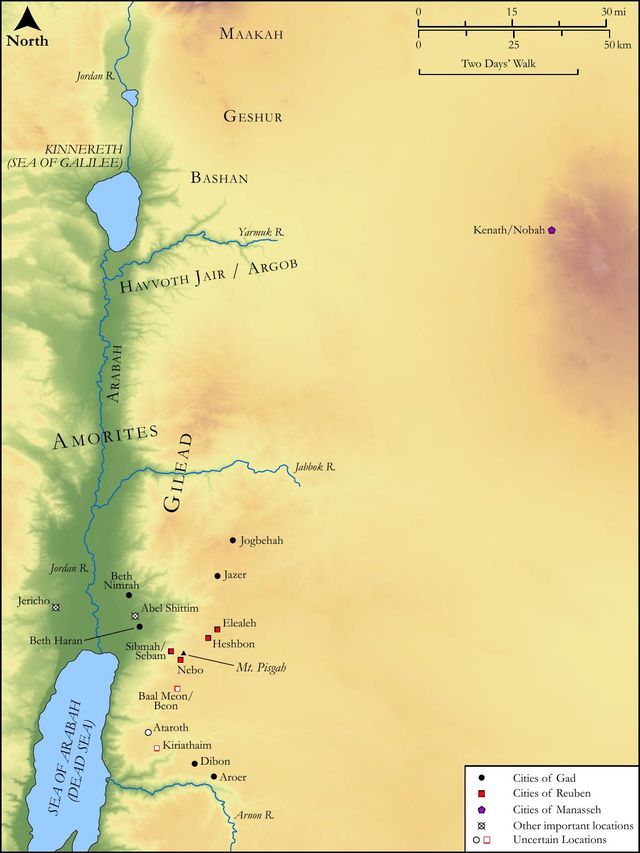
See on the biblical-era map
Study this verse
Continue studying Numbers 32:1 across the web’s major study libraries — every link below opens this exact verse, chapter, or book on the destination site.
Read & Compare
 BibleGatewayThis verse in more than 200 translations and 70 languages.
 Bible.comThe YouVersion reader — hundreds of translations, reading plans, and highlights.
 ESV.orgCrossway's official English Standard Version reader.
 NET BibleThe NET translation with 60,000+ translators' notes on every rendering decision.
 STEP BibleTyndale House's free study tool — original text, vocabulary, and scholarly resources.
 BibliaLogos Bible Software's free web reader.
 USCCBThe New American Bible (Revised Edition) with the U.S. bishops' study notes.
Commentaries
 BibleHub CommentariesDozens of classic commentaries on this verse, gathered on one page.
 StudyLightMore than 100 commentary sets — the largest collection on the web.
 BibleRefPlain-English commentary on what this verse means, verse by verse.
 Enduring WordDavid Guzik's free commentary on this chapter, widely used by Bible teachers.
 Bible Study ToolsVerse commentary alongside Greek and Hebrew study aids.
Original Language & Research
- BibleHub InterlinearThe verse word by word — original language, transliteration, and English.
- BibleHub LexiconEvery word's original-language definition and Strong's entry.
 Blue Letter BibleDeep-study tools — Strong's numbers, concordance, and word studies.
 SefariaThe Hebrew text with Rashi and centuries of Jewish commentary.
Sermons, Hymns & Audio


TrulyRandomVerse is not affiliated with these sites and doesn’t control their content. They’re linked because they’re genuinely useful.
Summary
Numbers 32:1 introduces a pivotal moment in Israel's journey, immediately prior to their entry into the Promised Land. It highlights the immense prosperity of the tribes of Reuben and Gad, who possessed an exceptionally large number of livestock. Their observation of the fertile lands of Jazer and Gilead, located east of the Jordan River, as perfectly suited for their extensive herds, sets the stage for their controversial request to settle in this region rather than crossing into Canaan with the other tribes. This verse thus lays the groundwork for a critical negotiation that tests tribal unity, leadership, and the Israelites' commitment to God's overarching plan for their inheritance.
Context
ShowHideLiterary Context
Numbers 32:1 opens a significant narrative within the book of Numbers, following a period of intense preparation and instruction for the conquest of Canaan. The Israelites have completed their forty years of wilderness wandering and are now encamped on the plains of Moab, east of the Jordan River, having recently defeated the Amorite kings Sihon and Og, whose lands they now occupy. This victory, detailed in Numbers 21:21-35, provides the immediate backdrop for the tribes' assessment of the conquered territory. This verse immediately precedes the tribes' request to settle east of the Jordan, a proposal that initially provokes Moses's strong disapproval due to its potential to undermine the unity and resolve of the entire nation, reminiscent of the earlier failure at Kadesh Barnea, recounted in Numbers 13. The narrative here serves as a crucial bridge between the wilderness journey and the conquest accounts in Joshua, highlighting the challenges of maintaining national cohesion and faithfulness to God's commands as the people transition into a settled existence.
Historical & Cultural Context
In the ancient Near East, livestock, particularly cattle, sheep, and goats, represented a primary form of wealth and a vital component of economic stability. A "very great multitude of cattle" signified immense prosperity and a significant practical challenge for nomadic or semi-nomadic peoples, requiring vast pasturage. The lands of Jazer and Gilead, situated east of the Jordan River, were renowned for their fertile plains, rolling hills, and abundant water sources, making them ideal for grazing. These regions were distinct from the central highlands of Canaan, which were designated as the primary inheritance for the tribes of Israel. The concept of "inheritance" (Hebrew: nachalah) was deeply rooted in Israelite culture, signifying not merely land ownership but a divinely allotted portion that connected them to God's covenant promises to Abraham, Isaac, and Jacob, as seen in Genesis 15:18-21. For the tribes to consider settling outside this designated inheritance was a profound cultural and theological deviation, raising questions about their commitment to the collective national destiny and God's specific instructions for the land.
Key Themes
ShowHideThis verse introduces several key themes that will unfold throughout the subsequent narrative. First, it highlights Divine Provision and Blessing, as the tribes' vast wealth in livestock is a testament to God's faithfulness in sustaining Israel throughout their wilderness journey, a theme echoed in Deuteronomy 2:7. Second, it immediately raises the theme of Stewardship vs. Self-Interest. The tribes' practical assessment of the land for their cattle, while seemingly logical, foreshadows a decision driven by personal convenience that could potentially jeopardize the corporate mission and unity of Israel, illustrating the principle found in Proverbs 16:25. Third, it sets the stage for a critical discussion on National Unity and Corporate Responsibility. The request of Reuben and Gad will challenge Moses to ensure that the pursuit of individual tribal advantage does not undermine the solidarity required for the conquest of the Promised Land, a task commanded by God in passages like Numbers 33:50-53.
Exposition and Analysis
ShowHideKey Word Analysis
ShowHideThis term refers broadly to livestock, encompassing sheep, goats, and especially cattle. In ancient Israelite society, miqneh was a primary indicator of wealth, status, and economic stability. Its abundance signified prosperity and divine blessing, but also presented practical challenges in terms of pasturage and management. The sheer quantity mentioned here underscores the significant assets of Reuben and Gad and their pressing need for extensive grazing lands.
This phrase intensifies the description of the livestock's quantity. ʻâtsûwm (עָצוּם) means "powerful," "numerous," or "mighty," while mᵉʼôd (מְאֹד) means "vehemently," "exceedingly," or "very." Together, they convey an overwhelming, immense, or exceedingly powerful quantity of cattle. This is not merely a large herd, but one of exceptional size, emphasizing the compelling practical reason behind the tribes' subsequent request.
This word, repeated in the final clause, signifies a "standing," "spot," or "locality." Its use here emphasizes the specific, ideal suitability of the land of Jazer and Gilead for their livestock. The repetition underscores the tribes' conviction that this particular location was perfectly matched to their abundant resources, making it an irresistible choice from their perspective.
Verse Breakdown
ShowHide"Now the children of Reuben and the children of Gad"
This clause immediately identifies the two tribes whose specific circumstances and subsequent actions will drive the narrative. Their distinct identity and shared interest in livestock set them apart from the other tribes in this immediate context, laying the foundation for their unique request.
"had a very great multitude of cattle"
This establishes the core premise of their situation. Their exceptional wealth in livestock is presented as a significant factor, explaining their unique needs and motivations. The emphasis on "very great multitude" underscores the scale of their assets and the practical challenges they faced in managing them, which necessitated vast grazing lands.
"and when they saw the land of Jazer, and the land of Gilead,"
This describes their observation and evaluation. Having recently conquered these lands from Sihon and Og, they now assess their suitability. The act of "seeing" implies not just visual perception but a careful, strategic appraisal of the land's potential, highlighting their pragmatic and self-interested perspective.
"that, behold, the place [was] a place for cattle;"
This final clause presents their definitive conclusion. The repetition of "place" (Hebrew: maqom) emphasizes the absolute suitability of these regions for their herds. It signifies a perfect match between their abundant resources (cattle) and the land's abundant pasturage, making it an ideal, almost irresistible, location for settlement from their perspective.
Literary Devices
ShowHideThe verse primarily employs Narrative Setup and Foreshadowing. It functions as a concise exposition, introducing the key characters (Reuben and Gad) and their defining characteristic (immense wealth in cattle), which immediately establishes the central conflict of the ensuing narrative. The observation of Jazer and Gilead as ideal for livestock is not merely descriptive; it Foreshadows the tribes' impending request to settle there, thereby creating a tension between their immediate practical needs and the larger national objective of conquering the land west of the Jordan. The seemingly innocuous observation of the land's suitability for cattle subtly hints at the potential for division and self-interest that will challenge Moses's leadership and the unity of the Israelite community.
Theological and Thematic Connections
ShowHideNumbers 32:1, while descriptive, introduces a profound theological tension between immediate prosperity and long-term covenant faithfulness. The abundance of cattle signifies God's provision, yet the tribes' response to this blessing reveals a human tendency to prioritize comfort and convenience over the collective divine mandate. This sets the stage for a critical examination of how individuals and communities respond to blessings, whether they are used to further God's kingdom purposes or become a distraction from them. It highlights the constant need for discernment, ensuring that practical considerations do not eclipse spiritual obedience and the corporate vision God has for His people. The decision of Reuben and Gad will force a confrontation with the principles of unity, shared sacrifice, and commitment to the inheritance God had promised for all of Israel.
Reflection and Application
ShowHideThis opening verse, though seemingly simple, presents a timeless dilemma for believers: how do we steward the blessings and resources God has given us, especially when they present opportunities that diverge from the path of greater obedience or corporate mission? The tribes of Reuben and Gad had legitimate needs, and the land was indeed suitable. Yet, their desire to settle there, while understandable from a practical standpoint, threatened to isolate them from the rest of Israel and potentially weaken the national resolve for the conquest. For us, this prompts reflection on whether our personal comforts, financial prosperity, or convenient opportunities lead us away from the greater call of God on our lives or the collective mission of the church. True stewardship involves not just managing resources wisely, but aligning their use with God's ultimate purposes, even when it requires personal sacrifice or delaying immediate gratification for a greater, shared vision. It challenges us to consider the impact of our individual choices on the body of Christ and the advancement of His kingdom.
Questions for Reflection
ShowHideFAQ
ShowHideWhy did Reuben and Gad have so much cattle, and why was this a problem?
ShowHideThe text states they had "a very great multitude of cattle," indicating immense prosperity, likely accumulated through God's provision during their wilderness journey and possibly from the spoils of recent victories over Sihon and Og, as detailed in Numbers 21:21-35. This abundance itself wasn't a problem; it was a blessing. The issue arose when their vast herds led them to prioritize their immediate practical needs for pastureland over the unified national goal of conquering the land west of the Jordan, which was the divinely promised inheritance for all twelve tribes. Their desire to settle east of the Jordan, while understandable from a herdsman's perspective, threatened to divide the nation and potentially discourage the other tribes from fulfilling God's command to possess the entire Promised Land, leading to Moses's strong rebuke in Numbers 32:6-7.
Christ-Centered Fulfillment
ShowHideNumbers 32:1, by setting the stage for the tribes' desire for a convenient, immediate inheritance east of the Jordan, subtly points to the superior and ultimate inheritance found in Christ. The "land" promised to Israel foreshadowed the spiritual inheritance and rest that believers receive through faith in Jesus. While Reuben and Gad sought a physical place for their earthly possessions, Christ offers a spiritual "place" and an eternal inheritance that transcends geographical boundaries and earthly wealth. He is the true "good land" in whom all spiritual blessings are found, as articulated in Ephesians 1:3. Furthermore, the tension between tribal self-interest and national unity in Numbers 32 finds its resolution in the New Testament concept of the Church as the unified body of Christ. In Him, there is no Jew or Gentile, slave or free, male or female, but all are one, as powerfully declared in Galatians 3:28. Our ultimate "settlement" is not in a land of earthly convenience, but in the heavenly places with Christ, as we are seated with Him in Ephesians 2:6, and our "multitude of cattle"—our spiritual blessings and gifts—are to be used for the building up of His unified body and the advancement of His eternal kingdom, rather than for self-serving ends, as encouraged in 1 Peter 4:10.