


Numbers 32:2
- וַיָּבֹאוּvai·ya·Vo·'uand they cameH935Conj-w ¦ V-Qal-ConsecImperf-3mpVerb Qal Consecutive Imperfect 3rd Plural Masculineוַandיָּבֹאוּthey came
- בְנֵיve·nei[the] descendants ofH1121N-mpcNoun Plural Masculine Construct
- גָדgadGadH1410N-proper-mNoun Proper Masculine
- וּבְנֵיu·ve·Neiand [the] descendants ofH1121Conj-w ¦ N-mpcNoun Plural Masculine Constructוּandבְנֵי[the] descendants of
- רְאוּבֵןre·'u·VenReubenH7205N-proper-mNoun Proper Masculine
- וַיֹּאמְרוּvai·yo·me·Ruand they saidH559Conj-w ¦ V-Qal-ConsecImperf-3mpVerb Qal Consecutive Imperfect 3rd Plural Masculineוַandיֹּאמְרוּthey said
- אֶל'eltoH413PrepPreposition
- מֹשֶׁהmo·ShehMosesH4872N-proper-mNoun Proper Masculine
- וְאֶלve·'eland toH413Conj-w ¦ PrepPrepositionוְandאֶלto
- אֶלְעָזָר'el·'a·ZarEleazarH499N-proper-mNoun Proper Masculine
- הַכֹּהֵןha·ko·Henthe priestH3548Art ¦ N-msNoun Singular Masculine Absoluteהַtheכֹּהֵןpriest
- וְאֶלve·'eland toH413Conj-w ¦ PrepPrepositionוְandאֶלto
- נְשִׂיאֵיne·si·'Ei[the] leaders ofH5387N-mpcNoun Plural Masculine Construct
- הָעֵדָהha·'e·Dahthe congregationH5712Art ¦ N-fsNoun Singular Feminine Absoluteהָtheעֵדָהcongregation
- לֵאמֹרle·Mor<to> sayingH559Prep-l ¦ V-Qal-InfVerb Qal Infinitive Constructלֵ<to>אמֹרsaying
English is a literal word-by-word gloss of the Hebrew, not the KJV's wording. Why?
This is the original text the KJV's translators worked from — each Hebrew word with its own literal English meaning in this verse, prepared by scholars at Tyndale House, Cambridge. The KJV translates whole sentences, not word by word, so its wording differs: one Hebrew word can become several English words, and the KJV may choose “the LORD” where the gloss reads “Yahweh”. Both are faithful — they answer different questions. For the KJV's own rendering, switch to the KJV text.
Details
See on the biblical-era map
Study this verse
Continue studying Numbers 32:2 across the web’s major study libraries — every link below opens this exact verse, chapter, or book on the destination site.
Read & Compare
 BibleGatewayThis verse in more than 200 translations and 70 languages.
 Bible.comThe YouVersion reader — hundreds of translations, reading plans, and highlights.
 ESV.orgCrossway's official English Standard Version reader.
 NET BibleThe NET translation with 60,000+ translators' notes on every rendering decision.
 STEP BibleTyndale House's free study tool — original text, vocabulary, and scholarly resources.
 BibliaLogos Bible Software's free web reader.
 USCCBThe New American Bible (Revised Edition) with the U.S. bishops' study notes.
Commentaries
 BibleHub CommentariesDozens of classic commentaries on this verse, gathered on one page.
 StudyLightMore than 100 commentary sets — the largest collection on the web.
 BibleRefPlain-English commentary on what this verse means, verse by verse.
 Enduring WordDavid Guzik's free commentary on this chapter, widely used by Bible teachers.
 Bible Study ToolsVerse commentary alongside Greek and Hebrew study aids.
Original Language & Research
- BibleHub InterlinearThe verse word by word — original language, transliteration, and English.
- BibleHub LexiconEvery word's original-language definition and Strong's entry.
 Blue Letter BibleDeep-study tools — Strong's numbers, concordance, and word studies.
 SefariaThe Hebrew text with Rashi and centuries of Jewish commentary.
Sermons, Hymns & Audio


TrulyRandomVerse is not affiliated with these sites and doesn’t control their content. They’re linked because they’re genuinely useful.
Summary
Numbers 32:2 details the pivotal approach of the tribes of Gad and Reuben to the highest echelons of Israelite leadership—Moses, Eleazar the priest, and the princes of the congregation. This initiative, occurring immediately after Israel's decisive victories over Sihon and Og and just prior to their anticipated entry into the Promised Land, sets the stage for a critical negotiation concerning their desired settlement east of the Jordan. The verse introduces the specific parties and the formal nature of their address, thereby establishing the narrative tension around land inheritance, tribal responsibility, and the unity of the nation as Israel stands on the very threshold of its promised destiny.
Context
ShowHideLiterary Context
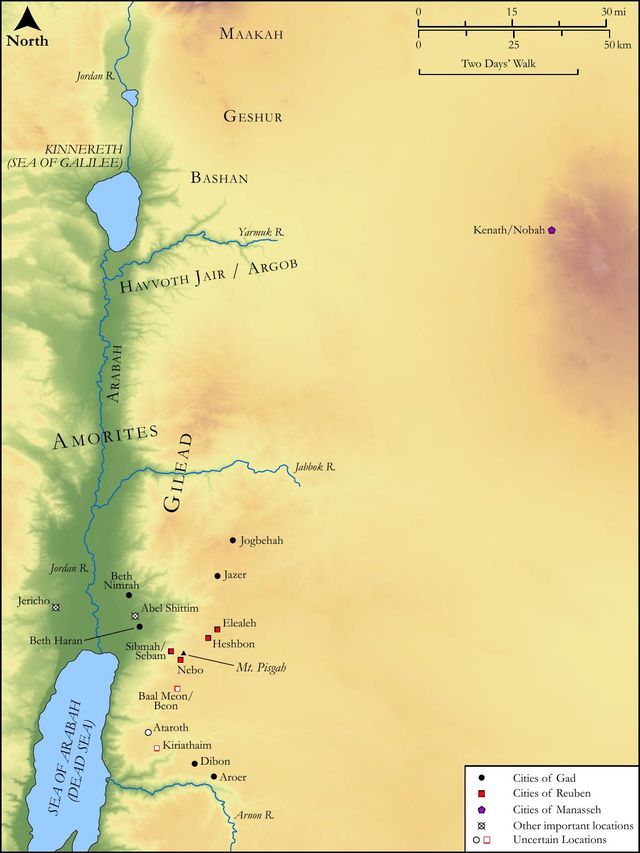
Numbers 32:2 is strategically placed at a crucial turning point in the book of Numbers, following Israel's significant military triumphs over the Amorite kings Sihon and Og, which resulted in the conquest of the fertile Transjordanian territories of Gilead and Bashan (Numbers 21). Numbers 32:1 explicitly highlights the suitability of this newly acquired land for livestock, a detail of immense importance to the tribes of Gad and Reuben, who possessed vast herds. Thus, this verse directly follows the description of the valuable conquered territory and immediately precedes the tribes' formal proposal to settle there. This narrative positioning effectively establishes a tension between the immediate opportunity for gain and the broader national mission of conquering the land west of the Jordan, foreshadowing the complex negotiations and potential divisions that will unfold.
Historical & Cultural Context
At this juncture, Israel stood on the precipice of transitioning from a nomadic existence in the wilderness to a settled life in the Promised Land. The concept of land inheritance was not merely economic but deeply theological, representing the tangible fulfillment of God's covenant promises to the patriarchs (e.g., Genesis 12:7). Within Israel's divinely ordained structure, tribal identity was paramount, yet unity was essential for the national mission. The leadership hierarchy—comprising Moses as the divinely appointed leader and lawgiver, Eleazar as the High Priest (who succeeded Aaron and served as a spiritual conduit to God), and the "princes of the congregation" representing the heads of the twelve tribes—was the established and respected channel for addressing significant national concerns and resolving disputes. The formal act of "coming and speaking" to these specific leaders underscores the gravity of the tribes' impending request and their adherence to the recognized protocols of authority within the Israelite community.
Key Themes
ShowHideNumbers 32:2 serves as a foundational verse for several prominent themes woven throughout the book of Numbers and the Pentateuch. Firstly, it introduces the critical theme of land and inheritance, which is a dominant motif culminating in the detailed division of Canaan among the tribes in the book of Joshua (e.g., Joshua 13). The tribes' request immediately brings to the forefront the practicalities, challenges, and potential compromises involved in fulfilling God's promise of a homeland. Secondly, the verse highlights the theme of leadership and authority, showcasing the established channels for communal decision-making and the crucial roles played by Moses, Eleazar, and the tribal princes in guiding the nation. Their response to Gad and Reuben's proposal will test their wisdom, integrity, and commitment to God's overarching plan for Israel. Finally, and perhaps most subtly, the verse initiates the theme of communal responsibility versus individual or tribal interest. While the desire for good pastureland is understandable, their request immediately raises questions about their willingness to participate fully in the greater national mission of conquering the land west of the Jordan, a tension explicitly addressed by Moses in subsequent verses (e.g., Numbers 32:6-7).
Exposition and Analysis
ShowHideKey Word Analysis
ShowHideFrom the primitive root H935, this verb signifies "to go or come" in a wide variety of applications. In this context, it denotes a deliberate and purposeful approach, indicating that the tribes of Gad and Reuben did not encounter the leaders by chance but intentionally drew near to present their case. This formal "coming" underscores the seriousness and premeditated nature of their impending request, setting a tone of gravity for the ensuing dialogue.
Derived from the primitive root H559, this verb means "to say" or "to declare," often implying a formal, weighty, or authoritative utterance rather than casual conversation. Its use here, in conjunction with "came," emphasizes that the tribes were about to articulate a significant proposal or concern that demanded the full attention and careful deliberation of the nation's highest authorities. It signals the beginning of a direct and consequential dialogue that will shape the immediate future of the tribes and the nation.
This term refers to an "exalted one," a "chief," "governor," or "ruler." In the context of Israel, the princes were the heads of the tribes or major family units, serving as representatives and decision-makers for their people. Their inclusion alongside Moses and Eleazar highlights that the request was being presented to the full spectrum of Israel's civil, military, and religious leadership, signifying its national importance and the need for a comprehensive, communal response.
Verse Breakdown
ShowHide"The children of Gad and the children of Reuben"
This clause precisely identifies the two specific tribal entities initiating the formal approach. These tribes, as Numbers 32:1 notes, possessed an exceptionally large number of livestock, making the newly conquered, fertile pasturelands east of the Jordan particularly attractive to them. Their collective action indicates a unified tribal interest and a shared desire for this specific territory.
"came and spake unto Moses,"
This describes the direct and formal manner in which the two tribes approached Moses. As the preeminent leader, prophet, and lawgiver for Israel, Moses held ultimate authority in national affairs. Their decision to address him first and foremost signifies their recognition of his central role in guiding the nation and their understanding that his approval was paramount for any significant undertaking.
"and to Eleazar the priest,"
The inclusion of Eleazar, who had succeeded his father Aaron as High Priest (Numbers 20:28), underscores the spiritual and religious dimension of the matter. Major national decisions, especially those concerning land allocation, tribal settlement, and the future of the covenant community, often involved the High Priest, who could consult the Lord through the Urim and Thummim, ensuring divine guidance.
"and unto the princes of the congregation, saying,"
The final clause highlights the comprehensive nature of the address, indicating that the request was presented to the full spectrum of Israel's leadership—political (Moses), religious (Eleazar), and tribal (the princes, representing the collective assembly or congregation). This broad appeal emphasizes the national scope and potential implications of their impending proposal, ensuring that all relevant authorities were informed and involved from the outset. The concluding word "saying" serves as a narrative bridge, signaling that the content of their significant petition is about to be revealed.
Literary Devices
ShowHideNumbers 32:2 effectively utilizes Narrative Framing by setting the scene for a pivotal dialogue that will shape the subsequent narrative. The concise statement "came and spake" acts as a direct and impactful prelude, building anticipation for the content of the tribes' address and the ensuing national discussion. The verse also employs Specificity through its precise naming of "the children of Gad and the children of Reuben" and the key figures of authority—Moses, Eleazar the priest, and the princes of the congregation. This detailed identification grounds the narrative in concrete reality and underscores the formal, official nature of the interaction. Furthermore, the verse subtly employs Foreshadowing, as the act of these tribes approaching the leadership with a request concerning land hints at the complex issues of land distribution, tribal unity, and the fulfillment of God's promises that will unfold throughout the remainder of Numbers and into the book of Joshua.
Theological and Thematic Connections
ShowHideNumbers 32:2, though seemingly a simple narrative introduction, is pregnant with profound theological significance, laying the groundwork for a critical discussion on the nature of covenant faithfulness, communal responsibility, and the pursuit of God's promised inheritance. The tribes' initiative, while appearing practical and economically sound, immediately raises questions about their commitment to the collective mission of conquering the entire Promised Land for all of Israel. This tension highlights the ongoing struggle within God's people between self-interest and the greater good of the community, a recurring theme throughout Israel's wilderness journey. The episode underscores that true blessing and inheritance are not merely about personal or tribal gain but about participating fully and sacrificially in God's redemptive plan for His people. It also reaffirms the vital importance of seeking counsel from established, God-ordained leadership when faced with significant decisions that impact the broader community, emphasizing the need for discernment and unity in pursuing God's ultimate will.
Reflection and Application
ShowHideNumbers 32:2 serves as a powerful mirror, inviting us to carefully consider the delicate and often challenging balance between individual needs, personal desires, and the overarching communal responsibility within God's people. The tribes of Gad and Reuben, driven by what they perceived as an advantageous opportunity for their own prosperity, approached leadership with a request that, while practical from their perspective, carried significant implications for the unity and mission of the entire nation. This scenario challenges us to critically examine our own priorities: Do our personal aspirations, career choices, or perceived advantages align with, or do they potentially detract from, the greater purposes of God's kingdom and the spiritual well-being of the broader community of faith? The passage reminds us of the importance of clear, respectful, and transparent communication with spiritual leadership, but it also highlights the profound necessity for leaders to discern motives, provide wise counsel, and guide the flock towards God's ultimate will, even when that requires confronting self-interest or challenging comfortable assumptions. Ultimately, faithful living often involves subordinating personal convenience and perceived gain to the collective call of Christ, participating wholeheartedly in the spiritual battles and shared burdens of the church, and trusting that God's fullest provision for us is best found within the context of His unified body, working together for His glory.
Questions for Reflection
ShowHideFAQ
ShowHideWhy did only Gad and Reuben approach Moses, Eleazar, and the princes, and not other tribes?
ShowHideNumbers 32:1 provides the immediate and compelling context: "Now the children of Reuben and the children of Gad had a very great multitude of cattle: and when they saw the land of Jazer, and the land of Gilead, that, behold, the place was a place for cattle." These two tribes specifically possessed an exceptionally large number of livestock, far exceeding that of other tribes, and the newly conquered territory east of the Jordan was uniquely suited for grazing their vast herds. Their particular economic situation and the specific characteristics of the land made this region exceptionally appealing and uniquely beneficial to them. While other tribes also had livestock, Gad and Reuben's abundance made the prospect of settling there a compelling and distinct consideration for them, leading them to initiate this specific and significant request to the national leadership.
Christ-Centered Fulfillment
ShowHideThe narrative of Numbers 32:2, with its focus on the pursuit of an earthly inheritance and the challenges of tribal unity in the face of a promised land, finds its ultimate and profound fulfillment in the person and work of Jesus Christ. The land of Canaan, which the Israelites were on the verge of entering, was a type and shadow of the greater, heavenly inheritance promised to believers in Christ. Just as Gad and Reuben sought a physical dwelling place, believers now seek a spiritual and eternal dwelling, not in a geographical location, but in Christ Himself and the new heavens and new earth (Hebrews 11:13-16). Jesus is the ultimate "good pasture" for His sheep, leading them to eternal life and abundant provision, declaring, "I am the door: by me if any man enter in, he shall be saved, and shall go in and out, and find pasture" (John 10:9-10). Furthermore, the tension between tribal interest and national unity in Numbers 32 powerfully foreshadows the call for unity in the body of Christ. In Christ, all believers, regardless of their background, individual desires, or earthly affiliations, are called to serve the greater mission of the Gospel under the ultimate leadership of Christ, our High Priest and King (Ephesians 4:1-3 and Colossians 1:18). Our true inheritance and the foundation of our unity are found not in earthly possessions or tribal distinctions, but in our shared identity, destiny, and common purpose in Christ.