


2 Samuel 7:18
Bible text: King James Version (1769 Blayney text) · Public domain
Bible text: Berean Standard Bible · Public domain
Bible text: American Standard Version (1901) · Public domain
Bible text: World English Bible, Messianic edition · Public domain
Bible text: Geneva Bible (1599) · Public domain
Bible text: Young's Literal Translation · Public domain
- וַיָּבֹאvai·ya·Vo'and he wentH935Conj-w ¦ V-Qal-ConsecImperf-3msVerb Qal Consecutive Imperfect 3rd Singular Masculineוַandיָּבֹאhe went
- הַמֶּלֶךְha·Me·lekhthe kingH4428Art ¦ N-msNoun Singular Masculine Absoluteהַtheמֶּלֶךְking
- דָּוִדda·VidDavidH1732N-proper-mNoun Proper Masculine
- וַיֵּשֶׁבvai·Ye·shevand he satH3427Conj-w ¦ V-Qal-ConsecImperf-3msVerb Qal Consecutive Imperfect 3rd Singular Masculineוַandיֵּשֶׁבhe sat
- לִפְנֵיlif·Nei<to> beforeH6440Prep-l ¦ N-mpcNoun Plural Masculine Constructלִ<to>פְנֵיbefore
- יְהוָהYah·wehYahwehH3068N-properNoun Proper Title
- וַיֹּאמֶרvai·Yo·merand he saidH559Conj-w ¦ V-Qal-ConsecImperf-3msVerb Qal Consecutive Imperfect 3rd Singular Masculineוַandיֹּאמֶרhe said
- מִיmiwho?H4310InterrogPronoun Interrogative
- אָנֹכִי'a·no·Khi[am] IH595Pro-1csPronoun Personal 1st Singular common gender
- אֲדֹנָי'a·do·NaiO LordH136N-properNoun Proper Title
- יְהוִהYah·wehYahwehH3069N-properNoun Proper Title
- וּמִיu·Miand who?H4310Conj-w ¦ InterrogPronoun Interrogativeוּandמִיwho?
- בֵיתִיvei·Ti[is] my houseH1004N-msc ¦ 1csNoun Singular Masculine Constructבֵיתִ[is] houseיmy
- כִּיkithatH3588PrtParticle Conditional
- הֲבִיאֹתַנִיha·vi·'o·Ta·niyou have brought meH935V-Hiphil-Perf-2ms ¦ 1csVerb Hiphil Perfect 2nd Singular Masculineהֲבִיאֹתַyou have broughtנִיme
- עַד'adtoH5704PrepPreposition
- הֲלֹםha·LomhereH1988AdvAdverb
English is a literal word-by-word gloss of the Hebrew, not the KJV's wording. Why?
This is the original text the KJV's translators worked from — each Hebrew word with its own literal English meaning in this verse, prepared by scholars at Tyndale House, Cambridge. The KJV translates whole sentences, not word by word, so its wording differs: one Hebrew word can become several English words, and the KJV may choose “the LORD” where the gloss reads “Yahweh”. Both are faithful — they answer different questions. For the KJV's own rendering, switch to the KJV text.
Details
See on the biblical-era maps
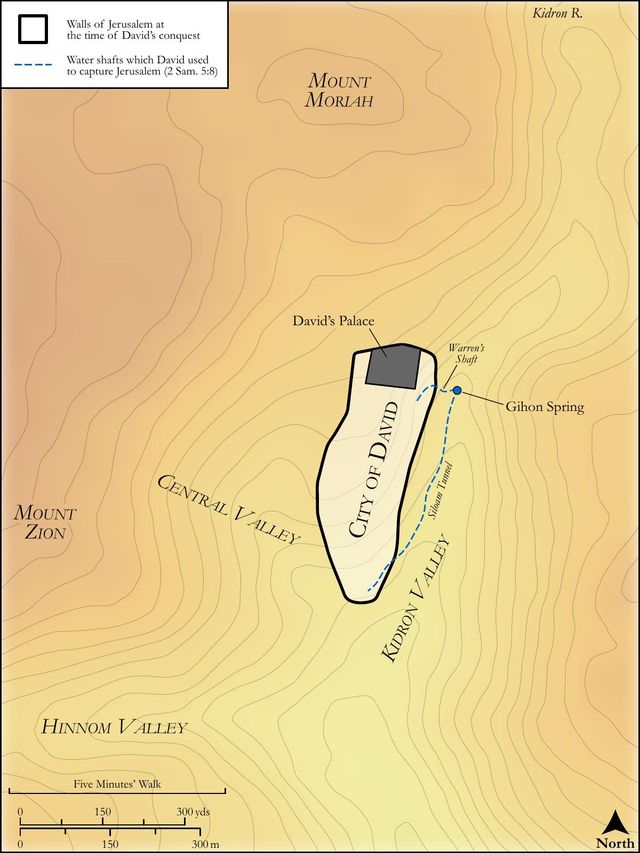
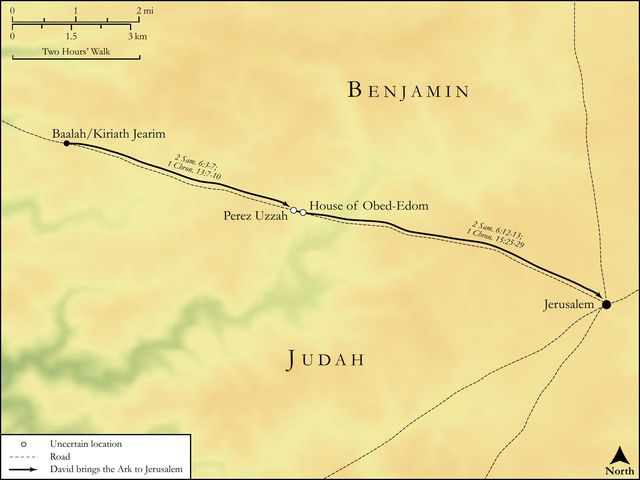
Study this verse
Public-domain commentary
Matthew Henry
From his Commentary on the Whole Bible. Henry comments on passages, not single verses — this entry covers 2 Samuel 7:18–29. His four-level outline is real structure in the source text, so it is rendered as structure.
We have here the solemn address David made to God, in answer to the gracious message God had sent him. We are not told what he said to Nathan; no doubt he received him very kindly and respectfully as God's messenger. But his answer to God he took himself, and did not send by Nathan. When ministers deliver God's message to us, it is not to them, but to God, that our hearts must reply; he understands the language of the heart, and to him we may come boldly. David had no sooner received the message than, while the impressions of it were fresh, he retired to return an answer. Observe,
I.The place he retired to:
He went in before the Lord, that is, into the tabernacle where the ark was, which was the token of God's presence; before that he presented himself. God's will now is that men pray everywhere; but, wherever we pray, we must set ourselves as before the Lord and set him before us.
II.The posture he put himself into: He sat before the Lord.
1.It denotes the posture of his body. Kneeling or standing is certainly the most proper gesture to be used in prayer; but the Jews, from this instance, say, "It was allowed to the kings of the house of David to sit in the temple, and to no other." But this will by no means justify the ordinary use of that gesture in prayer, whatever may be allowed in a case of necessity. David went in, and took his place before the Lord, so it may be read; but, when he prayed, he stood up as the manner was. Or he went in and continued before the Lord, staid some time silently meditating, before he began his prayer, and then remained longer than usual in the tabernacle. Or,
2.It may denote the frame of his spirit at this time. He went in, and composed himself before the Lord; thus we should do in all our approaches to God. O God, my heart is fixed, my heart is fixed.
III.The prayer itself, which is full of the breathings of pious and devout affection towards God.
1.He speaks very humbly of himself and his own merits. So he begins as one astonished: Who am I, O Lord God! and what is my house? Sa2 7:18. God had reminded him of the meanness of his original (Sa2 7:8) and he subscribed to it; he had low thoughts, (1.) Of his personal merits: Who am I? He was upon all accounts a very considerable and valuable man. His endowments both of body and mind were extraordinary. His gifts and graces were eminent. He was a man of honour, success, and usefulness, the darling of his country and the dread of its enemies. Yet, when he comes to speak of himself before God, he says, "Who am I? A man not worth taking notice of." (2.) Of the merits of his family: What is my house? His house was of the royal tribe, and descended from the prince of that tribe; he was allied to the best families of the country, and yet, like Gideon, thinks his family poor in Judah and himself the least in his father's house, Jdg 6:15. David thus humbled himself when Saul's daughter was proposed to him for a wife (Sa1 18:18), but now with much more reason. Note, It very well becomes the greatest and best of men, even in the midst of the highest advancements, to have low and mean thoughts of themselves; for the greatest of men are worms, the best are sinners, and those that are highest advanced have nothing but what they have received: "What am I, that thou hast brought me hitherto, brought me to the kingdom, and to a settlement in it, and rest from all my enemies?" It intimates that he could not have reached this himself by his own management, if God had not brought him to it. All our attainments must be looked upon as God's vouchsafements.
2.He speaks very highly and honourably of God's favours to him.
(1.)In what he had done for him: "Thou hast brought me hitherto, to this great dignity and dominion. Hitherto thou hast helped me." Though we should be left at uncertainty concerning further mercy, we have great reason to be thankful for that which has been done for us hitherto, Act 26:22.
(2.)In what he had yet further promised him. God had done great things for him already, and yet, as if those had been nothing, he had promised to do much more, Sa2 7:19. Note, What God has laid out upon his people is much, but what he has laid up for them is infinitely more, Psa 31:19. The present graces and comforts of the saints are invaluable gifts; and yet, as if these were too little for God to bestow upon his children, he has spoken concerning them for a great while to come, even as far as eternity itself reaches. Of this we must own, as David here, [1.] That it is far beyond what we could expect: Is this the manner of men? that is, First, Can man expect to be so dealt with by his Maker? Is this the law of Adam? Note, Considering what the character and condition of man are, it is very surprising and amazing that God should deal with him as he does. Man is a mean creature, and therefore under a law of distance - unprofitable to God, and therefore under a law of disesteem and disregard - guilty and obnoxious, and therefore under a law of death and damnation. But how unlike are God's dealings with man to this law of Adam! He is brought near to God, purchased at a high rate, taken into covenant and communion with God; could this ever have been thought of? Secondly, Do men usually deal thus with one another? No, the way of our God is far above the manner of men. Though he be high, he has respect to the lowly; and is this the manner of men? Though he is offended by us, he beseeches us to be reconciled, waits to be gracious, multiplies his pardons: and is this the manner of men? Some give another sense of this, reading it thus: And this is the law of man, the Lord Jehovah, that is, "This promise of one whose kingdom shall be established for ever must be understood of one that is a man and yet the Lord Jehovah, this must be the law of such a one. A Messiah from my loins must be man, but, reigning for ever, must be God." [2.] That beyond this there is nothing we can desire: "And what can David say more unto thee? Sa2 7:20. What can I ask or wish for more? Thou, Lord, knowest thy servant, knowest what will make me happy, and what thou hast promised is enough to do so." The promise of Christ includes all. If that man, the Lord God, be ours, what can we ask or think of more? Eph 3:20. The promises of the covenant of grace are framed by him that knows us, and therefore knows how to adapt them to every branch of our necessity. He knows us better than we know ourselves; and therefore let us be satisfied with the provision he has made for us. What can we say more for ourselves in our prayers than he has said for us in his promises?
3.He ascribes all to the free grace of God (Sa2 7:21), both the great things he had done for him and the great things he had made known to him. All was, (1.) For his word's sake, that is, for the sake of Christ the eternal Word; it is all owing to his merit. Or, "That thou mayest magnify thy word of promise above all thy name, in making it the stay and store-house of thy people." (2.) According to thy own heart, thy gracious counsels and designs, ex mero motu - of thy own good pleasure. Even so, Father, because it seemed good in thy eyes. All that God does for his people in his providences, and secures to them in his promises, is for his pleasure and for his praise, the pleasure of his will and the praise of his word.
4.He adores the greatness and glory of God (Sa2 7:22): Thou art great, O Lord God! for there is none like thee. God's gracious condescension to him, and the honour he had put upon him, did not at all abate his awful veneration for the divine Majesty; for the nearer any are brought to God the more they see of his glory, and the dearer we are in his eyes the greater he should be in ours. And this we acknowledge concerning God, that there is no being like him, nor any God besides him, and that what we have seen with our eyes of his power and goodness is according to all that we have heard with our ears, and the one half not told us.
5.He expresses a great esteem for the Israel of God, Sa2 7:23, Sa2 7:24. As there was none among the gods to be compared with Jehovah, so none among the nations to be compared with Israel, considering,
(1.)The works he had done for them. He went to redeem them, applied himself to it as a great work, went about it with solemnity. Elohim halecu, dii iveruni - Gods went, as if there was the same consultation and concurrence of all the persons in the blessed Trinity about the work of redemption that there was about the work of creation, when God said, Let us make man. Whom those that were sent of God went to redeem; so the Chaldee, meaning, I suppose, Moses and Aaron. The redemption of Israel, as described here, was typical of our redemption by Christ in that,
[1.]They were redeemed from the nations and their gods; so are we from all iniquity and all conformity to this present world. Christ came to save his people from their sins.
[2.]They were redeemed to be a peculiar people unto God, purified and appropriated to himself, that he might make himself a great name and do for them great things. The honour of God, and the eternal happiness of the saints, are the two things aimed at in their redemption.
(2.)The covenant he had made with them, Sa2 7:24. It was, [1.] Mutual: "They to be a people to thee, and thou to be a God to them; all their interests consecrated to thee, and all thy attributes engaged for them." [2.] Immutable: "Thou hast confirmed them." He that makes the covenant makes it sure and will make it good.
6.He concludes with humble petitions to God.
(1.)He grounds his petitions upon the message which God had sent him (Sa2 7:27): Thou hast revealed this to thy servant, that is, "Thou hast of thy own good will given me the promise that thou wilt build me a house, else I could never have found in my heart to pray such a prayer as this. I durst not have asked such great things if I had not been directed and encouraged by thy promise to ask them. They are indeed too great for me to beg, but not too great for thee to give. Thy servant has found in his heart to pray this prayer;" so it is in the original, and the Septuagint. Many, when they go to pray, have their hearts to seek, but David's heart was found, that is, it was fixed, gathered in from its wanderings, and entirely engaged to the duty and employed in it. That prayer which is found in the tongue only will not please God; it must be found in the heart; the heart must be lifted up and poured out before God. My son, give God thy heart.
(2.)He builds his faith and hopes to speed upon the fidelity of God's promise (Sa2 7:25): "Thou art that God (thou art he, even that God, the Lord of hosts, and God of Israel, or that God whose words are true, that God whom one may depend upon); and thou hast promised this goodness unto thy servant, which I am therefore bold to pray for." (3.) Thence he fetches the matter of his prayer, and refers to that as the guide of his prayers.
[1.]He prays for the performance of God's promise (Sa2 7:25): "Let the word be made good to me, on which thou hast caused me to hope (Psa 119:49) and do as thou hast said; I desire no more, and I expect no less; so full is the promise, and so firm." Thus we must turn God's promises into prayers, and then they shall be turned into performances; for, with God, saying and doing are not two things, as they often are with men. God will do as he hath said.
[2.]He prays for the glorifying of God's name (Sa2 7:26): Let thy name be magnified for ever. This ought to be the summary and centre of all our prayers, the Alpha and the Omega of them. Begin with Hallowed be thy name, and end with Thine is the glory for ever. "Whether I be magnified or no, let thy name be magnified." And he reckons that nothing magnifies God's name more than this, to say, with suitable affections, The Lord of hosts is the God over Israel. This bespeaks the God of Israel gloriously great, that he is the Lord of hosts; and this bespeaks the Lord of hosts gloriously good, that he is God over Israel. In both, let his name be magnified for ever. Let all the creatures and all the churches give him the glory of these two. David desired the performance of God's promise for the honour, not of his own name, but of God's. Thus the Son of David prayed, Father, glorify thy name (Joh 12:28), and (Joh 17:1), Glorify thy Son, that thy Son may also glorify thee.
[3.]He prays for his house, for to that the promise has special reference, First, That it might be happy (Sa2 7:29): Let it please thee to bless the house of thy servant; and again, with thy blessing. "Let the house of thy servant be truly and eternally blessed. Those whom thou blessest are blessed indeed." The care of good men is very much concerning their families; and the best entail on their families is that of the blessing of God. The repetition of this request is not a vain repetition, but expressive of the value he had of the divine blessing, and his earnest desire of it, as all in all to the happiness of his family. Secondly, That the happiness of it might remain: "Let it be established before thee (Sa2 7:26); let it continue for ever before thee." Sa2 7:29. He prayed, 1. That the entail of the crown might not be cut off, but remain in his family, that none of his might ever forfeit it, but that they might walk before God, which would be their establishment. 2. That his kingdom might have its perfection and perpetuity in the kingdom of the Messiah. When Christ for ever sat down on the right hand of God (Heb 10:12), and received all possible assurance that his seed and throne shall be as the days of heaven, this prayer of David the son of Jesse for his seed was abundantly answered, that it might continue before God for ever. See Psa 72:17. The perpetuity of the Messiah's kingdom is the desire and faith of all good people.
Historical interpretation
Historical reception
1 surviving comment on this verse from the historical church.
David, understanding this, says in the second book of Kings [Samuel] … “You did also speak of the house of your servant for a long time to come.” And, further on, “And now begin and bless the house of your servant that it may endure forever,” etc. At that time, David was about to beget his son through whom his lineage would be carried down to Christ; through whom, in turn, his house was to be everlasting—indeed, identified with the house of God. It was to be called the “house of David” because [it was] of David’s stock and, simultaneously, the “house of God” because it was a temple to God made not of stones but of people. In this house God’s people shall everlastingly dwell with their God and in their God, and God with his people and in his people, God filling his people, his people filled with their God, so that “God may be all in all”—the very same God being their prize in peace who was their strength in battle.It was with this in view that, when Nathan had said, “And the Lord said to you, that you shall build him a house,” David said further on, “Because you, O Lord of hosts, God of Israel, have revealed to the ear of your servant, saying, ‘I will build you a house.’ ” This is a house which we build by living virtuously and which God builds by helping us to live virtuously, for “unless the Lord builds the house, those who build it labor in vain.”
Only, however, when this house receives its final consecration will the words God spoke by Nathan’s lips come true: “And I will appoint a place for my people Israel, and I will plant them, and they shall dwell therein, and shall be disturbed no more: neither shall the children of iniquity afflict them any more as they did before, from the day that I appointed judges over my people Israel.”
Continue studying 2 Samuel 7:18 across the web’s major study libraries — every link below opens this exact verse, chapter, or book on the destination site.
Read & Compare
 BibleGatewayThis verse in more than 200 translations and 70 languages.
 Bible.comThe YouVersion reader — hundreds of translations, reading plans, and highlights.
 ESV.orgCrossway's official English Standard Version reader.
 NET BibleThe NET translation with 60,000+ translators' notes on every rendering decision.
 STEP BibleTyndale House's free study tool — original text, vocabulary, and scholarly resources.
 BibliaLogos Bible Software's free web reader.
 USCCBThe New American Bible (Revised Edition) with the U.S. bishops' study notes.
Commentaries
 BibleHub CommentariesDozens of classic commentaries on this verse, gathered on one page.
 StudyLightMore than 100 commentary sets — the largest collection on the web.
 BibleRefPlain-English commentary on what this verse means, verse by verse.
 Enduring WordDavid Guzik's free commentary on this chapter, widely used by Bible teachers.
 Bible Study ToolsVerse commentary alongside Greek and Hebrew study aids.
Original Language & Research
- BibleHub InterlinearThe verse word by word — original language, transliteration, and English.
- BibleHub LexiconEvery word's original-language definition and Strong's entry.
 Blue Letter BibleDeep-study tools — Strong's numbers, concordance, and word studies.
 SefariaThe Hebrew text with Rashi and centuries of Jewish commentary.
Sermons, Hymns & Audio


TrulyRandomVerse is not affiliated with these sites and doesn’t control their content. They’re linked because they’re genuinely useful.
Summary
King David's prayer in 2 Samuel 7:18 is a profound expression of humility and overwhelming gratitude, offered immediately after God, through the prophet Nathan, delivered the unconditional Davidic Covenant. Overwhelmed by the promise of an enduring dynasty and an eternal kingdom, David contrasts his own humble origins and the perceived insignificance of his "house" with the magnificent, unmerited favor God has bestowed upon him and his lineage. His posture of sitting "before the LORD" signifies deep reverence, contemplative worship, and intimate communion in response to God's boundless grace and sovereign initiative.
Context
ShowHideLiterary Context
The immediate literary context of 2 Samuel 7:18 is the pivotal establishment of the Davidic Covenant, a theological cornerstone of the Old Testament. Prior to this verse, David expresses a heartfelt desire to build a "house" (temple) for God, as recorded in 2 Samuel 7:2. However, through the prophet Nathan, God responds not by accepting David's offer, but by unilaterally promising to build David a "house" (dynasty) instead, as detailed in 2 Samuel 7:11. This divine reversal of roles powerfully underscores God's sovereignty and initiative in covenant-making. The covenant promises an enduring dynasty, a secure kingdom, and a son who will build the temple, establishing David's throne forever, as articulated in 2 Samuel 7:12-16. David's prayer, which spans 2 Samuel 7:18-29, is his immediate, humble, and deeply grateful response to this extraordinary, unilateral divine promise, recognizing its immense implications for his family and for the future of Israel.
Historical & Cultural Context
David reigned as king over a united Israel, a period marked by significant expansion and consolidation of power. Among the nations, it was common for kings to build temples for their gods as a demonstration of piety and power, often expecting divine favor or blessings in return. Covenants were also prevalent, but typically they were bilateral, involving obligations from both parties. The Davidic Covenant, however, is remarkable for its unilateral and unconditional nature, initiated entirely by God's sovereign will. David's humble origins as a shepherd boy from Bethlehem, chosen by God over his older brothers, as recounted in 1 Samuel 16:11-13, would have made the promise of an eternal dynasty even more astonishing and unfathomable to him. His act of sitting "before the LORD" likely refers to entering the tabernacle, where the Ark of the Covenant resided, signifying a direct, intimate encounter with God's manifest presence, adopting a posture of profound reverence and deep contemplation.
Key Themes
ShowHideThis verse powerfully encapsulates several key themes central to 2 Samuel and the broader biblical narrative. Firstly, Profound Humility is strikingly evident in David's self-deprecating rhetorical questions, contrasting his humble status with God's immense favor. He clearly acknowledges that his elevation and the promises are not due to any inherent merit on his part but solely to divine grace. Secondly, Overwhelming Gratitude permeates his prayer, as he expresses astonishment and heartfelt thanks for God's past faithfulness in bringing him "hitherto" and for the incomprehensible future promises. Thirdly, God's Sovereign Grace is highlighted with unparalleled clarity, emphasizing that the covenant is entirely God's initiative, demonstrating His boundless love and unwavering faithfulness, independent of human worthiness or achievement. Finally, the verse underscores the Significance of the Davidic Covenant itself, which transcends David's immediate reign, pointing forward to an eternal kingdom and ultimately foreshadowing the Messiah, Jesus Christ, who would inherit and fully fulfill the promises made to David's "house," as prophesied in Luke 1:32-33.
Exposition and Analysis
ShowHideKey Word Analysis
ShowHideThis compound divine name is profoundly significant in David's address. ʼĂdônây (H136) emphasizes God as the sovereign Master, the one who holds absolute authority and ownership, to whom David submits. Yᵉhôvih (H3069), a variation of YHWH (H3068), is God's personal, covenantal name, revealing Him as the self-existent, faithful God who keeps His promises. David's use of this combination expresses his recognition of God's supreme, majestic authority combined with His personal, steadfast faithfulness in His relationship with His people, particularly in the context of the recently revealed, astounding covenant. It underscores the profound reverence and trust David places in the One who has made such an astounding and unmerited promise.
The word bayith (H1004) is used with rich double meaning throughout 2 Samuel 7. Initially, David desires to build a "house" for God, meaning a temple or dwelling place for the Ark of the Covenant, as stated in 2 Samuel 7:2. God's response, however, shifts the meaning, promising to build David a "house," referring to his dynasty, his lineage, and his royal family line, as detailed in 2 Samuel 7:11. In 2 Samuel 7:18, David's question "what [is] my house?" refers to his family, his lineage, and his personal standing, emphasizing its perceived insignificance and lack of inherent merit in contrast to the eternal dynasty God has just promised to establish from it.
The word hălôm (H1988) literally translates to "hither" or "up to this point." In this context, it encapsulates David's retrospective astonishment at the entire trajectory of his life, from an obscure shepherd boy chosen from the fields to the king of Israel, and now, the recipient of an eternal covenant. It signifies a moment of profound reflection on God's consistent, guiding hand and overwhelming grace that has led him to this unimaginable pinnacle of blessing and promise, far beyond anything he could have achieved or deserved.
Verse Breakdown
ShowHide"Then went king David in, and sat before the LORD,"
This opening clause vividly depicts David's posture of profound humility and reverence. "Went in" likely refers to his entering the tabernacle or the sacred space where the Ark of the Covenant was housed, symbolizing God's manifest presence among His people. "Sat before the LORD" is not a casual posture but one of deep contemplation, prayer, and worship. It signifies a deliberate act of seeking God's presence, listening attentively, and responding in humble adoration, acknowledging God's absolute sovereignty and his own subordinate, yet privileged, position. This is a moment of intimate communion and profound reflection on the astounding divine revelation he has just received.
"and he said, Who [am] I, O Lord GOD?"
David's immediate verbal response is a rhetorical question expressing profound humility and self-abasement. He contrasts his own perceived unworthiness and humble origins (a shepherd, the youngest son of Jesse, as seen in 1 Samuel 16:11) with the immense favor and astonishing promises bestowed upon him by the Almighty God. This question is not a request for information but an exclamation of astonishment, wonder, and awe at God's condescending grace. It reflects a heart that understands its utter dependence on God and the completely unmerited nature of divine blessing.
"and what [is] my house, that thou hast brought me hitherto?"
This second rhetorical question extends David's humility from himself personally to his entire lineage and family. He acknowledges the ordinary, non-royal status of his "house" or family line, recognizing that there is nothing inherently special, prominent, or deserving about them that would warrant such an extraordinary, eternal promise. The phrase "that thou hast brought me hitherto" refers to God's faithful leading, protection, and provision throughout David's life, culminating in this moment of unparalleled covenant blessing. It highlights God's sovereign initiative and the overwhelming, unmerited nature of His grace that has elevated David and his descendants to such an unimaginable position of favor and promise.
Literary Devices
ShowHideThe verse is rich with literary devices that amplify its emotional and theological impact, powerfully conveying David's response. The most prominent is the Rhetorical Question, repeated twice ("Who [am] I...?" and "what [is] my house...?"). These questions are not posed to elicit an answer but to express David's profound astonishment, humility, and awe in the face of God's overwhelming grace. They serve to emphasize the vast Contrast between David's humble origins and the magnificent, eternal promises of the Davidic Covenant. The implied answer to these questions is "no one" and "nothing," underscoring the unmerited nature of God's favor. There is also an element of Hyperbole in David's self-deprecating language, as he exaggerates his unworthiness to magnify the sheer greatness of God's grace. Finally, the phrase "brought me hitherto" functions as a form of Retrospection, prompting David (and the reader) to reflect on God's faithful past actions as the foundational evidence for present and future blessings, reinforcing the theme of divine faithfulness.
Theological and Thematic Connections
ShowHideDavid's prayer in 2 Samuel 7:18 serves as a foundational expression of humility and gratitude in response to God's unilateral covenant. It establishes a timeless pattern for human response to divine grace: not pride or self-congratulation, but profound awe and recognition of God's sovereign initiative. The theological implication is clear: salvation and blessing are entirely from God, not earned by human merit, status, or achievement. This concept of unmerited favor (grace) is central to biblical theology, from God's gracious choice of Abraham in Genesis 12:1-3 to the New Covenant in Christ. David's posture and words become a model for all believers, demonstrating that true worship flows from a heart humbled by God's goodness and overwhelmed by His faithfulness, acknowledging that all good things come from His hand.
Reflection and Application
ShowHideDavid's response to God's overwhelming grace in 2 Samuel 7:18 provides a timeless blueprint for our own spiritual lives. In a world that often values self-promotion, personal achievement, and earned success, David's profound humility reminds us that our true worth, our ultimate blessings, and our eternal hope come not from our accomplishments or inherent merit, but solely from God's unmerited favor. When we reflect on God's faithfulness in our past—how He has "brought us hitherto" through every trial, triumph, and unexpected turn—and His magnificent promises for our future, our natural response should mirror David's: a heart overflowing with gratitude and a spirit humbled by His boundless love. This verse encourages us to cultivate a posture of worship that acknowledges God's absolute sovereignty over every aspect of our lives, prompting us to sit "before the LORD" not just to make requests, but to marvel at His goodness, to surrender our plans, and to trust that His purposes for us are infinitely greater and more glorious than anything we could ever conceive. It calls us to live in constant remembrance that every good and perfect gift is from above, fostering a life of dependent faith and joyful thanksgiving.
Questions for Reflection
ShowHideFAQ
ShowHideWhy did David "sit before the LORD" instead of kneeling or prostrating himself?
ShowHideWhile kneeling or prostration were indeed common postures for prayer and worship in Israel, "sitting before the LORD" (Hebrew: יָשַׁב לִפְנֵי יְהוָה, yashav lifnei YHWH) in this specific context signifies a posture of deep contemplation, reverence, and intimate communion. It implies a settled, unhurried presence in the sacred space, allowing for prolonged listening and thoughtful response to God's revelation. This was not a casual sitting, but a deliberate act of worship, perhaps indicative of a kingly audience with the divine King, or a deep, prolonged meditation on the profound implications of the covenant he had just received. Other biblical figures also "sat" in prayer or reflection, such as the elders of Israel before the Ark in Judges 20:26. This posture emphasizes a profound engagement of the mind and heart, rather than just a physical act of submission.
What is the significance of David's rhetorical questions about "Who am I?" and "What is my house?"
ShowHideThese questions are not literal requests for information but powerful expressions of profound humility, astonishment, and awe. David is intentionally contrasting his humble origins as a shepherd boy, chosen from obscurity (1 Samuel 16:11-12), and the ordinary, non-royal nature of his family ("my house") with the extraordinary, unmerited favor God has shown him. He recognizes that his elevation to kingship and the promise of an eternal dynasty are entirely due to God's sovereign grace, not his own merit or the inherent worthiness of his lineage. These questions serve to amplify the magnitude of God's boundless generosity and faithfulness, underscoring that the Davidic Covenant is a unilateral gift, not a reward for human effort. Ultimately, they serve to magnify God's glory by diminishing any human claim to credit.
Christ-Centered Fulfillment
ShowHideThe Davidic Covenant, to which 2 Samuel 7:18 is David's humble and astonished response, finds its ultimate and eternal fulfillment in Jesus Christ. The promise of an enduring "house" and a throne established "forever" (2 Samuel 7:16) could not be fully realized by any earthly king or human lineage, as all human kings eventually die and their kingdoms fade. Instead, it pointed forward to a greater Son of David, whose kingdom would truly be eternal and universal. The angel Gabriel's prophecy to Mary explicitly connects Jesus to this covenant, declaring that "He will be great and will be called the Son of the Most High; and the Lord God will give Him the throne of His father David; and He will reign over the house of Jacob forever, and His kingdom will have no end" (Luke 1:32-33). Jesus, born of the lineage of David according to the flesh (Romans 1:3), is the true King who sits on David's throne, not merely for a lifetime, but eternally. His kingdom is not earthly but spiritual, encompassing all who believe and submit to His Lordship. David's humility in 2 Samuel 7:18 foreshadows the even greater condescension of Christ, who, though existing in the form of God, "did not consider equality with God as something to be grasped, but emptied Himself, taking the form of a bond-servant, and being made in the likeness of men" (Philippians 2:6-7). The covenant, initiated by God's unmerited grace to an unworthy David, culminates in the ultimate act of grace: God sending His Son to establish an everlasting kingdom through His sacrificial death and glorious resurrection, inviting all to be part of His eternal "house" (Hebrews 3:6).