


2 Samuel 7:2
Bible text: King James Version (1769 Blayney text) · Public domain
Bible text: Berean Standard Bible · Public domain
Bible text: American Standard Version (1901) · Public domain
Bible text: World English Bible, Messianic edition · Public domain
Bible text: Geneva Bible (1599) · Public domain
Bible text: Young's Literal Translation · Public domain
- וַיֹּאמֶרvai·Yo·merand he saidH559Conj-w ¦ V-Qal-ConsecImperf-3msVerb Qal Consecutive Imperfect 3rd Singular Masculineוַandיֹּאמֶרhe said
- הַמֶּלֶךְha·Me·lekhthe kingH4428Art ¦ N-msNoun Singular Masculine Absoluteהַtheמֶּלֶךְking
- אֶל'eltoH413PrepPreposition
- נָתָןna·TanNathanH5416N-proper-mNoun Proper Masculine
- הַנָּבִיאha·na·Vi'the prophetH5030Art ¦ N-msNoun Singular Masculine Absoluteהַtheנָּבִיאprophet
- רְאֵהre·'EhseeH7200V-Qal-Imp-2msVerb Qal Imperative 2nd Singular Masculine
- נָאNa'pleaseH4994PrtParticle Interjection
- אָנֹכִי'a·no·KhiIH595Pro-1csPronoun Personal 1st Singular common gender
- יוֹשֵׁבyo·Shev[am] dwellingH3427V-Qal-Prtcpl-msVerb Qal Participle Singular Masculine Absolute
- בְּבֵיתbe·Veitin a house ofH1004Prep-b ¦ N-mscNoun Singular Masculine Constructבְּinבֵיתa house of
- אֲרָזִים'a·ra·Zimcedar<s>H730N-mpNoun Plural Masculine Absolute
- וַאֲרוֹןva·'a·rOnand [the] ark ofH727Conj-w ¦ N-mscNoun Singular Masculine Constructוַandאֲרוֹן[the] ark of
- הָאֱלֹהִיםha·'E·lo·Him<the> GodH430Art ¦ N-mpNoun Plural Masculine Absoluteהָ<the>אֱלֹהִיםGod
- יֹשֵׁבyo·Shev[is] dwellingH3427V-Qal-Prtcpl-msVerb Qal Participle Singular Masculine Absolute
- בְּתוֹךְbe·Tokhin [the] midst ofH8432Prep-b ¦ N-mscNoun Singular Masculine Constructבְּinתוֹךְ[the] midst of
- הַיְרִיעָהhay·ri·'Ahthe tent curtainH3407Art ¦ N-fsNoun Singular Feminine Absoluteהַtheיְרִיעָהtent curtain
English is a literal word-by-word gloss of the Hebrew, not the KJV's wording. Why?
This is the original text the KJV's translators worked from — each Hebrew word with its own literal English meaning in this verse, prepared by scholars at Tyndale House, Cambridge. The KJV translates whole sentences, not word by word, so its wording differs: one Hebrew word can become several English words, and the KJV may choose “the LORD” where the gloss reads “Yahweh”. Both are faithful — they answer different questions. For the KJV's own rendering, switch to the KJV text.
Details
See on the biblical-era maps
Study this verse
Public-domain commentary
Matthew Henry
From his Commentary on the Whole Bible. Henry comments on passages, not single verses — this entry covers 2 Samuel 7:1–3. His three-level outline is real structure in the source text, so it is rendered as structure.
Here is, I. David at rest. He sat in his house (Sa2 7:1), quiet and undisturbed, having no occasion to take the field: The Lord had given him rest round about, from all those that were enemies to his settlement in the throne, and he set himself to enjoy that rest. Though he was a man of war, he was for peace (Psa 120:7) and did not delight in war. He had not been long at rest, nor was it long before he was again engaged in war; but at present he enjoyed a calm, and he was in his element when he was sitting in his house, meditating in the law of God.
II.David's thought of building a temple for the honour of God.
He had built a palace for himself and a city for his servants; and now he thinks of building a habitation for the ark.
1.Thus he would make a grateful return for the honours God put upon him. Note, When God, in his providence, has remarkably done much for us, it should put us upon contriving what we may do for him and his glory. What shall I render unto the Lord?
2.Thus he would improve the present calm, and make a good use of the rest God had given him. Now that he was not called out to serve God and Israel in the high places of the field, he would employ his thoughts, and time, and estate, in serving him another way, and not indulge himself in ease, much less in luxury. When God, in his providence, gives us rest, and finds us little to do of worldly business, we must do so much the more for God and our souls. How different were the thoughts of David when he sat in his palace from Nebuchadnezzar's when he walked in his! Dan 4:29, Dan 4:30. That proud man thought of nothing but the might of his own power, and the honour of his own majesty; this humble soul is full of contrivance how to glorify God, and give honour to him. And how God resisteth the proud, and giveth grace and glory to the humble, the event showed. David considered (Sa2 7:2) the stateliness of his own habitation (I dwell in a house of cedar), and compared with that the meanness of the habitation of the ark (the ark dwells within curtains), and thought this incongruous, that he should dwell in a palace and the ark in a tent. David had been uneasy till he found out a place for the ark (Psa 132:4, Psa 132:5), and now he is uneasy till he finds out a better place. Gracious grateful souls,
(1.)Never think they can do enough for God, but, when they have done much, are still projecting to do more and devising liberal things.
(2.)They cannot enjoy their own accommodations while they see the church of God in distress and under a cloud. David can take little pleasure in a house of cedar for himself, unless the ark have one. Those who stretched themselves upon beds of ivory, and were not grieved for the affliction of Joseph, though they had David's music, had not David's spirit (Amo 6:4, Amo 6:6) nor those who dwelt in their ceiled houses while God's house lay waste.
III.His communicating this thought to Nathan the prophet.
He told him, as a friend and confidant, whom he used to advise with. Could not David have gone about it himself? Was it not a good work? Was not he himself a prophet? Yes, but in the multitude of counsellors there is safety. David told him, that by him he might know the mind of God. It was certainly a good work, but it was uncertain whether it was the will of God that David should have the doing of it.
IV.Nathan's approbation of it:
Go, do all that is in thy heart; for the Lord is with thee, Sa2 7:3. We do not find that David told him that he purposed to build a temple, only that it was a trouble to him that there was not one built, from which Nathan easily gathered what was in his heart, and bade him go on and prosper. Note, We ought to do all we can to encourage and promote the good purposes and designs of others, and put in a good word, as we have opportunity, to forward a good work. Nathan spoke this, not in God's name, but as from himself; not as a prophet, but as a wise and good man; it was agreeable to the revealed will of God, which requires that all in their places should lay out themselves for the advancement of religion and the service of God, though it seems his secret will was otherwise, that David should not do this. It was Christ's prerogative always to speak the mind of God, which he perfectly knew. Other prophets spoke it only when the spirit of prophecy was upon them; but, if in any thing they mistook (as Samuel, Sa1 16:6, and Nathan here) God soon rectified the mistake.
Continue studying 2 Samuel 7:2 across the web’s major study libraries — every link below opens this exact verse, chapter, or book on the destination site.
Read & Compare
 BibleGatewayThis verse in more than 200 translations and 70 languages.
 Bible.comThe YouVersion reader — hundreds of translations, reading plans, and highlights.
 ESV.orgCrossway's official English Standard Version reader.
 NET BibleThe NET translation with 60,000+ translators' notes on every rendering decision.
 STEP BibleTyndale House's free study tool — original text, vocabulary, and scholarly resources.
 BibliaLogos Bible Software's free web reader.
 USCCBThe New American Bible (Revised Edition) with the U.S. bishops' study notes.
Commentaries
 BibleHub CommentariesDozens of classic commentaries on this verse, gathered on one page.
 StudyLightMore than 100 commentary sets — the largest collection on the web.
 BibleRefPlain-English commentary on what this verse means, verse by verse.
 Enduring WordDavid Guzik's free commentary on this chapter, widely used by Bible teachers.
 Bible Study ToolsVerse commentary alongside Greek and Hebrew study aids.
Original Language & Research
- BibleHub InterlinearThe verse word by word — original language, transliteration, and English.
- BibleHub LexiconEvery word's original-language definition and Strong's entry.
 Blue Letter BibleDeep-study tools — Strong's numbers, concordance, and word studies.
 SefariaThe Hebrew text with Rashi and centuries of Jewish commentary.
Sermons, Hymns & Audio


TrulyRandomVerse is not affiliated with these sites and doesn’t control their content. They’re linked because they’re genuinely useful.
Summary
In 2 Samuel 7:2, King David expresses a profound and pious sentiment to Nathan the prophet, revealing his heart's desire to honor God. Having consolidated his kingdom and settled into a magnificent "house of cedar," a symbol of his established power and comfort, David contrasts his luxurious dwelling with the temporary nature of the Ark of God's abode, which still "dwelleth within curtains." This statement marks a pivotal moment, initiating the divine response that leads to God's extraordinary and unconditional covenant with David, promising an eternal dynasty rather than accepting a physical temple built by the king.
Context
ShowHideLiterary Context
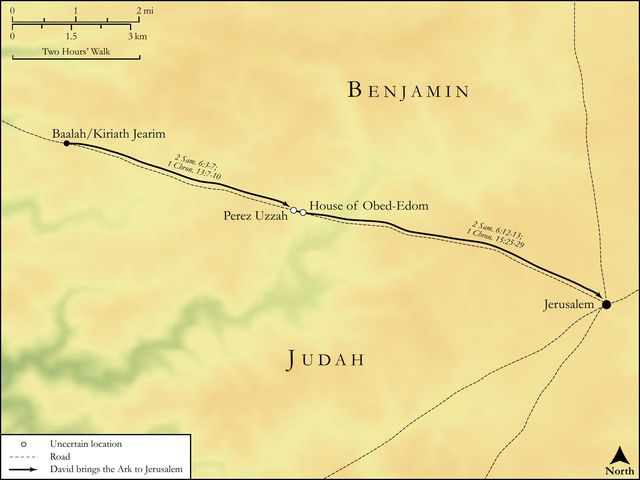
This verse is strategically placed after David has successfully brought the Ark of the Covenant to Jerusalem, establishing it as the nation's spiritual and political capital, as detailed in 2 Samuel 6. David has also secured his kingdom from external threats and established a period of peace and prosperity. His personal reflection and expressed desire in 2 Samuel 7:2 serve as the immediate catalyst for God's pivotal response through Nathan, which constitutes the foundational Davidic Covenant in 2 Samuel 7:4-17. This moment shifts the narrative focus from David's military and political achievements to the establishment of his spiritual legacy and the divine promise concerning his lineage, underscoring God's initiative in the covenant.
Historical & Cultural Context
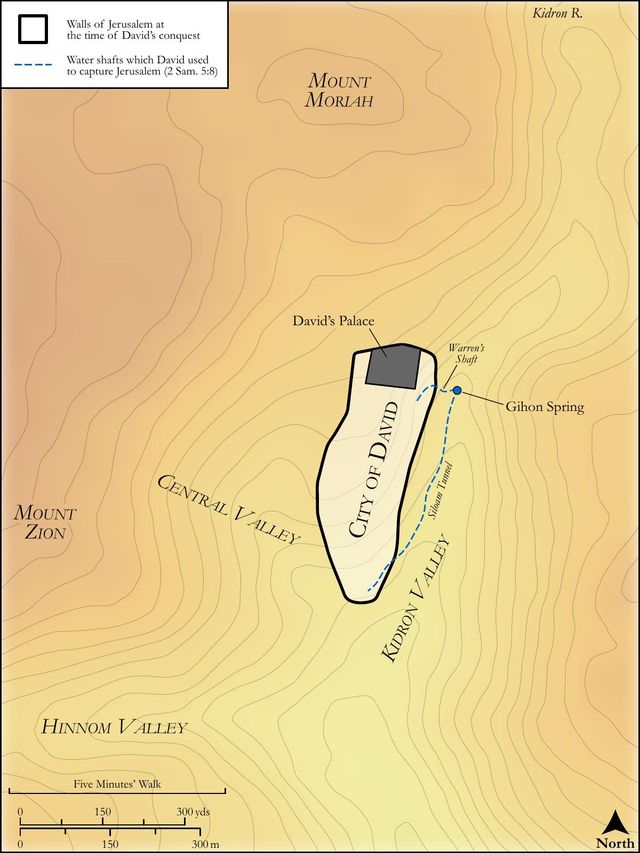
By this point in Israel's history, David has firmly established Jerusalem as his capital and the religious center, bringing a new era of stability after the tumultuous period of the judges and Saul's reign. His "house of cedar" signifies a permanent, luxurious palace, likely constructed with the aid of skilled Phoenician artisans and valuable cedar wood from Lebanon, as detailed in 2 Samuel 5:11. In stark contrast, the Ark of God remained housed in the Tabernacle, a portable tent structure designed for Israel's wilderness wanderings, whose intricate design is described in Exodus 26. For David, a settled king in a magnificent palace, the temporary nature of God's dwelling seemed unfitting. Among the nations, it was customary for powerful kings to build grand temples for their deities, as the Philistines kept the house of Dagon, reflecting the god's status and the king's piety, making David's desire culturally understandable and a demonstration of his devotion.
Key Themes
ShowHideDavid's statement in 2 Samuel 7:2 underscores several significant themes. Firstly, it highlights David's Piety and Devotion, showcasing his sincere desire to honor God above his own comfort and to provide a dwelling place commensurate with God's supreme status. Secondly, the verse emphasizes the Significance of God's Presence, represented by the Ark of the Covenant, which was the focal point of Israel's worship and the tangible symbol of God's covenant relationship with His people. David's concern for its dwelling place underscores its central importance in the life of the nation. Finally, it introduces the overarching theme of Divine Sovereignty vs. Human Initiative, as David's well-intentioned plan is met not with direct approval for his specific architectural ambition, but with God's declaration of an even greater, sovereign plan to build David a lasting "house" (dynasty), as elaborated in 2 Samuel 7:11.
Exposition and Analysis
ShowHideKey Word Analysis
ShowHideThis term refers to a dwelling, palace, or family. In David's statement, "an house of cedar" denotes his permanent, luxurious royal residence, symbolizing his established kingdom and personal stability. The word carries implications of permanence, security, and a settled existence, contrasting sharply with the Ark's temporary dwelling.
This primitive root means to sit down, to reside, inhabit, or settle. Its repetition in the verse ("I dwell," "the ark of God dwelleth") emphasizes the state of being settled or residing. David is securely "dwelling" in his magnificent home, while the Ark, representing God's presence, is still "dwelling" in a temporary, mobile structure, highlighting the incongruity that prompts David's concern.
This word refers to a hanging or curtain, specifically denoting the woven coverings and hangings that formed the Tabernacle. These "curtains" emphasize the temporary, mobile, and humble nature of the Ark's dwelling, a relic from Israel's nomadic past. The stark contrast with "cedar" underscores the disparity David perceives between his settled, opulent life and God's seemingly unsettled, modest abode.
Verse Breakdown
ShowHide"That the king said unto Nathan the prophet"
This opening clause establishes the setting of the conversation, highlighting David's initiative in seeking out Nathan, God's trusted messenger. It underscores David's reliance on prophetic guidance and his desire to align his actions with God's will, demonstrating his spiritual sensitivity and leadership.
"See now, I dwell in an house of cedar"
David's direct observation of his own circumstances. He acknowledges his secure, luxurious, and permanent dwelling, built with the finest, most durable materials. This statement reflects his personal comfort, the stability of his reign, and perhaps a sense of gratitude for God's blessings, but it also carries an implicit unease with the perceived imbalance in his relationship with God.
"but the ark of God dwelleth within curtains"
This is the heart of David's concern and the stark contrast he perceives. The Ark, the tangible symbol of God's covenant presence, glory, and throne, remains housed in a humble, temporary tent structure. This perceived impropriety fuels David's desire to build a more fitting, permanent temple for the Lord, demonstrating his deep reverence, devotion, and understanding of God's supreme status.
Literary Devices
ShowHideThe verse primarily employs Juxtaposition, creating a stark contrast between David's magnificent "house of cedar" and the humble "curtains" housing the Ark of God. This literary technique immediately highlights the perceived disparity that troubles David, emphasizing his piety and his desire to rectify what he sees as an imbalance. There is also an element of Implied Lament or Rhetorical Question in David's statement; though not phrased as a direct question, his observation functions as an expression of concern that implicitly asks, "Is this right? Should this be so?" This sets the stage for God's surprising and ultimately ironic response, where David's desire to build God a "house" leads to God promising to build David a "house" in the sense of an enduring dynasty, revealing Situational Irony.
Theological and Thematic Connections
ShowHideDavid's desire to build a permanent dwelling for God reflects a sincere and commendable heart, yet God's response reveals a profound theological truth: God is not contained by human structures, nor does He need them. Rather, He desires to establish His dwelling among His people in a way that transcends physical buildings, ultimately culminating in His indwelling presence through the Holy Spirit. This passage initiates the Davidic Covenant, a pivotal moment in salvation history where God's promise to David's lineage becomes the framework for the coming Messiah, establishing a kingdom that is eternal and spiritual, not merely temporal and physical.
Reflection and Application
ShowHideDavid's deep concern for God's dwelling place, even amidst his own comfort and prosperity, serves as a powerful challenge for believers today. It prompts us to examine our own priorities: Do we prioritize our comfort, security, and material possessions over the honor and advancement of God's kingdom in our lives and communities? While God no longer requires a physical temple built with hands, He desires to dwell within His people and for His presence to be manifest through our lives. David's example encourages us to be genuinely concerned with God's honor and to consider how we can best use our resources, time, and talents to serve His purposes. Furthermore, this narrative reminds us that our best intentions, though noble, may be met with God's even greater, and often different, plans. Our sincere desire to serve God is what truly pleases Him, and He often uses our good intentions as a springboard for His sovereign and more expansive will, demonstrating His faithfulness to accomplish His purposes through us, even when our specific plans differ from His.
Questions for Reflection
ShowHideFAQ
ShowHideWhy didn't David build the temple, despite his sincere desire?
ShowHideAlthough David had a sincere and commendable desire to build a permanent temple for God, God explicitly told him through Nathan the prophet that he would not be the one to build it. The primary reason given later in 1 Chronicles 22:8 is that David was a "man of war" and had "shed much blood." Instead, God ordained that David's son, Solomon, a man of peace, would be the one to build the temple (1 Kings 5:3-5). This was not a rebuke of David's piety, but rather God's sovereign choice for the timing and the builder, aligning with His broader redemptive plan for a period of peace to accompany the temple's construction.
What is the symbolic significance of the contrast between David's "house of cedar" and the Ark dwelling "within curtains"?
ShowHideThe "house of cedar" symbolizes permanence, luxury, and the settled, prosperous nature of David's kingdom. Cedar wood was a premium building material, signifying stability and royal status, reflecting David's consolidated power. In contrast, the Ark dwelling "within curtains" refers to the Tabernacle, a portable tent structure that had served as God's dwelling among Israel during their nomadic wanderings. This symbolizes temporary, mobile, and humble conditions. The contrast highlights David's perception of an incongruity: he, the king, lives in a magnificent, permanent palace, while the tangible symbol of God's presence remains in a temporary, less glorious abode. This perceived disparity motivated David's desire to build a more fitting, permanent structure for God, demonstrating his profound reverence.
Christ-Centered Fulfillment
ShowHideDavid's fervent desire to build a permanent "house" for God, born out of deep piety, finds its ultimate and profound fulfillment not in a physical edifice, but in the person and work of Jesus Christ. While David envisioned a structure of cedar and stone, God's greater plan was to build a "house" of living stones, a spiritual temple in which He would truly dwell. Jesus Himself declared, "Destroy this temple, and in three days I will raise it up," speaking of the temple of His body (John 2:19-21). He is the true dwelling place of God, the One in whom the fullness of the Godhead dwells bodily (Colossians 2:9). Through Christ's atoning work, believers are reconciled to God and, by the indwelling of the Holy Spirit, become living temples of God (1 Corinthians 6:19; Ephesians 2:20-22). David's good intention was superseded by God's far grander design to dwell not just among His people in a building, but within His people through the new covenant established in Christ, culminating in the New Jerusalem where God's dwelling is with humanity, and there is no temple because the Lord God Almighty and the Lamb are its temple (Revelation 21:3 and Revelation 21:22).