


2 Samuel 7:16
Bible text: King James Version (1769 Blayney text) · Public domain
Bible text: Berean Standard Bible · Public domain
Bible text: American Standard Version (1901) · Public domain
Bible text: World English Bible, Messianic edition · Public domain
Bible text: Geneva Bible (1599) · Public domain
Bible text: Young's Literal Translation · Public domain
- וְנֶאְמַןve·ne'·Manand it will be establishedH539Conj-w ¦ V-Niphal-ConsecPerf-3msVerb Niphal Consecutive Perfect 3rd Singular Masculineוְandנֶאְמַןit will be established
- בֵּיתְךָbei·te·Khayour houseH1004N-msc ¦ 2msNoun Singular Masculine Constructבֵּיתְhouseךָyour
- וּמַמְלַכְתְּךָu·mam·lakh·te·Khaand your kingdomH4467Conj-w ¦ N-fsc ¦ 2msNoun Singular Feminine Constructוּandמַמְלַכְתְּkingdomךָyour
- עַד'aduntilH5704PrepPreposition
- עוֹלָםo·LamperpetuityH5769N-msNoun Singular Masculine Absolute
- לְפָנֶיךָle·fa·Nei·kha<to> before youH6440Prep-l ¦ N-mpc ¦ 2msNoun Plural Masculine Constructלְ<to>פָנֶיbeforeךָyou
- כִּסְאֲךָkis·'a·Khayour throneH3678N-msc ¦ 2msNoun Singular Masculine Constructכִּסְאֲthroneךָyour
- יִהְיֶהyih·Yehit will beH1961V-Qal-Imperf-3msVerb Qal Imperfect 3rd Singular Masculine
- נָכוֹןna·KhonestablishedH3559V-Niphal-Prtcpl-msVerb Niphal Participle Singular Masculine Absolute
- עַד'aduntilH5704PrepPreposition
- עוֹלָםo·LamperpetuityH5769N-msNoun Singular Masculine Absolute
English is a literal word-by-word gloss of the Hebrew, not the KJV's wording. Why?
This is the original text the KJV's translators worked from — each Hebrew word with its own literal English meaning in this verse, prepared by scholars at Tyndale House, Cambridge. The KJV translates whole sentences, not word by word, so its wording differs: one Hebrew word can become several English words, and the KJV may choose “the LORD” where the gloss reads “Yahweh”. Both are faithful — they answer different questions. For the KJV's own rendering, switch to the KJV text.
Details
See on the biblical-era maps

Study this verse
Public-domain commentary
Matthew Henry
From his Commentary on the Whole Bible. Henry comments on passages, not single verses — this entry covers 2 Samuel 7:4–17. His three-level outline is real structure in the source text, so it is rendered as structure.
We have here a full revelation of God's favour to David and the kind intentions of that favour, the notices and assurances of which God sent him by Nathan the prophet, whom he entrusted to deliver this long message to him. The design of it is to take him off from his purpose of building the temple and it was therefore sent, 1. By the same hand that had given him encouragement to do it, lest, if it had been sent by any other, Nathan should be despised and insulted and David should be perplexed, being encouraged by one prophet and discouraged by another. 2. The same night, that Nathan might not continue long in an error nor David have his head any further filled with thoughts of that which he must never bring to pass. God might have said this to David himself immediately, but he chose to send it by Nathan, to support the honour of his prophets, and to preserve in David a regard to them. Though he be the head, they must be the eyes by which he must see the visions of the Almighty, and the tongue by which he must hear the word of God. He that delivered this long message to Nathan assisted his memory to retain it, that he might deliver it fully (he being resolved to deliver it faithfully) as he received it of the Lord. Now in this message,
I.David's purpose to build God a house is superseded.
God took notice of that purpose, for he knows what is in man; and he was well pleased with it, as appears Kg1 8:18, Thou didst well that it was in thy heart; yet he forbade him to go on with his purpose (Sa2 7:5): "Shalt thou build me a house? No, thou shalt not (as it is explained in the parallel place, Ch1 17:4); there is other work appointed for thee to do, which must be done first." David is a man of war, and he must enlarge the borders of Israel, by carrying on their conquests. David is a sweet psalmist, and he must prepare psalms for the use of the temple when it is built, and settle the courses of the Levites; but his son's genius will better suit for building the house, and he will have a better treasure to bear the charge of it, and therefore let it be reserved for him to do. As every man hath received the gift, so let him minister. The building of a temple was to be a work of time, and preparation made for it; but it was a thing that had never been spoken of till now. God tells him,
1.That hitherto he had never had a house built for him (Sa2 7:6), a tabernacle had served hitherto, and it might serve awhile longer. God regards not outward pomp in his service; his presence was as surely with his people when the ark was in a tent as when it was in a temple. David was uneasy that the ark was in curtains (a mean and movable habitation), but God never complained of it as any uneasiness to him. He did not dwell, but walk, and yet fainted not, nor was weary. Christ, like the ark, when here on earth walked in a tent or tabernacle, for he went about doing good, and dwelt not in any house of his own, till he ascended on high, to the mansions above, in his Father's house, and there he sat down. The church, like the ark, in this world is ambulatory, dwells in a tent, because its present state is both pastoral and military; its continuing city is to come. David, in his psalms, often calls the tabernacle a temple (as Psa 5:7; Psa 27:4; Psa 29:9; Psa 65:4; Psa 138:2), because it answered the intention of a temple, though it was made but of curtains. Wise and good men value not the show, while they have the substance. David perhaps had more true devotion, and sweeter communion with God, in a house of curtains, than any of his successors in the house of cedar.
2.That he had never given any orders or directions, or the least intimation, to any of the sceptres of Israel, that is, to any of the judges, Ch1 17:6 (for rulers are called sceptres, Eze 19:14, the great Ruler is called so, Num 24:17), concerning the building of the temple, Sa2 7:7. That worship only is acceptable which is instituted; why should David therefore design what God never ordained? Let him wait for a warrant, and then let him do it. Better a tent of God's appointing than a temple of his own inventing.
II.David is reminded of the great things God had done for him, to let him know that he was a favourite of heaven, though he had not the favour to be employed in this service, as also that God was not indebted to him for his good intentions, but, whatever he did for God's honour, God was beforehand with him, Sa2 7:8, Sa2 7:9.
1.He had raised him from a very mean and low condition: He took him from the sheep-cote. It is good for those who have come to great preferment to be often reminded of their small beginnings, that they may always be humble and thankful.
2.He had given him success and victory over his enemies (Sa2 7:9): "I was with thee whithersoever thou wentest, to protect thee when pursued, to prosper thee when pursuing. I have cut off all thy enemies, that stood in the way of thy advancement and settlement." 3. He had crowned him not only with power and dominion in Israel, but with honour and reputation among the nations about: I have made thee a great name. He had become famous for his courage, conduct, and great achievements, and was more talked of than any of the great men of his day. A great name is what those who have it have great reason to be thankful for and may improve to good purposes, but what those who have it not have no reason to be ambitious of: a good name is more desirable. A man may pass through the world very obscurely and yet very comfortably.
III.A happy establishment is promised to God's Israel, Sa2 7:10, Sa2 7:11.
This comes in in a parenthesis, before the promises made to David himself, to let him understand that what God designed to do for him was for Israel's sake, that they might be happy under his administration, and to give him the satisfaction of foreseeing peace upon Israel, when it was promised him that he should see his children's children, Psa 128:6. A good king cannot think himself happy unless his kingdom be so. The promises that follow relate to his family and posterity; these therefore, which speak of the settlement of Israel, intend the happiness of his own reign. Two things are promised: - 1. A quiet place: I will appoint a place for my people Israel. It was appointed long ago, yet they were disappointed, but now that appointment should be made good. Canaan should be clearly their own without any ejection or molestation. 2. A quiet enjoyment of that place: The children of wickedness (meaning especially the Philistines, who had been so long a plague to them) shall not afflict them any more; but, as in the time that I caused judges to be over my people Israel, I will cause thee to rest from all thy enemies (so Sa2 7:11 may be read), that is, "I will continue and complete that rest; the land shall rest from war, as it did under the judges."
IV.Blessings are entailed upon the family and posterity of David.
David had purposed to build God a house, and, in requital, God promises to build him a house, Sa2 7:11. Whatever we do for God, or sincerely design to do though Providence prevents our doing it, we shall in no wise lose our reward. He had promised to make him a name (Sa2 7:9); here he promises to make him a house, which should bear up that name. It would be a great satisfaction to David, while he lived, to have the inviolable assurance of a divine promise that his family should flourish when he was dead. Next to the happiness of our souls, and the church of God, we should desire the happiness of our seed, that those who come of us may be praising God on earth when we are praising him in heaven.
1.Some of these promises relate to Solomon, his immediate successor, and to the royal line of Judah.
(1.)That God would advance him to the throne. Those words, when thy days be fulfilled, and thou shalt sleep with thy fathers, intimate that David himself should come to his grave in peace; and then I will set up thy seed. This favour was so much the greater because it was more than God had done for Moses, or Joshua, or any of the judges whom he called to feed his people. David's government was the first that was entailed; for the promise made to Christ of the kingdom was to reach to his spiritual seed. If children, then heirs.
(2.)That he would settle him in the throne: I will establish his kingdom (Sa2 7:12), the throne of his kingdom, Sa2 7:13. His title shall be clear and uncontested, his interest confirmed, and his administration steady.
(3.)That he would employ him in that good work of building the temple, which David had only the satisfaction of designing: He shall build a house for my name, Sa2 7:13. The work shall be done, though David shall not have the doing of it.
(4.)That he would take him into the covenant of adoption (Sa2 7:14, Sa2 7:15): I will be his father, and he shall be my son. We need no more to make us and ours happy than to have God to be a Father to us and them; and all those to whom God is a Father he by his grace makes his sons, by giving them the disposition of children. If he be a careful, tender, bountiful Father to us, we must be obedient, tractable, dutiful children to him. The promise here speaks as unto sons. [1.] That his Father would correct him when there was occasion; for what son is he whom the Father chasteneth not? Afflictions are an article of the covenant, and are not only consistent with, but flow from, God's fatherly love. "If he commit iniquity, as it proved he did (Kg1 11:1), I will chasten him to bring him to repentance, but it shall be with the rod of men, such a rod as men may wield - I will not plead against him with the great power of God," Job 23:6. Or rather such a rod as men may bear - "I will consider his frame, and correct him with all possible tenderness and compassion when there is need, and no more than there is need of; it shall be with the stripes, the touches (so the word is) of the children of men; not a stroke, or wound, but a gentle touch." [2.] That yet he would not disinherit him (Sa2 7:15): My mercy (and that is the inheritance of sons) shall not depart from him. The revolt of the ten tribes from the house of David was their correction for iniquity, but the constant adherence of the other two to that family, which was a competent support of the royal dignity, perpetuated the mercy of God to the seed of David, according to this promise; though that family was cut short, yet it was not cut off, as the house of Saul was. Never any other family swayed the sceptre of Judah than that of David. This is that covenant of royalty celebrated (Psa 89:3, etc.) as typical of the covenant of redemption and grace.
2.Others of them relate to Christ, who is often called David and the Son of David, that Son of David to whom these promises pointed and in whom they had their full accomplishment. He was of the seed of David, Act 13:23. To him God gave the throne of his father David (Luk 1:32), all power both in heaven and earth, and authority to execute judgment. He was to build the gospel temple, a house for God's name, Zac 6:12, Zac 6:13. That promise, I will be his Father, and he shall be my Son, is expressly applied to Christ by the apostle, Heb 1:5. But the establishing of his house, and his throne, and his kingdom, for ever (Sa2 7:13, and again, and a third time Sa2 7:16. for ever), can be applied to no other than Christ and his kingdom. David's house and kingdom have long since come to an end; it is only the Messiah's kingdom that is everlasting, and of the increase of his government and peace there shall be no end. The supposition of committing iniquity cannot indeed be applied to the Messiah himself, but it is applicable (and very comfortable) to his spiritual seed. True believers have their infirmities, for which they may expect to be corrected, but they shall not be cast off. Every transgression in the covenant will not throw us out of covenant. Now,
(1.)This message Nathan faithfully delivered to David (Sa2 7:17); though, in forbidding him to build the temple, he contradicted his own words, yet he was not backward to do it when he was better informed concerning the mind of God.
(2.)These promises God faithfully performed to David and his seed in due time. Though David came short of making good his purpose to build God a house, yet God did not come short of making good his promise to build him a house. Such is the tenour of the covenant we are under; though there are many failures in our performances, there are none in God's.
Continue studying 2 Samuel 7:16 across the web’s major study libraries — every link below opens this exact verse, chapter, or book on the destination site.
Read & Compare
 BibleGatewayThis verse in more than 200 translations and 70 languages.
 Bible.comThe YouVersion reader — hundreds of translations, reading plans, and highlights.
 ESV.orgCrossway's official English Standard Version reader.
 NET BibleThe NET translation with 60,000+ translators' notes on every rendering decision.
 STEP BibleTyndale House's free study tool — original text, vocabulary, and scholarly resources.
 BibliaLogos Bible Software's free web reader.
 USCCBThe New American Bible (Revised Edition) with the U.S. bishops' study notes.
Commentaries
 BibleHub CommentariesDozens of classic commentaries on this verse, gathered on one page.
 StudyLightMore than 100 commentary sets — the largest collection on the web.
 BibleRefPlain-English commentary on what this verse means, verse by verse.
 Enduring WordDavid Guzik's free commentary on this chapter, widely used by Bible teachers.
 Bible Study ToolsVerse commentary alongside Greek and Hebrew study aids.
Original Language & Research
- BibleHub InterlinearThe verse word by word — original language, transliteration, and English.
- BibleHub LexiconEvery word's original-language definition and Strong's entry.
 Blue Letter BibleDeep-study tools — Strong's numbers, concordance, and word studies.
 SefariaThe Hebrew text with Rashi and centuries of Jewish commentary.
Sermons, Hymns & Audio


TrulyRandomVerse is not affiliated with these sites and doesn’t control their content. They’re linked because they’re genuinely useful.
Summary
Second Samuel 7:16 stands as the profound culmination of God's unconditional covenant promise to King David, declaring the eternal security and permanence of his royal dynasty, kingdom, and throne. This verse anchors the Davidic Covenant, shifting the focus from David's sincere desire to build a physical temple for God to God's sovereign initiative to establish an everlasting "house" for David. It is a pivotal prophetic statement, laying the theological groundwork for the coming Messiah, whose eternal reign would ultimately fulfill the divine decree spoken to Israel's beloved king.
Context
ShowHideLiterary Context
This verse is the climactic statement within God's response to King David's sincere desire to build a permanent temple for the Lord, as recounted in 2 Samuel 7:1-3. Through the prophet Nathan, God declines David's offer, not because it was ill-intended, but because God Himself would initiate a greater building project: a lasting dynasty for David. The preceding verses, 2 Samuel 7:8-11, recount God's past faithfulness to David, delivering him from his enemies, and promise future rest. Crucially, 2 Samuel 7:12-15 detail the promise of an offspring who would succeed David, build a house for God's name, and whose throne would be established forever, even through disciplinary measures, without the covenant being withdrawn as it was from Saul. Verse 16 then serves as a powerful summary and reaffirmation of this unconditional, eternal promise regarding David's lineage and kingship, solidifying the divine guarantee.
Historical & Cultural Context
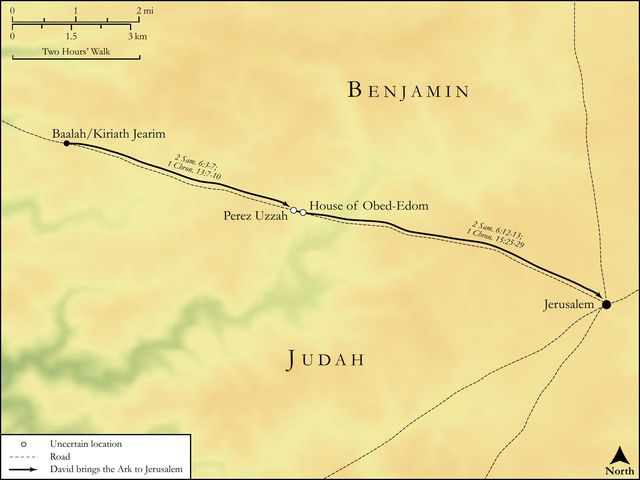
Among the nations, kingship was often viewed as divinely ordained, but dynasties were frequently unstable, subject to coups, assassinations, and foreign conquest. The covenant at Sinai was conditional, its blessings and curses depending on Israel's obedience. Against this backdrop, God's promise to David is revolutionary. David had recently consolidated his kingdom, captured Jerusalem, and brought the Ark of the Covenant there, establishing a central worship site. His desire to build a permanent temple reflected a common practice among kings to solidify their reign and honor their deities. However, God's response subverts this expectation, emphasizing His initiative and the unique nature of His covenant with David. This covenant elevates David's house above the typical fragility of human dynasties, promising a stability and perpetuity that only divine power could guarantee, setting Israel's kingship apart from its neighbors and establishing a unique theological foundation.
Key Themes
ShowHideThe central theme is the Davidic Covenant, a foundational theological pillar promising an eternal dynasty to David. Unlike the Mosaic Covenant, which was conditional on Israel's obedience, this covenant is largely unconditional in its ultimate establishment, resting on God's faithfulness, though individual kings would face consequences for disobedience, as seen in 2 Samuel 7:14. The repeated phrase "established for ever" underscores the perpetuity of David's royal line and authority, signifying an unending duration that transcends the earthly reigns of David and his immediate successors. This promise inherently carries profound Messianic Prophecy, pointing beyond any human king to a divine-human ruler. The ultimate fulfillment of this eternal kingdom is found in Jesus Christ, the Messiah, who is a direct descendant of David and whose kingdom is indeed eternal, as prophesied in Isaiah 9:7 and confirmed by the angel Gabriel's words to Mary in Luke 1:32-33.
Exposition and Analysis
ShowHideKey Word Analysis
ShowHideThis word, used for the first instance of "established" in the verse, means "to build up or support; to foster as a parent or nurse; figuratively to render (or be) firm or faithful, to trust or believe, to be permanent or quiet; morally to be true or certain." Here, it signifies the divine act of making David's "house" (dynasty) and "kingdom" firm, sure, and enduring. It speaks to God's faithfulness as the ultimate sustainer of David's lineage.
This word, used for the second instance of "established" concerning the throne, means "to be erect (i.e. stand perpendicular); hence (causatively) to set up, in a great variety of applications, whether literal (establish, fix, prepare, apply), or figurative (appoint, render sure, proper or prosperous)." Its application to the throne emphasizes the divine action of setting it up firmly, making it stable, and ensuring its perpetual existence. It underscores the divine appointment and security of David's royal authority.
This term denotes "time out of mind (past or future), i.e. (practically) eternity; frequentatively, adverbial (especially with prepositional prefix) always." When applied to God's promises and especially to a kingdom, it carries the weight of unending, eternal duration. In the context of the Davidic Covenant and its ultimate fulfillment in Christ, ʻôwlâm here clearly points to an absolute and truly eternal establishment, transcending all earthly limitations and time, signifying perpetuity without end.
Verse Breakdown
ShowHide"And thine house and thy kingdom shall be established for ever before thee:"
This initial clause declares the divine guarantee over two key aspects of David's legacy: his "house" (H1004, bayith), referring to his lineage or dynasty, and his "kingdom" (H4467, mamlâkâh), referring to the realm over which his descendants would rule. The phrase "shall be established for ever" emphasizes the divine act of securing their permanence through God's faithfulness (H539, ʼâman). The inclusion of "before thee" (H6440, pânîym) suggests that David himself would witness the beginning of this eternal establishment, and that this enduring reality would be perpetually in his sight and honor, a testament to God's faithfulness to him.
"thy throne shall be established for ever."
This second clause functions as a powerful reinforcement and intensification of the first, employing parallelism to reiterate the central promise. "Thy throne" (H3678, kiççêʼ) specifically refers to the seat of royal authority, symbolizing David's kingly power and dominion. The repetition of "shall be established for ever" (using H3559, kûwn, for the second "established") underscores the absolute and unconditional nature of God's promise concerning the perpetuity of David's royal authority. It signifies that the very foundation of his rule, embodied in the throne, would endure eternally, pointing towards a sovereign who would reign without end.
Literary Devices
ShowHideSecond Samuel 7:16 masterfully employs several literary devices to convey its profound theological weight. The most prominent is Repetition, specifically of the phrase "shall be established for ever." This emphatic reiteration serves to underscore the absolute certainty and unending duration of God's promise concerning David's dynasty, kingdom, and throne. It leaves no doubt about the divine intention for perpetuity. Parallelism is also evident, with the second clause ("thy throne shall be established for ever") echoing and reinforcing the first ("thine house and thy kingdom shall be established for ever"). This creates a sense of completeness and undeniable assurance, linking the abstract concepts of "house" and "kingdom" directly to the concrete symbol of "throne." The verse also exhibits characteristics of Covenant Language and Divine Fiat, as it is a direct, declarative pronouncement from God, carrying the weight of an unbreakable, sovereign decree. This authoritative tone highlights the unilateral nature of God's commitment to David.
Theological and Thematic Connections
ShowHideThe promise in 2 Samuel 7:16 is a cornerstone of biblical theology, establishing the Davidic Covenant as a pivotal moment in salvation history. It reveals God's unwavering faithfulness and His sovereign plan to establish an eternal kingdom through a chosen lineage. This covenant is distinct from others, particularly in its emphasis on divine initiative and its unconditional nature regarding ultimate fulfillment, even while individual kings might face disciplinary consequences. It provides the essential framework for understanding later prophetic literature that anticipates a coming Davidic king, and it sets the stage for the New Testament's presentation of Jesus as the ultimate heir to David's throne. The perpetuity promised here is not merely a long earthly reign but points to a transcendent, eternal dominion that finds its ultimate expression in the Messiah.
Reflection and Application
ShowHideSecond Samuel 7:16 offers profound assurance of God's unwavering faithfulness and the unshakeable stability of His divine plan. In a world characterized by change, uncertainty, and the rise and fall of human empires, this verse reminds us that God's promises endure across generations and through all circumstances. It teaches us that God is the ultimate sustainer of history, working out His purposes with perfect sovereignty. For believers today, this provides immense comfort and security, knowing that our hope is anchored not in fleeting human institutions but in the eternal kingdom of God, established through His Christ. It calls us to trust in God's reliability, to find our ultimate security in His unchanging character, and to live with the confidence that His kingdom, unlike any earthly one, will never end. This truth should inspire steadfast faith and a hopeful anticipation of Christ's full and final reign, motivating us to align our lives with His eternal purposes.
Questions for Reflection
ShowHideFAQ
ShowHideWas the Davidic Covenant truly unconditional, given the later failures of David's descendants?
ShowHideThe Davidic Covenant, as articulated in 2 Samuel 7, is often described as unconditional in its ultimate fulfillment, meaning God's promise to establish an eternal dynasty for David would not be revoked, regardless of the obedience or disobedience of individual kings. 2 Samuel 7:14-15 explicitly states that while David's descendants might be disciplined for their iniquity, God's steadfast love would not depart from them as it did from Saul. This ensures the perpetuity of the line and the eventual establishment of the eternal kingdom. However, the blessings and flourishing of the kingdom for any given generation were indeed conditional on the obedience of the reigning king. The exile of Judah (2 Kings 25) demonstrates the consequences of disobedience, but it did not negate the covenant's ultimate promise of a future Davidic king, which was perfectly fulfilled in Jesus Christ.
Christ-Centered Fulfillment
ShowHideSecond Samuel 7:16 finds its ultimate and glorious fulfillment in Jesus Christ, the promised Messiah. While David's earthly kingdom eventually declined and fell, the "for ever" promise could only be realized in a divine-human King. Jesus, born of the virgin Mary, is explicitly identified as a direct descendant of David (Matthew 1:1 and Luke 3:31). The angel Gabriel's announcement to Mary in Luke 1:32-33 directly echoes 2 Samuel 7:16, declaring that Jesus "will be great and will be called the Son of the Most High; and the Lord God will give Him the throne of His father David; and He will reign over the house of Jacob forever, and His kingdom will have no end." This establishes Jesus as the true heir to David's eternal throne. His kingdom is not a temporal, earthly empire, but a spiritual, universal, and eternal reign over the hearts and lives of His people (John 18:36). He is the "Root and the Offspring of David" (Revelation 22:16), the one whose "throne, O God, is forever and ever" (Hebrews 1:8). Thus, 2 Samuel 7:16 points forward to the everlasting reign of Christ, securing not merely a human dynasty, but an eternal spiritual kingdom for all who believe.