


2 Samuel 7:19
Bible text: King James Version (1769 Blayney text) · Public domain
Bible text: King James Version with Strong's numbers · Public domain
Bible text: Berean Standard Bible · Public domain
Bible text: American Standard Version (1901) · Public domain
Bible text: World English Bible, Messianic edition · Public domain
Bible text: Geneva Bible (1599) · Public domain
Bible text: Young's Literal Translation · Public domain
- וַתִּקְטַןva·tik·Tanand it was smallH6994Conj-w ¦ V-Qal-ConsecImperf-3fsVerb Qal Consecutive Imperfect 3rd Singular Feminineוַandתִּקְטַןit was small
- עוֹדodyetH5750Adj-msAdjective Numerical Singular Masculine Absolute
- זֹאתzotthis [thing]H2063PrtParticle Demonstrative
- בְּעֵינֶיךָbe·'ei·Nei·khain your viewH5869Prep-b ¦ N-fdc ¦ 2msNoun Dual Feminine Constructבְּinעֵינֶיviewךָyour
- אֲדֹנָי'a·do·NaiO LordH136N-properNoun Proper Title
- יְהוִהYah·wehYahwehH3069N-properNoun Proper Title
- וַתְּדַבֵּרva·te·da·Berand you have spokenH1696Conj-w ¦ V-Piel-ConsecImperf-2msVerb Piel Consecutive Imperfect 2nd Singular Masculineוַandתְּדַבֵּרyou have spoken
- גַּםgamalsoH1571AdvAdverb
- אֶל'elconcerningH413PrepPreposition
- בֵּיתbeit[the] house ofH1004N-mscNoun Singular Masculine Construct
- עַבְדְּךָ'av·de·Khayour servantH5650N-msc ¦ 2msNoun Singular Masculine Constructעַבְדְּservantךָyour
- לְמֵרָחוֹקle·me·ra·Chok<to> from distant [time]H7350Prep-l ¦ Prep-m ¦ Adj-msAdjective Singular Masculine Absoluteלְ<to>מֵfromרָחוֹקdistant [time]
- וְזֹאתve·Zotand thisH2063Conj-w ¦ PrtParticle Demonstrativeוְandזֹאתthis
- תּוֹרַתto·Rat[is] [the] manner ofH8452N-fscNoun Singular Feminine Construct
- הָאָדָםha·'a·Dam<the> humankindH120Art ¦ N-msNoun Singular Masculine Absoluteהָ<the>אָדָםhumankind
- אֲדֹנָי'a·do·NaiO LordH136N-properNoun Proper Title
- יְהוִהYah·wehYahwehH3069N-properNoun Proper Title
English is a literal word-by-word gloss of the Hebrew, not the KJV's wording. Why?
This is the original text the KJV's translators worked from — each Hebrew word with its own literal English meaning in this verse, prepared by scholars at Tyndale House, Cambridge. The KJV translates whole sentences, not word by word, so its wording differs: one Hebrew word can become several English words, and the KJV may choose “the LORD” where the gloss reads “Yahweh”. Both are faithful — they answer different questions. For the KJV's own rendering, switch to the KJV text.
Details
See on the biblical-era maps
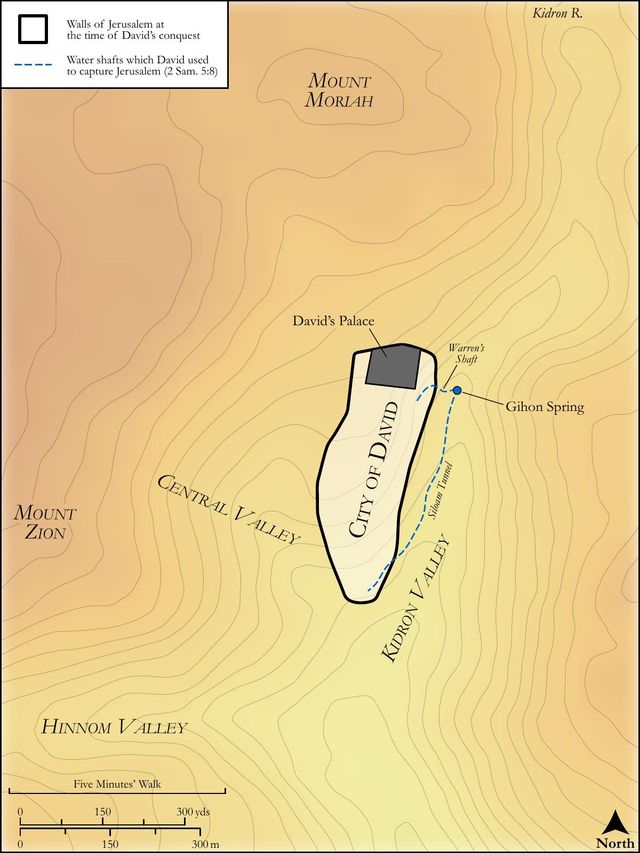
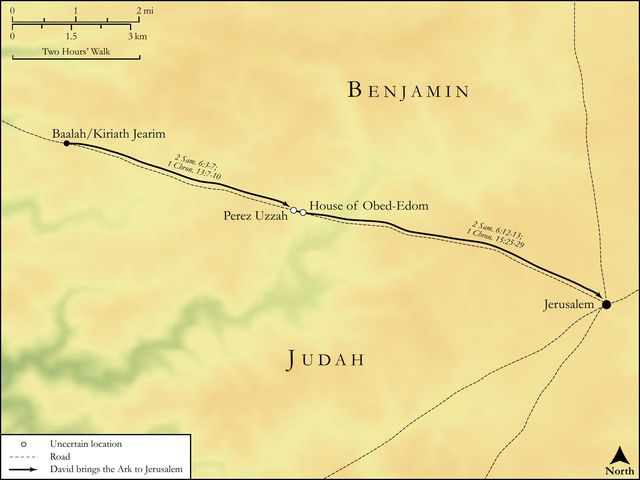
Study this verse
Public-domain commentary
Matthew Henry
From his Commentary on the Whole Bible. Henry comments on passages, not single verses — this entry covers 2 Samuel 7:18–29. His four-level outline is real structure in the source text, so it is rendered as structure.
We have here the solemn address David made to God, in answer to the gracious message God had sent him. We are not told what he said to Nathan; no doubt he received him very kindly and respectfully as God's messenger. But his answer to God he took himself, and did not send by Nathan. When ministers deliver God's message to us, it is not to them, but to God, that our hearts must reply; he understands the language of the heart, and to him we may come boldly. David had no sooner received the message than, while the impressions of it were fresh, he retired to return an answer. Observe,
I.The place he retired to:
He went in before the Lord, that is, into the tabernacle where the ark was, which was the token of God's presence; before that he presented himself. God's will now is that men pray everywhere; but, wherever we pray, we must set ourselves as before the Lord and set him before us.
II.The posture he put himself into: He sat before the Lord.
1.It denotes the posture of his body. Kneeling or standing is certainly the most proper gesture to be used in prayer; but the Jews, from this instance, say, "It was allowed to the kings of the house of David to sit in the temple, and to no other." But this will by no means justify the ordinary use of that gesture in prayer, whatever may be allowed in a case of necessity. David went in, and took his place before the Lord, so it may be read; but, when he prayed, he stood up as the manner was. Or he went in and continued before the Lord, staid some time silently meditating, before he began his prayer, and then remained longer than usual in the tabernacle. Or,
2.It may denote the frame of his spirit at this time. He went in, and composed himself before the Lord; thus we should do in all our approaches to God. O God, my heart is fixed, my heart is fixed.
III.The prayer itself, which is full of the breathings of pious and devout affection towards God.
1.He speaks very humbly of himself and his own merits. So he begins as one astonished: Who am I, O Lord God! and what is my house? Sa2 7:18. God had reminded him of the meanness of his original (Sa2 7:8) and he subscribed to it; he had low thoughts, (1.) Of his personal merits: Who am I? He was upon all accounts a very considerable and valuable man. His endowments both of body and mind were extraordinary. His gifts and graces were eminent. He was a man of honour, success, and usefulness, the darling of his country and the dread of its enemies. Yet, when he comes to speak of himself before God, he says, "Who am I? A man not worth taking notice of." (2.) Of the merits of his family: What is my house? His house was of the royal tribe, and descended from the prince of that tribe; he was allied to the best families of the country, and yet, like Gideon, thinks his family poor in Judah and himself the least in his father's house, Jdg 6:15. David thus humbled himself when Saul's daughter was proposed to him for a wife (Sa1 18:18), but now with much more reason. Note, It very well becomes the greatest and best of men, even in the midst of the highest advancements, to have low and mean thoughts of themselves; for the greatest of men are worms, the best are sinners, and those that are highest advanced have nothing but what they have received: "What am I, that thou hast brought me hitherto, brought me to the kingdom, and to a settlement in it, and rest from all my enemies?" It intimates that he could not have reached this himself by his own management, if God had not brought him to it. All our attainments must be looked upon as God's vouchsafements.
2.He speaks very highly and honourably of God's favours to him.
(1.)In what he had done for him: "Thou hast brought me hitherto, to this great dignity and dominion. Hitherto thou hast helped me." Though we should be left at uncertainty concerning further mercy, we have great reason to be thankful for that which has been done for us hitherto, Act 26:22.
(2.)In what he had yet further promised him. God had done great things for him already, and yet, as if those had been nothing, he had promised to do much more, Sa2 7:19. Note, What God has laid out upon his people is much, but what he has laid up for them is infinitely more, Psa 31:19. The present graces and comforts of the saints are invaluable gifts; and yet, as if these were too little for God to bestow upon his children, he has spoken concerning them for a great while to come, even as far as eternity itself reaches. Of this we must own, as David here, [1.] That it is far beyond what we could expect: Is this the manner of men? that is, First, Can man expect to be so dealt with by his Maker? Is this the law of Adam? Note, Considering what the character and condition of man are, it is very surprising and amazing that God should deal with him as he does. Man is a mean creature, and therefore under a law of distance - unprofitable to God, and therefore under a law of disesteem and disregard - guilty and obnoxious, and therefore under a law of death and damnation. But how unlike are God's dealings with man to this law of Adam! He is brought near to God, purchased at a high rate, taken into covenant and communion with God; could this ever have been thought of? Secondly, Do men usually deal thus with one another? No, the way of our God is far above the manner of men. Though he be high, he has respect to the lowly; and is this the manner of men? Though he is offended by us, he beseeches us to be reconciled, waits to be gracious, multiplies his pardons: and is this the manner of men? Some give another sense of this, reading it thus: And this is the law of man, the Lord Jehovah, that is, "This promise of one whose kingdom shall be established for ever must be understood of one that is a man and yet the Lord Jehovah, this must be the law of such a one. A Messiah from my loins must be man, but, reigning for ever, must be God." [2.] That beyond this there is nothing we can desire: "And what can David say more unto thee? Sa2 7:20. What can I ask or wish for more? Thou, Lord, knowest thy servant, knowest what will make me happy, and what thou hast promised is enough to do so." The promise of Christ includes all. If that man, the Lord God, be ours, what can we ask or think of more? Eph 3:20. The promises of the covenant of grace are framed by him that knows us, and therefore knows how to adapt them to every branch of our necessity. He knows us better than we know ourselves; and therefore let us be satisfied with the provision he has made for us. What can we say more for ourselves in our prayers than he has said for us in his promises?
3.He ascribes all to the free grace of God (Sa2 7:21), both the great things he had done for him and the great things he had made known to him. All was, (1.) For his word's sake, that is, for the sake of Christ the eternal Word; it is all owing to his merit. Or, "That thou mayest magnify thy word of promise above all thy name, in making it the stay and store-house of thy people." (2.) According to thy own heart, thy gracious counsels and designs, ex mero motu - of thy own good pleasure. Even so, Father, because it seemed good in thy eyes. All that God does for his people in his providences, and secures to them in his promises, is for his pleasure and for his praise, the pleasure of his will and the praise of his word.
4.He adores the greatness and glory of God (Sa2 7:22): Thou art great, O Lord God! for there is none like thee. God's gracious condescension to him, and the honour he had put upon him, did not at all abate his awful veneration for the divine Majesty; for the nearer any are brought to God the more they see of his glory, and the dearer we are in his eyes the greater he should be in ours. And this we acknowledge concerning God, that there is no being like him, nor any God besides him, and that what we have seen with our eyes of his power and goodness is according to all that we have heard with our ears, and the one half not told us.
5.He expresses a great esteem for the Israel of God, Sa2 7:23, Sa2 7:24. As there was none among the gods to be compared with Jehovah, so none among the nations to be compared with Israel, considering,
(1.)The works he had done for them. He went to redeem them, applied himself to it as a great work, went about it with solemnity. Elohim halecu, dii iveruni - Gods went, as if there was the same consultation and concurrence of all the persons in the blessed Trinity about the work of redemption that there was about the work of creation, when God said, Let us make man. Whom those that were sent of God went to redeem; so the Chaldee, meaning, I suppose, Moses and Aaron. The redemption of Israel, as described here, was typical of our redemption by Christ in that,
[1.]They were redeemed from the nations and their gods; so are we from all iniquity and all conformity to this present world. Christ came to save his people from their sins.
[2.]They were redeemed to be a peculiar people unto God, purified and appropriated to himself, that he might make himself a great name and do for them great things. The honour of God, and the eternal happiness of the saints, are the two things aimed at in their redemption.
(2.)The covenant he had made with them, Sa2 7:24. It was, [1.] Mutual: "They to be a people to thee, and thou to be a God to them; all their interests consecrated to thee, and all thy attributes engaged for them." [2.] Immutable: "Thou hast confirmed them." He that makes the covenant makes it sure and will make it good.
6.He concludes with humble petitions to God.
(1.)He grounds his petitions upon the message which God had sent him (Sa2 7:27): Thou hast revealed this to thy servant, that is, "Thou hast of thy own good will given me the promise that thou wilt build me a house, else I could never have found in my heart to pray such a prayer as this. I durst not have asked such great things if I had not been directed and encouraged by thy promise to ask them. They are indeed too great for me to beg, but not too great for thee to give. Thy servant has found in his heart to pray this prayer;" so it is in the original, and the Septuagint. Many, when they go to pray, have their hearts to seek, but David's heart was found, that is, it was fixed, gathered in from its wanderings, and entirely engaged to the duty and employed in it. That prayer which is found in the tongue only will not please God; it must be found in the heart; the heart must be lifted up and poured out before God. My son, give God thy heart.
(2.)He builds his faith and hopes to speed upon the fidelity of God's promise (Sa2 7:25): "Thou art that God (thou art he, even that God, the Lord of hosts, and God of Israel, or that God whose words are true, that God whom one may depend upon); and thou hast promised this goodness unto thy servant, which I am therefore bold to pray for." (3.) Thence he fetches the matter of his prayer, and refers to that as the guide of his prayers.
[1.]He prays for the performance of God's promise (Sa2 7:25): "Let the word be made good to me, on which thou hast caused me to hope (Psa 119:49) and do as thou hast said; I desire no more, and I expect no less; so full is the promise, and so firm." Thus we must turn God's promises into prayers, and then they shall be turned into performances; for, with God, saying and doing are not two things, as they often are with men. God will do as he hath said.
[2.]He prays for the glorifying of God's name (Sa2 7:26): Let thy name be magnified for ever. This ought to be the summary and centre of all our prayers, the Alpha and the Omega of them. Begin with Hallowed be thy name, and end with Thine is the glory for ever. "Whether I be magnified or no, let thy name be magnified." And he reckons that nothing magnifies God's name more than this, to say, with suitable affections, The Lord of hosts is the God over Israel. This bespeaks the God of Israel gloriously great, that he is the Lord of hosts; and this bespeaks the Lord of hosts gloriously good, that he is God over Israel. In both, let his name be magnified for ever. Let all the creatures and all the churches give him the glory of these two. David desired the performance of God's promise for the honour, not of his own name, but of God's. Thus the Son of David prayed, Father, glorify thy name (Joh 12:28), and (Joh 17:1), Glorify thy Son, that thy Son may also glorify thee.
[3.]He prays for his house, for to that the promise has special reference, First, That it might be happy (Sa2 7:29): Let it please thee to bless the house of thy servant; and again, with thy blessing. "Let the house of thy servant be truly and eternally blessed. Those whom thou blessest are blessed indeed." The care of good men is very much concerning their families; and the best entail on their families is that of the blessing of God. The repetition of this request is not a vain repetition, but expressive of the value he had of the divine blessing, and his earnest desire of it, as all in all to the happiness of his family. Secondly, That the happiness of it might remain: "Let it be established before thee (Sa2 7:26); let it continue for ever before thee." Sa2 7:29. He prayed, 1. That the entail of the crown might not be cut off, but remain in his family, that none of his might ever forfeit it, but that they might walk before God, which would be their establishment. 2. That his kingdom might have its perfection and perpetuity in the kingdom of the Messiah. When Christ for ever sat down on the right hand of God (Heb 10:12), and received all possible assurance that his seed and throne shall be as the days of heaven, this prayer of David the son of Jesse for his seed was abundantly answered, that it might continue before God for ever. See Psa 72:17. The perpetuity of the Messiah's kingdom is the desire and faith of all good people.
Historical interpretation
Historical reception
1 surviving comment on this verse from the historical church.
David, understanding this, says in the second book of Kings [Samuel] … “You did also speak of the house of your servant for a long time to come.” And, further on, “And now begin and bless the house of your servant that it may endure forever,” etc. At that time, David was about to beget his son through whom his lineage would be carried down to Christ; through whom, in turn, his house was to be everlasting—indeed, identified with the house of God. It was to be called the “house of David” because [it was] of David’s stock and, simultaneously, the “house of God” because it was a temple to God made not of stones but of people. In this house God’s people shall everlastingly dwell with their God and in their God, and God with his people and in his people, God filling his people, his people filled with their God, so that “God may be all in all”—the very same God being their prize in peace who was their strength in battle.It was with this in view that, when Nathan had said, “And the Lord said to you, that you shall build him a house,” David said further on, “Because you, O Lord of hosts, God of Israel, have revealed to the ear of your servant, saying, ‘I will build you a house.’ ” This is a house which we build by living virtuously and which God builds by helping us to live virtuously, for “unless the Lord builds the house, those who build it labor in vain.”
Only, however, when this house receives its final consecration will the words God spoke by Nathan’s lips come true: “And I will appoint a place for my people Israel, and I will plant them, and they shall dwell therein, and shall be disturbed no more: neither shall the children of iniquity afflict them any more as they did before, from the day that I appointed judges over my people Israel.”
Continue studying 2 Samuel 7:19 across the web’s major study libraries — every link below opens this exact verse, chapter, or book on the destination site.
Read & Compare
 BibleGatewayThis verse in more than 200 translations and 70 languages.
 Bible.comThe YouVersion reader — hundreds of translations, reading plans, and highlights.
 ESV.orgCrossway's official English Standard Version reader.
 NET BibleThe NET translation with 60,000+ translators' notes on every rendering decision.
 STEP BibleTyndale House's free study tool — original text, vocabulary, and scholarly resources.
 BibliaLogos Bible Software's free web reader.
 USCCBThe New American Bible (Revised Edition) with the U.S. bishops' study notes.
Commentaries
 BibleHub CommentariesDozens of classic commentaries on this verse, gathered on one page.
 StudyLightMore than 100 commentary sets — the largest collection on the web.
 BibleRefPlain-English commentary on what this verse means, verse by verse.
 Enduring WordDavid Guzik's free commentary on this chapter, widely used by Bible teachers.
 Bible Study ToolsVerse commentary alongside Greek and Hebrew study aids.
Original Language & Research
- BibleHub InterlinearThe verse word by word — original language, transliteration, and English.
- BibleHub LexiconEvery word's original-language definition and Strong's entry.
 Blue Letter BibleDeep-study tools — Strong's numbers, concordance, and word studies.
 SefariaThe Hebrew text with Rashi and centuries of Jewish commentary.
Sermons, Hymns & Audio


TrulyRandomVerse is not affiliated with these sites and doesn’t control their content. They’re linked because they’re genuinely useful.
Summary
2 Samuel 7:19 captures King David's profound astonishment and humble adoration in response to God's covenant promise. Having just heard through the prophet Nathan that God, not David, would build an enduring "house"—a dynasty and an eternal kingdom—David marvels at the sheer magnitude of divine favor. He recognizes that what seems an immeasurable blessing to him is, from God's infinite perspective, "yet a small thing," hinting at even grander, eternal purposes. David's rhetorical question, "And is this the manner of man, O Lord GOD?", underscores his realization that God's ways, His generosity, and His faithfulness far transcend any human custom or expectation.
Context
ShowHideLiterary Context
This verse is a pivotal moment within David's prayer of thanksgiving, recorded in 2 Samuel 7:18-29. It immediately follows the prophet Nathan's delivery of the Davidic Covenant (2 Samuel 7:8-17), where God reveals His intention to build David an eternal "house" (dynasty) rather than allowing David to build a physical "house" (temple) for Him. David's initial desire to build a dwelling for the Ark of the Covenant, expressed in 2 Samuel 7:1-3, is met with a divine reversal: God will establish David's throne forever. Verse 19 encapsulates David's overwhelmed and humbled response to this extraordinary, unmerited promise, extending beyond his lifetime and even beyond human comprehension.
Historical & Cultural Context
David's reign (c. 1010-970 BC) marked a period of consolidation and expansion for Israel, with Jerusalem established as its political and religious capital. The concept of a dynastic succession was common among the kings of the nations, but the unconditional and eternal nature of God's promise to David was utterly unique. Unlike covenants between men, which depended on each party keeping its oath, the Davidic Covenant, as revealed here, is presented as an unconditional divine initiative. David's astonishment reflects a deep understanding of the typical "manner of man," where such enduring, unmerited favor is not bestowed, especially on one who began as a humble shepherd (2 Samuel 7:8). This covenant would shape Israelite messianic expectations for centuries, pointing to a future king from David's lineage who would reign forever.
Key Themes
ShowHide2 Samuel 7 is foundational for several major theological themes. The Davidic Covenant itself is paramount, establishing an eternal dynasty and throne for David's lineage, which ultimately finds its fulfillment in Jesus Christ. This chapter also highlights God's exceeding generosity and grace, demonstrating His propensity to bless far beyond human expectation or desert, as David observes that even this grand promise is "yet a small thing" in God's sight. Furthermore, David's rhetorical question, "And is this the manner of man, O Lord GOD?", powerfully conveys God's transcendence and uniqueness, emphasizing that His ways, His love, and His faithfulness are utterly unlike human custom or behavior. Finally, David's prayer models humility in response to divine favor, as he is not puffed up by the promise but humbled and astonished by God's unmerited grace, recognizing his own unworthiness (2 Samuel 7:18).
Exposition and Analysis
ShowHideKey Word Analysis
ShowHideThis word (H6994) typically means "small," "insignificant," or "unimportant." In this context, David uses it to express his awe at God's perspective. What is an immense, incomprehensible blessing from a human viewpoint—an eternal dynasty—is considered by the omnipotent God as merely a "small thing" in the grand scope of His divine plan. This highlights God's boundless capacity for blessing and His eternal perspective that dwarfs even the most significant human achievements or aspirations.
This term (H1004) carries a deliberate double meaning in 2 Samuel 7. Initially, David desired to build God a "house" (a physical temple). However, God, through Nathan, declares that He will build David a "house," referring not to a physical dwelling but to a lasting dynasty or lineage. In verse 19, David understands this promise of an enduring "house" "for a great while to come" as the establishment of his royal line, a promise of an eternal succession that far exceeds the typical lifespan of human kingdoms.
This phrase (H8452 + H120) is somewhat ambiguous but profoundly significant. Tôwrâh can mean "instruction," "law," "custom," or "way." ʼÂdâm means "a human being," "mankind," or "person." Thus, "manner of man" can imply "the custom of man," "the law for man," or even "the destiny of man." In David's rhetorical question, it powerfully conveys that God's actions are entirely outside the realm of human custom, expectation, or capability. Humans do not typically bestow such unconditional, long-lasting, and far-reaching favor upon their servants. It underscores the unique, sovereign, and utterly transcendent nature of God's grace.
Verse Breakdown
ShowHide"And this was yet a small thing in thy sight, O Lord GOD;"
David begins by acknowledging the incredible magnitude of God's promise of an eternal dynasty. Yet, he immediately contrasts this with God's perspective, recognizing that for the Almighty, even such a monumental blessing is considered "a small thing." This reveals David's profound insight into God's infinite power and boundless generosity, suggesting that God's ultimate plans and blessings extend far beyond what any human could conceive or receive. The address "O Lord GOD" (Adonai Yahweh) emphasizes God's absolute sovereignty and covenant faithfulness.
"but thou hast spoken also of thy servant's house for a great while to come."
This clause specifies the content of the divine promise that has so overwhelmed David. God has not merely blessed David in his lifetime, but has spoken of an enduring "house"—a dynasty—that will last "for a great while to come," implying an indefinite or even eternal future. This refers to the establishment of David's lineage on the throne, a promise of continuity and stability for his royal line, which was unprecedented and highly coveted by ancient kings.
"And [is] this the manner of man, O Lord GOD?"
This is a rhetorical question that expresses David's utter astonishment and awe. He is essentially asking, "Is this how humans typically act, O Lord GOD?" The answer is a resounding "No." David recognizes that God's way of dealing with humanity, His unmerited favor, His unconditional promises, and His eternal perspective are entirely alien to human custom, law, or behavior. This highlights the unique, divine character of God, whose love and faithfulness operate on a plane far above human limitations and expectations.
Literary Devices
ShowHideThe verse employs several powerful literary devices. The most prominent is the Rhetorical Question ("And is this the manner of man, O Lord GOD?"), which David uses not to seek information but to express his profound awe and emphasize the unique, incomparable nature of God's actions compared to human behavior. There is also a subtle form of Hyperbole or divine Understatement in "this was yet a small thing in thy sight." From a human perspective, an eternal dynasty is an immeasurable gift, but from God's infinite perspective, it is merely a "small thing," hinting at the even greater, eternal plans He has. This creates a powerful Contrast between human limitations and divine boundlessness. The repeated address, "O Lord GOD," serves as a form of Repetition that underscores David's reverence and the solemnity of his prayer, reinforcing God's absolute authority and covenant faithfulness.
Theological and Thematic Connections
ShowHide2 Samuel 7:19 stands as a profound testament to God's boundless grace, His unique nature, and the eternal scope of His redemptive plan. David's astonishment at the "small thing" in God's sight, which to him is an incomprehensibly vast promise of an enduring dynasty, reveals a key theological truth: God's generosity and His capacity to bless far exceed human imagination or merit. This verse underscores the unconditional nature of the Davidic Covenant, a divine initiative rooted in God's faithfulness rather than human performance. It challenges us to reconsider our own understanding of God's blessings, recognizing that even what we perceive as immense gifts are but glimpses of His infinitely greater purposes. The "manner of man" is limited by time, self-interest, and finite resources, but God's "manner" is defined by eternity, selfless love, and infinite power, always working toward a grander, more glorious fulfillment than we can possibly conceive.
Reflection and Application
ShowHide2 Samuel 7:19 invites us into David's posture of humble awe before a God whose ways and generosity transcend all human understanding. It challenges us to move beyond a transactional view of faith, where blessings are earned, to embrace a posture of profound gratitude for God's unmerited favor. Just as God lavished an eternal promise upon David, He continues to bless His people in ways that far exceed our merits, our expectations, or even our wildest dreams. This verse encourages us to cultivate a deep trust in God's promises, knowing that if His plans for an earthly dynasty were so vast and enduring, His promises to us in Christ are infinitely more sure and far-reaching, extending into eternity. It calls us to marvel at His unique character, to recognize that His thoughts and ways are indeed higher than ours, and to respond to His extravagant love with genuine humility, worship, and obedient faith.
Questions for Reflection
ShowHideFAQ
ShowHideWhat does David mean by "this was yet a small thing in thy sight"?
ShowHideDavid is expressing his profound awe at God's perspective. From a human viewpoint, the promise of an eternal dynasty is an immense, almost unbelievable blessing. However, David recognizes that for God, who is infinite in power and wisdom, even such a grand promise is considered "a small thing." This highlights God's boundless capacity for blessing and His eternal plan that far surpasses any earthly kingdom or human aspiration. It suggests that God's ultimate purposes are even grander than this incredible covenant with David.
How does 2 Samuel 7:19 relate to the Davidic Covenant?
ShowHideThis verse is David's personal, astonished response to the core promise of the Davidic Covenant, delivered by Nathan in 2 Samuel 7:8-17. Specifically, it refers to God's promise to build David an enduring "house" (a dynasty) that will last "for a great while to come." David's prayer in 2 Samuel 7:18-29 is a testament to his understanding and acceptance of this foundational covenant, which guaranteed an eternal throne and kingdom for his lineage, ultimately pointing to the Messiah.
Why does David ask, "And is this the manner of man, O Lord GOD?"
ShowHideThis rhetorical question underscores David's realization that God's actions and promises are entirely unlike anything a human would do or could even conceive. "The manner of man" refers to human custom, law, behavior, or expectation. David is essentially saying, "Humans do not act with such unconditional generosity, eternal foresight, or unmerited favor." It emphasizes God's unique, transcendent, and sovereign nature, whose love and faithfulness operate on a plane far above human limitations and self-interest. It highlights the divine, rather than human, origin of the covenant.
Christ-Centered Fulfillment
ShowHide2 Samuel 7:19, with David's awe at God's promise of an eternal "house" and his rhetorical question about "the manner of man," finds its ultimate and most glorious fulfillment in Jesus Christ. The "house for a great while to come" is not merely an earthly dynasty, but the eternal spiritual kingdom established by the true Son of David. The angel Gabriel's prophecy to Mary explicitly connects Jesus to this covenant, declaring, "He will be great and will be called the Son of the Most High; and the Lord God will give Him the throne of His father David; and He will reign over the house of Jacob forever, and His kingdom will have no end" (Luke 1:32-33). What was a "small thing" in God's sight—an earthly dynasty—was merely a foreshadowing of the infinitely greater reality of Christ's eternal, heavenly reign. The "manner of man" is to establish temporary kingdoms and fallible lines, but God's "manner" is to establish an everlasting, perfect kingdom through His Son, the Lamb of God, who takes away the sin of the world, and reigns forever. The New Testament writers consistently present Jesus as the fulfillment of the Davidic Covenant, the one who sits on David's throne (Acts 2:29-36) and whose kingdom is indeed without end (Hebrews 1:8). Thus, David's astonishment becomes our own, as we behold the infinitely greater "house" God has built, not of stone, but of redeemed souls, ruled by the eternal King, Jesus Christ, who is the "Root and the Offspring of David" (Revelation 22:16).