


Deuteronomy 31:29
Bible text: King James Version (1769 Blayney text) · Public domain
Bible text: King James Version with Strong's numbers · Public domain
Bible text: Berean Standard Bible · Public domain
Bible text: American Standard Version (1901) · Public domain
Bible text: World English Bible, Messianic edition · Public domain
Bible text: Geneva Bible (1599) · Public domain
Bible text: Young's Literal Translation · Public domain
- כִּיkiforH3588PrtParticle Conditional
- יָדַעְתִּיya·Da'·tiI knowH3045V-Qal-Perf-1csVerb Qal Perfect 1st Singular common gender
- אַחֲרֵי'a·cha·ReiafterH310Adj-mpcAdjective Numerical Plural Masculine Construct
- מוֹתִיmo·Timy deathH4194N-msc ¦ 1csNoun Singular Masculine Constructמוֹתִdeathיmy
- כִּיkithatH3588PrtParticle Conditional
- הַשְׁחֵתhash·Chetcertainly <to act corruptly>H7843V-Hiphil-InfAbsVerb Hiphil Infinitive Absolute
- תַּשְׁחִתוּןtash·chi·Tunyou will act corruptly !H7843V-Hiphil-Imperf-2mp ¦ SfxVerb Hiphil Imperfect 2nd Plural Masculineתַּשְׁחִתוּyou will act corruptlyן!
- וְסַרְתֶּםve·sar·Temand you will turn asideH5493Conj-w ¦ V-Qal-ConsecPerf-2mpVerb Qal Consecutive Perfect 2nd Plural Masculineוְandסַרְתֶּםyou will turn aside
- מִןminfromH4480PrepPreposition
- הַדֶּרֶךְha·De·rekhthe wayH1870Art ¦ N-csNoun Singular common gender Absoluteהַtheדֶּרֶךְway
- אֲשֶׁר'a·SherwhichH834RelParticle Relative
- צִוִּיתִיtzi·Vi·tiI have commandedH6680V-Piel-Perf-1csVerb Piel Perfect 1st Singular common gender
- אֶתְכֶם'et·Khem<obj.> youH853DirObjM ¦ 2mpParticle Object Indicatorאֶתְ<obj.>כֶםyou
- וְקָרָאתve·ka·Ratand it will happen toH7122Conj-w ¦ V-Qal-ConsecPerf-3fsVerb Qal Consecutive Perfect 3rd Singular Feminineוְandקָרָאתit will happen to
- אֶתְכֶם'et·Khem<obj.> youH853DirObjM ¦ 2mpParticle Object Indicatorאֶתְ<obj.>כֶםyou
- הָרָעָהha·ra·'Ah<the> evilH7451Art ¦ N-fsNoun Singular Feminine Absoluteהָ<the>רָעָהevil
- בְּאַחֲרִיתbe·'a·cha·Ritat [the] end ofH319Prep-b ¦ N-fscNoun Singular Feminine Constructבְּatאַחֲרִית[the] end of
- הַיָּמִיםhai·ya·Mimthe daysH3117Art ¦ N-mpNoun Plural Masculine Absoluteהַtheיָּמִיםdays
- כִּיkiforH3588PrtParticle Conditional
- תַעֲשׂוּta·'a·Suyou will doH6213V-Qal-Imperf-2mpVerb Qal Imperfect 2nd Plural Masculine
- אֶת'et<obj.>H853DirObjMParticle Object Indicator
- הָרַעha·Ra'the evilH7451Art ¦ Adj-msAdjective Singular Masculine Absoluteהָtheרַעevil
- בְּעֵינֵיbe·'ei·Neiin [the] eyes ofH5869Prep-b ¦ N-fdcNoun Dual Feminine Constructבְּinעֵינֵי[the] eyes of
- יְהוָהYah·wehYahwehH3068N-properNoun Proper Title
- לְהַכְעִיסוֹle·hakh·'i·Soto provoke to anger himH3707Prep-l ¦ V-Hiphil-Inf ¦ 3msVerb Hiphil Infinitive Constructלְtoהַכְעִיסprovoke to angerוֹhim
- בְּמַעֲשֵׂהbe·ma·'a·Sehby [the] work ofH4639Prep-b ¦ N-mscNoun Singular Masculine Constructבְּbyמַעֲשֵׂה[the] work of
- יְדֵיכֶםye·dei·Khemyour handsH3027N-cdc ¦ 2mpNoun Dual common gender Constructיְדֵיhandsכֶםyour
English is a literal word-by-word gloss of the Hebrew, not the KJV's wording. Why?
This is the original text the KJV's translators worked from — each Hebrew word with its own literal English meaning in this verse, prepared by scholars at Tyndale House, Cambridge. The KJV translates whole sentences, not word by word, so its wording differs: one Hebrew word can become several English words, and the KJV may choose “the LORD” where the gloss reads “Yahweh”. Both are faithful — they answer different questions. For the KJV's own rendering, switch to the KJV text.
Details
See on the biblical-era map
Study this verse
Public-domain commentary
Matthew Henry
From his Commentary on the Whole Bible. Henry comments on passages, not single verses — this entry covers Deuteronomy 31:22–30.
Here, I. The charge is given to Joshua, which God has said (v. 14) he would give him. The same in effect that Moses had given him. The same in effect that Moses had given him (v. 7): Be strong and of a good courage, v. 23. Joshua had now heard from God so much of the wickedness of the people whom he was to have the conduct of as could not but be a discouragement to him: "Nay," says God, "how bad soever they are, thou shalt go through thy understanding, for I will be with thee. Thou shalt put them into possession of Canaan. If they afterwards by their sin throw themselves out of it again, that will be no fault of thine, nor any dishonour to thee, therefore be of good courage."
II.The solemn delivery of the book of the law to the Levites, to be deposited in the side of the ark, is here again related (v.
24-26), of which before, v. 9. Only they are here directed where to treasure up this precious original, not in the ark (there only the two tables were preserved), but in another box by the side of the ark. It is probable that this was the very book that was found in the house of the Lord (having been somehow or other misplaced) in the days of Josiah (Ch2 34:14), and so perhaps the following words here, that it may be a witness against thee, may particularly point at that event, which happened so long after; for the finding of this very book occasioned the public reading of it by Josiah himself, for a witness against a people who were then almost ripe for their ruin by the Babylonians.
III.The song which follows in the next chapter is here delivered to Moses, and by him to the people.
He wrote it first (v. 22), as the Spirit of God indited it, and then spoke it in the ears of all the congregation (v. 30), and taught it to them (v. 22), that is, gave out copies of it, and ordered the people to learn it by heart. It was delivered by word of mouth first, and afterwards in writing, to the elders and officers, as the representatives of their respective tribes (v. 28), by them to be transmitted to their several families and households. It was delivered to them with a solemn appeal to heaven and earth concerning the fair warning which was given them by it of the fatal consequences of their apostasy from God, and with a declaration of the little joy and little hope Moses had in and concerning them. 1. He declares what little joy he had had of them while he was with them, v. 27. It is not in a passion that he says, I know thy rebellion (as once he said unadvisedly, Hear now, you rebels), but it is the result of a long acquaintance with them: you have been rebellious against the Lord. Their rebellions against himself he makes no mention of: these he had long since forgiven and forgotten; but they must be made to hear of their rebellions against God, that they may be ever repented of and never repeated. 2. What little hopes he had of them now that he was leaving them. From what God had now said to him (v. 16) more than from his own experience of them, though that was discouraging enough, he tells them (v. 29), I know that after my death you will utterly corrupt yourselves. Many a sad thought, no doubt, it occasioned to this good man, to foresee the apostasy and ruin of a people he had taken so much pains with, in order to them good and make them happy; but this was his comfort, that he had done his duty, and that God would be glorified, if not in their settlement, yet in their dispersion. Thus our Lord Jesus, a little before his death, foretold the rise of false Christs and false prophets (Mat 24:24), notwithstanding which, and all the apostasies of the latter times, we may be confident that the gates of hell shall not prevail against the church, for the foundation of God stands sure.
Continue studying Deuteronomy 31:29 across the web’s major study libraries — every link below opens this exact verse, chapter, or book on the destination site.
Read & Compare
 BibleGatewayThis verse in more than 200 translations and 70 languages.
 Bible.comThe YouVersion reader — hundreds of translations, reading plans, and highlights.
 ESV.orgCrossway's official English Standard Version reader.
 NET BibleThe NET translation with 60,000+ translators' notes on every rendering decision.
 STEP BibleTyndale House's free study tool — original text, vocabulary, and scholarly resources.
 BibliaLogos Bible Software's free web reader.
 USCCBThe New American Bible (Revised Edition) with the U.S. bishops' study notes.
Commentaries
 BibleHub CommentariesDozens of classic commentaries on this verse, gathered on one page.
 StudyLightMore than 100 commentary sets — the largest collection on the web.
 BibleRefPlain-English commentary on what this verse means, verse by verse.
 Enduring WordDavid Guzik's free commentary on this chapter, widely used by Bible teachers.
 Bible Study ToolsVerse commentary alongside Greek and Hebrew study aids.
Original Language & Research
- BibleHub InterlinearThe verse word by word — original language, transliteration, and English.
- BibleHub LexiconEvery word's original-language definition and Strong's entry.
 Blue Letter BibleDeep-study tools — Strong's numbers, concordance, and word studies.
 SefariaThe Hebrew text with Rashi and centuries of Jewish commentary.
Sermons, Hymns & Audio


TrulyRandomVerse is not affiliated with these sites and doesn’t control their content. They’re linked because they’re genuinely useful.
Summary
Deuteronomy 31:29 presents Moses' solemn and divinely inspired prophecy concerning Israel's future. Delivered just before his death and their entry into the Promised Land, this verse reveals Moses' certain knowledge that after his departure, the Israelites will inevitably succumb to profound spiritual corruption and apostasy. They will deliberately turn away from the path God commanded, leading to severe "evil" befalling them in the "latter days." This calamitous outcome is a direct consequence of their intentional disobedience and idolatry, which will provoke the LORD's righteous anger through the "work of their hands."
Context
ShowHideLiterary Context
Deuteronomy 31 serves as a crucial transitional chapter in Moses' final address to the Israelites, bridging his extensive exposition of the Law (Deuteronomy 1-30) and the account of his death (Deuteronomy 34). Immediately preceding this verse, Moses has formally commissioned Joshua as his successor, encouraging him with the LORD's presence (Deuteronomy 31:7-8), and has commanded the public reading of the Law during the Feast of Booths every seven years (Deuteronomy 31:9-13). Following this pronouncement in verse 29, the LORD Himself confirms Moses' prophecy, instructing Moses to write down the "Song of Moses" (Deuteronomy 31:16-22, 30) as a permanent witness against Israel's future unfaithfulness. The LORD explicitly states, "For I know their imagination which they go about, even now, before I have brought them into the land which I have sworn" (Deuteronomy 31:21). This verse, therefore, is not mere speculation but a divinely revealed, certain pronouncement of Israel's future apostasy, establishing the theological framework for the detailed indictment and warning found in the Song of Moses.
Historical & Cultural Context
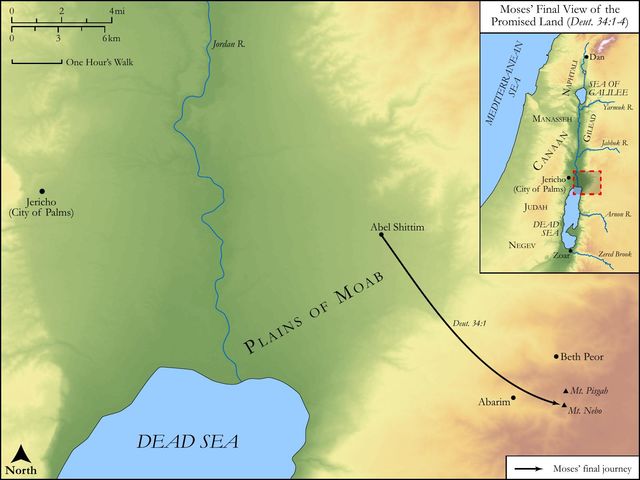
At this pivotal moment, the nation of Israel stands on the plains of Moab, on the brink of entering the land of Canaan. This land was saturated with polytheistic cultures, rampant idolatry, and morally corrupt practices. The covenant established at Mount Sinai was meticulously reaffirmed throughout Deuteronomy. Yahweh had graciously delivered Israel out of Egypt and now laid out His stipulations for His people. Obedience promised abundant blessings, while disobedience guaranteed severe curses, as vividly detailed in Deuteronomy 28. Moses' prophetic warning in Deuteronomy 31:29 reflects his profound understanding of human nature's fallenness and the pervasive, corrupting influence of the surrounding Canaanite religions, which often involved syncretism, fertility cults, and even child sacrifice. The "way which I have commanded you" refers to the comprehensive body of the Torah, the divinely revealed path of life that was intended to set Israel apart as a holy nation. The "work of your hands" is a culturally significant phrase, often referring to the crafting and worship of idols, a direct violation of the first two commandments and a common form of provocation to God among the nations round about.
Key Themes
ShowHideThis verse powerfully contributes to several overarching themes prominent in Deuteronomy and the broader biblical narrative. Firstly, it underscores the theme of Divine Foreknowledge and Sovereignty, demonstrating God's absolute knowledge of future events, even those stemming from human choices and free will. Secondly, it highlights the persistent theme of Human Depravity and Israel's Tendency Towards Apostasy, revealing that even after experiencing God's miraculous deliverance and receiving His perfect law, the human heart remains inherently prone to rebellion and spiritual compromise. This prophetic insight foreshadows the recurring cycle of sin, judgment, and eventual repentance that characterizes much of Israel's history, particularly as recorded in the book of Judges and the books of Samuel and Kings. Thirdly, it reinforces the Covenantal Consequences of Disobedience, emphasizing that turning away from God's "way" inevitably leads to "evil" befalling the nation, echoing the curses outlined in Deuteronomy 28 and the urgent call to choose life and blessing in Deuteronomy 30. Finally, the mention of "latter days" introduces an Eschatological Dimension, pointing to a future period of decisive divine action, often involving judgment for unfaithfulness but ultimately leading to God's redemptive purposes for His people.
Exposition and Analysis
ShowHideKey Word Analysis
ShowHideThis verb (H7843) signifies to decay, ruin, destroy, or spoil, and by implication, to act corruptly. In Deuteronomy 31:29, it is used in a profound moral and spiritual sense, indicating a deliberate and thorough defilement of oneself and the sacred covenant relationship with God. This word is notably used in Genesis 6:11-12 to describe the pervasive wickedness of humanity before the flood, signifying a deep moral decay that warrants divine judgment. For Israel, it implies a complete deviation from the purity of Yahweh worship, leading to idolatry and moral depravity that would ruin their relationship with God and their national well-being.
This noun (H1870) literally means a road or path, but figuratively, as here, it refers to a course of life or mode of action. In the context of the Torah, "the way" refers to the divinely prescribed path of righteousness, obedience, and covenant fidelity. To "turn aside from the way" (as mentioned in the verse) signifies a deliberate departure from God's commands, His revealed will, and the very lifestyle He ordained for His people. It represents a rejection of God's authority and a choice to follow one's own inclinations or the ways of the surrounding pagan nations.
This significant prophetic idiom (H319, H3117) refers to a future period, often distant, marked by decisive events, divine judgment, or the fulfillment of God's overarching redemptive plan. While it can denote any future time of consequence, in the prophetic books, it frequently points to periods of national crisis, exile, and ultimately, the eschatological age of the Messiah. Here, it specifically points to the historical periods of Israel's suffering, oppression, and dispersion that would result from their unfaithfulness, such as the Assyrian and Babylonian exiles, fulfilling Moses' warning.
Verse Breakdown
ShowHide"For I know that after my death ye will utterly corrupt [yourselves]"
Moses speaks with absolute certainty, not mere conjecture, a certainty derived from divine revelation. His impending death serves as a critical juncture, after which Israel's inherent propensity to stray from God will fully manifest. The phrase "utterly corrupt yourselves" (using a reflexive sense of shachath) emphasizes that this corruption is self-inflicted, stemming from their own choices and internal moral decay, rather than being an external imposition.
"and turn aside from the way which I have commanded you"
This clause specifies the nature of their corruption: a deliberate and conscious deviation from the Torah, the path of life and righteousness graciously given by God through Moses. It implies a rejection of God's authority, His covenant stipulations, and His unique relationship with them, choosing instead to follow their own desires or the paths of paganism.
"and evil will befall you in the latter days"
This is presented as the inevitable and just consequence of their profound corruption and turning aside. "Evil" here refers to calamity, disaster, suffering, and national distress, which would historically manifest in periods of oppression, famine, plague, war, and ultimately, exile from the Promised Land. The phrase "in the latter days" signifies that these consequences are not immediate but will unfold over time, pointing to the long and often tragic history of Israel's unfaithfulness and God's patient yet righteous response.
"because ye will do evil in the sight of the LORD, to provoke him to anger through the work of your hands"
This final clause provides the fundamental reason for the impending judgment. The root cause is their intentional "doing evil," which is a direct affront to God's holiness and His covenant. "To provoke him to anger" highlights God's righteous indignation against sin, especially covenant disloyalty and idolatry, which are an offense to His character. "The work of your hands" is a powerful metonymy, primarily referring to the making and worship of idols, but also encompassing all unrighteous deeds, self-made systems, and human efforts that stand in direct opposition to God's revealed will and character.
Literary Devices
ShowHideDeuteronomy 31:29 employs several potent literary devices to convey its weighty message. Prophecy is central, as Moses, speaking under divine inspiration, foretells future events with absolute certainty, revealing God's foreknowledge of Israel's apostasy. This prophecy also functions as Foreshadowing, setting the stage for the recurring narrative of Israel's rebellion and God's subsequent judgments found throughout the historical books of the Old Testament (e.g., Judges, Kings). The phrase "to provoke him to anger" utilizes Anthropomorphism, attributing human emotion (anger) to God to convey the intensity of His righteous displeasure with sin, making His holy response relatable to human understanding. The entire verse is deeply embedded in Covenant Language, drawing on the stipulations, blessings, and curses outlined in the Mosaic covenant, where fidelity brings life and infidelity brings judgment. Finally, the strong phrasing "utterly corrupt yourselves" can be seen as a form of Intensification or hyperbole, emphasizing the complete and pervasive nature of the moral and spiritual decay Moses foresees.
Theological and Thematic Connections
ShowHideDeuteronomy 31:29 serves as a stark and sobering reminder of humanity's persistent struggle with sin and the unwavering holiness of God. Theologically, it underscores the profound truth that God's foreknowledge does not negate human responsibility; Israel's future corruption is presented as a self-chosen path, a consequence of their own free will, not a divinely imposed fate. This verse highlights the enduring tension between God's gracious provision of His perfect law and His people's inherent tendency to stray, revealing the necessity of a transformed heart that the Old Covenant could not fully provide. It also reinforces the principle of divine justice, demonstrating that deliberate rebellion against a holy God inevitably leads to consequences, affirming that God takes sin seriously and will not be mocked. The "latter days" motif points to God's long-term plan, which encompasses both judgment for sin and, ultimately, His redemptive purposes for His people.
Reflection and Application
ShowHideMoses' prophetic warning to ancient Israel resonates deeply with believers today, serving as a sobering reminder that even after experiencing God's profound grace, receiving His clear commands, and witnessing His faithfulness, the human heart remains prone to spiritual drift and self-corruption. This verse calls us to profound self-awareness, recognizing our own capacity for "turning aside from the way" God has commanded, whether through overt disobedience, subtle compromise, or spiritual apathy. It challenges us to critically examine the "works of our hands"—our actions, priorities, allegiances, and even our self-made systems of success or comfort—to ensure they are not provoking God's displeasure but rather bringing Him glory. The warning of "evil befalling" in the "latter days" reminds us that there are real, often cumulative, consequences for persistent sin, both individually and corporately. Therefore, this passage urgently calls for vigilance, humility, and a constant return to God's Word as our ultimate guide, lest we too fall into the trap of spiritual corruption and experience the painful consequences of forsaking His perfect "way."
Questions for Reflection
ShowHideFAQ
ShowHideWhat does "utterly corrupt yourselves" mean in practical terms for Israel?
ShowHideIn practical terms, "utterly corrupt yourselves" (from the Hebrew shâchath) meant a profound and pervasive moral and spiritual decay that originated from within the nation. For Israel, this primarily manifested as widespread idolatry and syncretism, where they would abandon the exclusive worship of the one true God, Yahweh, and turn to the detestable gods of the surrounding Canaanite nations. This often involved engaging in pagan rituals, including fertility cults, child sacrifice, and the construction of high places and Asherah poles, as vividly depicted in books like Judges and 1 and 2 Kings. Beyond overt idolatry, it also encompassed a general disregard for the covenant laws governing justice, purity, and ethical conduct, leading to oppression of the vulnerable, sexual immorality, and a breakdown of the distinct holy identity God intended for them.
How did Israel "provoke him to anger through the work of your hands"?
ShowHideIsrael provoked God to anger primarily through their deliberate acts of disobedience and idolatry, which are powerfully encapsulated by the phrase "the work of your hands." This phrase directly points to the crafting and worship of physical idols, which were tangible representations of their spiritual infidelity and a direct violation of the first two commandments (e.g., the golden calf incident in Exodus 32:8). However, "work of your hands" also extends beyond literal idols to encompass all their self-made systems, unrighteous deeds, and human efforts that stood in opposition to God's will and character. Their actions, such as offering sacrifices to false gods, engaging in the detestable practices of the Canaanites, failing to uphold justice, and relying on their own strength rather than God's, were direct affronts to God's holiness and His covenant with them, stirring His righteous wrath and indignation.
What are the "latter days" referring to here?
ShowHideThe term "latter days" (Hebrew: achărîyth hayyamim) in Deuteronomy 31:29 refers to a future, often distant, period of significant events and consequences for the nation of Israel. While this phrase carries a broader eschatological dimension in other biblical prophecies, here in Deuteronomy, it primarily points to the historical periods of national suffering, judgment, and dispersion that Israel would experience due to their persistent covenant unfaithfulness. This includes the cycles of oppression under the Judges, the division of the kingdom, the Assyrian exile of the northern kingdom, and especially the Babylonian exile of the southern kingdom. These were periods when "evil" indeed befell them, precisely fulfilling Moses' prophecy. Ultimately, in the broader prophetic tradition, "latter days" also points to the ultimate redemption and restoration that God would bring through the Messiah, providing a future hope beyond the immediate judgment.
Christ-Centered Fulfillment
ShowHideDeuteronomy 31:29, with its stark prophecy of Israel's inevitable corruption and turning away from God's "way," profoundly underscores the absolute necessity of Christ. Moses' lamentable foreknowledge reveals the inherent limitation of the Old Covenant system: while the Law was holy and good, it could not truly transform the human heart or empower people to consistently obey (Romans 8:3). The "latter days" of Israel's judgment, foreseen by Moses, ultimately point to the desperate need for a new covenant, one where the Law is not merely an external command but is written on the heart, enabling true obedience (Jeremiah 31:31-34). Jesus Christ is the perfect fulfillment of this new covenant. He is the true Israelite who perfectly walked "the way" that Israel failed to keep, never corrupting Himself or turning aside, even to the point of obedient death on a cross (John 14:6 and Philippians 2:8). Through His atoning sacrifice, Jesus takes away the sin that provokes God's anger, offering forgiveness and the indwelling Holy Spirit to empower believers to walk in God's ways, thereby fulfilling the Law's righteous requirements in their lives (Romans 8:4). Thus, Moses' sorrowful prophecy of Israel's failure ultimately serves to magnify the glory of Christ, who provides the only true and lasting solution to humanity's inherent tendency to corrupt itself and turn away from God.