


Deuteronomy 31:27
- כִּיkiforH3588PrtParticle Conditional
- אָנֹכִי'a·no·KhiIH595Pro-1csPronoun Personal 1st Singular common gender
- יָדַעְתִּיya·Da'·tiI knowH3045V-Qal-Perf-1csVerb Qal Perfect 1st Singular common gender
- אֶת'et<obj.>H853DirObjMParticle Object Indicator
- מֶרְיְךָmer·ye·Khayour rebellionH4805N-msc ¦ 2msNoun Singular Masculine Constructמֶרְיְrebellionךָyour
- וְאֶתve·'Etand <obj.>H853Conj-w ¦ DirObjMParticle Object Indicatorוְandאֶת<obj.>
- עָרְפְּךָ'a·re·pe·Khayour neckH6203N-msc ¦ 2msNoun Singular Masculine Constructעָרְפְּneckךָyour
- הַקָּשֶׁהha·ka·Sheh<the> stiffH7186Art ¦ Adj-msAdjective Singular Masculine Absoluteהַ<the>קָּשֶׁהstiff
- הֵןhenhere!H2005PrtParticle Interjection
- בְּעוֹדֶנִּיbe·'o·de·Niwhen still IH5750Prep-b ¦ Adj-msc ¦ 1csAdjective Numerical Singular Masculine ConstructבְּwhenעוֹדֶstillנִּיI
- חַיchai[am] aliveH2416Adj-msAdjective Singular Masculine Absolute
- עִמָּכֶם'i·ma·Khemwith youH5973Prep ¦ 2mpPreposition Definiteעִמָּwithכֶםyou
- הַיּוֹםhai·Yomthis dayH3117Art ¦ N-msNoun Singular Masculine Absoluteהַthisיּוֹםday
- מַמְרִיםmam·RimrebelliousH4784V-Hiphil-Prtcpl-mpVerb Hiphil Participle Plural Masculine Absolute
- הֱיִתֶםhe·yi·Temyou have beenH1961V-Qal-Perf-2mpVerb Qal Perfect 2nd Plural Masculine
- עִם'imwithH5973PrepPreposition
- יְהֹוָהYah·wehYahwehH3068N-properNoun Proper Title
- וְאַףve·'Afand indeed?H637Conj-w ¦ PrtParticle Interjectionוְandאַףindeed?
- כִּיkiforH3588PrtParticle Conditional
- אַחֲרֵי'a·cha·ReiafterH310Adj-mpcAdjective Numerical Plural Masculine Construct
- מוֹתִיmo·Timy deathH4194N-msc ¦ 1csNoun Singular Masculine Constructמוֹתִdeathיmy
English is a literal word-by-word gloss of the Hebrew, not the KJV's wording. Why?
This is the original text the KJV's translators worked from — each Hebrew word with its own literal English meaning in this verse, prepared by scholars at Tyndale House, Cambridge. The KJV translates whole sentences, not word by word, so its wording differs: one Hebrew word can become several English words, and the KJV may choose “the LORD” where the gloss reads “Yahweh”. Both are faithful — they answer different questions. For the KJV's own rendering, switch to the KJV text.
Details
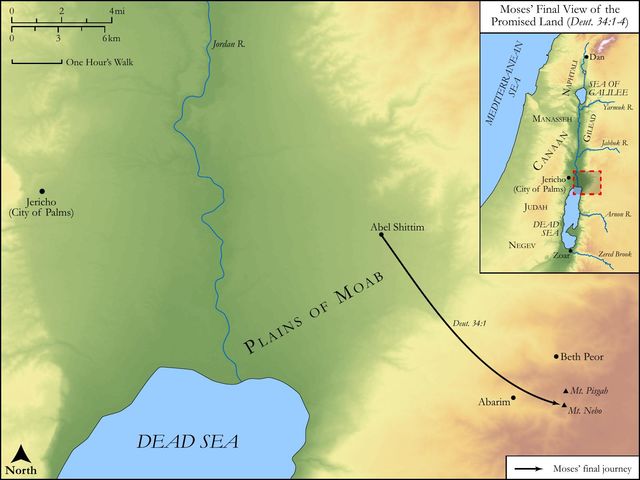
See on the biblical-era map
Study this verse
Public-domain commentary
Matthew Henry
From his Commentary on the Whole Bible. Henry comments on passages, not single verses — this entry covers Deuteronomy 31:22–30.
Here, I. The charge is given to Joshua, which God has said (v. 14) he would give him. The same in effect that Moses had given him. The same in effect that Moses had given him (v. 7): Be strong and of a good courage, v. 23. Joshua had now heard from God so much of the wickedness of the people whom he was to have the conduct of as could not but be a discouragement to him: "Nay," says God, "how bad soever they are, thou shalt go through thy understanding, for I will be with thee. Thou shalt put them into possession of Canaan. If they afterwards by their sin throw themselves out of it again, that will be no fault of thine, nor any dishonour to thee, therefore be of good courage."
II.The solemn delivery of the book of the law to the Levites, to be deposited in the side of the ark, is here again related (v.
24-26), of which before, v. 9. Only they are here directed where to treasure up this precious original, not in the ark (there only the two tables were preserved), but in another box by the side of the ark. It is probable that this was the very book that was found in the house of the Lord (having been somehow or other misplaced) in the days of Josiah (Ch2 34:14), and so perhaps the following words here, that it may be a witness against thee, may particularly point at that event, which happened so long after; for the finding of this very book occasioned the public reading of it by Josiah himself, for a witness against a people who were then almost ripe for their ruin by the Babylonians.
III.The song which follows in the next chapter is here delivered to Moses, and by him to the people.
He wrote it first (v. 22), as the Spirit of God indited it, and then spoke it in the ears of all the congregation (v. 30), and taught it to them (v. 22), that is, gave out copies of it, and ordered the people to learn it by heart. It was delivered by word of mouth first, and afterwards in writing, to the elders and officers, as the representatives of their respective tribes (v. 28), by them to be transmitted to their several families and households. It was delivered to them with a solemn appeal to heaven and earth concerning the fair warning which was given them by it of the fatal consequences of their apostasy from God, and with a declaration of the little joy and little hope Moses had in and concerning them. 1. He declares what little joy he had had of them while he was with them, v. 27. It is not in a passion that he says, I know thy rebellion (as once he said unadvisedly, Hear now, you rebels), but it is the result of a long acquaintance with them: you have been rebellious against the Lord. Their rebellions against himself he makes no mention of: these he had long since forgiven and forgotten; but they must be made to hear of their rebellions against God, that they may be ever repented of and never repeated. 2. What little hopes he had of them now that he was leaving them. From what God had now said to him (v. 16) more than from his own experience of them, though that was discouraging enough, he tells them (v. 29), I know that after my death you will utterly corrupt yourselves. Many a sad thought, no doubt, it occasioned to this good man, to foresee the apostasy and ruin of a people he had taken so much pains with, in order to them good and make them happy; but this was his comfort, that he had done his duty, and that God would be glorified, if not in their settlement, yet in their dispersion. Thus our Lord Jesus, a little before his death, foretold the rise of false Christs and false prophets (Mat 24:24), notwithstanding which, and all the apostasies of the latter times, we may be confident that the gates of hell shall not prevail against the church, for the foundation of God stands sure.
Continue studying Deuteronomy 31:27 across the web’s major study libraries — every link below opens this exact verse, chapter, or book on the destination site.
Read & Compare
 BibleGatewayThis verse in more than 200 translations and 70 languages.
 Bible.comThe YouVersion reader — hundreds of translations, reading plans, and highlights.
 ESV.orgCrossway's official English Standard Version reader.
 NET BibleThe NET translation with 60,000+ translators' notes on every rendering decision.
 STEP BibleTyndale House's free study tool — original text, vocabulary, and scholarly resources.
 BibliaLogos Bible Software's free web reader.
 USCCBThe New American Bible (Revised Edition) with the U.S. bishops' study notes.
Commentaries
 BibleHub CommentariesDozens of classic commentaries on this verse, gathered on one page.
 StudyLightMore than 100 commentary sets — the largest collection on the web.
 BibleRefPlain-English commentary on what this verse means, verse by verse.
 Enduring WordDavid Guzik's free commentary on this chapter, widely used by Bible teachers.
 Bible Study ToolsVerse commentary alongside Greek and Hebrew study aids.
Original Language & Research
- BibleHub InterlinearThe verse word by word — original language, transliteration, and English.
- BibleHub LexiconEvery word's original-language definition and Strong's entry.
 Blue Letter BibleDeep-study tools — Strong's numbers, concordance, and word studies.
 SefariaThe Hebrew text with Rashi and centuries of Jewish commentary.
Sermons, Hymns & Audio


TrulyRandomVerse is not affiliated with these sites and doesn’t control their content. They’re linked because they’re genuinely useful.
Summary
Deuteronomy 31:27 presents a profoundly poignant and prophetic declaration from Moses, delivered just before his death. With divinely imparted insight, he articulates his certain knowledge of Israel's inherent rebellion and deep-seated stubbornness, foretelling that their disobedience, already evident throughout his leadership, would escalate dramatically after his departure. This verse serves as a stark and unvarnished assessment of humanity's persistent inclination toward defiance against God's will, even in the face of His abundant grace, miraculous provision, and direct covenant relationship.
Context
ShowHideLiterary Context
This verse is strategically placed within Moses' final, urgent discourses to the Israelites, delivered on the precipice of his death and their imminent entry into the Promised Land. It immediately follows Moses' completion of writing the Law and his command to the Levites to place it beside the Ark of the Covenant as an enduring witness against the people (Deuteronomy 31:24-26). The subsequent verses (e.g., Deuteronomy 31:28-30) describe Moses summoning the elders and officers to hear the words of a song, which will further serve as a powerful witness to their future corruption, directly elaborating on the very apostasy predicted in this verse. The entire section emphasizes the solemnity and finality of Moses' warnings, underscoring the gravity of their covenant obligations and the inevitable, severe consequences of their anticipated breach.
Historical & Cultural Context
Moses addresses a generation that has personally experienced forty years of unparalleled divine provision, miraculous deliverance from Egyptian bondage, and the direct giving of the Law at Mount Sinai. Despite these profound and transformative experiences, their collective history is consistently marred by episodes of murmuring, idolatry (such as the infamous Golden Calf incident), and overt rebellion against both God and His appointed leaders. Culturally, the idiom "stiff neck" was a universally understood agricultural metaphor, vividly depicting an ox that stubbornly refuses to bend its neck to the yoke, thereby resisting the farmer's guidance and authority. Moses' impending death marks a critical and vulnerable transition for the nation, as they prepare to face the challenges of settling in Canaan without his direct, charismatic leadership, making his prophetic warning about their future apostasy particularly urgent and deeply relevant to their immediate circumstances.
Key Themes
ShowHideDeuteronomy 31:27 powerfully contributes to several overarching themes woven throughout Deuteronomy and the broader Pentateuch. It prominently highlights the theme of Divine Foreknowledge, demonstrating God's perfect and comprehensive understanding of both human nature and future events, as conveyed through Moses' divinely inspired prophetic insight. The verse starkly portrays Human Stubbornness and Rebellion, employing vivid and relatable imagery to describe Israel's persistent and inherent refusal to submit to God's benevolent will—a recurring theme echoed throughout the Old Testament, particularly evident in the cyclical narratives of the Book of Judges and the historical accounts of 1 and 2 Kings. Furthermore, this verse underscores the Peril of Disobedience and the Consequences of Covenant Breach, serving as a potent foreshadowing of the cycles of apostasy, divine judgment, and eventual exile that would tragically characterize Israel's national history, despite the clear warnings and detailed covenant stipulations meticulously laid out in earlier chapters, such as the blessings and curses enumerated in Deuteronomy 28.
Exposition and Analysis
ShowHideKey Word Analysis
ShowHideThis word signifies a deep, intimate, and certain knowledge, not merely intellectual acquaintance. In this context, it implies Moses' divinely imparted insight into the very character and future actions of the Israelites. It suggests a comprehensive understanding, gained through observation, experience, and divine revelation, of their inherent tendency towards disobedience.
Derived from a root meaning "to be bitter," this term denotes open defiance, insubordination, or revolt against a legitimate authority. It describes not just passive disobedience but an active, often willful, opposition to God's commands and covenant. Moses uses it to characterize a deep-seated, pervasive resistance to divine rule that he has witnessed firsthand throughout their wilderness journey.
This powerful and frequently used idiom literally means "hard of neck." It vividly portrays an ox that refuses to bend its neck to the yoke, resisting the farmer's guidance and direction. Spiritually, it signifies obstinacy, stubbornness, and an unwillingness to humble oneself and submit to God's will. It speaks to an unyielding spirit that resists correction, divine instruction, and the benevolent authority of the LORD.
Verse Breakdown
ShowHide"For I know thy rebellion, and thy stiff neck:"
Moses begins with a direct, emphatic declaration of his certain and comprehensive knowledge. This is not a mere suspicion or a guess, but a divinely imparted insight into the deep-seated character flaw of the Israelites. "Rebellion" (מֶרִי, meri') speaks to their overt acts of defiance, while "stiff neck" (קְשֵׁה־עֹרֶף, qasheh-ʻoreph') describes the underlying stubborn disposition and unyielding will that fuels such acts. It constitutes a profound and comprehensive indictment of their spiritual posture and inherent disposition.
"behold, while I am yet alive with you this day, ye have been rebellious against the LORD;"
Moses grounds his prophecy in the undeniable reality of their present and past behavior. He reminds them, and the reader, that their rebellious nature is not a future development but a persistent and undeniable reality. Even with his direct, vigilant leadership, the constant visible miracles of God's provision and presence, and the immediate proximity of the Law, they have consistently and repeatedly defied the LORD. This serves as irrefutable evidence for the subsequent, dire prediction.
"and how much more after my death?"
This rhetorical question carries the full weight of Moses' prophetic warning and deep lament. It is not merely a question but a powerful, implicit statement of certainty. If their rebellion was so pervasive and persistent even under his watchful leadership and the direct experience of God's manifest presence, how much greater and more widespread would it become once his restraining influence and intercessory presence were removed? This question implies a rapid and profound decline into deeper and more widespread apostasy, highlighting the fragility of their commitment and the immense spiritual challenge awaiting them in the Promised Land.
Literary Devices
ShowHideDeuteronomy 31:27 masterfully employs several potent literary devices to convey its urgent and somber message. The most prominent is the Metaphor and Idiom of "stiff neck." This vivid agricultural image of an ox refusing the yoke powerfully communicates the Israelites' stubborn and unyielding resistance to God's leading, making the abstract concept of spiritual disobedience tangible and deeply relatable. The verse also utilizes Foreshadowing and Prophecy, as Moses' declaration is not merely an observation of past behavior but a divinely inspired prediction of Israel's future apostasy and the cycles of disobedience that would characterize their history, setting the stage for the narratives found in the books of Judges and Kings. Furthermore, there is a powerful element of Repetition in the emphasis on "rebellion" ("thy rebellion," "ye have been rebellious"), which serves to underscore the pervasive, persistent, and inherent nature of their disobedience, thereby reinforcing the gravity and certainty of Moses' warning. The rhetorical question, "and how much more after my death?", functions as a powerful form of Anticipation of future decline, forcing the audience to confront the logical and inevitable progression of their current rebellious behavior.
Theological and Thematic Connections
ShowHideDeuteronomy 31:27 profoundly speaks to the persistent reality of human sinfulness and the unfathomable depth of God's foreknowledge. It reveals that God, through Moses, possessed a perfect understanding of the inherent bent of the human heart towards rebellion, even within His chosen covenant people. This understanding is not merely predictive but foundational to God's overarching redemptive plan. Despite knowing their future disobedience and the pain it would cause, God remains steadfastly faithful to His covenant promises, continually providing means for repentance, restoration, and ultimate salvation. The verse highlights the profound tension between God's perfect knowledge and human free will, emphasizing that while God knows, He does not coerce or negate human responsibility. Ultimately, it underscores the absolute necessity of a transformed heart, a theme that resonates throughout biblical history, pointing forward to a new covenant where God's law is not merely an external witness on stone tablets, but is supernaturally written on the very hearts of His people.
Reflection and Application
ShowHideDeuteronomy 31:27 serves as a timeless and unflinching mirror, reflecting the enduring human propensity for rebellion against divine authority. Moses' words, spoken with prophetic clarity to ancient Israel, resonate deeply with contemporary believers, challenging us to honestly and humbly examine the posture of our own hearts. Are there areas in our lives where we exhibit a "stiff neck"—stubbornly resisting God's clear commands, His gentle leading through the Holy Spirit, or the profound wisdom found in His Word? This verse reminds us that true faithfulness is not merely an outward performance under external scrutiny, but an internal posture of profound submission, trust, and yieldedness, cultivated even in the absence of direct accountability or visible leadership. It calls us to acknowledge our inherent fallenness and to continually seek God's transforming grace, recognizing that genuine, heartfelt obedience flows from a heart truly yielded to Him, not just from fear of consequences or the presence of a strong human leader. Our spiritual health and flourishing depend on our willingness to humble ourselves, confess our stubbornness, and embrace the ongoing, sanctifying work of the Holy Spirit within us.
Questions for Reflection
ShowHideFAQ
ShowHideWhy does Moses emphasize Israel's rebellion so strongly just before his death?
ShowHideMoses emphasizes Israel's rebellion at this critical juncture for several profound and interconnected reasons. First, it serves as a solemn, final, and undeniable warning, underscoring the extreme gravity of their covenant obligations and the severe consequences of disobedience. He desires to impress upon them the seriousness of their past and future unfaithfulness, ensuring they have no excuse for their actions. Second, it highlights the consistent and pervasive nature of their sin, demonstrating that their "stiff neck" was not an isolated incident but a deep-seated and persistent character flaw, evident even under his direct, miraculous leadership and God's continuous provision (e.g., the manna in the wilderness and water from the rock). Third, it prophetically sets the stage for the cycles of judgment and restoration outlined in the covenant, explaining why such patterns would tragically characterize their future history in the Promised Land. Moses, speaking with divine insight, knew that Israel's greatest and most enduring challenge would not be external enemies, but their own internal spiritual corruption, which he predicted would intensify significantly after his departure (as further elaborated in Deuteronomy 31:29).
Christ-Centered Fulfillment
ShowHideDeuteronomy 31:27, with its stark portrayal of Israel's inherent rebellion and stiff-neckedness, powerfully underscores humanity's desperate and profound need for a new heart and a new covenant, ultimately and perfectly fulfilled in Jesus Christ. Moses' prophetic insight reveals that no amount of external law, charismatic leadership, or miraculous divine intervention could fundamentally change the deeply rebellious human heart. This inherent inability to perfectly obey the Law, even when clearly written and divinely witnessed, points inexorably to the necessity of a radical, divine solution. Jesus, as the perfectly obedient Son of God (as beautifully articulated in Philippians 2:8), embodies the complete antithesis of Israel's pervasive rebellion, fulfilling the Law's righteous demands on humanity's behalf through His sinless life and atoning sacrifice. Furthermore, the New Covenant, inaugurated by Christ's sacrificial death and glorious resurrection, promises a radical, internal transformation: God's law is no longer merely an external witness against a rebellious people, but is supernaturally written on their hearts by the indwelling Holy Spirit (as profoundly prophesied in Jeremiah 31:33 and gloriously fulfilled in Hebrews 8:10). Through Christ, the "stiff neck" of human obstinacy is made pliable, and the rebellious heart is given a new desire and supernatural power to obey, empowered by the indwelling Spirit (as promised in Ezekiel 36:26-27). Thus, Moses' lament over Israel's persistent rebellion ultimately magnifies the incomparable glory of Christ, who provides the only true, lasting, and complete remedy for humanity's pervasive sinfulness.