


Acts 7:51
Bible text: King James Version (1769 Blayney text) · Public domain
Bible text: King James Version with Strong's numbers · Public domain
Bible text: Berean Standard Bible · Public domain
Bible text: American Standard Version (1901) · Public domain
Bible text: World English Bible, Messianic edition · Public domain
Bible text: Geneva Bible (1599) · Public domain
Bible text: Young's Literal Translation · Public domain
- σκληροτράχηλοιsklērotrachēloiStiff-neckedG4644A-VPMAdjective Vocative Plural Masculine
- καὶkaiandG2532CONJConjunction
- ἀπερίτμητοιaperitmētoiuncircumcisedG564A-VPMAdjective Vocative Plural Masculine
- τῇtēain theG3588T-DSFDefinite article Dative Singular Feminine
- καρδίαιςkardiaisheartsG2588N-DPFNoun Dative Plural Feminine
- καὶkaiandG2532CONJConjunction
- τοῖςtois<the>G3588T-DPNDefinite article Dative Plural Neuter
- ὠσίνōsinin earsG3775N-DPNNoun Dative Plural Neuter
- ὑμεῖςhumeisyou yourselvesG4771P-2NPPersonal pronoun Nominative 2nd Plural
- ἀεὶaeialwaysG104ADVAdverb
- τῷtōtheG3588T-DSNDefinite article Dative Singular Neuter
- πνεύματιpneumatiSpiritG4151N-DSNNoun Dative Singular Neuter
- τῷtō<the>G3588T-DSNDefinite article Dative Singular Neuter
- ἁγίῳhagiōHolyG40A-DSNAdjective Dative Singular Neuter
- ἀντιπίπτετεantipipteteresistG496V-PAI-2PVerb Present Active Indicative 2nd Plural
- ὡςhōsasG5613PRTParticle or Disjunctive
- οἱhoitheG3588T-NPMDefinite article Nominative Plural Masculine
- πατέρεςpateresfathersG3962N-NPMNoun Nominative Plural Masculine
- ὑμῶνhumōnof youG4771P-2GPPersonal pronoun Genitive 2nd Plural
- καὶkaialsoG2532CONJConjunction
- ὑμεῖς·humeisyouG4771P-2NPPersonal pronoun Nominative 2nd Plural
English is a literal word-by-word gloss of the Greek, not the KJV's wording. Why?
This is the original text the KJV's translators worked from — each Greek word with its own literal English meaning in this verse, prepared by scholars at Tyndale House, Cambridge. The KJV translates whole sentences, not word by word, so its wording differs: one Greek word can become several English words, and the KJV may choose “charity” where the gloss reads “love”. Both are faithful — they answer different questions. For the KJV's own rendering, switch to the KJV text.
Details
See on the biblical-era maps
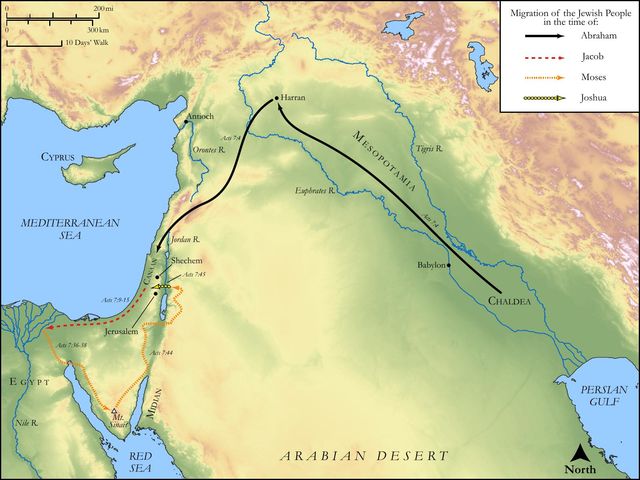
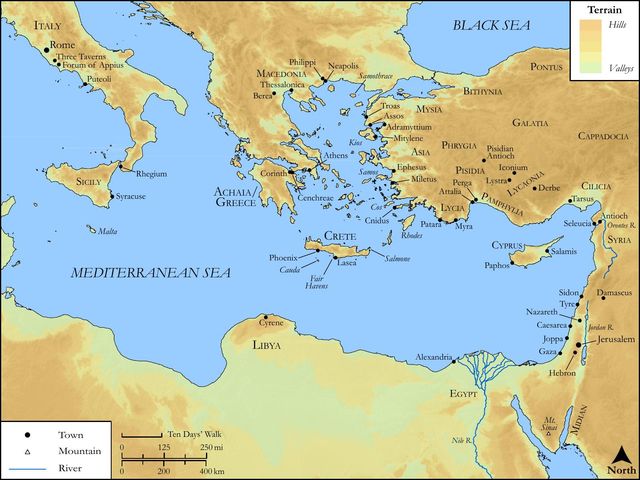
Study this verse
Public-domain commentary
Matthew Henry
From his Commentary on the Whole Bible. Henry comments on passages, not single verses — this entry covers Acts 7:51–53. His two-level outline is real structure in the source text, so it is rendered as structure.
Stephen was going on in his discourse (as it should seem by the thread of it) to show that, as the temple, so the temple-service must come to an end, and it would be the glory of both to give way to that worship of the Father in spirit and in truth which was to be established in the kingdom of the Messiah, stripped of the pompous ceremonies of the old law, and so he was going to apply all this which he had said more closely to his present purpose; but he perceived they could not bear it. They could patiently hear the history of the Old Testament told (it was a piece of learning which they themselves dealt much in); but if Stephen go about to tell them that their power and tyranny must come down, and that the church must be governed by a spirit of holiness and love, and heavenly-mindedness, they will not so much as give him the hearing. It is probable that he perceived this, and that they were going to silence him; and therefore he breaks off abruptly in the midst of his discourse, and by that spirit of wisdom, courage, and power, wherewith he was filled, he sharply rebuked his persecutors, and exposed their true character; for, if they will not admit the testimony of the gospel to them, it shall become a testimony against them.
I.They, like their fathers, were stubborn and wilful, and would not be wrought upon by the various methods God took to reclaim and reform them; they were like their fathers, inflexible both to the word of God and to his providences. 1. They, like their fathers, were stubborn and wilful, and would not be wrought upon by the various methods God took to reclaim and reform them; they were like their fathers, inflexible both to the word of God and to his providences. 1. They were stiff-necked (Act 7:51), and would not submit their necks to the sweet and easy yoke of God's government, nor draw in it, but were like a bullock unaccustomed to the yoke; or they would not bow their heads, no, not to God himself, would not do obeisance to him, would not humble themselves before him. The stiff neck is the same with the hard heart, obstinate and contumacious, and that will not yield - the general character of the Jewish nation, Exo 32:9; Exo 33:3, Exo 33:5; Exo 34:9; Deu 9:6, Deu 9:13; Deu 31:27; Eze 2:4. 2. They were uncircumcised in heart and ears their hearts and ears were not devoted and given up to God, as the body of the people were in profession by the sign of circumcision: "In name and show you are circumcised Jews, but in heart and ears you are still uncircumcised heathens, and pay no more deference to the authority of your God than they do, Jer 9:26. You are under the power of unmortified lusts and corruptions, which stop your ears to the voice of God, and harden your hearts to that which is both most commanding and most affecting." They had not that circumcision made without hands, in putting off the body of the sins of the flesh, Col 2:11.
II.They, like their fathers, were not only not influenced by the methods God took to reform them, but they were enraged and incensed against them: You do always resist the Holy Ghost.
1.They resisted the Holy Ghost speaking to them by the prophets, whom they opposed and contradicted, hated and ridiculed; this seems especially meant here, by the following explication, Which of the prophets have not your fathers persecuted? In persecuting and silencing those that spoke by the inspiration of the Holy Ghost they resisted the Holy Ghost. Their fathers resisted the Holy Ghost in the prophets that God raised up to them, and so did they in Christ's apostles and ministers, who spoke by the same Spirit, and had greater measures of his gifts than the prophets of the Old Testament had, and yet were more resisted.
2.They resisted the Holy Ghost striving with them by their own consciences, and would not comply with the convictions and dictates of them. God's Spirit strove with them as with the old world, but in vain; they resisted him, took part with their corruptions against their convictions, and rebelled against the light. There is that in our sinful hearts that always resists the Holy Ghost, a flesh that lusts against the Spirit, and wars against his motions; but in the hearts of God's elect, when the fulness of time comes, this resistance is overcomer and overpowered, and after a struggle the throne of Christ is set up in the soul, and every thought that had exalted itself against it is brought into captivity to it, Co2 10:4, Co2 10:5. That grace therefore which effects this change might more fitly be called victorious grace than irresistible.
III.They, like their fathers, persecuted and slew those whom God sent unto them to call them to duty, and make them offers of mercy.
1.Their fathers had been the cruel and constant persecutors of the Old Testament prophets (Act 7:51): Which of the prophets have not your fathers persecuted? More or less, one time or other, they had a blow at them all. With regard even to those that lived in the best reigns, when the princes did not persecute them, there was a malignant party in the nation that mocked at them and abused them, and most of them were at last, either by colour of law or popular fury, put to death; and that which aggravated the sin of persecuting the prophets was, that the business of the prophets they were so spiteful at was to show before of the coming of the just One, to give notice of God's kind intentions towards that people, to send the Messiah among them in the fulness of time. Those that were the messengers of such glad tidings should have been courted and caressed, and have had the preferments of the best of benefactors; but, instead of this, they had the treatment of the worst of malefactors.
2.They had been the betrayers and murderers of the just One himself, as Peter had told them, Act 3:14, Act 3:15; Act 5:30. They had hired Judas to betray him, and had in a manner forced Pilate to condemn him; and therefore it is charged upon them that they were his betrayers and murders. Thus they were the genuine seed of those who slew the prophets that foretold his coming, which, by slaying him, they showed they would have done if they had lived then; and thus, as our Saviour had told them, they brought upon themselves the guilt of the blood of all the prophets. To which of the prophets would those have shown any respect who had no regard to the Son of God himself?
IV.They, like their fathers, put contempt upon divine revelation, and would not be guided and governed by it; and this was the aggravation of their sin, that God had given, as to their fathers his law, so to them his gospel, in vain.
1.Their fathers received the law, and did not observe it, Act 7:53. God wrote to them the great things of his law, after he had first spoken them to them; and yet they were counted by them as a strange or foreign thing, which they were no way concerned in. The law is said to be received by the disposition of angels, because angels were employed in the solemnity of giving the law, in the thunderings and lightnings, and the sound of the trumpet. It is said to be ordained by angels (Gal 3:19), God is said to come with ten thousand of his saints to give the law (Deu 33:2), and it was a word spoken by angels, Heb 2:2. This put an honour both upon the law and the Lawgiver, and should increase our veneration for both. But those that thus received the law yet kept it not, but by making the golden calf broke it immediately in a capital instance.
2.They received the gospel now, by the disposition, not of angels, but of the Holy Ghost, - not with the sound of a trumpet, but, which was more strange, in the gift of tongues, and yet they did not embrace it. They would not yield to the plainest demonstrations, any more than their fathers before them did, for they were resolved not to comply with God either in his law or in his gospel.
We have reason to think Stephen had a great deal more to say, and would have said it if they would have suffered him; but they were wicked and unreasonable men with whom he had to do, that could no more hear reason than they could speak it.
Historical interpretation
Five Centuries of Reception
5 surviving comments on this verse. Each one is dated, so this reads as a timeline rather than a list.
Select a marker to jump to its quote. Markers stagger vertically where authors wrote within a few decades of each other.
What is more manifest than the mystery of this "wood,"-that the obduracy of this world had been sunk in the profundity of error, and is freed in baptism by the "wood" of Christ, that is, of His passion; in order that what had formerly perished through the "tree" in Adam, should be restored through the "tree" in Christ? while we, of course, who have succeeded to, and occupy, the room of the prophets, at the present day sustain in the world that treatment which the prophets always suffered on account of divine religion: for some they stoned, some they banished; more, however, they delivered to mortal slaughter, -a fact which they cannot deny.
What is the reason that at this point he speaks in the tone of invective? Great was his boldness of speech, when at the point to die: for in fact I think he knew that this was the case. "Ye stiffnecked," he says, "and uncircumcised in heart and ears." This also is from the prophets: nothing is of himself. "Ye do always resist the Holy Ghost: as your fathers did, so do ye." When it was not His will that sacrifices should be, ye sacrifice: when it is His will, then again ye do not sacrifice: when He would not give you commandments, ye drew them to you: when ye got them, ye neglected them. Again, when the Temple stood, ye worshipped idols: when it is His will to be worshipped without a Temple, ye do the opposite.
Observe, he says not, "Ye resist God," but, "the Spirit:" so far was he from knowing any difference between Them. And, what is greater: "As your fathers did," he says, "so do ye." Thus also did Christ (reproach them), forasmuch as they were always boasting much of their fathers.
Therefore when he sent the Holy Spirit, he manifested him visibly in two ways, as a dove and as fire; as a dove upon the baptized Lord, as fire upon the assembled disciples.… Here we saw a dove upon the Lord; there parted tongues upon the assembled disciples; in the one, simplicity is shown, in the other, fervor. For there are those who are said to be simple, and they are indolent; they are called simple, but they are lazy. Not such a one was Stephen, full of the Holy Spirit. He was simple, because he harmed no one; he was fervent, because he reproached the impious. For he did not keep silence before the Jews; his are those fiery words, “Stiff-necked and uncircumcised in heart and ears, you have always resisted the Holy Spirit.” Great vehemence! He rages, but as a dove without bile. For, in order that you may know that he raged without bile, they who were ravens, when they heard these words, immediately ran for stones [to use] against the dove. Stephen began to be stoned; and he, who but a little before was raging and boiling spirit, as if he had attacked his enemies, and as if he had assailed them with violence by those fiery and blazing words as you have heard, “Stiff-necked and uncircumcised in heart and ears,” so that he who heard these words might think that Stephen, if he were allowed, wished them immediately annihilated—when the rocks were coming on him from their hands, on his knees he said, “Lord, lay not this sin to their charge.” He adhered to the unity of the dove. For earlier his master, on whom the dove descended, had done that; hanging on the cross, he said, “Father, forgive them, for they know not what they do.”
Stiff-necked and uncircumcised in hearts and ears, you always resist the Holy Spirit. He shows them that the circumcision of the foreskin, in which they gloried against the grace of the Gospel, is of no avail for salvation, who were proven to have unclean thoughts and hearing. And at the same time, by speaking these things as if interpreting, he explains to them what the Angel signified when he appeared to Moses in the flame of fire from the bush, so that the bush burned but was not consumed. For the fire indeed signifies the Holy Spirit; the bush, which is a kind of thorn, figuratively denounced the sins of that people. Therefore, the Lord appeared to Moses in the bush having fire, but not consumed, to indicate that He Himself indeed came with the enlightenment and fervor of the Holy Spirit to instruct the people, but He would not consume the sins of that same people, although He would always oppose them with His pious benefits amidst the thickest thorns of their wickedness.
Continue studying Acts 7:51 across the web’s major study libraries — every link below opens this exact verse, chapter, or book on the destination site.
Read & Compare
 BibleGatewayThis verse in more than 200 translations and 70 languages.
 Bible.comThe YouVersion reader — hundreds of translations, reading plans, and highlights.
 ESV.orgCrossway's official English Standard Version reader.
 NET BibleThe NET translation with 60,000+ translators' notes on every rendering decision.
 STEP BibleTyndale House's free study tool — original text, vocabulary, and scholarly resources.
 BibliaLogos Bible Software's free web reader.
 USCCBThe New American Bible (Revised Edition) with the U.S. bishops' study notes.
Commentaries
 BibleHub CommentariesDozens of classic commentaries on this verse, gathered on one page.
 StudyLightMore than 100 commentary sets — the largest collection on the web.
 BibleRefPlain-English commentary on what this verse means, verse by verse.
 Enduring WordDavid Guzik's free commentary on this chapter, widely used by Bible teachers.
 Bible Study ToolsVerse commentary alongside Greek and Hebrew study aids.
Original Language & Research
- BibleHub InterlinearThe verse word by word — original language, transliteration, and English.
- BibleHub LexiconEvery word's original-language definition and Strong's entry.
 Blue Letter BibleDeep-study tools — Strong's numbers, concordance, and word studies.
 CNTR CollationThe earliest Greek manuscripts of this verse, collated letter by letter.
Sermons, Hymns & Audio


TrulyRandomVerse is not affiliated with these sites and doesn’t control their content. They’re linked because they’re genuinely useful.
Summary
Acts 7:51 captures Stephen's climactic and confrontational indictment of the Sanhedrin during his defense, immediately preceding his martyrdom. In this verse, Stephen accuses his Jewish audience of spiritual stubbornness, labeling them "stiffnecked" and "uncircumcised in heart and ears," thereby asserting their continuous and active resistance to the Holy Spirit. He draws a direct parallel between their present disobedience and the historical pattern of rebellion demonstrated by their ancestors, culminating his lengthy historical recounting of Israel's repeated rejection of God's messengers.
Context
ShowHideLiterary Context
Acts 7:51 serves as the dramatic and abrupt climax of Stephen's lengthy defense speech before the Sanhedrin. Prior to this verse, Stephen meticulously recounts the history of Israel from Abraham through Moses and the prophets, systematically highlighting a recurring pattern: God's faithfulness in sending messengers, and Israel's consistent, often violent, rejection of them. This historical survey builds to a crescendo, demonstrating that the current Jewish leaders are perpetuating this ancient pattern by resisting God's ultimate messenger, Jesus, and the Holy Spirit. The verse immediately precedes Stephen's vision of Jesus standing at the right hand of God and his subsequent stoning, making it the pivotal turning point from defense to prophetic condemnation.
Historical & Cultural Context
Stephen, one of the seven deacons chosen in Acts 6, was a Hellenistic Jew, accused of blasphemy against Moses, the Law, and the Temple. He stood before the Sanhedrin, the supreme Jewish religious and judicial council, whose members included high priests, elders, and scribes. His accusation of being "stiffnecked" and "uncircumcised in heart and ears" would have resonated deeply with his Jewish audience, as these were well-known Old Testament prophetic idioms (e.g., Exodus 32:9 or Jeremiah 9:26) used to describe Israel's spiritual obstinacy and failure to truly obey God's covenant. Physical circumcision was the foundational sign of the covenant, making Stephen's spiritual reinterpretation of it a profound and provocative challenge to their identity and piety.
Key Themes
ShowHideStephen's speech, culminating in this verse, powerfully articulates several key themes. One is Israel's Persistent Rebellion, which he painstakingly illustrates through historical examples, showing a continuous thread of disobedience from the wilderness generation to his contemporary audience. This echoes the lament found in Nehemiah 9:26. Another theme is The Rejection of God's Messengers, as Stephen argues that the same pattern of rejecting Joseph, Moses, and the prophets has now culminated in the rejection of Jesus, the Messiah. This highlights a tragic continuity of spiritual blindness. Finally, the verse underscores The Active Work and Human Resistance to the Holy Spirit. Stephen's direct accusation that they "always resist the Holy Ghost" emphasizes the Spirit's ongoing presence and activity in guiding God's people and revealing truth, and humanity's capacity to actively oppose divine influence, a concept also seen in Isaiah 63:10.
Exposition and Analysis
ShowHideKey Word Analysis
ShowHideThis compound word, derived from sklēros (hard) and trachēlos (neck), literally means "hard-necked." It is a direct Septuagintal echo of Old Testament descriptions (e.g., Exodus 32:9) of Israel's stubbornness. The imagery is that of an ox refusing to submit to the yoke, symbolizing an unyielding, obstinate will that resists divine authority, instruction, and correction.
This term, combined with "in heart and ears," moves beyond the physical ritual of circumcision to denote a profound spiritual deficiency. While outward circumcision marked covenant membership, Stephen uses "uncircumcised" to accuse his audience of lacking the true, inward transformation God desires. Their "heart" (Greek, kardía'), representing their inner being, thoughts, and will, and their "ears" (Greek, oûs'), representing their capacity to hear and obey, remained closed, unresponsive, and unyielding to God's truth.
Formed from anti (against) and píptō (to fall), this verb means "to fall against," "to oppose," or "to contend with." It signifies an active, deliberate, and often hostile opposition. The continuous tense of "do always resist" emphasizes a habitual and persistent pattern of antagonism towards the Holy Spirit's promptings, guidance, and revelation, rather than a passive or accidental failure to comply.
Verse Breakdown
ShowHide"Ye stiffnecked and uncircumcised in heart and ears"
Stephen launches into a direct and scathing personal indictment of his powerful accusers. By calling them "stiffnecked," he accuses them of having an unyielding, stubborn will, refusing to bend to God's authority or direction, much like an unmanageable animal. The phrase "uncircumcised in heart and ears" is a profound spiritual accusation. Despite their physical circumcision, which marked them as God's covenant people, Stephen declares that their inner being—their affections, intellect, and will (heart)—and their spiritual receptivity (ears) were closed off, unable to truly hear, receive, or obey God's word. This signifies a deep spiritual insensitivity and an unwillingness to be transformed by divine truth.
"ye do always resist the Holy Ghost"
This is the core of Stephen's charge. He asserts that their spiritual obstinacy manifests as a continuous, active, and deliberate opposition to the Holy Spirit. This resistance is not merely to Stephen's message, but to the divine power, truth, and guidance that the Spirit has consistently conveyed through God's messengers throughout history, culminating in the ministry of Jesus Christ. The word "always" underscores the chronic, habitual nature of their opposition, indicating a deep-seated pattern of rebellion.
"as your fathers [did], so [do] ye"
This concluding phrase draws a damning historical parallel, linking the present generation's actions directly to the persistent pattern of disobedience found throughout Israel's past. Stephen's preceding historical survey (Acts 7:2-50) meticulously detailed how Israel's ancestors repeatedly rejected God's prophets and leaders, from Moses to the prophets. By saying "so do ye," Stephen condemns his audience for perpetuating this tragic legacy of spiritual rebellion, demonstrating that they are no different from the generations they condemn for their unfaithfulness.
Literary Devices
ShowHideStephen's address in Acts 7:51 is a masterclass in prophetic rhetoric, employing several powerful literary devices. The most striking is Metaphor, particularly in the phrases "stiffnecked" and "uncircumcised in heart and ears." "Stiffnecked" is a vivid metaphor borrowed from animal husbandry, depicting an ox refusing to yield to the yoke, which powerfully symbolizes an unyielding, rebellious will against divine authority. "Uncircumcised in heart and ears" extends the physical concept of circumcision into the spiritual realm, using it metaphorically to describe a profound spiritual insensitivity and an inability to truly hear or receive God's word. This is a form of Figurative Language that underscores spiritual blindness and obstinacy. The phrase "as your fathers did, so do ye" employs Analogy and Historical Parallelism, drawing a direct and damning comparison between the present audience and their rebellious ancestors, emphasizing a recurring pattern of disobedience throughout Israel's history. The verse also utilizes Direct Address and Apostrophe, as Stephen directly confronts his powerful accusers, delivering a highly confrontational and accusatory climax to his sermon.
Theological and Thematic Connections
ShowHideStephen's indictment in Acts 7:51 encapsulates a profound theological truth about humanity's fallen nature and its persistent resistance to divine revelation. It highlights that true covenant relationship with God is not merely external or ritualistic (like physical circumcision) but requires an internal transformation of the heart and a willingness to hear and obey. The resistance to the Holy Spirit is presented as the ultimate act of rebellion, as the Spirit is the active agent of God's presence and truth in the world. This verse serves as a stark reminder that even those who are outwardly religious or hold positions of authority can be spiritually hardened and actively oppose God's will, particularly when it challenges their preconceived notions or power structures. It underscores the biblical emphasis on the condition of the heart as paramount to genuine faith and obedience.
Reflection and Application
ShowHideStephen's fiery words in Acts 7:51, though directed at a specific audience in a dramatic historical moment, carry timeless relevance for all who claim to follow God. The challenge to be "uncircumcised in heart and ears" prompts a deep self-examination: are we genuinely open to the Holy Spirit's leading, even when it confronts our comfort zones, challenges our traditions, or demands radical obedience? Spiritual stubbornness, like the "stiffnecked" ox, can manifest subtly in our lives through an unwillingness to forgive, a refusal to repent, or a resistance to new truths revealed in Scripture. This verse calls us to cultivate a posture of humility and spiritual sensitivity, actively listening for the Spirit's voice and yielding our wills to His transformative power. It reminds us that true faith is not merely intellectual assent or outward religious practice, but a dynamic, ongoing surrender of the heart and mind to God, allowing the Spirit to continually refine and guide us away from the pattern of historical rebellion.
Questions for Reflection
ShowHideFAQ
ShowHideWhy does Stephen use such harsh language, especially when on trial for his life?
ShowHideStephen's language is indeed confrontational, but it is deeply rooted in the prophetic tradition of the Old Testament. Prophets frequently used strong, direct words to call Israel to repentance and expose their spiritual rebellion. Stephen, filled with the Holy Spirit (Acts 7:55), was not merely defending himself but delivering God's truth to a hardened audience. His words were a final, desperate plea and a prophetic indictment, mirroring the very resistance he accused them of. He understood the gravity of their rejection of Jesus and the Holy Spirit, and his passion for God's truth outweighed any concern for his personal safety. His boldness highlights the conviction and courage that comes from being empowered by the Holy Spirit.
What does "uncircumcised in heart and ears" mean in a spiritual sense?
ShowHideWhile physical circumcision was the outward sign of God's covenant with Israel, "uncircumcised in heart and ears" refers to a profound spiritual condition. It means that despite outward religious observance, a person's inner being—their mind, will, and affections (heart)—is closed off to God's truth, and their ability to hear and obey His word (ears) is impaired. It signifies a lack of spiritual responsiveness, an unwillingness to submit to God's will, and an inability to truly grasp divine revelation. This concept is found in the Old Testament, where prophets like Jeremiah called for a "circumcision of the heart" (Jeremiah 4:4) as a sign of true devotion and obedience to God, emphasizing that true covenant relationship is inward, not just outward.
Christ-Centered Fulfillment
ShowHideStephen's accusation in Acts 7:51, though delivered to the Jewish leaders of his day, finds its ultimate Christ-centered fulfillment in the person and work of Jesus Christ. The "Holy Ghost" whom they resisted is the very Spirit of God who empowered Jesus throughout His earthly ministry, from His baptism (Matthew 3:16) to His resurrection (Romans 8:11). The persistent resistance to God's messengers, highlighted by Stephen, culminated in the ultimate rejection and crucifixion of God's Son, Jesus, the Messiah. He was the final and complete revelation of God, yet He was met with the same "stiffnecked" and "uncircumcised" hearts that had rejected prophets before Him, leading to His crucifixion outside the city gates (Hebrews 13:12). However, in Christ, the spiritual circumcision of the heart, which Stephen's audience so desperately lacked, is made possible. Through faith in Jesus, the Holy Spirit performs this inward work, transforming rebellious hearts of stone into hearts of flesh (Ezekiel 36:26), enabling them to truly hear and obey God's voice. Thus, while Acts 7:51 exposes humanity's chronic rebellion, it simultaneously points to the cross and resurrection as the only means by which this resistance can be overcome, offering new life and a Spirit-empowered responsiveness to God's truth, fulfilling the promise of a new covenant where God's law is written on the heart (Jeremiah 31:33).