


Exodus 33:5
Bible text: King James Version (1769 Blayney text) · Public domain
Bible text: King James Version with Strong's numbers · Public domain
Bible text: Berean Standard Bible · Public domain
Bible text: American Standard Version (1901) · Public domain
Bible text: World English Bible, Messianic edition · Public domain
Bible text: Geneva Bible (1599) · Public domain
Bible text: Young's Literal Translation · Public domain
- וַיֹּאמֶרvai·Yo·merand he had saidH559Conj-w ¦ V-Qal-ConsecImperf-3msVerb Qal Consecutive Imperfect 3rd Singular Masculineוַandיֹּאמֶרhe had said
- יְהוָהYah·wehYahwehH3068N-properNoun Proper Title
- אֶל'eltoH413PrepPreposition
- מֹשֶׁהmo·ShehMosesH4872N-proper-mNoun Proper Masculine
- אֱמֹר'e·MorsayH559V-Qal-Imp-2msVerb Qal Imperative 2nd Singular Masculine
- אֶל'eltoH413PrepPreposition
- בְּנֵיbe·nei[the] people ofH1121N-mpcNoun Plural Masculine Construct
- יִשְׂרָאֵלYis·ra·'ElIsraelH3478N-properNoun Proper Location
- אַתֶּם'a·TemyouH859Pro-2mpPronoun Personal 2nd Plural Masculine
- עַם'am[are] a peopleH5971N-msNoun Singular Masculine Absolute
- קְשֵׁהke·shehstiff ofH7186Adj-mscAdjective Singular Masculine Construct
- עֹרֶף'O·refneckH6203N-msNoun Singular Masculine Absolute
- רֶגַעRe·ga'a momentH7281N-msNoun Singular Masculine Absolute
- אֶחָד'e·ChadoneH259Adj-fsAdjective Numerical Singular Feminine Absolute
- אֶעֱלֶה'e·'e·LehI will go upH5927V-Qal-Imperf-1csVerb Qal Imperfect 1st Singular common gender
- בְקִרְבְּךָve·kir·be·Chain your midstH7130Prep-b ¦ N-msc ¦ 2msNoun Singular Masculine Constructבְinקִרְבְּmidstךָyour
- וְכִלִּיתִיךָve·khi·li·Ti·khaand I will make an end of youH3615Conj-w ¦ V-Piel-ConsecPerf-1cs ¦ 2msVerb Piel Consecutive Perfect 1st Singular common genderוְandכִלִּיתִיI will make an end ofךָyou
- וְעַתָּהve·'a·Tahand thereforeH6258Conj-w ¦ AdvAdverbוְandעַתָּהtherefore
- הוֹרֵדho·Redtake downH3381V-Hiphil-Imp-2msVerb Hiphil Imperative 2nd Singular Masculine
- עֶדְיְךָ'ed·ye·Khayour ornament[s]H5716N-msc ¦ 2msNoun Singular Masculine Constructעֶדְיְornament[s]ךָyour
- מֵעָלֶיךָme·'a·Lei·khafrom on <the> yourselfH5921Prep-m ¦ Prep ¦ 2msPreposition Definiteמֵfromעָלֶיon <the>ךָyourself
- וְאֵדְעָהve·'e·de·'Ahso let me considerH3045Conj-w ¦ V-Qal-Imperf-1csVerb Qal Imperfect 1st Singular common genderוְsoאֵדְעָהlet me consider
- מָהmahwhat?H4100InterrogPronoun Interrogative
- אֶעֱשֶׂה'e·'e·sehwill I doH6213V-Qal-Imperf-1csVerb Qal Imperfect 1st Singular common gender
- לָּךְLakhto <the> youPrep-l ¦ 2msSuffix Personal 2nd Singular Masculineלָּto <the>ךְyou
English is a literal word-by-word gloss of the Hebrew, not the KJV's wording. Why?
This is the original text the KJV's translators worked from — each Hebrew word with its own literal English meaning in this verse, prepared by scholars at Tyndale House, Cambridge. The KJV translates whole sentences, not word by word, so its wording differs: one Hebrew word can become several English words, and the KJV may choose “the LORD” where the gloss reads “Yahweh”. Both are faithful — they answer different questions. For the KJV's own rendering, switch to the KJV text.
Details
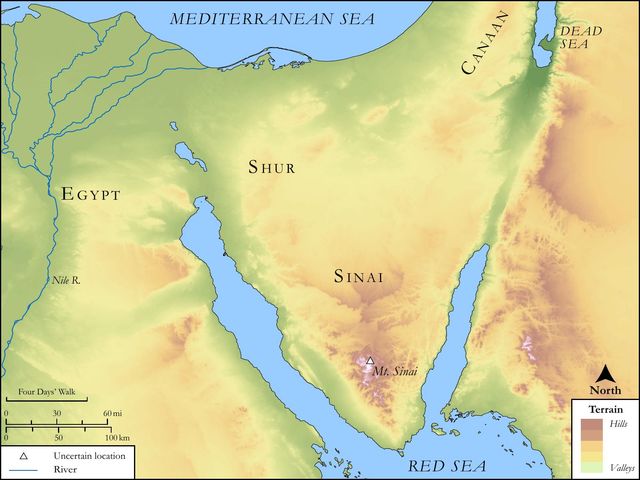
See on the biblical-era maps

Study this verse
Public-domain commentary
Matthew Henry
From his Commentary on the Whole Bible. Henry comments on passages, not single verses — this entry covers Exodus 33:1–6. His two-level outline is real structure in the source text, so it is rendered as structure.
Here is, I. The message which God sent by Moses to the children of Israel, signifying the continuance of the displeasure against them, and the bad terms they yet stood upon with God. This he must let them know for their further mortification. 1. He applies to them a mortifying name, by giving them their just character - a stiff-necked people, Exo 33:3, Exo 33:5. "Go," says God to Moses, "go and tell them that they are so." He that knows them better than they know themselves says so of them. God would have brought them under the yoke of his law, and into the bond of his covenant, but their necks were too stiff to bow to them. God would have cured them of their corrupt and crooked dispositions, and have set them straight; but they were wilful and obstinate, and hated to be reformed, and would not have God to reign over them. Note, God judges of men by the temper of their minds. We know what man does; God knows what he is: we know what proceeds from man; God knows what is in man, and nothing is more displeasing to him than stiff-neckedness, as nothing in children is more offensive to their parents and teachers than stubbornness. 2. He tells them what they deserved, that he should come into the midst of them in a moment, and consume them, Exo 33:5. Had he dealt with them according to their sins, he had taken them away with a swift destruction. Note, Those whom God pardons must be made to know what their sin deserved, and how miserable they would have been if they had been unpardoned, that God's mercy may be the more magnified. 3. He bids them depart and go up hence to the land of Canaan, Exo 33:1. This mount Sinai, where they now were, was the place appointed for the setting up of God's tabernacle and solemn worship among them; this was not yet done, so that in bidding them depart hence God intimates that it should not be done - "Let them go forward as they are;" and so it was very expressive of God's displeasure. 4. He turns them over to Moses, as the people whom he had brought up out of the land of Egypt, and leaves it to him to lead them to Canaan. 5. Though he promises to make good his covenant with Abraham, in giving them Canaan, yet he denies them the extraordinary tokens of his presence, such as they had hitherto been blessed with, and leaves them under the common conduct of Moses their prince, and the common convoy of a guardian angel: "I will send an angel before thee, for thy protector, otherwise the evil angels would soon destroy thee; but I will not go up in the midst of thee, lest I consume thee" (Exo 33:2, Exo 33:3); not as if an angel would be more patient and compassionate than God, but their affronts given to an angel would not be so provoking as those given to the shechinah, or divine Majesty itself. Note, The greater the privileges we enjoy the greater is our danger if we do not improve them and live up to them. 6. He speaks as one that was at a loss what course to take with them. Justice said, "Cut them off, and consume them." Mercy said, "How shall I give thee up, Ephraim?" Hos 11:8. Well, says God, put off thy ornaments, that I may know what to do with thee; that is, "Put thyself into the posture of a penitent, that the dispute may be determined in thy favour, and mercy may rejoice against judgment," Exo 33:5. Note, Calls to repentance are plain indications of mercy designed. If the Lord were pleased to kill us, justice knows what to do with a stiff-necked people: but God has no pleasure in the death of those that die; let them return and repent, and then mercy, which otherwise is at a loss, knows what to do.
II.The people's melancholy reception of this message; it was evil tidings to them to hear that they should not have God's special presence with them, and therefore,
1.They mourned (Exo 33:4), mourned for their sin which had provoked God to withdraw from them, and mourned for this as the sorest punishment of their sin. When 3000 of them were at one time laid dead upon the spot by the Levites' sword, we do not find that they mourned for this (hoping that it would help to expiate the guilt); but when God denied them his favourable presence then they mourned and were in bitterness. Note, Of all the bitter fruits and consequences of sin, that which true penitents most lament, and dread most, is God's departure from them. God had promised that, notwithstanding their sin, he would give them the land flowing with milk and honey. but they could have small joy of that if they had not God's presence with them. Canaan itself would be no pleasant land without that; therefore, if they want that, they mourn.
2.In token of great shame and humiliation, those that were undressed did not put on their ornaments (Exo 33:4), and those that were dressed stripped themselves of their ornaments, by the mount; or, as some read it, at a distance from the mount (Exo 33:6), standing afar off like the publican, Luk 18:13. God bade them lay aside their ornaments (Exo 33:5), and they did so, both to show, in general, their deep mourning, and, in particular, to take a holy revenge upon themselves for giving their ear-rings to make the golden calf of. Those that would part with their ornaments for the maintenance of their sin could do no less than lay aside their ornaments in token of their sorrow and shame for it. When the Lord God calls to weeping and mourning we must comply with the call, and not only fast from pleasant bread (Dan 10:3), but lay aside our ornaments; even those that are decent enough at other times are unseasonably worn on days of humiliation or in times of public calamity, Isa 3:18.
Continue studying Exodus 33:5 across the web’s major study libraries — every link below opens this exact verse, chapter, or book on the destination site.
Read & Compare
 BibleGatewayThis verse in more than 200 translations and 70 languages.
 Bible.comThe YouVersion reader — hundreds of translations, reading plans, and highlights.
 ESV.orgCrossway's official English Standard Version reader.
 NET BibleThe NET translation with 60,000+ translators' notes on every rendering decision.
 STEP BibleTyndale House's free study tool — original text, vocabulary, and scholarly resources.
 BibliaLogos Bible Software's free web reader.
 USCCBThe New American Bible (Revised Edition) with the U.S. bishops' study notes.
Commentaries
 BibleHub CommentariesDozens of classic commentaries on this verse, gathered on one page.
 StudyLightMore than 100 commentary sets — the largest collection on the web.
 BibleRefPlain-English commentary on what this verse means, verse by verse.
 Enduring WordDavid Guzik's free commentary on this chapter, widely used by Bible teachers.
 Bible Study ToolsVerse commentary alongside Greek and Hebrew study aids.
Original Language & Research
- BibleHub InterlinearThe verse word by word — original language, transliteration, and English.
- BibleHub LexiconEvery word's original-language definition and Strong's entry.
 Blue Letter BibleDeep-study tools — Strong's numbers, concordance, and word studies.
 SefariaThe Hebrew text with Rashi and centuries of Jewish commentary.
Sermons, Hymns & Audio


TrulyRandomVerse is not affiliated with these sites and doesn’t control their content. They’re linked because they’re genuinely useful.
Summary
Exodus 33:5 captures a pivotal moment in Israel's post-Sinai journey, immediately following their egregious sin with the golden calf. The verse conveys the Lord's righteous indignation and the severe consequences of their persistent rebellion, declaring them a "stiffnecked people" whom His holy presence could instantly consume. Consequently, God commands a visible act of profound humility and repentance—the removal of their ornaments—as a necessary prerequisite for Him to determine His future course of action concerning them, underscoring both His justice and His conditional mercy.
Context
ShowHideLiterary Context
This verse is deeply embedded in the immediate aftermath of the golden calf idolatry, detailed in Exodus 32. Following Moses' fervent intercession that averted immediate divine judgment (Exodus 32:11-14), God declares His intention not to accompany Israel directly to the Promised Land, lest His holy presence consume them due to their stubbornness (Exodus 33:1-3). The people respond with spontaneous mourning and remove their ornaments (Exodus 33:4). Verse 5 then serves as God's direct command to Moses, confirming and giving divine rationale for this act of humility, while simultaneously reiterating the grave danger posed by their unrepentant nature. It sets the stage for Moses' continued intercession for God's presence to remain with His people, a plea that culminates in God's renewed promise in Exodus 33:14.
Historical & Cultural Context
The phrase "stiffnecked people" was a common metaphor in Israel, depicting an ox that stubbornly resists the yoke and refuses to be guided. Applied to Israel, it vividly portrays their obstinate refusal to submit to God's authority and commands, a characteristic frequently lamented throughout their history, from their murmuring in the wilderness (e.g., Exodus 16) to their later rejection of prophets. Ornaments, such as jewelry and adornments, were not merely symbols of wealth or beauty but often carried religious or social significance, sometimes even being associated with pagan deities or pride. Notably, the golden calf was fashioned from the very gold ornaments the people had worn (Exodus 32:2-4). In Israel, removing ornaments, along with tearing clothes or wearing sackcloth, was a recognized sign of deep mourning, humility, and repentance. God's command for them to strip themselves of these adornments was a culturally intelligible and profoundly symbolic act, demanding a visible demonstration of their internal contrition and a renunciation of the very symbols that might have contributed to their pride or idolatry.
Key Themes
ShowHideThis verse contributes significantly to several major theological and narrative themes within the book of Exodus and the broader Pentateuch. It highlights the theme of Divine Holiness and Judgment, emphasizing that God's pure and consuming presence cannot abide unrepentant sin, a truth reiterated in Leviticus 10:1-2. It powerfully underscores the theme of Human Rebellion and Obstinacy, particularly Israel's persistent "stiffneckedness" which is a recurring motif throughout their wilderness journey and beyond, as seen in Deuteronomy 9:6. Furthermore, it introduces the theme of Conditional Mercy and Repentance, demonstrating that while God is just in His judgment, He also provides a path for reconciliation through genuine humility and outward acts of contrition, a principle echoed in prophetic calls for repentance (e.g., Isaiah 55:6-7). The removal of ornaments also touches on the theme of Renunciation of Worldly Attachments, calling for a visible detachment from symbols of pride or idolatry that hinder true devotion to God.
Exposition and Analysis
ShowHideKey Word Analysis
ShowHideThis word refers to a son, but in its widest sense, it encompasses literal and figurative relationships, including offspring, descendants, and members of a nation. In "children of Israel," it emphasizes the collective identity of the Israelites as the descendants and covenant people of Jacob (Israel), highlighting their familial and national relationship with God, despite their rebellion.
(qâsheh, "severe, hard") and H6203 (ʻôreph, "nape of the neck"), this vivid idiom literally translates to "hard of neck." It is a powerful metaphor drawn from agricultural life, depicting an ox that stubbornly resists the farmer's goad and refuses to submit to the yoke, thereby resisting guidance and discipline. When applied to Israel, it signifies their profound obstinacy, recalcitrance, and rebellious unwillingness to yield to God's will and commands. It underscores their inherent resistance to divine authority and their tendency towards disobedience.
This primitive root means "to end," whether intransitively (to cease, be finished, perish) or transitively (to complete, prepare, consume). In this context, it signifies complete destruction or annihilation. God's threat to "consume thee" emphasizes the absolute and immediate danger posed by His unmitigated holy presence to a rebellious and unholy people, highlighting the severity of their sin and the righteousness of divine judgment.
This term refers to finery, general outfit, or specifically a headstall. In the context of Exodus 33:5, these ornaments symbolized not only personal beauty and status but also potentially pride, self-reliance, or even lingering attachments to pagan practices (as some ornaments were used in idolatrous worship). The divine command to "put off thy ornaments" was a call for a public and tangible act of humility, mourning, and a visible renunciation of any worldly attachments or pride that stood in opposition to God's holiness.
This primitive root means "to know" (properly, to ascertain by seeing), used in a great variety of senses, including observation, care, recognition, instruction, designation, and punishment. In the phrase "that I may know what to do unto thee," the Hebrew verb yâdaʻ is an example of divine anthropomorphism. This does not imply that God, being omniscient, lacks knowledge of the future or is uncertain about His plans. Rather, it is a relational expression that emphasizes God's desire for a genuine, responsive action from humanity before He fully reveals or executes His conditional will. It highlights His patience and His willingness to adjust His dealings based on human repentance, inviting a response rather than imposing an irreversible decree.
Verse Breakdown
ShowHide"For the LORD had said unto Moses, Say unto the children of Israel,"
This opening clause establishes the divine origin and authoritative nature of the message. It underscores that the subsequent declaration and command come directly from Yahweh (H3068, Yᵉhôvâh), the self-existent and eternal God, communicated through His chosen mediator, Moses (H4872, Môsheh), to the entire Israelite community (H1121, bên H3478, Yisrâʼêl). This highlights the solemnity and non-negotiable nature of the divine pronouncement.
"Ye [are] a stiffnecked people:"
This is God's blunt and uncompromising assessment of Israel's character (H5971, ʻam). It is a direct indictment of their stubbornness (H7186, qâsheh H6203, ʻôreph), rebellion, and unyielding resistance to His divine authority, particularly evident in their recent idolatry with the golden calf. This declaration serves as the foundational reason for the severe threat that follows, emphasizing their culpability.
"I will come up into the midst of thee in a moment, and consume thee:"
This clause reveals the terrifying consequence of their "stiffnecked" nature in the presence of a holy God. The phrase "come up into the midst" (H5927, ʻâlâh H7130, qereb) signifies God's direct, personal intervention. The warning that He would do so "in a moment" (H259, ʼechâd H7281, regaʻ) and "consume thee" (H3615, kâlâh) is a stark warning that God's unmitigated, holy presence, if not met with genuine repentance, would result in their instant, complete destruction. This highlights the absolute purity and consuming nature of God's holiness and the inherent danger of sin dwelling in His immediate proximity.
"therefore now put off thy ornaments from thee,"
This is God's specific, tangible command for an act of repentance. The imperative "put off" (H3381, yârad, implying "bring down" or "take off") combined with "ornaments" (H5716, ʻădîy), symbols of pride, status, or even idolatrous associations, was a culturally understood gesture of deep humility, mourning, and a visible renunciation of self-reliance and worldly attachments. It was a required outward demonstration reflecting an inward shift towards brokenness and submission.
"that I may know what to do unto thee."
This concluding phrase, while anthropomorphic (H3045, yâdaʻ), conveys God's conditional intent. It signifies that His future actions and decisions (H6213, ʻâsâh, "to do or make") regarding Israel's destiny are contingent upon their genuine response to His command for humility. It is an invitation for repentance, demonstrating God's patience and His desire for reconciliation, allowing for a change in His declared course of action based on their obedience and contrite spirit.
Literary Devices
ShowHideExodus 33:5 employs several potent literary devices to convey its urgent message. The most prominent is Metaphor, specifically in the phrase "stiffnecked people." This vivid imagery, drawn from the stubborn resistance of an ox to its yoke, powerfully communicates Israel's recalcitrant and rebellious nature against divine authority. This metaphor is deeply embedded in the biblical narrative to describe Israel's persistent disobedience. Another key device is Anthropomorphism, seen in "that I may know what to do unto thee." God is described as "knowing" in a human sense, which does not imply a lack of divine omniscience but rather expresses His relational engagement and His willingness to respond to human action and repentance. This highlights God's desire for a genuine response from His people, making His divine will accessible to human understanding. Furthermore, the command to "put off thy ornaments" is rich in Symbolism. The ornaments, representing pride, status, or even past idolatry, become symbols of the worldly attachments and self-sufficiency that must be stripped away in an act of profound humility and mourning. This symbolic act is a tangible demonstration of an internal change. The potential for God to "consume thee in a moment" also carries an element of Hyperbole, emphasizing the extreme and immediate danger of God's holiness encountering unrepentant sin, though it simultaneously underscores the very real threat of divine judgment and the absolute purity of God's nature.
Theological and Thematic Connections
ShowHideExodus 33:5 powerfully articulates several core theological truths: the absolute holiness of God and the consuming nature of His presence when confronted with unrepentant sin; the gravity of human rebellion, characterized by stubbornness and a refusal to submit to divine authority; and the necessity of genuine, tangible repentance as a prerequisite for divine mercy and reconciliation. God's threat to "consume" them highlights His righteous judgment, yet His command to "put off thy ornaments" offers a path to avert this judgment, demonstrating His patience and desire for His people to humble themselves. This passage underscores that while God is merciful, His mercy is often contingent upon a human response of contrition and obedience, reflecting His relational nature and the covenantal framework of His dealings with Israel.
Reflection and Application
ShowHideExodus 33:5 serves as a timeless reminder of the profound seriousness of sin and the non-negotiable requirement of genuine humility and repentance before a holy God. Israel's "stiffneckedness" is a mirror reflecting our own human tendency toward stubbornness, self-will, and resistance to divine guidance. God's threat of immediate consumption underscores that His holiness is not to be trifled with; His presence, while desirable, is dangerous to the unholy. The command to remove ornaments challenges us to consider what "adornments" we cling to—pride, self-sufficiency, worldly status, material possessions, or even cherished sins—that hinder our full submission to God. True repentance involves not just an inward feeling of sorrow but often a tangible, visible act of laying aside those things that separate us from God or that we elevate above Him. It is an invitation to humble ourselves, confess our rebellion, and actively turn back to Him, trusting that He waits to "know what to do" in response to our sincere contrition. This passage calls us to a radical self-examination, prompting us to shed anything that impedes our full devotion and embrace a posture of humble obedience.
Questions for Reflection
ShowHideFAQ
ShowHideWhy does God say "that I may know what to do unto thee" if He is omniscient?
ShowHideThis phrase is an example of divine anthropomorphism, where God uses human terms to describe His actions or intentions in a way that humans can understand. It does not imply a lack of knowledge on God's part, as He is indeed omniscient. Instead, it emphasizes God's desire for a genuine human response. He is not uncertain, but He is waiting for Israel to demonstrate their repentance and humility. His subsequent actions are contingent upon their choices, highlighting His relational nature and the importance of human free will and responsibility in the covenant relationship. It signifies that God's disposition towards them, whether judgment or renewed favor, will be determined by their contrite heart and obedient actions, as seen in their spontaneous mourning in Exodus 33:4.
What is the significance of the "ornaments" that the Israelites were commanded to remove?
ShowHideThe ornaments (jewelry, adornments) were significant on multiple levels. Culturally, they represented status, wealth, and beauty. Theologically, in the context of the golden calf incident, they likely symbolized pride, self-reliance, and potentially even lingering attachments to pagan practices (since gold ornaments were used to fashion the idol in Exodus 32:2-4). By commanding their removal, God was calling for a profound, visible act of humility, mourning, and renunciation. It was a public declaration of their sorrow for sin, a stripping away of anything that might represent their pride or rebellion, and a tangible sign of their willingness to humble themselves completely before God. This act was akin to other customs of mourning and repentance in Scripture, such as wearing sackcloth and ashes, as when Mordecai rent his clothes and put on sackcloth with ashes.
Is God's threat to "consume" them a literal one, or is it hyperbole?
ShowHideWhile the phrase "in a moment" might suggest an immediate, instantaneous destruction that was averted by Moses' intercession and the people's repentance, the threat itself was profoundly literal and serious. God's holiness is a consuming fire (Deuteronomy 4:24; Hebrews 12:29), and His unmitigated presence among an unholy, rebellious people would indeed lead to their destruction. This threat underscores the absolute gravity of sin and the inherent danger of a holy God dwelling among an unholy people without proper atonement and repentance. God's mercy provided a way for them to avert this judgment through humility, but the capacity and righteousness of His judgment were very real. The narrative demonstrates God's willingness to execute such judgments, as seen in the fate of Nadab and Abihu (Leviticus 10:1-2).
Christ-Centered Fulfillment
ShowHideExodus 33:5, with its stark portrayal of a holy God confronting a "stiffnecked" and rebellious people, finds its ultimate fulfillment and resolution in Jesus Christ. The threat of God's consuming presence among an unholy people foreshadows the just wrath of God against all sin, which would ultimately be poured out. However, instead of consuming humanity, God's righteous judgment was fully satisfied in Christ. He, the perfect Lamb of God, who takes away the sin of the world, bore the full weight of our "stiffnecked" rebellion and the consuming fire of divine wrath on the cross (2 Corinthians 5:21). Through His atoning sacrifice, God's holiness can now dwell in the midst of His redeemed people, not to consume them, but to transform them by His Spirit (John 14:16-17). The command to "put off thy ornaments" prefigures the New Testament call to "put off your old self, which belongs to your former manner of life... and to put on the new self, created after the likeness of God in true righteousness and holiness" (Ephesians 4:22-24). In Christ, we are reconciled to God, allowing His holy presence to indwell us without destruction, because our sin has been fully atoned for, making us a new creation (2 Corinthians 5:17). He is the true tabernacle, the dwelling place of God among humanity, making it safe for God to be "in the midst" of His people.