


Exodus 33:4
Bible text: King James Version (1769 Blayney text) · Public domain
Bible text: Berean Standard Bible · Public domain
Bible text: American Standard Version (1901) · Public domain
Bible text: World English Bible, Messianic edition · Public domain
Bible text: Geneva Bible (1599) · Public domain
Bible text: Young's Literal Translation · Public domain
- וַיִּשְׁמַעvai·yish·Ma'and it heardH8085Conj-w ¦ V-Qal-ConsecImperf-3msVerb Qal Consecutive Imperfect 3rd Singular Masculineוַandיִּשְׁמַעit heard
- הָעָםha·'Amthe peopleH5971Art ¦ N-msNoun Singular Masculine Absoluteהָtheעָםpeople
- אֶת'et<obj.>H853DirObjMParticle Object Indicator
- הַדָּבָרha·da·Varthe wordH1697Art ¦ N-msNoun Singular Masculine Absoluteהַtheדָּבָרword
- הָרָעha·Ra'<the> badH7451Art ¦ Adj-msAdjective Singular Masculine Absoluteהָ<the>רָעbad
- הַזֶּהha·Zeh<the> thisH2088Art ¦ PrtParticle Demonstrativeהַ<the>זֶּהthis
- וַיִּתְאַבָּלוּvai·yit·'a·Ba·luand they mournedH56Conj-w ¦ V-Hithpael-ConsecImperf-3mpVerb Hithpael Consecutive Imperfect 3rd Plural Masculineוַandיִּתְאַבָּלוּthey mourned
- וְלֹאve·lo'and notH3808Conj-w ¦ NegParticle Negativeוְandלֹאnot
- שָׁתוּSha·tuthey placedH7896V-Qal-Perf-3cpVerb Qal Perfect 3rd Plural common gender
- אִישׁ'ishanyoneH376N-msNoun Singular Masculine Absolute
- עֶדְיוֹed·Yohis ornament[s]H5716N-msc ¦ 3msNoun Singular Masculine Constructעֶדְיornament[s]וֹhis
- עָלָיו'a·Lavon himselfH5921Prep ¦ 3msPreposition Definiteעָלָיonוhimself
English is a literal word-by-word gloss of the Hebrew, not the KJV's wording. Why?
This is the original text the KJV's translators worked from — each Hebrew word with its own literal English meaning in this verse, prepared by scholars at Tyndale House, Cambridge. The KJV translates whole sentences, not word by word, so its wording differs: one Hebrew word can become several English words, and the KJV may choose “the LORD” where the gloss reads “Yahweh”. Both are faithful — they answer different questions. For the KJV's own rendering, switch to the KJV text.
Details
See on the biblical-era maps

Study this verse
Public-domain commentary
Matthew Henry
From his Commentary on the Whole Bible. Henry comments on passages, not single verses — this entry covers Exodus 33:1–6. His two-level outline is real structure in the source text, so it is rendered as structure.
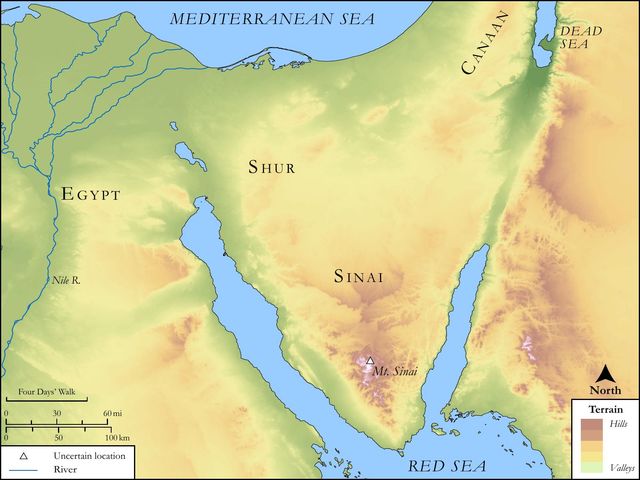
Here is, I. The message which God sent by Moses to the children of Israel, signifying the continuance of the displeasure against them, and the bad terms they yet stood upon with God. This he must let them know for their further mortification. 1. He applies to them a mortifying name, by giving them their just character - a stiff-necked people, Exo 33:3, Exo 33:5. "Go," says God to Moses, "go and tell them that they are so." He that knows them better than they know themselves says so of them. God would have brought them under the yoke of his law, and into the bond of his covenant, but their necks were too stiff to bow to them. God would have cured them of their corrupt and crooked dispositions, and have set them straight; but they were wilful and obstinate, and hated to be reformed, and would not have God to reign over them. Note, God judges of men by the temper of their minds. We know what man does; God knows what he is: we know what proceeds from man; God knows what is in man, and nothing is more displeasing to him than stiff-neckedness, as nothing in children is more offensive to their parents and teachers than stubbornness. 2. He tells them what they deserved, that he should come into the midst of them in a moment, and consume them, Exo 33:5. Had he dealt with them according to their sins, he had taken them away with a swift destruction. Note, Those whom God pardons must be made to know what their sin deserved, and how miserable they would have been if they had been unpardoned, that God's mercy may be the more magnified. 3. He bids them depart and go up hence to the land of Canaan, Exo 33:1. This mount Sinai, where they now were, was the place appointed for the setting up of God's tabernacle and solemn worship among them; this was not yet done, so that in bidding them depart hence God intimates that it should not be done - "Let them go forward as they are;" and so it was very expressive of God's displeasure. 4. He turns them over to Moses, as the people whom he had brought up out of the land of Egypt, and leaves it to him to lead them to Canaan. 5. Though he promises to make good his covenant with Abraham, in giving them Canaan, yet he denies them the extraordinary tokens of his presence, such as they had hitherto been blessed with, and leaves them under the common conduct of Moses their prince, and the common convoy of a guardian angel: "I will send an angel before thee, for thy protector, otherwise the evil angels would soon destroy thee; but I will not go up in the midst of thee, lest I consume thee" (Exo 33:2, Exo 33:3); not as if an angel would be more patient and compassionate than God, but their affronts given to an angel would not be so provoking as those given to the shechinah, or divine Majesty itself. Note, The greater the privileges we enjoy the greater is our danger if we do not improve them and live up to them. 6. He speaks as one that was at a loss what course to take with them. Justice said, "Cut them off, and consume them." Mercy said, "How shall I give thee up, Ephraim?" Hos 11:8. Well, says God, put off thy ornaments, that I may know what to do with thee; that is, "Put thyself into the posture of a penitent, that the dispute may be determined in thy favour, and mercy may rejoice against judgment," Exo 33:5. Note, Calls to repentance are plain indications of mercy designed. If the Lord were pleased to kill us, justice knows what to do with a stiff-necked people: but God has no pleasure in the death of those that die; let them return and repent, and then mercy, which otherwise is at a loss, knows what to do.
II.The people's melancholy reception of this message; it was evil tidings to them to hear that they should not have God's special presence with them, and therefore,
1.They mourned (Exo 33:4), mourned for their sin which had provoked God to withdraw from them, and mourned for this as the sorest punishment of their sin. When 3000 of them were at one time laid dead upon the spot by the Levites' sword, we do not find that they mourned for this (hoping that it would help to expiate the guilt); but when God denied them his favourable presence then they mourned and were in bitterness. Note, Of all the bitter fruits and consequences of sin, that which true penitents most lament, and dread most, is God's departure from them. God had promised that, notwithstanding their sin, he would give them the land flowing with milk and honey. but they could have small joy of that if they had not God's presence with them. Canaan itself would be no pleasant land without that; therefore, if they want that, they mourn.
2.In token of great shame and humiliation, those that were undressed did not put on their ornaments (Exo 33:4), and those that were dressed stripped themselves of their ornaments, by the mount; or, as some read it, at a distance from the mount (Exo 33:6), standing afar off like the publican, Luk 18:13. God bade them lay aside their ornaments (Exo 33:5), and they did so, both to show, in general, their deep mourning, and, in particular, to take a holy revenge upon themselves for giving their ear-rings to make the golden calf of. Those that would part with their ornaments for the maintenance of their sin could do no less than lay aside their ornaments in token of their sorrow and shame for it. When the Lord God calls to weeping and mourning we must comply with the call, and not only fast from pleasant bread (Dan 10:3), but lay aside our ornaments; even those that are decent enough at other times are unseasonably worn on days of humiliation or in times of public calamity, Isa 3:18.
Continue studying Exodus 33:4 across the web’s major study libraries — every link below opens this exact verse, chapter, or book on the destination site.
Read & Compare
 BibleGatewayThis verse in more than 200 translations and 70 languages.
 Bible.comThe YouVersion reader — hundreds of translations, reading plans, and highlights.
 ESV.orgCrossway's official English Standard Version reader.
 NET BibleThe NET translation with 60,000+ translators' notes on every rendering decision.
 STEP BibleTyndale House's free study tool — original text, vocabulary, and scholarly resources.
 BibliaLogos Bible Software's free web reader.
 USCCBThe New American Bible (Revised Edition) with the U.S. bishops' study notes.
Commentaries
 BibleHub CommentariesDozens of classic commentaries on this verse, gathered on one page.
 StudyLightMore than 100 commentary sets — the largest collection on the web.
 BibleRefPlain-English commentary on what this verse means, verse by verse.
 Enduring WordDavid Guzik's free commentary on this chapter, widely used by Bible teachers.
 Bible Study ToolsVerse commentary alongside Greek and Hebrew study aids.
Original Language & Research
- BibleHub InterlinearThe verse word by word — original language, transliteration, and English.
- BibleHub LexiconEvery word's original-language definition and Strong's entry.
 Blue Letter BibleDeep-study tools — Strong's numbers, concordance, and word studies.
 SefariaThe Hebrew text with Rashi and centuries of Jewish commentary.
Sermons, Hymns & Audio


TrulyRandomVerse is not affiliated with these sites and doesn’t control their content. They’re linked because they’re genuinely useful.
Summary
Exodus 33:4 powerfully depicts the immediate and profound response of the Israelites upon receiving the devastating news that God, in His holiness, would not personally accompany them into the Promised Land due to their sin with the golden calf. This declaration, perceived as "evil tidings," plunged the entire community into deep mourning, visibly expressed by their collective act of removing all personal adornments. This gesture was a potent public demonstration of their sorrow, shame, and a posture of humble self-abasement, acknowledging the severe implications of their rebellion and the potential loss of God's intimate, covenantal presence.
Context
ShowHideLiterary Context
This verse serves as a critical pivot point following the catastrophic idolatry of the golden calf in Exodus 32. Moses had just concluded a fervent intercession, successfully averting God's immediate, consuming wrath against the people. However, God's holiness remained uncompromised. In Exodus 33:1-3, the Lord informs Moses that while He will send an angel to lead them, He Himself will not go among them, declaring, "lest I consume thee in the way, for thou art a stiffnecked people." This pronouncement, the "evil tidings" of verse 4, is the direct catalyst for the people's intense mourning, underscoring the gravity of their idolatry and the immediate, tangible consequence of jeopardizing their covenant relationship with Yahweh. The narrative then progresses to Moses' continued intercession and God's eventual relenting, promising His presence to Moses personally and, by extension, to the people (Exodus 33:12-17).
Historical & Cultural Context
The presence of a god, often symbolized by an idol or a sacred object, was held paramount for protection, prosperity, and national identity, as Israel's own cry at Sinai showed: "make us gods, which shall go before us." For Israel, the Lord's presence was uniquely manifested in the miraculous pillar of cloud and fire and, soon, in the Tabernacle. His declared withdrawal, even with the promise of an angel, was perceived as a national catastrophe, signifying a loss of divine favor, a profound existential threat, and a breach in the covenant. Ornaments, such as jewelry, fine clothing, and other personal adornments, were not merely decorative; they often symbolized status, joy, celebration, and even cultic devotion. In times of profound mourning, national disaster, or deep penitence, it was a widespread custom to remove such adornments, tear garments, put on sackcloth, and cover oneself with ashes. This act of stripping away ornaments was a public, non-verbal declaration of deep distress, humility, and a plea for mercy, demonstrating a complete reversal from the celebratory, self-indulgent revelry associated with the golden calf worship (Exodus 32:6).
Key Themes
ShowHideExodus 33:4 significantly contributes to several overarching themes in the book of Exodus and the broader Pentateuch. It powerfully illustrates the holiness of God and His righteous judgment against sin, particularly idolatry, which directly jeopardizes His covenant relationship with His people. The verse highlights the theme of divine presence as both a blessing and a potential danger; while God's presence is essential for Israel's identity and success, His holiness means that unrepentant sin cannot coexist with His immediate presence without consuming the transgressors. Furthermore, the people's response introduces the theme of repentance and humility, demonstrating that genuine sorrow for sin and outward acts of self-abasement are necessary steps towards reconciliation and the restoration of fellowship with God. This episode sets the stage for Moses' continued intercession and the subsequent revelation of God's character as merciful and gracious, yet just, in Exodus 34:6-7.
Exposition and Analysis
ShowHideKey Word Analysis
ShowHideThis verb (H56) signifies a deep, profound sorrow or grief, often associated with lamentation over loss, death, or calamity. It implies a genuine, heartfelt expression of distress rather than a superficial display. In this context, it indicates the people's recognition of the severe consequences of their sin—the potential loss of God's intimate presence—and their subsequent emotional pain. This mourning goes beyond mere fear of punishment; it is a lament for a broken relationship and a profound spiritual loss.
This noun (H5716) refers to items of finery, adornment, or jewelry, typically worn for celebration, status, or personal embellishment. The act of removing these "ornaments" was a powerful symbolic gesture. It represented a stripping away of joy, pride, and self-adornment, replaced by humility, shame, and a posture of penitence. Such an act was a clear outward sign of deep mourning, self-abasement, and profound sorrow for sin, contrasting sharply with the celebratory adornments worn during their idolatrous revelry.
Verse Breakdown
ShowHide"And when the people heard these evil tidings"
This clause establishes the immediate cause of the Israelites' reaction. The "evil tidings" refer specifically to God's declaration in Exodus 33:3 that He would not personally go with them into the Promised Land due to their "stiffnecked" nature, lest He consume them. This news was "evil" because it signified a potential withdrawal of God's intimate, covenantal presence, which was the very foundation of their identity, security, and hope as a nation. It was a severe, direct consequence of their recent idolatry with the golden calf.
"they mourned"
This phrase describes the emotional response of the Israelites. The mourning was not a casual sadness but a deep, visceral grief, reflecting their understanding of the gravity of God's announcement. It suggests a dawning realization of the profound spiritual loss and the precariousness of their situation without God's direct leading. This sorrow was a necessary step towards repentance, indicating a shift from rebellion and revelry to regret and a desire for reconciliation.
"and no man did put on him his ornaments"
This final clause details the outward, visible manifestation of their mourning and humility. In a culture where ornaments symbolized joy, prosperity, and celebration, their removal was a powerful act of self-abasement and penitence. It was a public acknowledgment of their shame and sorrow, demonstrating a willingness to set aside all worldly adornments and pride in the face of divine displeasure. This act was a communal expression of their desire to humble themselves before God, hoping for His mercy and the restoration of His presence.
Literary Devices
ShowHideExodus 33:4 employs several potent literary devices to convey its profound message. Symbolism is prominent in the "ornaments" (עֲדִי - 'adiy), which represent joy, status, and worldly pride. Their removal symbolizes a stripping away of these things, replaced by humility, sorrow, and penitence. This act also serves as a stark Contrast to the previous scene of revelry and self-adornment during the golden calf worship (Exodus 32:6). The "evil tidings" themselves are a form of Foreshadowing, hinting at the potential for divine judgment and the precariousness of Israel's covenant relationship if their sin continued unchecked. The immediate and universal reaction of mourning ("no man did put on him his ornaments") demonstrates Synecdoche, where the action of a part (each individual removing ornaments) represents the whole community's pervasive and profound sense of national crisis and remorse, emphasizing the collective impact of God's message.
Theological and Thematic Connections
ShowHideExodus 33:4 profoundly illustrates the immediate consequences of sin and the nature of genuine repentance. The Israelites' mourning and stripping of ornaments reveal a dawning recognition of their grievous offense against a holy God and the dire implications for their covenant relationship with Him. It underscores the theological truth that unconfessed and unrepented sin breaks fellowship with God and invites His righteous judgment, often manifested as a withdrawal of His intimate, life-giving presence. However, their response also points to the possibility of divine mercy, as true sorrow for sin, accompanied by outward acts of humility and self-abasement, is a prerequisite for reconciliation. This passage highlights the sanctity of God's presence and the necessity of a contrite heart for maintaining a vibrant covenant relationship with Him, reminding us that external displays of piety must stem from an internal transformation and brokenness over sin.
Reflection and Application
ShowHideThe profound sorrow and visible humility of the Israelites in Exodus 33:4 serve as a timeless mirror for our own spiritual lives. When confronted with the gravity of our sin and its impact on our relationship with God, our response should transcend mere regret over negative consequences. It calls for a deep, heartfelt mourning—a godly sorrow that acknowledges our offense against a holy God and longs for reconciliation. The stripping of ornaments symbolizes a willingness to lay aside anything that promotes pride, self-sufficiency, or worldly attachments that hinder our communion with the Divine. True repentance involves not just an intellectual acknowledgment of wrongdoing but a transformative humility that reorients our desires and priorities towards God's presence and will. It reminds us that our most precious adornment is a humble and contrite spirit, which is valued by God far above all external displays of wealth or status. This passage challenges us to consider what "ornaments" we might need to metaphorically "strip off" to pursue deeper intimacy with the Lord.
Questions for Reflection
ShowHideFAQ
ShowHideWhat does "evil tidings" mean in this context?
ShowHideIn Exodus 33:4, "evil tidings" (Hebrew: רָעָה, ra'ah, meaning "badness," "calamity," or "distress") refers specifically to God's declaration in Exodus 33:3 that He would not personally accompany the Israelites into the Promised Land. This news was "evil" or "bad" because it signified the potential withdrawal of God's intimate, covenantal presence, which was absolutely central to their identity, protection, and success as a nation. It was a direct and severe consequence of their recent idolatry with the golden calf, and the people understood it as a profound judgment and a threat to their very existence and their future in the land of promise.
Why did the people remove their "ornaments" as a sign of mourning?
ShowHideIn Israel, ornaments (jewelry, fine clothing, and other personal embellishments) were potent symbols of joy, celebration, prosperity, status, and personal honor. The act of removing or stripping off these adornments was a profound, widely understood sign of deep mourning, grief, humility, and penitence. It was a public, non-verbal declaration that their joy had turned to sorrow, their pride to shame, and their celebration to lament. By removing their ornaments, the Israelites were visually expressing their profound distress over God's displeasure and their desire to humble themselves before Him, hoping for His mercy and the restoration of His presence. This practice is seen in various biblical contexts as a sign of repentance or national calamity, such as in Isaiah 3:18-24 where God promises to strip away the finery of proud women, or in Jonah 3:6 where the king of Nineveh removes his robe and puts on sackcloth in repentance, mirroring the people's actions in Exodus.
Christ-Centered Fulfillment
ShowHideExodus 33:4, with its depiction of a people mourning the potential withdrawal of God's presence due to sin, finds its ultimate fulfillment and resolution in Jesus Christ. The Israelites' act of stripping off ornaments symbolized a desperate plea for reconciliation and a desire for God's presence, which their sin had jeopardized. In Christ, this longing is fully met. He is Immanuel, "God with us", the very presence of God made manifest, who dwelt among us (John 1:14). Unlike the temporary withdrawal threatened in Exodus, Christ's sacrifice on the cross permanently atoned for sin, removing the barrier that separates humanity from God's holy presence (Hebrews 10:19-22). He became the ultimate "Lamb of God" (John 1:29), bearing the "evil tidings" of our sin and its consequences, so that we might receive the "good tidings" of reconciliation and eternal life. Through Him, not only is God's presence assured for believers (Matthew 28:20), but we are also clothed with His righteousness, replacing our mourning with joy and our self-abasement with adoption as children of God (Isaiah 61:3 and Galatians 3:27).