


2 Chronicles 30:8
- עַתָּה'a·TahnowH6258AdvAdverb
- אַל'almay notH408NegParticle Negative
- תַּקְשׁוּtak·Shuyou hardenH7185V-Hiphil-Imperf-2mpVerb Hiphil Imperfect 2nd Plural Masculine
- עָרְפְּכֶם'a·re·pe·Khemyour neckH6203N-msc ¦ 2mpNoun Singular Masculine Constructעָרְפְּneckכֶםyour
- כַּאֲבוֹתֵיכֶםka·'a·vo·tei·Khemlike your fathersH1Prep-k ¦ N-fpc ¦ 2mpNoun Plural Feminine Constructכַּlikeאֲבוֹתֵיfathersכֶםyour
- תְּנוּte·nugiveH5414V-Qal-Imp-2mpVerb Qal Imperative 2nd Plural Masculine
- יָדyada handH3027N-csNoun Singular common gender Absolute
- לַיהוָהla·Yah·wehto YahwehH3068Prep-l ¦ N-properNoun Proper TitleלַtoיהוָהYahweh
- וּבֹאוּu·Vo·'uand comeH935Conj-w ¦ V-Qal-Imp-2mpVerb Qal Imperative 2nd Plural Masculineוּandבֹאוּcome
- לְמִקְדָּשׁוֹle·mik·da·Shoto his sanctuaryH4720Prep-l ¦ N-msc ¦ 3msNoun Singular Masculine Constructלְtoמִקְדָּשׁsanctuaryוֹhis
- אֲשֶׁר'a·SherwhichH834RelParticle Relative
- הִקְדִּישׁhik·Dishhe has consecratedH6942V-Hiphil-Perf-3msVerb Hiphil Perfect 3rd Singular Masculine
- לְעוֹלָםle·'o·Lamfor everH5769Prep-l ¦ N-msNoun Singular Masculine Absoluteלְforעוֹלָםever
- וְעִבְדוּve·'iv·Duand serveH5647Conj-w ¦ V-Qal-Imp-2mpVerb Qal Imperative 2nd Plural Masculineוְandעִבְדוּserve
- אֶת'et<obj.>H853DirObjMParticle Object Indicator
- יְהוָהYah·wehYahwehH3068N-properNoun Proper Title
- אֱלֹהֵיכֶם'e·lo·hei·Khemyour GodH430N-mpc ¦ 2mpNoun Plural Masculine ConstructאֱלֹהֵיGodכֶםyour
- וְיָשֹׁבve·ya·Shoso may it turn backH7725Conj-w ¦ V-Qal-Imperf-3msVerb Qal Imperfect 3rd Singular Masculineוְsoיָשֹׁבmay it turn back
- מִכֶּםmi·Kemfrom youPrep-m ¦ 2mpSuffix Personal 2nd Plural Masculineמִfromכֶּםyou
- חֲרוֹןcha·Ron[the] burning ofH2740N-mscNoun Singular Masculine Construct
- אַפּוֹ'a·Pohis angerH639N-msc ¦ 3msNoun Singular Masculine Constructאַפּangerוֹhis
English is a literal word-by-word gloss of the Hebrew, not the KJV's wording. Why?
This is the original text the KJV's translators worked from — each Hebrew word with its own literal English meaning in this verse, prepared by scholars at Tyndale House, Cambridge. The KJV translates whole sentences, not word by word, so its wording differs: one Hebrew word can become several English words, and the KJV may choose “the LORD” where the gloss reads “Yahweh”. Both are faithful — they answer different questions. For the KJV's own rendering, switch to the KJV text.
Details
See on the biblical-era map
Study this verse
Public-domain commentary
Matthew Henry
From his Commentary on the Whole Bible. Henry comments on passages, not single verses — this entry covers 2 Chronicles 30:1–12. His four-level outline is real structure in the source text, so it is rendered as structure.
Here is, I. A passover resolved upon. That annual feast was instituted as a memorial of the bringing of the children of Israel out of Egypt. It happened that the reviving of the temple service fell within the appointed days of that feast, the seventeenth day of the first month: this brought that forgotten solemnity to mind. "What shall we do," says Hezekiah, "about the passover? It is a very comfortable ordinance, and has been long neglected. How shall we revive it? The time has elapsed for this year; we cannot go about it immediately; the congregation is thin, the people have not notice, the priests are not prepared, Ch2 30:3. Must we defer it till another year?" Many, it is likely, were for deferring it; but Hezekiah considered that by that time twelve-month the good affections of the people would cool, and it would be too long to want the benefit of the ordinance; and therefore, finding a proviso in the law of Moses that particular persons who were unclean in the first month might keep the passover the fourteenth day of the second month and be accepted (Num 9:11), he doubted not but that it might be extended to the congregation. Whereupon they resolved to keep the passover in the second month. Let the circumstance give way to the substance, and let not the thing itself be lost upon a nicety about the time. It is good striking while the iron is hot, and taking people when they are in a good mind. Delays are dangerous.
II.A proclamation issued out to give notice of this passover and to summon the people to it.
1.An invitation was sent to the ten revolted tribes to stir them up to come and attend this solemnity. Letters were written to Ephraim and Manasseh to invite them to Jerusalem to keep this passover (Ch2 30:1), not with any political design, to bring them back to the house of David, but with a pious design to bring them back to the Lord God of Israel. "Let them take whom they will for their king," says Hezekiah, "so they will but take him for their God." The matters in difference between Judah and Israel, either upon a civil or sacred account, shall not hinder but that if the people of Israel will sincerely return to the Lord their God Hezekiah will bid them as welcome to the passover as any of his own subjects. Expresses are sent post throughout all the tribes of Israel with memorials earnestly pressing the people to take this opportunity of returning to the God from whom they had revolted. Now here we have,
(1.)The contents of the circular letters that were despatched upon the occasion, in which Hezekiah discovers a great concern both for the honour of God and for the welfare of the neighbouring kingdom, the prosperity of which he seems passionately desirous of, though he not only received no toll, tribute, or custom, from it, but it had often, and not long since, been vexatious to his kingdom. This is rendering good for evil. Observe,
[1.]What it is which he presses them to (Ch2 30:8): "Yield yourselves unto the Lord. Before you can come into communion with him you must come into covenant with him." Give the hand to the Lord (so the word is), that is, "Consent to take him for your God." A bargain is confirmed by giving the hand. "Strike this bargain. Join yourselves to him in an everlasting covenant. Subscribe with the hand to be his, Isa 44:5. Give him your hand, in token of giving him your heart. Lay your hand to his plough. Devote yourselves to his service, to work for him. Yield to him," that is, "Come up to his terms, come under his government, stand it not out any longer against him." "Yield to him, to be absolutely and universally at his command, at his disposal, to be, and do, and have, and suffer, whatever he pleases. In order to this, be not stiff-necked as your fathers were; let not your corrupt and wicked wills rise up in resistance of and rebellion against the will of God. Say not that you will do what you please, but resolve to do what he pleases." There is in the carnal mind a stiffness, an obstinacy, an unaptness to comply with God. We have it from our fathers; it is bred in the bone with us. This must be conquered; and the will that had in it a spirit of contradiction must be melted into the will of God; and to his yoke the neck that was an iron sinew must be bowed and fitted. In pursuance of this resignation to God, he presses them to enter into his sanctuary, that is, to attend upon him in that place which he had chosen, to put his name there, and serve him in the ordinances which he had appointed. "The doors of the sanctuary are now opened, and you have liberty to enter; the temple service is now revived, and you are welcome to join in it." The king says, Come; the princes and priests say, Come; whosoever will, let him come. This he calls (Ch2 30:6) turning to the Lord God; for they had forsaken him, and worshipped other gods. Repent now, and be converted. Thus those who through grace have turned to God themselves should do all they can to bring others back to him.
[2.]What arguments he uses to persuade them to do this. First, "You are children of Israel, and therefore stand related, stand obliged, to the God of Israel, from whom you have revolted." Secondly, "The God you are called to return to is the God of Abraham, Isaac, and Jacob, a God in covenant with your first fathers, who served him and yielded themselves to him; and it was their honour and happiness that they did so." Thirdly, "Your late fathers that forsook him and trespassed against him have been given up to desolation; their apostasy and idolatry have been their ruin, as you see (Ch2 30:7); let their harms be your warnings." Fourthly, "You yourselves are but a remnant narrowly escaped out of the hands of the kings of Assyria (Ch2 30:6), and therefore are concerned to put yourselves under the protection of the God of your fathers, that you be not quite swallowed up." Fifthly, "This is the only way of turning away the fierceness of God's anger from you (Ch2 30:8), which will certainly consume you if you continue stiff-necked." Lastly, "If you return to God in a way of duty, he will return to you in a way of mercy." This he begins with (Ch2 30:6) and concludes with, Ch2 30:9. In general, "You will find him gracious and merciful, and one that will not turn away his face from you, if you seek him, notwithstanding the provocations you have given him." Particularly, "You may hope that he will turn again the captivity of your brethren that are carried away, and bring them back to their own land." Could any thing be expressed more pathetically, more movingly? Could there be a better cause, or could it be better pleaded?
(2.)The entertainment which Hezekiah's messengers and message met with. It does not appear that Hoshea, who was now king of Israel, took any umbrage from, or gave any opposition to, the dispersing of these proclamations through his kingdom, nor that he forbade his subjects to accept the invitation. He seems to have left them entirely to their liberty. They might go to Jerusalem to worship if they pleased; for, though he did evil, yet not like the kings of Israel that were before him, Kg2 17:2. He saw ruin coming upon his kingdom, and, if any of his subjects would try this expedient to prevent it, they had his full permission. But, for the people,
[1.]The generality of them slighted the call and turned a deaf ear to it. The messengers went from city to city, some to one and some to another, and used pressing entreaties with the people to come up to Jerusalem to keep the passover; but they were so far from complying with the message that they abused those that brought it, laughed them to scorn, and mocked them (Ch2 30:10), not only refused, but refused with disdain. Tell them of the God of Abraham! they knew him not, they had other gods to serve, Baal and Ashtaroth. Tell them of the sanctuary! their high places were as good. Tell them of God's mercy and wrath! they neither dreaded the one nor desired the other. No marvel that the king's messengers were thus despitefully used by this apostate race when God's messengers were so, his servants the prophets, who produced credentials from him. The destruction of the kingdom of the ten tribes was now at hand. It was but two or three years after this that the king of Assyria laid siege to Samaria, which ended in the captivity of those tribes. Just before this they had not only a king of their own that permitted them to return to God's sanctuary, but a king of Judah that earnestly invited them to do it. Had they generally accepted this invitation, it might have prevented their ruin; but their contempt of it hastened and aggravated it, and left them inexcusable.
[2.]Yet there were some few that accepted the invitation. The message, though to some it was a savour of death unto death, was to others a savour of life unto life, Ch2 30:11. In the worst of times God has had a remnant; so he had here, many of Asher, Manasseh, and Zebulun (here is no mention of any out of Ephraim, though some of that tribe are mentioned, Ch2 30:18), humbled themselves, and came to Jerusalem, that is, were sorry for their sins and submitted to God. Pride keeps men from yielding themselves to the Lord; when that is brought down, the work is done.
2.A command was given to the men of Judah to attend this solemnity; and they universally obeyed it, v. 12. They did it with one heart, were all of a mind in it, and the hand of God gave them that one heart; for it is in the day of power that Christ's subjects are made willing. It is God that works both to will and to do. When people, at any time, manifest an unexpected forwardness to do that which is good, we must acknowledge that hand of God in it.
Continue studying 2 Chronicles 30:8 across the web’s major study libraries — every link below opens this exact verse, chapter, or book on the destination site.
Read & Compare
 BibleGatewayThis verse in more than 200 translations and 70 languages.
 Bible.comThe YouVersion reader — hundreds of translations, reading plans, and highlights.
 ESV.orgCrossway's official English Standard Version reader.
 NET BibleThe NET translation with 60,000+ translators' notes on every rendering decision.
 STEP BibleTyndale House's free study tool — original text, vocabulary, and scholarly resources.
 BibliaLogos Bible Software's free web reader.
 USCCBThe New American Bible (Revised Edition) with the U.S. bishops' study notes.
Commentaries
 BibleHub CommentariesDozens of classic commentaries on this verse, gathered on one page.
 StudyLightMore than 100 commentary sets — the largest collection on the web.
 BibleRefPlain-English commentary on what this verse means, verse by verse.
 Enduring WordDavid Guzik's free commentary on this chapter, widely used by Bible teachers.
 Bible Study ToolsVerse commentary alongside Greek and Hebrew study aids.
Original Language & Research
- BibleHub InterlinearThe verse word by word — original language, transliteration, and English.
- BibleHub LexiconEvery word's original-language definition and Strong's entry.
 Blue Letter BibleDeep-study tools — Strong's numbers, concordance, and word studies.
 SefariaThe Hebrew text with Rashi and centuries of Jewish commentary.
Sermons, Hymns & Audio


TrulyRandomVerse is not affiliated with these sites and doesn’t control their content. They’re linked because they’re genuinely useful.
Summary
King Hezekiah's impassioned plea in 2 Chronicles 30:8 serves as a pivotal call to repentance and renewed covenant faithfulness for all Israel. Following generations of spiritual apostasy and national decline, Hezekiah urges the people to abandon the stubborn rebellion that characterized their ancestors. Instead, they are exhorted to fully submit to the Lord, return to the divinely consecrated Temple in Jerusalem for proper worship, and faithfully serve God. This radical turning, Hezekiah promises, is the only path to avert divine judgment and experience God's restorative mercy.
Context
ShowHideLiterary Context
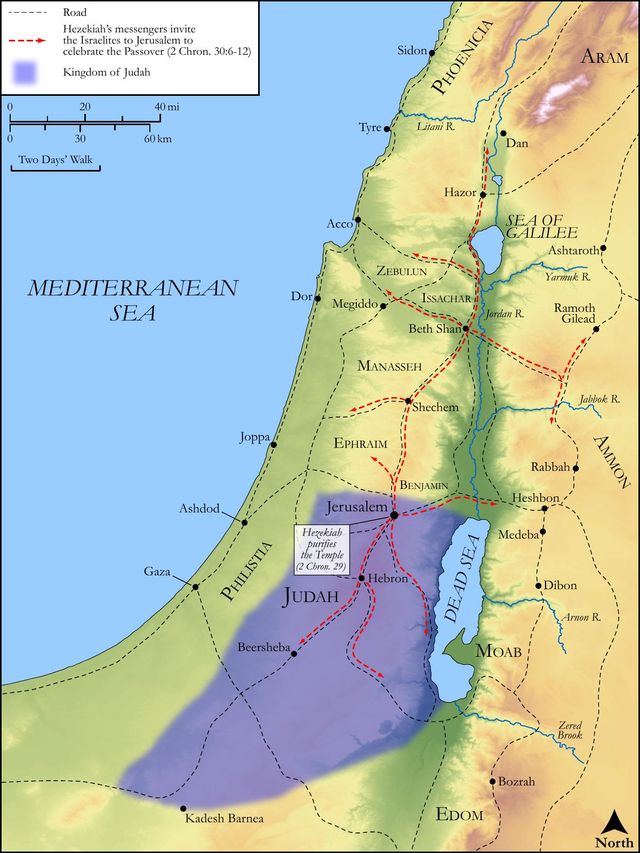
This verse is situated within King Hezekiah's ambitious and unprecedented invitation to all Israel—both Judah and the remnants of the northern kingdom—to celebrate the Passover in Jerusalem. Having just completed a thorough cleansing and rededication of the Temple in 2 Chronicles 29, Hezekiah now extends an urgent summons for national spiritual renewal. The immediate verses leading up to 2 Chronicles 30:8 detail the couriers' journey throughout the land, delivering the king's message, which included a stark reminder of the judgment that had befallen their fathers due to unfaithfulness (2 Chronicles 30:7). Verse 8 itself is a direct exhortation, a pivotal point in Hezekiah's appeal, urging a decisive break from past patterns of rebellion and a return to the Lord, setting the stage for the mixed but ultimately successful response to his call for the Passover celebration described later in the chapter.
Historical & Cultural Context
Hezekiah reigned over Judah from approximately 715-686 BC, a period of significant geopolitical upheaval. The northern kingdom of Israel had fallen to Assyria in 722 BC, and many of its inhabitants were exiled, leaving a fractured and spiritually compromised remnant. Judah itself had suffered under Hezekiah's idolatrous father, Ahaz, who had closed the Temple and promoted pagan worship. Hezekiah's reforms represented a radical departure from this recent past, seeking to restore the Mosaic covenant and centralize worship in Jerusalem. Culturally, the concept of being "stiffnecked" was a well-understood idiom for stubbornness and rebellion, often used in the context of an ox refusing to bear a yoke. Yielding oneself to the Lord, or "giving the hand," was a recognized gesture of submission and covenant allegiance, akin to pledging fealty to a king or entering into a binding agreement. The Temple in Jerusalem was the singular, divinely appointed place for legitimate worship and sacrifice, a foundational element of Israelite identity and covenant relationship with Yahweh.
Key Themes
ShowHideThe overarching themes in 2 Chronicles 30, and particularly in this verse, revolve around repentance and return to God. Hezekiah's call is a stark reminder of the consequences of apostasy and unfaithfulness, contrasting the fathers' rebellion with the present opportunity for divine mercy. The emphasis on entering "his sanctuary, which he hath sanctified for ever" underscores the centrality of proper worship and the holiness of God's dwelling place, a direct challenge to the syncretism and idolatry that had plagued both kingdoms. The promise that God's "fierceness of his wrath may turn away" highlights God's justice against sin but also His profound compassion and willingness to forgive those who genuinely seek Him, echoing the divine promise found in 2 Chronicles 7:14. This entire chapter serves as a powerful testament to the sovereignty of God in orchestrating revival and the importance of leadership in guiding a nation back to covenant fidelity.
Exposition and Analysis
ShowHideKey Word Analysis
ShowHideThis vivid idiom, literally "hard of neck" or "stubborn of neck," is used to describe an obstinate, unyielding, and rebellious disposition, particularly in the context of resisting God's commands or authority. From H7185, qâshâh means "to be dense, i.e., tough or severe," implying a hardened state. From H6203, ʻôreph refers to "the nape or back of the neck," which, when stiff, indicates refusal to turn or submit. Like an ox that refuses to submit to the yoke and pull the plow, a "stiffnecked" people refuse to obey God's will, characterized by a hardened heart and an unwillingness to humble themselves. This term powerfully encapsulates Israel's historical pattern of rebellion against the Lord, from the wilderness generation (e.g., Exodus 32:9) to the time of the judges and kings.
This phrase, literally "give the hand," signifies an act of voluntary submission, surrender, or pledging allegiance. From H5414, nâthan is a primitive root meaning "to give," used with great latitude to imply placing, bestowing, or committing. From H3027, yâd refers to "a hand (the open one, indicating power, means, direction, etc.)," and idiomatically can mean "yield." It implies a covenantal commitment, an offering of oneself in service and obedience. In ancient Near Eastern treaties, "giving the hand" could denote submission to a conquering power or the formation of a binding agreement. Here, Hezekiah urges the people to make a decisive and willing commitment to the LORD, abandoning their former rebellion for a posture of humble obedience and faithful service within the covenant.
This word, referring to the Temple, means "to be (causatively, make, pronounce or observe as) clean (ceremonially or morally)." From H6942, qâdash is a primitive root indicating a state of being set apart, consecrated, or made holy. The Temple's status as "sanctified for ever" emphasizes its perpetual holiness and its unique, divinely appointed role as the legitimate place of worship and communion with God, regardless of the people's past unfaithfulness. It asserts the Temple's enduring sacred status against all forms of idolatrous defilement.
Verse Breakdown
ShowHide"Now be ye not stiffnecked, as your fathers [were, but]"
This opening clause serves as a direct and urgent admonition. Hezekiah explicitly warns against repeating the historical pattern of stubborn rebellion and obstinate resistance to God's will that characterized previous generations of Israel, which led to divine judgment and national calamity. The "fathers" here refer to those who consistently resisted God's commands, leading to the division of the kingdom and the eventual exile of the northern tribes. The conjunction "but" signals a sharp contrast and a call for a radical change in disposition from past disobedience to present obedience.
"yield yourselves unto the LORD,"
This is the positive command, the alternative to being "stiffnecked." It calls for a complete and voluntary surrender of one's will, allegiance, and life to God. It is an invitation to enter into a renewed covenant relationship, marked by humility, obedience, and devotion, acknowledging God's rightful sovereignty over their lives. This act of "giving the hand" signifies a profound commitment and a turning from self-will to divine will.
"and enter into his sanctuary, which he hath sanctified for ever:"
This clause specifies a concrete act of yielding: returning to the Temple in Jerusalem. The "sanctuary" (the Temple) is emphasized as divinely "sanctified for ever," highlighting its perpetual holiness and its central role as the legitimate place of worship and communion with God, regardless of the people's past unfaithfulness. This was a direct rebuke to idolatrous practices and unauthorized altars, asserting the Temple's unique and enduring sacred status as the designated place for proper worship and atonement.
"and serve the LORD your God,"
This is the practical outworking of yielding and entering the sanctuary. "Serving the Lord" encompasses faithful obedience to His commands, participating in proper worship, and living in accordance with the covenant. It moves beyond mere ritual to a life of active devotion and allegiance to Yahweh as their exclusive God, demonstrating their renewed commitment through their actions and lifestyle.
"that the fierceness of his wrath may turn away from you."
This final clause presents the ultimate motivation and promised outcome of their repentance and obedience. God's "fierceness of his wrath" refers to the just judgment and severe consequences for sin and covenant breaking, which Israel had experienced. Hezekiah offers the hope that through genuine turning and submission, God's righteous anger will be averted, and His mercy and favor will be extended, leading to restoration, protection, and blessing.
Literary Devices
ShowHideThe verse employs several powerful literary devices to convey its urgent message. Metaphor is prominently used with the term "stiffnecked," drawing on the imagery of an uncooperative animal (like an ox refusing the yoke) to vividly portray human obstinacy and rebellion against divine authority. This creates a strong visual for the audience, highlighting the folly and danger of such a disposition. The verse also utilizes antithesis or contrast, setting the negative command "be ye not stiffnecked" against the positive commands to "yield yourselves unto the LORD," "enter into his sanctuary," and "serve the LORD your God," thereby emphasizing the stark choice before the people and the radical change in posture required. Furthermore, the structure of the verse functions as a conditional promise or consequence, where the actions of yielding, entering the sanctuary, and serving God are presented as the necessary conditions ("if...then") for the desired outcome: "that the fierceness of his wrath may turn away from you." This rhetorical strategy appeals to both fear of judgment and hope for mercy, powerfully motivating the audience towards repentance. The direct address "be ye not" also creates a sense of personal appeal and urgency, making the king's message resonate directly with each individual.
Theological and Thematic Connections
ShowHideThis verse powerfully encapsulates the biblical themes of repentance, divine justice, and God's enduring mercy. It underscores that while God is holy and just, requiring obedience and punishing sin, He is also profoundly gracious and ready to forgive those who genuinely turn to Him. The call to return to the sanctuary and serve the Lord highlights the perpetual importance of right worship and covenant fidelity as central to a healthy relationship with God. This divine pattern of judgment averted by repentance is a recurring motif throughout the Old Testament, demonstrating God's consistent character and His desire for His people's restoration rather than their destruction.
Reflection and Application
ShowHideKing Hezekiah's ancient call to repentance resonates deeply with contemporary believers, urging us to examine the posture of our hearts before God. Are there areas in our lives where we exhibit a "stiffnecked" resistance to God's will, preferring our own way or clinging to sin? This verse challenges us to a radical surrender, to "yield ourselves unto the LORD" in every facet of our being—our thoughts, desires, actions, and resources. It reminds us that true worship is not merely a ritual but a lifestyle of humble obedience and faithful service, prioritizing God's presence and His commands. Just as the physical sanctuary was central for Israel, believers today are called to prioritize spiritual communion with God, whether through personal devotion, corporate worship, or living as His consecrated dwelling place. The promise that God's wrath may turn away offers immense hope, reminding us that even in the face of our failures, God's mercy is available through genuine repentance, leading to restoration and spiritual flourishing.
Questions for Reflection
ShowHideFAQ
ShowHideWhat does it mean to be "stiffnecked" in a modern context?
ShowHideIn a modern context, being "stiffnecked" refers to a stubborn, unyielding, and rebellious attitude towards God's will, His commands, or His leading in one's life. It manifests as an unwillingness to repent, to humble oneself, or to submit to divine authority. It can appear as spiritual pride, resistance to correction, or a persistent desire to live according to one's own desires rather than God's. It's a refusal to "take on the yoke" of Christ, which Jesus himself described as easy and light for those who learn from Him (Matthew 11:29-30). This spiritual stubbornness hinders one's relationship with God and prevents the reception of His blessings.
How does "yielding yourselves unto the LORD" relate to salvation?
ShowHideWhile 2 Chronicles 30:8 is an Old Testament call to covenant faithfulness, the concept of "yielding yourselves unto the LORD" is profoundly connected to salvation. In the New Testament, salvation is received through faith in Jesus Christ, which inherently involves a surrender of one's life to Him as Lord. This yielding is not merely a one-time decision but an ongoing posture of submission to His lordship, allowing Him to transform and direct one's life. It is a turning from self-reliance and sin to trust and obey God, aligning with the New Testament call to repentance and faith (Acts 2:38). True salvation involves not just belief in Christ's atoning work but also a commitment to follow Him as Lord, which is an act of yielding one's entire being.
Christ-Centered Fulfillment
ShowHideThe call in 2 Chronicles 30:8 finds its ultimate fulfillment in Jesus Christ. The "stiffnecked" rebellion of humanity, so vividly described throughout the Old Testament, is overcome only through the atoning work of the Lamb of God who takes away the sin of the world. We are no longer called to merely "yield ourselves" in a general sense, but to yield to the specific Lordship of Jesus Christ, who perfectly embodied submission to the Father's will, even to the point of death on a cross (Philippians 2:8). The "sanctuary, which he hath sanctified for ever," foreshadows Christ himself, who is the true and eternal Temple, the very dwelling place of God, through whom we now have direct access to the Father (John 2:19-21, Hebrews 9:11-12). His once-for-all sacrifice on the cross is the definitive act that causes "the fierceness of his wrath" against sin to turn away from all who believe in Him (Romans 5:9). In Christ, we are empowered by the Holy Spirit to genuinely "serve the LORD our God," not out of fear of wrath, but out of love and gratitude for the redemption He has accomplished, living as new creations in Him (2 Corinthians 5:17).