


Deuteronomy 32:20
- וַיֹּאמֶרvai·Yo·merand he saidH559Conj-w ¦ V-Qal-ConsecImperf-3msVerb Qal Consecutive Imperfect 3rd Singular Masculineוַandיֹּאמֶרhe said
- אַסְתִּירָה'as·Ti·rahI will hideH5641V-Hiphil-Imperf-1csVerb Hiphil Imperfect 1st Singular common gender
- פָנַיfa·Naimy faceH6440N-mpc ¦ 1csNoun Plural Masculine Constructפָנַfaceיmy
- מֵהֶםme·Hemfrom <the> themPrep-m ¦ 3mpSuffix Personal 3rd Plural Masculineמֵfrom <the>הֶםthem
- אֶרְאֶה'er·'EhI will seeH7200V-Qal-Imperf-1csVerb Qal Imperfect 1st Singular common gender
- מָהmahwhat?H4100InterrogPronoun Interrogative
- אַחֲרִיתָם'a·cha·ri·Tam[will be] their endH319N-fsc ¦ 3mpNoun Singular Feminine Constructאַחֲרִיתָ[will be] endםtheir
- כִּיkiforH3588PrtParticle Conditional
- דוֹרDor[are] a generation ofH1755N-mscNoun Singular Masculine Construct
- תַּהְפֻּכֹתtah·pu·Khotperversiti<es>H8419N-fpNoun Plural Feminine Absolute
- הֵמָּהHe·mahtheyH1992Pro-3mpPronoun Personal 3rd Plural Masculine
- בָּנִיםba·NimchildrenH1121N-mpNoun Plural Masculine Absolute
- לֹאlo'[whom] notH3808NegParticle Negative
- אֵמֻן'e·MunfaithfulnessH529N-msNoun Singular Masculine Absolute
- בָּםBam[is] in <the> themPrep-b ¦ 3mpSuffix Personal 3rd Plural Masculineבָּ[is] in <the>םthem
English is a literal word-by-word gloss of the Hebrew, not the KJV's wording. Why?
This is the original text the KJV's translators worked from — each Hebrew word with its own literal English meaning in this verse, prepared by scholars at Tyndale House, Cambridge. The KJV translates whole sentences, not word by word, so its wording differs: one Hebrew word can become several English words, and the KJV may choose “the LORD” where the gloss reads “Yahweh”. Both are faithful — they answer different questions. For the KJV's own rendering, switch to the KJV text.
Details
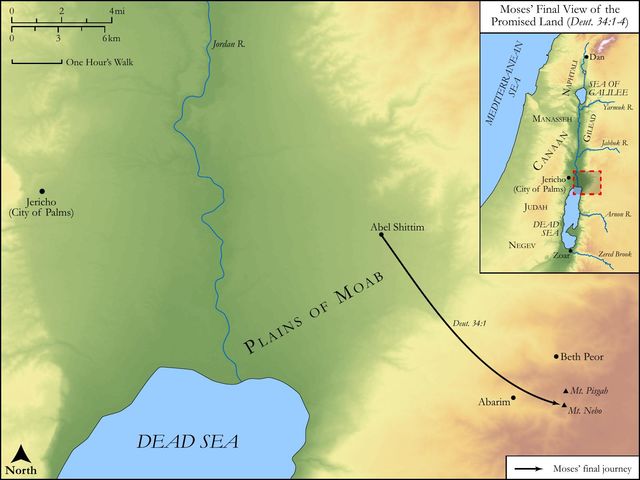
See on the biblical-era map
Study this verse
Public-domain commentary
Matthew Henry
From his Commentary on the Whole Bible. Henry comments on passages, not single verses — this entry covers Deuteronomy 32:19–25. His four-level outline is real structure in the source text, so it is rendered as structure.
The method of this song follows the method of the predictions in the foregoing chapter, and therefore, after the revolt of Israel from God, described in the foregoing verses, here follow immediately the resolves of divine Justice concerning them; we deceive ourselves if we think that God will be thus mocked by a foolish faithless people, that play fast and loose with him.
I.He had delighted in them, but now he would reject them with detestation and disdain, Deu 32:19.
When the Lord saw their treachery, and folly, and base ingratitude, he abhorred them, he despised them, so some read it. Sin makes us odious in the sight of the holy God; and no sinners are so loathsome to him as those that he has called, and that have called themselves, his sons and his daughters, and yet have been provoking to him. Note, The nearer any are to God in profession the more noisome are they to him if they are defiled in a sinful way, Psa 106:39, Psa 106:40.
II.He had given them the tokens of his presence with them and his favour to them; but now he would withdraw and hide his face from them, Deu 32:20. His hiding his face signifies his great displeasure; they had turned their back upon God, and now God would turn his back upon them (compare Jer 18:17 with Jer 2:27); but here it denotes also the slowness of God's proceedings against them in a way of judgment. They began in their apostasy with omissions of good, and so proceeded to commissions of evil. In like manner God will first suspend his favours, and let them see what the issue of that will be, what a friend they lose when they provoke God to depart, and will try whether this will bring them to repentance. Thus we find God hiding himself, as it were, in expectation of the event, Isa 57:17. To justify himself in leaving them he shows that they were such as there was no dealing with; for,
1.They were froward and a people that could not be pleased, or obstinate in sin, and that could not be convinced and reclaimed.
2.They were faithless, and a people that could not be trusted. When he saved them, and took them into covenant, he said, Surely they are children that will not lie (Isa 63:8); but when they proved otherwise, children in whom is no faith, they deserved to be abandoned, and that the God of truth should have no more to do with them.
III.He had done every thing to make them easy and to please them, but now he would do that against them which should be most vexatious to them. The punishment here answers the sin, Deu 32:21.
1.They had provoked God with despicable deities which were not gods at all, but vanities, creatures of their own imagination, that could not pretend either to merit or to repay the respects of their worshippers; the more vain and vile the gods were after which they went a whoring the greater was the offence to that great and good God whom they set them up in competition with and contradiction to. This put two great evils into their idolatry, Jer 2:13.
2.God would therefore plague them with despicable enemies, that were worthless, weak, and inconsiderable, and not deserving the name of a people, which was a great mortification to them, and aggravated the oppressions they groaned under The more base the people were that tyrannised over them the more barbarous they would be (none so insolent as a beggar on horseback), besides that it would be infamous to Israel, who had so often triumphed over great and mighty nations, to be themselves trampled upon by the weak and foolish, and to come under the curse of Canaan, who was to be a servant of servants. But God can make the weakest instrument a scourge to the strongest sinner; and those that by sin insult their might Creator are justly insulted by the meanest of their fellow-creatures. This was remarkably fulfilled in the days of the judges, when they were sometimes oppressed by the very Canaanites themselves, whom they had subdued, Jdg 4:2. But the apostle applies it to the conversion of the Gentiles, who had been a people not in covenant with God, and foolish in divine things, yet were brought into the church, sorely to the grief of the Jews, who upon all occasions showed a great indignation at it, which was both their sin and their punishment, as envy always is, Rom 10:19.
IV.He had planted them in a good land, and replenished them with all good things; but now he would strip them of all their comforts, and bring them to ruin. The judgments threatened are very terrible, Deu 32:22-25.
1.The fire of God's anger shall consume them, Deu 32:22. Are they proud of their plenty? It shall burn up the increase of the earth. Are they confident of their strength? It shall destroy the very foundations of their mountains: there is no fence against the judgments of God when they come with commission to lay all waste. It shall burn to the lowest hell, that is, it shall bring them to the very depth of misery in this world, which yet would be but a faint resemblance of the complete and endless misery of sinners in the other world. The damnation of hell (as our Saviour calls it) is the fire of God's anger, fastening upon the guilty conscience of a sinner, to its inexpressible and everlasting torment, Isa 30:33.
2.The arrows of God's judgments shall be spent upon them, till his quiver is quite exhausted, Deu 32:23. The judgments of God, like arrows, fly swiftly (Psa 64:7), reaching those at a distance who flatter themselves with hopes of escaping them, Psa 21:8, Psa 21:12. They come from an unseen hand, but wound mortally, for God never misses his mark, Kg1 22:34. The particular judgments here threatened are,
(1.)Famine: they shall be burnt, or parched, with hunger.
(2.)Pestilence and other diseases, here called burning heat and bitter destruction.
(3.)The insults of the inferior creatures: the teeth of beasts and the poison of serpents, Deu 32:24.
(4.)War and the fatal consequences of it, Deu 32:25.
[1.]Perpetual frights. When the sword is without, there cannot but be terror within. Co2 7:5, Without were fightings, within were fears. Those who cast off the fear of God are justly exposed to the fear of enemies.
[2.]Universal deaths. The sword of the Lord, when it is sent to lay all waste, will destroy without distinction; neither the strength of the young man nor the beauty of the virgin, neither the innocency of the suckling nor the gravity or infirmity of the man of gray hairs, will be their security from the sword when it devours one as well as another. Such devastation does war make, especially when it is pushed on by men as ravenous as wild beasts and as venomous as serpents, Deu 32:24. See here what mischief sin does, and reckon those fools that make a mock at it.
Historical interpretation
Historical reception
1 surviving comment on this verse from the historical church.
There is peace and joy in the hearts of those upon whom the face of the Lord looks. But for those from whom he turns away there is an accumulation of evils. He does not desire to look upon evil, because he is good. But if he deliberately looks toward evil, then wickedness takes root, because of humankind’s infidelity.
Continue studying Deuteronomy 32:20 across the web’s major study libraries — every link below opens this exact verse, chapter, or book on the destination site.
Read & Compare
 BibleGatewayThis verse in more than 200 translations and 70 languages.
 Bible.comThe YouVersion reader — hundreds of translations, reading plans, and highlights.
 ESV.orgCrossway's official English Standard Version reader.
 NET BibleThe NET translation with 60,000+ translators' notes on every rendering decision.
 STEP BibleTyndale House's free study tool — original text, vocabulary, and scholarly resources.
 BibliaLogos Bible Software's free web reader.
 USCCBThe New American Bible (Revised Edition) with the U.S. bishops' study notes.
Commentaries
 BibleHub CommentariesDozens of classic commentaries on this verse, gathered on one page.
 StudyLightMore than 100 commentary sets — the largest collection on the web.
 BibleRefPlain-English commentary on what this verse means, verse by verse.
 Enduring WordDavid Guzik's free commentary on this chapter, widely used by Bible teachers.
 Bible Study ToolsVerse commentary alongside Greek and Hebrew study aids.
Original Language & Research
- BibleHub InterlinearThe verse word by word — original language, transliteration, and English.
- BibleHub LexiconEvery word's original-language definition and Strong's entry.
 Blue Letter BibleDeep-study tools — Strong's numbers, concordance, and word studies.
 SefariaThe Hebrew text with Rashi and centuries of Jewish commentary.
Sermons, Hymns & Audio


TrulyRandomVerse is not affiliated with these sites and doesn’t control their content. They’re linked because they’re genuinely useful.
Summary
Deuteronomy 32:20 unveils a solemn declaration from God within the "Song of Moses," expressing His righteous judgment and profound displeasure over Israel's persistent rebellion and spiritual apathy. This verse reveals God's decision to withdraw His divine favor and protection, allowing the natural, destructive consequences of their "froward" (perverse) and faithless disposition to unfold, thereby illustrating the severe implications of covenant infidelity.
Context
ShowHideLiterary Context
This verse is embedded within the "Song of Moses" (Deuteronomy 32), a profound poetic and prophetic discourse delivered by Moses to the Israelites just before his death. The song serves as a comprehensive theological reflection, recounting God's unwavering faithfulness to His covenant people despite their repeated cycles of apostasy. It functions as a solemn warning, outlining the blessings contingent upon obedience and the curses that would inevitably follow disobedience, specifically foretelling Israel's future spiritual decline and God's resultant judgment. The immediate preceding verses (Deuteronomy 32:15-19) vividly describe Israel's prosperity leading to spiritual arrogance, idolatry, and a profound provocation of God's anger, setting the stage for the divine declaration in verse 20.
Historical & Cultural Context
The "Song of Moses" is delivered on the plains of Moab, with the Israelites poised to enter the Promised Land. This generation had witnessed God's mighty acts of deliverance from Egypt and sustenance in the wilderness, yet they were prone to murmuring, rebellion, and idolatry, as documented throughout the books of Exodus and Numbers. The concept of God "hiding His face" was a deeply significant expression in ancient Israel, signifying the withdrawal of divine favor, protection, and blessing, often leading to vulnerability and distress. Conversely, God "showing His face" implied His benevolent presence and blessing, as seen in the priestly blessing of Numbers 6:25. The "froward" nature speaks to a deep-seated cultural and spiritual stubbornness that often characterized Israel's relationship with Yahweh, despite His covenantal faithfulness.
Key Themes
ShowHideDeuteronomy 32:20 contributes significantly to several overarching themes within the "Song of Moses" and the broader book of Deuteronomy. It underscores the theme of Divine Judgment and Sovereignty, demonstrating God's ultimate authority to respond to human sin and His righteous indignation against covenant unfaithfulness. It highlights the Consequences of Unfaithfulness and Rebellion, illustrating that persistent spiritual apathy and idolatry inevitably lead to divine discipline and the withdrawal of blessing, as also seen in the curses of Deuteronomy 28. Furthermore, the verse emphasizes the critical importance of Faith and Steadfastness in the covenant relationship, contrasting God's unwavering character with Israel's fickle and faithless disposition. This tension between God's faithfulness and Israel's unfaithfulness is a central motif throughout the Pentateuch, culminating in this prophetic warning.
Exposition and Analysis
ShowHideKey Word Analysis
ShowHideThis term (H8419), derived from a root meaning "to turn, overturn, pervert," signifies a twisted, perverse, or crooked disposition. It describes a moral and spiritual corruption that actively opposes and deviates from God's righteous path. It implies a willful, stubborn rebellion, a disposition that turns things upside down or acts contrary to what is right and expected, indicating a deep-seated spiritual perversity rather than mere accidental transgression.
The word "faith" (H529), here negated by "no" (לֹא, lōʾ), denotes faithfulness, trustworthiness, steadfastness, or loyalty. The absence of ʼêmûwn indicates a fundamental lack of trust, reliability, and steadfast commitment to God. It's not merely a momentary lapse but a deep-seated deficiency in their relationship with Yahweh, reflecting a failure to believe in His character, promises, and commands, which is the root cause of their perversity.
Verse Breakdown
ShowHide"And he said"
This introduces the direct speech of God (H559, ʼâmar), emphasizing the divine origin and authoritative nature of the declaration. It is Yahweh Himself who is speaking, not Moses's interpretation.
"I will hide my face from them"
This is a powerful anthropomorphic expression (H5641, çâthar for "hide"; H6440, pânîym for "face") signifying God's withdrawal of His benevolent presence, favor, protection, and blessings. It implies a deliberate act of divine distancing, leaving the people vulnerable to their enemies and the consequences of their own choices. It is a sign of profound displeasure and judgment.
"I will see what their end [shall be]"
This does not imply God's ignorance of the future (H7200, râʼâh for "see"; H319, ʼachărîyth for "end"), but rather His sovereign decision to allow their rebellion to run its course, observing the inevitable, self-inflicted destruction that will result. It is an active, judicial observation, permitting the natural and supernatural consequences of their actions to unfold as a form of divine retribution and demonstration of their folly.
"for they [are] a very froward generation"
This clause provides the primary reason for God's judgment. Their "frowardness" (H8419, tahpukâh - perversity, crookedness, rebellion) describes their inherent disposition and consistent behavior—a willful turning away from God's ways and a persistent opposition to His commands. The intensifier "very" underscores the depth of their spiritual corruption. The term "generation" (H1755, dôwr) highlights this as a characteristic of the collective people.
"children in whom [is] no faith"
This second reason clarifies and deepens the first. Their "frowardness" stems from a fundamental lack of ʼêmûwn (H529)—faith, trust, loyalty, and steadfastness towards God. Despite being His covenant "children" (H1121, bên), their actions demonstrated a profound absence of belief in His promises, character, and commands, which is the ultimate root of their perverse behavior and rebellion.
Literary Devices
ShowHideDeuteronomy 32:20 employs several significant literary devices. The phrase "I will hide my face from them" is a powerful example of Anthropomorphism, attributing a human action (hiding one's face) to God to convey His emotional state of displeasure and His deliberate withdrawal of favor. This action also serves as Foreshadowing, hinting at the future distress and suffering Israel will experience when left to their own devices, without divine protection. The description of Israel as "a very froward generation, children in whom is no faith" utilizes Parallelism, where the second phrase ("children in whom is no faith") reinforces and elaborates upon the first ("a very froward generation"), emphasizing the deep-seated nature of their spiritual malady. The use of "very" before "froward" also functions as Intensification, underscoring the extreme degree of their perversity and rebellion in God's eyes.
Theological and Thematic Connections
ShowHideDeuteronomy 32:20 profoundly articulates God's righteous response to covenant infidelity, highlighting that while God is patient and merciful, His justice demands accountability for persistent rebellion and unbelief. The concept of God "hiding His face" is a recurring theological motif throughout Scripture, symbolizing divine judgment, the removal of favor, and the experience of spiritual desolation when humanity turns away from Him. This verse underscores the foundational biblical truth that genuine faith is not merely intellectual assent but a steadfast trust and loyalty that manifests in obedience and faithfulness. The absence of such faith leads inevitably to spiritual perversion and the dire consequences of being outside God's protective presence, demonstrating that God's character remains consistent in both His love and His justice.
Reflection and Application
ShowHideDeuteronomy 32:20 serves as a timeless mirror for all generations, urging us to examine the depth of our own faith and the integrity of our walk with God. It powerfully reminds us that God's covenant relationship with His people demands not only outward adherence but also an inward disposition of genuine trust and loyalty. When we allow "frowardness"—a stubborn, perverse inclination toward self-will and sin—to take root, and when our "faith" becomes superficial or absent, we risk experiencing a withdrawal of God's manifest presence and blessing. This is not arbitrary punishment, but the natural consequence of severing ourselves from the Source of life and protection. The verse calls us to a radical self-assessment: are we truly "children of faith," or are we prone to the same spiritual apathy and rebellion that plagued ancient Israel? Our spiritual well-being and flourishing depend on cultivating a heart of steadfast trust and obedience, continually turning towards God rather than away from Him.
Questions for Reflection
ShowHideFAQ
ShowHideDoes God literally "hide His face" from people today?
ShowHideWhile God does not literally have a physical face to hide, the phrase "hide my face" is a powerful anthropomorphism that signifies a withdrawal of His manifest favor, protection, and blessing. In a spiritual sense, when individuals or communities persistently reject God's commands and live in rebellion and unbelief, they experience the natural consequences of being outside His protective and guiding presence. This can manifest as spiritual barrenness, a lack of discernment, exposure to the consequences of sin, or a sense of divine distance. It is not that God ceases to exist or to be sovereign, but that He allows the trajectory of human choices to unfold, demonstrating the profound implications of living apart from Him. The New Testament emphasizes that through Christ, believers always have access to God's presence, but persistent sin can still hinder the experience of His blessing and communion.
Christ-Centered Fulfillment
ShowHideDeuteronomy 32:20, with its stark portrayal of Israel's "frowardness" and "no faith," finds its ultimate fulfillment and resolution in Jesus Christ. Israel, as a "very froward generation," consistently failed to maintain the covenant of faith and obedience. However, Jesus embodies the perfectly faithful Son, the one in whom there is absolute and unwavering faith, as the author and finisher of our faith (Hebrews 12:2). He is the true Israel, the obedient one who never turned His face from the Father's will, even unto death. On the cross, it was Jesus's face that was "hidden" from the Father, as He cried out, "My God, my God, why have you forsaken me?" This profound moment of divine abandonment, where the Father turned His face from the Son, was not due to Christ's own "frowardness," but because He bore the "frowardness" and "no faith" of humanity. He became our substitute, experiencing the ultimate consequence of sin—separation from God—so that those who believe in Him might never have God's face hidden from them. Through Christ, we are given a new heart of faith (Ezekiel 36:26) and are reconciled to God, able to approach Him with confidence at the throne of grace (Hebrews 4:16). Jesus, therefore, is the end of our "froward" generation and the source of true, saving faith, perfectly fulfilling what Israel so tragically lacked.