


Luke 18:8
Bible text: King James Version (1769 Blayney text) · Public domain
Bible text: King James Version with Strong's numbers · Public domain
Bible text: Berean Standard Bible · Public domain
Bible text: American Standard Version (1901) · Public domain
Bible text: World English Bible, Messianic edition · Public domain
Bible text: Geneva Bible (1599) · Public domain
Bible text: Young's Literal Translation · Public domain
- λέγωlegōI sayG3004V-PAI-1SVerb Present Active Indicative 1st Singular
- ὑμῖνhuminto youG4771P-2DPPersonal pronoun Dative 2nd Plural
- ὅτιhotithatG3754CONJConjunction
- ποιήσειpoiēseiHe will carry outG4160V-FAI-3SVerb Future Active Indicative 3rd Singular
- τὴνtēntheG3588T-ASFDefinite article Accusative Singular Feminine
- ἐκδίκησινekdikēsinavengingG1557N-ASFNoun Accusative Singular Feminine
- αὐτῶνautōnof themG846P-GPMPersonal pronoun Genitive Plural Masculine
- ἐνenwithG1722PREPPreposition
- τάχειtacheispeedG5034N-DSNNoun Dative Singular Neuter
- πλὴνplēnNeverthelessG4133CONJConjunction
- ὁhotheG3588T-NSMDefinite article Nominative Singular Masculine
- υἱὸςhuiosSonG5207N-NSM-TNoun Nominative Singular Masculine Title
- τοῦtou<the>G3588T-GSMDefinite article Genitive Singular Masculine
- ἀνθρώπουanthrōpouof ManG444N-GSM-TNoun Genitive Singular Masculine Title
- ἐλθὼνelthōnhaving comeG2064V-2AAP-NSMVerb 2nd Aorist Active Participle Nominative Singular Masculine
- ἆραarasurely notG687PRT-NNegative Particle Negative
- εὑρήσειheurēseiwill He findG2147V-FAI-3SVerb Future Active Indicative 3rd Singular
- τὴνtēn<the>G3588T-ASFDefinite article Accusative Singular Feminine
- πίστινpistinfaithG4102N-ASFNoun Accusative Singular Feminine
- ἐπὶepionG1909PREPPreposition
- τῆςtēstheG3588T-GSFDefinite article Genitive Singular Feminine
- γῆς;gēsearth?G1093N-GSFNoun Genitive Singular Feminine
English is a literal word-by-word gloss of the Greek, not the KJV's wording. Why?
This is the original text the KJV's translators worked from — each Greek word with its own literal English meaning in this verse, prepared by scholars at Tyndale House, Cambridge. The KJV translates whole sentences, not word by word, so its wording differs: one Greek word can become several English words, and the KJV may choose “charity” where the gloss reads “love”. Both are faithful — they answer different questions. For the KJV's own rendering, switch to the KJV text.
Details
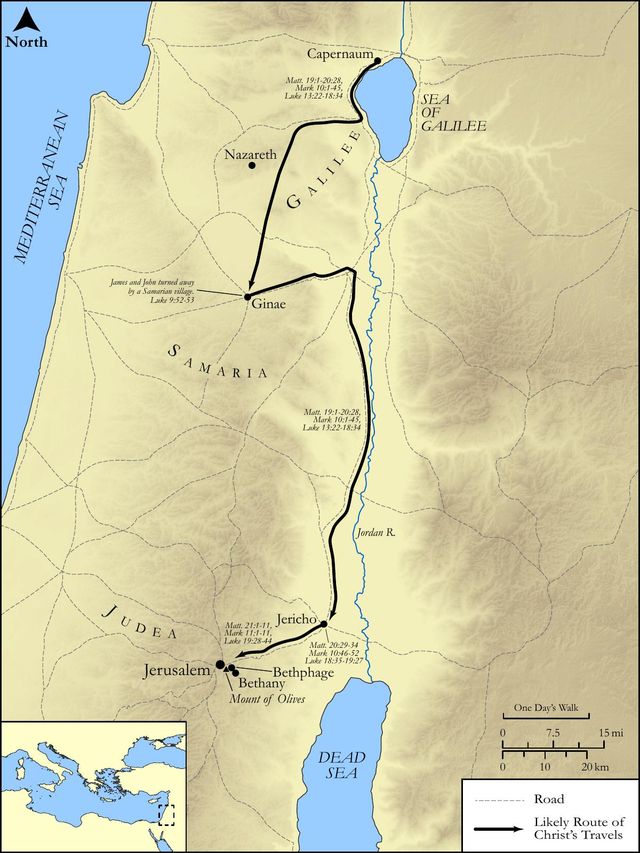
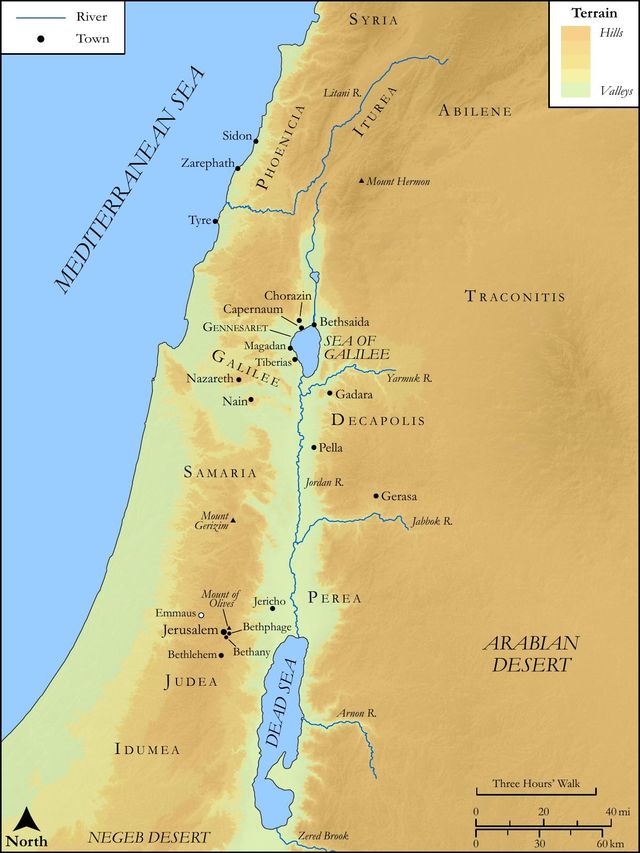
See on the biblical-era maps

Study this verse
Public-domain commentary
Matthew Henry
From his Commentary on the Whole Bible. Henry comments on passages, not single verses — this entry covers Luke 18:1–8. His four-level outline is real structure in the source text, so it is rendered as structure.
This parable has its key hanging at the door; the drift and design of it are prefixed. Christ spoke it with this intent, to teach us that men ought always to pray and not to faint, Luk 18:1. It supposes that all God's people are praying people; all God's children keep up both a constant and an occasional correspondence with him, send to him statedly, and upon every emergency. It is our privilege and honour that we may pray. It is our duty; we ought to pray, we sin if we neglect it. It is to be our constant work; we ought always to pray, it is that which the duty of every day requires. We must pray, and never grow weary of praying, nor think of leaving it off till it comes to be swallowed up in everlasting praise. But that which seems particularly designed here is to teach us constancy and perseverance in our requests for some spiritual mercies that we are in pursuit of, relating either to ourselves or to the church of God. When we are praying for strength against our spiritual enemies, our lusts and corruptions, which are our worst enemies, we must continue instant in prayer, must pray and not faint, for we shall not seek God's face in vain. So we must likewise in our prayers for the deliverance of the people of God out of the hands of their persecutors and oppressors.
I.Christ shows, by a parable, the power of importunity among men, who will be swayed by that, when nothing else will influence, to do what is just and right. He gives you an instance of an honest cause that succeeded before an unjust judge, not by the equity or compassionableness of it, but purely by dint of importunity. Observe here,
1.The bad character of the judge that was in a certain city. He neither feared God nor regarded man; he had no manner of concern either for his conscience or for his reputation; he stood in no awe either of the wrath of God against him or of the censures of men concerning him: or, he took no care to do his duty either to God or man; he was a perfect stranger both to godliness and honour, and had no notion of either. It is not strange if those that have cast off the fear of their Creator be altogether regardless of their fellow-creatures; where no fear of God is no good is to be expected. Such a prevalency of irreligion and inhumanity is bad in any, but very bad in a judge, who has power in his hand, in the use of which he ought to be guided by the principles of religion and justice, and, if he be not, instead of doing good with his power he will be in danger of doing hurt. Wickedness in the place of judgment was one of the sorest evils Solomon saw under the sun, Ecc 3:16.
2.The distressed case of a poor widow that was necessitated to make her appeal to him, being wronged by some one that thought to bear her down with power and terror. She had manifestly right on her side; but, it should seem, in soliciting to have right done her, she tied not herself to the formalities of the law, but made personal application to the judge from day to day at his own house, still crying, Avenge me of mine adversary; that is, Do me justice against mine adversary; not that she desired to be revenged on him for any thing he had done against her, but that he might be obliged to restore what effects he had of hers in his hands, and might be disabled any more to oppress her. Note, Poor widows have often many adversaries, who barbarously take advantage of their weak and helpless state to invade their rights, and defraud them of what little they have; and magistrates are particularly charged, not only not to do violence to the widow (Jer 21:3), but to judge the fatherless, and plead for the widow (Isa 1:17), to be their patrons and protectors; then they are as gods, for God is so, Psa 68:5.
3.The difficulty and discouragement she met with in her cause: He would not for awhile. According to his usual practice, he frowned upon her, took no notice of her cause, but connived at all the wrong her adversary did her; for she had no bribe to give him, no great man whom he stood in any awe of to speak for her, so that he did not at all incline to redress her grievances; and he himself was conscience of the reason of his dilatoriness, and could not but own within himself that he neither feared God nor regarded man. It is sad that a man should know so much amiss of himself, and be in no care to amend it.
4.The gaining of her point by continually dunning this unjust judge (Luk 18:5): "Because this widow troubleth me, gives me a continual toil, I will hear her cause, and do her justice; not so much lest by her clamour against me she bring me into an ill name, as lest by her clamour to me she weary me; for she is resolved that she will give me no rest till it is done, and therefore I will do it, to save myself further trouble; as good at first as at last." Thus she got justice done her by continual craving; she begged it at his door, followed him in the streets, solicited him in open court, and still her cry was, Avenge me of mine adversary, which he was forced to do, to get rid of her; for his conscience, bad as he was, would not suffer him to send her to prison for an affront upon the court.
II.He applies this for the encouragement of God's praying people to pray with faith and fervency, and to persevere therein.
1.He assures them that God will at length be gracious to them (Luk 18:6): Hear what the unjust judge saith, how he owns himself quite overcome by a constant importunity, and shall not God avenge his own elect? Observe,
(1.)What it is that they desire and expect: that God would avenge his own elect. Note,
[1.]There are a people in the world that are God's people, his elect, his own elect, a choice people, a chosen people. And this he has an eye to in all he does for them; it is because they are his chosen, and in pursuance of the choice he has made of them.
[2.]God's own elect meet with a great deal of trouble and opposition in this world; there are many adversaries that fight against them; Satan is their great adversary.
[3.]That which is wanted and waited for is God's preserving and protecting them, and the work of his hands in them; his securing the interest of the church in the world and his grace in the heart.
(2.)What it is that is required of God's people in order to the obtaining of this: they must cry day and night to him; not that he needs their remonstrances, or can be moved by their pleadings, but this he has made their duty, and to this he has promised mercy. We ought to be particular in praying against our spiritual enemies, as St. Paul was: For this thing I besought the Lord thrice, that it might depart from me; like this importunate widow. Lord, mortify this corruption. Lord, arm me against this temptation. We ought to concern ourselves for the persecuted and oppressed churches, and to pray that God would do them justice, and set them in safety. And herein we must be very urgent; we must cry with earnestness: we must cry day and night, as those that believe prayer will be heard at last; we must wrestle with God, as those that know how to value the blessing, and will have no nay. God's praying people are told to give him no rest, Isa 62:6, Isa 62:7.
(3.)What discouragements they may perhaps meet with in their prayers and expectations. He may bear long with them, and may not presently appear for them, in answer to their prayers. He is makrothumōn ep' autois - he exercises patience towards the adversaries of his people, and does not take vengeance on them; and he exercises the patience of his people, and does not plead for them. He bore long with the cry of the sin of the Egyptians that oppressed Israel, and with the cry of the sorrows of those that were oppressed.
(4.)What assurance they have that mercy will come at last, though it be delayed, and how it is supported by what the unjust judge saith: If this widow prevail by being importunate, much more shall God's elect prevail. For,
[1.]This widow was a stranger, nothing related to the judge; but God's praying people are his own elect, whom he knows, and loves, and delights in, and has always concerned himself for.
[2.]She was but one, but the praying people of God are many, all of whom come to him on the same errand, and agree to ask what they need, Mat 18:19. As the saints of heaven surround the throne of glory with their united praises, so saints on earth besiege the throne of grace with their united prayers.
[3.]She came to a judge that bade her keep her distance; we come to a Father that bids us come boldly to him, and teaches us to cry, Abba, Father.
[4.]She came to an unjust judge; we come to a righteous Father (Joh 17:25), one that regards his own glory and the comforts of his poor creatures, especially those in distress, as widows and fatherless.
[5.]She came to this judge purely upon her own account; but God is himself engaged in the cause which we are soliciting; and we can say, Arise, O Lord, plead thine own cause; and what wilt thou do to thy great name?
[6.]She had no friend to speak for her, to add force to her petition, and to use interest for her more than her own; but we have an Advocate with the Father, his own Son, who ever lives to make intercession for us, and has a powerful prevailing interest in heaven.
[7.]She had no promise off speeding, no, nor any encouragement given her to ask; but we have the golden sceptre held out to us, are told to ask, with a promise that it shall be given to us.
[8.]She could have access to the judge only at some certain times; but we may cry to God day and night, at all hours, and therefore may the rather hope to prevail by importunity.
[9.]Her importunity was provoking to the judge, and she might fear lest it should set him more against her; but our importunity is pleasing to God; the prayer of the upright is his delight, and therefore, we may hope, shall avail much, if it be an effectual fervent prayer.
2.He intimates to them that, notwithstanding this, they will begin to be weary of waiting for him (Luk 18:8): "Nevertheless, though such assurances are given that God will avenge his own elect, yet, when the Son of man cometh, shall he find faith on the earth?" The Son of man will come to avenge his own elect, to plead the cause of persecuted Christians against the persecuting Jews; he will come in his providence to plead the cause of his injured people in every age, and at the great day he will come finally to determine the controversies of Zion. Now, when he comes, will he find faith on the earth? The question implies a strong negation: No, he will not; he himself foresees it.
(1.)This supposes that it is on earth only that there is occasion for faith; for sinners in hell are feeling that which they would not believe, and saints in heaven are enjoying that which they did believe.
(2.)It supposes that faith is the great thing that Jesus Christ looks for. He looks down upon the children of men, and does not ask, Is there innocency? but, Is there faith? He enquired concerning the faith of those who applied themselves to him for cures.
(3.)It supposes that if there were faith, though ever so little, he would discover it, and find it out. His eye is upon the weakest and most obscure believer.
(4.)It is foretold that, when Christ comes to plead his people's cause, he will find but little faith in comparison with what one might expect. That is,
[1.]In general, he will find but few good people, few that are really and truly good. Many that have the form and fashion of godliness, but few that have faith, that are sincere and honest: nay, he will find little fidelity among men; the faithful fail, Psa 12:1, Psa 12:2. Even to the end of time there will still be occasion for the same complaint. The world will grow no better, no, not when it is drawing towards its period. Bad it is, and bad it will be, and worst of all just before Christ's coming; the last times will be the most perilous.
[2.]In particular, he will find few that have faith concerning his coming. When he comes to avenge his own elect he looks if there be any faith to help and to uphold, and wonders that there is none, Isa 59:16; Isa 63:5. It intimates that Christ, both in his particular comings for the relief of his people, and in his general coming at the end of time, may, and will, delay his coming so long as that, First, Wicked people will begin to defy it, and to say, Where is the promise of his coming? Pe2 3:4. They will challenge him to come (Isa 5:10; Amo 5:19); and his delay will harden them in their wickedness, Mat 24:48. Secondly, Even his own people will begin to despair of it, and to conclude he will never come, because he has passed their reckoning. God's time to appear for his people is when things are brought to the last extremity, and when Zion begins to say, The Lord has forsaken me. See Isa 49:14; Isa 40:27. But this is our comfort, that, when the time appointed comes, it will appear that the unbelief of man has not made the promise of God of no effect.
Historical interpretation
Eight Centuries of Reception
12 surviving comments on this verse. Each one is dated, so this reads as a timeline rather than a list.
Select a marker to jump to its quote. Markers stagger vertically where authors wrote within a few decades of each other.
But in us unanimity is diminished in proportion as liberality of working is decayed. Then they used to give for sale houses and estates; and that they might lay up for themselves treasures in heaven, presented to the apostles the price of them, to be distributed for the use of the poor. But now we do not even give the tenths from our patrimony; and while our Lord bids us sell, we rather buy and increase our store. Thus has the vigour of faith dwindled away among us; thus has the strength of believers grown weak. And therefore the Lord, looking to our days, says in His Gospel, "When the Son of man cometh, think you that He shall find faith on the earth? " We see that what He foretold has come to pass. There is no faith in the fear of God, in the law of righteousness, in love, in labour; none considers the fear of futurity, and none takes to heart the day of the Lord, and the wrath of God, and the punishments to come upon unbelievers, and the eternal torments decreed for the faithless. That which our conscience would fear if it believed, it fears not because it does not at all believe. But if it believed, it would also take heed; and if it took heed, it would escape.
But if there be among us, most beloved brother, the fear of God, if the maintenance of the faith prevail, if we keep the precepts of Christ, if we guard the incorrupt and inviolate sanctity of His spouse, if the words of the Lord abide in our thoughts and hearts, when he says, "Thinkest thou, when the Son of man cometh, shall He find faith on the earth" then, because we are God's faithful soldiers, who war for the faith and sincere religion of God, let us keep the camp entrusted to us by God with faithful valour. Nor ought custom, which had crept in among some, to prevent the truth from prevailing and conquering; for custom without truth is the antiquity of error. On which account, let us forsake the error and follow the truth, knowing that in Esdras also the truth conquers, as it is written: "Truth endureth and grows strong to eternity, and lives and prevails for ever and ever. With her there is no accepting of persons or distinctions; but what is just she does: nor in her judgments is there unrighteousness, but the strength, and the kingdom, and the majesty, and the power of all ages. Blessed be the Lord God of truth!" This truth Christ showed to us in His Gospel, and said, "I am the truth." Wherefore, if we are in Christ, and have Christ in us, if we abide in the truth, and the truth abides in us, let us keep fast those things which are true.
For these are hidden wolves, dumb dogs, that cannot bark, who at present are but few, but in process of time, when the end of the world draws nigh, will be more in number and more troublesome, of whom said the Lord, "Will the Son of man, when He comes, find faith on the earth? "
He who hath redeemed thee, hath shown thee what He would have thee do. He would have thee be instant in prayer, He would have thee ponder in thy heart the blessings thou art praying for, He would have thee ask and receive what His goodness is longing to impart. He never refuses His blessings to them that pray, but rather stirs men up by His mercy not to faint in praying. Gladly accept the Lord's encouragement: be willing to do what He commands, not to do what He forbids. Lastly, consider what a blessed privilege is granted thee, to talk with God in thy prayers, and make known to Him all thy wants, while He though not in words, yet by His mercy, answers thee, for He despiseth not petitions, He tires not but when thou art silent.
[Daniel 11:32] "And ungodly men shall deceitfully dissemble against the covenant. But the people who know their God shall prevail and succeed." And in Maccabees we read that there were some who, to be sure, pretended that they were custodians of God's law, and later they came to terms with the Gentiles; yet the others adhered to their religion. But in my opinion this will take place in the time of the Antichrist, when the love of many shall wax cold. It is concerning these people that our Lord says in the Gospel, "Dost thou think that the Son of man, when He comes, will find faith upon the earth?" (Luke 18:8).
(lib. ii. qu. 45.) Our Lord utters His parables, either for the sake of the comparison, as in the instance of the creditor, who when forgiving his two debtors all that they owed him was most loved by him who owed him most; or on account of the contrast, from which he draws his conclusion; as, for example, if God so clothe the grass of the field, which to-day is, and tomorrow is cast into the oven, shall he not much more clothe you, O ye of little faith. So also here when he brings forward the case of the unjust judge.
The widow may be said to resemble the Church, which appears desolate until the Lord shall come, who now secretly watches over her. But in the following words, And she came unto him, saying, Avenge me, &c. we are told the reason why the elect of God pray that they may be avenged; which we find also said of the martyrs in the Revelations of St. John, (Rev. 6:10.) though at the same time we are very plainly reminded to pray for our enemies and persecutors. This avenging of the righteous then we must understand to be, that the wicked may perish. And they perish in two ways, either by conversion to righteousness, or by punishment having lost the opportunity of conversion. Although, if all men were converted to God, there would still remain the devil to be condemned at the end of the world. And since the righteous are longing for this end to come, they are not unreasonably said to desire vengeance.
(ut sup.) If then with the most unjust judge, the perseverance of the suppliant at length prevailed even to the fulfilment of her desire, how much more confident ought they to feel who cease not to pray to God, the Fountain of justice and mercy? And so it follows. And the Lord said, Hear what, &c.
(Serm. 115.) Our Lord speaks this of perfect faith, which is seldom found on earth. See how full the Church of God is; were there no faith, who would enter it? Were there perfect faith, who would not move mountains?
(ut sup.) Our Lord adds this to show, that when faith fails, prayer dies. In order to pray then, we must have faith, and that our faith fail not, we must pray. Faith pours forth prayer, and the pouring forth of the heart in prayer gives stedfastness to faith.
We say in our prayers to him who is able to save and drive away from us that wicked being, “Avenge me of my adversary.” The only-begotten Word of God has truly done this by having become man. He has ejected the ruler of this world from his tyranny over us and has delivered and saved us and put us under the yoke of his kingdom. It is excellent to make requests through constant prayer, because Christ will receive our pleas and fulfill our petitions.
People sell the word of righteousness and make many abandon sound faith. They involve them in the inventions of devilish error. As Scripture says, they belch things out of their own hearts and not out of the mouth of the Lord. He foretold this saying, “When the Son of man comes, will he find faith on the earth?” It did not escape his knowledge. How could it, since he is God, who knows all things? In his own words, he tells us that the love of many will grow cold. In the end times, some will depart from a correct and blameless faith. They will be going after seducing spirits and listening to the false words of people who have a seared conscience. Against these, we come near to God as faithful servants, begging him that their wickedness and their attempts against his glory may have no effect.
As our Savior pointed out, even the cruel and wicked judge eventually looked into the poor widow’s case because she had wearied him with her insistence. It is quite clear that God does not neglect us. Even if he makes us wait, he will nonetheless answer us and see to our case all of a sudden. When we pray all the time, we should not weary. We should eagerly cry out to him day and night, begging him with a broken heart and a humble spirit. “A humble spirit is a sacrifice to God, and God will not reject a broken heart.”
However, when the Son of Man comes, do you think He will find faith on the earth? Although the omnipotent Creator is always ready to vindicate His chosen ones who cry out to Him, on the day of judgment, which should be held in trembling hearts, when the same Creator appears in the form of the Son of Man, there will be such a rarity of the chosen that the ruin of the entire world will have to be hastened not so much because of the cry of the faithfully unjustly condemned, but because of the torpor of those justly condemned. But the Lord says doubtfully: Do you think, will He find faith? He does not doubt, but rebukes. The word of doubt reproves infidelity, not divinity. For we also sometimes use the word of doubt reprovingly about things we are certain about, although we do not doubt in our heart. For instance, if you are indignant with your servant, you might say: You despise me, consider perhaps, I am your master. And the Apostle to some of his contemptors: I think also I have the Spirit of God (1 Cor. 7). He who says, I think, seems to doubt. But he was reproving, not doubting. Thus, the Lord, who indeed knows all things through whom all things were made, nonetheless doubtingly reproves the hearts of the faithless.
We should say that he is always praying, and faints not, who never fails to pray at the canonical hours. Or all things which the righteous man does and says towards God, are to be counted as praying.
When the Almighty Creator shall appear in the form of the Son of man, so scarce will the elect be, that not so much the cries of the faithful as the torpor of the others will hasten the world's fall. Our Lord speaks then as it were doubtfully, not that He really is in doubt, but to reprove us; just as we sometimes, in a matter of certainty, might use the words of doubt, as, for instance, in chiding a servant, "Remember, am I not thy master?"
Our Lord having spoken of the trials and dangers which were coming, adds immediately afterward their remedy, namely, constant and earnest prayer.
We may observe, that irreverence towards man is a token of a greater degree of wickedness. For as many as fear not God, yet are restrained by their shame before men, are so far the less sinful; but when a man becomes reckless also of other men, the burden of his sins is greatly increased.
It follows, And there was a widow in that city.
As if He said, If perseverance could melt a judge defiled with every sin, how much more shall our prayers incline to mercy God the Father of all mercies! But some have given a more subtle meaning to the parable, saying, that the widow is a soul that has put off the old man, (that is, the devil,) who is her adversary, because she approaches God, the righteous Judge, who neither fears (because He is God alone) nor regards man, for with God there is no respect of persons. Upon the widow then, or soul ever supplicating Him against the devil, God shows mercy, and is softened by her importunity. After having taught us that we must in the last days resort to prayer because of the dangers that are coming, our Lord adds, Nevertheless, when the Son of man cometh, shall he find faith on the earth?
Continue studying Luke 18:8 across the web’s major study libraries — every link below opens this exact verse, chapter, or book on the destination site.
Read & Compare
 BibleGatewayThis verse in more than 200 translations and 70 languages.
 Bible.comThe YouVersion reader — hundreds of translations, reading plans, and highlights.
 ESV.orgCrossway's official English Standard Version reader.
 NET BibleThe NET translation with 60,000+ translators' notes on every rendering decision.
 STEP BibleTyndale House's free study tool — original text, vocabulary, and scholarly resources.
 BibliaLogos Bible Software's free web reader.
 USCCBThe New American Bible (Revised Edition) with the U.S. bishops' study notes.
Commentaries
 BibleHub CommentariesDozens of classic commentaries on this verse, gathered on one page.
 StudyLightMore than 100 commentary sets — the largest collection on the web.
 BibleRefPlain-English commentary on what this verse means, verse by verse.
 Enduring WordDavid Guzik's free commentary on this chapter, widely used by Bible teachers.
 Bible Study ToolsVerse commentary alongside Greek and Hebrew study aids.
Original Language & Research
- BibleHub InterlinearThe verse word by word — original language, transliteration, and English.
- BibleHub LexiconEvery word's original-language definition and Strong's entry.
 Blue Letter BibleDeep-study tools — Strong's numbers, concordance, and word studies.
 CNTR CollationThe earliest Greek manuscripts of this verse, collated letter by letter.
Sermons, Hymns & Audio


TrulyRandomVerse is not affiliated with these sites and doesn’t control their content. They’re linked because they’re genuinely useful.
Summary
Luke 18:8 concludes the Parable of the Persistent Widow with Jesus's direct application, assuring His disciples that God will swiftly bring justice to His elect who cry out to Him. This promise of divine vindication is immediately followed by a profound, sobering question regarding the state of faith on earth at the time of the Son of Man's return, challenging believers to consider the endurance and quality of their own spiritual conviction.
Context
ShowHideLiterary Context
This verse serves as the interpretive climax and direct application of the Parable of the Persistent Widow, which Jesus introduces with the explicit purpose "that men ought always to pray, and not to faint" (Luke 18:1). The parable contrasts an unrighteous, self-serving judge with a persistent, vulnerable widow. Despite his indifference to God and man, the judge grants her justice due to her relentless appeals. Jesus then draws a forceful a fortiori (how much more) argument: if an unjust judge responds to persistence, how much more will a righteous and loving God respond to His chosen ones who cry out to Him day and night? The "speedily" in Luke 18:8a should be understood in light of God's eternal perspective and certain timing, not necessarily an immediate human timeline, emphasizing the certainty and decisiveness of His intervention.
Historical & Cultural Context
In Israel, widows were among the most vulnerable and overlooked groups, often lacking legal protection, property rights, and male advocates. They were frequently targets of exploitation, making the widow's relentless pursuit of justice against an "unjust judge" (Luke 18:2) particularly poignant. Judges held significant power, and their corruption was a serious societal problem. The concept of "avenging" (ekdíkēsis) here is not about personal revenge but about legal vindication and the establishment of justice for the wronged, a core aspect of God's character throughout the Old Testament (e.g., Deuteronomy 32:35). The expectation of a coming Messiah, often referred to as the "Son of Man" (a title with roots in Daniel 7:13-14), who would bring ultimate justice and establish God's kingdom, was deeply ingrained in Jewish thought.
Key Themes
ShowHideLuke 18:8 encapsulates several major themes central to Luke's Gospel and broader biblical theology. Firstly, it underscores God's unwavering commitment to justice and vindication for His elect, assuring them that their cries in the face of oppression or injustice will be heard and answered. Secondly, it highlights the importance of persistent, unwavering prayer, directly linking it to the certainty of God's response. The parable's opening declaration in Luke 18:1 sets this as the primary lesson. Thirdly, the verse introduces a crucial eschatological dimension through the mention of the "Son of Man's" return, pointing to the ultimate culmination of God's redemptive plan and the final establishment of His kingdom. Finally, and perhaps most poignantly, it raises a profound question about the endurance and quality of faith at the end of the age, challenging believers to cultivate a steadfast and active trust in God's character and promises, even amidst delay or adversity, as seen in the broader discourse on the end times in Luke 21.
Exposition and Analysis
ShowHideKey Word Analysis
ShowHideThis term signifies vindication or retribution. In this context, it refers to God's righteous act of bringing justice to His elect, defending their cause against those who oppress them. It is not about personal revenge but about the divine establishment of what is right and just.
This primary verb means "to come or go." Here, it specifically refers to the future, decisive arrival of the "Son of Man," signifying His Second Coming and the ultimate culmination of God's plan. It implies a powerful, sovereign advent.
This word denotes persuasion, credence, or moral conviction. In the New Testament, it often refers to reliance upon Christ for salvation, but in this context, it encompasses a broader sense of active trust, faithfulness, and steadfast obedience to God, particularly in the face of delay or adversity. It is the kind of persevering faith exemplified by the widow, which believes in God's ultimate justice and continues to cry out.
Verse Breakdown
ShowHide"I tell you that he will avenge them speedily."
Jesus emphatically declares that God will certainly and decisively bring justice to His chosen ones. The term "speedily" (G5034, G1722) indicates not necessarily immediate timing in human terms, but rather the certainty and swiftness of God's action from His eternal perspective, emphasizing that when He acts, it will be decisive and without delay. This is a divine assurance to those who persevere in prayer and seek His justice.
"Nevertheless when the Son of man cometh,"
This phrase marks a significant shift, introducing a profound eschatological dimension. "Nevertheless" (G4133) signals a contrast or a new, perhaps challenging, thought. The "Son of Man" (G5207, G444) is Jesus's favored self-designation, highlighting both His humanity and His divine authority as the Messiah, particularly in His role as judge and king at His glorious return. This clause sets the stage for the critical question that follows, linking the promise of divine justice to the ultimate event of Christ's Second Coming.
"shall he find faith on the earth?"
This is a powerful rhetorical question (G687, "âra," indicating a presumed negative answer). It is not a definitive prediction that faith will be entirely absent, but rather a sobering query about the quality, depth, and prevalence of genuine, persevering faith at the time of Christ's return. "Faith" (G4102) here implies the active, enduring trust in God's character and promises, the kind that persists in prayer and believes in God's ultimate justice despite delays or societal pressures. The question challenges believers to consider whether their faith will be found steadfast and true in the face of increasing apostasy, indifference, or spiritual lukewarmness in the end times. "On the earth" (G1909, G1093) emphasizes the global scope of this concern.
Literary Devices
ShowHideLuke 18:8 is rich in Literary Devices. The most prominent is the Rhetorical Question, "shall he find faith on the earth?" This question is not posed to elicit information but to provoke deep introspection and challenge the audience. It implies a concern that true, enduring faith may be scarce at the time of Christ's return, urging listeners to examine their own spiritual state. There is also a powerful Contrast at play: the certainty of God's swift justice for His elect is juxtaposed with the potential scarcity of genuine faith among humanity. This highlights the tension between divine faithfulness and human spiritual vulnerability. The phrase "avenge them speedily" can be seen as a form of Hyperbole or divine perspective, emphasizing the certainty and decisiveness of God's action rather than an immediate chronological speed in human terms. Finally, the title "Son of Man" functions as Symbolism, a messianic title that evokes both Jesus's humanity and His divine authority as the eschatological judge and king, drawing on Old Testament prophecy, particularly from Daniel 7.
Theological and Thematic Connections
ShowHideLuke 18:8 stands as a pivotal verse, seamlessly weaving together themes of divine justice, the nature of prayer, and eschatological expectation. It assures believers of God's unwavering commitment to vindicate His elect, providing profound comfort and encouragement for those who suffer injustice and cry out to Him. This divine vindication is not a mere possibility but a certainty, rooted in God's righteous character. However, this assurance is immediately followed by a stark challenge concerning the state of human faith at the time of Christ's return. This rhetorical question serves as a perpetual call to self-examination, urging believers across all generations to cultivate a deep, abiding, and persevering faith that can withstand the trials and temptations of the world, remaining steadfast until the very end. The verse thus balances the comforting promise of God's faithfulness with the sobering responsibility of human faithfulness.
Reflection and Application
ShowHideLuke 18:8 offers a dual challenge and comfort for the contemporary believer. The initial promise, "I tell you that he will avenge them speedily," serves as a powerful anchor for our souls, particularly when we face injustice, oppression, or simply feel unheard in our prayers. It reminds us that God is actively engaged in the affairs of His people, and His justice, though sometimes delayed from our perspective, is absolutely certain and will be executed decisively. This should fuel our perseverance in prayer, encouraging us to "always pray and not faint" (Luke 18:1). We are called to embody the persistent widow's spirit, trusting that our righteous God will indeed answer. The latter part of the verse, however, pivots to a profound introspection: "Nevertheless when the Son of man cometh, shall he find faith on the earth?" This is a piercing question for every generation. It compels us to examine the quality and depth of our own faith. Is it a superficial, fair-weather faith, or is it a deep, enduring conviction that actively trusts God's character and promises, even when answers are slow or the world seems to be spiraling into godlessness? This verse calls us to cultivate a vibrant, active, and steadfast faith that not only believes in Christ's return but lives in eager expectation and readiness, demonstrating its authenticity through persistent prayer and unwavering trust in God's ultimate justice.
Questions for Reflection
ShowHideFAQ
ShowHideWhat does "speedily" mean in this context? Does it imply immediate action?
ShowHideThe term "speedily" (Greek: táchos) in Luke 18:8 does not necessarily mean "immediately" in human chronological terms. Rather, it emphasizes the certainty and decisiveness of God's action from His divine perspective. For God, who exists outside of human time, His intervention is always timely and effective, and when He acts, it is swift and conclusive. The parable's point is not about the speed of the answer, but the certainty that God, unlike the unjust judge, will indeed vindicate His elect. It assures believers that their cries will not go unheard or unanswered indefinitely, but that God's justice will prevail in His perfect timing.
Is Jesus predicting that there will be no faith left on earth when He returns?
ShowHideJesus's question, "shall he find faith on the earth?" (Luke 18:8) is a rhetorical one, designed to provoke thought and challenge, rather than a definitive prediction of absolute absence of faith. While it suggests that genuine, persevering faith will be rare and hard to find amidst the spiritual decline and apostasy of the end times (as also indicated in passages like Matthew 24:12), it does not mean faith will be completely eradicated. Instead, it serves as a sobering warning and a call to vigilance for believers to ensure their own faith is active, enduring, and steadfast, the kind of faith that persists in prayer and trusts God's justice despite challenges and delays.
Christ-Centered Fulfillment
ShowHideLuke 18:8 finds its ultimate fulfillment and deepest meaning in the person and work of Jesus Christ. He is the very "Son of Man" (Luke 18:8) whose coming is anticipated, not just as a future event, but as the central reality of God's redemptive plan. Christ perfectly embodies the divine justice promised in the first part of the verse; He is the one through whom God will "avenge" His elect, not through human retribution, but through His righteous judgment and the establishment of His eternal kingdom. His first coming inaugurated this justice through His atoning sacrifice, where He, the Lamb of God, bore the full weight of sin and injustice. His resurrection and ascension were God's swift vindication of Him, demonstrating that justice had been served and triumph secured. Furthermore, Christ is both the object and the author of the "faith" (Hebrews 12:2) that the verse questions. He is the one in whom we must place our trust, and it is by His Spirit that true, persevering faith is sustained. The question of whether He will find faith on the earth at His return is a call to look to Him, the one who endured to the end (Hebrews 12:3), and to draw from His inexhaustible grace the strength to remain steadfast until His glorious second advent, when He will return as the righteous Judge to fully vindicate His people and establish His eternal reign.