


Luke 6:12
Bible text: King James Version (1769 Blayney text) · Public domain
Bible text: Berean Standard Bible · Public domain
Bible text: American Standard Version (1901) · Public domain
Bible text: World English Bible, Messianic edition · Public domain
Bible text: Geneva Bible (1599) · Public domain
Bible text: Young's Literal Translation · Public domain
- ἘγένετοEgenetoIt came to passG1096V-2ADI-3SVerb 2nd Aorist Middle Deponent Indicative 3rd Singular
- δὲdethenG1161CONJConjunction
- ἐνeninG1722PREPPreposition
- ταῖςtaistheG3588T-DPFDefinite article Dative Plural Feminine
- ἡμέραιςhēmeraisdaysG2250N-DPFNoun Dative Plural Feminine
- ταύταιςtautaisthoseG3778D-DPFDemonstrative pronoun Dative Plural Feminine
- ἐξελθεῖνexeltheinto go outG1831V-2AANVerb 2nd Aorist Active Infinitive
- εἰςeistoG1519PREPPreposition
- τὸtotheG3588T-ASNDefinite article Accusative Singular Neuter
- ὄροςorosmountainG3735N-ASNNoun Accusative Singular Neuter
- προσεύξασθαι·proseuxasthaito prayG4336V-ADNVerb Aorist Middle Deponent Infinitive
- καὶkaiandG2532CONJConjunction
- ἦνēnHe wasG1510V-IAI-3SVerb Imperfect Active Indicative 3rd Singular
- διανυκτερεύωνdianuktereuōnspending the nightG1273V-PAP-NSMVerb Present Active Participle Nominative Singular Masculine
- ἐνeninG1722PREPPreposition
- τῇtēa<the>G3588T-DSFDefinite article Dative Singular Feminine
- προσευχῇproseuchēaprayerG4335N-DSFNoun Dative Singular Feminine
- τοῦtou<the>G3588T-GSMDefinite article Genitive Singular Masculine
- θεοῦtheouto GodG2316N-GSM-TNoun Genitive Singular Masculine Title
English is a literal word-by-word gloss of the Greek, not the KJV's wording. Why?
This is the original text the KJV's translators worked from — each Greek word with its own literal English meaning in this verse, prepared by scholars at Tyndale House, Cambridge. The KJV translates whole sentences, not word by word, so its wording differs: one Greek word can become several English words, and the KJV may choose “charity” where the gloss reads “love”. Both are faithful — they answer different questions. For the KJV's own rendering, switch to the KJV text.
Details
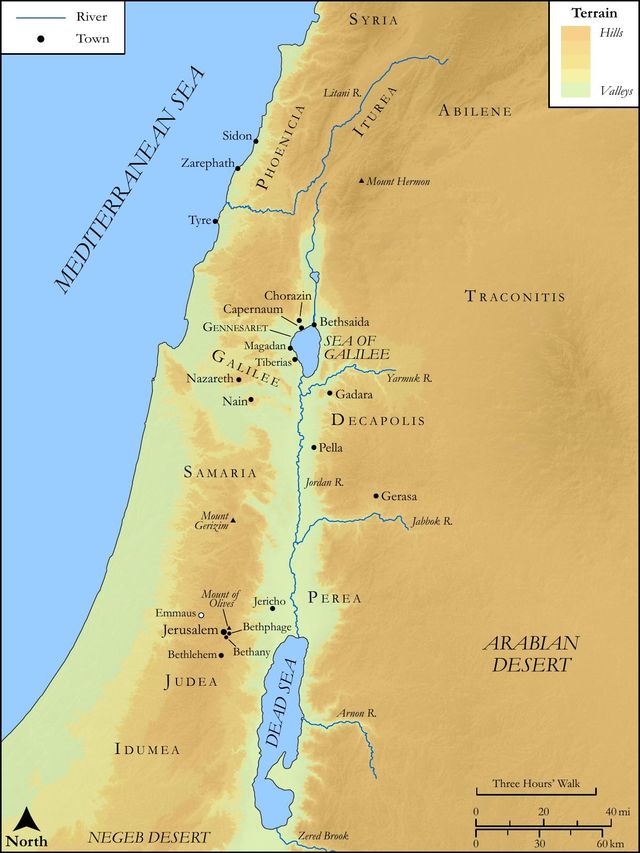
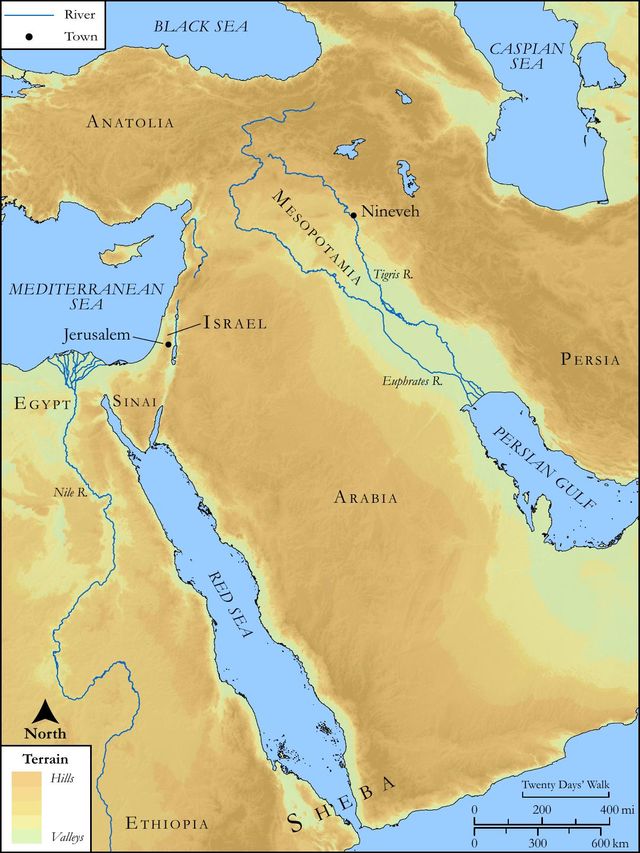
See on the biblical-era maps

Study this verse
Public-domain commentary
Matthew Henry
From his Commentary on the Whole Bible. Henry comments on passages, not single verses — this entry covers Luke 6:12–19. His two-level outline is real structure in the source text, so it is rendered as structure.
In these verses, we have our Lord Jesus in secret, in his family, and in public; and in all three acting like himself.
I.In secret we have him praying to God, Luk 6:12.
This evangelist takes frequent notice of Christ's retirements, to give us an example of secret prayer, by which we must keep up our communion with God daily, and without which it is impossible that the soul should prosper. In those days, when his enemies were filled with madness against him, and were contriving what to do to him, he went out to pray; that he might answer the type of David (Psa 109:4), For my love, they are my adversaries; but I give myself unto prayer. Observe,
1.He was alone with God; he went out into a mountain, to pray, where he might have no disturbance or interruption given him; we are never less alone than when we are thus alone. Whether there was any convenient place built upon this mountain, for devout people to retire to for their private devotions, as some think, and that that oratory, or place of prayer, is meant here by hē proseuchē tou theou, to me seems very uncertain. He went into a mountain for privacy, and therefore, probably, would not go to a place frequented by others.
2.He was long alone with God: He continued all night in prayer. We think one half hour a great deal to spend in the duties of the closet; but Christ continued a whole night in meditation and secret prayer. We have a great deal of business at the throne of grace, and we should take a great delight in communion with God, and by both these we may be kept sometimes long at prayer.
II.In his family we have him nominating his immediate attendants, that should be the constant auditors of his doctrine and eye-witnesses of his miracles, that hereafter they might be sent forth as apostles, his messengers to the world, to preach his gospel to it, and plant his church in it, Luk 6:13. After he had continued all night in prayer, one would have thought that, when it was day, he should have reposed himself, and got some sleep. No, as soon as any body was stirring, he called unto him his disciples. In serving God, our great care should be, not to lose time, but to make the end of one good duty the beginning of another. Ministers are to be ordained with prayer more than ordinarily solemn. The number of the apostles was twelve. Their names are here recorded; it is the third time that we have met with them, and in each of the three places the order of them differs, to teach both ministers and Christians not to be nice in precedency, not in giving it, much less in taking it, but to look upon it as a thing not worth taking notice of; let it be as it lights. He that in Mark was called Thaddeus, in Matthew Lebbeus, whose surname was Thaddeus, is here called Judas the brother of James, the same that wrote the epistle of Jude. Simon, who in Matthew and Mark was called the Canaanite, is here called Simon Zelotes, perhaps for his great zeal in religion. Concerning these twelve here named we have reason to say, as the queen of Sheba did of Solomon's servants, Happy are thy men, and happy are these thy servants, that stand continually before thee, and hear thy wisdom; never were men so privileged, and yet one of them had a devil, and proved a traitor (Luk 6:16); yet Christ, when he chose him, was not deceived in him.
III.In public we have him preaching and healing, the two great works between which he divided his time, Luk 6:17.
He came down with the twelve from the mountain, and stood in the plain, ready to receive those that resorted to him; and there were presently gathered about him, not only the company of his disciples, who used to attend him, but also a great multitude of people, a mixed multitude out of all Judea and Jerusalem. Though it was some scores of miles from Jerusalem to that part of Galilee where Christ now was, - though at Jerusalem they had abundance of famous rabbin, that had great names, and bore a mighty sway, - yet they came to hear Christ. They came also from the sea-coast of Tyre and Sidon. Though they who lived there were generally men of business, and though they bordered upon Canaanites, yet there were some well affected to Christ; such there were dispersed in all parts, here and there one.
1.They came to hear him and he preached to them. Those that have not good preaching near them had better travel far for it than be without it. It is worth while to go a great way to hear the word of Christ, and to go out of the way of other business for it.
2.They came to be cured by him, and he healed them. Some were troubled in body, and some in mind; some had diseases, some had devils; but both the one and the other, upon their application to Christ, were healed, for he has power over diseases and devils (Luk 6:17, Luk 6:18), over the effects and over the causes. Nay, it should seem, those who had no particular diseases to complain of yet found it a great confirmation and renovation to their bodily health and vigour to partake of the virtue that went out of him; for (Luk 6:19) the whole multitude sought to touch him, those that were in health as well as those that were sick, and they were all, one way or other, the better for him: he healed them all; and who is there that doth not need, upon some account or other, to be healed? There is a fulness of grace in Christ, and healing virtue in him, and ready to go out from him, that is enough for all, enough for each.
Historical interpretation
Eleven Centuries of Reception
11 surviving comments on this verse. Each one is dated, so this reads as a timeline rather than a list.
Select a marker to jump to its quote. Markers stagger vertically where authors wrote within a few decades of each other.
Surely to Sion He brings good tidings, and to Jerusalem peace and all blessings; He goes up into a mountain, and there spends a night in prayer, and He is indeed heard by the Father.
Let us urgently pray and groan with continual petitions. For know, beloved brethren, that I was not long ago reproached with this also in a vision, that we were sleepy in our prayers, and did not pray with watchfulness; and undoubtedly God, who "rebukes whom He loves, when He rebukes, rebukes that He may amend, amends that He may preserve. Let us therefore strike off and break away from the bonds of sleep, and pray with urgency and watchfulness, as the Apostle Paul bids us, saying, "Continue in prayer, and watch in the same." For the apostles also ceased not to pray day and night; and the Lord also Himself, the teacher of our discipline, and the way of our example, frequently and watch-fully prayed, as we read in the Gospel: "He went out into a mountain to pray, and continued all night in prayer to God." And assuredly what He prayed for, He prayed for on our behalf, since He was not a sinner, but bore the sins of others. But He so prayed for us, that in another place we read, "And the Lord said to Peter, Behold, Satan has desired to sift you as wheat: but I have prayed for thee, that thy faith fail not." But if for us and for our sins He both laboured and watched and prayed, how much more ought we to be instant in prayers; and, first of all, to pray and to entreat the Lord Himself, and then through Him, to make satisfaction to God the Father! We have an advocate and an intercessor for our sins, Jesus Christ the Lord and our God, if only we repent of our sins past, and confess and acknowledge our sins, whereby we now offend the Lord, and for the time to come engage to walk in His ways, and to fear His commandments. The Father corrects and protects us, if we still stand fast in the faith both in afflictions and perplexities, that is to say, cling closely to His Christ; as it is written, "Who shall separate us from the love of Christ? Shall tribulation, or distress, or persecution, or famine or nakedness, or peril, or sword? None of these things can separate believers, nothing can tear away those who are clinging to His body and blood. Persecution of that kind is an examination and searching out of the heart. God wills us to be sifted and proved, as He has always proved His people; and yet in His trials help has never at any time been wanting to believers.
The two next are James and John, as it follows, James and John, both indeed sons of Zebedee, who were also fishermen. After them he mentions Philip and Bartholomew. John says Philip was of Bethsaida, of the city of Andrew and Peter. Bartholomew was a simple man, devoid of all worldly knowledge and guile. But Matthew was called from those who used to collect taxes; concerning whom he adds Matthew and Thomas.
So the Lord prays, not to entreat for himself but to intercede for me. Although the Father placed all things in the power of his Son, yet the Son, in order to fulfill the form of a man, thinks that the Father must be entreated for us, because he is our Advocate.… If he is an Advocate, he must intercede on account of my sins.…It says, “He passed the whole night in prayer.” A model is given to you. A form is prescribed which you must imitate.… Unless I am mistaken, it is nowhere found that he prayed with the apostles. Everywhere he entreats alone, for human prayers do not grasp the counsels of God, nor can anyone share with Christ in the inward mysteries.
You have heard then the words of Him who says, Stretch forth thy hand. That is a frequent and common cure, and thou that thinkest thy hand is whole, beware lest it be contracted by avarice or sacrilege. Stretch it forth oftener to help thy neighbour, to protect the widow, to save from injury him whom you see the victim of unjust attack; stretch it forth to the poor man who beseeches thee; stretch it forth to the Lord, to ask pardon of thy sins; as the hand is stretched forth so is it healed. (1 Kings 13:5, 6.)
Let not thy ears be open to deceit, that thou shouldest think that the Son of God prays from want of strength, that He may obtain what He could not perform; for being Himself the Author of power, the Master of obedience, He leads us by His own example to the precepts of virtue.
Every where also He prays alone, for human wishes comprehend not the wisdom of God; and no one can be a partaker of the secrets of Christ. But not every one who prays ascends a mountain, he only who prays advancing from earthly things to higher, who is not anxious for the riches or honours of the world. All whose minds are raised above the world ascend the mountain. In the Gospel therefore you will find, that the disciples alone ascend the mountain with the Lord. But thou, O Christian, hast now the character given, the form prescribed which thou shouldest imitate; as it follows, And he continued all night in prayer to God. For what oughtest thou to do for thy salvation, when Christ continues all night in prayer for thee?
But what does it become thee to do when thou wouldest commence any work of piety, when Christ, about to send out His disciples, first prayed? for it follows, And when it was day, he called his disciples, &c. whom truly He destined to be the means of spreading the salvation of man through the world. Turn thy eyes also to the heavenly council. Not the wise men, not the rich, not the noble, but He chose to send out fishermen and publicans, that they might not seem to turn men to their grace by riches or by the influence of power and rank, and that the force of truth, not the graces of oratory, might prevail.
(Hom. ad Pop. Ant. 42. et in Act. c. 16. Ed. Lat.) Rise then thou also at night time. The soul is then purer, the very darkness and great silence are in themselves enough to lead us to sorrow for our sins. But if thou lookest upon the heaven itself studded with stars as with unnumbered eyes, if thou thinkest that they who wanton and do unjustly in day time are then nothing different from the dead, thou wilt loathe all human undertakings. All these things serve to raise the mind. Vain-glory then disquiets not, no tumult of passion has the mastery; fire does not so destroy the rust of iron as nightly prayer the blight of sin. He whom the heat of the sun has fevered by day is refreshed by the dew; nightly tears are better than any dew, and are proof against desire and fear. But if a man is not cherished by the dew we speak of, he withers in the day. Wherefore although thou prayest not much at night, pray once with watching, and it is enough; show that the night belongs not only to the body, but to the soul.
Let us examine then in the actions which Jesus did, how He teaches us to be instant in prayer to God, going apart by ourselves, and in secret, no one seeing us; putting aside also our worldly cares, that the mind may be raised up to the height of divine contemplation; and this we have marked in the fact, that Jesus went in to a mountain apart to pray.
And He was spending the night in prayer to God. A model is prescribed for you to emulate. What should you do for your own salvation when Christ spends the night in prayer for you? What should you do when you wish to undertake an office of piety, when Christ ensured to pray first before sending the apostles? Do you want to know how, He prayed for me, not for Himself?
He not only surnamed Peter first, but long before this, when he was brought by Andrew, it is said, Thou shall be called Cephas, which is by interpretation, a stone (John 1:42.). But Luke, wishing to mention the names of the disciples, since it was necessary to call him Peter, wished shortly to imply that this was not his name before, but the Lord had given it to him.
Matthew places himself after his fellow-disciple Thomas, from humility, whereas by the other Evangelists he is put before him. It follows, James the son of Alphæus, and Simon who is called Zelotes.
But in a mystical sense the mountain on which our Lord chose His disciples represents the loftiness of justice in which they were to be instructed, and which they were to preach to others; so also the law was given on a mountain.
But it happened in those days that He went out to the mountain to pray. Not everyone who prays ascends to the mountain. For there is a prayer that brings about sin. But he who prays well, who seeks God in prayer, ascends from earthly things to higher things, reaching the peak of higher concern. But he who earnestly prays about riches, or worldly honor, or even about the death of an enemy, he, lying in the depths, sends vile prayers to God. The Lord, however, prays not for Himself, but to intercede for me. For even if the Father has put all things in the Son’s power, the Son still deems it necessary to beseech the Father on our behalf because He is our advocate. For He says, "We have an advocate with the Father, Jesus Christ" (1 John 2). If He is an advocate, He must intervene for my sins. Therefore, He pleads not as a weak person, but as a pious one. Do you want to know how capable He is of accomplishing everything He wishes? He is both advocate and judge. In one, the function of piety; in the other, the symbol of power.
(non occ.) When adversaries rose up against the miracles and teaching of Christ, He chose Apostles as defenders and witnesses of the truth, and prefaces their election with prayer; as it is said, And it came to pass, &c.
Because in truth he was of Cana in Galilee, which is interpreted zeal; and this is added to distinguish him from Simon Peter. It follows, Judas the brother of James, and Judas Iscariot, who also betrayed him.
Continue studying Luke 6:12 across the web’s major study libraries — every link below opens this exact verse, chapter, or book on the destination site.
Read & Compare
 BibleGatewayThis verse in more than 200 translations and 70 languages.
 Bible.comThe YouVersion reader — hundreds of translations, reading plans, and highlights.
 ESV.orgCrossway's official English Standard Version reader.
 NET BibleThe NET translation with 60,000+ translators' notes on every rendering decision.
 STEP BibleTyndale House's free study tool — original text, vocabulary, and scholarly resources.
 BibliaLogos Bible Software's free web reader.
 USCCBThe New American Bible (Revised Edition) with the U.S. bishops' study notes.
Commentaries
 BibleHub CommentariesDozens of classic commentaries on this verse, gathered on one page.
 StudyLightMore than 100 commentary sets — the largest collection on the web.
 BibleRefPlain-English commentary on what this verse means, verse by verse.
 Enduring WordDavid Guzik's free commentary on this chapter, widely used by Bible teachers.
 Bible Study ToolsVerse commentary alongside Greek and Hebrew study aids.
Original Language & Research
- BibleHub InterlinearThe verse word by word — original language, transliteration, and English.
- BibleHub LexiconEvery word's original-language definition and Strong's entry.
 Blue Letter BibleDeep-study tools — Strong's numbers, concordance, and word studies.
 CNTR CollationThe earliest Greek manuscripts of this verse, collated letter by letter.
Sermons, Hymns & Audio


TrulyRandomVerse is not affiliated with these sites and doesn’t control their content. They’re linked because they’re genuinely useful.
Summary
Luke 6:12 presents a pivotal moment in Jesus' ministry, revealing His profound and unwavering reliance on God the Father through dedicated, sustained prayer. On the eve of selecting His twelve apostles, a decision of immense strategic and spiritual significance, Jesus withdrew to a solitary mountain and spent the entire night in communion with God. This act underscores His complete dependence on divine wisdom and power, setting a foundational example for all believers on the necessity of deep spiritual preparation and discernment, especially before undertaking crucial tasks.
Context
ShowHideLiterary Context
This verse is strategically placed by Luke immediately following a series of escalating confrontations between Jesus and the religious authorities, particularly concerning the Sabbath (as seen in Luke 6:1-11). These conflicts highlight the growing tension and the pressing need for Jesus to establish a core group of disciples who would understand and carry forward His mission. The all-night prayer directly precedes the momentous selection of the twelve apostles (recorded in Luke 6:13-16), who would become the foundational leaders of His burgeoning movement. Thus, the prayer serves as a crucial spiritual prelude to a decision that would shape the future of the church.
Historical & Cultural Context
In ancient Jewish culture, prayer was a central pillar of religious life, deeply ingrained in daily routines and significant events. Mountains, in particular, often held symbolic significance as places of divine encounter and revelation, reminiscent of Moses receiving the Law on Mount Sinai or Elijah's encounter with God on Mount Horeb. For a rabbi or spiritual leader, withdrawing for prayer was not unusual, but an all-night vigil indicated a matter of extraordinary importance. Jesus' action would have resonated with the cultural understanding of seeking divine counsel for weighty matters, while simultaneously elevating the practice to an unprecedented level of intensity and personal communion with God.
Key Themes
ShowHideThis verse powerfully encapsulates several recurring themes in Luke's Gospel and throughout Jesus' ministry. Firstly, it highlights Jesus' profound dependence on God the Father, even as the Son of God. Despite His divine nature, Jesus consistently models a life of reliance on the Father, frequently withdrawing to pray (as also seen in Luke 5:16 and Luke 9:28). Secondly, it emphasizes the primacy of prayer for discernment and major decisions. Jesus teaches by example that significant undertakings, especially those with eternal implications, must be bathed in earnest, sustained prayer. Thirdly, the act of going "into a mountain" underscores the importance of solitude for intimate communion with God, away from the demands and distractions of ministry. Finally, this prayer serves as preparation for ministry and leadership selection, demonstrating that spiritual power and wisdom for leadership flow from deep engagement with God.
Exposition and Analysis
ShowHideKey Word Analysis
ShowHideThis verb literally means "to sit up the whole night" or "to spend the night through." Its use here emphasizes the unbroken, intense, and prolonged nature of Jesus' prayer. It was not a brief petition but a sustained vigil, indicating the profound weight and importance Jesus placed on this time of communion with God. This word highlights the depth of His commitment and the earnestness of His seeking.
This verb means "to pray to God, i.e., supplicate, worship." It signifies a direct, intentional act of communication with the Divine. Coupled with "continued all night," it underscores that Jesus' entire night was dedicated to this sacred act of supplication and worship, focusing His will and mind completely on the Father.
Referring to a "mountain" or "hill." In biblical contexts, mountains frequently serve as places of divine encounter, revelation, and spiritual retreat. By withdrawing to a mountain, Jesus sought a place of solitude and elevation, both physically and spiritually, facilitating uninterrupted communion with God away from the clamor of crowds and the demands of His public ministry.
Verse Breakdown
ShowHide"And it came to pass in those days,"
This introductory phrase, common in Luke's Gospel, serves as a transitional marker, linking this event to the ongoing narrative of Jesus' ministry. "In those days" suggests a period of intense activity and growing significance, setting the stage for a crucial development.
"that he went out into a mountain to pray,"
This clause describes Jesus' intentional withdrawal from the public sphere. His choice of a "mountain" signifies a deliberate seeking of solitude and an elevated place, often associated with divine encounters in biblical tradition. The purpose of this withdrawal is explicitly stated: "to pray," indicating a focused and personal communion with God.
"and continued all night in prayer to God."
This is the climactic detail of the verse, emphasizing the extraordinary nature of Jesus' prayer. The phrase "continued all night" (dianyktereúō) highlights the duration and intensity of His supplication. It was an unbroken vigil, demonstrating the profound depth of His dependence on God and the earnestness with which He sought divine guidance for the momentous decision of selecting His apostles.
Literary Devices
ShowHideLuke employs several literary devices to convey the profound significance of this event. The use of Foreshadowing is evident, as Jesus' all-night prayer immediately precedes the crucial selection of the twelve apostles, signaling the immense importance of this upcoming decision and the spiritual weight Jesus placed upon it. The phrase "continued all night" employs Emphasis and perhaps a form of Hyperbole (though literally possible), underscoring the extraordinary duration and intensity of Jesus' communion with God. This highlights His complete devotion and the seriousness of His spiritual preparation. Furthermore, the "mountain" serves as potent Symbolism, representing a place of divine encounter, revelation, and spiritual elevation, where one can commune with God away from worldly distractions. Finally, Jesus' actions serve as a powerful Modeling for His disciples and for all believers, demonstrating the essential practice of deep, sustained prayer before significant undertakings.
Theological and Thematic Connections
ShowHideLuke 6:12 profoundly underscores the theological truth of Jesus' full humanity and His perfect dependence on the Father, even as the divine Son. This prayer vigil is not a sign of weakness, but rather a demonstration of His perfect obedience and reliance on the Trinitarian relationship. It reveals that even the Son of God, in His incarnate state, found it essential to seek the Father's will and power for His ministry. This act establishes prayer as the primary means by which God's will is discerned and His power is released, not just for Jesus, but for all who follow Him. It challenges any notion of self-sufficiency in spiritual work, pointing instead to a life rooted in continuous, dependent communion with the Almighty. The selection of the apostles, a foundational act for the future of the Church, was thus saturated in divine counsel, ensuring its alignment with God's eternal purposes.
Reflection and Application
ShowHideJesus' all-night prayer in Luke 6:12 offers a profound and challenging model for contemporary believers. In a world that often values speed, efficiency, and human ingenuity, Jesus demonstrates the paramount importance of intentional, sustained communion with God before undertaking significant endeavors. This passage compels us to examine our own prayer lives: Do we prioritize prayer as our first and most crucial step before major decisions, or do we relegate it to an afterthought? Are we willing to seek out solitude, to disconnect from distractions, and to persevere in prayer for extended periods when facing weighty choices or spiritual battles? Jesus' example reminds us that true wisdom, strength, and discernment for life's complexities and ministry's demands flow from a deep, dependent, and consistent reliance on our heavenly Father. It calls us to cultivate a spiritual discipline that mirrors the Son's devotion, trusting that God's guidance is worth every moment of earnest seeking.
Questions for Reflection
ShowHideFAQ
ShowHideWhy did Jesus need to pray all night, if He is God?
ShowHideJesus' all-night prayer is not an indication of weakness or a lack of divine knowledge, but rather a profound demonstration of His perfect humanity and His complete dependence on the Father within the Trinitarian relationship. As the incarnate Son, Jesus fully embraced His human limitations and responsibilities, including the need for spiritual sustenance and guidance. This intense prayer vigil served multiple purposes: it was an act of perfect obedience and submission to the Father's will; it was a model for His disciples and all future believers, showing the absolute necessity of prayer for discerning God's will and receiving power for ministry; and it was a spiritual battle, preparing Him for the immense spiritual opposition and the weighty decision of selecting the apostles who would carry His mission forward (see Hebrews 5:7-9). His prayer life underscores that true spiritual power and wisdom come from a deep, continuous, and dependent relationship with God.
What is the significance of Jesus going "into a mountain" to pray?
ShowHideThe "mountain" in biblical narrative often symbolizes a place of divine encounter, revelation, and spiritual elevation. Throughout Scripture, significant encounters between God and humanity occur on mountains (e.g., Moses on Mount Sinai in Exodus 19, Elijah on Mount Horeb in 1 Kings 19). For Jesus, withdrawing to a mountain provided a necessary physical and spiritual separation from the crowds and the demands of His public ministry. This solitude facilitated uninterrupted, intimate communion with His Father, allowing for deep spiritual discernment and preparation for the monumental task of choosing His apostles. It underscores the principle that profound spiritual work often requires intentional removal from the clamor of the world to engage with God in a focused and undistracted manner.
Christ-Centered Fulfillment
ShowHideLuke 6:12, with Jesus' all-night prayer before selecting His apostles, finds profound Christ-centered fulfillment by revealing the perfect humanity and divine purpose of the Son. This act of deep dependence on the Father foreshadows Jesus' ultimate obedience to the Father's will, which culminated in His atoning sacrifice on the cross. His prayer for the formation of His core leadership team is a foundational act in establishing the Church, His body, through which His redemptive work would continue. Just as He sought the Father's wisdom for this crucial decision, so too did He perfectly fulfill the Father's will in His life, death, and resurrection, securing for us access to the very presence of God. Through Christ, we are now invited into this same intimate communion with the Father, empowered by the Holy Spirit (as seen in Ephesians 2:18), and the Spirit intercedes for us when we do not know how to pray (as described in Romans 8:26-27). Jesus' prayer life, exemplified here and throughout the Gospels (e.g., John 17), serves as the perfect model for the New Covenant believer, demonstrating that our access to God and our ability to live out our calling flow directly from His completed work and His ongoing intercession as our great High Priest (as affirmed in Hebrews 4:14-16).