


Matthew 24:9
Bible text: King James Version (1769 Blayney text) · Public domain
Bible text: King James Version with Strong's numbers · Public domain
Bible text: Berean Standard Bible · Public domain
Bible text: American Standard Version (1901) · Public domain
Bible text: World English Bible, Messianic edition · Public domain
Bible text: Geneva Bible (1599) · Public domain
Bible text: Young's Literal Translation · Public domain
- ΤότεToteThenG5119ADVAdverb
- παραδώσουσινparadōsousinwill they deliverG3860V-FAI-3PVerb Future Active Indicative 3rd Plural
- ὑμᾶςhumasyouG4771P-2APPersonal pronoun Accusative 2nd Plural
- εἰςeistoG1519PREPPreposition
- θλῖψινthlipsintribulationG2347N-ASFNoun Accusative Singular Feminine
- καὶkaiandG2532CONJConjunction
- ἀποκτενοῦσινapoktenousinwill killG615V-FAI-3PVerb Future Active Indicative 3rd Plural
- ὑμᾶς·humasyouG4771P-2APPersonal pronoun Accusative 2nd Plural
- καὶkaiandG2532CONJConjunction
- ἔσεσθεesestheyou will beG1510V-FDI-2PVerb Future Middle Deponent Indicative 2nd Plural
- μισούμενοιmisoumenoihatedG3404V-PPP-NPMVerb Present Passive Participle Nominative Plural Masculine
- ὑπὸhupobyG5259PREPPreposition
- πάντωνpantōnallG3956A-GPNAdjective Genitive Plural Neuter
- τῶνtōntheG3588T-GPNDefinite article Genitive Plural Neuter
- ἐθνῶνethnōnnationsG1484N-GPNNoun Genitive Plural Neuter
- διὰdiaon account ofG1223PREPPreposition
- τὸtotheG3588T-ASNDefinite article Accusative Singular Neuter
- ὄνομάonomanameG3686N-ASNNoun Accusative Singular Neuter
- μουmouof MeG3165P-1GSPersonal pronoun Genitive 1st Singular
English is a literal word-by-word gloss of the Greek, not the KJV's wording. Why?
This is the original text the KJV's translators worked from — each Greek word with its own literal English meaning in this verse, prepared by scholars at Tyndale House, Cambridge. The KJV translates whole sentences, not word by word, so its wording differs: one Greek word can become several English words, and the KJV may choose “charity” where the gloss reads “love”. Both are faithful — they answer different questions. For the KJV's own rendering, switch to the KJV text.
Details
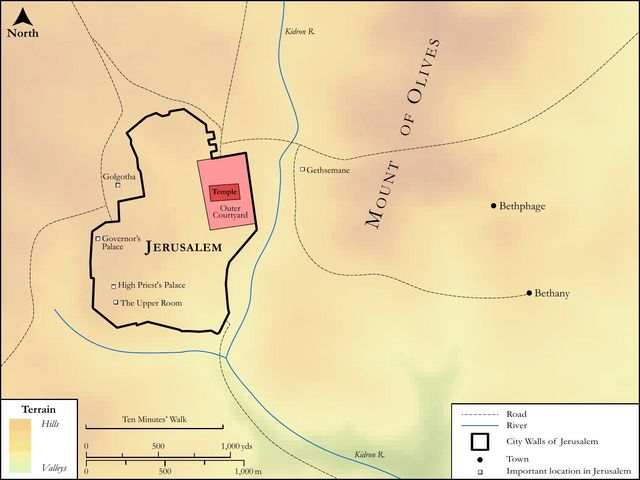
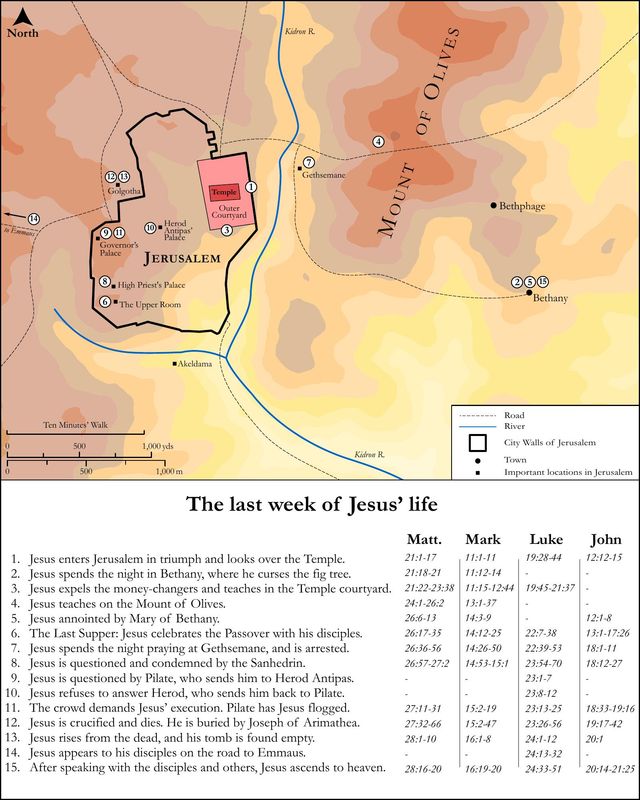
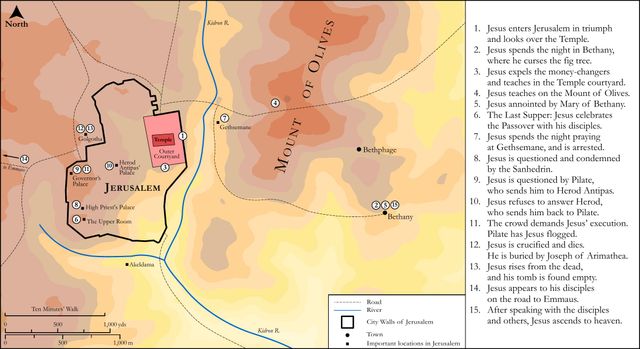
See on the biblical-era maps
Study this verse
Historical interpretation
Twelve Centuries of Reception
14 surviving comments on this verse. Each one is dated, so this reads as a timeline rather than a list.
Select a marker to jump to its quote. Markers stagger vertically where authors wrote within a few decades of each other.
Watch for your life's sake. Let not your lamps be quenched, nor your loins unloosed; but be ye ready, for ye know not the hour in which our Lord cometh. But often shall ye come together, seeking the things which are befitting to your souls: for the whole time of your faith will not profit you, if ye be not made perfect in the last time. For in the last days false prophets and corrupters shall be multiplied, and the sheep shall be turned into wolves, and love shall be turned into hate; for when lawlessness increaseth, they shall hate and persecute and betray one another, and then shall appear the world-deceiver as Son of God, and shall do signs and wonders, and the earth shall be delivered into his hands, and he shall do iniquitous things which have never yet come to pass since the beginning. Then shall the creation of men come into the fire of trial, and many shall be made to stumble and shall perish; but they that endure in their faith shall be saved from under the curse itself. And then shall appear the signs of the truth; first, the sign of an out-spreading in heaven; then the sign of the sound of the trumpet; and the third, the resurrection of the dead; yet not of all, but as it is said: The Lord shall come and all His saints with Him. Then shall the world see the Lord coming upon the clouds of heaven.
Morally; He who shall see that glorious second coming of the word of God into his soul, must needs suffer in proportion to the measure of his proficiency assaults of opposing influences, and Christ in him must be hated by all, not only by the nations literally understood, but by the nations of spiritual vices. And in such enquiries there will be few who shall reach the truth with any fulness, the more part shall be offended and fall therefrom, betraying and accusing one another because of their disagreement respecting doctrines, which shall give rise to a mutual hatred. Also there shall be many setting forth unsound words concerning things to come, and interpreting the Prophets in a manner in which they ought not; these are the false Prophets who shall deceive many, and who shall cause to wax cold that fervour of love which was before in the simplicity of the faith. But he who can abide firmly in the Apostolic tradition, he shall be saved; and the Gospel being preached to the minds of all shall be for a testimony to all nations, that is, to all the unbelieving thoughts of the soul.
But how should the people of Christ be hated by the nations who dwelt in the uttermost parts of the earth? But one may perhaps say, that in this place all is put hyperbolically for many. But this that He says, Then shall they deliver you, presents some difficulty; for before these things the Christians were delivered to tribulation. To this it may be answered, that at that time the Christians shall be more delivered to tribulation than ever. And persons in any misfortune love to examine into the origin of them, and to talk about them. Hence when the worship of the Gods shall be almost deserted by reason of the multitude of Christians, it will be said that that is the cause of the wars, and famines, and pestilences; and of the earthquakes also they will say that the Christians are the cause, whence the persecution of the Churches.
And that, Ye shall be hated of all men for my name's sake, might be then applied thus; That indeed at this time all nations are conspired together against the Christians, but that when the things foretold by Christ shall have come to pass, then there shall be persecutions, not as before in places, but every where against the people of God.
Such was Nicolaus, one of the seven deacons, who led astray many by his pretences. And Simon Magus who, armed with diabolic works and words, perverted many by false miracles.
For in the last days false prophets shall be multiplied, and such as corrupt the word; and the sheep shall be changed into wolves, and love into hatred: for through the abounding of iniquity the love of many shall wax cold. For men shall hate, and persecute, and betray one another. And then shall appear the deceiver of the world, the enemy of the truth, the prince of lies, [2 Thessalonians 2:3-12] whom the Lord Jesus "shall destroy with the spirit of His mouth, who takes away the wicked with His lips; and many shall be offended at Him. But they that endure to the end, the same shall be saved. And then shall appear the sign of the Son of man in heaven;" [Isaiah 11:4; Matthew 24:1-51] and afterwards shall be the voice of a trumpet by the archangel; and in that interval shall be the revival of those that were asleep. And then shall the Lord come, and all His saints with Him, with a great concussion above the clouds, with the angels of His power, [Matthew 16:27] in the throne of His kingdom, to condemn the devil, the deceiver of the world, and to render to every one according to his deeds. "Then shall the wicked go away into everlasting punishment, but the righteous shall go into life eternal," [Matthew 25:46] to inherit those things "which eye has not seen, nor ear heard, nor have entered into the heart of man, such things as God has prepared for them that love Him;" [1 Corinthians 2:9] and they shall rejoice in the kingdom of God, which is in Christ Jesus.
"Then shall they deliver you up to be afflicted, and shall kill you."
In good season did He introduce their ills, having a consolation from the common miseries; and not in this way only, but also by His adding, that it is "for my name's sake. For ye shall be hated," He saith, "of all men for my name's sake. Then shall many be offended, and shall betray one another, and many false Christs and false prophets shall arise, and shall deceive many. And because iniquity shall abound, the love of many shall wax cold; but he that shall endure unto the end, the same shall be saved."
This is the greater evil, when the war is intestine too, for there were many false brethren. Seest thou the war to be threefold? from the deceivers, from the enemies, from the false brethren. See Paul too lamenting over the same things, and saying, "Without were fightings, within were fears;" and, "perils among false brethren," and again, "For such are false apostles, deceitful workers, transforming themselves into the apostles of Christ."
After this again, what is more grievous than all, they shall not have so much as the consolation from love. Then indicating, that these things will in no degree harm the noble and the firm, He saith, Fear not, neither be troubled. For if ye show forth the patience that becomes you, the dangers will not prevail over you. And it is a plain proof of this, that the word shall surely be preached everywhere in the world, so much shall ye be above the things that alarm you. For, that they may not say, how then shall we live? He said more, Ye shall both live and preach everywhere. Therefore He added moreover, "And this gospel shall be preached in the whole world for a witness to all nations, and then shall the end come," of the downfall of Jerusalem.
Or otherwise; The disciples when they heard these things which were spoken of Jerusalem might suppose that they should be beyond reach of harm, as though what they now heard was the sufferings of others, while they themselves should meet with nothing but prosperous times, He therefore announces the grievous things which should befal them, putting them in fear for themselves. First He had bid them be on their guard against the arts of false teachers, He now foretels to them the violence of tyrants. In good season He thus introduces their own woes, as here they will receive consolation from the common calamities; and He held out to them not this comfort only, but also that of the cause for which they should suffer, showing that it was for His name's sake, And ye shall be hated of all men for my name's sake.
Having named two sources of opposition, that from seducers, and that from enemies, He adds a third, that from false brethren; And then shall many be offended, and shall betray one another, and shall hate one another. See Paul bewailing these same things, Without were fightings, within were fears; (2 Cor. 7:5. 2 Cor. 11:26. v. 13.) and in another place; In perils among false brethren, of whom he says, Such are false Apostles, deceitful workers.
And He adds, what is still more cruel, that such false Prophets shall have no alleviation in charity; Because iniquity shall abound, the love of many shall wax cold.
Then that they should not say, How then shall we live among so many evils? He promises not only that they should live, but that they should teach every where. And this Gospel of the kingdom shall be preached in all the world.
That before the taking of Jerusalem the Gospel was preached every where, hear what Paul says, Their sound is gone out into all the earth; (Rom. 10:18.) and see himself travelling from Jerusalem into Spain. And if one had so large a province, think how much all must have done. Whence writing to certain, he says of the Gospel, It bears fruit, and increases in every creature under heaven. (Col. 1:6.) And this is the strongest proof of Christ's power, that in thirty years or a little more, the word of the Gospel filled the ends of the world. Though the Gospel was preached every where, yet all did not believe, whence He adds, For a witness unto all nations, in accusation, that is, of such as believe not, they who have believed bearing witness against them that believed not, and condemning them. And in fit season did Jerusalem fall, namely, after the Gospel had been preached throughout the world; as it follows, And then shall the consummation come, i. e. the end of Jerusalem. For they who have seen Christ's power shining forth every where, and in brief space spread over the whole world, what mercy did they deserve when they continued still in ingratitude?
(V. 9.) Then they will deliver you up to tribulation and kill you, and you will be hated by all nations for my name's sake. The apostles are a representation of all believers, not that the apostles themselves will be found in physical form at that time.
These all are the beginnings of sorrows, is better understood of pains of labour, as it were the conception of the coming of Antichrist, and not of the birth.
Observe, He says, the love of many, (Rom. 8:35.) not 'of all,' for in the Apostles, and those like them, love would continue, as Paul speaks, Who shall separate us from the love of Christ?
And the sign of the Lord's second coming is, that the Gospel shall be preached in all the world, so that all may be without excuse.
(Ep. 199, 46.) But that this preaching the Gospel of the kingdom in all the world was accomplished by the Apostles, we have not any certain evidence, to prove. There are numberless barbarous nations in Africa, among whom the Gospel is not even yet preached, as it is easy to learn from the prisoners who are brought from thence. But it cannot be said that these have no part in the promise of God. For God promised with an oath not the Romans only, but all nations to the seed of Abraham. But in whatever nation there is yet no Church established, it must needs be that there should be one, not that all the people should believe; for how then should that be fulfilled, Ye shall be hated of all nations for my name's sake, unless there be in all nations those who hate and those; who are hated? That preaching therefore was not accomplished by the Apostles, while as yet there were nations among whom it had not begun to be fulfilled. The words of the Apostle also, Their sound hath gone out into all the world, though expressed as of time past, are meant to apply to something future, not yet completed; as the Prophet, whose words he quotes, said that the Gospel bore fruit and grew in the whole world (Ps. 19:4.), to show thereby to what extent its growth should come. If then we know not when it shall be that the whole world shall be filled with the Gospel, undoubtedly we know not when the end shall be; but it shall not be before such time.
As the capture of Jerusalem approached, many rose up, calling themselves Christians, and deceived many; such Paul calls false brethren, John Antichrists.
That is, true love towards God and our neighbour, in proportion as each surrenders himself to iniquity, in that proportion will the flame of charity in his heart be extinguished.
Whoso shall endure unto the end, i. e. to the end of his life; for whoso to the end of his life shall persevere in the confession of the name of Christ, and in love, he shall be saved.
For the Lord knew that the hearts of the disciples would be made sad by the destruction of Jerusalem, and overthrow of their nation, and He therefore comforts them with a promise that more of the Gentiles should believe than of the Jews should perish.
But the whole passage might be referred to the end of the world. For then shall many be offended, and depart from the faith, when they see the numbers and wealth of the wicked, and the miracles of Antichrist, and they shall persecute their brethren; and Antichrist shall send false Prophets, who shall deceive many; iniquity shall abound, because the number of the wicked shall be increased; and love shall wax cold, because the number of the good shall diminish.
But because all these things come not from the injustice of the one striking but from the merit of the world that suffers, the deeds of wicked men are set forth first when it is said: "But before all these things they will lay their hands upon you and persecute you, and deliver you to synagogues, leading you before kings and governors for my name's sake." As if he were saying openly: First the hearts of men are disturbed, and afterward the elements, so that when the order of things is thrown into confusion, it may be shown from what retribution this comes.
For what desert so many evils are to be brought upon Jerusalem, and the whole Jewish province the Lord shows, when He adds, Then shall they deliver you up,&c.
(non occ.)c. But it is possible to maintain both applications of the passage, if only we will take this diffusion of Gospel preaching in a double sense. If we understand it of fruit produced by the preaching, and the foundation in every nation of a Church of believers in Christ, as Augustine (in the passage above quoted) expounds it, then it is a sign which ought to precede the end of the world, and which did not precede the destruction of Jerusalem. But if we understand it of the fame of their preaching, then it was accomplished before the destruction of Jerusalem, when Christ's disciples had been dispersed over the four quarters of the earth. Whence Jerome says, (Hieron. in loc.) I do not suppose that there remained any nation which knew not the name of Christ; for where preacher had never been, some notion of the faith must have been communicated by neighbouring nations.
Continue studying Matthew 24:9 across the web’s major study libraries — every link below opens this exact verse, chapter, or book on the destination site.
Read & Compare
 BibleGatewayThis verse in more than 200 translations and 70 languages.
 Bible.comThe YouVersion reader — hundreds of translations, reading plans, and highlights.
 ESV.orgCrossway's official English Standard Version reader.
 NET BibleThe NET translation with 60,000+ translators' notes on every rendering decision.
 STEP BibleTyndale House's free study tool — original text, vocabulary, and scholarly resources.
 BibliaLogos Bible Software's free web reader.
 USCCBThe New American Bible (Revised Edition) with the U.S. bishops' study notes.
Commentaries
 BibleHub CommentariesDozens of classic commentaries on this verse, gathered on one page.
 StudyLightMore than 100 commentary sets — the largest collection on the web.
 BibleRefPlain-English commentary on what this verse means, verse by verse.
 Enduring WordDavid Guzik's free commentary on this chapter, widely used by Bible teachers.
 Bible Study ToolsVerse commentary alongside Greek and Hebrew study aids.
Original Language & Research
- BibleHub InterlinearThe verse word by word — original language, transliteration, and English.
- BibleHub LexiconEvery word's original-language definition and Strong's entry.
 Blue Letter BibleDeep-study tools — Strong's numbers, concordance, and word studies.
 CNTR CollationThe earliest Greek manuscripts of this verse, collated letter by letter.
Sermons, Hymns & Audio


TrulyRandomVerse is not affiliated with these sites and doesn’t control their content. They’re linked because they’re genuinely useful.
Summary
Matthew 24:9 stands as a stark prophetic warning from Jesus to His disciples, detailing the severe persecution, affliction, and even martyrdom they and future generations of believers would endure. This verse underscores the universal hatred the world would direct toward followers of Christ, not for political or social reasons, but solely "for my name's sake," emphasizing that allegiance to Jesus is the fundamental cause of this widespread opposition. It is a crucial part of the Olivet Discourse, preparing believers for the trials that would precede Christ's return and the consummation of the age.
Context
ShowHideLiterary Context
Matthew 24:9 is embedded within Jesus' extensive eschatological discourse, often called the "Olivet Discourse," delivered on the Mount of Olives in response to His disciples' questions concerning the destruction of the Temple and the signs of His coming and the end of the age (Matthew 24:3). Prior to this verse, Jesus describes general signs of the end, such as wars, famines, earthquakes, and pestilences, referring to them as "the beginning of sorrows" (Matthew 24:7-8). With verse 9, the focus shifts dramatically from broad global calamities to the specific, direct suffering that will be inflicted upon His followers. This transition signifies that while the world experiences general distress, believers will face a unique, targeted persecution precisely because of their identification with Christ, marking a distinct phase in the unfolding of end-time events.
Historical & Cultural Context
The early followers of Jesus, primarily Jewish, were initially seen as a sect within Judaism. However, as the Christian movement grew and distinguished itself, it increasingly faced hostility from both Jewish authorities and the Roman Empire. Roman authorities viewed Christians with suspicion, often accusing them of atheism (for refusing to worship Roman gods and emperors) and various social evils. This led to sporadic but intense persecutions, exemplified by events under Emperor Nero (c. 64 AD) and later under Domitian. The phrase "all nations" would have resonated with the Jewish understanding of the "Gentiles" (non-Jewish peoples), indicating a widespread, global antagonism that transcended specific cultural or political boundaries. The disciples, living under Roman rule and within a Jewish society that would soon reject Jesus en masse, were acutely aware of the potential for religious and political oppression, making Jesus' warning particularly poignant and relevant to their immediate future.
Key Themes
ShowHideThis verse contributes significantly to several overarching themes within Matthew's Gospel and biblical theology. Firstly, it powerfully establishes the Cost of Discipleship, making it clear that following Jesus is not a path devoid of suffering but often entails profound sacrifice, even martyrdom, for the sake of one's faith. This theme is echoed elsewhere in Jesus' teachings, such as the call to take up one's cross. Secondly, it highlights the Universal Hostility Towards Christ and His Kingdom, revealing that the world system is fundamentally opposed to God's reign and those who represent it. This opposition is not accidental but a direct consequence of the spiritual warfare between light and darkness. Thirdly, the phrase "for my name's sake" underscores the Identity and Authority of Christ as the ultimate reason for persecution, emphasizing that suffering for Christ is a direct affirmation of His Lordship and a participation in His own suffering (John 15:20). Finally, the prophecy serves as an Eschatological Sign, indicating that increasing persecution of believers is a characteristic marker of the period leading up to Christ's glorious return, calling for endurance and faithfulness until the end (Revelation 2:10).
Exposition and Analysis
ShowHideKey Word Analysis
ShowHideMeaning "pressure (literally or figuratively)." It denotes severe anguish, distress, oppression, or tribulation. This word implies not just physical suffering but also emotional and spiritual pressure, encompassing the full range of hardships faced by believers. It is a term frequently used in the New Testament to describe the trials and persecutions endured by God's people.
Meaning "to detest (especially to persecute); by extension, to love less." This word conveys a deep-seated, active animosity, not mere dislike or indifference. It points to an intense, often irrational, opposition that seeks to harm or destroy, reflecting the profound spiritual antagonism the world holds against Christ and His followers.
Meaning a "name" (literally or figuratively), encompassing authority and character. When used in the phrase "for my name's sake," it signifies the entire person, authority, reputation, and teachings of Jesus Christ. Persecution "for His name's sake" means suffering precisely because of one's identification with Christ, allegiance to His Lordship, and proclamation of His Gospel.
Verse Breakdown
ShowHide"Then shall they deliver you up to be afflicted"
The temporal adverb "Then" (G5119, tóte) indicates a specific point in the sequence of end-time events, following the general calamities. "They" refers to the various authorities and hostile elements in the world. "Deliver you up" (G3860, paradídōmi) suggests betrayal, surrender, or handing over, often to authorities for judgment or punishment, as Jesus himself was delivered up. "To be afflicted" (G1519, eis G2347, thlîpsis) prophesies that believers will be subjected to intense pressure, tribulation, and suffering.
"and shall kill you"
This clause (G2532, kaí G615, apokteínō G5209, hymâs) is a direct and unambiguous prophecy of martyrdom. It indicates that the persecution will escalate to the ultimate physical sacrifice for many believers, a reality borne out throughout church history.
"and ye shall be hated of all nations"
This expands the scope of persecution to a global scale. "Hated" (G3404, miséō) emphasizes the profound animosity. "Of all nations" (G5259, hypó G3956, pâs G1484, éthnos) signifies that this hatred will be widespread, originating from various ethnic, cultural, and political groups across the world, demonstrating a universal opposition to the Christian faith.
"for my name's sake"
This crucial phrase (G1223, diá G3450, moû G3686, ónoma) reveals the fundamental reason for the persecution. It is not for political rebellion or social deviance, but solely because of their association with, and allegiance to, Jesus Christ Himself. Bearing His name and proclaiming His truth provokes this hatred, making the suffering a direct attack on Christ through His followers.
Literary Devices
ShowHideMatthew 24:9 employs several powerful literary devices. The primary device is Prophecy, as Jesus directly foretells future events concerning His disciples' suffering. This serves not only as a warning but also as a means of validating His divine foresight and preparing His followers for what is to come. Hyperbole or Generalization can be seen in the phrase "all nations," which, while indicating widespread hatred, may not imply every single individual or nation will actively persecute, but rather that the opposition will be pervasive and globally recognized. Foreshadowing is evident as the verse anticipates the intense persecutions faced by the early church (e.g., Stephen's martyrdom) and throughout history. Finally, Metonymy is present in the phrase "for my name's sake," where "name" stands in for Jesus' entire person, authority, and message. This emphasizes that the persecution is not arbitrary but directly tied to the identity and mission of Christ.
Theological and Thematic Connections
ShowHideMatthew 24:9 profoundly shapes our understanding of Christian existence in a fallen world. It reveals that suffering for righteousness is not an anomaly but an expected and often necessary part of the believer's journey, directly linking our experience to that of Christ Himself. This persecution, far from indicating God's abandonment, serves as a divine sign, a refining fire for faith, and a powerful witness to the world of the truth and transformative power of the Gospel. It underscores the spiritual warfare inherent in the kingdom of God's advance, where the world's hatred for Christ is manifested through its antagonism toward His followers. Ultimately, this verse calls believers to a sober recognition of the cost of discipleship, an unwavering commitment to Christ, and a reliance on God's sovereign plan, knowing that He uses even suffering to accomplish His purposes and bring about His ultimate victory.
Reflection and Application
ShowHideMatthew 24:9 serves as a foundational text for understanding the nature of Christian discipleship in a world often hostile to the Gospel. It calls believers to a profound sense of spiritual readiness, not to fear or despair, but to a sober recognition that suffering for Christ is a predicted and often unavoidable aspect of following Him. This passage encourages us to examine the depth of our commitment, asking if our faith is robust enough to endure societal rejection, affliction, or even the threat of death for the sake of Christ's name. It reminds us that our identity in Christ is the very reason for the world's animosity, transforming potential persecution from a sign of failure into a mark of authentic allegiance. By embracing this truth, believers can cultivate resilience, discernment, and an unwavering focus on the eternal reward, understanding that our temporary suffering is part of a larger divine narrative that culminates in Christ's ultimate triumph.
Questions for Reflection
ShowHideFAQ
ShowHideIs Matthew 24:9 only about the early church or does it apply to believers today?
ShowHideWhile Matthew 24:9 certainly found immediate and profound fulfillment in the persecution of the early church, as documented in the Book of Acts and early church history, its prophetic scope extends far beyond that initial period. Jesus' words describe an ongoing reality that has characterized the experience of believers throughout history and will continue until His return. The phrase "all nations" signifies a universal and enduring opposition to Christ and His followers, meaning that believers in every generation and every part of the world may face affliction, hatred, and even death "for my name's sake." Therefore, this verse serves as a timeless warning and a call to readiness for all who bear the name of Christ, reminding us that persecution is an expected part of the Christian life.
What does "hated of all nations" mean, considering not all nations actively persecute Christians?
ShowHideThe phrase "hated of all nations" (G3956, pâs G1484, éthnos) should be understood not as a literal, exhaustive statement that every single person in every single nation will harbor active hatred for Christians, but rather as a comprehensive expression of the pervasive and universal nature of the world's spiritual antagonism towards Christ and His kingdom. It signifies that the spirit of the age, the prevailing values and systems of the world, are fundamentally at odds with the values and truth of the Gospel. This opposition can manifest in various forms, from overt physical persecution and martyrdom in some regions to more subtle forms of social ostracism, discrimination, ridicule, or legal restrictions in others. It implies that wherever the Gospel is faithfully proclaimed and lived out, it will inevitably confront and challenge the prevailing worldview, leading to a reaction of hostility from those who reject Christ's Lordship.
How can believers find strength and hope when facing such severe persecution?
ShowHideBelievers can find profound strength and hope in the face of persecution by anchoring themselves in several core biblical truths. Firstly, Jesus Himself foretold this suffering, indicating it is part of God's sovereign plan and not a sign of His absence or disfavor. Secondly, Christ Himself endured the ultimate persecution and hatred, setting an example of faithfulness unto death and demonstrating that victory is found through suffering (1 Peter 2:21-23). Thirdly, the promise of eternal reward and vindication provides immense encouragement; those who suffer for Christ's name will ultimately reign with Him (Revelation 2:10). Finally, the Holy Spirit empowers believers to endure, granting courage and peace amidst trials, and the fellowship of other believers provides vital support and encouragement, reminding us that we are not alone in our suffering.
Christ-Centered Fulfillment
ShowHideMatthew 24:9 finds its ultimate Christ-centered fulfillment in the person and work of Jesus Himself. While the verse prophesies the persecution of His followers, it is first and foremost a reflection of the hatred and affliction that Christ endured. Jesus was delivered up by His own people and ultimately by the Roman authorities, suffering immense affliction and being killed on a cross. He was hated without cause by the world, precisely "for His name's sake" – for claiming to be the Son of God and the Messiah. The suffering of believers, therefore, is a profound participation in the suffering of Christ (Colossians 1:24), a bearing of His reproach, and a testimony to His truth. Yet, just as Christ's death led to His glorious resurrection and triumph over sin and death, so too the persecution of His followers ultimately serves to advance His kingdom and demonstrate His power. The "name's sake" for which believers suffer is the very name above every name, to which every knee will one day bow, ensuring that their ultimate vindication and reward are secured by His victory.