


Deuteronomy 32:35
Bible text: King James Version (1769 Blayney text) · Public domain
Bible text: King James Version with Strong's numbers · Public domain
Bible text: Berean Standard Bible · Public domain
Bible text: American Standard Version (1901) · Public domain
Bible text: World English Bible, Messianic edition · Public domain
Bible text: Geneva Bible (1599) · Public domain
Bible text: Young's Literal Translation · Public domain
- לִיli[belong] to <the> mePrep-l ¦ 1csSuffix Personal 1st Singular common genderלִ[belong] to <the>יme
- נָקָםna·KamvengeanceH5359N-msNoun Singular Masculine Absolute
- וְשִׁלֵּםve·shi·Lemand retributionH8005Conj-w ¦ N-msNoun Singular Masculine Absoluteוְandשִׁלֵּםretribution
- לְעֵתle·'Etto a timeH6256Prep-l ¦ N-csNoun Singular common gender Absoluteלְtoעֵתa time
- תָּמוּטta·Mut[when] it will slipH4131V-Qal-Imperf-3fsVerb Qal Imperfect 3rd Singular Feminine
- רַגְלָםrag·Lamtheir footH7272N-fsc ¦ 3mpNoun Singular Feminine Constructרַגְלָfootםtheir
- כִּיkiforH3588PrtParticle Conditional
- קָרוֹבka·rOv[is] nearH7138Adj-msAdjective Singular Masculine Absolute
- יוֹםYom[the] day ofH3117N-mscNoun Singular Masculine Construct
- אֵידָם'ei·Damtheir disasterH343N-msc ¦ 3mpNoun Singular Masculine Constructאֵידָdisasterםtheir
- וְחָשׁve·Chashand it will make hasteH2363Conj-w ¦ V-Qal-ConsecPerf-3msVerb Qal Consecutive Perfect 3rd Singular Masculineוְandחָשׁit will make haste
- עֲתִדֹת'a·ti·Dotimpending [things]H6264Adj-fpAdjective Plural Feminine Absolute
- לָמוֹla·moto <the> themPrep-l ¦ 3mpSuffix Personal 3rd Plural Masculineלָto <the>מוֹthem
English is a literal word-by-word gloss of the Hebrew, not the KJV's wording. Why?
This is the original text the KJV's translators worked from — each Hebrew word with its own literal English meaning in this verse, prepared by scholars at Tyndale House, Cambridge. The KJV translates whole sentences, not word by word, so its wording differs: one Hebrew word can become several English words, and the KJV may choose “the LORD” where the gloss reads “Yahweh”. Both are faithful — they answer different questions. For the KJV's own rendering, switch to the KJV text.
Details
See on the biblical-era map
Study this verse
Public-domain commentary
Matthew Henry
From his Commentary on the Whole Bible. Henry comments on passages, not single verses — this entry covers Deuteronomy 32:26–38. His three-level outline is real structure in the source text, so it is rendered as structure.
After many terrible threatenings of deserved wrath and vengeance, we have here surprising intimations of mercy, undeserved mercy, which rejoices against judgment, and by which it appears that God has no pleasure in the death of sinners, but would rather they should turn and live.
I.In jealousy for his own honour, he will not make a full end of them, Deu 32:26-28.
1.It cannot be denied but that they deserved to be utterly ruined, and that their remembrance should be made to cease from among men, so that the name of an Israelite should never be known but in history; for they were a nation void of counsel (v, 28), the most sottish inconsiderate people that ever were, that would not believe the gory of God, though they saw it, nor understand his loving kindness, though they tasted it and lived upon it. Of those who could cast off such a God, such a law, such a covenant, for vain and dunghill-deities, it might truly be said, There is no understanding in them.
2.It would have been an easy thing with God to ruin them and blot out the remembrance of them; when the greatest part of them were cut off by the sword, it was but scattering the remnant into some remote obscure corners of the earth, where they should never have been heard of any more, and the thing had been done. See Eze 5:12. God can destroy those that are most strongly fortified, disperse those that are most closely united, and bury those names in perpetual oblivion that have been most celebrated.
3.Justice demanded it: I said I would scatter them. It is fit those should be cut off from the earth that have cut themselves off from their God; why should they not be dealt with according to their deserts?
4.Wisdom considered the pride and insolence of the enemy, which would take occasion from the ruin of a people that had been so dear to God, and for whom he had done such great things, to reflect upon God and to imagine that because they had got the better of Israel they had carried the day against the God of Israel: The adversaries will say, Our hand is high, high indeed, when it has been too high for those whom God himself fought for; nor will they consider that the Lord has done all this, but will dream that they have done it in despite of him, as if the God of Israel were as weak and impotent, and as easily run down, as the pretended deities of other nations.
5.In consideration of this, Mercy prevails for the sparing of a remnant and the saving of that unworthy people from utter ruin: I feared the wrath of the enemy. It is an expression after the manner of men; it is certain that God fears no man's wrath, but he acted in this matter as if he had feared it. Those few good people in Israel that had a concern for the honour of God's name feared the wrath of the enemy in this instance more than in any other, as Joshua (Jos 7:9), and David often; and, because they feared it, God himself is said to fear it. He needed not Moses to plead it with him, but reminded himself of it: What will the Egyptians say? Let all those whose hearts tremble for the ark of God and his Israel comfort themselves with this, that God will work for his own name, and will not suffer it to be profaned and polluted: how much soever we deserve to be disgraced, God will never disgrace the throne of his glory.
II.In concern for their welfare, he earnestly desires their conversion; and, in order to that, their serious consideration of their latter end, Deu 32:29. Observe,
1.Though God had pronounced them a foolish people and of no understanding, yet he wishes they were wise, as Deu 5:29, O that there were such a heart in them! and Psa 94:8, You fools, when will you be wise? God delights not to see sinners ruin themselves, but desires they will help themselves; and, if they will, he is ready to help them.
2.It is a great piece of wisdom, and will contribute much to the return of sinners to God, seriously to consider the latter end, or the future state. It is here meant particularly of that which God by Moses had foretold concerning this people in the latter days: but it may be applied more generally. We ought to understand and consider,
(1.)The latter end of life, and the future state of the soul. To think of death as our removal from a world of sense to a world of spirits, the final period of our state of trial and probation, and our entrance upon an unchangeable state of recompence and retribution.
(2.)The latter end of sin, and the future state of those that live and die in it. O that men would consider the happiness they will lose, and the misery they will certainly plunge themselves into, if they go on still in their trespasses, what will be in the end thereof, Jer 5:31. Jerusalem forgot this, and therefore came down wonderfully, Lam 1:9.
III.He calls to mind the great things he had done for them formerly, as a reason why he should not quite cast them off.
This seems to be the meaning of that (Deu 32:30, Deu 32:31), "How should one Israelite have been too hard for a thousand Canaanites, as they have been many a time, but that God, who is greater than all gods, fought for them!" And so it corresponds with that, Isa 63:10, Isa 63:11. When he was turned to be their enemy, as here, and fought against them for their sins, then he remembered the days of old, saying, Where is he that brought them out of the sea? So here, his arm begins to awake as in the days of old against the wrath of the enemy, Psa 138:7. there was a time when the enemies of Israel were sold by their own rock, that is, their own idol-gods, who could not help them, but betrayed them, because Jehovah, the God of Israel, had shut them up as sheep for the slaughter. For the enemies themselves must own that their gods were a very unequal match for the God of Israel. For their vine is of the vine of Sodom, Deu 32:32, Deu 32:33. This must be meant of the enemies of Israel, who fell so easily before the sword of Israel because they were ripe for ruin, and the measure of their iniquity was full. Yet these verses may be understood of the strange prevalency of the enemies of Israel against them, when God made use of them as the rod of his anger, Isa 10:5, Isa 10:6. "How should one Canaanite chase a thousand Israelites" (as it is threatened against those that trust to Egypt for help, Isa 30:17, One thousand shall flee at the rebuke of one) "unless Israel's rock had deserted them and given them up." For otherwise, however they may impute their power to their gods (Hab 1:11), as the Philistines imputed their victory to Dagon, it is certain the enemies' rock could not have prevailed against the rock of Israel; God would soon have subdued their enemies (Psa 81:14), but that the wickedness of Israel delivered them into their hands. For their vine, that is, Israel's, is of the vine of Sodom, Deu 32:32, Deu 32:33. They were planted a choice vine, wholly a right seed, but by sin had become the degenerate plant of a strange vine (Jer 2:21), and not only transcribed the iniquity of Sodom, but outdid it, Eze 16:48. God called them his vineyard, his pleasant plant, Isa 5:7. But their fruits were, 1. Very offensive, and displeasing to God, bitter as gall. 2 Very malignant, and pernicious one to another, like the cruel venom of asps. Some understand this of their punishment; their sin would be bitterness in the latter end (Sa2 2:26), it would bite like a serpent and sting like an adder, Job 20:14, Pro 23:32.
IV.He resolves upon the destruction of those at last that had been their persecutors and oppressors.
When the cup of trembling goes round, the king of Babel shall pledge it at last, Jer 25:26, and see Isa 51:22, Isa 51:23. The day is coming when the judgment that began at the house of God shall end with the sinner and ungodly, Pe1 4:17, Pe1 4:18. God will in due time bring down the church's enemies.
1.In displeasure against their wickedness, which he takes notice of, and keeps an account of, Deu 32:34, Deu 32:35. "Is not this implacable fury of theirs against Israel laid up in store with me, to be reckoned for hereafter, when it shall be made to appear that to me belongs vengeance?" Some understand it of the sin of Israel, especially their persecuting the prophets, which was laid up in store against them from the blood of righteous Abel, Mat 23:35. However it teaches us that the wickedness of the wicked is all laid up in store with God. (1.) He observes it, Psa 90:8. He knows both what the vine is and what the grapes are, what is the temper of the mind and what are the actions of life. (21.) He keeps a record of it both in his own omniscience and in the sinner's conscience; and this is sealed up among his treasures, which denotes both safety and secresy: these books cannot be lost, nor will they be opened till the great day. See Hos 13:12. (3.) He often delays the punishment of sin for a great while; it is laid up in store, till the measure be full, and the day of divine patience has expired. See Job 21:28-30. (4.) There is a day of reckoning coming, when all the treasures of guilt and wrath will be broken up, and the sin of sinners shall surely find them out. [1.] The thing itself will certainly be done, for the Lord is a God to whom vengeance belongs, and therefore he will repay, Isa 59:18. This is quoted by the apostle to show the severity of God's wrath against those that revolt from the faith of Christ, Heb 10:30. [2.] It will be done in due time, in the best time; nay, it will be done in a short time. The day of their calamity is at hand; and, though it may seem to tarry, it lingers not, it slumbers not, but makes haste. In one hour, shall the judgment of Babylon come.
2.He will do it in compassion to his own people, who, though they had greatly provoked him, yet stood in relation to him, and their misery appealed to his mercy (Deu 32:36): The Lord shall judge his people,. that is, judge for them against their enemies, plead their cause, and break the yoke of oppression under which they had long groaned, repenting himself for his servants; not changing his mind, but changing his way, and fighting for them, as he had fought against them, when he sees that their power is gone. This plainly points at the deliverances God wrought for Israel by the judges out of the hands of those to whom he had sold them for their sins (see Jdg 2:11-18), and how his soul was grieved for the misery of Israel (Jdg 10:16), and this when they were reduced to the last extremity. God helped them when they could not help themselves; for there was none shut up or left; that is, none that dwelt either in cities or walled towns, in which they were shut up, nor any that dwelt in scattered houses in the country, in which they were left at a distance from neighbours. Note, God's time to appear for the deliverance of his people is when things are at the worst with them. God tries his people's faith, and stirs up prayer, by letting things go to the worst, and then magnifies his own power, and fills the faces of his enemies with shame and the hearts of his people with so much the greater joy, by rescuing them out of extremity as brands out of the burning.
3.He will do it in contempt and to the reproach of idol-gods, Deu 32:37, Deu 32:38. Where are their gods? Two ways it may be understood:
(1.)That God would do that for his people which the idols they had served could not do for them. They had forsaken God, and been very liberal in their sacrifices to idols, had brought to their altars the fat of their sacrifices and the wine of their drink-offerings, which they supposed their deities to feed upon and on which they feasted with them. "Now," says God, "will these gods you have made your court to, at so great an expense, help you in your distress, and so repay you for all your charges in their service? Go get you to the gods you have served, and let them deliver you, Jdg 10:14. This is intended to convince them of their folly in forsaking a God that could help them for gods that could not, and so to bring them to repentance and qualify them for deliverance. When the adulteress shall follow after her lovers and not overtake them, pray to her idols and receive no kindness from them, then she shall say, I will go and return to my first husband, Hos 2:7. See Isa 16:12; Jer 2:27, Jer 2:28. Or,
(2.)That God would do that against his enemies which the idols they had served could not save them from, Sennacherib and Nebuchadnezzar boldly challenged the God of Israel to deliver his worshippers (Isa 37:10; Dan 3:15), and he did deliver them, to the confusion of their enemies. But the God of Israel challenged Bel and Nebo to deliver their worshippers, to rise up and help them, and to be their protection (Isa 47:12, Isa 47:13); but they were so far from helping them that they themselves, that is, their images, which was all that was of them, went into captivity, Isa 46:1, Isa 46:2. Note, Those who trust to any rock but God will find it sand in the day of their distress; it will fail them when they most need it.
Historical interpretation
Four Centuries of Reception
4 surviving comments on this verse. Each one is dated, so this reads as a timeline rather than a list.
Select a marker to jump to its quote. Markers stagger vertically where authors wrote within a few decades of each other.
Bless them which persecute you: bless, and curse not. Rejoice with them that do rejoice, and weep with them that weep. Be of the same mind one toward another. Mind not high things, but condescend to men of low estate. Be not wise in your own conceits. Recompense to no man evil for evil. Provide things honest in the sight of all men. If it be possible, as much as lieth in you, live peaceably with all men. Dearly beloved, avenge not yourselves, but rather give place unto wrath: for it is written, Vengeance is mine; I will repay, saith the Lord. [Deuteronomy 32:35] Therefore if thine enemy hunger, feed him; if he thirst, give him drink: for in so doing thou shalt heap coals of fire on his head. Be not overcome of evil, but overcome evil with good.
Having therefore, brethren, boldness to enter into the holiest by the blood of Jesus, By a new and living way, which he hath consecrated for us, through the veil, that is to say, his flesh; And having an high priest over the house of God; Let us draw near with a true heart in full assurance of faith, having our hearts sprinkled from an evil conscience, and our bodies washed with pure water. Let us hold fast the profession of our faith without wavering; (for he is faithful that promised;) And let us consider one another to provoke unto love and to good works: Not forsaking the assembling of ourselves together, as the manner of some is; but exhorting one another: and so much the more, as ye see the day approaching. For if we sin wilfully after that we have received the knowledge of the truth, there remaineth no more sacrifice for sins, But a certain fearful looking for of judgment and fiery indignation, which shall devour the adversaries. He that despised Moses' law died without mercy under two or three witnesses: Of how much sorer punishment, suppose ye, shall he be thought worthy, who hath trodden under foot the Son of God, and hath counted the blood of the covenant, wherewith he was sanctified, an unholy thing, and hath done despite unto the Spirit of grace? For we know him that hath said, Vengeance belongeth unto me, I will recompense, saith the Lord. And again, The Lord shall judge his people. [Deuteronomy 32:35] It is a fearful thing to fall into the hands of the living God. But call to remembrance the former days, in which, after ye were illuminated, ye endured a great fight of afflictions; Partly, whilst ye were made a gazingstock both by reproaches and afflictions; and partly, whilst ye became companions of them that were so used. For ye had compassion of me in my bonds, and took joyfully the spoiling of your goods, knowing in yourselves that ye have in heaven a better and an enduring substance. Cast not away therefore your confidence, which hath great recompence of reward. For ye have need of patience, that, after ye have done the will of God, ye might receive the promise. For yet a little while, and he that shall come will come, and will not tarry. Now the just shall live by faith: but if any man draw back, my soul shall have no pleasure in him. But we are not of them who draw back unto perdition; but of them that believe to the saving of the soul.
But what better pattern can there be than that of Divine justice? For the Son of God says: "Love your enemies;" and again: "Pray for those that persecute you and speak against you." So far does He remove the desire of vengeance from the perfect that He commands charity towards those who injure them. And since He had said in the Old Testament: "Vengeance is Mine, I will repay." He says in the Gospel, that we are to pray for those who have injured us, that He Who has said that He will avenge, may not do so; for it is His will to pardon at your desire with which according to His promise He agrees. But if you seek for you know that the unjust is more severely punished by his own convictions than by judicial severity.
A brother who was hurt by another brother went to the Theban Sisois and said, ‘I want to get back at a brother who has hurt me.’ The hermit begged him, ‘Don’t do that, my son, leave vengeance in the hands of God.’ But he said, ‘I can’t rest till I get my own back.’ The hermit said, ‘My brother, let us pray.’ He stood and said, ‘O God, we have no further need of you, for we can take vengeance by ourselves.’ The brother heard it and fell at the hermit’s feet, saying, ‘I won’t quarrel with my brother any longer; I beg you to forgive me.’
Continue studying Deuteronomy 32:35 across the web’s major study libraries — every link below opens this exact verse, chapter, or book on the destination site.
Read & Compare
 BibleGatewayThis verse in more than 200 translations and 70 languages.
 Bible.comThe YouVersion reader — hundreds of translations, reading plans, and highlights.
 ESV.orgCrossway's official English Standard Version reader.
 NET BibleThe NET translation with 60,000+ translators' notes on every rendering decision.
 STEP BibleTyndale House's free study tool — original text, vocabulary, and scholarly resources.
 BibliaLogos Bible Software's free web reader.
 USCCBThe New American Bible (Revised Edition) with the U.S. bishops' study notes.
Commentaries
 BibleHub CommentariesDozens of classic commentaries on this verse, gathered on one page.
 StudyLightMore than 100 commentary sets — the largest collection on the web.
 BibleRefPlain-English commentary on what this verse means, verse by verse.
 Enduring WordDavid Guzik's free commentary on this chapter, widely used by Bible teachers.
 Bible Study ToolsVerse commentary alongside Greek and Hebrew study aids.
Original Language & Research
- BibleHub InterlinearThe verse word by word — original language, transliteration, and English.
- BibleHub LexiconEvery word's original-language definition and Strong's entry.
 Blue Letter BibleDeep-study tools — Strong's numbers, concordance, and word studies.
 SefariaThe Hebrew text with Rashi and centuries of Jewish commentary.
Sermons, Hymns & Audio


TrulyRandomVerse is not affiliated with these sites and doesn’t control their content. They’re linked because they’re genuinely useful.
Summary
Deuteronomy 32:35, a potent declaration within the prophetic Song of Moses, asserts God's exclusive prerogative over vengeance and recompense. It reveals the divine certainty and precise timing of judgment for those who oppose God or His covenant people, emphasizing that their downfall is not merely inevitable but divinely orchestrated and imminent. This verse serves as a solemn warning of impending calamity for the rebellious and a powerful assurance of ultimate justice from the sovereign Lord, highlighting His unwavering commitment to His covenant and His righteous governance over all creation.
Context
ShowHideLiterary Context
This verse is deeply embedded within the "Song of Moses" (Deuteronomy 32), a lengthy and profound poetic oracle delivered by Moses to the Israelites just before his death and their momentous entry into the Promised Land. The song functions as a comprehensive prophetic covenant lawsuit, meticulously recounting God's steadfast faithfulness to Israel despite their anticipated future apostasy, and detailing the consequent divine judgment that will follow, alongside a promise of eventual restoration. The initial verses Deuteronomy 32:1-14 laud God's incomparable character and His tender, providential care for Israel, likening Him to an eagle nurturing its young. Following this, verses 15-25 lament Israel's profound rebellion and the resultant divine anger. Deuteronomy 32:35 is strategically placed within a pivotal section (verses 26-43) where God declares His intention to bring judgment not only upon unfaithful Israel but also, crucially, upon their enemies who have wrongly oppressed them, thereby vindicating His own holy name and His chosen people. The immediate preceding verses Deuteronomy 32:32-34 vividly describe the "vine of Sodom" and the "poison of dragons" as potent metaphors for the deep wickedness of Israel's adversaries (or, in some interpretations, rebellious elements within Israel itself), whose sins are meticulously "laid up in store" with God. This detailed prelude makes the declaration of vengeance in verse 35 a direct, inevitable, and divinely ordained consequence of accumulated sin.
Historical & Cultural Context
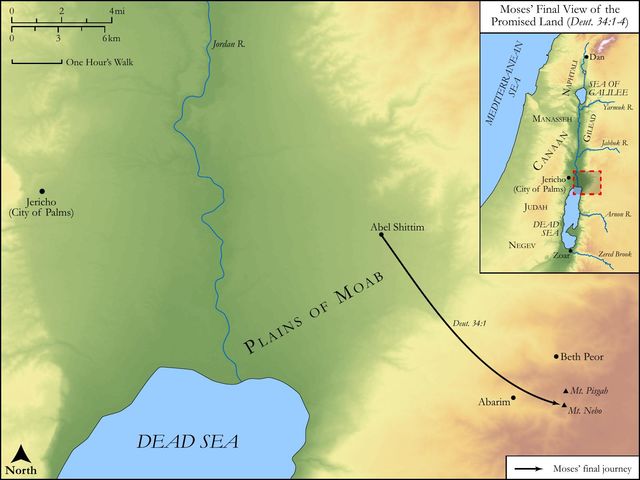
The Song of Moses is delivered on the plains of Moab, with the vast Israelite host poised on the precipice of entering Canaan, the land promised to their ancestors. This geographical and temporal setting profoundly underscores the imminent transition from forty years of wilderness wandering to a settled, agricultural life, where the temptations of idolatry and syncretism with Canaanite practices would be ever-present and formidable. In the covenant given at Sinai and renewed on the plains of Moab, the LORD set before Israel elaborate lists of blessings for obedience and severe curses for disobedience. The concept of a sovereign God exacting justice and punishing covenant infidelity was thus well understood in Israel. However, biblical divine vengeance (nāqām) stands in stark contrast to human vengeance. Unlike human retribution, which often stems from personal malice, is frequently disproportionate, and can be driven by unrighteous anger, divine vengeance in the biblical narrative is always righteous, perfectly just, and ultimately aimed at vindication, the restoration of moral order in all creation, and the upholding of God's holy character. It is an intrinsic attribute of God's holiness and His unwavering commitment to His covenant, ensuring that injustice does not prevail indefinitely and that His divine rule is ultimately affirmed. Moses, serving as the divinely appointed mediator of the covenant, delivers this song as his final, weighty charge, emphasizing God's unique and absolute authority over life, death, and destiny.
Key Themes
ShowHideDeuteronomy 32:35 powerfully contributes to several overarching and foundational themes within the book of Deuteronomy and the broader Old Testament narrative. Firstly, it unequivocally underscores the absolute sovereignty of God over all creation, particularly in matters of justice and judgment. God alone possesses the inherent right and omnipotent power to execute vengeance and recompense, thereby preventing human beings from usurping His divine role or attempting to take justice into their own fallible hands, a principle profoundly reiterated in the New Testament (e.g., Romans 12:19). Secondly, the verse highlights the certainty and divine timing of judgment. The vivid phrase "their foot shall slide in due time" emphasizes that consequences for sin and rebellion are not arbitrary or haphazard but are divinely appointed and precisely timed according to God's perfect wisdom. Furthermore, "the day of their calamity is at hand" signifies its imminent and unavoidable arrival, speaking to both God's immense patience and His ultimate, unyielding resolve to bring justice. This theme is consistently woven throughout the warnings of blessings and curses found in Deuteronomy 28. Finally, the verse powerfully reinforces the theme of consequences for covenant disobedience and rebellion. Whether directed at Israel for their future apostasy or at the pagan nations who oppress them, the verse serves as a stark and inescapable reminder that actions have profound spiritual and temporal repercussions, thus affirming God's righteous governance over human affairs and His unwavering commitment to upholding the sanctity of His covenant.
Exposition and Analysis
ShowHideKey Word Analysis
ShowHideThis term (H5359), often misconstrued through a human lens, refers in a divine context not to petty or malicious revenge but to righteous indignation, vindication, and the restoration of justice. It signifies God's active, holy intervention to right wrongs, punish evil, and uphold His immutable character and covenant. It is an essential aspect of His sovereignty, ensuring that ultimate justice is served and that His name is glorified through the defeat of wickedness and the vindication of the oppressed.
Derived from a root meaning "to complete," "to repay," or "to make whole," this word (H8005) speaks to the full and complete restitution or retribution. It implies that God will render to each according to their deeds, ensuring that the consequences perfectly match the offense. It is about settling accounts, bringing all things to their rightful and just conclusion, whether in the form of punishment for sin or reward for righteousness.
This primitive root (H4131) vividly describes a tottering, stumbling, or slipping motion, implying profound instability and an impending, inevitable fall. It paints a powerful picture of someone standing on treacherous, unstable ground, whose position is precarious and whose collapse is certain. In the context of divine judgment, it suggests that the wicked are already on the brink of destruction, and their downfall is merely a matter of time, divinely appointed and inescapable.
Verse Breakdown
ShowHide"To me [belongeth] vengeance, and recompence;"
This opening declaration is a profound statement of divine prerogative and exclusive ownership. God unequivocally claims for Himself the sole right and inherent power to execute both vengeance and recompense. This is not a shared responsibility or a delegated authority; it is an attribute intrinsic to His sovereignty, perfect righteousness, and ultimate justice. It emphatically establishes that human beings are forbidden from taking justice into their own hands, as only God possesses the perfect knowledge, impartiality, and omnipotence required to administer true and righteous retribution.
"their foot shall slide in [due] time:"
This phrase introduces the certainty and precise timing of the impending divine judgment. The powerful imagery of a "sliding foot" vividly portrays instability, a precarious position, and an inevitable fall, indicating that those who are the objects of God's judgment (whether rebellious Israel or their oppressors) are already in a perilous state. The crucial addition "in [due] time" (H6256, ʻêth) emphasizes that this downfall is not random or accidental but is divinely appointed, perfectly timed according to God's sovereign plan, and patiently awaited.
"for the day of their calamity [is] at hand,"
This clause provides the compelling reason for the "sliding foot" and powerfully reinforces the imminence of the impending judgment. "Calamity" (H343, ʼêyd) refers to a devastating disaster, ruin, or destruction. The declaration that this "day" (H3117, yôwm) is "at hand" (H7138, qârôwb) signifies its extreme proximity and unavoidable nature. It is not a distant, theoretical threat but an impending, certain reality, underscoring the urgency and absolute certainty of divine judgment for those who persist in rebellion.
"and the things that shall come upon them make haste."
This final clause further emphasizes the swift, relentless, and accelerating approach of the promised divine judgment. The "things that shall come upon them" (H6264, ʻâthîyd) refer to the full weight of God's righteous retribution and the consequences of their actions. The phrase "make haste" (H2363, chûwsh) suggests an accelerating process, implying that once the divinely appointed "due time" arrives, the execution of judgment will be rapid, decisive, and inescapable, leaving no room for evasion or delay.
Literary Devices
ShowHideDeuteronomy 32:35, as an integral part of the highly poetic and prophetic Song of Moses, is rich in literary and rhetorical devices that profoundly amplify its solemn message. The primary device is Personification, as God speaks directly in the first person, claiming "vengeance" and "recompence" as His exclusive possessions, thereby emphasizing His absolute and inherent control over these divine attributes. The phrase "their foot shall slide" employs vivid Imagery and a potent Metaphor, painting a clear and unsettling picture of instability and impending collapse, suggesting a precarious position that inevitably leads to a devastating fall. This Metaphor of a "sliding foot" effectively communicates the precarious and doomed state of those who stand under divine judgment. The declarations that "the day of their calamity [is] at hand" and "the things that shall come upon them make haste" utilize powerful Foreshadowing and create a palpable sense of Imminence, building dramatic tension and underscoring the absolute certainty and swiftness of God's impending judgment. The entire verse functions as a powerful Divine Declaration of God's unwavering sovereignty and perfect justice, a solemn warning that carries the full, unchallengeable weight of God's own supreme authority and righteous character.
Theological and Thematic Connections
ShowHideDeuteronomy 32:35 stands as a foundational theological statement regarding God's unique and exclusive right to administer ultimate justice. It underscores that vengeance, in its righteous and redemptive sense, belongs solely to the Lord, preventing humanity from engaging in personal retribution that is often fueled by malice, disproportionate, and ultimately unjust. This divine prerogative ensures that justice is perfectly balanced, perfectly timed, and perfectly executed, reflecting God's holy character and His commitment to moral order. The verse also highlights God's active involvement in human history, not as a passive observer, but as a sovereign ruler who will ultimately bring all things to account, whether for His covenant people or their adversaries. It is a powerful reminder that while God is patient and longs for repentance, His patience has a limit, and the day of reckoning for unrepentant sin is certain and unavoidable.
Reflection and Application
ShowHideDeuteronomy 32:35 offers profound insights for contemporary believers, calling us to a posture of deep trust, profound humility, and unwavering hope in God's perfect governance. Firstly, it demands that we wholeheartedly relinquish any desire for personal revenge or retribution. When we are wronged, insulted, or unjustly treated, this verse serves as a powerful reminder that vengeance belongs to God alone. Our sacred role is to forgive, to bless those who persecute us, and to trust that the Lord, who sees all things with perfect clarity, will administer perfect justice in His own divine timing. This liberating truth frees us from the corrosive burden of bitterness, the destructive cycle of retaliation, and the heavy weight of seeking personal vindication. Secondly, for those who might be complacent in sin, presuming upon God's boundless patience, this verse serves as a solemn and urgent warning: there is indeed a "due time" for judgment, and "the day of calamity" is truly "at hand" for those who persist in rebellion against God's commands and His holy character. It issues a compelling call for immediate repentance and a decisive turning towards God before it is too late and the consequences are realized. Finally, for those who are suffering under oppression, enduring injustice, or facing persecution, this verse offers immense comfort and profound hope. It assures us with absolute certainty that God is not indifferent to suffering; He sees every tear, He knows every wrong, and He will ultimately act decisively to bring about justice and recompense for His people, vindicating the righteous and bringing down the proud.
Questions for Reflection
ShowHideFAQ
ShowHideWhy does God claim "vengeance" for Himself, and how is this different from human revenge?
ShowHideThe term "vengeance" (Hebrew: nāqām, H5359) when attributed to God in Scripture, as in Deuteronomy 32:35, is fundamentally and qualitatively different from human revenge. Human revenge is typically driven by personal malice, uncontrolled anger, and a desire for disproportionate retaliation. It is often impulsive, biased, and destructive, leading to perpetual cycles of violence and injustice. In stark contrast, God's vengeance is a pure expression of His perfect righteousness, holiness, and immutable justice. It is not an emotional outburst but a deliberate, holy act of vindication, aimed at restoring righteousness in all creation, upholding His sacred covenant, and demonstrating His absolute sovereignty over all forms of evil. God's vengeance is always perfectly just, perfectly timed, and perfectly executed. He claims it exclusively because He alone possesses the perfect knowledge, absolute impartiality, and infinite power to administer true justice, ensuring that every wrong is righted and every deed receives its due recompense (H8005, shillêm). This profound truth is why the New Testament explicitly instructs believers to "[leave room for God's wrath, for it is written: 'It is mine to avenge; I will repay,' says the Lord](/romans/12-19 "Romans 12:19 - Do Not Avenge Yourselves')."
Christ-Centered Fulfillment
ShowHideDeuteronomy 32:35, with its powerful declaration of divine vengeance and recompense, finds its ultimate fulfillment and profound reinterpretation in the person and redemptive work of Jesus Christ. While the Old Testament speaks of God's righteous judgment against sin and rebellion, the New Testament reveals how this very judgment is both absorbed and ultimately executed through Christ. On the cross, Jesus became the willing recipient of God's righteous wrath against humanity's sin, bearing the "calamity" (H343, ʼêyd) that was justly due to us, so that all who believe might be spared and reconciled to God (as powerfully articulated in 2 Corinthians 5:21). His perfect, atoning sacrifice is the ultimate "recompense" (H8005, shillêm) for sin, fully satisfying the immutable demands of divine justice. Furthermore, Christ is revealed as the ultimate agent of God's future and final judgment. The "day of their calamity" (H3117, yôwm) that "is at hand" (H7138, qârôwb) finds its eschatological climax in the glorious return of Christ, who will come not only as the merciful Savior but also as the righteous and omnipotent Judge. Passages like John 5:22 unequivocally declare that the Father "judges no one, but has entrusted all judgment to the Son." The imagery of the "sliding foot" (H7272, regel, and H4131, môwṭ) and the "hasting calamity" (H2363, chûwsh) will be fully and irrevocably realized for those who reject His grace and persist in rebellion, as vividly described in 2 Thessalonians 1:7-9 where Christ brings "vengeance on those who do not know God and on those who do not obey the gospel of our Lord Jesus." Thus, Deuteronomy 32:35 profoundly foreshadows the dual nature of Christ's coming: His first advent as the Lamb of God who takes away the sin of the world, and His second advent as the Lion of Judah who executes perfect, final, and universal justice.