


Deuteronomy 10:17
- כִּיkiforH3588PrtParticle Conditional
- יְהוָהYah·wehYahwehH3068N-properNoun Proper Title
- אֱלֹהֵיכֶם'e·lo·hei·Khemyour GodH430N-mpc ¦ 2mpNoun Plural Masculine ConstructאֱלֹהֵיGodכֶםyour
- הוּאhu'heH1931Pro-3msPronoun Personal 3rd Singular Masculine
- אֱלֹהֵי'e·lo·Hei[is] [the] God ofH430N-mpcNoun Plural Masculine Construct
- הָאֱלֹהִיםha·'E·lo·Himthe godsH430Art ¦ N-mpNoun Plural Masculine Absoluteהָtheאֱלֹהִיםgods
- וַאֲדֹנֵיva·'a·do·Neiand [the] lord<s> ofH113Conj-w ¦ N-mpcNoun Plural Masculine Constructוַandאֲדֹנֵי[the] lord<s> of
- הָאֲדֹנִיםha·'a·do·Nimthe lordsH113Art ¦ N-mpNoun Plural Masculine Absoluteהָtheאֲדֹנִיםlords
- הָאֵלha·'Elthe GodH410Art ¦ N-msNoun Singular Masculine AbsoluteהָtheאֵלGod
- הַגָּדֹלha·ga·Dol<the> greatH1419Art ¦ Adj-msAdjective Singular Masculine Absoluteהַ<the>גָּדֹלgreat
- הַגִּבֹּרha·gi·Bor<the> mightyH1368Art ¦ N-msNoun Singular Masculine Absoluteהַ<the>גִּבֹּרmighty
- וְהַנּוֹרָאve·ha·no·Ra'and <the> awesomeH3372Conj-w ¦ Art ¦ V-Niphal-Prtcpl-msVerb Niphal Participle Singular Masculine Absoluteוְandהַ<the>נּוֹרָאawesome
- אֲשֶׁר'a·SherwhoH834RelParticle Relative
- לֹאlo'notH3808NegParticle Negative
- יִשָּׂאyi·Sa'he lifts upH5375V-Qal-Imperf-3msVerb Qal Imperfect 3rd Singular Masculine
- פָנִיםfa·NimfaceH6440N-mpNoun Plural Masculine Absolute
- וְלֹאve·Lo'and notH3808Conj-w ¦ NegParticle Negativeוְandלֹאnot
- יִקַּחyi·Kachhe takesH3947V-Qal-Imperf-3msVerb Qal Imperfect 3rd Singular Masculine
- שֹׁחַדSho·chada bribeH7810N-msNoun Singular Masculine Absolute
English is a literal word-by-word gloss of the Hebrew, not the KJV's wording. Why?
This is the original text the KJV's translators worked from — each Hebrew word with its own literal English meaning in this verse, prepared by scholars at Tyndale House, Cambridge. The KJV translates whole sentences, not word by word, so its wording differs: one Hebrew word can become several English words, and the KJV may choose “the LORD” where the gloss reads “Yahweh”. Both are faithful — they answer different questions. For the KJV's own rendering, switch to the KJV text.
Details
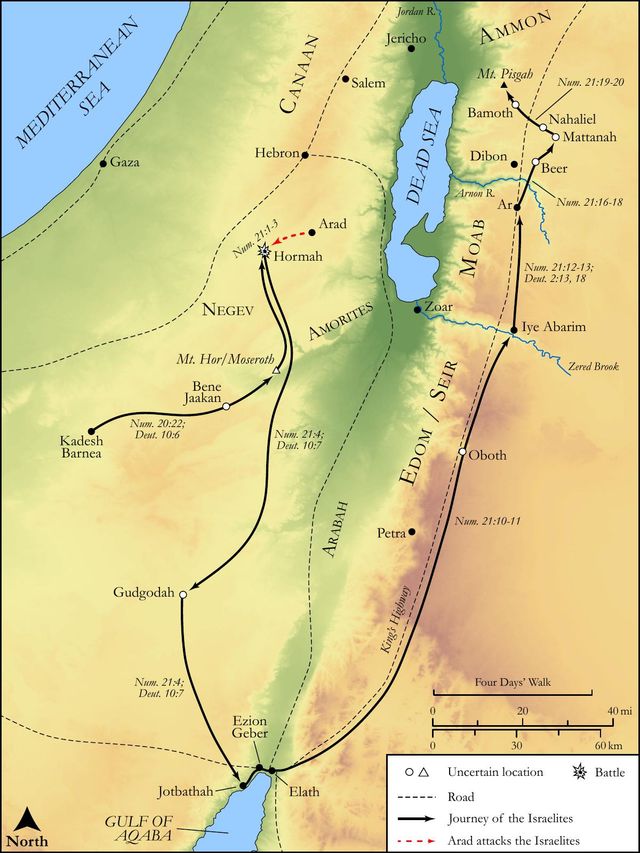
See on the biblical-era map
Study this verse
Public-domain commentary
Matthew Henry
From his Commentary on the Whole Bible. Henry comments on passages, not single verses — this entry covers Deuteronomy 10:12–22. His three-level outline is real structure in the source text, so it is rendered as structure.
Here is a most pathetic exhortation to obedience, inferred from the premises, and urged with very powerful arguments and a great deal of persuasive rhetoric. Moses brings it in like an orator, with an appeal to his auditors And now, Israel, what doth the Lord thy God require of thee? Deu 10:12. Ask what he requires; as David (Psa 116:12), What shall I render? When we have received mercy from God it becomes us to enquire what returns we shall make to him. Consider what he requires, and you will find it is nothing but what is highly just and reasonable in itself and of unspeakable benefit and advantage to you. Let us see here what he does require, and what abundant reason there is why we should do what he requires.
I.We are here most plainly directed in our duty to God, to our neighbour, and to ourselves.
1.We are here taught our duty to God, both in the dispositions and affections of our souls and in the actions of our lives, our principles and our practices.
(1.)We must fear the Lord our God, Deu 10:12, and again Deu 10:20. We must adore his majesty, acknowledge his authority, stand in awe of his power, and dread his wrath. This is gospel duty, Rev 14:6, Rev 14:7.
(2.)We must love him, be well pleased that he is, desire that he may be ours, and delight in the contemplation of him and in communion with him. Fear him as a great God, and our Lord, love him as a good God, and our Father and benefactor.
(3.)We must walk in his ways, that is, the ways which he has appointed us to walk in. The whole course of our conversation must be conformable to his holy will.
(4.)We must serve him (Deu 10:20), serve him with all our heart and soul (Deu 10:12), devote ourselves to his honour, put ourselves under his government, and lay out ourselves to advance all the interests of his kingdom among men. And we must be hearty and zealous in his service, engage and employ our inward man in his work, and what we do for him we must do cheerfully and with a good will.
(5.)We must keep his commandments and his statutes, Deu 10:13. Having given up ourselves to his service, we must make his revealed will our rule in every thing, perform all he prescribes, forbear all the forbids, firmly believing that all the statutes he commands us are for our good. Besides the reward of obedience, which will be our unspeakable gain, there are true honour and pleasure in obedience. It is really for our present good to be meek and humble, chaste and sober, just and charitable, patient and contented; these make us easy, and safe, and pleasant, and truly great.
(6.)We must give honour to God, in swearing by his name (Deu 10:20); so give him the honour of his omniscience, his sovereignty, his justice, as well as of his necessary existence. Swear by his name, and not by the name of any creature, or false god, whenever an oath for confirmation is called for.
(7.)To him we must cleave, Deu 10:20. Having chosen him for our God, we must faithfully and constantly abide with him and never forsake him. Cleave to him as one we love and delight in, trust and confide in, and from whom we have great expectations.
2.We are here taught our duty to our neighbour (Deu 10:19): Love the stranger; and, if the stranger, much more our brethren, as ourselves. If the Israelites that were such a peculiar people, so particularly distinguished from all people, must be kind to strangers, much more must we, that are not enclosed in such a pale; we must have a tender concern for all that share with us in the human nature, and as we have opportunity; (that is, according to their necessities and our abilities) we must do good to all men. Two arguments are here urged to enforce this duty: - (1.) God's common providence, which extends itself to all nations of men, they being all made of one blood. God loveth the stranger (Deu 10:18), that is, he gives to all life, and breath, and all things, even to those that are Gentiles, and strangers to the commonwealth of Israel and to Israel's God. He knows those perfectly whom we know nothing of. He gives food and raiment even to those to whom he has not shown his word and statutes. God's common gifts to mankind oblige us to honour all men. Or the expression denotes the particular care which Providence takes of strangers in distress, which we ought to praise him for (Psa 146:9, The Lord preserveth the strangers), and to imitate him, to serve him, and concur with him therein, being forward to make ourselves instruments in his hand of kindness to strangers. (2.) The afflicted condition which the Israelites themselves had been in, when they were strangers in Egypt. Those that have themselves been in distress, and have found mercy with God, should sympathize most feelingly with those that are in the like distress and be ready to show kindness to them. The people of the Jews, notwithstanding these repeated commands given them to be kind to strangers, conceived a rooted antipathy to the Gentiles, whom they looked upon with the utmost disdain, which made them envy the grace of God and the gospel of Christ, and this brought a final ruin upon themselves.
3.We are here taught our duty to ourselves (Deu 10:16): Circumcise the foreskin of your hearts. that is, "Cast away from you all corrupt affections and inclinations, which hinder you from fearing and loving God. Mortify the flesh with the lusts of it. Away with all filthiness and superfluity of naughtiness, which obstruct the free course of the word of God to your hearts. Rest not in the circumcision of the body, which was only the sign, but be circumcised in heart, which is the thing signified." See Rom 2:29. The command of Christ goes further than this, and obliges us not only to cut off the foreskin of the heart, which may easily be spared, but to cut off the right hand and to pluck out the right eye that is an offence to us; the more spiritual the dispensation is the more spiritual we are obliged to be, and to go the closer in mortifying sin. And be no more stiff-necked, as they had been hitherto, Deu 9:24. "Be not any longer obstinate against divine commands and corrections, but ready to comply with the will of God in both." The circumcision of the heart makes it ready to yield to God, and draw in his yoke.
II.We are here most pathetically persuaded to our duty. Let but reason rule us, and religion will.
1.Consider the greatness and glory of God, and therefore fear him, and from that principle serve and obey him. What is it that is thought to make a man great, but great honour, power, and possessions? Think then how great the Lord our God is, and greatly to be feared.
(1.)He has great honour, a name above every name. He is God of gods, and Lord of lords, Deu 10:17. Angels are called gods, so are magistrates, and the Gentiles had gods many, and lords many, the creatures of their own fancy; but God is infinitely above all these nominal deities. What an absurdity would it be for them to worship other gods when the God to whom they had sworn allegiance was the God of gods!
(2.)He has great power. He is a mighty God and terrible (Deu 10:17), who regardeth not persons. He has the power of a conqueror, and so he is terrible to those that resist him and rebel against him. He has the power of a judge, and so he is just to all those that appeal to him or appear before him. And it is as much the greatness and honour of a judge to be impartial in his justice, without respect to persons or bribes, as it is to a general to be terrible to the enemy. Our God is both.
(3.)He has great possessions. Heaven and earth are his (Deu 10:14), and all the hosts and stars of both. Therefore he is able to bear us out in his service, and to make up the losses we sustain in discharging our duty to him. And yet therefore he has no need of us, nor any thing we have or can do; we are undone without him, but he is happy without us, which makes the condescensions of his grace, in accepting us and our services, truly admirable. Heaven and earth are his possession, and yet the Lord's portion is his people.
2.Consider the goodness and grace of God, and therefore love him, and from that principle serve and obey him. His goodness is his glory as much as his greatness.
(1.)He is good to all. Whomsoever he finds miserable, to them he will be found merciful: He executes the judgment of the fatherless and widow, Deu 10:18. It is his honour to help the helpless, and to succour those that most need relief and that men are apt to do injury to, or at least to put a light upon. See Psa 68:4, Psa 68:5; Psa 146:7, Psa 146:9.
(2.)But truly God is good to Israel in a special obligations to him: "He is they praise, and he is thy God, Deu 10:21. Therefore love him and serve him, because of the relation wherein he stands to thee. He is thy God, a God in covenant with thee, and as such he is thy praise," that is [1.] "He puts honour upon thee; he is the God in whom, all the day long, thou mayest boast that thou knowest him, and art known of him. If he is thy God, he is thy glory." [2.] "He expects honour from thee. He is thy praise," that is "he is the God whom thou art bound to praise; if he has not praise from thee, whence may he expect it?" He inhabits the praises of Israel. Consider, First, The gracious choice he made of Israel, Deu 10:15. "He had a delight in thy fathers, and therefore chose their seed." Not that there was any thing in them to merit his favour, or to recommend them to it, but so it seemed good in his eyes. He would be kind to them, though he had no need of them. Secondly, The great things he had done for Israel, Deu 10:21, Deu 10:22. He reminds them not only of what they had heard with their ears, and which their fathers had told them of, but of what they had seen with their eyes, and which they must tell their children of, particularly that within a few generations seventy souls (for they were no more when Jacob went down into Egypt) increased to a great nation, as the stars of heaven for multitude. And the more they were in number the more praise and service God expected from them; yet it proved, as in the old world, that when they began to multiply they corrupted themselves.
Historical interpretation
Historical reception
1 surviving comment on this verse from the historical church.
[Trypho the Jew said,] “But now, return to the original topic and prove to us that the prophetic Spirit ever admits the existence of another God, besides the Creator of all things; and do be careful not the mention the sun and moon, which, Scripture tells us, God permitted the Gentiles to worship as gods. Even prophets often misuse the word in this sense when they say, ‘Your God is God of gods and Lord of lords,’ often adding, ‘the great and mighty and terrible.’ Such words are used not as if they were really gods but because the word is instructing us that the true God, the Creator of all, is the sole Lord of all those who are falsely regarded as gods and lords. To convince us of this the Holy Spirit said through David: ‘The gods of the Gentiles (although reputed as gods) are idols of demons, and not gods.’3 And he places a curse upon those who make or worship such idols.”“Trypho,” I answered, “… They who worship these idols and similar objects are justly condemned.”
Continue studying Deuteronomy 10:17 across the web’s major study libraries — every link below opens this exact verse, chapter, or book on the destination site.
Read & Compare
 BibleGatewayThis verse in more than 200 translations and 70 languages.
 Bible.comThe YouVersion reader — hundreds of translations, reading plans, and highlights.
 ESV.orgCrossway's official English Standard Version reader.
 NET BibleThe NET translation with 60,000+ translators' notes on every rendering decision.
 STEP BibleTyndale House's free study tool — original text, vocabulary, and scholarly resources.
 BibliaLogos Bible Software's free web reader.
 USCCBThe New American Bible (Revised Edition) with the U.S. bishops' study notes.
Commentaries
 BibleHub CommentariesDozens of classic commentaries on this verse, gathered on one page.
 StudyLightMore than 100 commentary sets — the largest collection on the web.
 BibleRefPlain-English commentary on what this verse means, verse by verse.
 Enduring WordDavid Guzik's free commentary on this chapter, widely used by Bible teachers.
 Bible Study ToolsVerse commentary alongside Greek and Hebrew study aids.
Original Language & Research
- BibleHub InterlinearThe verse word by word — original language, transliteration, and English.
- BibleHub LexiconEvery word's original-language definition and Strong's entry.
 Blue Letter BibleDeep-study tools — Strong's numbers, concordance, and word studies.
 SefariaThe Hebrew text with Rashi and centuries of Jewish commentary.
Sermons, Hymns & Audio


TrulyRandomVerse is not affiliated with these sites and doesn’t control their content. They’re linked because they’re genuinely useful.
Summary
Deuteronomy 10:17 stands as a profound theological declaration, articulating the unparalleled nature and character of Yahweh. It proclaims Him as the supreme authority over all perceived powers and rulers, an infinitely great, mighty, and awe-inspiring God who governs with absolute impartiality and incorruptible justice. This foundational statement establishes the very basis for Israel's covenant obligations, calling them to reflect His righteous attributes in their communal life and individual conduct, thereby setting a divine standard for justice and ethical living.
Context
ShowHideLiterary Context
This verse is strategically placed within Moses' second major discourse to the Israelites, delivered on the plains of Moab as they stood on the cusp of entering the Promised Land. It serves as the theological bedrock for the ethical exhortations found in Deuteronomy 10:12-22, where Moses passionately reviews God's faithfulness and calls the people to a renewed, wholehearted covenant relationship. The immediate preceding verse, Deuteronomy 10:16, commands the Israelites to "circumcise therefore the foreskin of your heart, and be no more stiffnecked," urging them to remove spiritual stubbornness and cultivate an inner receptivity to God's commands. Verse 17 then provides the irrefutable reason for such radical devotion: because God is supremely sovereign, awe-inspiring, and perfectly just, He alone is worthy of absolute allegiance, and His people are called to emulate His righteous character in their communal life.
Historical & Cultural Context
Moses' address takes place at a pivotal moment in Israelite history—forty years after the Exodus, as the generation that rebelled in the wilderness has passed away, and a new generation prepares to inherit the land. They are about to encounter Canaanite cultures rife with polytheism, idolatry, and corrupt judicial practices, where deities were often seen as capricious, bribable, and partial to their devotees. In this context, the declaration of Yahweh as "God of gods, and Lord of lords" served as a powerful polemic against the surrounding pagan pantheons, asserting His unique, incomparable supremacy. Furthermore, the emphasis on God's impartiality ("regardeth not persons, nor taketh reward") was a revolutionary concept, contrasting sharply with the often-corrupt legal systems of the ancient Near East, where justice could be bought or influenced by status. This divine attribute was to be the model for Israel's own judicial and social structures as they established their society in the land, ensuring that their governance reflected divine righteousness.
Key Themes
ShowHideDeuteronomy 10:17 powerfully contributes to several overarching themes in the book of Deuteronomy. First, it underscores Divine Sovereignty and Supremacy, asserting Yahweh's absolute dominion over all creation, all nations, and all other spiritual entities, whether real or imagined. This is a recurring theme, emphasizing that Israel's covenant relationship is with the one true, ultimate power. Second, the description of God as "a great God, a mighty, and a terrible" highlights the Awe and Majesty of God, fostering a sense of reverential fear and worship. This "terrible" quality (in the KJV sense of awe-inspiring) is meant to compel obedience rooted in profound respect for His holiness and power, as seen throughout the covenant stipulations in Deuteronomy. Third, the declaration that God "regardeth not persons, nor taketh reward" establishes the fundamental theme of Impartiality and Justice. This attribute of God becomes the ethical standard for Israel's judges, leaders, and indeed, every individual, calling them to administer justice fairly and compassionately, reflecting the very character of the God who chose them, as further expounded in Deuteronomy 16:19.
Exposition and Analysis
ShowHideKey Word Analysis
ShowHideThis term, often translated as "God," is used here in a superlative construction, "God of gods." While ʼĕlôhîym can refer to other deities or even judges, its pairing with "of gods" (also ʼĕlôhîym) emphatically declares Yahweh's absolute supremacy. It signifies that He is the ultimate and supreme God, standing above all other beings, powers, or deities that might be worshipped or acknowledged by humans, asserting His unique and ultimate authority.
Derived from a primitive root meaning "to fear" or "to revere," "terrible" in the King James Version carries the archaic meaning of "awe-inspiring," "dreadful," or "reverence-inducing." It speaks to God's immense majesty, power, and holiness that evokes profound respect, wonder, and holy fear, rather than mere fright. It describes a God whose presence and actions are so grand and powerful that they command utter reverence and submission from all creation.
This idiom, literally "does not lift up faces," signifies absolute impartiality. The root nâsâʼ means "to lift" or "to bear," and pânîym refers to "face" or "presence." In this context, it means God does not show favoritism or bias based on external factors such as social status, wealth, nationality, physical appearance, or any other human distinction. His judgment and dealings are based purely on righteousness and truth, treating all individuals justly according to their deeds and character.
Verse Breakdown
ShowHide"For the LORD your God [is] God of gods, and Lord of lords"
This opening clause establishes Yahweh's absolute supremacy and unrivaled authority. The repetition of "God of gods" and "Lord of lords" uses a Hebrew superlative construction, common in the ancient Near East, to declare that He is the ultimate, incomparable deity, above all other gods (whether pagan idols or lesser spiritual beings) and all earthly rulers or authorities. He is the sovereign over all creation and all power structures, the one true God to whom ultimate allegiance is due.
"a great God, a mighty, and a terrible"
This phrase further describes God's inherent attributes, building upon His supreme status. "Great" speaks to His immeasurable scope, boundless power, and infinite majesty; "mighty" emphasizes His strength, omnipotence, and ability to act decisively in history and creation; and "terrible" (in its archaic sense) highlights His awe-inspiring majesty and holiness, which rightly evokes profound reverence, wonder, and holy fear from all creation, compelling obedience rooted in deep respect.
"which regardeth not persons, nor taketh reward"
This final clause defines God's perfect justice and incorruptibility, providing an ethical model for His people. "Regardeth not persons" means He is absolutely impartial, showing no favoritism based on status, outward appearance, or any human distinction. His judgments are based purely on righteousness. "Nor taketh reward" signifies that He cannot be bribed, swayed, or influenced by any external offering or personal gain, ensuring that His judgments are always pure, uncompromised, and perfectly just, reflecting His intrinsic holiness and truth.
Literary Devices
ShowHideDeuteronomy 10:17 employs several powerful literary devices to convey its profound theological truth and impress it upon the listeners. The most prominent is Superlative Language, seen in the phrases "God of gods" and "Lord of lords." This is a common Hebrew idiom (e.g., "Holy of Holies," "Song of Songs") used to express the ultimate degree of something, emphatically asserting Yahweh's absolute supremacy and uniqueness above all other real or perceived deities and earthly rulers. This serves as a strong Polemic against the polytheistic beliefs and practices of the surrounding Canaanite nations, asserting monotheism and Yahweh's incomparable nature. The description of God as "great," "mighty," and "terrible" uses a series of Divine Epithets to build a cumulative picture of His overwhelming power, majesty, and holiness, invoking a profound sense of Awe and reverential fear in the listener. Finally, the two negative statements, "regardeth not persons" and "nor taketh reward," function as a form of Parallelism or Merism, defining God's perfect justice by stating what He does not do. This emphasizes His complete impartiality and incorruptibility, providing a clear and non-negotiable ethical standard for Israel to emulate in their own judicial and social systems.
Theological and Thematic Connections
ShowHideDeuteronomy 10:17 serves as a cornerstone for understanding the character of God, not just in the Old Testament but throughout the entire biblical narrative. It establishes the theological foundation for the covenant relationship, asserting that the God who chose Israel is uniquely sovereign, infinitely powerful, and perfectly just. This declaration of God's impartiality and incorruptibility is revolutionary, setting a divine standard for justice that transcends human biases and corruption. It implies that since God is inherently just, His people are called to reflect this attribute in their own societal structures, legal systems, and interpersonal relationships, ensuring that justice flows like a river and righteousness like an ever-flowing stream. This verse thus provides both a compelling reason for worship and a clear blueprint for ethical living, reminding believers that their God is not only worthy of all praise but also the ultimate model for righteous conduct in a world often marred by injustice and partiality.
Reflection and Application
ShowHideDeuteronomy 10:17 calls us to a profound re-evaluation of our understanding of God and, consequently, our lives. Recognizing God as the "God of gods and Lord of lords" should cultivate a deep sense of reverence, humility, and absolute trust within us, reminding us that our ultimate allegiance belongs to Him alone, above all earthly powers, ideologies, or personal desires. His "greatness," "might," and "terribleness" (awe-inspiring nature) invite us into worship that is both passionate and reverent, acknowledging His incomparable majesty and power. More practically, God's absolute impartiality and incorruptibility challenge us to examine our own hearts and actions. Do we show favoritism based on wealth, social status, race, influence, or personal affinity? Are we tempted to compromise our integrity for personal gain or convenience, or to pervert justice in any form? This verse compels us to mirror God's character by actively pursuing justice, fairness, and compassion in all our interactions, treating every person with dignity and respect, knowing that God Himself judges without partiality. It also offers immense comfort and security, assuring us that in a world often marked by injustice and corruption, ultimate justice rests in the hands of a perfectly righteous and unswayable God, who sees and judges all things rightly.
Questions for Reflection
ShowHideFAQ
ShowHideWhat does "God of gods, and Lord of lords" mean in the context of monotheism?
ShowHideThis phrase, "God of gods, and Lord of lords" (Hebrew: Elohei ha-Elohim v'Adonei ha-Adonim), is a superlative expression, common in ancient Near Eastern languages and Hebrew. It does not imply the actual existence of other true gods or lords in a polytheistic sense. Instead, it emphatically declares Yahweh's absolute and unrivaled supremacy over all other entities that might be called "gods" (e.g., pagan deities, idols, spiritual beings, or even human rulers who claim divine authority) or "lords." It asserts that He is the ultimate, incomparable, and sovereign power, the one true God who stands above all others, reinforcing the monotheistic truth that there is no God like Him and He alone is worthy of worship and allegiance, as affirmed in passages like Deuteronomy 4:35.
How does God's impartiality ("regardeth not persons, nor taketh reward") apply to us today?
ShowHideGod's impartiality means He judges and interacts with humanity based on righteousness and truth, not on external factors like wealth, social status, nationality, or personal connections. He cannot be bribed or swayed by any influence. This attribute serves as a foundational ethical principle for believers today, calling us to embody fairness, justice, and equality in all our dealings. In our personal lives, it means treating everyone with dignity and respect, avoiding prejudice and favoritism, and making decisions based on merit and truth. In our communities and societies, it means advocating for just systems, opposing corruption, and ensuring that all people have equal access to justice and opportunity, reflecting the character of the God we serve (James 2:1-9). This divine impartiality provides a powerful standard for human conduct and a source of comfort that ultimate justice will prevail.
Christ-Centered Fulfillment
ShowHideDeuteronomy 10:17, with its majestic declaration of God's supreme authority, awe-inspiring power, and perfect impartiality, finds its ultimate and most profound fulfillment in the person and work of Jesus Christ. The title "Lord of lords" is directly applied to Christ in the New Testament, signifying His ultimate dominion and sovereignty over all creation, powers, and authorities (Revelation 19:16). As the incarnate Son, Jesus perfectly embodies the "great," "mighty," and "terrible" (awe-inspiring) nature of God, demonstrating divine power over sickness, nature, and even death, revealing the glory of God in human flesh (Mark 4:39; John 11:43-44). Crucially, Christ is the ultimate manifestation of God's impartiality and incorruptible justice. He "regardeth not persons," extending salvation and grace to all who believe, regardless of their social standing, ethnicity, or past sins, thereby breaking down all barriers between Jew and Gentile, slave and free, male and female (Galatians 3:28; Colossians 3:11). His sacrifice on the cross was not a "reward" or bribe to God, but the perfect, just, and unblemished atonement for sin, demonstrating God's righteousness in justifying those who believe in Jesus, thereby upholding divine justice while offering mercy (Romans 3:25-26). Thus, in Christ, the attributes of the sovereign, awe-inspiring, and perfectly just God of Deuteronomy are fully revealed and made accessible to humanity, inviting all to come and find reconciliation and new life.