


Daniel 2:47
Bible text: King James Version (1769 Blayney text) · Public domain
Bible text: King James Version with Strong's numbers · Public domain
Bible text: Berean Standard Bible · Public domain
Bible text: American Standard Version (1901) · Public domain
Bible text: World English Bible, Messianic edition · Public domain
Bible text: Geneva Bible (1599) · Public domain
Bible text: Young's Literal Translation · Public domain
- עָנֵה'a·Neh[was] replyingH6032V-Peal-Prtcpl-msVerb Peal Participle Singular Masculine Absolute
- מַלְכָּאmal·Ka'king theH4430N-cs ¦ ArtNoun Singular common gender Definiteמַלְכָּkingאthe
- לְדָנִיֵּאלle·da·ni·Yelto DanielH1841Prep-l ¦ N-proper-mNoun Proper MasculineלְtoדָנִיֵּאלDaniel
- וְאָמַרve·'a·Marand [was] sayingH560Conj-w ¦ V-Qal-Prtcpl-msVerb Qal Participle Singular Masculine Absoluteוְandאָמַר[was] saying
- מִןminfromH4481PrepPreposition
- קְשֹׁטke·ShottruthH7187N-csNoun Singular common gender Absolute
- דִּיdithatH1768ConjConjunction
- אֱלָהֲכוֹן'e·la·ha·Khonyour GodH426N-csc ¦ 2mpNoun Singular common gender ConstructאֱלָהֲGodכוֹןyour
- הוּאhu'heH1932Pro-3msPronoun Personal 3rd Singular Masculine
- אֱלָהּ'e·Lah[is the] God ofH426N-cscNoun Singular common gender Construct
- אֱלָהִין'e·la·HingodsH426N-mpNoun Plural Masculine Absolute
- וּמָרֵאu·ma·Re'and [the] lord ofH4756Conj-w ¦ N-cscNoun Singular common gender Constructוּandמָרֵא[the] lord of
- מַלְכִיןmal·KhinkingsH4430N-mpNoun Plural Masculine Absolute
- וְגָלֵהve·ga·Lehand [one who] revealsH1541Conj-w ¦ V-Qal-Prtcpl-msVerb Qal Participle Singular Masculine Absoluteוְandגָלֵה[one who] reveals
- רָזִיןra·ZinsecretsH7328N-mpNoun Plural Masculine Absolute
- דִּיdithatH1768ConjConjunction
- יְכֵלְתָּye·Khe·le·tayou have been ableH3202V-Peal-Perf-2msVerb Peal Perfect 2nd Singular Masculine
- לְמִגְלֵאle·mig·Le'to revealH1541Prep-l ¦ V-Qal-InfVerb Qal Infinitive Constructלְtoמִגְלֵאreveal
- רָזָהra·Zah'secret theH7328N-cs ¦ ArtNoun Singular common gender Definiteרָזָsecretהthe
- דְנָהde·NahthisH1836PrtParticle Demonstrative
English is a literal word-by-word gloss of the Hebrew, not the KJV's wording. Why?
This is the original text the KJV's translators worked from — each Hebrew word with its own literal English meaning in this verse, prepared by scholars at Tyndale House, Cambridge. The KJV translates whole sentences, not word by word, so its wording differs: one Hebrew word can become several English words, and the KJV may choose “the LORD” where the gloss reads “Yahweh”. Both are faithful — they answer different questions. For the KJV's own rendering, switch to the KJV text.
Details
See on the biblical-era map
Study this verse
Public-domain commentary
Matthew Henry
From his Commentary on the Whole Bible. Henry comments on passages, not single verses — this entry covers Daniel 2:46–49.
One might have expected that when Nebuchadnezzar was contriving to make his own kingdom everlasting he would be enraged at Daniel, who foretold the fall of it and that another kingdom of another nature should be the everlasting kingdom; but, instead of resenting it as an affront, he received it as an oracle, and here we are told what the expressions were of the impressions it made upon him. 1. He was ready to look upon Daniel as a little god. Though he saw him to be a man, yet from this wonderful discovery which he had made both of his secret thoughts, in telling him the dream, and of things to come, in telling him the interpretation of it, he concluded that he had certainly a divinity lodged in him, worthy his adoration; and therefore he fell upon his face and worshipped Daniel, Dan 2:46. It was the custom of the country by prostration to give honour to kings, because they have something of a divine power in them (I have said, You are gods); and therefore this king, who had often received such veneration from others, now paid the like to Daniel, whom he supposed to have in him a divine knowledge, which he was so struck with an admiration of that he could not contain himself, but forgot both that Daniel was a man and that himself was a king. Thus did God magnify divine revelation and make it honourable, extorting from a proud potentate such a veneration but for one glimpse of it. He worshipped Daniel, and commanded that they should offer an oblation to him, and burn incense. Herein he cannot be justified, but may in some measure be excused, when Cornelius was thus ready to worship Peter, and John the angel, who both knew better. But, though it is not here mentioned, yet we have reason to think that Daniel refused these honours that he paid him, and said, as Peter to Cornelius, Stand up, I myself also am a man, or, as the angel to St. John, See thou do it not; for it is not said that the oblation was offered unto him, though the king commanded it, or rather said it, for so the word is. He said, in his haste, Let an oblation be offered to him. And that Daniel did say something to him which turned his eyes and thoughts another way is intimated in what follows (Dan 2:47), The king answered Daniel. Note, It is possible for those to express a great honour for the ministers of God's word who yet have no true love for the word. Herod feared John, and heard him gladly, and yet went on in his sins, Mar 6:20. 2. He readily acknowledged the God of Daniel to be the great God, the true God, the only living and true God. If Daniel will not suffer himself to be worshipped, he will (as Daniel, it is likely, directed him) worship God, by confessing (Dan 2:47), Of a truth your God is a God of gods, such a God as there is no other, above all gods in dignity, over all gods in dominion. He is a Lord of kings, from whom they derive their power and to whom they are accountable; and he is both a discoverer and a revealer of secrets; what is most secret he sees and can reveal, and what he has revealed is what was secret and which none but himself could reveal, Co1 2:10. 3. He preferred Daniel, made him a great man, Dan 2:48. God made him a great man indeed when he took him into communion with himself, a greater man than Nebuchadnezzar could make him; but, because God had magnified him, therefore the king magnified him. Does wealth make men great? The king gave him many great gifts; and he had no reason to refuse them, when they all put him into so much the greater capacity of doing good to his brethren in captivity. These gifts were grateful returns for the good services he had done, and not aimed at, nor bargained for, by him, as the rewards of divination were by Balaam. Does power make a man great? He made him ruler over the whole province of Babylon, which no doubt had great influence upon the other provinces; he made him likewise chancellor of the university, chief of the governors over all the wise men of Babylon, to instruct those whom he had thus outdone; and, since they could not do what the king would have them do, they shall be obliged to do what Daniel would have them do. Thus it is fit that the fool should be servant to the wise in heart. Seeing Daniel could reveal this secret (Dan 2:47), the king thus advanced him. Note, It is the wisdom of princes to advance and employ those who receive divine revelation, and are much conversant with it, who, as Daniel here, show themselves to be well acquainted with the kingdom of heaven. Joseph, like Daniel here, was advanced in the court of the king of Egypt for his interpreting his dreams; and he called him Zaphnath-paaneah - a revealer of secrets, as the king of Babylon here calls Daniel; so that the preambles to their patents of honour are the same - for, and in consideration of, their good services done to the crown in revealing secrets. 4. He preferred his companions for his sake, and upon his special instance and request, Dan 2:49. Daniel himself sat in the gate of the king, as president of the council, chief-justice, or prime-minister of state, or perhaps chamberlain of the household; but he used his interest for his friends as became a good man, and procured places in the government for Shadrach, Meshach, and Abednego. Those that helped him with their prayers shall share with him in his honours, such a grateful sense had he even of that service. The preferring of them would be a great stay and help to Daniel in his place and business. And these pious Jews, being thus preferred in Babylon, had great opportunity of serving their brethren in captivity, and of doing them many good offices, which no doubt they were ready to do. Thus, sometimes, before God brings his people into trouble, he prepares it, that it may be easy to them.
Historical interpretation
Historical reception
3 surviving comments on this verse. Each one is dated, so this reads as a timeline rather than a list.
Select a marker to jump to its quote. Markers stagger vertically where authors wrote within a few decades of each other.
Prophecy is both free from reproach among the unbelievers and has very great credit and usefulness. For none will say in regard to prophesying, “they are mad,” nor will anyone deride them that prophesy, but, on the contrary, they will be astonished at and admire them.… So also, Nebuchadnezzar worshiped God.… Observe the might of prophecy, how it changed that savage one and allowed him to be instructed and introduced him to faith.
The king here does not say, “What must I do to be saved?” but the teaching is more obvious in his case than any language whatever. He immediately becomes a proclaimer; he does not need to be instructed like the jailor. The king proclaims God and confesses God’s power.… And what then followed? Not one single jailor but many are taught by way of the king’s writings, by way of the mere observance of the facts.… How great the force of praises that are sung in the midst of tribulation.
Verse 47. "Then King Nebuchadnezzar fell on his face and worshipped Daniel, and ordered sacrifices and incense to be offered up to him. Therefore the king spoke and said to Daniel." Porphyry falsely impugns this passage on the ground that a very proud king would never worship a mere captive, as if, forsooth, the Lycaonians had not been willing to offer blood sacrifices to Paul and Barnabas on account of the mighty miracles they had wrought (Acts 14:8-18). And so there is no need to impute to the Scripture the error of the Gentiles who deem everything above themselves to be gods, for the Scripture simply is narrating everything as it actually happened. However we can make this further assertion, that the king himself set forth the reasons for his worship and offering of blood-sacrifices when he said to Daniel:
"Truly thy God is the God of gods and the Lord of kings and a revealer of mysteries, since thou hast been able to disclose this holy secret." And so it was not so much that he was worshipping Daniel as that he was through Daniel worshipping the God who had revealed the holy secrets . This is the same thing that we read Alexander the Great, King of the Macedonians, did in the high priesthood of Joaida . Or, if this explanation seem unsatisfactory, we shall have to say that Nebuchadnezzar, overwhelmed by the amazing greatness of the miracles, did not realize what he was doing, but coming to know the true God and Lord of kings he both worshipped His servant and offered him incense.
Continue studying Daniel 2:47 across the web’s major study libraries — every link below opens this exact verse, chapter, or book on the destination site.
Read & Compare
 BibleGatewayThis verse in more than 200 translations and 70 languages.
 Bible.comThe YouVersion reader — hundreds of translations, reading plans, and highlights.
 ESV.orgCrossway's official English Standard Version reader.
 NET BibleThe NET translation with 60,000+ translators' notes on every rendering decision.
 STEP BibleTyndale House's free study tool — original text, vocabulary, and scholarly resources.
 BibliaLogos Bible Software's free web reader.
 USCCBThe New American Bible (Revised Edition) with the U.S. bishops' study notes.
Commentaries
 BibleHub CommentariesDozens of classic commentaries on this verse, gathered on one page.
 StudyLightMore than 100 commentary sets — the largest collection on the web.
 BibleRefPlain-English commentary on what this verse means, verse by verse.
 Enduring WordDavid Guzik's free commentary on this chapter, widely used by Bible teachers.
 Bible Study ToolsVerse commentary alongside Greek and Hebrew study aids.
Original Language & Research
- BibleHub InterlinearThe verse word by word — original language, transliteration, and English.
- BibleHub LexiconEvery word's original-language definition and Strong's entry.
 Blue Letter BibleDeep-study tools — Strong's numbers, concordance, and word studies.
 SefariaThe Hebrew text with Rashi and centuries of Jewish commentary.
Sermons, Hymns & Audio


TrulyRandomVerse is not affiliated with these sites and doesn’t control their content. They’re linked because they’re genuinely useful.
Summary
Daniel 2:47 records the awe-struck confession of King Nebuchadnezzar, the most powerful ruler of his age, who, profoundly impacted by divine revelation, acknowledges the supreme deity of Daniel's God. This momentous declaration follows Daniel's miraculous unveiling and interpretation of the king's forgotten dream, a task that had proven impossible for all of Babylon's renowned wise men. The verse signifies a pivotal moment where the ultimate earthly authority bows before the ultimate heavenly authority, recognizing Yahweh as the sovereign ruler over all gods and kings, and the unique source of all hidden knowledge.
Context
ShowHideLiterary Context
Daniel 2:47 serves as the climactic declaration within the narrative of Daniel 2. The preceding verses meticulously detail King Nebuchadnezzar's disturbing dream, his extraordinary demand for his wise men to not only interpret but also reveal the dream itself, and his subsequent decree to execute them when they inevitably failed. Daniel, upon learning of the decree, intercedes in prayer with his companions, and God graciously reveals the dream and its interpretation to him. Daniel then presents this divine revelation to the king, accurately describing the dream of the colossal statue composed of various materials representing successive world empires. Nebuchadnezzar's response in verse 47 is one of overwhelming astonishment and reverent submission, directly following Daniel's faithful and precise exposition, which included the foundational declaration that "there is a God in heaven who reveals mysteries" (Daniel 2:28). This profound confession validates Daniel's God and sets the stage for Daniel's elevated status within the Babylonian court.
Historical & Cultural Context
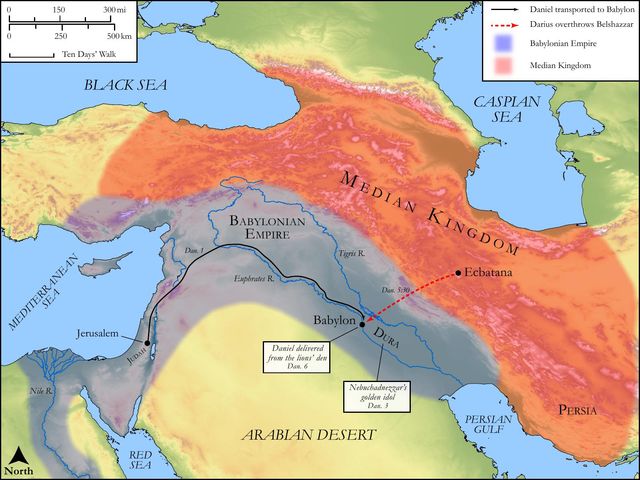
The historical backdrop for this event is the Neo-Babylonian Empire, the preeminent world power during the late 7th and early 6th centuries BCE. King Nebuchadnezzar II (reigned c. 605-562 BCE) was a formidable and absolute monarch, celebrated for his military conquests, monumental building projects, and a highly structured, polytheistic religious system. Babylon itself was a renowned center for astrological and divinatory practices, housing a sophisticated class of "wise men," including magicians, enchanters, sorcerers, and Chaldeans, who served as royal advisors. These wise men relied on human wisdom, occult practices, and interpretations of omens. For Nebuchadnezzar, the concept of a single, transcendent God who could reveal secrets beyond human comprehension, and who held ultimate authority over all other deities and earthly rulers, represented a radical departure from his established worldview. His declaration, while not necessarily a full conversion to monotheism, is a profound acknowledgment of Yahweh's unparalleled power and supremacy, particularly in the realm of divine revelation, a domain where his own religious experts had utterly failed.
Key Themes
ShowHideThis verse powerfully contributes to several overarching themes found throughout the book of Daniel and broader biblical theology. Firstly, it emphatically underscores the Absolute Sovereignty of God. Nebuchadnezzar, the mightiest earthly ruler, declares Daniel's God to be the "God of gods" and the "Lord of kings," a stunning admission that no human power or pagan deity can rival the ultimate authority of Yahweh. This reinforces the biblical truth that God rules over the kingdoms of men and directs the hearts of kings. Secondly, it highlights Divine Revelation. The king explicitly calls God a "revealer of secrets," emphasizing God's unique ability to unveil hidden knowledge, especially prophetic truths about the future. Unlike human wisdom or occult practices, God's revelation is accurate, complete, and originates from a source of perfect knowledge, a theme central to the prophetic nature of Daniel. Lastly, the event serves as a Vindication of God and His Servants. Daniel's faithfulness and the power of his God are publicly glorified before the most influential pagan king of the era, elevating both Daniel's status and the recognition of Yahweh in the Babylonian court, demonstrating that those who honor God, He will honor.
Exposition and Analysis
ShowHideKey Word Analysis
ShowHideThis Aramaic term corresponds to the Hebrew אֱלוֹהַּ (Eloah), meaning "God" or "god." In this context, Nebuchadnezzar's use of ʼĕlâhh in the superlative "God of gods" (ʼĕlâhh ʼĕlâhîn) signifies an acknowledgment of Yahweh's supreme deity, indicating His superiority over all other claimed deities or idols worshipped by various nations, including the vast pantheon of Babylonian gods. It denotes the ultimate divine authority, recognizing Him as the highest being.
Derived from a root meaning "to domineer," mârêʼ signifies a master, sovereign, or owner. When Nebuchadnezzar declares God to be the "Lord of kings" (mârêʼ malekîn), he is acknowledging God's ultimate dominion and authority over all earthly rulers and their empires. This phrase implies that even the most powerful human leaders are ultimately subject to God's will and reign, placing Him in a position of absolute control over human history and political power.
This Aramaic word means "to denude," "to exile," or "to reveal." In the context of "revealer of secrets" (gâlêh râzîn), it emphasizes God's unique attribute as the one who possesses and can disclose hidden things, particularly future events and divine plans. This highlights God's omniscience and His active involvement in communicating truth to humanity, distinguishing Him from human attempts at divination or wisdom, which had demonstrably failed.
Verse Breakdown
ShowHide"The king answered unto Daniel, and said,"
This opening clause establishes the speaker and the recipient of this profound declaration. Nebuchadnezzar's "answer" is not a direct reply to a question from Daniel, but rather a spontaneous outburst of awe and recognition following Daniel's successful revelation and interpretation of the dream. It underscores the king's direct engagement with Daniel and, by extension, with Daniel's God, marking the immediate impact of the divine revelation.
"Of a truth [it is], that your God [is] a God of gods,"
Nebuchadnezzar begins with an emphatic affirmation of truth, indicating the undeniable reality of what he is about to declare. His confession that Daniel's God is a "God of gods" is a superlative statement, recognizing Yahweh's unparalleled supremacy over all other deities, including the numerous gods of the Babylonian pantheon. It is an acknowledgment of Yahweh's unique and ultimate divine authority, placing Him above all other claimed divine powers.
"and a Lord of kings,"
This phrase further extends the scope of God's sovereignty from the divine realm to the earthly political sphere. Nebuchadnezzar, himself the most powerful king of his time, humbly acknowledges that Daniel's God is the ultimate "Lord of kings," meaning that all human rulers, regardless of their might or dominion, are ultimately subordinate to God's supreme authority and control. This is a remarkable admission from an absolute monarch.
"and a revealer of secrets,"
This specific attribute directly addresses the immediate context of Daniel's miraculous feat. The king's wise men had failed to reveal the dream, but Daniel's God had succeeded. This highlights God's unique power to disclose hidden knowledge, particularly prophetic truths and divine mysteries, distinguishing Him from any human or pagan source of wisdom or divination, which had proven utterly impotent.
"seeing thou couldest reveal this secret."
This concluding clause provides the empirical evidence for Nebuchadnezzar's grand confession. The king's recognition of God's attributes ("God of gods," "Lord of kings," "revealer of secrets") is directly tied to Daniel's ability, by divine empowerment, to reveal the forgotten dream and its interpretation. It is the undeniable, tangible proof that validates all of Nebuchadnezzar's preceding declarations about Daniel's God, solidifying his conviction.
Literary Devices
ShowHideDaniel 2:47 employs several powerful literary devices to convey its profound message. The most prominent is Superlative Language, seen in the phrases "God of gods" and "Lord of kings." These expressions are not meant to suggest the literal existence of other true gods or independent kings, but rather to emphasize the absolute, unparalleled supremacy of Yahweh over every conceivable power, whether divine or human. This elevates God to the highest possible status in Nebuchadnezzar's polytheistic worldview, demonstrating His unique and ultimate authority. The king's declaration also functions as a form of Confession or Testimony, a public acknowledgment of divine truth from an unexpected source, lending significant weight and credibility to the message of God's sovereignty. Furthermore, there is a strong element of Contrast between the abject failure of Babylon's wise men and the resounding success of Daniel through his God, which underscores God's unique attribute as the "revealer of secrets." The strategic repetition of the word "secret" (Aramaic: râz) at the end of the verse serves to reinforce the central conflict and its divine resolution, highlighting the miraculous and exclusive nature of God's revelation.
Theological and Thematic Connections
ShowHideDaniel 2:47 is a profound theological statement, affirming the absolute sovereignty and omniscience of the God of Israel. It asserts that Yahweh is not merely one deity among many, but the supreme authority over all creation, including both spiritual powers ("God of gods") and earthly rulers ("Lord of kings"). This declaration from a pagan monarch underscores the biblical truth that God's dominion extends universally, transcending human kingdoms and religious systems. Furthermore, it highlights God's unique attribute as the ultimate source of truth and revelation, contrasting His perfect knowledge with the limitations of human wisdom and pagan divination. The verse foreshadows the ultimate triumph of God's kingdom, a theme central to Daniel's prophecies, where all earthly powers will eventually give way to the eternal reign of the Most High.
Reflection and Application
ShowHideKing Nebuchadnezzar's confession in Daniel 2:47 serves as a powerful anchor for our faith in a world often characterized by uncertainty, political upheaval, and the rise and fall of human powers. It reminds us that no matter how formidable earthly rulers or systems may appear, there is a God who reigns supreme over all. This truth should instill in believers a profound sense of peace and trust, knowing that God is actively involved in history, directing the course of nations and individuals according to His sovereign plan. We are called to live with confidence in His ultimate control, to rely on His revealed Word as the ultimate source of truth, and to be faithful witnesses, like Daniel, through whom God's extraordinary power and wisdom can be displayed to a world in need of His revelation. Our faithfulness, even in challenging circumstances and hostile environments, can lead to God's glory being recognized and His truth acknowledged by those who do not yet know Him.
Questions for Reflection
ShowHideFAQ
ShowHideWhy is Nebuchadnezzar's declaration in Daniel 2:47 so significant?
ShowHideNebuchadnezzar's declaration is highly significant because it comes from the most powerful pagan monarch of his time, acknowledging the supremacy of the God of Israel. This is not a casual remark but a profound confession born out of undeniable evidence—Daniel's miraculous revelation of the king's forgotten dream and its interpretation. It signifies that even earthly rulers, despite their immense power and polytheistic beliefs, are compelled to recognize the unique, unparalleled authority and knowledge of Yahweh. It demonstrates God's ability to reveal Himself even to those outside the covenant, using extraordinary circumstances to display His sovereignty over all nations and their gods, as seen in Nebuchadnezzar's later praise of God's eternal dominion in Daniel 4:34-35.
What does it mean for God to be "a God of gods" and "a Lord of kings"?
ShowHideThese phrases are superlative expressions emphasizing God's absolute and unrivaled supremacy. "God of gods" (Aramaic: ʼĕlâhh ʼĕlâhîn) means that Yahweh is superior to all other deities, idols, or spiritual powers worshipped by humanity. It's not an affirmation of polytheism but a declaration that if there were any other "gods," Daniel's God would be their ultimate sovereign. Similarly, "Lord of kings" (Aramaic: mârêʼ malekîn) signifies that God holds ultimate dominion and authority over all earthly rulers and their kingdoms. Even the most powerful monarchs are ultimately subject to His will and plan. This concept is echoed throughout Scripture, affirming that God sets up kings and removes them.
How does this event relate to other instances of pagan rulers acknowledging the God of Israel in the Bible?
ShowHideThis event in Daniel 2:47 is one of several instances in the Old Testament where pagan rulers acknowledge the power and supremacy of the God of Israel, often as a result of miraculous intervention or prophetic revelation. Examples include Pharaoh's acknowledgment during the plagues in Exodus 9:27, the queen of Sheba's praise of Solomon's God in 1 Kings 10:9, and Cyrus's decree to rebuild the temple in Ezra 1:2-4. These instances collectively demonstrate God's universal sovereignty and His ability to work through and reveal Himself to all peoples, even those who do not explicitly worship Him, for the fulfillment of His divine purposes and the advancement of His kingdom.
Christ-Centered Fulfillment
ShowHideDaniel 2:47, with Nebuchadnezzar's declaration of God as the "God of gods, and a Lord of kings, and a revealer of secrets," finds its ultimate and most profound fulfillment in Jesus Christ. While Daniel served as a revealer of secrets through divine empowerment, Christ is the ultimate revelation of God Himself, the very Word made flesh who "has explained Him" (John 1:18). All the mysteries of God's kingdom and His eternal plan are revealed in and through Jesus, for "in Him are hidden all the treasures of wisdom and knowledge" (Colossians 2:3). Furthermore, if Daniel's God is the "Lord of kings," then Jesus Christ is the King of kings and Lord of lords, the one to whom all authority in heaven and on earth has been given (Matthew 28:18). The prophetic dream revealed by Daniel pointed to successive earthly kingdoms, but ultimately to a kingdom that the God of heaven would set up, one that would never be destroyed (Daniel 2:44). This eternal kingdom is the reign of Christ, who "is before all things, and in Him all things hold together" (Colossians 1:17). Thus, Nebuchadnezzar's confession, while significant in its own right, serves as a powerful Old Testament foreshadowing of the comprehensive and absolute sovereignty of Jesus Christ, the one who truly holds all power, reveals all truth, and reigns eternally over all creation.