


Daniel 2:28
Bible text: King James Version (1769 Blayney text) · Public domain
Bible text: King James Version with Strong's numbers · Public domain
Bible text: Berean Standard Bible · Public domain
Bible text: American Standard Version (1901) · Public domain
Bible text: World English Bible, Messianic edition · Public domain
Bible text: Geneva Bible (1599) · Public domain
Bible text: Young's Literal Translation · Public domain
- בְּרַםbe·RamneverthelessH1297AdvAdverb
- אִיתַי'i·TaithereH383N-csNoun Singular common gender Absolute
- אֱלָהּ'e·Lah[is] a GodH426N-csNoun Singular common gender Absolute
- בִּשְׁמַיָּאbish·mai·Ya'in heavens theH8065Prep-b ¦ N-mp ¦ ArtNoun Plural Masculine Definiteבִּinשְׁמַיָּheavensאthe
- גָּלֵאga·Le'[who] revealsH1541V-Peal-Prtcpl-msVerb Peal Participle Singular Masculine Absolute
- רָזִיןra·ZinsecretsH7328N-mpNoun Plural Masculine Absolute
- וְהוֹדַעve·ho·Da'and he has made knownH3046Conj-w ¦ V-Hiphil-Perf-3msVerb Hiphil Perfect 3rd Singular Masculineוְandהוֹדַעhe has made known
- לְמַלְכָּאle·mal·Ka'to king theH4430Prep-l ¦ N-cs ¦ ArtNoun Singular common gender Definiteלְtoמַלְכָּkingאthe
- נְבוּכַדְנֶצַּרne·vu·khad·ne·TzarNebuchadnezzarH5020N-proper-mNoun Proper Masculine
- מָהmahwhatH4101InterrogPronoun Interrogative
- דִּיdithatH1768ConjConjunction
- לֶהֱוֵאle·he·Ve'it will beH1934V-Peal-Imperf-3msVerb Peal Imperfect 3rd Singular Masculine
- בְּאַחֲרִיתbe·'a·cha·Ritat [the] end ofH320Prep-b ¦ N-fscNoun Singular Feminine Constructבְּatאַחֲרִית[the] end of
- יוֹמַיָּאyo·mai·Ya'days theH3118N-mp ¦ ArtNoun Plural Masculine Definiteיוֹמַיָּdaysאthe
- חֶלְמָךְchel·Makhyour dreamH2493N-csc ¦ 2msNoun Singular common gender Constructחֶלְמָdreamךְyour
- וְחֶזְוֵיve·chez·Veiand [the] visions ofH2376Conj-w ¦ N-mpcNoun Plural Masculine Constructוְandחֶזְוֵי[the] visions of
- רֵאשָׁךְre·Shakhyour headH7217N-csc ¦ 2msNoun Singular common gender Constructרֵאשָׁheadךְyour
- עַל'alonH5922PrepPreposition
- מִשְׁכְּבָךְmish·ke·Vakhyour bedH4903N-csc ¦ 2msNoun Singular common gender Constructמִשְׁכְּבָbedךְyour
- דְּנָהde·Nah[is] thisH1836PrtParticle Demonstrative
- הוּאHu'itH1932Pro-3msPronoun Personal 3rd Singular Masculine
English is a literal word-by-word gloss of the Hebrew, not the KJV's wording. Why?
This is the original text the KJV's translators worked from — each Hebrew word with its own literal English meaning in this verse, prepared by scholars at Tyndale House, Cambridge. The KJV translates whole sentences, not word by word, so its wording differs: one Hebrew word can become several English words, and the KJV may choose “the LORD” where the gloss reads “Yahweh”. Both are faithful — they answer different questions. For the KJV's own rendering, switch to the KJV text.
Details
See on the biblical-era map
Study this verse
Public-domain commentary
Matthew Henry
From his Commentary on the Whole Bible. Henry comments on passages, not single verses — this entry covers Daniel 2:24–30. His two-level outline is real structure in the source text, so it is rendered as structure.
We have here the introduction to Daniel's declaring the dream, and the interpretation of it.
I.He immediately bespoke the reversing of the sentence against the wise men of Babylon, Dan 2:24.
He went with all speed to Arioch, to tell him that his commission was now superseded: Destroy not the wise men of Babylon. Though there were those of them perhaps that deserved to die, as magicians, by the law of God, yet here that which they stood condemned for was not a crime worth of death or of bonds, and therefore let them not die, and be unjustly destroyed, but let them live, and be justly shamed, as having been nonplussed and unable to do that which a prophet of the Lord could do. Note, Since God shows common kindness to the evil and good, we should do so too, and be ready to save the lives of even bad men, Mat 5:45. A good man is a common good. To Paul in the ship God gave the souls of all that sailed with him; they were saved for his sake. To Daniel was owing the preservation of all the wise men, who yet rendered not according to the benefit done to them, Dan 3:8.
II.He offered his service, with great assurance, to go to the king, and tell him his dream and the interpretation of it, and was admitted accordingly, Dan 2:24, Dan 2:25. Arioch brought him in haste to the king, hoping to ingratiate himself by introducing Daniel; he pretends he had sought him to interpret the king's dream, whereas really it was to execute upon him the king's sentence that he sought him. But courtiers' business is every way to humour the prince and make their own services acceptable.
III.He contrived as much as might be to reflect shame upon the magicians, and to give honour to God, upon this occasion.
The king owned that it was a bold undertaking, and questioned whether he could make it good (Dan 2:26): Art thou able to make known unto me the dream? What! Such a babe in this knowledge, such a stripling as thou are, wilt thou undertake that which thy seniors despair of doing? The less likely it appeared to the king that Daniel should do this the more God was glorified in enabling him to do it. Note, In transmitting divine revelation to the children of men it has been God's usual way to make use of the weak and foolish things and persons of the world, and such as were despised and despaired of, to confound the wise and mighty, that the excellency of the power might be of him, Co1 1:27, Co1 1:28. Daniel from this takes occasion,
1.To put the king out of conceit with his magicians and soothsayers, whom he had such great expectations from (Dan 2:27): "This secret they cannot show to the king; it is out of their power; the rules of their art will not reach to it. Therefore let not the king be angry with them for not doing that which they cannot do; but rather despise them, and cast them off, because they cannot do it." Broughton reads it generally: "This secret no sages, astrologers, enchanters, or entrail-cookers, can show unto the king; let not the king therefore consult them any more." Note, The experience we have of the inability of all creatures to give us satisfaction should lessen our esteem of them, and lower our expectations from them. They are baffled in their pretensions; we are baffled in our hopes from them. Hitherto they come, and no further; let us therefore say to them, as Job to his friends, Now you are nothing; miserable comforters are you all.
2.To bring him to the knowledge of the one only living and true God, the God whom Daniel worshipped: "Though they cannot find out the secret, let not the king despair of having it found out, for there is a God in heaven that reveals secrets," Dan 2:28. Note, The insufficiency of creatures should drive us to the all-sufficiency of the Creator. There is a God in heaven (and it is well for us there is) who can do that for us, and make known that to us, which none on earth can, particularly the secret history of the work of redemption and the secret designs of God's love to us therein, the mystery which was hidden from ages and generations; divine revelation helps us out where human reason leaves us quite at a loss, and makes known that, not only to kings, but to the poor of this world, which none of the philosophers or politicians of the heathens, with all their oracles and arts of divination to help them, could ever pretend to give us any light into, Rom 16:25, Rom 16:26.
IV.He confirmed the king in his opinion that the dream he was thus solicitous to recover the idea of was really well worth enquiring after, that it was of great value and of vast consequence, not a common dream, the idle disport of a ludicrous and luxuriant fancy, which was not worth remembering or telling again, but that it was a divine discovery, a ray of light darted into his mind from the upper world, relating to the great affairs and revolutions of this lower world. God in it made known to the king what should be in the latter days (Dan 2:28), that is, in the times that were to come, reaching as far as the setting up of Christ's kingdom in the world, which was to be in the latter days, Heb 1:1. And again (Dan 2:29): "The thoughts which came into thy mind were not the repetitions of what had been before, as our dreams usually are" -
Omnia quae sensu volvuntur vota diurno
Tempore sopito reddit amica quies -
The sentiments which we indulge throughout the day
often mingle with the grateful slumbers of the night.
- Claudian
"But they were predictions of what should come to pass hereafter, which he that reveals secrets makes known unto thee; and therefore thou art in the right in taking the hint and pursuing it thus." Note, Things that are to come to pass hereafter are secret things, which God only can reveal; and what he has revealed of those things, especially with reference to the last days of all, to the end of time, ought to be very seriously and diligently enquired into and considered by every one of us. Some think that the thoughts which are said to have come into the king's mind upon his bed, what should come to pass hereafter, were his own thoughts when he was awake. Just before he fell asleep, and dreamed this dream, he was musing in his own mind what would be the issue of his growing greatness, what his kingdom would hereafter come to; and so the dream was an answer to those thoughts. What discoveries God intends to make he thus prepares men for.
V.He solemnly professes that he could not pretend to have merited from God the favour of this discovery, or to have obtained it by any sagacity of his own (Dan 2:30): "But, as for me, this secret is not found out by me, but is revealed to me, and that not for any wisdom that I have more than any living, to qualify me for the receiving of such a discovery." Note, It well becomes those whom God has highly favoured and honoured to be very humble and low in their own eyes, to lay aside all opinion of their own wisdom and worthiness, that God alone may have all the praise of the good they are, and have, and do, and that all may be attributed to the freeness of his good-will towards them and the fulness of his good work in them. The secret was made known to him not for his own sake, but,
1.For the sake of his people, for their sakes that shall make known the interpretation to the king, that is, for the sake of his brethren and companions in tribulation, who had by their prayers helped him to obtain this discovery, and so might be said to make known the interpretation - that their lives might be spared, that they might come into favour and be preferred, and all the people of the Jews might fare the better, in their captivity, for their sakes. Note, Humble men will be always ready to think that what God does for them and by them is more for the sake of others than for their own.
2.For the sake of his prince; and some read the former clause in this sense, "Not for any wisdom of mine, but that the king may know the interpretation, and that thou mightest know the thoughts of thy heart, that thou mightest have satisfaction given thee as to what thou wast before considering, and thereby instruction given thee how to behave towards the church of God." God revealed this thing to Daniel that he might make it known to the king. Prophets receive that they may give, that the discoveries made to them may not be lodged with themselves, but communicated to the persons that are concerned.
Historical interpretation
Two Centuries of Reception
5 surviving comments on this verse. Each one is dated, so this reads as a timeline rather than a list.
Select a marker to jump to its quote. Markers stagger vertically where authors wrote within a few decades of each other.
Let us not then be looking open-mouthed toward others. For it is true, the prayers of the saints have the greatest power, on condition, however, of our repentance and change. Since even Moses, who had rescued his own brother and six hundred thousand men from the wrath that was then coming on them from God, had no power to deliver his sister. … And Samuel was not able to save Saul from the wrath from above, yet he oftentimes preserved the Israelites.… And Daniel saved the barbarians from slaughter, but he did not deliver the Jews from their captivity.… So on the one hand, if we are careless, we shall not be able to obtain salvation, no, not even by the help of others; if, on the other hand, we are watchful, we shall be able to do this by ourselves, and by ourselves rather than by others. Yes, for God is more willing to give his grace to us than to others for us, that we, by our zeal to avoid his wrath, may both enjoy a deep trust in him and become better people.
For nothing is so advantageous and so likely to pacify the hearers as to say nothing about one’s self of an honorable nature, but on the contrary, to forestall all suspicion of wishing to do so. And, in truth, much more did they [the apostles] increase their glory by despising glory and showing that what had just taken place was not a human act but a divine work; and that it was their part to join with the beholders in admiration rather than to receive it from them.… In the same manner also did the ancient fathers, for instance, Daniel, say, “Not because of any wisdom I have more than all the living has this mystery been revealed to me.” … And again Joseph, “Do not interpretations belong to God?”
Verse 28. "But there is a God in heaven who reveals mysteries." Therefore it is only in vain that thou inquirest (other MSS have: "that he inquire") of men as to something which is known only to God in heaven. Also, by indirectly drawing Nebuchadnezzar away from the worship of many gods, Daniel directs him to the knowledge of the one (true) God.
"Who hath shown thee, King Nebuchadnezzar, what is going to take place (the Vulg. reads: "the things which are going to take place") in the last times." Avoiding the blemish of adulation but cleaving to the truth, he courteously suggests that it is to the king, for it was to him that God had revealed secrets concerning what was to occur in the last times. Now either these "last days" are to be reckoned from the time when the dream was revealed to Daniel until the end of the world, or else at least this inference is to be drawn, that the over-all interpretation of the dream applies to that final end when the image and statue beheld is to be ground to powder.
"Thy dream and the visions of thy head upon thy bed were as follows." He does not say, "The visions of thine eyes," lest we should think it was something physical, but rather: "of thy head." "For the eyes of a wise man are in his head" (Ecclesiastes 2:14), that is to say in the princely organ of the heart, just as we read in the Gospel: "Blessed are the pure in heart, for they are ones who shall see God" (Matthew 5:8). Again: "What are ye meditating in your hearts?" (Matthew 9:4). To be sure, other authorities in treating of this chapter, conjecture that the authoritative part of the soul (to hegemonikon) lies not in the heart but, as Plato says, in the brain.
The one who interprets what another has seen is more a prophet than the one who had seen.… Less a prophet is he who … sees in spirit only the signs of the things signified, and a greater prophet is he who is granted only an understanding of images. But the greatest prophet is he who is endowed with both gifts, namely, that of seeing in spirit the symbolic likeness of corporeal objects and that of understanding them with the vital power of the mind. Such a one was Daniel. His preeminence was tested and established when he not only told the dream he had had but also explained the meaning of it. For the corporeal images themselves were produced in his spirit, and an understanding of them was revealed in his mind. I am using the word spirit, therefore, in the sense in which Paul uses it, where he distinguishes it from the mind: "I will pray with the spirit, but I will pray with the mind also." Here he implies that signs of things are formed in the spirit and that an understanding of the signs shines forth in the mind.
“To you, O king, as you lay in bed came thoughts of what would be hereafter, and he who reveals mysteries made known to you what is to be.” And a little later, “You, O king, saw, and behold, a great image.” … Daniel, therefore, in reverently indicating that the dream was to be fulfilled and in telling from what thoughts it arose, shows clearly that dreams often rise from our thoughts and from revelation. Seeing, then, that dreams may arise from such a variety of causes, one ought to be very reluctant to put one’s faith in them, since it is hard to tell from what source they come.… If the mind is not on its guard against these, it will be entangled in countless vanities by the master of deceit, who is clever enough to foretell many things that are true in order finally to capture the soul by but one falsehood. This happened recently to one of our people who believed strongly in dreams. In one of them he was promised a long life. After collecting a large sum of money to last him for many years, he died suddenly, leaving all of his wealth behind untouched, without having so much as a single good work to take with him.
Continue studying Daniel 2:28 across the web’s major study libraries — every link below opens this exact verse, chapter, or book on the destination site.
Read & Compare
 BibleGatewayThis verse in more than 200 translations and 70 languages.
 Bible.comThe YouVersion reader — hundreds of translations, reading plans, and highlights.
 ESV.orgCrossway's official English Standard Version reader.
 NET BibleThe NET translation with 60,000+ translators' notes on every rendering decision.
 STEP BibleTyndale House's free study tool — original text, vocabulary, and scholarly resources.
 BibliaLogos Bible Software's free web reader.
 USCCBThe New American Bible (Revised Edition) with the U.S. bishops' study notes.
Commentaries
 BibleHub CommentariesDozens of classic commentaries on this verse, gathered on one page.
 StudyLightMore than 100 commentary sets — the largest collection on the web.
 BibleRefPlain-English commentary on what this verse means, verse by verse.
 Enduring WordDavid Guzik's free commentary on this chapter, widely used by Bible teachers.
 Bible Study ToolsVerse commentary alongside Greek and Hebrew study aids.
Original Language & Research
- BibleHub InterlinearThe verse word by word — original language, transliteration, and English.
- BibleHub LexiconEvery word's original-language definition and Strong's entry.
 Blue Letter BibleDeep-study tools — Strong's numbers, concordance, and word studies.
 SefariaThe Hebrew text with Rashi and centuries of Jewish commentary.
Sermons, Hymns & Audio


TrulyRandomVerse is not affiliated with these sites and doesn’t control their content. They’re linked because they’re genuinely useful.
Summary
Daniel 2:28 stands as a profound declaration by Daniel to King Nebuchadnezzar, asserting that unlike the failed wisdom of human advisors, there exists a transcendent "God in heaven" who possesses the unique power to unveil hidden mysteries. This pivotal verse establishes that the king's forgotten dream and its accompanying visions are not random occurrences but divinely purposed revelations concerning the unfolding of future events, specifically "what shall be in the latter days," thereby setting the stage for a sweeping prophecy of world history that culminates in the establishment of God's eternal kingdom.
Context
ShowHideLiterary Context
Daniel 2:28 serves as the dramatic and theological pivot point in the narrative of Nebuchadnezzar's perplexing dream. Preceding this verse, the Babylonian king is deeply troubled by a dream he cannot recall but knows holds immense significance. He issues a life-or-death decree to his wise men, astrologers, and sorcerers, demanding not only the interpretation but also the very content of his dream. Their collective inability to meet this impossible demand underscores the inherent limitations of human wisdom and pagan divination, highlighting their powerlessness before a truly divine revelation. Daniel, upon hearing the decree and the impending execution of all the wise men, including himself and his companions, boldly requests time to seek divine intervention. Following fervent prayer with his friends, God graciously reveals the entire mystery to Daniel in a night vision. This verse, then, is Daniel's humble yet confident opening statement to the king, strategically deflecting all glory from himself and unequivocally attributing the power of revelation solely to the "God in heaven." This immediate contrast between human impotence and divine omnipotence establishes the foundational theological framework for the entire prophecy that follows, setting the stage for God's sovereign unveiling of future history.
Historical & Cultural Context
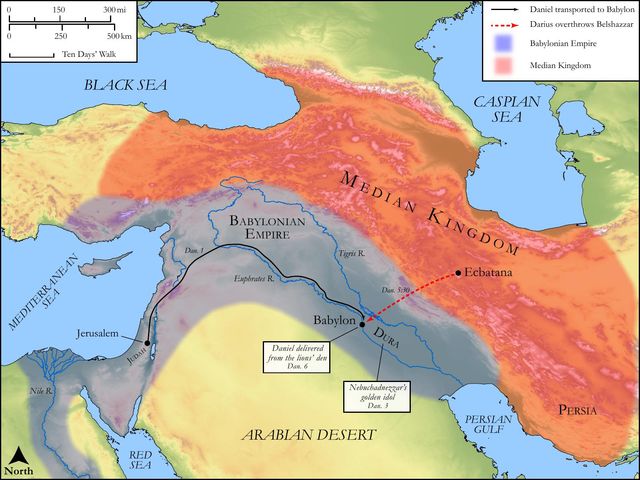
The historical backdrop for Daniel 2:28 is the opulent and powerful Neo-Babylonian Empire during the reign of Nebuchadnezzar II (c. 605-562 BC). Babylon was at the zenith of its power, having conquered Judah and exiled many of its people, including Daniel and his three friends, to its capital. This ancient metropolis was renowned for its advanced civilization, monumental architecture (like the Hanging Gardens and the Ishtar Gate), and its deeply ingrained religious practices, particularly astrology, divination, and various forms of magic. Kings like Nebuchadnezzar wielded absolute, unquestionable authority, and their decrees were final, often enforced with swift and brutal consequences, as seen in his threat to execute all the wise men. In this setting, Daniel, a Jewish exile and a servant of the one true God, stands as a stark contrast to the Babylonian court's spiritual advisors. His ability to reveal the king's dream and its meaning, when all others failed, powerfully demonstrates the supremacy of the God of Israel over the pantheon of Babylonian deities and the limitations of their human-derived wisdom, even in the very heart of the world's most formidable empire.
Key Themes
ShowHideDaniel 2:28 introduces and reinforces several crucial themes that resonate throughout the book of Daniel and biblical prophecy. Foremost is the theme of Divine Sovereignty and Revelation, emphasizing that God alone is the ultimate source of all knowledge and the exclusive revealer of hidden things, especially concerning the future. Unlike the powerless human astrologers and magicians, the "God in heaven" knows and makes known what is to come, a truth powerfully affirmed in Amos 3:7. Another significant theme is God's Control Over History, as the phrase "maketh known to the king Nebuchadnezzar what shall be in the latter days" underscores God's active orchestration and foretelling of historical events, demonstrating His absolute control over human kingdoms and destinies. This dream is not a random occurrence but a divinely ordained message about future dispensations. Furthermore, the verse introduces the Prophecy of the "Latter Days," a critical prophetic term referring to the distant future, often encompassing the end times or the period leading up to the establishment of God's eternal kingdom. This signifies that the dream's scope extends far beyond Nebuchadnezzar's immediate reign, encompassing successive world empires and culminating in God's ultimate plan for humanity, as seen throughout Daniel 2. Finally, Daniel's immediate attribution of credit to God highlights the theme of Humility and Giving Glory to God, a hallmark of true servants of God who recognize that all wisdom and power originate from above.
Exposition and Analysis
ShowHideKey Word Analysis
ShowHideThis Aramaic term, corresponding to the Hebrew Eloah, refers to the singular, transcendent God of Israel. In the context of the polytheistic Babylonian court, where numerous deities were worshipped, Daniel's declaration of "a God in heaven" is a powerful assertion of monotheism and the absolute supremacy of Yahweh over all other gods. It underscores that the source of this profound revelation is not one of Babylon's many idols, but the one true God who reigns from the celestial realm, possessing ultimate authority and knowledge.
This Aramaic verb, corresponding to the Hebrew galah, means "to denude," "to exile," or, in this context, "to reveal" or "to uncover." It signifies the act of making known what was previously hidden, secret, or inaccessible. Daniel's use of this word emphasizes God's unique and exclusive capacity to disclose profound mysteries that are utterly beyond human comprehension or discovery, directly contrasting with the utter failure of Nebuchadnezzar's wise men to "reveal" the dream.
Derived from an unused root that likely means "to attenuate" or "to hide," this Aramaic word refers to a mystery or hidden knowledge. Daniel employs this term to describe the profound, concealed truths embedded within Nebuchadnezzar's dream, which only God possesses the power and knowledge to unveil. The very use of "secrets" highlights the divine origin and exclusive nature of the information being revealed, setting it apart from any humanly attainable wisdom or insight, and emphasizing its supernatural source.
Verse Breakdown
ShowHide"But there is a God in heaven"
This opening clause immediately establishes a stark and powerful contrast with the preceding narrative, where all human wisdom, pagan divination, and worldly power have demonstrably failed. Daniel asserts the existence of a singular, sovereign God whose dwelling place is "in heaven," signifying His transcendence, omnipotence, and ultimate authority over all earthly affairs and human knowledge. This declaration serves as the foundational premise for the divine intervention that is about to unfold, positioning God as the sole solution to the king's dilemma.
"that revealeth secrets, and maketh known to the king Nebuchadnezzar what shall be in the latter days."
This is the core assertion of God's unique power and active engagement. God is not merely a distant, passive deity but an active agent who "revealeth secrets"—unveiling profound mysteries that are otherwise inaccessible to human minds. Crucially, He "maketh known" these hidden truths specifically to King Nebuchadnezzar, a powerful pagan ruler, demonstrating God's sovereign control over even gentile kings and His willingness to communicate His plans through them. The phrase "what shall be in the latter days" introduces the vast prophetic scope of the dream, indicating that its revelation pertains to events far into the future, encompassing the entire course of world history and the unfolding of God's ultimate plan.
"Thy dream, and the visions of thy head upon thy bed, are these;"
With this concluding clause, Daniel directly addresses the king, affirming with divine authority that the revelation he has received precisely corresponds to the king's forgotten dream and the accompanying mental "visions" experienced during his sleep. This direct and accurate confirmation validates Daniel's claim and prepares the king for the detailed interpretation that will follow, leaving no doubt that God has indeed provided the exact, precise information Nebuchadnezzar sought, thereby establishing Daniel's credibility and God's undeniable power.
Literary Devices
ShowHideDaniel 2:28 employs several significant literary devices that amplify its theological message. The most prominent is Contrast, immediately established by the opening conjunction "But." This word sharply contrasts the utter impotence and failure of the Babylonian wise men, who could not reveal the king's dream, with the omnipotence and unique ability of "a God in heaven" who "revealeth secrets." This highlights the vast chasm between finite human limitations and infinite divine capability. There is also a strong element of Attribution, as Daniel immediately and unequivocally attributes the source of the revelation solely to God, not to his own wisdom, intellect, or spiritual prowess. This serves to glorify God and underscore Daniel's profound humility and reliance on divine power. The phrase "what shall be in the latter days" functions as Foreshadowing, hinting at the extensive and far-reaching prophetic content that will be unveiled in the subsequent verses, setting the expectation for a grand sweep of historical revelation that extends far beyond Nebuchadnezzar's immediate reign. Finally, the entire verse is a Declarative Statement, delivered with unwavering confidence and authority, stemming not from Daniel's personal conviction but from the absolute certainty of divine revelation.
Theological and Thematic Connections
ShowHideDaniel 2:28 powerfully articulates the profound theological truth of God's absolute sovereignty over all of creation, including the intricate tapestry of human history and the unfolding of time itself. It asserts that God is not a passive observer but an active, omniscient participant who not only knows the future with perfect clarity but also orchestrates and reveals it according to His immutable divine purpose. This stands in stark contrast to the limited knowledge, inherent powerlessness, and often deceptive claims of human beings and false gods. The singular ability to "reveal secrets" and make known "what shall be in the latter days" is an exclusive attribute of the one true God, demonstrating His unparalleled omniscience, omnipotence, and ultimate control. This foundational truth provides immense comfort and assurance to believers, reminding us that even amidst the tumultuous rise and fall of earthly kingdoms and the apparent chaos of world events, God's ultimate plan remains firmly and securely in His sovereign control.
Reflection and Application
ShowHideDaniel 2:28 offers profound encouragement and vital practical guidance for believers navigating the complexities of contemporary life. In a world often characterized by overwhelming uncertainty, pervasive chaos, and a deep-seated sense of being out of control, this verse serves as a powerful reassurance that there is indeed "a God in heaven" who is eternally sovereign over all things. He knows the end from the beginning, and He is actively, purposefully working out His divine plan through the entire course of human history. This truth invites us to cultivate a deep, abiding trust in His providence, even when circumstances seem utterly overwhelming, incomprehensible, or contrary to our expectations. Furthermore, Daniel's immediate and unequivocal attribution of glory to God models a vital spiritual discipline: profound humility. Any wisdom, insight, or ability we possess comes as a gracious gift from Him, and our primary response should be to acknowledge His grace and give Him all the credit, deflecting praise from ourselves. This verse also calls us to prioritize and seek divine wisdom above mere human knowledge, reminding us that true understanding of life's deepest mysteries and the future comes from God's direct revelation, not from worldly sources, human intellect, or speculative theories. Living with this eternal perspective, knowing that God reveals "what shall be in the latter days," empowers us to navigate present challenges with unwavering hope, confident that all earthly kingdoms are temporary and destined to pass away, while God's eternal kingdom is everlasting and unshakeable.
Questions for Reflection
ShowHideFAQ
ShowHideWhy did Nebuchadnezzar forget his dream, and why was it so important that Daniel reveal both the dream and its interpretation?
ShowHideNebuchadnezzar's inability to recall his dream, coupled with his extraordinary demand that his wise men not only interpret it but also tell him what it was, served several crucial divine purposes. First, it powerfully highlighted the absolute impotence and fraudulent nature of the Babylonian court's astrologers, enchanters, and sorcerers. Their collective failure to even know the dream exposed their claims of supernatural insight as utterly baseless, demonstrating that their power was limited, deceptive, and not truly divine. Second, by requiring Daniel to state the dream's content before interpreting it, God ensured that when the dream was revealed, there could be no doubt whatsoever about the true, divine source of the revelation. This prevented any human claim to its knowledge or interpretation, thereby ensuring that all glory and credit for the profound insight went solely to the "God in heaven." This dramatic setup powerfully underscored God's unique sovereignty, His ability to intervene directly in human affairs, and His capacity to reveal hidden truths, contrasting sharply with the false gods and limited wisdom of Babylon.
What is the significance of the phrase "latter days" in Daniel 2:28?
ShowHideThe phrase "latter days" (Aramaic: aharit yomayya) is a crucial prophetic idiom used throughout the Old Testament. In the context of Daniel 2:28, it refers to a distant future period, extending far beyond Nebuchadnezzar's immediate reign and the lifespan of the Babylonian Empire. It signifies the unfolding of God's ultimate purposes for human history, leading inexorably to the establishment of His eternal kingdom. This phrase indicates that the dream's scope is not merely about Nebuchadnezzar's empire but encompasses a grand sweep of successive world empires and their eventual culmination. In broader biblical prophecy, "latter days" or "last days" often points to the eschatological period, including the time of the Messiah's coming, the outpouring of the Holy Spirit, and the final consummation of God's redemptive plan, as seen in Acts 2:17 where Peter quotes Joel. It emphasizes God's long-term, sovereign control over historical epochs.
Christ-Centered Fulfillment
ShowHideDaniel 2:28, with its profound declaration of a "God in heaven that revealeth secrets" concerning "what shall be in the latter days," finds its ultimate and most profound fulfillment in the person and work of Jesus Christ. He is the preeminent and final revelation of God to humanity, the very Word made flesh, through whom God has spoken most fully and definitively (John 1:14, Hebrews 1:1-3). The "secrets" that God reveals are ultimately centered on His magnificent redemptive plan for humanity, a mystery hidden for ages but now fully disclosed in Christ (Colossians 1:26-27). The "latter days" to which Daniel points are precisely the era inaugurated by Christ's first coming, culminating in His glorious second advent and the complete establishment of His eternal kingdom. Jesus Himself is the "stone cut out without hands" from Daniel 2:34 and Daniel 2:45, which strikes the feet of the great image, signifying the decisive demise of all earthly kingdoms and the unstoppable rise of God's indestructible kingdom (Daniel 2:44). Through Christ, God not only reveals the future but actively brings it to pass, establishing a spiritual kingdom that will never be destroyed and will ultimately fill the whole earth, culminating in His glorious return and the full, righteous manifestation of His reign.