


John 17:25
- πάτερpaterFatherG3962N-VSM-TNoun Vocative Singular Masculine Person Gentilic
- δίκαιεdikaierighteousG1342A-VSMAdjective Vocative Singular Masculine
- καὶkaialthoughG2532CONJConjunction
- ὁhotheG3588T-NSMDefinite article Nominative Singular Masculine
- κόσμοςkosmosworldG2889N-NSMNoun Nominative Singular Masculine
- σεseYouG4771P-2ASPersonal pronoun Accusative 2nd Singular
- οὐκouknotG3756PRT-NNegative Particle Negative
- ἔγνωegnōhas knownG1097V-2AAI-3SVerb 2nd Aorist Active Indicative 3rd Singular
- ἐγὼegōI myselfG1473P-1NSPersonal pronoun Nominative 1st Singular
- δέdenowG1161CONJConjunction
- σεseYouG4771P-2ASPersonal pronoun Accusative 2nd Singular
- ἔγνωνegnōnhave knownG1097V-2AAI-1SVerb 2nd Aorist Active Indicative 1st Singular
- καὶkaiandG2532CONJConjunction
- οὗτοιhoutoitheseG3778D-NPMDemonstrative pronoun Nominative Plural Masculine
- ἔγνωσανegnōsanhave knownG1097V-2AAI-3PVerb 2nd Aorist Active Indicative 3rd Plural
- ὅτιhotithatG3754CONJConjunction
- σύsuYou yourselfG4771P-2NSPersonal pronoun Nominative 2nd Singular
- μεmeMeG3165P-1ASPersonal pronoun Accusative 1st Singular
- ἀπέστειλας·apesteilassentG649V-AAI-2SVerb Aorist Active Indicative 2nd Singular
English is a literal word-by-word gloss of the Greek, not the KJV's wording. Why?
This is the original text the KJV's translators worked from — each Greek word with its own literal English meaning in this verse, prepared by scholars at Tyndale House, Cambridge. The KJV translates whole sentences, not word by word, so its wording differs: one Greek word can become several English words, and the KJV may choose “charity” where the gloss reads “love”. Both are faithful — they answer different questions. For the KJV's own rendering, switch to the KJV text.
Details
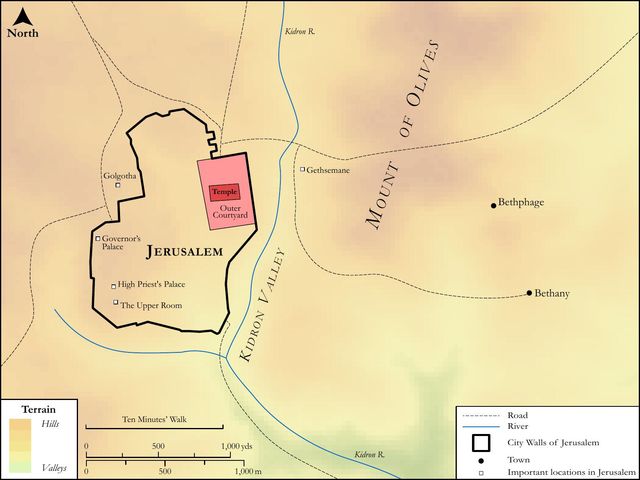
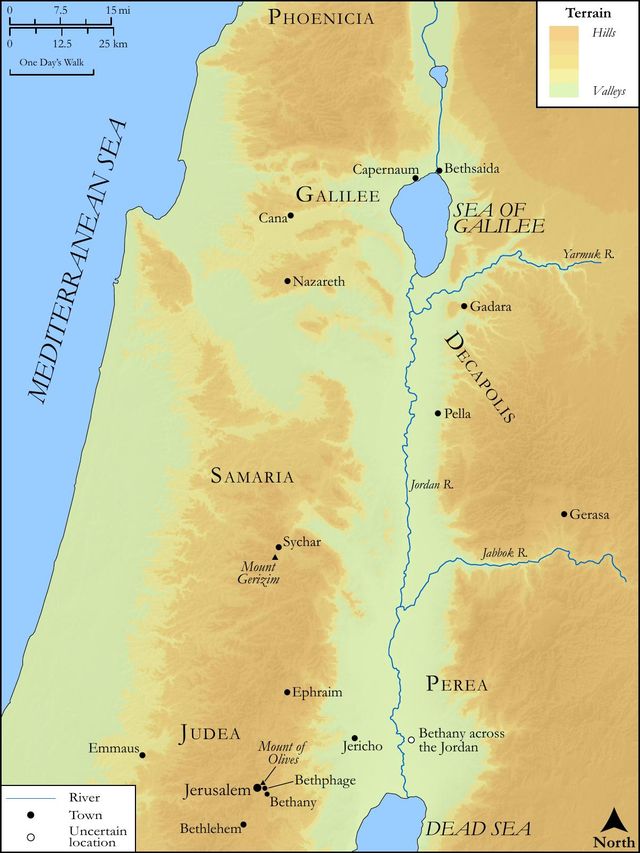
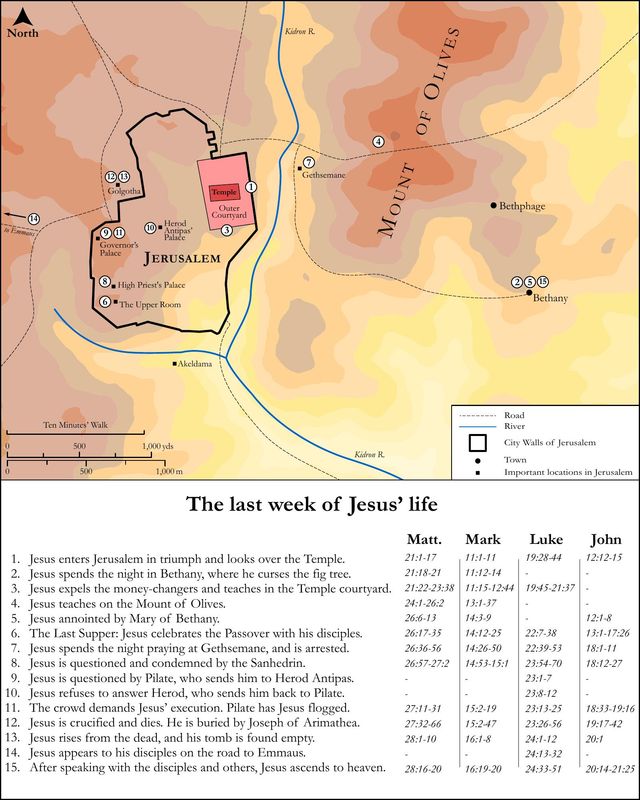
See on the biblical-era map
Study this verse
Public-domain commentary
Matthew Henry
From his Commentary on the Whole Bible. Henry comments on passages, not single verses — this entry covers John 17:24–26. His four-level outline is real structure in the source text, so it is rendered as structure.
Here is, I. A petition for the glorifying of all those that were given to Christ (Joh 17:24), not only these apostles, but all believers: Father, I will that they may be with me. Observe,
1.The connection of this request with those foregoing. He had prayed that God would preserve, sanctify, and unite them; and now he prays that he would crown all his gifts with their glorification. In this method we must pray, first for grace, and then for glory (Psa 84:11); for in this method God gives. Far be it from the only wise God to come under the imputation either of that foolish builder who without a foundation built upon the sand, as he would if he should glorify any whom he has not first sanctified; or of that foolish builder who began to build and was not able to finish, as he would if he should sanctify any, and not glorify them.
2.The manner of the request: Father, I will. Here, as before, he addresses himself to God as a Father, and therein we must do likewise; but when he says, thelō - I will, he speaks a language peculiar to himself, and such as does not become ordinary petitioners, but very well became him who paid for what he prayed for.
(1.)This intimates the authority of his intercession in general; his word was with power in heaven, as well as on earth. He entering with his own blood into the holy place, his intercession there has an uncontrollable efficacy. He intercedes as a king, for he is a priest upon his throne (like Melchizedek), a king-priest.
(2.)It intimates his particular authority in this matter; he had a power to give eternal life (Joh 17:2), and, pursuant to that power, he says, Father, I will. Though now he took upon him the form of a servant, yet that power being to be most illustriously exerted when he shall come the second time in the glory of a judge, to say, Come ye blessed, having that in his eye, he might well say, Father, I will.
3.The request itself - that all the elect might come to be with him in heaven at last, to see his glory, and to share in it. Now observe here,
(1.)Under what notion we are to hope for heaven? wherein does that happiness consist? three things make heaven: - [1.] It is to be where Christ is: Where I am; in the paradise whither Christ's soul went at death; in the third heavens whither his soul and body went at his ascension: - Where I am, am to be shortly, am to be eternally. In this world we are but in transitu - on our passage; there we truly are where we are to be for ever; so Christ reckoned, and so must we. [2.] It is to be with him where he is; this is not tautology, but intimates that we shall not only be in the same happy place where Christ is, but that the happiness of the place will consist in his presence; this is the fulness of its joy. The very heaven of heaven is to be with Christ, there in company with him, and communion with him, Phi 1:23. [3.] It is to behold his glory, which the Father has given him. Observe, First, The glory of the Redeemer is the brightness of heaven. That glory before which angels cover their faces was his glory, Joh 12:41. The Lamb is the light of the new Jerusalem, Rev 21:23. Christ will come in the glory of his Father, for he is the brightness of his glory. God shows his glory there, as he does his grace here, through Christ. "The Father has given me this glory," though he was as yet in his low estate; but it was very true, and very near. Secondly, The felicity of the redeemed consists very much in the beholding of this glory; they will have the immediate view of his glorious person. I shall see God in my flesh, Job 19:26, Job 19:27. They will have a clear insight into his glorious undertaking, as it will be then accomplished; they will see into those springs of love from which flow all the streams of grace; they shall have an appropriating sight of Christ's glory (Uxor fulget radiis mariti - The wife shines with the radiance of her husband), and an assimilating sight: they shall be changed into the same image, from glory to glory.
(2.)Upon what ground we are to hope for heaven; no other than purely the mediation and intercession of Christ, because he hath said, Father, I will. Our sanctification is our evidence, for he that has this hope in him purifies himself; but it is the will of Christ that is our title, by which will we are sanctified, Heb 10:10. Christ speaks here as if he did not count his own happiness complete unless he had his elect to share with him in it, for it is the bringing of many sons to glory that makes the captain of our salvation perfect, Heb 2:10.
4.The argument to back this request: for thou lovedst me before the foundation of the world. This is a reason,
(1.)Why he expected this glory himself. Thou wilt give it to me, for thou lovedst me. The honour and power given to the Son as Mediator were founded in the Father's love to him (Joh 5:20): the Father loves the Son, is infinitely well pleased in his undertaking, and therefore has given all things into his hands; and, the matter being concerted in the divine counsels from eternity, he is said to love him as Mediator before the foundation of the world. Or,
(2.)Why he expected that those who were given to him should be with him to share in his glory: "Thou lovedst me, and them in me, and canst deny me nothing I ask for them."
II.The conclusion of the prayer, which is designed to enforce all the petitions for the disciples, especially the last, that they may be glorified. Two things he insists upon, and pleads: -
1.The respect he had to his Father, Joh 17:25. Observe,
(1.)The title he gives to God: O righteous Father. When he prayed that they might be sanctified, he called him holy Father; when he prays that they may be glorified, he calls him righteous Father; for it is a crown of righteousness which the righteous Judge shall give. God's righteousness was engaged for the giving out of all that good which the Father had promised and the Son had purchased.
(2.)The character he gives of the world that lay in wickedness: The world has not known thee. Note, Ignorance of God overspreads the world of mankind; this is the darkness they sit in. Now this is urged here,
[1.]To show that these disciples need the aids of special grace, both because of the necessity of their work - they were to bring a world that knew not God to the knowledge of him; and also, because of the difficulty of their work - they must bring light to those that rebelled against the light; therefore keep them.
[2.]To show that they were qualified for further peculiar favours, for they had that knowledge of God which the world had not.
(3.)The plea he insists upon for himself: But I have known thee. Christ knew the Father as no one else ever did; knew upon what grounds he went in his undertaking, knew his Father's mind in every thing, and therefore, in this prayer, came to him with confidence, as we do to one we know. Christ is here suing out blessings for those that were his; pursuing this petition, when he had said, The world has not known thee, one would expect it should follow, but they have known thee; no, their knowledge was not to be boasted of, but I have known thee, which intimates that there is nothing in us to recommend us to God's favour, but all our interest in him, and intercourse with him, result fRom. and depend upon, Christ's interest and intercourse. We are unworthy, but he is worthy.
(4.)The plea he insists upon for his disciples: And they have known that thou hast sent me; and,
[1.]Hereby they are distinguished from the unbelieving world. When multitudes to whom Christ was sent, and his grace offered, would not believe that God had sent him, these knew it, and believed it, and were not ashamed to own it. Note, To know and believe in Jesus Christ, in the midst of a world that persists in ignorance and infidelity, is highly pleasing to God, and shall certainly be crowned with distinguishing glory. Singular faith qualifies for singular favours.
[2.]Hereby they are interested in the mediation of Christ, and partake of the benefit of his acquaintance with the Father: "I have known thee, immediately and perfectly; and these, though they have not so known thee, nor were capable of knowing thee so, yet have known that thou hast sent me, have known that which was required of them to know, have known the Creator in the Redeemer." Knowing Christ as sent of God, they have, in him, known the Father, and are introduced to an acquaintance with him; therefore, "Father, look after them for my sake."
2.The respect he had to his disciples (Joh 17:26): "I have led them into the knowledge of thee, and will do it yet more and more; with this great and kind intention, that the love wherewith thou hast loved me may be in them, and I in them." Observe here,
(1.)What Christ had done for them: I have declared unto them thy name.
[1.]This he had done for those that were his immediate followers. All the time that he went in and out among them, he made it his business to declare his Father's name to them, and to beget in them a veneration for it. The tendency of all his sermons and miracles was to advance his Father's honours, and to spread the knowledge of him, Joh 1:18.
[2.]This he had done for all that believe on him; for they had not been brought to believe if Christ had not made known to them his Father's name. Note, First, We are indebted to Christ for all the knowledge we have of the Father's name; he declares it, and he opens the understanding to receive that revelation. Secondly, Those whom Christ recommends to the favour of God he first leads into an acquaintance with God.
(2.)What he intended to do yet further for them: I will declare it. To the disciples he designed to give further instructions after his resurrection (Act 1:3), and to bring them into a much more intimate acquaintance with divine things by the pouring out of the Spirit after his ascension; and to all believers, into whose hearts he hath shined, he shines more and more. Where Christ has declared his Father's name, he will declare it; for to him that hath shall be given; and those that know God both need and desire to know more of him. This is fitly pleaded for them: "Father, own and favour them, for they will own and honour thee."
(3.)What he aimed at in all this; not to fill their heads with curious speculations, and furnish them with something to talk of among the learned, but to secure and advance their real happiness in two things: -
[1.]Communion with God: "Therefore I have given them the knowledge of thy name, of all that whereby thou hast made thyself known, that thy love, even that wherewith thou hast loved me, may be, not only towards them, but in them;" that is, First, "Let them have the fruits of that love for their sanctification; let the Spirit of love, with which thou hast filled me, be in them." Christ declares his Father's name to believers, that with that divine light darted into their minds a divine love may be shed abroad in their hearts, to be in them a commanding constraining principle of holiness, that they may partake of a divine nature. When God's love to us comes to be in us, it is like the virtue which the loadstone gives the needle, inclining it to move towards the pole; it draws out the soul towards God in pious and devout affections, which are as the spirits of the divine life in the soul. Secondly, "Let them have the taste and relish of that love for their consolation; let them not only be interested in the love of God, by having God's name declared to them, but, by a further declaration of it, let them have the comfort of that interest; that they may not only know God, but know that they know him," Jo1 2:3. It is the love of God thus shed abroad in the heart that fills it with joy, Rom 5:3, Rom 5:5. This God has provided for, that we may not only be satisfied with his loving kindness, but be satisfied of it; and so may live a life of complacency in God and communion with him; this we must pray for, this we must press after; if we have it, we must thank Christ for it; if we want it, we may thank ourselves.
[2.]Union with Christ in order hereunto: And I in them. There is no getting into the love of God but through Christ, nor can we keep ourselves in that love but by abiding in Christ, that is, having him to abide in us; nor can we have the sense and apprehension of that love but by our experience of the indwelling of Christ, that is, the Spirit of Christ in our hearts. It is Christ in us that is the only hope of glory that will not make us ashamed, Col 1:27. All our communion with God, the reception of his love to us with our return of love to him again, passes through the hands of the Lord Jesus, and the comfort of it is owing purely to him. Christ had said but a little before, I in them (Joh 17:23), and here it is repeated (though the sense was complete without it), and the prayer closed with it, to show how much the heart of Christ was sent upon it; all his petitions centre in this, and with this the prayers of Jesus, the Son of David, are ended: "I in them; let me have this, and I desire no more." It is the glory of the Redeemer to dwell in the redeemed: it is his rest for ever, and he has desired it. Let us therefore make sure our union with Christ, and then take the comfort of his intercession. This prayer had an end, but that he ever lives to make.
Historical interpretation
Nine Centuries of Reception
9 surviving comments on this verse. Each one is dated, so this reads as a timeline rather than a list.
Select a marker to jump to its quote. Markers stagger vertically where authors wrote within a few decades of each other.
And that He who alone is God is also alone and truly righteous, our Lord in the Gospel itself shall testify, saying "Father, I will that they also whom Thou hast given Me be with Me where I am; that they may behold My glory, which Thou hast given Me: For Thou lovedst Me before the foundation of the world. O righteous Father, the world hath not known Thee: but I have known Thee, and these have known that Thou hast sent Me. And I have declared to them Thy name, and will declare it." This is He "that visits the iniquities of the fathers upon the children, to them that hate Him, and shows mercy to those that love Him."
"And these have known that Thou hast sent Me." Seest thou that He alludeth to those, who said that He was not from God, and all is finally summed up to meet this argument?
"O righteous Father, the world hath not known Thee." What meaneth this? What connection hath it? He here showeth that no man knoweth God, save those only who have come to know the Son. And what He saith is of this kind: "I wished all to be so, yet they have not known Thee, although they had no complaint against Thee." For this is the meaning of, "O righteous Father." And here He seemeth to me to speak these words, as vexed that they would not know One so just and good. For since the Jews had said that they knew God, but that He knew Him not, at this He aimeth, saying, "For Thou lovedst Me before the foundation of the world"; thus putting together a defense against the accusations of the Jews. For how could He who had received glory, who was loved before the foundation of the world, who desired to have them as witnesses of that glory, how could He be opposed to the Father? "This then is not true which the Jews say, that they know Thee, and that I know Thee not; on the contrary, I know Thee, and they have not known Thee."
(Tr. cx. 4) Nor is this said, however, as if to mean that the Father was not in us, or we in the Father. He only means to say, that He is Mediator between God and man. And what He adds, That they may be made perfect in one, shows that the reconciliation made by this Mediator, was carried on even to the enjoyment of everlasting blessedness. So what follows, That the world may know that Thou hast sent Me, must not be taken to mean the same as the words just above, That the world may believe. For as long as we believe what we do not see, we are not yet made perfect, as we shall be when we have merited to see what we believe. So that when He speaks of their being made perfect, we are to understand such a knowledge as shall be by sight, not such as is by faith. These that believe are the world, not a permanent enemy, but changed from an enemy to a friend; as it follows: And hast loved them, as Thou hast loved Me. The Father loves us in the Son, because He elected us in Him. These words do not prove that we are equal to the Only Begotten Son; for this mode of expression, as one thing so another, does not always signify equality. It sometimes only means, because one thing, therefore another. And this is its meaning here: Thou hast loved them, as Thou hast loved Me, i. e. Thou hast loved them, because Thou hast loved Me. There is no reason for God loving His members, but that He loves him. But since He hateth nothing that He hath made, who can adequately express how much He loves the members of His Only Begotten Son, and still more the Only Begotten Himself.
(Tr. cxi. 1) These are they whom He has received from the Father, whom He also chose out of the world; as He saith at the beginning of this prayer, Thou hast given Him power over all flesh, i. e. all mankind, That He should give eternal life to as many as Thou hast given Him. Wherein He shows that He had received power over all men, to deliver whom He would, and to condemn whom He would. Wherefore it is to all His members that He promises this reward, that where He is, they may be also. Nor can that but be done, which the Almighty Son saith that He wishes to the Almighty Father: for the Father and the Son have one will, which, if weakness prevent us from comprehending, piety must believe. Where I am: so far as pertains to the creature, He was made of the seed of David according to the flesh: He might say, Where I am, meaning where He was shortly to be, i. e. heaven. In heaven then, He promises us, we shall be. For thither was the form of a servant raised, which He had taken from the Virgin, and there placed on the right hand of God.
(Tr. cxi) But as respects the form of God, wherein He is equal to the Father, if we understand these words, that they may be with Me where I am, with reference to that, then away with all bodily ideas, and enquire not where the Son, Who is equal to the Father, is: for no one hath discovered where He is not. Wherefore it was not enough for Him to say, I will that they may be where I am, but He adds, with Me. For to be with Him is the great good: even the miserable can be where He is, but only the happy can be with Him. And as in the ease of the visible, though very different be whatever example we take, a blind man will serve for one, as a blind man though He is where the light is, yet is not himself with the light, but is absent from it in its presence, so not only the unbelieving, but the believing, though they cannot be where Christ is not, yet are not themselves with Christ by sight: by faith we cannot doubt but that a believer is with Christ. But here He is speaking of that sight wherein we shall see Him as He is; as He adds, That they may behold My glory, which Thou hast given Me. That they may behold, He says, not, that they may believe. It is the reward of faith which He speaks of, not faith itself.
(Tr. cxi. 3) When then we shall have seen the glory which the Father gave the Son, though by this glory we do not understand here, that which He gave to the equal Son when He begat Him, but that which He gave to the Son of man, after His crucifixion; then shall the judgment be, then shall the wicked be taken away, that he see not the glory of the Lord: what glory but that whereby He is God? If then we take their words, That they may be with Me where I am, to be spoken by Him as Son of God, in that case they must have a higher meaning, viz. that we shall be in the Father with Christ. As He immediately adds, That they may see My glory which Thou hast given Me; and then, Which Thou gavest Me before the foundation of the world. For in Him He loved us before the foundation of the world, and then predestined what He should do at the end of the world.
(Tr. cxi. 5) Or thus; What is to know Him, but eternal life, which He gave not to a condemned but to a reconciled world? For this reason the world hath not known Thee; because Thou art just, and hast punished them with this ignorance of Thee, in reward for their misdeeds. And for this reason the reconciled world knows Thee, because Thou art merciful, and hast vouchsafed this knowledge, not in consequence of their merits, but of thy grace. It follows: But I have known Thee. He is God the fountain of grace by nature, man of the Holy Ghost and Virgin by grace ineffable. Then because the grace of God is through Jesus Christ, He says, And they have known Me, i. e. the reconciled world have known Me, by grace, forasmuch as Thou hast sent Me. And I have made known Thy name to them by faith, and will make it known by sight: that the love wherewith Thou hast loved Me may be in them. (2 Tim. 4:7) The Apostle uses a like phrase, I have fought a good fight, by a good fight being the more common form. The love wherewith the Father loveth the Son in us, can only be in us because we are His members, and we are loved in Him when He is loved wholly, i. e. both head and body. And therefore He adds, And I in them; He is in us, as in His temple, we in Him as our Head.
"O righteous Father," He saith, "the world hath not known Thee." Just because Thou art righteous it hath not known Thee. It is as that world which has been predestined to condemnation really deserved, that it hath not known Him; while the world which He hath reconciled unto Himself through Christ hath known Him not of merit, but by grace. For what else is the knowing of Him, but eternal life which, while He undoubtedly withheld it from the condemned world, He bestowed on the reconciled. On that very account, therefore, the world hath not known Thee, because Thou art righteous, and hast rendered unto it according to its deserts, that it should not know Thee: while on the same account the reconciled world hath known Thee, because Thou art merciful, and, not for any merit of its own, but by grace, hast supplied it with the needed help to know Thee. And then there follows, "But I have known Thee." He is the Fountain of grace, who is by nature God, and, by grace ineffable, man also of the Holy Spirit and the Virgin: and then on His own behalf, because the grace of God is through Jesus Christ our Lord, He adds, "And these have known that Thou hast sent me." Such is the reconciled world. But it is because Thou hast sent me that they have known: by grace, therefore, have they known.
He here calls the Father righteous, where He might have used another title. For He is holy, pure, undefiled, Maker and Creator of the world, and whatever else befits the Ruler of the Universe. It is very desirable, then, to inquire why Christ entitled Him righteous, when He might have given Him another name. It will, then, be productive to us of much profit, if we do not allow any passages of Holy Writ to escape us. When, then, Christ desired us to be sanctified by the favour of His Father, fulfilling Himself the character of Advocate and Mediator, He made His intercession for us in the words: Holy Father, keep them in Thy Truth; meaning by Truth nothing but His own Spirit, by Whom He secureth our souls, sealing them in His Likeness, and edifying them, as it were, by His ineffable power, so that courage is undaunted; and exhorting us to manifest unrestrained zeal in abundant good works, and to let nothing stand in our way, or avail to call us back, that so we may hasten eagerly on our course to do God's pleasure, and may set at naught the manifold inventions of the devil and the pleasures of the world. For they who have once been sealed by the Holy Spirit, and who receive into their minds the earnest of His grace, have their hearts fortified, as they are girded with power from on high. Christ, therefore, besought the Father that He would sanctify us, in order that we might enjoy blessings so acceptable. Here, too, I think, He seems to have some such idea in His mind. For besides what He said about our need of sanctification from the Father, He also added these words concerning us: And the glory which Thou hast given Me I have given unto them; that they may be one, even as We are One; for Thou lovedst them, even as Thou lovedst Me; and again: Father, those whom Thou hast given Me, I will that where I am, they also may be with Me.
After thus speaking, He straightway calls the Father righteous, and with reason; for by His approval and consent the Son became Man, that He might endow the nature of man, which was created for good works, with sanctification through the Spirit, and union with God, and with an abiding place in the mansions above, there to live and reign with Him. For God did not create man at the beginning to work wickedness; but his nature was perverted into vice by the impious wiles of the devil, and was led astray from its guidance of old by the hand of God, and, as it were, upheaved from its foundation. Truly, it well beseemed the righteous Father to lift up again that human nature which had been cast down through the devil's malice, and to establish in its former position that which had been unduly debased, and to rid it of the foulness of sin, and, as it were, transform it into its original image as it had been at first created, and also to subject the adversary that assaulted man and impiously dared to compass his ruin, that is, Satan, to the vengeance that was meet; though methinks any kind of chastisement were slight for him who exhibited such madness against God. Therefore He saith: O righteous Father----for Thou art righteous and good, and true is Thy judgment; for Thou hast sent down Me, Who am Thine own true Son, to the world to succour and renew it. But, alas for the blindness of the world! He says: For though Thou wert such as I have said, the world knew Thee not. For surely they should straightway have seen the loving-kindness of Thy judgment and Thy merciful Will, and should have hastened to welcome their Saviour, and have brought Him willing service.
Christ, then, held this discourse with the Father, offering up, as it were, thanks on our behalf and for our sake, inasmuch as He, in His righteousness, had vouchsafed salvation to those who had suffered through the devil's malice, and had doomed the devil to perdition. And the world, He says, that is, they who oppose the Divine message of the Gospel through their worldly-mindedness, have not learnt that the Father is righteous, for the god of this world hath blinded the minds of the unbelieving, as Paul says, that the light of the Gospel of the glory of Christ should not dawn upon them. But He bore witness to His own disciples that they knew and understood Him, and hereby He endows them once more with a great and enviable dignity. For He shows them to be far above all the humiliation and contumely of the world, through their knowledge of the Father, and clearly also through their confession that Christ was the Son. When, therefore, at the same time as the charge was brought against the world that it knew not the Father, that is, the true and living God, He bore witness to the disciples that they knew Him, is it not henceforth quite beyond dispute, that they were not of the world now that they had become Christ's, Who is above the world, according to the saying of Paul: Through which the world hath been crucified unto me, and I unto the world; who saith again concerning us: And they that are of Christ Jesus have crucified the flesh with the passions and the lusts thereof? When we say that the disciples were out of the world, we do not mean that they were absent so far as their bodies and position in space were concerned, for they appear as lights in the world, holding forth the Word of Life. We rather mean that, while they still walked upon earth, they were citizens of heaven; and that, bidding farewell to the lusts of the flesh, and lifting their minds high above all worldly desire, they had attained to an exceeding height of virtue, according to the saying in the Psalms: The mighty men of God have been exalted high above the earth. For they who have reached true manliness through God have put aside the grovelling thoughts of earth, and turned their minds heavenward; for this, I think, is the meaning of the word exalted. The world then, He says, O Father, knew not Thee in Thy righteousness. But I know Thee, for I am Thy Counsel and Wisdom. I regarded not the glory and Divine dignity that is Mine by Nature, but humbled Myself, and descended to human poverty, that I might save with Thine approval the race that had fallen away from kinship with Us. Though the world knew not this, yet were the disciples enriched with this knowledge, and verily comprehended that Thou hast sent Me; that is, that I have come to bring Thy purpose to a glorious issue, by rescuing the world which was in peril.
Christ calls the Father righteous with good reason. For by the Father's approval and consent the Son became man that he might endow human nature, which was created for good works, with sanctification through the Spirit, and union with God and an abiding place in the mansions above where he will live and reign with him. For God did not create humanity at the beginning to do wickedness. But their nature was perverted into vice by the impious schemes of the devil, and they were led astray from the guidance of old that they had received at the hands of God. They were uprooted, as it were, from its moorings. In truth, it seemed good to the righteous Father to lift up again that human nature that had been cast down through the devil's malice and to establish in its former position what had been unduly debased. He wanted to rid the human nature of the foulness of sin and, as it were, transform it into its original image as it had been at first created. He also sought to subject the adversary, that is, Satan, who assaulted humanity and impiously dared to make its ruin complete, to the vengeance that was fitting for him. Although I personally think any kind of chastisement was slight for someone who exhibited such madness against God. Therefore he says, "O righteous Father," "for you are righteous and good, and your judgment is true," because you have sent me down, your own true Son, to the world to help and renew it. But the world is blind to all this! He says, For though you are exactly as I described you, "the world did not know you." Otherwise they would have surely seen the loving-kindness of your judgment and your merciful will. In that case, they should have hurried to welcome their Savior and provided him with willing service.
(Moral.) What means then what the Truth saith above, No man hath ascended into heaven, but He that came down from heaven, even the Son of man which is in heaven. (John 3:13) Yet here is no discrepancy, for our Lord being the Head of His members, the reprobates excluded, He is alone with us. And therefore, we making one with Him, whence He came alone in Himself, thither He returns alone in us.
After then that He had prayed for believers, and promised them so many good things, another prayer follows worthy of His mercy and benignity: O righteous Father, the world hath not known Thee; as if to say, I would wish that all men obtained these good things, which I have asked for the believing. But inasmuch as they have not known Thee, they shall not obtain the glory and crown.
Continue studying John 17:25 across the web’s major study libraries — every link below opens this exact verse, chapter, or book on the destination site.
Read & Compare
 BibleGatewayThis verse in more than 200 translations and 70 languages.
 Bible.comThe YouVersion reader — hundreds of translations, reading plans, and highlights.
 ESV.orgCrossway's official English Standard Version reader.
 NET BibleThe NET translation with 60,000+ translators' notes on every rendering decision.
 STEP BibleTyndale House's free study tool — original text, vocabulary, and scholarly resources.
 BibliaLogos Bible Software's free web reader.
 USCCBThe New American Bible (Revised Edition) with the U.S. bishops' study notes.
Commentaries
 BibleHub CommentariesDozens of classic commentaries on this verse, gathered on one page.
 StudyLightMore than 100 commentary sets — the largest collection on the web.
 BibleRefPlain-English commentary on what this verse means, verse by verse.
 Enduring WordDavid Guzik's free commentary on this chapter, widely used by Bible teachers.
 Bible Study ToolsVerse commentary alongside Greek and Hebrew study aids.
Original Language & Research
- BibleHub InterlinearThe verse word by word — original language, transliteration, and English.
- BibleHub LexiconEvery word's original-language definition and Strong's entry.
 Blue Letter BibleDeep-study tools — Strong's numbers, concordance, and word studies.
 CNTR CollationThe earliest Greek manuscripts of this verse, collated letter by letter.
Sermons, Hymns & Audio


TrulyRandomVerse is not affiliated with these sites and doesn’t control their content. They’re linked because they’re genuinely useful.
Summary
John 17:25, a pivotal verse within Jesus' High Priestly Prayer, profoundly contrasts the world's spiritual ignorance of God with the intimate, experiential knowledge shared by the Father, the Son, and the disciples. It highlights the Father's inherent righteousness as the standard against which the world's lack of recognition is measured, while simultaneously affirming the unique relationship between the Father and the Son, and the salvific knowledge granted to those who believe in Jesus' divine mission.
Context
ShowHideLiterary Context
This verse is situated at the climax of Jesus' High Priestly Prayer in John 17, delivered just hours before His arrest, trial, and crucifixion. The prayer unfolds in three distinct movements: Jesus prays for His own glorification (verses 1-5), then for His immediate disciples (verses 6-19), and finally for all future believers (verses 20-26). Verse 25 falls within the final section, yet it serves as a bridge, reiterating the distinction between the "world" and "these" (the disciples) that has been a recurring theme throughout the prayer, particularly in Jesus' earlier petitions for the disciples' protection from the world (e.g., John 17:14-16). It underscores the spiritual divide that Jesus' ministry has created and the unique knowledge that defines His true followers.
Historical & Cultural Context
Jesus' prayer takes place in Jerusalem, likely in the upper room or en route to the Garden of Gethsemane, during the Passover week. The Jewish people, under Roman occupation, held diverse expectations for the Messiah—many anticipated a political liberator. However, Jesus consistently presented Himself as a spiritual King whose kingdom was "not of this world" (John 18:36). The "world" (Greek: kosmos) in John's Gospel often refers not merely to the physical earth or its inhabitants, but to humanity organized in opposition to God, operating under its own principles and values, often characterized by spiritual blindness and hostility towards divine truth. This spiritual ignorance was evident in the Jewish religious leaders' rejection of Jesus and the Roman authorities' indifference, reflecting a broader human condition of being "in darkness" (John 1:5).
Key Themes
ShowHideJohn 17:25 contributes significantly to several overarching themes in John's Gospel and this specific prayer. The theme of Divine Revelation and Knowledge is central, contrasting the world's inability to "know" God with the Son's perfect knowledge and the disciples' imparted knowledge through Him. This "knowing" (ginōskō) is not merely intellectual but deeply personal and experiential, leading to eternal life as stated in John 17:3. The Righteousness of God is emphasized by Jesus' address to the "righteous Father," affirming God's just character even in the face of the world's rebellion. This righteousness underpins God's plan of salvation and judgment. Furthermore, the verse highlights the Distinctiveness of the Believer, setting apart those who have recognized Jesus' divine commission from the unbelieving world. This distinction underscores the spiritual transformation and unique relationship with God that comes through faith in Christ, as Jesus prays for His followers to be "sanctified in the truth" (John 17:17).
Exposition and Analysis
ShowHideKey Word Analysis
ShowHideFrom the Strong's data, this word signifies "equitable (in character or act); by implication, innocent, holy (absolutely or relatively)." When Jesus addresses God as "O righteous Father," He is acknowledging God's perfect justice, moral integrity, and inherent holiness. This attribute is foundational to God's character and His dealings with humanity, providing the just basis for both judgment against the world's ignorance and the gracious provision of salvation through Christ.
This verb, a prolonged form of a primary verb, means "to 'know' (absolutely) in a great variety of applications and with many implications... to allow, be aware (of), feel, (have) know(-ledge), perceived, be resolved, can speak, be sure, understand." In John 17:25, ginōskō implies a deep, personal, experiential, and relational knowledge, not merely intellectual assent. Jesus' statement "I have known thee" speaks to His eternal, intimate communion with the Father. The disciples' "have known that thou hast sent me" indicates their saving, revelatory understanding of Jesus' divine origin and mission, distinguishing them from the world's spiritual blindness.
Derived from a root meaning "orderly arrangement," kosmos here refers to "the world (in a wide or narrow sense, including its inhabitants, literally or figuratively (morally))." In this context, it specifically denotes humanity alienated from God, operating under its own principles and values, and characterized by spiritual ignorance and rebellion against divine truth. This "world" is distinct from the Father, the Son, and those who have come to know God through Christ.
Verse Breakdown
ShowHide"O righteous Father,"
Jesus addresses God with an intimate yet profoundly respectful title. "Righteous" (díkaios) emphasizes God's perfect justice and moral uprightness, a critical attribute given the world's spiritual blindness and rebellion. This address sets the tone for the prayer's lament and affirmation, grounding it in God's unchangeable character.
"the world hath not known thee:"
This clause presents a stark contrast. The "world" (kosmos), representing humanity in its fallen, unredeemed state, is characterized by a fundamental lack of experiential and saving knowledge of God. This ignorance is not merely intellectual but a spiritual blindness and unwillingness to acknowledge God's truth and authority, leading to separation and condemnation.
"but I have known thee,"
This declarative statement asserts Jesus' unique and unparalleled relationship with the Father. His knowledge is not acquired but inherent, a perfect, eternal, and intimate communion that defines His divine Sonship. This distinguishes Him as the sole revealer of the Father, the one through whom true knowledge of God can be obtained.
"and these have known that thou hast sent me."
This final clause highlights the transformative impact of Jesus' ministry on His disciples. "These" (hoûtos) refers to the immediate followers present. Their "knowing" (ginōskō) is a saving, experiential understanding that Jesus is the divinely appointed Messiah, sent by the Father to accomplish His redemptive purposes. This recognition of Jesus' divine mission is the hallmark of true faith and distinguishes them from the unbelieving world.
Literary Devices
ShowHideThe verse employs several powerful literary devices. Contrast is paramount, sharply distinguishing the world's ignorance from the intimate knowledge shared by Jesus and His disciples. This antithesis underscores the spiritual divide between those who embrace divine revelation and those who reject it. Apostrophe is used in the direct address, "O righteous Father," lending a tone of reverence and intimacy to Jesus' prayer. The repetition of the verb "known" (ginōskō) serves as a form of Anaphora and Emphasis, highlighting the central theme of knowledge and its different manifestations: the world's lack of it, Jesus' perfect possession of it, and the disciples' reception of it. This repetition underscores the spiritual chasm between belief and unbelief and the salvific nature of true knowledge of God through Christ.
Theological and Thematic Connections
ShowHideJohn 17:25 profoundly articulates the core theological distinction between those who are "of God" and those who are "of the world." It underscores that true knowledge of God is not an intellectual exercise but a relational reality, mediated exclusively through Jesus Christ. The Father's righteousness ensures that while the world remains in ignorance due to its rebellion, those who respond to the Son's revelation are brought into a saving relationship. This verse emphasizes the exclusivity of Christ as the way to the Father and the profound privilege of those who have received His testimony, marking them as distinct from the prevailing spiritual darkness.
Reflection and Application
ShowHideJohn 17:25 invites us into the heart of Jesus' prayer, revealing His deep concern for His followers and the stark reality of the world's spiritual condition. For believers, this verse is a profound reminder of the immense privilege we have in knowing God through Christ. Our knowledge is not merely intellectual assent but an experiential, transformative relationship, distinguishing us from a world that often remains blind to divine truth. This should cultivate both gratitude for God's gracious revelation and a renewed sense of mission to embody and proclaim the truth of Christ to a world desperately in need of knowing the righteous Father. It challenges us to deepen our own experiential knowledge of God, not just through study, but through prayer, obedience, and intimate communion, so that our lives might bear witness to the One who sent Jesus.
Questions for Reflection
ShowHideFAQ
ShowHideWhat does Jesus mean by "the world hath not known thee"?
ShowHideWhen Jesus says "the world hath not known thee," He is referring to humanity in its fallen, unredeemed state, which is characterized by spiritual blindness and a fundamental lack of experiential, saving knowledge of God. This "world" (Greek: kosmos) often represents the prevailing human system and values that are alienated from God, unable or unwilling to recognize His truth, His righteousness, or His plan of salvation. This ignorance is not merely a lack of information but a deep-seated spiritual rebellion that prevents true communion with the Father, as seen in John 3:19-20.
Christ-Centered Fulfillment
ShowHideJohn 17:25 finds its ultimate fulfillment in Christ as the exclusive mediator of true knowledge of God. The world's ignorance of the Father is overcome only through the Son, who perfectly "has known" Him. Jesus' incarnation, life, death, and resurrection are the very means by which the "righteous Father" is revealed to humanity. He is the image of the invisible God (Colossians 1:15), the one who has "made Him known" (John 1:18). The disciples' knowledge that the Father "hast sent me" is the foundational truth upon which the entire New Covenant rests, for it is through belief in the Christ, the Sent One, that humanity can escape the world's spiritual blindness and enter into eternal life (John 3:16). Thus, Jesus is not merely a messenger but the very message, embodying the Father's righteousness and revealing His love, making it possible for all who believe to truly know God, a knowledge that transcends mere intellect and leads to eternal communion.