


John 17:24
Bible text: King James Version (1769 Blayney text) · Public domain
Bible text: King James Version with Strong's numbers · Public domain
Bible text: Berean Standard Bible · Public domain
Bible text: American Standard Version (1901) · Public domain
Bible text: World English Bible, Messianic edition · Public domain
Bible text: Geneva Bible (1599) · Public domain
Bible text: Young's Literal Translation · Public domain
- ΠάτερPaterFatherG3962N-VSM-TNoun Vocative Singular Masculine Person Gentilic
- ὃhothat [one]G3739R-ASNRelative pronoun Accusative Singular Neuter
- δέδωκάςdedōkasYou have givenG1325V-RAI-2SVerb Perfect Active Indicative 2nd Singular
- μοιmoiMeG3165P-1DSPersonal pronoun Dative 1st Singular
- θέλωthelōI desireG2309V-PAI-1SVerb Present Active Indicative 1st Singular
- ἵναinathatG2443CONJConjunction
- ὅπουhopouwhereG3699CONJConjunction
- εἰμὶeimiamG1510V-PAI-1SVerb Present Active Indicative 1st Singular
- ἐγὼegōI myselfG1473P-1NSPersonal pronoun Nominative 1st Singular
- κἀκεῖνοιkakeinoithey alsoG1565CONJ + G1565=D-NPM
- ὦσινōsinmay beG1510V-PAS-3PVerb Present Active Subjunctive 3rd Plural
- μετ᾽met᾽withG3326PREPPreposition
- ἐμοῦemouMeG1473S-1SGSNPossessive pronoun Genitive 1st Person Singular Neuter
- ἵναinathatG2443CONJConjunction
- θεωρῶσινtheōrōsinthey may beholdG2334V-PAS-3PVerb Present Active Subjunctive 3rd Plural
- τὴνtēn<the>G3588T-ASFDefinite article Accusative Singular Feminine
- δόξανdoxangloryG1391N-ASFNoun Accusative Singular Feminine
- τὴνtēn<the>G3588T-ASFDefinite article Accusative Singular Feminine
- ἐμὴνemēnof MineG1473S-1SASFPossessive pronoun Accusative 1st Person Singular Feminine
- ἣνhēnthatG3739R-ASFRelative pronoun Accusative Singular Feminine
- δέδωκάςdedōkasYou have givenG1325V-RAI-2SVerb Perfect Active Indicative 2nd Singular
- μοιmoiMeG3165P-1DSPersonal pronoun Dative 1st Singular
- ὅτιhotibecauseG3754CONJConjunction
- ἠγάπησάςēgapēsasYou lovedG25V-AAI-2SVerb Aorist Active Indicative 2nd Singular
- μεmeMeG3165P-1ASPersonal pronoun Accusative 1st Singular
- πρὸprobeforeG4253PREPPreposition
- καταβολῆςkatabolēs[the] foundationG2602N-GSFNoun Genitive Singular Feminine
- κόσμουkosmouof [the] worldG2889N-GSMNoun Genitive Singular Masculine
English is a literal word-by-word gloss of the Greek, not the KJV's wording. Why?
This is the original text the KJV's translators worked from — each Greek word with its own literal English meaning in this verse, prepared by scholars at Tyndale House, Cambridge. The KJV translates whole sentences, not word by word, so its wording differs: one Greek word can become several English words, and the KJV may choose “charity” where the gloss reads “love”. Both are faithful — they answer different questions. For the KJV's own rendering, switch to the KJV text.
Details
See on the biblical-era maps
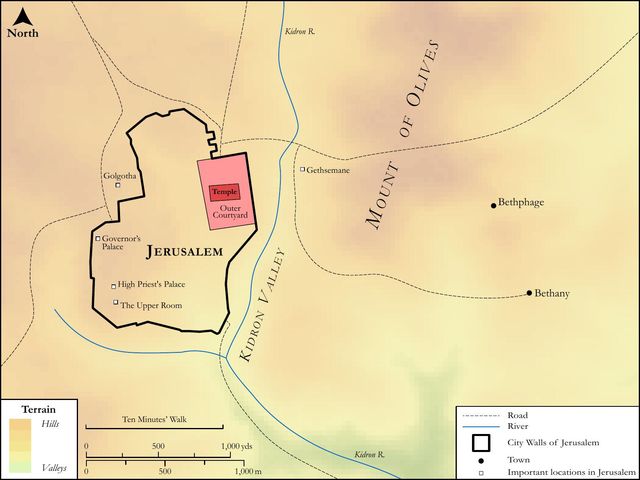
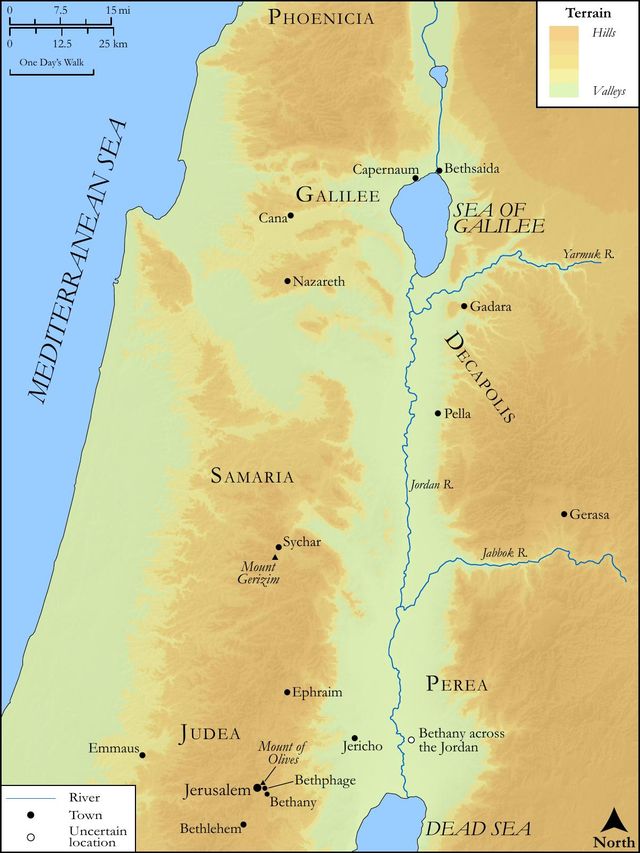
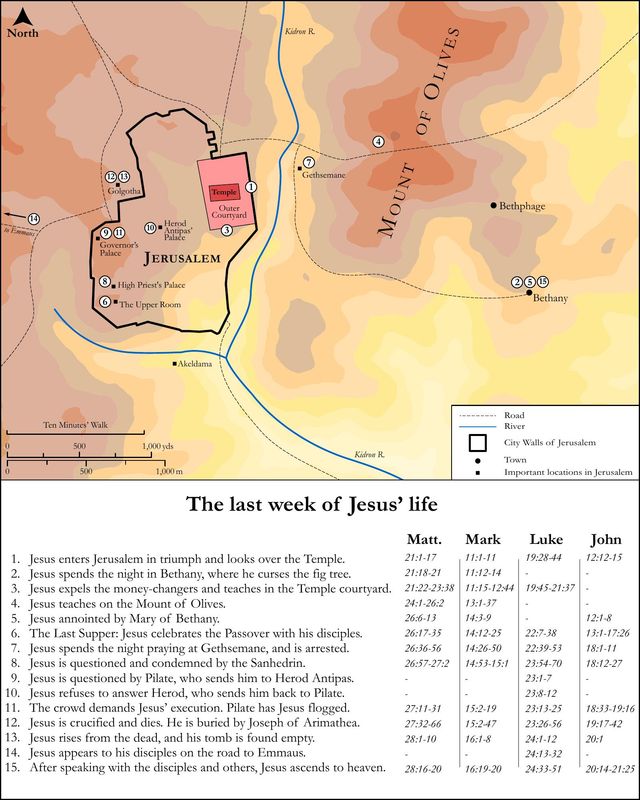
Study this verse
Public-domain commentary
Matthew Henry
From his Commentary on the Whole Bible. Henry comments on passages, not single verses — this entry covers John 17:24–26. His four-level outline is real structure in the source text, so it is rendered as structure.
Here is, I. A petition for the glorifying of all those that were given to Christ (Joh 17:24), not only these apostles, but all believers: Father, I will that they may be with me. Observe,
1.The connection of this request with those foregoing. He had prayed that God would preserve, sanctify, and unite them; and now he prays that he would crown all his gifts with their glorification. In this method we must pray, first for grace, and then for glory (Psa 84:11); for in this method God gives. Far be it from the only wise God to come under the imputation either of that foolish builder who without a foundation built upon the sand, as he would if he should glorify any whom he has not first sanctified; or of that foolish builder who began to build and was not able to finish, as he would if he should sanctify any, and not glorify them.
2.The manner of the request: Father, I will. Here, as before, he addresses himself to God as a Father, and therein we must do likewise; but when he says, thelō - I will, he speaks a language peculiar to himself, and such as does not become ordinary petitioners, but very well became him who paid for what he prayed for.
(1.)This intimates the authority of his intercession in general; his word was with power in heaven, as well as on earth. He entering with his own blood into the holy place, his intercession there has an uncontrollable efficacy. He intercedes as a king, for he is a priest upon his throne (like Melchizedek), a king-priest.
(2.)It intimates his particular authority in this matter; he had a power to give eternal life (Joh 17:2), and, pursuant to that power, he says, Father, I will. Though now he took upon him the form of a servant, yet that power being to be most illustriously exerted when he shall come the second time in the glory of a judge, to say, Come ye blessed, having that in his eye, he might well say, Father, I will.
3.The request itself - that all the elect might come to be with him in heaven at last, to see his glory, and to share in it. Now observe here,
(1.)Under what notion we are to hope for heaven? wherein does that happiness consist? three things make heaven: - [1.] It is to be where Christ is: Where I am; in the paradise whither Christ's soul went at death; in the third heavens whither his soul and body went at his ascension: - Where I am, am to be shortly, am to be eternally. In this world we are but in transitu - on our passage; there we truly are where we are to be for ever; so Christ reckoned, and so must we. [2.] It is to be with him where he is; this is not tautology, but intimates that we shall not only be in the same happy place where Christ is, but that the happiness of the place will consist in his presence; this is the fulness of its joy. The very heaven of heaven is to be with Christ, there in company with him, and communion with him, Phi 1:23. [3.] It is to behold his glory, which the Father has given him. Observe, First, The glory of the Redeemer is the brightness of heaven. That glory before which angels cover their faces was his glory, Joh 12:41. The Lamb is the light of the new Jerusalem, Rev 21:23. Christ will come in the glory of his Father, for he is the brightness of his glory. God shows his glory there, as he does his grace here, through Christ. "The Father has given me this glory," though he was as yet in his low estate; but it was very true, and very near. Secondly, The felicity of the redeemed consists very much in the beholding of this glory; they will have the immediate view of his glorious person. I shall see God in my flesh, Job 19:26, Job 19:27. They will have a clear insight into his glorious undertaking, as it will be then accomplished; they will see into those springs of love from which flow all the streams of grace; they shall have an appropriating sight of Christ's glory (Uxor fulget radiis mariti - The wife shines with the radiance of her husband), and an assimilating sight: they shall be changed into the same image, from glory to glory.
(2.)Upon what ground we are to hope for heaven; no other than purely the mediation and intercession of Christ, because he hath said, Father, I will. Our sanctification is our evidence, for he that has this hope in him purifies himself; but it is the will of Christ that is our title, by which will we are sanctified, Heb 10:10. Christ speaks here as if he did not count his own happiness complete unless he had his elect to share with him in it, for it is the bringing of many sons to glory that makes the captain of our salvation perfect, Heb 2:10.
4.The argument to back this request: for thou lovedst me before the foundation of the world. This is a reason,
(1.)Why he expected this glory himself. Thou wilt give it to me, for thou lovedst me. The honour and power given to the Son as Mediator were founded in the Father's love to him (Joh 5:20): the Father loves the Son, is infinitely well pleased in his undertaking, and therefore has given all things into his hands; and, the matter being concerted in the divine counsels from eternity, he is said to love him as Mediator before the foundation of the world. Or,
(2.)Why he expected that those who were given to him should be with him to share in his glory: "Thou lovedst me, and them in me, and canst deny me nothing I ask for them."
II.The conclusion of the prayer, which is designed to enforce all the petitions for the disciples, especially the last, that they may be glorified. Two things he insists upon, and pleads: -
1.The respect he had to his Father, Joh 17:25. Observe,
(1.)The title he gives to God: O righteous Father. When he prayed that they might be sanctified, he called him holy Father; when he prays that they may be glorified, he calls him righteous Father; for it is a crown of righteousness which the righteous Judge shall give. God's righteousness was engaged for the giving out of all that good which the Father had promised and the Son had purchased.
(2.)The character he gives of the world that lay in wickedness: The world has not known thee. Note, Ignorance of God overspreads the world of mankind; this is the darkness they sit in. Now this is urged here,
[1.]To show that these disciples need the aids of special grace, both because of the necessity of their work - they were to bring a world that knew not God to the knowledge of him; and also, because of the difficulty of their work - they must bring light to those that rebelled against the light; therefore keep them.
[2.]To show that they were qualified for further peculiar favours, for they had that knowledge of God which the world had not.
(3.)The plea he insists upon for himself: But I have known thee. Christ knew the Father as no one else ever did; knew upon what grounds he went in his undertaking, knew his Father's mind in every thing, and therefore, in this prayer, came to him with confidence, as we do to one we know. Christ is here suing out blessings for those that were his; pursuing this petition, when he had said, The world has not known thee, one would expect it should follow, but they have known thee; no, their knowledge was not to be boasted of, but I have known thee, which intimates that there is nothing in us to recommend us to God's favour, but all our interest in him, and intercourse with him, result fRom. and depend upon, Christ's interest and intercourse. We are unworthy, but he is worthy.
(4.)The plea he insists upon for his disciples: And they have known that thou hast sent me; and,
[1.]Hereby they are distinguished from the unbelieving world. When multitudes to whom Christ was sent, and his grace offered, would not believe that God had sent him, these knew it, and believed it, and were not ashamed to own it. Note, To know and believe in Jesus Christ, in the midst of a world that persists in ignorance and infidelity, is highly pleasing to God, and shall certainly be crowned with distinguishing glory. Singular faith qualifies for singular favours.
[2.]Hereby they are interested in the mediation of Christ, and partake of the benefit of his acquaintance with the Father: "I have known thee, immediately and perfectly; and these, though they have not so known thee, nor were capable of knowing thee so, yet have known that thou hast sent me, have known that which was required of them to know, have known the Creator in the Redeemer." Knowing Christ as sent of God, they have, in him, known the Father, and are introduced to an acquaintance with him; therefore, "Father, look after them for my sake."
2.The respect he had to his disciples (Joh 17:26): "I have led them into the knowledge of thee, and will do it yet more and more; with this great and kind intention, that the love wherewith thou hast loved me may be in them, and I in them." Observe here,
(1.)What Christ had done for them: I have declared unto them thy name.
[1.]This he had done for those that were his immediate followers. All the time that he went in and out among them, he made it his business to declare his Father's name to them, and to beget in them a veneration for it. The tendency of all his sermons and miracles was to advance his Father's honours, and to spread the knowledge of him, Joh 1:18.
[2.]This he had done for all that believe on him; for they had not been brought to believe if Christ had not made known to them his Father's name. Note, First, We are indebted to Christ for all the knowledge we have of the Father's name; he declares it, and he opens the understanding to receive that revelation. Secondly, Those whom Christ recommends to the favour of God he first leads into an acquaintance with God.
(2.)What he intended to do yet further for them: I will declare it. To the disciples he designed to give further instructions after his resurrection (Act 1:3), and to bring them into a much more intimate acquaintance with divine things by the pouring out of the Spirit after his ascension; and to all believers, into whose hearts he hath shined, he shines more and more. Where Christ has declared his Father's name, he will declare it; for to him that hath shall be given; and those that know God both need and desire to know more of him. This is fitly pleaded for them: "Father, own and favour them, for they will own and honour thee."
(3.)What he aimed at in all this; not to fill their heads with curious speculations, and furnish them with something to talk of among the learned, but to secure and advance their real happiness in two things: -
[1.]Communion with God: "Therefore I have given them the knowledge of thy name, of all that whereby thou hast made thyself known, that thy love, even that wherewith thou hast loved me, may be, not only towards them, but in them;" that is, First, "Let them have the fruits of that love for their sanctification; let the Spirit of love, with which thou hast filled me, be in them." Christ declares his Father's name to believers, that with that divine light darted into their minds a divine love may be shed abroad in their hearts, to be in them a commanding constraining principle of holiness, that they may partake of a divine nature. When God's love to us comes to be in us, it is like the virtue which the loadstone gives the needle, inclining it to move towards the pole; it draws out the soul towards God in pious and devout affections, which are as the spirits of the divine life in the soul. Secondly, "Let them have the taste and relish of that love for their consolation; let them not only be interested in the love of God, by having God's name declared to them, but, by a further declaration of it, let them have the comfort of that interest; that they may not only know God, but know that they know him," Jo1 2:3. It is the love of God thus shed abroad in the heart that fills it with joy, Rom 5:3, Rom 5:5. This God has provided for, that we may not only be satisfied with his loving kindness, but be satisfied of it; and so may live a life of complacency in God and communion with him; this we must pray for, this we must press after; if we have it, we must thank Christ for it; if we want it, we may thank ourselves.
[2.]Union with Christ in order hereunto: And I in them. There is no getting into the love of God but through Christ, nor can we keep ourselves in that love but by abiding in Christ, that is, having him to abide in us; nor can we have the sense and apprehension of that love but by our experience of the indwelling of Christ, that is, the Spirit of Christ in our hearts. It is Christ in us that is the only hope of glory that will not make us ashamed, Col 1:27. All our communion with God, the reception of his love to us with our return of love to him again, passes through the hands of the Lord Jesus, and the comfort of it is owing purely to him. Christ had said but a little before, I in them (Joh 17:23), and here it is repeated (though the sense was complete without it), and the prayer closed with it, to show how much the heart of Christ was sent upon it; all his petitions centre in this, and with this the prayers of Jesus, the Son of David, are ended: "I in them; let me have this, and I desire no more." It is the glory of the Redeemer to dwell in the redeemed: it is his rest for ever, and he has desired it. Let us therefore make sure our union with Christ, and then take the comfort of his intercession. This prayer had an end, but that he ever lives to make.
Historical interpretation
Five Centuries of Reception
24 surviving comments on this verse. Each one is dated, so this reads as a timeline rather than a list.
Select a marker to jump to its quote. Markers stagger vertically where authors wrote within a few decades of each other.
Service [rendered] to God brings no profit to God, nor does God need our obedience. However, he grants life, incorruption and eternal glory to those who follow and serve him, bestowing gifts on those who serve [him] because they do serve him and on his followers because they do follow him. But he does not receive any benefit from them because he is already rich, perfect and in need of nothing. Still, God demands service from men and women so that he can benefit those who continue in his service, since he is so good and merciful. For as much as God lacks nothing, that is how much we stand in need of fellowship with God, because our glory consists in continuing and remaining permanently in God’s service.
Wherefore also did the Lord say to His disciples, "Ye have not chosen Me, but I have chosen you;" indicating that they did not glorify Him when they followed Him; but that, in following the Son of God, they were glorified by Him. And again, "I will, that where I am, there they also may be, that they may behold My glory;" not vainly boasting because of this, but desiring that His disciples should share in His glory.
The Lord himself, in the Gospel, not only declares that these same results will occur in the future but that they are to be brought about by his own intercession when he himself decides to obtain them from the Father for his disciples, saying, “Father, I will that where I am, they also may be with me. And as you and I are one, may they also be one in us.” In this, the divine likeness itself already appears to advance (if we may so express it) from being merely similar to becoming the same, because, undoubtedly, in the consummation, or the end, God is “all and in all.” …I am of the opinion that the expression by which God is said to be “all in all” means that he is “all” in each individual person. Now he will be “all” in each individual when all those with any rational understanding—cleansed from the dregs of every sort of vice and with every cloud of wickedness completely swept away—either feel, understand or think in terms wholly divine. He will be “all” in each person when that person’s understanding will no longer behold or retain anything else other than God, but God alone will be the measure and standard of all his or her movements. This is when God will be “all,” for there will no longer be any distinction of good and evil, since evil will no longer exist. For God is, then, all things, and no evil can be present where he is. Nor will there be a desire any longer to eat from the tree of the knowledge of good and evil on the part of one who is always in the possession of good and to whom God is everything.
That no one should be made sad by death; since in living is labour and peril, in dying peace and the certainty of resurrection. In Genesis: "Then said the Lord to Adam, Because thou hast hearkened to the voice of thy wife, and hast eaten of that tree of which alone I commanded thee that thou shouldest not eat, cursed shall be the ground in all thy works; in sadness and groaning shalt thou eat of it all the days of thy life: thorns and thistles shall it cast forth to thee; and thou shalt eat the herb of the field in the sweat of thy brow. Thou shall eat thy bread until thou return unto the earth from which also thou wast taken; because earth thou art, and to earth thou shall go." Also in the same place: "And Enoch pleased God, and was not found afterwards: because God translated him." And in Isaiah: "All flesh is grass, and all the glory of it as the flower of grass. The grass withered, and the flower hath fallen away; but the word of the Lord abideth for ever." In Ezekiel: "They say, Our bones are become dry, our hope hath perished: we have expired. Therefore prophesy, and say, Thus saith the Lord, Behold, I open your monuments, and I will bring you forth from your monuments, and I will bring you into the land of Israel; and I will put my Spirit upon you, and ye shall live; and I will place you into your land: and ye shall know that I the Lord have spoken, and will do it, saith the Lord." Also in the Wisdom of Solomon: "He was taken away, lest wickedness should change his understanding; for his soul was pleasing to God." Also in the eighty-third Psalm: "How beloved are thy dwellings, Thou Lord of hosts? My soul desires and hastes to the courts of God." And in the Epistle of Paul to the Thessalonians: "But we would not that you should be ignorant, brethren, concerning those who sleep, that ye sorrow not as others which have no hope. For if we believe that Jesus died and rose again, so also them which have fallen asleep in Jesus will God bring with Him." Also in the first Epistle to the Corinthians: "Thou fool, that which thou sowest is not quickened except it have first died." And again: "Star differeth from star in glory: so also the resurrection. The body is sown in corruption, it rises without corruption; it is sown in ignominy, it rises again in glory; it is sown in weakness, it rises again in power; it is sown an animal body, it rises again a spiritual body." And again: "For this corruptible must put on incorruption, and this mortal put on immortality. But when this corruptible shall have put on incorruption, and this mortal shall have put on immortality, then shall come to pass the word that is written, Death is absorbed Into striving. Where, O death, is thy sting? Where, O death, is thy striving? " Also in the Gospel according to John: "Father, I will that those whom Thou hast given me be with me where I shall be, and may see my glory which Thou hast given me before the foundation of the world." Also according to Luke: "Now lettest Thou Thy servant depart in peace, O Lord, according to the word; for mine eyes have seen Thy salvation." Also according to John: "If ye loved me, ye would rejoice because I go to the Father; for the Father is greater than I."
That in the meantime we die, we are passing over to immortality by death; nor can eternal life follow, unless it should befall us to depart from this life. That is not an ending, but a transit, and, this journey of time being traversed, a passage to eternity. Who would not hasten to better things? Who would not crave to be changed and renewed into the likeness of Christ, and to arrive more quickly to the dignity of heavenly glory, since Paul the apostle announces and says, "For our conversation is in heaven, from whence also we look for the Lord Jesus Christ; who shall change the body of our humiliation, and conform it to the body of His glory? " Christ the Lord also promises that we shall be such, when, that we may be with Him, and that we may live with Him in eternal mansions, and may rejoice in heavenly kingdoms, He prays the Father for us, saying, "Father, I will that they also whom Thou hast given me be with me where I am, and may see the glory which Thou hast given me before the world was made." He who is to attain to the throne of Christ, to the glory of the heavenly kingdoms, ought not to mourn nor lament, but rather, in accordance with the Lord's promise, in accordance with his faith in the truth, to rejoice in this his departure and translation.
And He was not worthy that you should listen to and believe Him, yet He should not have been despised by you even on this account, that He showed to you things concerning your salvation, that He prepared for you a path to heaven, and the immortality for which you long.
"Father," He saith, "I will that they also whom Thou hast given Me, be with Me where I am." "Then dost Thou gain by prayer, and dost Thou not yet possess that concerning which they enquired continually, saying, 'Whither goest Thou?' What sayest Thou? How then didst Thou say to them, 'Ye shall sit upon twelve thrones'? How didst Thou promise other things more and greater?" Seest thou that He saith all in the way of condescension? since how would He have said, "Thou shalt follow afterwards"? But He speaketh thus with a view to a fuller conviction and demonstration of His love.
(Hom. lxxxii. 2) After He has said that many should believe on Him through them, and that they should obtain great glory, He then speaks of the crowns in store for them; Father, I will that they also whom Thou hast given Me, be with Me where I am.
(Hom. lxxxii) He saith not, that they may partake of My glory, but, that they may behold, intimating that the rest there is to see the Son of God. The Father gave Him glory, when He begat Him.
"That they may behold My glory which Thou hast given Me." This again is a sign of His being of one mind with the Father, of a higher character than those former, for He saith, "Before the foundation of the world," yet hath it also a certain condescension; for, "Thou hast given Me," He saith. Now if this be not the case, I would gladly ask the gainsayers a question. He that giveth, giveth to one subsisting; did the Father then, having first begotten the Son, afterwards give Him glory, having before allowed Him to be without glory? And how could this be reasonable? Seest that the "He gave," is, "He begot"?
But why said He not, "That they may share My glory," instead of, "That they may behold My glory"? Here He implieth, that all that rest is, the looking on the Son of God. This certainly it is which causes them to be glorified; as Paul saith, "With open face mirroring the glory of the Lord." For as they who look on the sunbeams, and enjoy a very clear atmosphere, draw their enjoyment from their sight, so then also, and in much greater degree, this will cause us pleasure. At the same time also He showeth, that what they should behold was not the body then seen, but some awful Substance.
The Lord Jesus raises up His people to a great hope, than which there could not possibly be a greater. Listen and rejoice in hope, that, since the present is not a life to be loved, but to be tolerated, you may have the power of patient endurance amid all its tribulation. Listen, I say, and weigh well to what it is that our hopes are exalted. Christ Jesus saith, The Son of God, the Only-begotten, who is co-eternal and equal with the Father, saith: He, who for our sakes became man, but became not, like every man besides, a liar, saith: the Way, the Life, the Truth saith: He who overcame the world, saith of those for whom He overcame it: listen, believe, hope, desire what He saith: "Father," He says, "I will that they also whom Thou hast given me be with me where I am." Who are these who He says were given Him by the Father? Are they not those of whom He says in another place, "No man cometh unto me, unless the Father, who hath sent me, draw him"? We already know if we have made any beneficial progress in this Gospel, how it is that the things which He says the Father doeth, He Himself doeth likewise along with the Father. They are those, therefore, whom He has received from the Father, whom He Himself has also chosen out of the world, and chosen that they may be no more of the world, even as He also is not of the world; and yet that they also may be a world that believeth and knoweth that Christ has been sent by God the Father that the world might be delivered from the world, and so, as a world that was to be reconciled unto God, might not be condemned with the world that lieth in enmity.
But if it is in respect of the form of God, wherein He is equal to the Father, that we would be inclined to understand His words, "I will that they also be with me, where I am," let our mind get quit of every thought of material images: whatever the soul has had presented to it, that is endowed with length, or breadth, or thickness, tinted by the light with any sort of bodily hue, or diffused through local space of any kind, whether finite or infinite, let it, as far as possible, turn away from all such notions the glance of its contemplation on the inward bent of its thoughts. And let us not be making inquiries as to where the Son, the Father's co-equal, is, since no one has yet found out where He is not. But if any one would inquire, let him inquire rather how he may be with Him; not everywhere as He is, but wherever He may be. For when He said to the man that was expiating his crimes on the tree, and making confession unto salvation, "Today shall thou be with me in paradise," in respect to His human nature His own soul was on that very day to be in hell, His flesh in the sepulchre; but as respected His Godhead He was certainly also in paradise. And therefore the soul of the thief, absolved from his by-gone crimes, and already in the blessed enjoyment of His grace, although it could not be everywhere as He was, yet could on that very day be also with Him in paradise, from which He, who is always everywhere, had not withdrawn.
Because of the same blessed hope the apostle also says: "But God, who is rich in mercy, for His great love wherewith He loved us, even when we were dead in sins, hath quickened us together with Christ; by whose grace we are saved; and hath raised us up together, and made us sit together in heavenly places in Christ Jesus." And so accordingly we may understand the Lord to have said, "That where I am, there they may be also." He, indeed, said of Himself that He was there already; but of us He merely declared that He wished us to be there with Him, without any indication that we were there already. But what the Lord said that He wished to be done, the apostle spake of as already accomplished. For he said not, He will yet raise us up, and make us sit in heavenly places; but, "hath raised us up, and made us sit in heavenly places:" for it is not without good grounds, but in believing assurance, that he reckons as already done what he is certain will yet be done.
Let no one disturb the clearness of the meaning by any cloudy contradiction; but let what follows furnish its testimony to the words that precede. For after saying, "I will that they also be with me where I am," He went on immediately to add, "That they may behold my glory, which Thou gavest me: for Thou lovedst me before the foundation of the world." "That they may behold," He said; not, that they may believe. This is faith's wages, not faith itself. For if faith has been correctly defined in the Epistle to the Hebrews as "the assurance [conviction] of things that are not seen," why may not the wages of faith be defined, the beholding of things which were hoped for in faith? For when we shall see the glory which the Father hath given the Son, even though we may understand what is spoken of in this passage, not as that [glory] which the Father gave His co-equal Son in begetting Him, but as that which He gave Him, when become the Son of man, after the death of the cross;-when, I say, we shall see that glory of the Son, then of a certainty shall take place the judgment of the quick and the dead, and then shall the wicked be taken away that he may not behold the glory of the Lord; and what [glory], save that of His Godhead? For blessed are the pure in heart, for they shall see God: and because the wicked are not pure in heart, therefore they shall not see. Then shall they go away into everlasting punishment; for so shall the wicked be taken away, that he may not behold the glory of the Lord: but the righteous shall go into life eternal. And what is life eternal? "That they may know Thee, the only true God, and Jesus Christ, whom Thou hast sent": not, indeed, as those knew Him, who although impure in heart, yet were able to see Him as He sat in judgment in His glorified servant-form; but as He is yet to be known by the pure in heart, as the only true God, the Son along with the Father and Holy Spirit, because the Trinity itself is the only true God.
(Tr. cx. 4) Nor is this said, however, as if to mean that the Father was not in us, or we in the Father. He only means to say, that He is Mediator between God and man. And what He adds, That they may be made perfect in one, shows that the reconciliation made by this Mediator, was carried on even to the enjoyment of everlasting blessedness. So what follows, That the world may know that Thou hast sent Me, must not be taken to mean the same as the words just above, That the world may believe. For as long as we believe what we do not see, we are not yet made perfect, as we shall be when we have merited to see what we believe. So that when He speaks of their being made perfect, we are to understand such a knowledge as shall be by sight, not such as is by faith. These that believe are the world, not a permanent enemy, but changed from an enemy to a friend; as it follows: And hast loved them, as Thou hast loved Me. The Father loves us in the Son, because He elected us in Him. These words do not prove that we are equal to the Only Begotten Son; for this mode of expression, as one thing so another, does not always signify equality. It sometimes only means, because one thing, therefore another. And this is its meaning here: Thou hast loved them, as Thou hast loved Me, i. e. Thou hast loved them, because Thou hast loved Me. There is no reason for God loving His members, but that He loves him. But since He hateth nothing that He hath made, who can adequately express how much He loves the members of His Only Begotten Son, and still more the Only Begotten Himself.
(Tr. cxi. 1) These are they whom He has received from the Father, whom He also chose out of the world; as He saith at the beginning of this prayer, Thou hast given Him power over all flesh, i. e. all mankind, That He should give eternal life to as many as Thou hast given Him. Wherein He shows that He had received power over all men, to deliver whom He would, and to condemn whom He would. Wherefore it is to all His members that He promises this reward, that where He is, they may be also. Nor can that but be done, which the Almighty Son saith that He wishes to the Almighty Father: for the Father and the Son have one will, which, if weakness prevent us from comprehending, piety must believe. Where I am: so far as pertains to the creature, He was made of the seed of David according to the flesh: He might say, Where I am, meaning where He was shortly to be, i. e. heaven. In heaven then, He promises us, we shall be. For thither was the form of a servant raised, which He had taken from the Virgin, and there placed on the right hand of God.
(Tr. cxi) But as respects the form of God, wherein He is equal to the Father, if we understand these words, that they may be with Me where I am, with reference to that, then away with all bodily ideas, and enquire not where the Son, Who is equal to the Father, is: for no one hath discovered where He is not. Wherefore it was not enough for Him to say, I will that they may be where I am, but He adds, with Me. For to be with Him is the great good: even the miserable can be where He is, but only the happy can be with Him. And as in the ease of the visible, though very different be whatever example we take, a blind man will serve for one, as a blind man though He is where the light is, yet is not himself with the light, but is absent from it in its presence, so not only the unbelieving, but the believing, though they cannot be where Christ is not, yet are not themselves with Christ by sight: by faith we cannot doubt but that a believer is with Christ. But here He is speaking of that sight wherein we shall see Him as He is; as He adds, That they may behold My glory, which Thou hast given Me. That they may behold, He says, not, that they may believe. It is the reward of faith which He speaks of, not faith itself.
(Tr. cxi. 3) When then we shall have seen the glory which the Father gave the Son, though by this glory we do not understand here, that which He gave to the equal Son when He begat Him, but that which He gave to the Son of man, after His crucifixion; then shall the judgment be, then shall the wicked be taken away, that he see not the glory of the Lord: what glory but that whereby He is God? If then we take their words, That they may be with Me where I am, to be spoken by Him as Son of God, in that case they must have a higher meaning, viz. that we shall be in the Father with Christ. As He immediately adds, That they may see My glory which Thou hast given Me; and then, Which Thou gavest Me before the foundation of the world. For in Him He loved us before the foundation of the world, and then predestined what He should do at the end of the world.
(Tr. cxi. 5) Or thus; What is to know Him, but eternal life, which He gave not to a condemned but to a reconciled world? For this reason the world hath not known Thee; because Thou art just, and hast punished them with this ignorance of Thee, in reward for their misdeeds. And for this reason the reconciled world knows Thee, because Thou art merciful, and hast vouchsafed this knowledge, not in consequence of their merits, but of thy grace. It follows: But I have known Thee. He is God the fountain of grace by nature, man of the Holy Ghost and Virgin by grace ineffable. Then because the grace of God is through Jesus Christ, He says, And they have known Me, i. e. the reconciled world have known Me, by grace, forasmuch as Thou hast sent Me. And I have made known Thy name to them by faith, and will make it known by sight: that the love wherewith Thou hast loved Me may be in them. (2 Tim. 4:7) The Apostle uses a like phrase, I have fought a good fight, by a good fight being the more common form. The love wherewith the Father loveth the Son in us, can only be in us because we are His members, and we are loved in Him when He is loved wholly, i. e. both head and body. And therefore He adds, And I in them; He is in us, as in His temple, we in Him as our Head.
For the words that we read of Him as uttering on the eve of His passion, "Yet not, Father, as I will, but as Thou wilt," as if the Father has or had one will, and the Son another, are the echo of our infirmity, however faith-pervaded, which our Head transfigured in His own person, when He likewise bare our iniquities. But that the will of the Father and the Son is one, of both of whom also there is but one Spirit, by including whom we come to the knowledge of the Trinity, let piety believe, even though our infirmity meanwhile permitteth us not to understand.
If, then, it is in reference to His Godhead as the Son of God, equal and co-eternal with the Father, that we take the words, "I will that they also be with me where I am," we shall be with Christ in the Father; but He in His own way, we in ours, wherever we may be in body. For if localities are to be understood, and such as contain incorporeal beings, and everything has a place where it is, the eternal place of Christ where He always is, is the Father Himself, and the place of the Father is the Son; for "I," He said, "am in the Father, and the Father in me;" and in this prayer, "As Thou, Father, art in me, and I in Thee:" and they are our place, because there follows, "That they also may be one in us:" and we are God's place, inasmuch as we are His temple; even as He, who died for us and liveth for us, also prayeth for us, that we may be one in them; because "His [dwelling] place was made in peace, and His habitation in Zion," which we are. But who is qualified to think on such places or what is in them, apart from the idea of space-defined capacities and material masses? Yet no little progress is made, if at least, when any such idea presents itself to the eye of the mind, it is denied, rejected, and reprobated: and a certain kind of light is, as far as possible, thought of, in which such things are perceived as deserving only to be denied, rejected, and reprobated; and the certainty of that light is known and loved, so that from thence an upward movement is begun in us, and an effort made to reach into places farther within: and when the mind through its own infirmity and still inferior purity has failed to penetrate them it is driven back again, not without the sighings of love and the tears of ardent longing, and continues to bear in patience until it is purified by faith, and prepared by the holiness of the inward life to be able to take up its abode therein.
But as we have already, in a way proportionate to the brevity of our discourse, spoken of the objects of the promise, and of its own stability; let us now look at this one point, as far as we are able, what it is that He was pleased to promise when He said, "I will that they also whom Thou hast given me be with me where I am." As far as pertains to the creaturehood wherein He was made of the seed of David according to the flesh, not even He Himself was yet where He would afterwards be: but He could say in this way, "where I am," to let us understand that He was soon to ascend into heaven, so that He spake of Himself as being already there, where He was presently to be. He could do so also in the same way as He had said on a former occasion, when speaking to Nicodemus, "No man ascendeth into heaven, save He that came down from heaven, even the Son of man who is in heaven." For there also He did not say, Will be, but "is," because of the oneness of person, wherein God is at once man, and man God. He promised, therefore, that we should be in heaven; for thither the servant-form, which He received of the Virgin, has been elevated, and set at the right hand of the Father.
On this account, doubtless, it was not enough for Him to say, "I will that they also be where I am;" but He added, "with me." For to be with Him is the chief good. For even the miserable can be where He is, since wheresoever any are, there is He also; but the blessed only are with Him, because it is only of Him that they can be blessed. Was it not truly said to God, "If I ascend into heaven, Thou art there; and if I go down into hell, Thou art present?" or is not Christ after all that Wisdom of God which "penetrateth everywhere because of its purity"? But the light shineth in darkness and the darkness comprehendeth it not. And similarly, to take a kind of illustration from what is visible, although greatly unlike, as the blind man, even though he be where the light is, is yet not himself with the light, but is really absent from that which is present; so the unbeliever and profane, or even the believer and pious, because not yet competent to gaze on the light of wisdom, although he cannot be anywhere that Christ is not there likewise, yet is not himself with Christ, I mean in actual sight. For we cannot doubt that the true believer is with Christ by faith; because in reference to this He saith, "He that is not with me is against me." But when He said to God the Father, "I will that they also whom Thou hast given me be with me where I am," He spake exclusively of that sight wherein we shall see Him as He is.
For so He says in the beginning of this prayer: "Thou hast given Him power over all flesh," that is, over every man, "that He should give eternal life to as many as Thou hast given Him." Here He makes it clear that He has indeed received power over all men, that, as the future Judge of quick and dead, He may deliver whom He pleases, and condemn whom He pleases; but that these were given Him that to all of them He should give eternal life. For so He says: "That He should give eternal life to as many as Thou hast given Him." Accordingly they were not given Him that from them He should withhold eternal life; although over them also the power has been given Him, inasmuch as He has received it over all flesh, in other words, over every man. In this way the world that has been reconciled will be delivered from the hostile world, when He putteth into exercise His power over it, to send it away into death eternal; but the other He maketh His own that He may give it everlasting life. Accordingly, to every one, without fail, of His own sheep the Good Shepherd, as to every one of His members the great Head, hath promised this reward, that where He is, there also we shall be with Him; nor can that be otherwise which the omnipotent Son declared to be His will to the omnipotent Father. For there also is the Holy Spirit, equally eternal, equally God, the one Spirit of the two, the substance of the will of both.
How, then, shall we not be with Christ where He is, when we shall be with Him in the Father in whom He is? On this, also, the apostle is not without something to say to us, although we are not yet in possession of the reality, but only cherishing the hope. For he says, "If ye be risen with Christ, seek those things which are above, where Christ sitteth on the right hand of God: set your affections on things above, not on things on the earth. For ye have died," he adds, "and your life is hid with Christ in God." Here, you see, our life is meanwhile in faith and hope with Christ, where He is; because it is with Christ in God. That, you see, is as if already accomplished for which He prayed, when He said, "I will that they also be with me where I am;" but now only by faith. And when will it be accomplished by actual sight? "When Christ," he says, "[who is] your life, shall appear, then shall ye also appear with Him in glory." Then shall we appear as that which we then shall be; for it shall then be apparent that it was not without good grounds that we believed and hoped we should become so, before it actually took place. He will do this, to whom the Son, after saying, "That they may behold my glory, which Thou gavest me," immediately added, "For Thou lovedst me before the foundation of the world." For in Him He loved us also before the foundation of the world, and then foreordained what He was to do in the end of the world.
After having prayed for His disciples, or rather all those who come to Him through faith, and having required of the Father that they may have union with Him, and love, and sanctification, He proceeds at once to add these words; showing that to live with Him and to be deemed worthy to see His glory, belongeth only to those who have been already united to the Father through Him, and have obtained His love, which He must be conceived to enjoy from the Father. For we are loved as sons, according as we are like Him Who is actually by Nature His Son. For though it be not dealt out to us in equal measure, yet as it is a complete semblance of the love the Father hath for the Son, and is coincident therewith, it images forth the glory of the Son. I will, therefore, He says, O Father, that those who are Mine, through their coming to Me through faith, and the light that proceedeth from Thee, may be with Me and see My glory. And what language can reveal the greatness of the blessing which is implied in being with Christ Himself? For we shall enjoy ineffable fruition of soul, and eye hath not seen, nor ear heard, nor mind conceived, what God hath prepared for those that love Him. For what thing that maketh for the fulness of joy can be lacking to those who have allotted to them the portion of being with Christ Himself, the Lord of all? Yea, the wise and holy Paul seems to have thought it a thing surpassing conception, for he says, to depart and be with Christ is far better. And surely he that preferred this great and acceptable reward to this world's life, will bear us true testimony that great is the blessing of converse with Him which He confers on His own; He that giveth all things to all men plenteously. And the word spoken through him to us will also help to support our contention. For having in himself Christ speaking, and revealing the powers of the age to come, he spoke also after this manner: For the dead shall rise, he says, and also we that are alive, that are left, shall together with them be caught up in the clouds, to meet the Lord in the air: and so shall we ever be with the Lord. Further, our Lord Himself plainly promised us this blessing, saying: I go and will prepare a place for you. I will come again, and will receive you with Myself; that where I am, there ye may be also with Me.
For either, without thinking deeply on the subject, we shall readily conclude that our abiding home in heaven is meant, or, following another line of thought, we shall suppose that the same place will be allotted to us as to Christ; that is, similar and analogous honours, according to our likeness to Himself. For we shall be conformed to His glory, and shall reign with Him, according to Holy Writ; and He promises that, like as He is wont, we shall also be enthroned in the kingdom of the heavens.
Leaving, then, for the present, as beyond dispute, any further proof that we shall be with Christ and share His glory, and be partakers in His kingdom, we proceed to the other point, I mean the words, that they may behold My glory. Not, therefore, to the profane and sinners, nor to those who dishonour the law of God, will it be given to gaze on the vision of Christ's glory; but only to the holy and righteous. This also we may know by the prophet's words: Let the impious man be taken away, that he see not the glory of the Lord; and in the Gospel message of our Saviour Christ: Blessed are the pure in heart, for they shall see God. And who can the pure in heart be but they who, by union with God, through the Son, in the Spirit, have rid themselves of fleshly lusts, and put far away from them the pleasure of the world, and have, as it were, denied their own lives, and resigned them wholly to the Will of the Spirit, and who are in all purity and sincerity fellow-citizens with Christ; such as was Paul, who out of his own exceeding purity feared not to say: I have been crucified with Christ, yet I live; and yet no longer I, but Christ liveth in me? I hear also the voice of another of the Saints in his song: Make me a pure heart, O God, and renew a right spirit within me. Cast me not away from Thy presence, and take not Thy Holy Spirit from me. Give me again the comfort of Thy salvation, and establish me with Thy free Spirit. He calleth the Spirit the comfort of salvation, as giving men joy unceasing and perpetual, and affording them guidance through all the changes and chances of the world; for the Spirit belongeth to the only true Saviour, that is, Christ. He giveth Him many names, and adds a pure heart to his prayer, and straightway invokes the Spirit; since they who are not yet united unto God, and made partakers of Christ's blessing through the Spirit, have not a perfect heart, but rather one that is froward and distraught.
To sum it up, therefore, in brief: Christ desired that to His followers might be granted in special the blessing of being with Him, and beholding His glory; for He says that He was loved even before the foundation of the world, hereby clearly showing how ancient was the great mystery of the redemption He wrought for us, and that the way of our salvation, effected through the mediation of Christ, was foreknown by God the Father. This knowledge was not, indeed, vouchsafed to men upon earth at the beginning, but the Law intervened, which was our schoolmaster to teach us the Divine life, creating in us a dim knowledge through types, God the Father keeping for the fitting time the blessing through the Saviour. And this knowledge seems to us of much avail to show how groundless was the scorn and impious murmuring of the children of Israel, who chose continually to advocate the Law, even when at the advent of the truth, they ought henceforth to have made of no account the types; and it seems very useful also to controvert the others who think that the counsel of the Father, Which contrived the great mystery of our redemption, was an afterthought. Therefore also Paul said concerning Christ (destroying the contention of those who hold this view), that He was foreknown before the foundation of the world, but was revealed at the last times.
We must observe, also, that He says that the Father had given unto Him the disciples themselves, as well as Divine glory and universal dominion; not in His character as by Nature God, the Lord of all, Who therefore has kingly dignity inherent in Himself, but rather in so far as He manifested Himself as man, who has all things as gifts from God, and not as his birthright. For the created world receives everything from God; and nothing at all that is in it is its own, though it appear to possess things that are good.
(Moral.) What means then what the Truth saith above, No man hath ascended into heaven, but He that came down from heaven, even the Son of man which is in heaven. (John 3:13) Yet here is no discrepancy, for our Lord being the Head of His members, the reprobates excluded, He is alone with us. And therefore, we making one with Him, whence He came alone in Himself, thither He returns alone in us.
That which He calls glory then is the love wherewith He was loved with the Father before the foundation of the world. And in that glory He loved us too before the foundation of the world.
Continue studying John 17:24 across the web’s major study libraries — every link below opens this exact verse, chapter, or book on the destination site.
Read & Compare
 BibleGatewayThis verse in more than 200 translations and 70 languages.
 Bible.comThe YouVersion reader — hundreds of translations, reading plans, and highlights.
 ESV.orgCrossway's official English Standard Version reader.
 NET BibleThe NET translation with 60,000+ translators' notes on every rendering decision.
 STEP BibleTyndale House's free study tool — original text, vocabulary, and scholarly resources.
 BibliaLogos Bible Software's free web reader.
 USCCBThe New American Bible (Revised Edition) with the U.S. bishops' study notes.
Commentaries
 BibleHub CommentariesDozens of classic commentaries on this verse, gathered on one page.
 StudyLightMore than 100 commentary sets — the largest collection on the web.
 BibleRefPlain-English commentary on what this verse means, verse by verse.
 Enduring WordDavid Guzik's free commentary on this chapter, widely used by Bible teachers.
 Bible Study ToolsVerse commentary alongside Greek and Hebrew study aids.
Original Language & Research
- BibleHub InterlinearThe verse word by word — original language, transliteration, and English.
- BibleHub LexiconEvery word's original-language definition and Strong's entry.
 Blue Letter BibleDeep-study tools — Strong's numbers, concordance, and word studies.
 CNTR CollationThe earliest Greek manuscripts of this verse, collated letter by letter.
Sermons, Hymns & Audio


TrulyRandomVerse is not affiliated with these sites and doesn’t control their content. They’re linked because they’re genuinely useful.
Summary
John 17:24 captures a pivotal moment in Jesus' High Priestly Prayer, revealing His deepest desire for all believers: that they would ultimately be with Him in His heavenly dwelling to behold His inherent glory. This profound intercession is rooted in the eternal, pre-creational love shared between the Father and the Son, establishing the secure foundation for the believer's ultimate destiny and participation in divine fellowship.
Context
ShowHideLiterary Context
John 17 stands as a unique and deeply intimate prayer offered by Jesus to His Father on the eve of His crucifixion. Often termed the "High Priestly Prayer," it immediately follows Jesus' extensive farewell discourse to His disciples (John 13-16). The chapter unfolds in three distinct movements: Jesus prays for Himself (verses 1-5), then for His immediate disciples (verses 6-19), and finally, in a sweeping intercession, for all future believers (verses 20-26). John 17:24 falls within this third section, representing the culmination of Jesus' desire for the unity and ultimate glorification of His church, emphasizing the eschatological hope for all who would believe through the ages. It is a powerful articulation of His purpose for those the Father has entrusted to Him.
Historical & Cultural Context
The setting of this prayer is likely the Upper Room or immediately after leaving it, just hours before Jesus' arrest. This was a time of intense Passover celebration in Jerusalem, a feast rich with themes of redemption and covenant. The concept of "glory" (Hebrew: kavod, Greek: doxa) held significant weight in Jewish thought, often referring to God's manifest presence (e.g., the Shekinah glory in the tabernacle/temple) or His inherent majesty. For Jesus to speak of "my glory" and for believers to "behold" it would evoke profound theological implications for His audience, hinting at His divine identity and the ultimate, unmediated presence with God. The idea of being "given" by the Father resonates with Old Testament themes of divine election and God's sovereign initiative in establishing a people for Himself.
Key Themes
ShowHideJohn 17:24 powerfully contributes to several overarching themes within the Gospel of John. Foremost is the theme of Divine Unity and Relationship, particularly the eternal, loving bond between the Father and the Son, which serves as the foundation for the believer's inclusion into the divine family. The verse also highlights Sovereign Election and God's Initiative in Salvation, as believers are explicitly referred to as those "whom thou hast given me," echoing sentiments found earlier in the Gospel, such as John 6:37. Furthermore, the theme of Glorification and Eternal Life is central, as Jesus' prayer moves beyond mere salvation to the ultimate destiny of believers: to participate in and behold His divine glory. This anticipates the future hope of the church, where believers will finally experience full fellowship with God, as promised in passages like 1 John 3:2.
Exposition and Analysis
ShowHideKey Word Analysis
ShowHideThis word, used by Jesus, signifies more than a mere wish or desire; it denotes a strong, authoritative purpose or determination. Unlike boulomai (which might imply passive acquiescence), thélō conveys an active choice, an intent, or a divine resolve. In this context, it underscores the certainty and power behind Jesus' intercession for His followers, indicating that His prayer for their ultimate destiny is not a hopeful plea but a declaration of divine will that will assuredly come to pass.
Derived from a root meaning "to seem" or "to think," dóxa here refers to the inherent splendor, majesty, honor, and radiant manifestation of God's character and presence. It encompasses the intrinsic divine nature of Christ. For believers to "behold" this glory implies not just a visual observation but a profound, experiential encounter with the very essence of Christ's divine being, a participation in His radiant majesty that transcends earthly understanding.
This verb signifies a deep, unconditional, and self-sacrificial love, characteristic of God's nature. In this verse, it describes the eternal love existing between the Father and the Son "before the foundation of the world." This agapē love is the ultimate foundation for all of God's redemptive plan, including the Father's giving of believers to the Son and the Son's desire for their glorification. It speaks to the secure and immutable basis of our salvation and future hope.
Verse Breakdown
ShowHide"Father, I will that they also, whom thou hast given me, be with me where I am"
Jesus addresses God as "Father," emphasizing the intimate, familial relationship within the Trinity, which forms the basis of His prayer. His declaration, "I will," signifies a divine, authoritative desire and purpose for His followers. These followers are identified as those "whom thou hast given me," highlighting the Father's sovereign act in drawing individuals to Christ and entrusting them to Him. The ultimate desire is for these believers to "be with me where I am," pointing to an eternal, intimate fellowship and co-existence with Christ in His heavenly, glorified state. This is the ultimate goal of salvation—not merely escape from judgment, but presence with the Savior.
"that they may behold my glory, which thou hast given me"
This clause reveals the profound purpose of being with Christ. The goal is not just presence, but active participation in and observation of His "glory." This refers to the inherent divine splendor, majesty, and radiant nature of Christ. The phrase "which thou hast given me" reiterates that this glory is not something Christ earned, but something eternally possessed and shared with the Father, underscoring His pre-existence and divine equality within the Godhead. Beholding this glory means experiencing the fullness of His divine being.
"for thou lovedst me before the foundation of the world."
This final clause provides the ultimate foundation and reason for Jesus' prayer and the certainty of its fulfillment. The entire plan of salvation, including the Father's giving of believers to the Son and their future glorification, is rooted in the eternal, pre-creational love that existed between the Father and the Son. This "before the foundation of the world" emphasizes the eternal nature of God's plan and the timeless, boundless love within the Trinity, assuring believers that their destiny is secure in this ancient, unfathomable divine affection.
Literary Devices
ShowHideJohn 17:24 masterfully employs several literary devices to convey its profound theological truths. The entire chapter is an example of Intercession, as Jesus, acting as the ultimate High Priest, pleads on behalf of His followers, demonstrating His mediatorial role. There is a powerful use of Emphasis through repetition, particularly with the phrase "thou hast given me," which appears multiple times in John 17 (verses 2, 6, 9, 11, 12, 22, 24). This repetition underscores the Father's sovereign initiative in salvation and the secure relationship between the Father, Son, and believers. Furthermore, Symbolism is evident in the concept of "glory," which represents not just a visible radiance but the very essence of Christ's divine nature and majesty. To "behold" this glory is a symbolic representation of ultimate intimacy, full understanding, and shared participation in the divine life.
Theological and Thematic Connections
ShowHideThis verse is a cornerstone for understanding the believer's ultimate hope and the depth of God's redemptive plan. It powerfully articulates the eschatological reality of being with Christ, not merely in a spatial sense, but in a profound, experiential union where His divine glory is fully revealed and apprehended. This future state is not a contingent hope but a certainty, grounded in the eternal, pre-existent love between the Father and the Son. It highlights the Trinitarian nature of salvation: the Father's sovereign giving, the Son's intercessory will, and the ultimate purpose of revealing Christ's glory, which is intrinsically tied to the divine nature shared by the Father and the Son. Our salvation is thus an invitation into the very fellowship of the Godhead, secured by a love that predates creation itself.
Reflection and Application
ShowHideJohn 17:24 offers immense comfort and profound assurance to every believer. It reveals that our ultimate destiny is not merely to escape judgment or to reside in a generic "heaven," but to enter into an eternal, intimate, and glorious fellowship with Jesus Christ Himself. This promise transforms our perspective on suffering, loss, and the uncertainties of life, anchoring our hope in a divine reality that transcends all earthly circumstances. Knowing that Jesus Himself wills our presence with Him, and that this will is rooted in the Father's eternal love, provides an unshakable foundation for our faith. It calls us to live with an eternal perspective, allowing the anticipation of beholding Christ's glory to shape our values, priorities, and daily walk, inspiring us to pursue holiness and live lives that reflect the glory we are destined to share.
Questions for Reflection
ShowHideFAQ
ShowHideWhat does it mean for believers to "behold my glory"?
ShowHideTo "behold my glory" means to experience a profound, unmediated, and intimate encounter with the inherent divine splendor, majesty, and radiant nature of Jesus Christ. It's not merely a visual observation but a full apprehension of His divine essence, power, and character. This is the ultimate culmination of salvation, where believers will see Christ as He truly is, without the limitations of earthly perception or the veil of sin. It implies a participation in His glory, a transformation into His likeness, and an eternal, joyful fellowship in His presence. This promise is echoed in 1 John 3:2, which states, "we shall see him as he is."
Does "whom thou hast given me" imply predestination, and how does it relate to human free will?
ShowHideThe phrase "whom thou hast given me" strongly emphasizes God the Father's sovereign initiative in salvation. It highlights that believers are not merely individuals who chose Christ, but those whom the Father, in His eternal plan, has drawn and entrusted to the Son. This aligns with other passages in John's Gospel, such as John 6:37 ("All that the Father giveth me shall come to me") and John 6:44 ("No man can come to me, except the Father which hath sent me draw him"). While this emphasizes divine sovereignty, it does not negate human responsibility or the call to believe. The Bible presents both God's sovereign election and human response as true, holding them in a divine tension that underscores God's active role in bringing people to Himself while still calling for faith.
Christ-Centered Fulfillment
ShowHideJohn 17:24 finds its ultimate fulfillment in the person and work of Jesus Christ, who is the very embodiment of the glory He desires for His followers to behold. His incarnation was the veiled manifestation of this glory (John 1:14), and His crucifixion, resurrection, and ascension represent the path through which humanity can access this divine presence. Through His atoning sacrifice, Jesus broke the barrier of sin that separated humanity from God's glory, and through His resurrection, He inaugurated the new creation, promising a future where believers will be fully conformed to His glorious image. The Spirit's indwelling now grants us a foretaste of this glory (2 Corinthians 3:18), but the prayer of John 17:24 anticipates the eschatological reality where, united with Christ, we will inherit His glory as co-heirs with Him (Romans 8:17). This is the ultimate consummation of our salvation: to be with Christ, where He is, forever beholding and participating in the radiant splendor that the Father eternally bestowed upon His beloved Son, making us partakers of His divine nature (2 Peter 1:4).