


Deuteronomy 32:21
Bible text: King James Version (1769 Blayney text) · Public domain
Bible text: King James Version with Strong's numbers · Public domain
Bible text: Berean Standard Bible · Public domain
Bible text: American Standard Version (1901) · Public domain
Bible text: World English Bible, Messianic edition · Public domain
Bible text: Geneva Bible (1599) · Public domain
Bible text: Young's Literal Translation · Public domain
- הֵםhemtheyH1992Pro-3mpPronoun Personal 3rd Plural Masculine
- קִנְאוּנִיkin·'U·nithey have made jealous meH7065V-Piel-Perf-3cp ¦ 1csVerb Piel Perfect 3rd Plural common genderקִנְאוּthey have made jealousנִיme
- בְלֹאve·lo'by notH3808Prep-b ¦ NegParticle Negativeבְbyלֹאnot
- אֵל'Ela godH410N-msNoun Singular Masculine Absolute
- כִּעֲסוּנִיki·'a·Su·nithey have provoked to anger meH3707V-Piel-Perf-3cp ¦ 1csVerb Piel Perfect 3rd Plural common genderכִּעֲסוּthey have provoked to angerנִיme
- בְּהַבְלֵיהֶםbe·hav·lei·Hemby their vanitiesH1892Prep-b ¦ N-mpc ¦ 3mpNoun Plural Masculine Constructבְּbyהַבְלֵיvanitiesהֶםtheir
- וַאֲנִיva·'a·Niand IH589Conj-w ¦ Pro-1csPronoun Personal 1st Singular common genderוַandאֲנִיI
- אַקְנִיאֵם'ak·ni·'EmI will make jealous themH7065V-Hiphil-Imperf-1cs ¦ 3mpVerb Hiphil Imperfect 1st Singular common genderאַקְנִיאֵI will make jealousםthem
- בְּלֹאbe·lo'by notH3808Prep-b ¦ NegParticle Negativeבְּbyלֹאnot
- עָם'Ama peopleH5971N-msNoun Singular Masculine Absolute
- בְּגוֹיbe·Goyby a nationH1471Prep-b ¦ N-msNoun Singular Masculine Absoluteבְּbyגוֹיa nation
- נָבָלna·ValfoolishH5036Adj-msAdjective Singular Masculine Absolute
- אַכְעִיסֵם'akh·'i·SemI will provoke to anger themH3707V-Hiphil-Imperf-1cs ¦ 3mpVerb Hiphil Imperfect 1st Singular common genderאַכְעִיסֵI will provoke to angerםthem
English is a literal word-by-word gloss of the Hebrew, not the KJV's wording. Why?
This is the original text the KJV's translators worked from — each Hebrew word with its own literal English meaning in this verse, prepared by scholars at Tyndale House, Cambridge. The KJV translates whole sentences, not word by word, so its wording differs: one Hebrew word can become several English words, and the KJV may choose “the LORD” where the gloss reads “Yahweh”. Both are faithful — they answer different questions. For the KJV's own rendering, switch to the KJV text.
Details
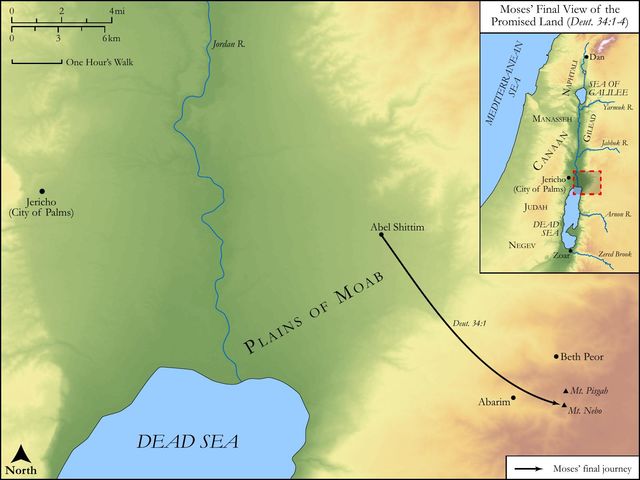
See on the biblical-era map
Study this verse
Public-domain commentary
Matthew Henry
From his Commentary on the Whole Bible. Henry comments on passages, not single verses — this entry covers Deuteronomy 32:19–25. His four-level outline is real structure in the source text, so it is rendered as structure.
The method of this song follows the method of the predictions in the foregoing chapter, and therefore, after the revolt of Israel from God, described in the foregoing verses, here follow immediately the resolves of divine Justice concerning them; we deceive ourselves if we think that God will be thus mocked by a foolish faithless people, that play fast and loose with him.
I.He had delighted in them, but now he would reject them with detestation and disdain, Deu 32:19.
When the Lord saw their treachery, and folly, and base ingratitude, he abhorred them, he despised them, so some read it. Sin makes us odious in the sight of the holy God; and no sinners are so loathsome to him as those that he has called, and that have called themselves, his sons and his daughters, and yet have been provoking to him. Note, The nearer any are to God in profession the more noisome are they to him if they are defiled in a sinful way, Psa 106:39, Psa 106:40.
II.He had given them the tokens of his presence with them and his favour to them; but now he would withdraw and hide his face from them, Deu 32:20. His hiding his face signifies his great displeasure; they had turned their back upon God, and now God would turn his back upon them (compare Jer 18:17 with Jer 2:27); but here it denotes also the slowness of God's proceedings against them in a way of judgment. They began in their apostasy with omissions of good, and so proceeded to commissions of evil. In like manner God will first suspend his favours, and let them see what the issue of that will be, what a friend they lose when they provoke God to depart, and will try whether this will bring them to repentance. Thus we find God hiding himself, as it were, in expectation of the event, Isa 57:17. To justify himself in leaving them he shows that they were such as there was no dealing with; for,
1.They were froward and a people that could not be pleased, or obstinate in sin, and that could not be convinced and reclaimed.
2.They were faithless, and a people that could not be trusted. When he saved them, and took them into covenant, he said, Surely they are children that will not lie (Isa 63:8); but when they proved otherwise, children in whom is no faith, they deserved to be abandoned, and that the God of truth should have no more to do with them.
III.He had done every thing to make them easy and to please them, but now he would do that against them which should be most vexatious to them. The punishment here answers the sin, Deu 32:21.
1.They had provoked God with despicable deities which were not gods at all, but vanities, creatures of their own imagination, that could not pretend either to merit or to repay the respects of their worshippers; the more vain and vile the gods were after which they went a whoring the greater was the offence to that great and good God whom they set them up in competition with and contradiction to. This put two great evils into their idolatry, Jer 2:13.
2.God would therefore plague them with despicable enemies, that were worthless, weak, and inconsiderable, and not deserving the name of a people, which was a great mortification to them, and aggravated the oppressions they groaned under The more base the people were that tyrannised over them the more barbarous they would be (none so insolent as a beggar on horseback), besides that it would be infamous to Israel, who had so often triumphed over great and mighty nations, to be themselves trampled upon by the weak and foolish, and to come under the curse of Canaan, who was to be a servant of servants. But God can make the weakest instrument a scourge to the strongest sinner; and those that by sin insult their might Creator are justly insulted by the meanest of their fellow-creatures. This was remarkably fulfilled in the days of the judges, when they were sometimes oppressed by the very Canaanites themselves, whom they had subdued, Jdg 4:2. But the apostle applies it to the conversion of the Gentiles, who had been a people not in covenant with God, and foolish in divine things, yet were brought into the church, sorely to the grief of the Jews, who upon all occasions showed a great indignation at it, which was both their sin and their punishment, as envy always is, Rom 10:19.
IV.He had planted them in a good land, and replenished them with all good things; but now he would strip them of all their comforts, and bring them to ruin. The judgments threatened are very terrible, Deu 32:22-25.
1.The fire of God's anger shall consume them, Deu 32:22. Are they proud of their plenty? It shall burn up the increase of the earth. Are they confident of their strength? It shall destroy the very foundations of their mountains: there is no fence against the judgments of God when they come with commission to lay all waste. It shall burn to the lowest hell, that is, it shall bring them to the very depth of misery in this world, which yet would be but a faint resemblance of the complete and endless misery of sinners in the other world. The damnation of hell (as our Saviour calls it) is the fire of God's anger, fastening upon the guilty conscience of a sinner, to its inexpressible and everlasting torment, Isa 30:33.
2.The arrows of God's judgments shall be spent upon them, till his quiver is quite exhausted, Deu 32:23. The judgments of God, like arrows, fly swiftly (Psa 64:7), reaching those at a distance who flatter themselves with hopes of escaping them, Psa 21:8, Psa 21:12. They come from an unseen hand, but wound mortally, for God never misses his mark, Kg1 22:34. The particular judgments here threatened are,
(1.)Famine: they shall be burnt, or parched, with hunger.
(2.)Pestilence and other diseases, here called burning heat and bitter destruction.
(3.)The insults of the inferior creatures: the teeth of beasts and the poison of serpents, Deu 32:24.
(4.)War and the fatal consequences of it, Deu 32:25.
[1.]Perpetual frights. When the sword is without, there cannot but be terror within. Co2 7:5, Without were fightings, within were fears. Those who cast off the fear of God are justly exposed to the fear of enemies.
[2.]Universal deaths. The sword of the Lord, when it is sent to lay all waste, will destroy without distinction; neither the strength of the young man nor the beauty of the virgin, neither the innocency of the suckling nor the gravity or infirmity of the man of gray hairs, will be their security from the sword when it devours one as well as another. Such devastation does war make, especially when it is pushed on by men as ravenous as wild beasts and as venomous as serpents, Deu 32:24. See here what mischief sin does, and reckon those fools that make a mock at it.
Historical interpretation
Historical reception
1 surviving comment on this verse from the historical church.
How then shall they call on him in whom they have not believed? and how shall they believe in him of whom they have not heard? and how shall they hear without a preacher? And how shall they preach, except they be sent? as it is written, How beautiful are the feet of them that preach the gospel of peace, and bring glad tidings of good things! But they have not all obeyed the gospel. For Esaias saith, Lord, who hath believed our report? So then faith cometh by hearing, and hearing by the word of God. But I say, Have they not heard? Yes verily, their sound went into all the earth, and their words unto the ends of the world. But I say, Did not Israel know? First Moses saith, I will provoke you to jealousy by them that are no people, and by a foolish nation I will anger you. [Deuteronomy 32:21] But Esaias is very bold, and saith, I was found of them that sought me not; I was made manifest unto them that asked not after me. But to Israel he saith, All day long I have stretched forth my hands unto a disobedient and gainsaying people.
Continue studying Deuteronomy 32:21 across the web’s major study libraries — every link below opens this exact verse, chapter, or book on the destination site.
Read & Compare
 BibleGatewayThis verse in more than 200 translations and 70 languages.
 Bible.comThe YouVersion reader — hundreds of translations, reading plans, and highlights.
 ESV.orgCrossway's official English Standard Version reader.
 NET BibleThe NET translation with 60,000+ translators' notes on every rendering decision.
 STEP BibleTyndale House's free study tool — original text, vocabulary, and scholarly resources.
 BibliaLogos Bible Software's free web reader.
 USCCBThe New American Bible (Revised Edition) with the U.S. bishops' study notes.
Commentaries
 BibleHub CommentariesDozens of classic commentaries on this verse, gathered on one page.
 StudyLightMore than 100 commentary sets — the largest collection on the web.
 BibleRefPlain-English commentary on what this verse means, verse by verse.
 Enduring WordDavid Guzik's free commentary on this chapter, widely used by Bible teachers.
 Bible Study ToolsVerse commentary alongside Greek and Hebrew study aids.
Original Language & Research
- BibleHub InterlinearThe verse word by word — original language, transliteration, and English.
- BibleHub LexiconEvery word's original-language definition and Strong's entry.
 Blue Letter BibleDeep-study tools — Strong's numbers, concordance, and word studies.
 SefariaThe Hebrew text with Rashi and centuries of Jewish commentary.
Sermons, Hymns & Audio


TrulyRandomVerse is not affiliated with these sites and doesn’t control their content. They’re linked because they’re genuinely useful.
Summary
Deuteronomy 32:21, a profound declaration within the "Song of Moses," powerfully articulates God's righteous indignation and sovereign response to Israel's profound covenant infidelity. It reveals the Lord's holy jealousy, provoked by His people's idolatrous worship of worthless "vanities," and declares His intention to reciprocate this jealousy and anger by using a "foolish nation"—the Gentiles—to provoke Israel, foreshadowing a monumental shift in salvation history and demonstrating His ultimate control over all nations and His overarching redemptive plan.
Context
ShowHideLiterary Context
Deuteronomy 32:21 is strategically positioned within the "Song of Moses" (Deuteronomy 32:1-43), a lengthy poetic oracle delivered by Moses just before his death and Israel's long-anticipated entry into the Promised Land. This song functions as a climactic covenant lawsuit, serving as a solemn testimony against Israel. It meticulously recounts God's unwavering faithfulness to His chosen people from their very inception, while simultaneously prophesying their inevitable rebellion, descent into idolatry, and the subsequent divine judgment. The verses immediately preceding verse 21 (Deuteronomy 32:15-20) vividly depict Israel's apostasy—how they "grew fat and kicked," abandoning the God who made them, sacrificing to "demons that were no God," and provoking Him with their "detestable practices." Verse 21, therefore, serves as God's direct, impassioned declaration of His righteous response to this profound betrayal, setting the theological and narrative stage for the detailed description of the disciplinary judgments that follow in Deuteronomy 32:22-35.
Historical & Cultural Context
The "Song of Moses" was delivered to the generation poised to enter Canaan, a land saturated with pagan worship, fertility cults, and deeply entrenched idolatrous practices. The surrounding nations, such as the Canaanites, worshipped a pantheon of gods (e.g., Baal, Asherah) through rituals often involving child sacrifice and sexual immorality, practices utterly anathema to the Lord. Israel, having been miraculously delivered from Egyptian polytheism and given the exclusive covenant of Yahweh at Sinai, was repeatedly warned against adopting these foreign practices, as articulated in passages like Deuteronomy 6:14. The concept of "jealousy" for one's exclusive bride or covenant partner was a well-understood dynamic in Israel, as in the law of jealousy in Numbers 5, making God's "jealousy" a comprehensible, though divinely elevated, expression of His demand for exclusive worship, much like a faithful husband's righteous jealousy over his wife's infidelity. The "foolish nation" or "not a people" refers to the Gentiles, who, from Israel's ethnocentric perspective, were outside the covenant and thus considered inferior or insignificant, highlighting the shocking and counter-intuitive nature of God's chosen instrument of provocation.
Key Themes
ShowHideDeuteronomy 32:21 powerfully articulates several core themes central to the book of Deuteronomy and the broader Old Testament narrative. Firstly, it underscores the theme of Divine Sovereignty and Justice, demonstrating that God remains in absolute control even in judgment, orchestrating events—including the rise of seemingly insignificant nations—to fulfill His purposes and uphold His righteous character, as further emphasized in Deuteronomy 32:35. Secondly, the verse highlights Covenant Fidelity and Infidelity, contrasting God's unwavering loyalty to His covenant with Israel's repeated failure to uphold their end through idolatry, a theme woven throughout the Pentateuch, famously declared in Exodus 34:14. Thirdly, it introduces the profound concept of Divine Jealousy, not as a human flaw, but as a holy, passionate zeal for His exclusive worship and the purity of His relationship with His people, reflecting His unique status as the one true God, as proclaimed in Isaiah 42:8. Finally, the verse contains a remarkable Prophecy of Gentile Inclusion, foreshadowing God's future plan to use non-Israelite nations to provoke Israel to jealousy, a theme later expounded by the Apostle Paul in Romans 11, revealing the expansive nature of God's redemptive purposes beyond the confines of a single nation.
Exposition and Analysis
ShowHideKey Word Analysis
ShowHideThis term (H7065), a primitive root, signifies "to be (causatively, make) zealous," implying a strong, fervent emotion. In the context of God, it is not a human vice but a holy attribute, reflecting His absolute demand for exclusive worship and His passionate commitment to the purity of His covenant relationship with Israel. It signifies His intolerance for rivals and His protective zeal for His own glory and the well-being of His people, whom He considers His treasured possession, as seen in Exodus 20:5.
This word (H1892) literally means "emptiness" or "vanity," often referring to something transitory and unsatisfactory. In the context of idolatry, it emphatically conveys the utter powerlessness, non-existence, and deceptive nature of false gods and idols. They are "nothing" compared to the living, omnipotent God, offering no true substance, help, or salvation, echoing the profound skepticism towards idols found in prophetic literature like Isaiah 44:9-20.
This adjective (H5036) means "stupid," "wicked," or "impious." When applied to a nation, it describes a people considered by Israel to be utterly insignificant, lacking wisdom, understanding, or divine favor. The paradox is that God, in His sovereignty, chooses such a "foolish" or "no-account" nation (i.e., the Gentiles) to execute His judgment and provoke Israel, highlighting His ability to work through unexpected and seemingly inferior instruments to achieve His grand purposes, humbling Israel's pride and demonstrating His universal authority.
Verse Breakdown
ShowHide"They have moved me to jealousy with [that which is] not God; they have provoked me to anger with their vanities:"
This initial clause establishes the profound cause of God's righteous wrath. "They" refers to Israel, who, despite being uniquely chosen and blessed by Yahweh, turned away from Him. Their sin is precisely defined as worshipping "that which is not God," emphasizing the non-existence and impotence of their chosen deities. This is further elaborated by "their vanities," highlighting the emptiness, futility, and worthlessness of idols. The consequence of this profound idolatry is twofold: it "moved" God to holy "jealousy"—a zealous demand for exclusive devotion—and "provoked" Him to righteous "anger," a just and inevitable response to their profound betrayal of the covenant.
"and I will move them to jealousy with [those which are] not a people; I will provoke them to anger with a foolish nation."
This second clause declares God's sovereign, reciprocal judgment. Just as Israel provoked God, He will, in turn, provoke them. The instrument of His divine provocation is described as "those which are not a people" and a "foolish nation"—terms that clearly refer to the Gentiles, nations considered inferior or outside God's covenant by Israel. The divine strategy is to use the inclusion or elevation of these "unworthy" peoples to stir up jealousy and anger within Israel, serving as a form of divine discipline and a catalyst for their eventual return. This prophetic declaration remarkably foreshadows the New Testament era, where God's salvation would extend to the Gentiles, prompting a profound and transformative theological shift.
Literary Devices
ShowHideDeuteronomy 32:21 is rich in Parallelism, a hallmark of Hebrew poetry, where the second line or clause echoes, reinforces, or contrasts with the first. Specifically, it employs Synonymous Parallelism in the first half ("moved me to jealousy with [that which is] not God; they have provoked me to anger with their vanities"), where the two phrases convey similar ideas. The second half utilizes a combination of Antithetical Parallelism and Chiastic Structure. The structure "They have moved me to jealousy... I will move them to jealousy..." creates a powerful Chiasm (A-B-B'-A') that emphasizes the reciprocal nature of God's action and the justice of His response. The phrases "[that which is] not God" and "their vanities" function as a powerful Metonymy or Synecdoche for idolatry, representing the entire system of false worship. The description of the Gentiles as "not a people" and a "foolish nation" employs profound Irony, as these are the very instruments God will use to accomplish His purposes, highlighting the unexpected and often humbling ways God works. The entire verse functions as a Prophecy, declaring future events, and also as a solemn Warning, underscoring the severe consequences of covenant infidelity.
Theological and Thematic Connections
ShowHideDeuteronomy 32:21 stands as a profound theological statement on God's character, His covenant relationship with Israel, and His expansive redemptive plan. It reveals God's holy jealousy as an intrinsic aspect of His nature, demanding exclusive worship from His people, not out of insecurity, but out of His absolute uniqueness and His unwavering commitment to their well-being. Idolatry, therefore, is not merely a breaking of a rule, but a profound act of spiritual adultery that provokes the Creator. Furthermore, the verse introduces the astonishing concept that God would use the "unworthy" Gentiles to provoke Israel, foreshadowing the inclusion of non-Jews into God's saving purposes. This divine strategy demonstrates God's absolute sovereignty over all nations and His ability to turn even human rebellion into an opportunity for demonstrating His justice and extending His grace, ultimately aiming for Israel's restoration. This passage thus serves as a foundational text for understanding the intricate dynamics of God's dealings with both Israel and the nations throughout salvation history.
Reflection and Application
ShowHideDeuteronomy 32:21 serves as a timeless warning and a profound theological insight for believers today. While overt idol worship of statues may be less common in many modern contexts, the principle of "that which is not God" remains acutely relevant. Anything that displaces God from His rightful, supreme position in our hearts, affections, time, and trust—whether it be career success, material possessions, relationships, social media, entertainment, or even self-righteousness—becomes a "vanity" that provokes God's holy jealousy. This verse calls us to a radical self-examination, urging us to identify and dismantle any "altars" we have unwittingly erected to false gods. It reminds us that God's love is not passive; it is a zealous, exclusive love that demands our full allegiance and devotion. Furthermore, the prophecy of God using a "foolish nation" to provoke Israel challenges our ethnocentric or exclusive tendencies, reminding us that God's redemptive plan is expansive and often works through unexpected means and people. We are called to embrace His global vision and to recognize His sovereignty in all circumstances, even those that seem contrary to our expectations or preferences.
Questions for Reflection
ShowHideFAQ
ShowHideWhat does "moved me to jealousy" mean when referring to God?
ShowHideWhen the Bible speaks of God being "moved to jealousy" (Hebrew: qânâʼ), it is crucial to understand this not as a human emotion of envy or insecurity, but as a divine attribute reflecting His absolute uniqueness, holiness, and His rightful demand for exclusive worship. God's jealousy stems from His nature as the one true God, who has entered into an exclusive covenant relationship with His people. When Israel worshipped "that which is not God" or "vanities" (idols), they were engaging in spiritual adultery, breaking their covenant vows. God's jealousy, therefore, is a righteous zeal for His own glory and the purity of His relationship with His beloved people, much like a faithful husband's righteous indignation when his wife is unfaithful. It underscores His intolerance for rivals and His passionate commitment to protect His honor and His people from the destructive nature of idolatry. This is consistent with the declaration in Exodus 34:14, "for you shall worship no other god, for the Lord, whose name is Jealous, is a jealous God."
How does this verse foreshadow the inclusion of the Gentiles?
ShowHideDeuteronomy 32:21 profoundly foreshadows the inclusion of the Gentiles into God's redemptive plan through its declaration: "I will move them to jealousy with [those which are] not a people; I will provoke them to anger with a foolish nation." For Israel, the "not a people" or "foolish nation" referred to the non-Israelite nations, whom they often viewed as outside God's special favor or understanding. This prophecy indicates that God would use these very Gentiles—whom Israel considered insignificant—as instruments to provoke Israel to jealousy. This is precisely what the Apostle Paul expounds upon in Romans 10:19 and especially in Romans 11:11-12, where he explicitly quotes this verse from Deuteronomy. Paul argues that God allowed Israel to stumble so that salvation could extend to the Gentiles, and the spiritual flourishing of the Gentiles would, in turn, provoke Israel to jealousy, ultimately leading to their restoration. Thus, this verse in Deuteronomy is a remarkable early prophetic glimpse into the universal scope of God's salvation, extending beyond ethnic Israel to include all who believe.
What are "vanities" in this context, and why are they provocative to God?
ShowHideIn Deuteronomy 32:21, "vanities" translates the Hebrew word hebel, which literally means "breath," "vapor," or "emptiness." In this context, it refers to idols and false gods. These are called "vanities" because they are utterly worthless, powerless, and futile; they are non-existent in terms of divine reality, offering no true help, salvation, or substance. They are a stark contrast to the living, omnipotent God of Israel. For Israel to turn from the true God, who delivered them from slavery and sustained them, to worship these "vanities" was a profound act of betrayal and ingratitude. It was provocative to God because it denied His unique sovereignty, His covenant faithfulness, and His exclusive claim to their worship. It was an affront to His holiness and an insult to His power, treating Him as if He were no different from these empty, man-made creations. The worship of "vanities" undermines God's glory and leads His people astray, hence provoking His righteous anger and jealousy.
Christ-Centered Fulfillment
ShowHideDeuteronomy 32:21, while rooted in the Old Covenant context of Israel's idolatry and God's disciplinary response, finds its ultimate Christ-centered fulfillment in the expansive redemptive work accomplished through Jesus Christ. The "jealousy" God expresses against Israel's turning to "that which is not God" ultimately points to the singular truth that salvation is found in Him alone, for "there is no other name under heaven given among men by which we must be saved" than that of Jesus, as proclaimed in Acts 4:12. The prophecy that God would provoke Israel with "those which are not a people" and a "foolish nation"—the Gentiles—is profoundly realized in the New Testament. Through Christ's atoning sacrifice, the dividing wall between Jew and Gentile was broken down (Ephesians 2:14), and salvation was offered freely to all who believe, regardless of their ethnic origin. This radical inclusion of the Gentiles, once "aliens from the commonwealth of Israel and strangers to the covenants of promise" (Ephesians 2:12), indeed served to provoke Israel to jealousy, as articulated by Paul in Romans 11:11-12. The "foolishness" of the cross, which is "a stumbling block to Jews and folly to Gentiles," is precisely how God saves those who believe (1 Corinthians 1:23-24). Thus, in Christ, God's holy jealousy is satisfied by the perfect obedience and sacrifice of His Son, and His redemptive plan, initially focused on Israel, expands to embrace all nations, demonstrating His universal sovereignty and the boundless scope of His grace.