


Revelation 19:1
Bible text: King James Version (1769 Blayney text) · Public domain
Bible text: King James Version with Strong's numbers · Public domain
Bible text: Berean Standard Bible · Public domain
Bible text: American Standard Version (1901) · Public domain
Bible text: World English Bible, Messianic edition · Public domain
Bible text: Geneva Bible (1599) · Public domain
Bible text: Young's Literal Translation · Public domain
- ΚαὶKaiandG2532CONJConjunction
- μετὰmetaAfterG3326PREPPreposition
- ταῦταtautathese thingsG3778D-APNDemonstrative pronoun Accusative Plural Neuter
- ἤκουσαēkousaI heardG191V-AAI-1SVerb Aorist Active Indicative 1st Singular
- φωνὴνphōnēna voiceG5456N-ASFNoun Accusative Singular Feminine
- μεγάληνmegalēnloudG3173A-ASFAdjective Accusative Singular Feminine
- ὄχλουochlouof a multitudeG3793N-GSMNoun Genitive Singular Masculine
- πολλοῦpollougreatG4183A-GSMAdjective Genitive Singular Masculine
- ἐνeninG1722PREPPreposition
- τῷtō<the>G3588T-DSMDefinite article Dative Singular Masculine
- οὐρανῷouranōheavenG3772N-DSMNoun Dative Singular Masculine
- λεγόντων·legontōncrying outG3004V-PAP-GPMVerb Present Active Participle Genitive Plural Masculine
- ἁλληλουϊά·hallēlouiaHallelujah!G239PRTParticle or Disjunctive
- ἡhēTheG3588T-NSFDefinite article Nominative Singular Feminine
- σωτηρίαsōtēriasalvationG4991N-NSFNoun Nominative Singular Feminine
- καὶkaiandG2532CONJConjunction
- ἡhētheG3588T-NSFDefinite article Nominative Singular Feminine
- δόξαdoxagloryG1391N-NSFNoun Nominative Singular Feminine
- καὶkaiandG2532CONJConjunction
- ἡhētheG3588T-NSFDefinite article Nominative Singular Feminine
- τιμὴtimēhonorG5092N-NSFNoun Nominative Singular Feminine
- καὶkaiandG2532CONJConjunction
- ἡhētheG3588T-NSFDefinite article Nominative Singular Feminine
- δύναμιςdunamispowerG1411N-NSFNoun Nominative Singular Feminine
- κυρίῳkuriōto LordG2962N-DSM-TNoun Dative Singular Masculine Title
- τοῦtou<the>G3588T-GSMDefinite article Genitive Singular Masculine
- θεοῦtheouGodG2316N-GSM-TNoun Genitive Singular Masculine Title
- ἡμῶνhēmōnof us!G3165P-1GPPersonal pronoun Genitive 1st Plural
English is a literal word-by-word gloss of the Greek, not the KJV's wording. Why?
This is the original text the KJV's translators worked from — each Greek word with its own literal English meaning in this verse, prepared by scholars at Tyndale House, Cambridge. The KJV translates whole sentences, not word by word, so its wording differs: one Greek word can become several English words, and the KJV may choose “charity” where the gloss reads “love”. Both are faithful — they answer different questions. For the KJV's own rendering, switch to the KJV text.
Details
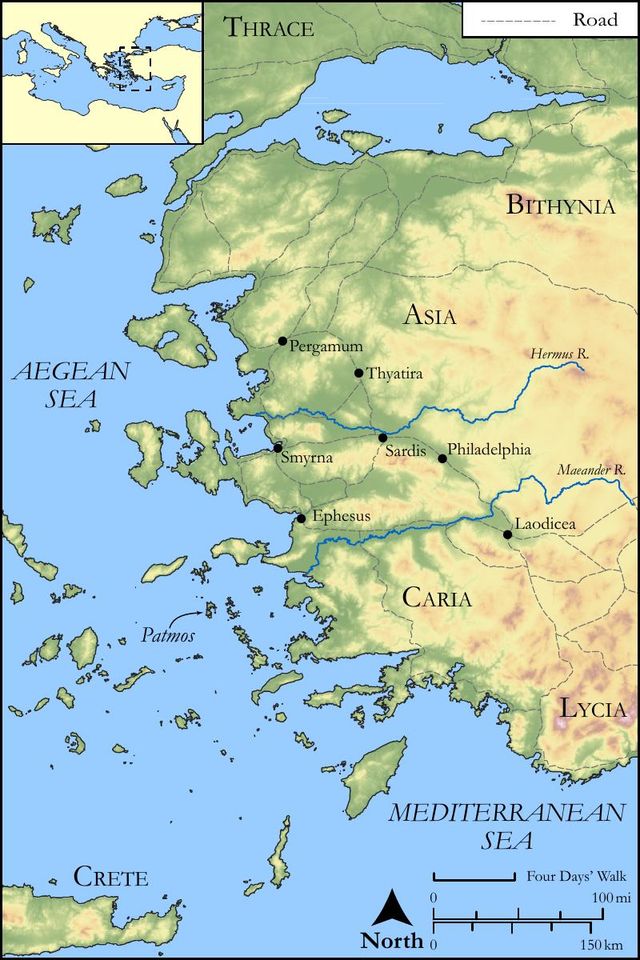
See on the biblical-era maps

Study this verse
Public-domain commentary
Matthew Henry
From his Commentary on the Whole Bible. Henry comments on passages, not single verses — this entry covers Revelation 19:1–4.
The fall of Babylon being fixed, finished, and declared to be irrecoverable in the foregoing chapter, this begins with a holy triumph over her, in pursuance of the order given forth: Rejoice over her, thou heaven, and you holy apostles and prophets, Rev 18:20. They now gladly answer the call; and here you have, 1. The form of their thanksgiving, in that heavenly and most comprehensive word, Alleluia, praise you the Lord: with this they begin, with this they go on, and with this they end (Rev 19:4); their prayers are now turned into praises, their hosannas end in halleluias. 2. The matter of their thanksgiving: they praise him for the truth of his word, and the righteousness of his providential conduct, especially in this great event - the ruin of Babylon, which had been a mother, nurse, and nest of idolatry, lewdness, and cruelty (Rev 19:2), for which signal example of divine justice they ascribe salvation, and glory, and honour, and power, unto our God. 3. The effect of these their praises: when the angels and saints cried Alleluia, her fire burned more fiercely and her smoke ascended for ever and ever, Rev 19:3. The surest way to have our deliverances continued and completed is to give God the glory of what he has done for us. Praising God for what we have is praying in the most effectual manner for what is yet further to be done for us; the praises of the saints blow up the fire of God's wrath against the common enemy. 4. The blessed harmony between the angels and the saints in this triumphant song, Rev 19:4. The churches and their ministers take the melodious sound from the angels, and repeat it; falling down, and worshipping God, they cry, Amen, Alleluia.
Historical interpretation
Six Centuries of Reception
6 surviving comments on this verse. Each one is dated, so this reads as a timeline rather than a list.
Select a marker to jump to its quote. Markers stagger vertically where authors wrote within a few decades of each other.
Concerning the harlot it says, “The smoke from her goes up forever and ever.” That is to say, while the church remains in her joyful praise, the smoke of the destruction of the wicked also remains. Just as the beginning of fire is in smoke, so smoke is present as long as fire remains. I think that the Lord gave us an example of these good and evil persons in the figures of the pauper and the rich man.
This is the voice of the church when the separation has already occurred and when all wicked persons have gone out of her to be consumed with eternal fire. “And their smoke goes up for ever and ever.” Hear, O brothers, and fear and know that Babylon and the harlot whose smoke ascends forever and ever are not to be understood as anything other than lustful, adulterous and arrogant persons. And, therefore, if you wish to avoid these punishments, do not desire to commit such grievous sins.… Is it smoke of a burned-out city that is visible and goes up forever and ever, and not rather [the smoke] of people who remain in their arrogance? It says “it goes up,” not “it will go up,” for in the present age Babylon is always going into destruction and burning up in part, just as Jerusalem is moving into paradise in those saints who leave the world. The Lord showed this in the story of the poor man and the rich man.
The saints exult over the destruction of the traitorous city, and they praise God with the jubilation of praise. What does this describe other than the coming of the retribution of the evildoers and the rewarding of the good? This is that of which Daniel spoke, “Some will rise to everlasting life, and some to everlasting reproach,” so that they might see [this] forever. For this reason it is said, “The smoke from her goes up forever and ever.”
“Hallelujah” signifies divine praise, while “Amen” means “truly” or “let it be so.” This praise is common both from the angelic powers as well as from humankind, which is similar to the angels, and this praise is sent up to God three times on account of the tri-hypostatic deity of the Father and of the Son and of the Holy Spirit, one God. God has “avenged the blood of his servants from the hand” of Babylon and has benefited her inhabitants by accomplishing the cessation of sin through its punishment. The words that the “smoke from the city goes up forever and ever” show either the unforgettable nature of the punishment that has come upon the city, or that although she meted out punishments in part and to some extent, she will, nonetheless, be punished eternally in the coming age.
After this, I heard what seemed to be the loud voice of a great multitude in heaven, saying: Alleluia, etc. Now the Church says this in part; but then it will be said perfectly when the separation has been made, and when it has been more openly avenged.
As from a great multitude I heard a voice from heaven: for the ranks of the holy angels are innumerable; as one of the Fathers said, the ninety-nine are the sheep (see Matt. 18:12, Luke 15:4) preserved and steadfast, the angels, and the one that was led astray is all humanity. And they said, "Alleluia." The word alleluia is Hebrew; it means "praise" or "give thanks, praise God." Therefore they sing a song of thanksgiving at the righteous judgment of spiritual Babylon.
Continue studying Revelation 19:1 across the web’s major study libraries — every link below opens this exact verse, chapter, or book on the destination site.
Read & Compare
 BibleGatewayThis verse in more than 200 translations and 70 languages.
 Bible.comThe YouVersion reader — hundreds of translations, reading plans, and highlights.
 ESV.orgCrossway's official English Standard Version reader.
 NET BibleThe NET translation with 60,000+ translators' notes on every rendering decision.
 STEP BibleTyndale House's free study tool — original text, vocabulary, and scholarly resources.
 BibliaLogos Bible Software's free web reader.
 USCCBThe New American Bible (Revised Edition) with the U.S. bishops' study notes.
Commentaries
 BibleHub CommentariesDozens of classic commentaries on this verse, gathered on one page.
 StudyLightMore than 100 commentary sets — the largest collection on the web.
 BibleRefPlain-English commentary on what this verse means, verse by verse.
 Enduring WordDavid Guzik's free commentary on this chapter, widely used by Bible teachers.
 Bible Study ToolsVerse commentary alongside Greek and Hebrew study aids.
Original Language & Research
- BibleHub InterlinearThe verse word by word — original language, transliteration, and English.
- BibleHub LexiconEvery word's original-language definition and Strong's entry.
 Blue Letter BibleDeep-study tools — Strong's numbers, concordance, and word studies.
 CNTR CollationThe earliest Greek manuscripts of this verse, collated letter by letter.
Sermons, Hymns & Audio


TrulyRandomVerse is not affiliated with these sites and doesn’t control their content. They’re linked because they’re genuinely useful.
Summary
Revelation 19:1 initiates a profound shift in the apocalyptic narrative, moving from the detailed judgments upon "Babylon the Great" to a magnificent crescendo of heavenly worship. This verse introduces the first of four "Alleluia" declarations in this chapter, uttered by a vast multitude in heaven who ascribe salvation, glory, honor, and power to the Lord God, celebrating His righteous justice and sovereign authority in the wake of His decisive victory over evil.
Context
ShowHideLiterary Context
This verse immediately follows the vivid and extensive account of the fall and judgment of "Babylon the Great" in Revelation 17 and Revelation 18. Babylon, a symbolic representation of all worldly systems opposed to God, has been utterly destroyed. The "great voice of much people in heaven" thus represents the triumphant, righteous response to God's definitive act of justice against spiritual and moral corruption. This heavenly acclamation serves as a pivotal transition, setting the stage for the highly anticipated return of Christ and the Marriage Supper of the Lamb later in the chapter, marking the inauguration of God's final kingdom.
Historical & Cultural Context
The book of Revelation was written during a period of intense persecution of Christians under the Roman Empire, likely during the reign of Emperor Domitian (c. AD 95). The imagery of "Babylon" would have resonated deeply with the original audience, as Rome was often referred to as "Babylon" in early Christian writings, symbolizing its oppressive power and idolatry. The call to "Alleluia" (a Hebrew term) would have connected the Christian community to the ancient traditions of Israelite worship, particularly the Psalms, where this exclamation frequently appears as a call to praise God for His mighty acts. This heavenly chorus would have offered immense encouragement and vindication to believers suffering under Roman tyranny, assuring them that God's justice would ultimately prevail over all earthly powers.
Key Themes
ShowHideRevelation 19:1 powerfully contributes to several overarching themes within the book. Firstly, it underscores the theme of Divine Justice and Vindication, as the praise erupts precisely because God has executed righteous judgment against the forces of evil and injustice, providing assurance that His perfect plan will triumph. Secondly, the declaration "Salvation, and glory, and honour, and power, unto the Lord our God" highlights the absolute Sovereignty and Power of God, affirming His ultimate authority and control over all history and events, from creation to consummation, as seen in passages like Revelation 4:11. Thirdly, the verse offers a profound glimpse into Heavenly Worship, portraying a vast, unanimous multitude—likely a combination of angels and redeemed saints—who ceaselessly offer God the ultimate adoration He is due, echoing the continuous worship described in Revelation 5:11-14. Finally, the prominent mention of "Salvation" emphasizes that deliverance from sin, death, and all evil is entirely God's initiative and accomplishment, a theme central to the gospel message found throughout Scripture.
Exposition and Analysis
ShowHideKey Word Analysis
ShowHideFrom Hebrew origin, this adoring exclamation means "Praise ye Jah!" or "Praise the Lord!" Its appearance here, unique to Revelation in the New Testament, signifies a fervent, communal outburst of worship and adoration, celebrating God's triumph and vindication. It is a direct, imperative call to acknowledge God's supreme worthiness.
This word refers to an articulate tone or sound, often implying an address or language. Here, it describes a "great voice," indicating a powerful, resounding, and unified declaration from a vast multitude. It conveys the overwhelming and undeniable nature of the praise being offered in heaven.
Derived from a word meaning "savior," this term denotes rescue or safety, both physically and morally. In this context, it refers to God's act of deliverance from the power of evil and sin, specifically His righteous judgment that brings about a new order of safety and vindication for His people. It highlights God as the ultimate source of rescue and well-being.
Verse Breakdown
ShowHide"And after these things I heard a great voice of much people in heaven,"
This opening clause establishes the chronological sequence ("after these things," referring to the fall of Babylon) and introduces the speaker's (John's) auditory experience. The "great voice" from "much people" signifies an overwhelming, unified chorus, emphasizing the immense scale and unanimity of the heavenly response. The location "in heaven" underscores the divine perspective and the ultimate reality of God's throne room.
"saying, Alleluia;"
This is the immediate, direct utterance of the heavenly multitude. "Alleluia" serves as a powerful, universal acclamation of praise and worship, expressing profound joy and adoration for God's character and actions. Its Hebrew origin connects this heavenly worship to the ancient, eternal praise of God's people.
"Salvation, and glory, and honour, and power, unto the Lord our God:"
This is the core content of the heavenly praise, a fourfold ascription of divine attributes to God. "Salvation" acknowledges His saving acts, particularly His recent judgment. "Glory" refers to His inherent majesty and splendor. "Honour" speaks to His intrinsic worthiness of esteem and reverence. "Power" points to His omnipotence and sovereign ability to execute His will. Together, these attributes declare God's comprehensive supremacy and His absolute right to receive all worship and adoration from His creation. The phrase "unto the Lord our God" affirms His unique identity as the supreme deity and the covenant God of His people.
Literary Devices
ShowHideRevelation 19:1 employs several powerful literary devices to convey its message of triumphant worship. The most prominent is Ascription, where the heavenly multitude directly attributes specific qualities—salvation, glory, honor, and power—to God. This highlights God's inherent character and His worthiness of praise. Hyperbole is evident in "a great voice of much people," suggesting an immeasurable and overwhelming chorus that transcends human comprehension, emphasizing the magnitude of heavenly adoration. The use of Anaphora with the repeated "and" (Greek: kai) before "glory," "honour," and "power" creates a rhythmic, cumulative effect, building the intensity of the praise and underscoring the comprehensive nature of God's attributes. Furthermore, the scene functions as a form of Dramatic Irony for the original readers, who, suffering persecution, would find solace in knowing that while earthly powers seemed to prevail, heaven was already celebrating God's ultimate victory over those very powers.
Theological and Thematic Connections
ShowHideRevelation 19:1 encapsulates a profound theological truth: God's justice is inextricably linked to His salvation, and both are cause for ultimate praise. The heavenly chorus erupts not merely at the destruction of evil, but at the vindication of God's righteous character and the demonstration of His saving power. This passage reaffirms that God is not only sovereign over history but actively intervenes to bring about His perfect will, ensuring that all evil will be judged and His people will ultimately be delivered. It teaches us that true worship flows from a deep understanding and appreciation of God's attributes and His redemptive acts throughout history, culminating in the final triumph of His kingdom.
Reflection and Application
ShowHideRevelation 19:1 serves as a powerful reminder that despite the apparent chaos and injustice in the world, God remains utterly sovereign and perfectly just. For believers, this verse offers immense hope and a call to worship. It encourages us to look beyond our immediate circumstances and align our hearts with the eternal reality of God's triumph. When we witness evil seemingly prospering, or when we face personal trials, this heavenly "Alleluia" reminds us that God is actively working out His purposes, and His justice will ultimately prevail. Our worship, even amidst difficulty, becomes an act of faith, anticipating the day when all creation will join this heavenly chorus. It challenges us to live lives that reflect the glory, honor, and power of the God we serve, trusting in His ultimate salvation.
Questions for Reflection
ShowHideFAQ
ShowHideWhy is "Alleluia" repeated so often in Revelation 19, and what is its significance?
ShowHideThe word "Alleluia" (or Hallelujah) is a transliteration of a Hebrew phrase meaning "Praise ye the Lord!" Its repetition four times in Revelation 19:1-6 is highly significant. It marks a climactic moment of intense, communal, and joyful worship in heaven, specifically in response to God's righteous judgment against "Babylon the Great" and in anticipation of the Marriage Supper of the Lamb and Christ's return. Its repeated use emphasizes the profound joy, vindication, and unanimous adoration felt in heaven as God's ultimate plan of salvation and justice unfolds. It signals a new phase of divine action and the assured triumph of God's kingdom.
Christ-Centered Fulfillment
ShowHideWhile Revelation 19:1 directly praises "the Lord our God," the ultimate fulfillment of this praise is profoundly Christ-centered. The "salvation, glory, honour, and power" ascribed to God are perfectly manifested and mediated through Jesus Christ. He is the Lamb of God who takes away the sin of the world, the very embodiment of God's salvation. The glory of God is seen most clearly in the face of Jesus Christ, who is the "radiance of God's glory and the exact representation of his being" (Hebrews 1:3). All authority and power in heaven and on earth have been given to Him (Matthew 28:18), and it is through His victorious work on the cross and His subsequent reign that God's justice is fully executed and His kingdom established. The "Lord our God" who receives this praise is the Triune God, with Christ as the central figure through whom all divine attributes are revealed and all worship is directed, ultimately leading to the Marriage Supper of the Lamb and His final, triumphant return (Revelation 19:11-16).