


Revelation 4:11
Bible text: King James Version (1769 Blayney text) · Public domain
Bible text: King James Version with Strong's numbers · Public domain
Bible text: Berean Standard Bible · Public domain
Bible text: American Standard Version (1901) · Public domain
Bible text: World English Bible, Messianic edition · Public domain
Bible text: Geneva Bible (1599) · Public domain
Bible text: Young's Literal Translation · Public domain
- ἄξιοςaxiosWorthyG514A-NSMAdjective Nominative Singular Masculine
- εἶeiareG1510V-PAI-2SVerb Present Active Indicative 2nd Singular
- ὁhoYouG3588T-VSMDefinite article Vocative Singular Masculine
- κύριοςkuriosLordG2962N-VSM-TNoun Vocative Singular Masculine Person Gentilic
- λαβεῖνlabeinto receiveG2983V-2AANVerb 2nd Aorist Active Infinitive
- τὴνtēn<the>G3588T-ASFDefinite article Accusative Singular Feminine
- δόξανdoxangloryG1391N-ASFNoun Accusative Singular Feminine
- καὶkaiandG2532CONJConjunction
- τὴνtēn<the>G3588T-ASFDefinite article Accusative Singular Feminine
- τιμὴνtimēnhonorG5092N-ASFNoun Accusative Singular Feminine
- καὶkaiandG2532CONJConjunction
- τὴνtēn<the>G3588T-ASFDefinite article Accusative Singular Feminine
- δύναμινdunaminpowerG1411N-ASFNoun Accusative Singular Feminine
- ὅτιhotiforG3754CONJConjunction
- σὺsuYou yourselfG4771P-2NSPersonal pronoun Nominative 2nd Singular
- ἔκτισαςektisascreatedG2936V-AAI-2SVerb Aorist Active Indicative 2nd Singular
- τὰta<the>G3588T-APNDefinite article Accusative Plural Neuter
- πάνταpantaall thingsG3956A-APNAdjective Accusative Plural Neuter
- καὶkaiandG2532CONJConjunction
- διὰdiabecause ofG1223PREPPreposition
- τὸtotheG3588T-ASNDefinite article Accusative Singular Neuter
- θέλημάthelēmawillG2307N-ASNNoun Accusative Singular Neuter
- σουsouof YouG4771P-2GSPersonal pronoun Genitive 2nd Singular
- ἦσανēsanthey were existingG1510V-IAI-3PVerb Imperfect Active Indicative 3rd Plural
- καὶkaiandG2532CONJConjunction
- ἐκτίσθησανektisthēsanwere createdG2936V-API-3PVerb Aorist Passive Indicative 3rd Plural
English is a literal word-by-word gloss of the Greek, not the KJV's wording. Why?
This is the original text the KJV's translators worked from — each Greek word with its own literal English meaning in this verse, prepared by scholars at Tyndale House, Cambridge. The KJV translates whole sentences, not word by word, so its wording differs: one Greek word can become several English words, and the KJV may choose “charity” where the gloss reads “love”. Both are faithful — they answer different questions. For the KJV's own rendering, switch to the KJV text.
Details
See on the biblical-era maps

Study this verse
Public-domain commentary
Matthew Henry
From his Commentary on the Whole Bible. Henry comments on passages, not single verses — this entry covers Revelation 4:8–11. His three-level outline is real structure in the source text, so it is rendered as structure.
We have considered the sights that the apostle saw in heaven: now let us observe the songs that he heard, for there is in heaven not only that to be seen which will highly please a sanctified eye, but there is that to be heard which will greatly delight a sanctified ear. This is true concerning the church of Christ here, which is a heaven upon earth, and it will be eminently so in the church made perfect in the heaven of heavens.
I.He heard the song of the four living creatures, of the ministers of the church, which refers to the prophet Isaiah's vision, Isa 6:1-13. And here,
1.They adore one God, and one only, the Lord God Almighty, unchangeable and everlasting.
2.They adore three holies in this one God, the Holy Father, the Holy Son, and the Holy Spirit; and these are one infinitely holy and eternal Being, who sits upon the throne, and lives for ever and ever. In this glory the prophet saw Christ, and spoke of him.
II.He heard the adorations of the four-and-twenty elders, that is, of the Christian people represented by them; the ministers led, and the people followed, in the praises of God, Rev 4:10, Rev 4:11. Here observe,
1.The object of their worship, the same with that which the ministers adored: Him that sat on the throne, the eternal everliving God. The true church of God has one and the same object of worship. Two different objects of worship, either co-ordinate or sub-ordinate, would confound the worship and divide the worshippers. It is unlawful to join in divine worship with those who either mistake or multiply the object. There is but one God, and he alone, as God, is worshipped by the church on earth and in heaven.
2.The acts of adoration.
(1.)They fell down before him that sat on the throne; they discovered the most profound humility, reverence, and godly fear.
(2.)They cast their crowns before the throne; they gave God the glory of the holiness wherewith he had crowned their souls on earth and the honour and happiness with which he crowns them in heaven. They owe all their graces and all their glories to him, and acknowledge that his crown is infinitely more glorious than theirs, and that it is their glory to be glorifying God.
3.The words of adoration: they said, Thou art worthy, O Lord, to receive glory, and honour, and power, Rev 4:11. Observe,
(1.)They do not say, We give thee glory, and honour, and power; for what can any creature pretend to give unto God? But they say, thou art worthy to receive glory.
(2.)In this they tacitly acknowledge that God is exalted far above all blessing and praise. He was worthy to receive glory, but they were not worthy to praise, nor able to do it according to his infinite excellences.
4.We have the ground and reason of their adoration, which is threefold: - (1.) He is the Creator of all things, the first cause; and none but the Creator of all things should be adored; no made thing can be the object of religious worship. (2.) He is the preserver of all things, and his preservation is a continual creation; they are created still by the sustaining power of God. All beings but God are dependent upon the will and power of God, and no dependent being must be set up as an object of religious worship. It is the part of the best dependent beings to be worshippers, not to be worshipped. (3.) He is the final cause of all things: For thy pleasure they are and were created. It was his will and pleasure to create all things; he was not put upon it by the will of another; there is no such thing as a subordinate creator, that acts under and by the will and power of another; and, if there were, he ought not to be worshipped. As God made all things at his pleasure, so he made them for his pleasure, to deal with them as he pleases and to glorify himself by them one way or other. Though he delights not in the death of sinners, but rather that they should turn and live, yet he hath made all things for himself, Pro 16:4. Now if these be true and sufficient grounds for religious worship, as they are proper to God alone, Christ must needs be God, one with the Father and Spirit, and be worshipped as such; for we find the same causality ascribed to him. Col 1:16, Col 1:17, All things were created by him and for him, and he is before all things, and by him all things consist.
Historical interpretation
Six Centuries of Reception
3 surviving comments on this verse. Each one is dated, so this reads as a timeline rather than a list.
Select a marker to jump to its quote. Markers stagger vertically where authors wrote within a few decades of each other.
We also know of another translation: “Because you have created all things, and they exist and are created on account of your will.” Indeed, all things existed in the artful wisdom [of God] before they were formed in the act of creation. However, they were created in order that those things might exist also visibly which in their natures are according to the ideas written in the wisdom of God.
Thou art worthy, O Lord our God, to receive glory, and honour, and power, as if they were saying, “These things principally fit thee, from whom, by whom, and in whom is the glory, honor, and power of the saints.” Yet, what is meant by what follows, because thou hast created all things; and for thy will they were, and have been created? If they have been created, how can they have been before they were created? One should know then that they were in the predestination before they came into being in deed.
They say: "To You, Master, all glory is owed; for You brought all things from non-existence into being, and by Your will subjected what did not exist before."
Continue studying Revelation 4:11 across the web’s major study libraries — every link below opens this exact verse, chapter, or book on the destination site.
Read & Compare
 BibleGatewayThis verse in more than 200 translations and 70 languages.
 Bible.comThe YouVersion reader — hundreds of translations, reading plans, and highlights.
 ESV.orgCrossway's official English Standard Version reader.
 NET BibleThe NET translation with 60,000+ translators' notes on every rendering decision.
 STEP BibleTyndale House's free study tool — original text, vocabulary, and scholarly resources.
 BibliaLogos Bible Software's free web reader.
 USCCBThe New American Bible (Revised Edition) with the U.S. bishops' study notes.
Commentaries
 BibleHub CommentariesDozens of classic commentaries on this verse, gathered on one page.
 StudyLightMore than 100 commentary sets — the largest collection on the web.
 BibleRefPlain-English commentary on what this verse means, verse by verse.
 Enduring WordDavid Guzik's free commentary on this chapter, widely used by Bible teachers.
 Bible Study ToolsVerse commentary alongside Greek and Hebrew study aids.
Original Language & Research
- BibleHub InterlinearThe verse word by word — original language, transliteration, and English.
- BibleHub LexiconEvery word's original-language definition and Strong's entry.
 Blue Letter BibleDeep-study tools — Strong's numbers, concordance, and word studies.
 CNTR CollationThe earliest Greek manuscripts of this verse, collated letter by letter.
Sermons, Hymns & Audio


TrulyRandomVerse is not affiliated with these sites and doesn’t control their content. They’re linked because they’re genuinely useful.
Summary
Revelation 4:11 presents the climactic declaration of worship from the twenty-four elders in John's heavenly vision, articulating the profound and foundational reasons for God's supreme worthiness. This verse serves as a magnificent doxology, acknowledging God's absolute sovereignty and His unparalleled role as the magnificent Creator of all things, whose divine pleasure is the ultimate purpose and sustaining force behind all existence. It encapsulates the essence of heavenly adoration directed towards the Almighty.
Context
ShowHideLiterary Context
Revelation 4:11 stands as the crescendo of worship in the heavenly throne room vision described in Revelation 4. The chapter opens with John being invited into heaven (Revelation 4:1), where he immediately encounters the awe-inspiring majesty of God seated on His throne, surrounded by a rainbow, lightning, thunder, and seven lamps of fire. Around the throne are twenty-four elders clothed in white and crowned with gold, and four living creatures full of eyes. The four living creatures initiate ceaseless praise (Revelation 4:8), which then prompts the twenty-four elders to fall down, cast their crowns before the throne, and join in the adoration, culminating in the declaration of Revelation 4:11. This verse thus serves as the theological justification for the worship witnessed, setting the stage for the unfolding of God's redemptive plan in subsequent chapters.
Historical & Cultural Context
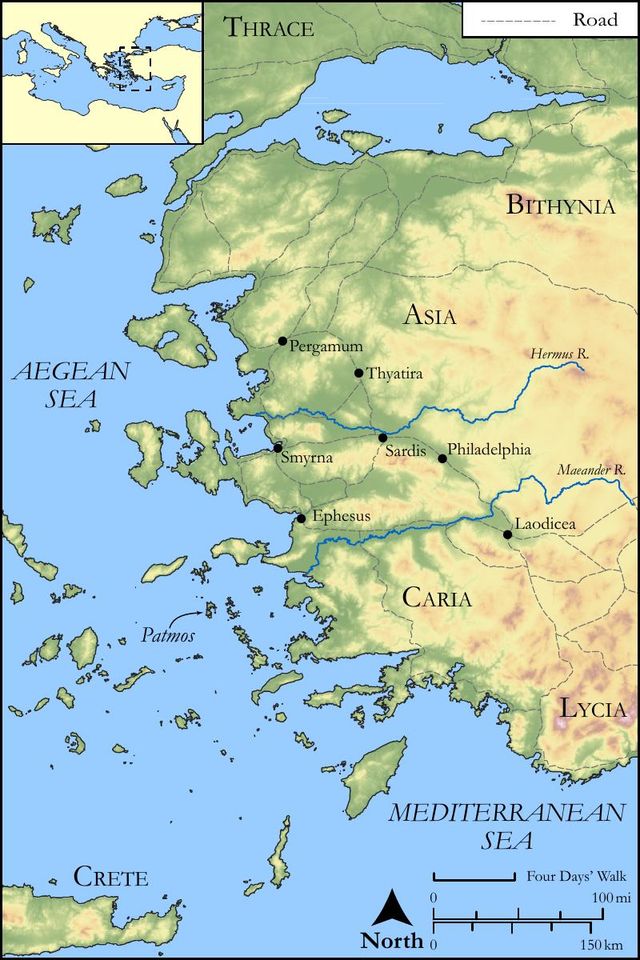
The Book of Revelation was written by John, likely while exiled on the island of Patmos, to seven churches in Asia Minor (Revelation 1:4). These churches were facing various pressures, including Roman persecution, internal heresies, and societal temptations to compromise their faith. In this context, the vision of God's unshakeable sovereignty and worthiness in Revelation 4 would have been immensely encouraging and strengthening. It reminded believers that despite earthly turmoil, a powerful and glorious God was in ultimate control, worthy of all worship and trust. The imagery of a throne room, elders, and crowns would have resonated with Roman imperial court imagery, but here, the ultimate authority is unequivocally God, not Caesar, challenging the prevailing imperial cult.
Key Themes
ShowHideThis verse powerfully contributes to several overarching themes within Revelation and the broader biblical narrative. Foremost is the theme of God's Sovereignty and Absolute Authority, as He is depicted as the one on the throne, the Creator of all things. This reinforces the truth that God is the ultimate ruler, deserving of all power and honor, a theme echoed throughout the Old Testament (e.g., Psalm 93:1). Another crucial theme is Worship, portraying it as the natural and appropriate response to God's inherent worthiness and creative acts. The ceaseless worship in heaven serves as a model for earthly worship, emphasizing its centrality to the Christian life. Finally, the verse highlights the Purpose of Creation, asserting that all things exist "for thy pleasure," underscoring that creation is not accidental but a deliberate act of God's will, designed to bring Him glory and delight, a concept found from Genesis 1 to the New Testament (Colossians 1:16).
Exposition and Analysis
ShowHideKey Word Analysis
ShowHideThis term (G514) signifies being deserving, comparable, or suitable, as if drawing praise. In this context, it asserts God's intrinsic and inherent right to receive the highest forms of adoration, glory, honor, and power. His very nature and His actions, particularly His act of creation, establish Him as uniquely qualified to be the sole object of ultimate worship.
This verb (G2936) means to fabricate, found, or form originally. It highlights God's unique role as the originator and architect of all existence. The use of both "hast created" (aorist, completed past action) and "were created" (aorist passive, emphasizing the result) underscores the totality and finality of God's creative work, establishing Him as the ultimate source of everything.
While often translated as "will" or "desire," thélēma (G2307) in this verse emphasizes God's sovereign purpose, determination, and delight in His creative act. It reveals that creation was not a necessity or an accident, but an expression of God's good and perfect volition, bringing Him satisfaction and fulfilling His divine intent. The universe exists because it pleased God for it to exist.
Verse Breakdown
ShowHide"Thou art worthy, O Lord, to receive glory and honour and power:"
This opening clause is a direct address and declaration of God's inherent merit. The "Lord" (G2962, kýrios') signifies His supreme authority and mastery. The elders declare that God is uniquely qualified ("worthy," G514, áxios') to be the recipient of "glory" (G1391, dóxa'), which speaks to His manifest splendor and majesty; "honour" (G5092, timḗ'), referring to the high esteem and value due to Him; and "power" (G1411, dýnamis'), acknowledging His omnipotence and ability to do all things. These three attributes represent the full spectrum of divine praise and recognition.
"for thou hast created all things,"
This clause provides the primary justification for God's worthiness. The conjunction "for" (G3754, hóti') introduces the reason. God's act of creating "all things" (G3956, pâs')—all creation, visible and invisible—establishes His unique position as the ultimate source and sustainer of existence. His creative power is the fundamental basis for His claim to universal worship.
"and for thy pleasure they are and were created."
This final clause reveals the profound purpose behind God's creation. The phrase "for thy pleasure" (G1223, diá' + G2307, thélēma') signifies that creation originated from and exists for God's sovereign will and delight. The repetition of "they are and were created" (G1526, eisí' + G2936, ktízō') emphasizes both the ongoing existence ("are") and the initial act of creation ("were created") as being entirely purposed by God's good pleasure. This means the universe and everything within it exists to manifest God's glory and bring Him satisfaction.
Literary Devices
ShowHideRevelation 4:11 is rich with Doxology, a formal expression of praise to God, which is its primary literary function. The verse employs Repetition ("created" appears twice) to emphasize God's role as the sole Creator and the ultimate purpose of His creation. The use of the Triad of "glory and honour and power" is a common biblical device that signifies completeness and totality, indicating that God is worthy of every conceivable form of adoration and authority. Furthermore, the verse functions as a Justification, providing the theological rationale ("for thou hast created all things") for the worship being offered, moving beyond mere emotional praise to a reasoned declaration of God's inherent worth. The entire scene in Revelation 4 is a powerful example of Symbolism, with the throne, elders, and living creatures all representing aspects of God's majesty and the heavenly court, culminating in this declaration of His absolute supremacy.
Theological and Thematic Connections
ShowHideRevelation 4:11 is a foundational statement of biblical theology, anchoring our understanding of God's nature and the purpose of existence. It unequivocally establishes God as the sovereign Creator, whose inherent worthiness demands and receives universal worship. This truth underpins the entire biblical narrative, from the initial act of creation in Genesis 1 to the consummation of all things in the new heavens and new earth. The verse teaches that God's pleasure is not merely a byproduct but the ultimate reason for creation, meaning all things exist to bring Him glory and satisfaction. This theological bedrock provides meaning and purpose to human existence, reminding us that our lives find their highest calling when lived in alignment with God's will and for His praise. It refutes any notion of an accidental universe or a God who is distant or disengaged, instead presenting a God who is intimately involved as the source and sustainer of all that is.
Reflection and Application
ShowHideRevelation 4:11 calls us to a profound reorientation of our perspective, shifting our focus from self-centered concerns to God's supreme worthiness and His ultimate pleasure. When we grasp that all things, including ourselves, exist "for thy pleasure," it transforms our understanding of purpose, suffering, and joy. Our lives are not random occurrences but intentional expressions of God's good will, designed to bring Him glory. This truth inspires genuine worship that is not contingent on circumstances but rooted in God's unchanging character as Creator and Sovereign. It encourages us to live lives that reflect His design, finding our deepest satisfaction in aligning our desires with His and participating in His ongoing work in the world. Recognizing God's absolute power and authority as the Creator provides immense comfort and stability in a chaotic world, reminding us that He is in control and His purposes will prevail.
Questions for Reflection
ShowHideFAQ
ShowHideWhy is God declared "worthy" in this verse, and what does that mean for us?
ShowHideGod is declared "worthy" (Greek: áxios) in Revelation 4:11 because He inherently possesses all the attributes that demand ultimate adoration, honor, and power. The primary reason given is His role as the Creator of "all things." This means His worthiness is not earned or bestowed by creation, but is an intrinsic quality of His divine being. For us, this declaration serves as the foundational truth for all true worship. It means our worship should be rooted in who God is—His character, His power, His majesty—rather than solely on what He does for us. It calls us to acknowledge His absolute supremacy and to direct our lives, thoughts, and actions towards His glory, recognizing that He alone is deserving of ultimate praise.
Christ-Centered Fulfillment
ShowHideWhile Revelation 4:11 focuses on God the Father as the Creator, the New Testament consistently reveals that the Son, Jesus Christ, was intimately involved in and is the agent of all creation. Colossians 1:16 explicitly states, "For by him were all things created, that are in heaven, and that are in earth, visible and invisible, whether they be thrones, or dominions, or principalities, or powers: all things were created by him, and for him." Similarly, John 1:3 declares, "All things were made by him; and without him was not any thing made that was made." Therefore, the worthiness ascribed to the Creator in Revelation 4:11 is ultimately shared by Christ, who is the very embodiment of God's glory and the means by which God's pleasure in creation is realized. As the Creator, Sustainer, and ultimate purpose of all things, Jesus is worthy of the same "glory and honour and power" that the elders ascribe to God on the throne, a truth powerfully affirmed later in Revelation when the Lamb also receives worship (Revelation 5:12-13). He is the one through whom God's creative purpose finds its ultimate expression and fulfillment, ensuring that creation indeed exists for God's eternal pleasure.