


Matthew 6:13
Bible text: King James Version (1769 Blayney text) · Public domain
Bible text: King James Version with Strong's numbers · Public domain
Bible text: Berean Standard Bible · Public domain
Bible text: American Standard Version (1901) · Public domain
Bible text: World English Bible, Messianic edition · Public domain
Bible text: Geneva Bible (1599) · Public domain
Bible text: Young's Literal Translation · Public domain
- καὶkaiAndG2532CONJConjunction
- μὴmēnotG3361PRT-NNegative Particle Negative
- εἰσενέγκῃςeisenegkēsmay you leadG1533V-2AAS-2SVerb 2nd Aorist Active Subjunctive 2nd Singular
- ἡμᾶςhēmasusG3165P-1APPersonal pronoun Accusative 1st Plural
- εἰςeisintoG1519PREPPreposition
- πειρασμόνpeirasmontemptationG3986N-ASMNoun Accusative Singular Masculine
- ἀλλὰallabutG235CONJConjunction
- ῥῦσαιrhusaido deliverG4506V-ADM-2SVerb Aorist Middle Deponent Imperative 2nd Singular
- ἡμᾶςhēmasusG3165P-1APPersonal pronoun Accusative 1st Plural
- ἀπὸapofromG575PREPPreposition
- τοῦtoutheG3588T-GSNDefinite article Genitive Singular Neuter
- πονηροῦponērouevil’G4190A-GSNAdjective Genitive Singular Neuter
- ὅτιhotiSinceG3754CONJConjunction
- σοῦsouof youG4771P-2GSPersonal pronoun Genitive 2nd Singular
- ἐστινestinisG1510V-PAI-3SVerb Present Active Indicative 3rd Singular
- ἡhētheG3588T-NSFDefinite article Nominative Singular Feminine
- βασιλείαbasileiakingdomG932N-NSFNoun Nominative Singular Feminine
- καὶkaiandG2532CONJConjunction
- ἡhētheG3588T-NSFDefinite article Nominative Singular Feminine
- δύναμιςdunamispowerG1411N-NSFNoun Nominative Singular Feminine
- καὶkaiandG2532CONJConjunction
- ἡhētheG3588T-NSFDefinite article Nominative Singular Feminine
- δόξαdoxagloryG1391N-NSFNoun Nominative Singular Feminine
- εἰςeisintoG1519PREPPreposition
- τοῦςtoustheG3588T-APMDefinite article Accusative Plural Masculine
- αἰῶναςaiōnasagesG165N-APMNoun Accusative Plural Masculine
- ἀμήνamēnAmenG281INJ-HEBInterjection
English is a literal word-by-word gloss of the Greek, not the KJV's wording. Why?
This is the original text the KJV's translators worked from — each Greek word with its own literal English meaning in this verse, prepared by scholars at Tyndale House, Cambridge. The KJV translates whole sentences, not word by word, so its wording differs: one Greek word can become several English words, and the KJV may choose “charity” where the gloss reads “love”. Both are faithful — they answer different questions. For the KJV's own rendering, switch to the KJV text.
Details
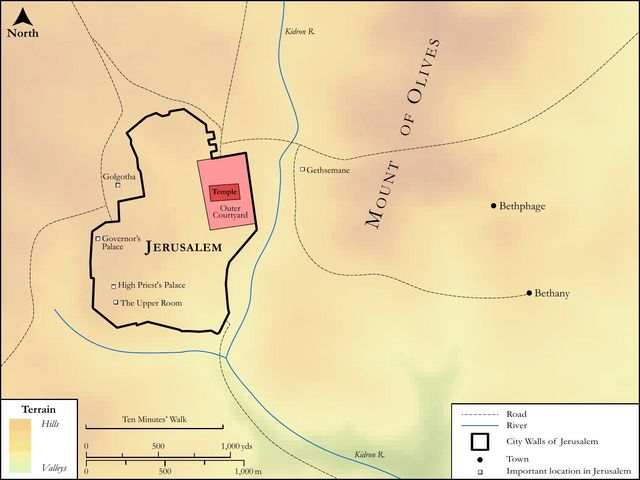
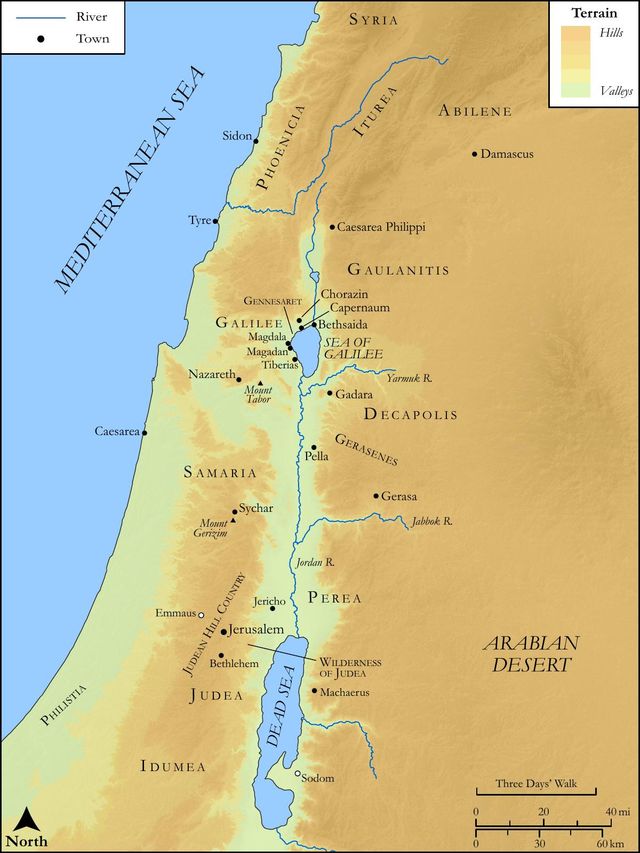
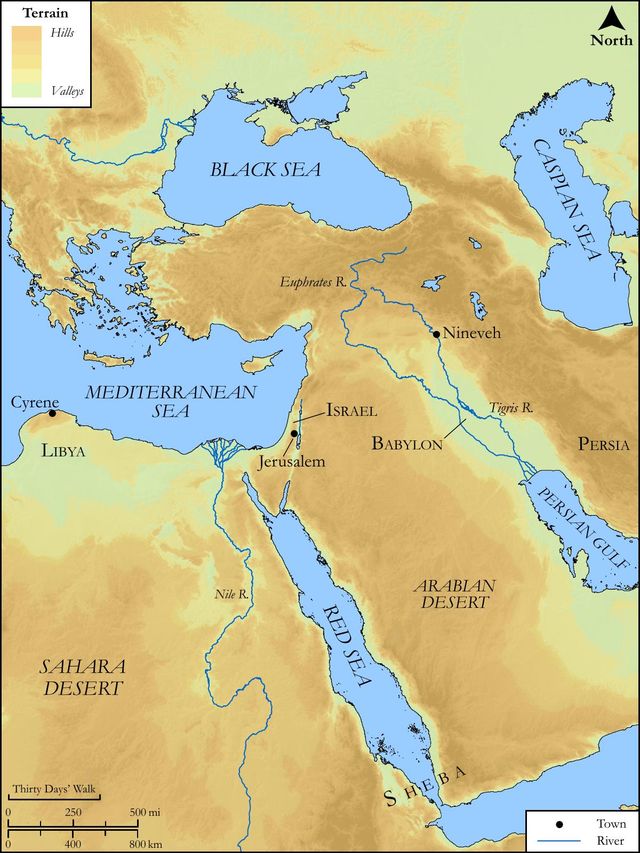
See on the biblical-era maps
Study this verse
Public-domain commentary
Matthew Henry
From his Commentary on the Whole Bible. Henry comments on passages, not single verses — this entry covers Matthew 6:9–15. His four-level outline is real structure in the source text, so it is rendered as structure.
When Christ had condemned what was amiss, he directs to do better; for his are reproofs of instruction. Because we know not what to pray for as we ought, he here helps our infirmities, by putting words into our mouths; after this manner therefore pray ye, Mat 6:9. So many were the corruptions that had crept into this duty of prayer among the Jews, that Christ saw it needful to give a new directory for prayer, to show his disciples what must ordinarily be the matter and method of their prayer, which he gives in words that may very well be used as a form; as the summary or contents of the several particulars of our prayers. Not that we are tied up to the use of this form only, or of this always, as if this were necessary to the consecrating of our other prayers; we are here bid to pray after this manner, with these words, or to this effect. That in Luke differs from this; we do not find it used by the apostles; we are not here taught to pray in the name of Christ, as we are afterward; we are here taught to pray that the kingdom might come which did come when the Spirit was poured out: yet, without doubt, it is very good to use it as a form, and it is a pledge of the communion of saints, it having been used by the church in all ages, at least (says Dr. Whitby) from the third century. It is our Lord's prayer, it is of his composing, of his appointing; it is very compendious, yet very comprehensive, in compassion to our infirmities in praying. The matter is choice and necessary, the method instructive, and the expression very concise. It has much in a little, and it is requisite that we acquaint ourselves with the sense and meaning of it, for it is used acceptably no further than it is used with understanding and without vain repetition.
The Lord's prayer (as indeed every prayer) is a letter sent from earth to heaven. Here is the inscription of the letter, the person to whom it is directed, our Father; the where, in heaven; the contents of it in several errands of request; the close, for thine is the kingdom; the seal, Amen; and if you will, the date too, this day.
Plainly thus: there are three parts of the prayer.
I.The preface, Our Father who art in heaven.
Before we come to our business, there must be a solemn address to him with whom our business lies; Our Father. Intimating, that we must pray, not only alone and for ourselves, but with and for others; for we are members one of another, and are called into fellowship with each other. We are here taught to whom to pray, to God only, and not to saints and angels, for they are ignorant of us, are not to have the high honours we give in prayer, nor can give favours we expect. We are taught how to address ourselves to God, and what title to give him, that which speaks him rather beneficent than magnificent, for we are to come boldly to the throne of grace.
1.We must address ourselves to him as our Father, and must call him so. He is a common Father to all mankind by creation, Mal 2:10; Act 17:28. He is in a special manner a Father to the saints, by adoption and regeneration (Eph 1:5; Gal 4:6); and an unspeakable privilege it is. Thus we must eye him in prayer, keep up good thoughts of him, such as are encouraging and not affrighting; nothing more pleasing to God, nor pleasant to ourselves, than to call God Father. Christ in prayer mostly called God Father. If he be our Father, he will pity us under our weaknesses and infirmities (Psa 103:13), will spare us (Mal 3:17), will make the best of our performances, though very defective, will deny us nothing that is good for us, Luk 11:11-13. We have access with boldness to him, as to a father, and have an advocate with the Father, and the Spirit of adoption. When we come repenting of our sins, we must eye God as a Father, as the prodigal did (Luk 15:18; Jer 3:19); when we come begging for grace, and peace, and the inheritance and blessing of sons, it is an encouragement that we come to God, not as an unreconciled, avenging Judge, but as a loving, gracious, reconciled Father in Christ, Jer 3:4.
2.As our Father in heaven: so in heaven as to be every where else, for the heaven cannot contain him; yet so in heaven as there to manifest his glory, for it is his throne (Psa 103:19), and it is to believers a throne of grace: thitherward we must direct our prayers, for Christ the Mediator is now in heaven, Heb 8:1. Heaven is out of sight, and a world of spirits, therefore our converse with God in prayer must be spiritual; it is on high, therefore in prayer we must be raised above the world, and lift up our hearts, Psa 5:1. Heaven is a place of perfect purity, and we must therefore lift up pure hands, must study to sanctify his name, who is the Holy One, and dwells in that holy place, Lev 10:3. From heaven God beholds the children of men, Psa 33:13, Psa 33:14. And we must in prayer see his eye upon us: thence he has a full and clear view of all our wants and burdens and desires, and all our infirmities. It is the firmament of his power likewise, as well as of his prospect, Psa 150:1. He is not only, as a Father, able to help us, able to do great things for us, more than we can ask or think; he has wherewith to supply our needs, for every good gift is from above. He is a Father, and therefore we may come to him with boldness, but a Father in heaven, and therefore we must come with reverence, Ecc 5:2. Thus all our prayers should correspond with that which is our great aim as Christians, and that is, to be with God in heaven. God and heaven, the end of our whole conversation, must be particularly eyed in every prayer; there is the centre to which we are all tending. By prayer, we send before us thither, where we profess to be going.
II.The petitions, and those are six; the three first relating more immediately to God and his honour, the three last to our own concerns, both temporal and spiritual; as in the ten commandments, the four first teach us our duty toward God, and the last six our duty toward our neighbour. The method of this prayer teaches us to seek first the kingdom of God and his righteousness, and then to hope that other things shall be added.
1.Hallowed be thy name. It is the same word that in other places is translated sanctified. But here the old word hallowed is retained, only because people were used to it in the Lord's prayer. In these words,
(1.)We give glory to God; it may be taken not as a petition, but as an adoration; as that, the Lord be magnified, or glorified, for God's holiness is the greatness and glory of all his perfections. We must begin our prayers with praising God, and it is very fit he should be first served, and that we should give glory to God, before we expect to receive mercy and grace from him. Let him have praise of his perfections, and then let us have the benefit of them.
(2.)We fix our end, and it is the right end to be aimed at, and ought to be our chief and ultimate end in all our petitions, that God may be glorified; all our other requests must be in subordination to this, and in pursuance of it. "Father, glorify thyself in giving me my daily bread and pardoning my sins," etc. Since all is of him and through him, all must be to him and for him. In prayer our thoughts and affections should be carried out most to the glory of God. The Pharisees made their own name the chief end of their prayers (Mat 6:5, to be seen of men), in opposition to which we are directed to make the name of God our chief end; let all our petitions centre in this and be regulated by it. "Do so and so for me, for the glory of thy name, and as far as is for the glory of it." (3.) We desire and pray that the name of God, that is, God himself, in all that whereby he has made himself known, may be sanctified and glorified both by us and others, and especially by himself. "Father, let thy name be glorified as a Father, and a Father in heaven; glorify thy goodness and thy highness, thy majesty and mercy. Let thy name be sanctified, for it is a holy name; no matter what becomes of our polluted names, but, Lord, what wilt thou do to thy great name?" When we pray that God's name may be glorified,
[1.]We make a virtue of necessity; for God will sanctify his own name, whether we desire it or not; I will be exalted among the heathen, Psa 46:10.
[2.]We ask for that which we are sure shall be granted; for when our Saviour prayed, Father glorify thy name, it was immediately answered, I have glorified it, and will glorify it again.
2.Thy kingdom come. This petition has plainly a reference to the doctrine which Christ preached at this time, which John Baptist had preached before, and which he afterwards sent his apostles out to preach - the kingdom of heaven is at hand. The kingdom of your Father who is in heaven, the kingdom of the Messiah, this is at hand, pray that it may come. Note, We should turn the word we hear into prayer, our hearts should echo to it; does Christ promise, surely I come quickly? our hearts should answer, Even so, come. Ministers should pray over the word: when they preach, the kingdom of God is at hand, they should pray, Father, thy kingdom come. What God has promised we must pray for; for promises are given, not to supersede, but to quicken and encourage prayer; and when the accomplishment of a promise is near and at the door, when the kingdom of heaven is at hand, we should then pray for it the more earnestly; thy kingdom come; as Daniel set his face to pray for the deliverance of Israel, when he understood that the time of it was at hand, Dan 9:2. See Luk 19:11. It was the Jews' daily prayer to God, Let him make his kingdom reign, let his redemption flourish, and let his Messiah come and deliver his people. Dr. Whitby, ex Vitringa. "Let thy kingdom come, let the gospel be preached to all and embraced by all; let all be brought to subscribe to the record God has given in his word concerning his Son, and to embrace him as their Saviour and Sovereign. Let the bounds of the gospel-church be enlarged, the kingdom of the world be made Christ's kingdom, and all men become subjects to it, and live as becomes their character."
3.Thy will be done in earth as it is in heaven. We pray that God's kingdom being come, we and others may be brought into obedience to all the laws and ordinances of it. By this let it appear that Christ's kingdom is come, let God's will be done; and by this let is appear that it is come as a kingdom of heaven, let it introduce a heaven upon earth. We make Christ but a titular Prince, if we call him King, and do not do his will: having prayed that he may rule us, we pray that we may in every thing be ruled by him. Observe,
(1.)The thing prayed for, thy will be done; "Lord, do what thou pleasest with me and mine; Sa1 3:18. I refer myself to thee, and am well satisfied that all thy counsel concerning me should be performed." In this sense Christ prayed, not my will, but thine be done. "Enable me to do what is pleasing to thee; give me that grace that is necessary to the right knowledge of thy will, and an acceptable obedience to it. Let thy will be done conscientiously by me and others, not our own will, the will of the flesh, or the mind, not the will of men (Pe1 4:2), much less Satan's will (Joh 8:44), that we may neither displease God in any thing we do (ut nihil nostrum displiceat Deo), nor be displeased at any thing God does" (ut nihil Dei displiceat nobis).
(2.)The pattern of it, that it might be done on earth, in this place of our trial and probation (where our work must be done, or it never will be done), as it is done in heaven, that place of rest and joy. We pray that earth may be made more like heaven by the observance of God's will (this earth, which, through the prevalency of Satan's will, has become so near akin to hell), and that saints may be made more like the holy angels in their devotion and obedience. We are on earth, blessed be God, not yet under the earth; we pray for the living only, not for the dead that have gone down into silence.
4.Give us this day our daily bread. Because our natural being is necessary to our spiritual well-being in this world, therefore, after the things of God's glory, kingdom, and will, we pray for the necessary supports and comforts of this present life, which are the gifts of God, and must be asked of him, Ton arton epiousion - Bread for the day approaching, for all the remainder of our lives. Bread for the time to come, or bread for our being and subsistence, that which is agreeable to our condition in the world (Pro 30:8), food convenient for us and our families, according to our rank and station.
Every word here has a lesson in it: (1.) We ask for bread; that teaches us sobriety and temperance; we ask for bread, not dainties, not superfluities; that which is wholesome, though it be not nice. (2.) We ask for our bread; that teaches us honesty and industry: we do not ask for the bread out of other people's mouths, not the bread of deceit (Pro 20:17), not the brad of idleness (Pro 31:27), but the bread honestly gotten. (3.) We ask for our daily bread; which teaches us not to take thought for the morrow (Mat 6:34), but constantly to depend upon divine Providence, as those that live from hand to mouth. (4.) We beg of God to give it us, not sell it us, nor lend it us, but give it. The greatest of men must be beholden to the mercy of God for their daily bread, (5.) We pray, "Give it to us; not to me only, but to others in common with me." This teaches us charity, and a compassionate concern for the poor and needy. It intimates also, that we ought to pray with our families; we and our households eat together, and therefore ought to pray together. (6.) We pray that God would give us this day; which teaches us to renew the desire of our souls toward God, as the wants of our bodies are renewed; as duly as the day comes, we must pray to our heavenly Father, and reckon we could as well go a day without meat, as without prayer.
5.And forgive us our debts, as we forgive our debtors, This is connected with the former; and forgive, intimating, that unless our sins be pardoned, we can have no comfort in life, or the supports of it. Our daily bread does but feed us as lambs for the slaughter, if our sins be not pardoned. It intimates, likewise, that we must pray for daily pardon, as duly as we pray for daily bread. He that is washed, needeth to wash his feet. Here we have,
(1.)A petition; Father in heaven forgive us our debts, our debts to thee. Note,
[1.]Our sins are our debts; there is a debt of duty, which, as creatures, we owe to our Creator; we do not pray to be discharged from that, but upon the non-payment of that there arises a debt of punishment; in default of obedience to the will of God, we become obnoxious to the wrath of God; and for not observing the precept of the law, we stand obliged to the penalty. A debtor is liable to process, so are we; a malefactor is a debtor to the law, so are we.
[2.]Our hearts' desire and prayer to our heavenly Father every day should be, that he would forgive us our debts; that the obligation to punishment may be cancelled and vacated, that we may not come into condemnation; that we may be discharged, and have the comfort of it. In suing out the pardon of our sins, the great plea we have to rely upon is the satisfaction that was made to the justice of God for the sin of man, by the dying of the Lord Jesus our Surety, or rather Bail to the action, that undertook our discharge.
(2.)An argument to enforce this petition; as we forgive our debtors. This is not a plea of merit, but a plea of grace. Note, Those that come to God for the forgiveness of their sins against him, must make conscience of forgiving those who have offended them, else they curse themselves when they say the Lord's prayer. Our duty is to forgive our debtors; as to debts of money, we must not be rigorous and severe in exacting them from those that cannot pay them without ruining themselves and their families; but this means debt of injury; our debtors are those that trespass against us, that smite us (Mat 5:39, Mat 5:40), and in strictness of law, might be prosecuted for it; we must forbear, and forgive, and forget the affronts put upon us, and the wrongs done us; and this is a moral qualification for pardon and peace; it encourages to hope, that God will forgive us; for if there be in us this gracious disposition, it is wrought of God, and therefore is a perfection eminently and transcendently in himself; it will be an evidence to us that he has forgiven us, having wrought in us the condition of forgiveness.
6.And lead us not into temptation, but deliver us from evil. This petition is expressed,
(1.)Negatively: Lead us not into temptation. Having prayed that the guilt of sin may be removed, we pray, as it is fit, that we may never return again to folly, that we may not be tempted to it. It is not as if God tempted any to sin; but, "Lord, do not let Satan loose upon us; chain up that roaring lion, for he is subtle and spiteful; Lord, do not leave us to ourselves (Psa 19:13), for we are very weak; Lord, do not lay stumbling-blocks and snares before us, nor put us into circumstances that may be an occasion of falling." Temptations are to be prayed against, both because of the discomfort and trouble of them, and because of the danger we are in of being overcome by them, and the guilt and grief that then follow.
(2.)Positively: But deliver us from evil; apo tou ponērou - from the evil one, the devil, the tempter; "keep us, that either we may not be assaulted by him, or we may not be overcome by those assaults:" Or from the evil thing, sin, the worst of evils; an evil, an only evil; that evil thing which God hates, and which Satan tempts men to and destroys them by. "Lord, deliver us from the evil of the world, the corruption that is in the world through lust; from the evil of every condition in the world; from the evil of death; from the sting of death, which is sin: deliver us from ourselves, from our own evil hearts: deliver us from evil men, that they may not be a snare to us, nor we a prey to them."
III.The conclusion:
For thine is the kingdom, and the power and the glory, for ever. Amen. Some refer this to David's doxology, Ch1 29:11. Thine, O Lord, is the greatness. It is,
1.A form of plea to enforce the foregoing petitions. It is our duty to plead with God in prayer, to fill our mouth with arguments (Job 23:4) not to move God, but to affect ourselves; to encourage the faith, to excite our fervency, and to evidence both. Now the best pleas in prayer are those that are taken from God himself, and from that which he has made known of himself. We must wrestle with God in his own strength, both as to the nature of our pleas and the urging of them. The plea here has special reference to the first three petitions; "Father in heaven, thy kingdom come, for thine is the kingdom; thy will be done, for thine is the power; hallowed be thy name, for thine is the glory." And as to our own particular errands, these are encouraging: "Thine is the kingdom; thou hast the government of the world, and the protection of the saints, thy willing subjects in it;" God gives and saves like a king. "Thine is the power, to maintain and support that kingdom, and to make good all thine engagements to thy people." Thine is the glory, as the end of all that which is given to, and done for, the saints, in answer to their prayers; for their praise waiteth for him. This is matter of comfort and holy confidence in prayer.
2.It is a form of praise and thanksgiving. The best pleading with God is praising of him; it is the way to obtain further mercy, as it qualifies us to receive it. In all our addresses to God, it is fit that praise should have a considerable share, for praise becometh the saints; they are to be our God for a name and for a praise. It is just and equal; we praise God, and give him glory, not because he needs it - he is praised by a world of angels, but because he deserves it; and it is our duty to give him glory, in compliance with his design in revealing himself to us. Praise is the work and happiness of heaven; and all that would go to heaven hereafter, must begin their heaven now. Observe, how full this doxology is, The kingdom, and the power, and the glory, it is all thine. Note, It becomes us to be copious in praising God. A true saint never thinks he can speak honourably enough of God: here there should be a gracious fluency, and this for ever. Ascribing glory to God for ever, intimates an acknowledgement, that it is eternally due, and an earnest desire to be eternally doing it, with angels and saints above, Psa 71:14.
Lastly, To all this we are taught to affix our Amen, so be it. God's Amen is a grant; his fiat is, it shall be so; our Amen is only a summary desire; our fiat is, let it be so: it is in the token of our desire and assurance to be heard, that we say Amen. Amen refers to every petition going before, and thus, in compassion to our infirmities, we are taught to knit up the whole in one word, and so to gather up, in the general, what we have lost and let slip in the particulars. It is good to conclude religious duties with some warmth and vigour, that we may go from them with a sweet savour upon our spirits. It was of old the practice of good people to say, Amen, audibly at the end of every prayer, and it is a commendable practice, provided it be done with understanding, as the apostle directs (Co1 14:16), and uprightly, with life and liveliness, and inward expressions, answerable to that outward expression of desire and confidence.
Most of the petitions in the Lord's prayer had been commonly used by the Jews in their devotions, or words to the same effect: but that clause in the fifth petition, As we forgive our debtors, was perfectly new, and therefore our Saviour here shows for what reason he added it, not with any personal reflection upon the peevishness, litigiousness, and ill nature of the men of that generation, though there was cause enough for it, but only from the necessity and importance of the thing itself. God, in forgiving us, has a peculiar respect to our forgiving those that have injured us; and therefore, when we pray for pardon, we must mention our making conscience of that duty, not only to remind ourselves of it, but to bind ourselves to it. See that parable, Mat 18:23-35. Selfish nature is loth to comply with this, and therefore it is here inculcated, Mat 6:14, Mat 6:15.
1.In a promise. If ye forgive, your heavenly Father will also forgive. Not as if this were the only condition required; there must be repentance and faith, and new obedience; but as where other graces are in truth, there will be this, so this will be a good evidence of the sincerity of our other graces. He that relents toward his brother, thereby shows that he repents toward his God. Those which in the prayer are called debts, are here called trespasses, debts of injury, wrongs done to us in our bodies, goods, or reputation: trespasses is an extenuating term for offences, paraptōmata - stumbles, slips, falls. Note, It is a good evidence, and a good help of our forgiving others, to call the injuries done us by a mollifying, excusing name. Call them not treasons, but trespasses; not wilful injuries, but casual inadvertencies; peradventure it was an oversight (Gen 43:12), therefore make the best of it. We must forgive, as we hope to be forgiven; and therefore must not only bear no malice, nor mediate revenge, but must not upbraid our brother with the injuries he has done us, nor rejoice in any hurt that befalls him, but must be ready to help him and do him good, and if he repent and desire to be friends again, we must be free and familiar with him, as before.
2.In a threatening. "But if you forgive not those that have injured you, that is a bad sign you have not the other requisite conditions, but are altogether unqualified for pardon: and therefore your Father, whom you call Father, and who, as a father, offers you his grace upon reasonable terms, will nevertheless not forgive you. And if other grace be sincere, and yet you be defective greatly in forgiving, you cannot expect the comfort of your pardon, but to have your spirit brought down by some affliction or other to comply with this duty." Note, Those who would have found mercy with God must show mercy to their brethren; no can we expect that he should stretch out the hands of his favour to us, unless we lift up to him pure hands, without wrath, Ti1 2:8. If we pray in anger, we have reason to fear God will answer in anger. It has been said, Prayers made in wrath are written in gall. What reason is it that God should forgive us the talents we are indebted to him, if we forgive not our brethren the pence they are indebted to us? Christ came into the world as the great Peace-Maker, and not only to reconcile us to God, but one to another, and in this we must comply with him. It is great presumption and of dangerous consequence, for any to make a light matter of that which Christ here lays such a stress upon. Men's passions shall not frustrate God's word.
Historical interpretation
Nineteen Centuries of Reception
17 surviving comments on this verse. Each one is dated, so this reads as a timeline rather than a list.
Select a marker to jump to its quote. Markers stagger vertically where authors wrote within a few decades of each other.
But let not your fasts be with the hypocrites; for they fast on the second and fifth day of the week; but do ye fast on the fourth day and the Preparation (Friday). Neither pray as the hypocrites; but as the Lord commanded in His Gospel, thus pray: Our Father who art in heaven, hallowed be Thy name. Thy kingdom come. Thy will be done, as in heaven, so on earth. Give us to-day our daily (needful) bread, and forgive us our debt as we also forgive our debtors. And bring us not into temptation, but deliver us from the evil one (or, evil); for Thine is the power and the glory for ever. Thrice in the day thus pray.
And certainly, when the Son of God has faith's protection absolutely committed to Him, beseeching it of the Father, from whom He receives all power in heaven and on earth, how entirely out of the question is it that the devil should have the assailing of it in his own power! But in the prayer prescribed to us, when we say to our Father, "Lead us not into temptation " (now what greater temptation is there than persecution?), we acknowledge that that comes to pass by His will whom we beseech to exempt us from it.
To complete the prayer that was so well arranged, Christ added that we should pray not only that our sins be forgiven but also that they be resisted completely: “Lead us not into temptation,” that is, do not allow us to be led by the tempter. God forbid that our Lord should seem to be the tempter, as if he were not aware of one’s faith or were eager to upset it! That weakness and spitefulness belongs to the devil. For even in the case of Abraham, God had ordered the sacrifice of his son not to tempt his faith but to prove it. In him he might illustrate that which he was later to teach, that no one should hold loved ones dearer than God.… The disciples were so tempted to desert their Lord that they indulged in sleep instead of prayer. Therefore the phrase that balances and interprets “lead us not into temptation” is “but deliver us from evil.”
25. Moreover, the Lord of necessity admonishes us to say in prayer, "And suffer us not to be led into temptation." In which words it is shown that the adversary can do nothing against us except God shall have previously permitted it; so that all our fear, and devotion, and obedience may be turned towards God, since in our temptations nothing is permitted to evil unless power is given from Him. This is proved by divine Scripture, which says, "Nebuchadnezzar king of Babylon came to Jerusalem, and besieged it; and the Lord delivered it into his hand."67 But power is given to evil against us according to our sins, as it is written, "Who gave Jacob for a spoil, and Israel to those who make a prey of Him? Did not the Lord, against whom they sinned, and would not walk in His ways, nor hear His law? and He has brought upon them the anger of His wrath."68 And again, when Solomon sinned, and departed from the Lord's commandments and ways, it is recorded, "And the Lord stirred up Satan against Solomon himself."69
26. Now power is given against us in two modes: either for punishment when we sin, or for glory when we are proved, as we see was done with respect to Job; as God Himself sets forth, saying, "Behold, all that he hath I give unto thy hands; but be careful not to touch himself."70 And the Lord in His Gospel says, in the time of His passion, "Thou couldest have no power against me unless it were given thee from above."71 But when we ask that we may not come into temptation, we are reminded of our infirmity and weakness in that we thus ask, lest any should insolently vaunt himself, lest any should proudly and arrogantly assume anything to himself, lest any should take to himself the glory either of confession or of suffering as his own, when the Lord Himself, teaching humility, said, "Watch and pray, that ye enter not into temptation; the spirit indeed is willing, but the flesh is weak; "72 so that while a humble and submissive confession comes first, and all is attributed to God, whatever is sought for suppliantly with fear and honour of God, may be granted by His own loving-kindness.
27. After all these things, in the conclusion of the prayer comes a brief clause, which shortly and comprehensively sums up all our petitions and our prayers. For we conclude by saying, "But deliver us from evil," comprehending all adverse things which the enemy attempts against us in this world, from which there may be a faithful and sure protection if God deliver us, if He afford His help to us who pray for and implore it. And when we say, Deliver us from evil, there remains nothing further which ought to be asked. When we have once asked for God's protection against evil, and have obtained it, then against everything which the devil and the world work against us we stand secure and safe. For what fear is there in this life, to the man whose guardian in this life is God?
(Tr. vii. 17.) Herein it is shown that the adversary can nothing avail against us, unless God first permit him; so that all our fear and devotion ought to be addressed to God.
(ubi sup.) And in so praying we are cautioned of our own infirmity and weakness, lest any presumptuously exalt himself; that while a humble and submissive confession comes first, and all is referred to God, whatever we suppliantly apply for may by His gracious favour be supplied.
(Tr. vii. 18.) After all these preceding petitions at the conclusion of the prayer comes a sentence, comprising shortly and collectively the whole of our petitions and desires. For there remains nothing beyond for us to ask for, after petition made for God's protection from evil; for that gained, we stand secure and safe against all things that the Devil and the world work against us. What fear hath he from this life, who has God through life for his guardian?
(ubi sup.) We need not wonder, dearest brethren, that this is God's prayer, seeing how His instruction comprises all our petitioning, in one saving sentence. This had already been prophesied by Isaiah the Prophet, A short word will God make in the whole earth. (Is. 10:22.) For when our Lord Jesus Christ came unto all, and gathering together the learned alike and the unlearned, did to every sex and age set forth the precepts of salvation, He made a full compendium of His instructions, that the memory of the scholars might not labour in the heavenly discipline, but accept with readiness whatsoever was necessary into a simple faith.
"And lead us not into temptation; but deliver us from the evil one: for Thine is the kingdom, and the power, and the glory, for ever. Amen."
Here He teaches us plainly our own vileness, and quells our pride, instructing us to deprecate all conflicts, instead of rushing upon them. For so both our victory will be more glorious, and the devil's overthrow more to be derided. I mean, that as when we are dragged forth, we must stand nobly; so when we are not summoned, we should be quiet, and wait for the time of conflict; that we may show both freedom from vainglory, and nobleness of spirit.
And He here calls the devil "the wicked one," commanding us to wage against him a war that knows no truce, and implying that he is not such by nature. For wickedness is not of those things that are from nature, but of them that are added by our own choice. And he is so called pre-eminently, by reason of the excess of his wickedness, and because he, in no respect injured by us, wages against us implacable war. Wherefore neither said He, "deliver us from the wicked ones," but, "from the wicked one;" instructing us in no case to entertain displeasure against our neighbors, for what wrongs soever we may suffer at their hands, but to transfer our enmity from these to him, as being himself the cause of all our wrongs.
Having then made us anxious as before conflict, by putting us in mind of the enemy, and having cut away from us all our remissness; He again encourages and raises our spirits, by bringing to our remembrance the King under whom we are arrayed, and signifying Him to be more powerful than all. "For Thine," saith He, "is the kingdom, and the power, and the glory."
Doth it not then follow, that if His be the kingdom, we should fear no one, since there can be none to withstand, and divide the empire with him. For when He saith, "Thine is the kingdom," He sets before us even him, who is warring against us, brought into subjection, though he seem to oppose, God for a while permitting it. For in truth he too is among God's servants, though of the degraded class, and those guilty of offense; and he would not dare set upon any of his fellow servants, had he not first received license from above. And why say I, "his fellow servants?" Not even against swine did he venture any outrage, until He Himself allowed him; nor against flocks, nor herds, until he had received permission from above.
"And the power," saith He. Therefore, manifold as thy weakness may be, thou mayest of right be confident, having such a one to reign over thee, who is able fully to accomplish all, and that with ease, even by thee.
"And the glory, for ever. Amen." Thus He not only frees thee from the dangers that are approaching thee, but can make thee also glorious and illustrious. For as His power is great, so also is His glory unspeakable, and they are all boundless, and no end of them. Seest thou how He hath by every means anointed His Champion, and hath framed Him to be full of confidence?
Having made us anxious by the mention of our enemy, in this that He has said Deliver us from evil, He again restores confidence by that which is added in some copies, For thine is the kingdom, and the power, and the glory, since if His be the kingdom, none need fear, since even he who fights against us, must be His subject. But since His power and glory are infinite, He can not only deliver from evil, but also make glorious.
(Vers. 11-13.) Give us this day our daily bread. And forgive us our debts, as we also have forgiven our debtors. And lead us not into temptation, but deliver us from evil. The word 'supersubstantial,' which we have expressed, is rendered in Greek as 'ἐπιούσιον,' a term that the Septuagint translators frequently translate as 'περιούσιον.' Therefore, we examined the Hebrew, and wherever they translated 'περιούσιον,' we found 'Sgolla,' which Symmachus translated as 'ἐξαίρετον,' meaning exceptional or outstanding, although he did interpret it differently in one particular instance. Therefore, when we ask that God give us extraordinary or exceptional bread, we ask for Him who says: 'I am the living bread that came down from heaven' (John 6:51). In the Gospel called according to the Hebrews, instead of 'supersubstantial bread,' I found the word 'mahar,' which means 'for tomorrow'; so the meaning is: 'Give us our bread for tomorrow,' that is, for the future, today. We can also understand the 'supersubstantial bread' in another way, referring to the bread that is above all substances and exceeds all creatures. Others simply think, according to the words of the Apostle (I Tim. VI, 8): Having food and clothing, with these we are content, that we should only be concerned with providing for the holy present food. Hence, in the following it is commanded: Do not worry about tomorrow.
Amen. The sign of the Lord's Prayer is: which the Eagle interprets faithfully: we, truly, can say.
Amen, which appears here at the close, is the seal of the Lord's Prayer. Aquila rendered 'faithfully'—we may perhaps 'truly.'
The sixth petition is, And bring us not into temptation. Some manuscripts have the word lead, which is, I judge, equivalent in meaning: for both translations have arisen from the one Greek word which is used. But many parties in prayer express themselves thus, Suffer us not to be led into temptation; that is to say, explaining in what sense the word lead is used. For God does not Himself lead, but suffers that man to be led into temptation whom He has deprived of His assistance, in accordance with a most hidden arrangement, and with his deserts. Often, also, for manifest reasons, He judges him worthy of being so deprived, and allowed to be led into temptation. But it is one thing to be led into temptation, another to be tempted. For without temptation no one can be proved, whether to himself, as it is written, He that has not been tempted, what manner of things does he know? or to another, as the apostle says, And your temptation in my flesh you despised not: for from this circumstance he learned that they were steadfast, because they were not turned aside from charity by those tribulations which had happened to the apostle according to the flesh. For even before all temptations we are known to God, who knows all things before they happen.
When, therefore, it is said, The Lord your God tempts (proves) you, that He may know if you love Him, the words that He may know are employed for what is the real state of the case, that He may make you know: just as we speak of a joyful day, because it makes us joyful; of a sluggish frost, because it makes us sluggish; and of innumerable things of the same sort, which are found either in ordinary speech, or in the discourse of learned men, or in the Holy Scriptures. And the heretics who are opposed to the Old Testament, not understanding this, think that the brand of ignorance, as it were, is to be placed upon Him of whom it is said, The Lord your God tempts you: as if in the Gospel it were not written of the Lord, And this He said to tempt (prove) him, for He Himself knew what He would do. For if He knew the heart of him whom He was tempting, what is it that He wished to see by tempting him? But in reality, that was done in order that he who was tempted might become known to himself, and that he might condemn his own despair, on the multitudes being filled with the Lord's bread, while he had thought they had not enough to eat.
Here, therefore, the prayer is not, that we should not be tempted, but that we should not be brought into temptation: as if, were it necessary that any one should be examined by fire, he should pray, not that he should not be touched by the fire, but that he should not be consumed. For the furnace proves the potter's vessels, and the trial of tribulation righteous men. Joseph therefore was tempted with the allurement of debauchery, but he was not brought into temptation. Susanna was tempted, but she was not led or brought into temptation; and many others of both sexes: but Job most of all, in regard to whose admirable steadfastness in the Lord his God, those heretical enemies of the Old Testament, when they wish to mock it with sacrilegious mouth, brandish this above other weapons, that Satan begged that he should be tempted. For they put the question to unskilful men by no means able to understand such things, how Satan could speak with God: not understanding (for they cannot, inasmuch as they are blinded by superstition and controversy) that God does not occupy space by the mass of His corporeity; and thus exist in one place, and not in another, or at least have one part here, and another elsewhere: but that He is everywhere present in His majesty, not divided by parts, but everywhere complete. But if they take a fleshly view of what is said, The heaven is my throne, and the earth is my footstool, — to which passage our Lord also bears testimony, when He says, Swear not at all: neither by heaven, for it is God's throne; nor by the earth, for it is His footstool, — what wonder if the devil, being placed on earth, stood before the feet of God, and spoke something in His presence? For when will they be able to understand that there is no soul, however wicked, which can yet reason in any way, in whose conscience God does not speak? For who but God has written the law of nature in the hearts of men?— that law concerning which the apostle says: For when the Gentiles, which have not the law, do by nature the things contained in the law, these, having not the law, are a law unto themselves: which show the work of the law written in their hearts, their conscience also bearing them witness, and their thoughts the meanwhile accusing or else excusing one another, in the day when the Lord shall judge the secrets of men. And therefore, as in the case of every rational soul, which thinks and reasons, even though blinded by passion, we attribute whatever in its reasoning is true, not to itself but to the very light of truth by which, however faintly, it is according to its capacity illuminated, so as to perceive some measure of truth by its reasoning; what wonder if the depraved spirit of the devil, perverted though it be by lust, should be represented as having heard from the voice of God Himself, i.e. from the voice of the very Truth, whatever true thought it has entertained about a righteous man whom it was proposing to tempt? But whatever is false is to be attributed to that lust from which he has received the name of devil. Although it is also the case that God has often spoken by means of a corporeal and visible creature whether to good or bad, as being Lord and Governor of all, and Disposer according to the merits of every deed: as, for instance, by means of angels, who appeared also under the aspect of men; and by means of the prophets, saying, Thus says the Lord. What wonder then, if, though not in mere thought, at least by means of some creature fitted for such a work, God is said to have spoken with the devil?
And let them not imagine it unworthy of His dignity, and as it were of His righteousness, that God spoke with him: inasmuch as He spoke with an angelic spirit, although one foolish and lustful, just as if He were speaking with a foolish and lustful human spirit. Or let such parties themselves tell us how He spoke with that rich man, whose most foolish covetousness He wished to censure, saying: You fool, this night your soul shall be required of you: then whose shall those things be which you have provided? Certainly the Lord Himself says so in the Gospel, to which those heretics, whether they will or no, bend their necks. But if they are puzzled by this circumstance, that Satan asks from God that a righteous man should be tempted; I do not explain how it happened, but I compel them to explain why it is said in the Gospel by the Lord Himself to the disciples, Behold, Satan has desired to have you, that he may sift you as wheat; and He says to Peter, But I have prayed for you, that your faith fail not. And when they explain this to me, they explain to themselves at the same time that which they question me about. But if they should not be able to explain this, let them not dare with rashness to blame in any book what they read in the Gospel without offense.
Temptations, therefore, take place by means of Satan not by his power, but by the Lord's permission, either for the purpose of punishing men for their sins, or of proving and exercising them in accordance with the Lord's compassion. And there is a very great difference in the nature of the temptations into which each one may fall. For Judas, who sold his Lord, did not fall into one of the same nature as Peter fell into, when, under the influence of terror, he denied his Lord. There are also temptations common to man, I believe, when every one, though well disposed, yet yielding to human frailty, falls into error in some plan, or is irritated against a brother, in the earnest endeavour to bring him round to what is right, yet a little more than Christian calmness demands: concerning which temptations the apostle says, There has no temptation taken you but such as is common to man; while he says at the same time, But God is faithful, who will not suffer you to be tempted above that you are able; but will with the temptation also make a way to escape, that you may be able to bear it. And in that sentence he makes it sufficiently evident that we are not to pray that we may not be tempted, but that we may not be led into temptation. For we are led into temptation, if such temptations have happened to us as we are not able to bear. But when dangerous temptations, into which it is ruinous for us to be brought and led, arise either from prosperous or adverse temporal circumstances, no one is broken down by the irksomeness of adversity, who is not led captive by the delight of prosperity.
The seventh and last petition is, But deliver us from evil. For we are to pray not only that we may not be led into the evil from which we are free, which is asked in the sixth place; but that we may also be delivered from that into which we have been already led. And when this has been done, nothing will remain terrible, nor will any temptation at all have to be feared. And yet in this life, so long as we carry about our present mortality, into which we were led by the persuasion of the serpent, it is not to be hoped that this can be the case; but yet we are to hope that at some future time it will take place: and this is the hope which is not seen, of which the apostle, when speaking, said, But hope which is seen is not hope. But yet the wisdom which is granted in this life also, is not to be despaired of by the faithful servants of God. And it is this, that we should with the most wary vigilance shun what we have understood, from the Lord's revealing it, is to be shunned; and that we should with the most ardent love seek after what we have understood, from the Lord's revealing it, is to be sought after. For thus, after the remaining burden of this mortality has been laid down in the act of dying, there shall be perfected in every part of man at the fit time, the blessedness which has been begun in this life, and which we have from time to time strained every nerve to lay hold of and secure.
“Lead us not into temptation, but deliver us from evil.” Will this, again, be necessary in the life to come? “Lead us not into temptation” will not be said except where there can be temptation. We read in the book of holy Job, “Is not the life of man upon earth a temptation?” What, then, do we pray for? Hear what. The apostle James saith, “Let no man say when he is tempted, I am tempted of God.” He spoke of those evil temptations whereby men are deceived and brought under the yoke of the devil. This is the kind of temptation he spoke of. For there is another sort of temptation which is called a proving; of this kind of temptation it is written, “The Lord your God tempteth (proveth) you to know whether ye love Him.” What means “to know?” “To make you know,” for He knoweth already. With that kind of temptation whereby we are deceived and seduced, God tempteth no man.
What, then, has He hereby taught us? To fight against our lusts. For ye are about to put away your sins in holy baptism; but lusts will still remain, wherewith ye must fight after that ye are regenerate. For a conflict with your own selves still remains. Let no enemy from without be feared: conquer thine own self, and the whole world is conquered. What can any tempter from without, whether the devil or the devil’s minister, do against thee? Whosoever sets the hope of gain before thee to seduce thee, let him only find no covetousness in thee; and what can he who would tempt thee by gain effect? Whereas, if covetousness be found in thee, thou takest fire at the sight of gain, and art taken by the bait of this corrupt food; but if he find no covetousness in thee the trap remains spread in vain.
Or should the tempter set before thee some woman of surpassing beauty; if chastity be within, iniquity from without is overcome. Therefore, that he may not take thee with the bait of a strange woman’s beauty, fight with thine own lust within; thou hast no sensible perception of thine enemy, but of thine own concupiscence thou hast. Thou dost not see the devil, but the object that engageth thee thou dost see. Get the mastery, then, over that of which thou art sensible within. Fight valiantly, for He who hath regenerated thee is thy Judge; He hath arranged the lists, He is making ready the crown.
And truly it is a great temptation, dearly beloved, it is a great temptation in this life, when that in us is the subject of temptation whereby we obtain pardon if, in any of our temptations, we have fallen. It is a frightful temptation when that is taken from us whereby we may be healed from the wounds of other temptations. I know that ye have not yet understood me. Give me your attention that ye may understand. Suppose avarice tempts a man and he is conquered in any single temptation (for sometimes even a good wrestler and fighter may get roughly handled): avarice, then, has got the better of a man, good wrestler tho he be, and he has done some avaricious act. Or there has been a passing lust; it has not brought the man to fornication nor reached unto adultery—for when this does take place the man must at all events be kept back from the criminal act. But he “hath seen a woman to lust after her”: he has let his thoughts dwell on her with more pleasure than was right; he has admitted the attack; excellent combatant tho he be, he has been wounded, but he has not consented to it; he has beaten back the motion of his lust, has chastised it with the bitterness of grief; he has beaten it back, and has prevailed. Still, in the very fact that he had slipped has he ground for saying, “Forgive us our debts.” And so of all other temptations, it is a hard matter that in them all there should not be occasion for saying, “Forgive us our debts.”
What, then, is that frightful temptation which I have mentioned, that grievous, that tremendous temptation, which must be avoided with all our strength, with all our resolution; what is it? When we go about to avenge ourselves. Anger is kindled and the man burns to be avenged. Oh, frightful temptation! Thou art losing that whereby thou hadst to attain pardon for other faults. If thou hadst committed any sin as to other senses and other lusts, hence mightst thou have had thy cure in that thou mightst say, “Forgive us our debts, as we also forgive our debtors.” But whoso instigateth thee to take vengeance will lose for thee the power thou hadst to say, “As we also forgive our debtors.” When that power is lost all sins will be retained; nothing at all is remitted.
Our Lord and Master and Savior, knowing this dangerous temptation in this life when He taught us six or seven petitions in this prayer, took none of them for Himself to treat of and to commend to us with greater earnestness than this one.
(Enchir. 73.) Forasmuch as this so great goodness, namely, to forgive debts, and to love our enemies, cannot be possessed by so great a number as we suppose to be heard in the use of this prayer; without doubt the terms of this stipulation are fulfilled, though one have not attained to such proficiency as to love his enemy; yet if when he is requested by one, who has trespassed against him, that he would forgive him, he do forgive him from his heart; for he himself desires to be forgiven then at least when he asks forgiveness. And if one have been moved by a sense of his sin to ask forgiveness of him against whom he has sinned, he is no more to be thought on as an enemy, that there should be any thing hard in loving him, as there was when he was in active enmity.
(Serm. in Mont. ii. 9.) Some copies read, Carry us not, an equivalent word, both being a translation of one Greek word, εἰσενέγκης. Many in interpreting say, 'Suffer us not to be led into temptation,' as being what is implied in the word lead. For God does not of Himself lead a man, but suffer him to be led from whom He has withdrawn His aid.
(ubi sup.) But it is one thing to be led into temptation, another to be tempted; for without temptation none can be approved, either to himself or to another; but every man is fully known to God before all trial. Therefore we do not here pray that we may not be tempted, but that we may not be led into temptation. As if one who was to be burnt alive should pray not that he should not be touched by fire, but that he should not be burnt. For we are then led into temptation when such temptations befal us as we are not able to resist.
(Epist. 130, 11.) When then we say, Lead us not into temptation, what we ask is, that we may not, deserted by His aid, either consent through the subtle snares, or yield to the forcible might, of any temptation.
(De Don. Pers. 5.) When the Saints pray, Lead us not into temptation, what else do they pray for than that they may persevere in their sanctity. This once granted—and that it is God's gift this, that of Him we ask it, shows-none of the Saints but holds to the end his abiding holiness; for none ceases to hold on his Christian profession, till he be first overtaken of temptation. Therefore we seek not to be led into temptation that this may not happen to us; and if it does not happen, it is God that does not permit it to happen; for there is nothing done, but what He either does, or suffers to be done. He is therefore able to turn our wills from evil to good, to raise the fallen and to direct him into the way that is pleasing to Himself, to whom not in vain we plead, Lead us not into temptation. For whoso is not led into temptation of his own evil will, is free of all temptation; for, each man is tempted of his own lust. (James 1:14.) God would have us pray to Him that we may not be led into temptation, though He could have granted it without our prayer, that we might be kept in mind who it is from whom we receive all benefits. Let the Church therefore observe her daily prayers; she prays that the unbelieving may believe, therefore it is God that turns men to the faith; she prays that the believers may persevere; God gives them perseverance even unto the end.
But deliver us from evil. Amen.
(ubi sup.) We ought to pray not only that we may not be led into evil from which we are at present free; but further that we may be set free from that into which we have already been led. Therefore it follows, Deliver us from evil.
(Epist. 130, 11.) This petition with which the Lord's Prayer concludes is of such extent, that a Christian man in whatever tribulation cast, will in this petition utter groans, in this shed tears, here begin and here end his prayer. And therefore follows Amen, by which is expressed the strong desire of him that prays.
(Epist. 130, 12.) And whatever other words we may use, either introductory to quicken the affections, or in conclusion to add to them, we say nothing more than is contained in the Lord's Prayer if we pray rightly and connectedly. For he who says, Glorify thyself in all nations, as thou art glorified among as, (Ecclus. 36:4.) what else does he say than, Hallowed be thy name? (Ps. 80:3.) He who prays, show thy face and we shall be safe, what is it but to say, Let thy kingdom come? (Ps. 119:133.) To say, Direct my steps according to thy word, what is it more than, Thy will be done? (Prov. 30:8.) To say, Give me neither poverty nor riches, what else is it than, Give us this day our daily bread? Lord, remember David and all his mercifulness! (Ps. 131:1.) and, If I have returned evil for evil, (Ps. 7:4.) what else but, Forgive us our debts even as we forgive our debtors? He who says, Remove far from me all greediness of belly, what else does he say, but Lead us not into temptation? (Ps. 59:1.) He who says, Save me, O my God, from my enemies, what else does he say but Deliver us from evil? And if you thus go through all the words of the holy prayers, you will find nothing that is not contained in the Lord's Prayer. Whoever then speaks such words as have no relation to this evangelic prayer, prays carnally; and such prayer I know not why we should not pronounce unlawful, seeing the Lord instructs those who are born again only to pray spiritually. But whoso in prayer says, Lord, increase my riches, add to my honours; and that from desire of such things, not with a view to doing men service after God's will by such things; I think that he finds nothing in the Lord's Prayer on which he may build such petitions. Let such an one then be withheld by shame from praying for, if not from desiring, such things. But if he have shame at the desire, yet desire overcomes, he will do better to pray for deliverance from the evil of desire to Him to whom we say, Deliver us from evil.
(Serm. in Mont. ii. 11.) This number of petitions seems to answer to the seven-fold number of the beatitudes. If it is the fear of God by which are made blessed the poor in spirit, for theirs is the kingdom of heaven, let us ask that the name of God be hallowed among men, a reverent fear abiding for ever and ever. If it be piety by which the meek are blessed, let us pray that His kingdom may come, that we may become meek, and not resist Him. If it be knowledge by which they that mourn are blessed, let us pray that His will may be done as in heaven so in earth; for if the body consent with the spirit as does earth with heaven, we shall not mourn. If fortitude be that by which they that hunger are blessed, let us pray that our daily bread be this day given us, by which we may come to full saturity. If it is counsel by which blessed are the merciful, for they shall obtain mercy, let us forgive debts, that our debts may be forgiven us. If it be understanding by which they of pure heart are blessed, let us pray that we be not led into temptation, lest we have a double heart in the pursuit of temporal and earthly things which are for our probation. If it be wisdom by which blessed are the peacemakers, for they shall be called the sons of God, let us pray to be delivered from evil; for that very deliverance will make us free as sons of God.
We must consider and carefully set forth the respective and distinctive notes of those seven petitions. While our present life is passing away like time, our hope is fixed on the life eternal, and while we cannot reach the eternal without first passing through the present life, eternal things are first in importance. In addition, the fulfillment of the first three petitions has its beginning in the life that begins and ends in this world. For the hallowing of God’s name began with the advent of the Lord’s humility; and the coming of his kingdom—the coming in which he will appear in brightness—will be made manifest not after the end of the world but at the ending of the world; and the perfect fulfilling of God’s will on earth as in heaven—whether you take the words heaven and earth to mean the righteous and the sinful, or the spirit and the flesh, or the Lord and the church, or all of these together—will be fully achieved through the full attainment of our blessedness, and therefore at the ending of the world. But all three will continue for all eternity; for the hallowing of God’s name will continue forever, and of his kingdom there is no end, and there is the promise of everlasting life for our blessedness. Therefore these three things will continue, completely fulfilled, in the life that is promised to us.It seems to me that our remaining four petitions pertain to the needs of this temporal life. The first of them is “give us this day our daily bread”; the mere fact that it is called a “daily” bread shows that it pertains to the present time, the time which the Lord has called “today.” This is equally clear, no matter what significance one may attach to the expression “daily bread”; that is to say, whether we take it as signifying spiritual bread or the bread that is visible either in the sacrament or in our earthly food. Of course, this opinion does not imply that spiritual food is not everlasting. What the Scriptures call daily food is offered to the soul in the sound of human speech or in some kind of sign that is confined to time. There will be none of these things when everyone will be “taught of God” and will be imbibing the ineffable light of truth through mind alone but not imparting it through any bodily actions. Perhaps that is the very reason why this nourishment is called food rather than drink. For just as food must be broken up and chewed before it can become nourishment for the body, so also is the soul nourished by the Scriptures when it has uncovered and digested their inner meaning. But whatever is taken in the form of drink is not changed as it flows into the body. Therefore truth is called food as long as it is referred to as daily bread; when there will be no need of breaking it, so to speak, and chewing it, then it will be in the form of drink. This will be the case when there will be no need of discussing and discoursing, when nothing will be needed but a drink of pure and crystal truth.
In this life we are both receiving and granting forgiveness of sins, and this is the second of those four petitions. But in eternity there will be no forgiving of sins, because there will be no sins to be forgiven. Temptations make this life troublesome, but there will be no temptations after the fulfillment of the promise, “You will hide them in the secret of your presence.” Of course, the evil from which we wish to be delivered is an evil that is present with us in this life, and it is during this life that we wish to be delivered from it. For through God’s justice we have by our own faults made this life mortal, and through the mercy of God we are being delivered from that mortality.
Hyperichius said, ‘Snatch your neighbour from his sins, so far as you can, and refrain from condemning him, for God does not reject those who turn to him. Let no evil word about your brother stay in your mind, so that you can say, “Forgive us our debts, as we also forgive our debtors” (Mt. 7:12).’
As He had above put many high things into men's mouths, teaching them to call God their Father, to pray that His kingdom might come; so now He adds a lesson of humility, when He says, and lead us not into temptation.
This is also connected with the foregoing. Thine is the kingdom has reference to Thy kingdom come, that none should therefore say, God has no kingdom on earth. The power, answers to Thy will be done, as in earth so in heaven, that none should say thereon that God cannot perform whatever He would. And the glory, answers to all that follows, in which God's glory is shown forth.
We humans are weak and therefore we should not throw ourselves into temptations. But when we have fallen into temptation, we should pray that we not be swallowed up by it. For he who has been led into the very depth of temptation is the one who has been swallowed up and defeated by temptation. But it is different for him who merely fell into temptation, and then conquered it.
He did not say, from evil men, for it is not they who do us harm, but the devil.
Here He emboldens us for if our Father is King, powerful and glorious, then certainly we too will defeat the evil one and we will then be made glorious.
"With angels and archangels and all the company of heaven." Will you believe it? It is only quite recently I made that quotation a part of my private prayers--I festoon it round "hallowed be Thy name". This, by the way, illustrates what I was saying last week about the uses of ready-made forms. They remind one. And I have found this quotation a great enrichment. One always accepted this with theoretically. But it is quite different when one brings it into consciousness at an appropriate moment and wills the association of one's own little twitter with the voice of the great saints and (we hope) of our own dear dead. They may drown some of its uglier qualities and set off any tiny value it has...
Thy kingdom come. That is, may your reign be realised here, as it is realised there. But I tend to take there on three levels. First, as in the sinless world beyond the horrors of animal and human life; in the behaviour of stars and trees and water, in sunrise and wind. May there be here (in my heart) the beginning of a like beauty. Secondly, as in the best human lives I have known: in all the people who really bear the burdens and ring true, the people we call bricks, and in the quiet, busy, ordered life of really good families and really good religious houses. May that too be "here". Finally, of course, in the usual sense: as in heaven, as among the blessed dead.
And here can of course be taken not only for "in my heart", but for "in this college"--in England--in the world in general. But prayer is not the time for pressing our own favourite social or political panacea. Even Queen Victoria didn't like "being talked to as if she were a public meeting".
Thy will be done. My festoons on this have been added gradually. At first I took it exclusively as an act of submission, attempting to do with it what Our Lord did in Gethsemane. I thought of God's will purely as something that would come upon me, something of which I should be the patient. And I also thought of it as a will which would be embodied in pains and disappointments. Not, to be sure, that I suppose God's will for me to consist entirely of disagreeables. But I thought it was only the disagreeables that called for this preliminary submission--the agreeables could look after themselves for the present. When they turned up, one could give thanks.
This interpretation is, I expect, the commonest. And so it must be. And such are the miseries of human life that it must often fill our whole mind. But at other times other meanings can be added. So I added one more.
The peg for it is, I admit, much more obvious in the English version than in the Greek or Latin. No matter: this is where the liberty of festooning comes in. "Thy will be done". But a great deal of it is to be done by God's creatures; including me. The petition, then, is not merely that I may patiently suffer God's will but also that I may vigorously do it. I must be an agent as well as a patient. I am asking that I may be enabled to do it. In the long run I am asking to be given "the same mind which was also in Christ".
Taken this way, I find the words have a more regular daily application. For there isn't always--or we don't always have reason to suspect that there is--some great affliction looming in the near future, but there are always duties to be done; usually, for me, neglected duties to be caught up with. "Thy will be done--by me--now" brings one back to brass tacks.
But more than that, I am at this very moment contemplating a new festoon. Tell me if you think it a vain subtlety. I am beginning to feel that we need a preliminary act of submission not only towards possible future afflictions but also towards possible future blessings. I know it sounds fantastic; but think it over. It seems to me that we often, almost sulkily, reject the good that God offers us because, at that moment, we expected some other good. Do you know what I mean? On every level of our life--in our religious experience, in our gastronomic, erotic, aesthetic and social experience--we are always harking back to some occasion which seemed to us to reach perfection, setting that up as a norm, and depreciating all other occasions by comparison. But these other occasions, I now suspect, are often full of their own new blessings if only we would lay ourselves open to it. God shows us a new facet of the glory, and we refuse to look at it because we're still looking for the old one. And of course we don't get that. You can't, at the twentieth reading, get again the experience of reading Lycidas for the first time. But what you do get can be in its own way as good.
This applies especially to the devotional life. Many religious people lament that the first fervours of their conversion have died away. They think--sometimes rightly, but not, I believe always--that their sins account for this. They may even try by pitiful efforts of will to revive what now seem to have been the golden days. But were those fervours--the operative word is those--ever intended to last?
It would be rash to say that there is any prayer which God never grants. But the strongest candidate is the prayer we might express in the single word encore. And how should the Infinite repeat Himself? All space and time are too little for Him to utter Himself in them once.
And the joke, or tragedy, of it all is that these golden moments in the past, which are so tormenting if we erect them into a norm, are entirely nourishing, wholesome, and enchanting if we are content to accept them for what they are, for memories. Properly bedded down in a past which we do not miserably try to conjure back, they will send up exquisite growths. Leave the bulbs alone, and the new flowers will come up. Grub them up and hope, by fondling and sniffing, to get last year's blooms, and you will get nothing. "Unless a seed die..."
I expect we all do much the same with the prayer for our daily bread. It means, doesn't it, all we need for the day--"things requisite and necessary as well for the body as for the soul." I should hate to make this clause "purely religious" by thinking of "spiritual" needs alone. One of its uses, to me, is to remind us daily that what Burnaby calls the naïf view of prayer is firmly built into Our Lord's teaching.
Forgive us... as we forgive. Unfortunately there's no need to do any festooning here. To forgive for the moment is not difficult. But to go on forgiving, to forgive the same offence again every time it recurs to the memory--there's the real tussle. My resource is to look for some action of my own which is open to the same charge as the one I'm resenting. If I still smart to remember how A let me down, I must still remember how I let B down. If I find it difficult to forgive those who bullied me at school, let me, at that very moment, remember, and pray for, those I bullied. (Not that we called it bullying of course. That is where prayer without words can be so useful. In it there are no names; therefore no aliases.)
I was never worried myself by the words lead us not into temptation, but a great many of my correspondents are. The words suggest to them what some one has called "a fiend-like conception of God," as one who first forbids us certain fruits and then lures us to taste them. But the Greek word ([Greek: peirasmos]) means "trial"--"trying circumstances"--of every sort; a far larger word than English "temptation". So that the petition essentially is, "Make straight our paths. Spare us, where possible, from all crises, whether of temptation or affliction." By the way, you yourself, though you've doubtless forgotten it, gave me an excellent gloss on it: years ago in the pub at Coton. You said it added a sort of reservation to all our preceding prayers. As if we said, "In my ignorance I have asked for A, B and C. But don't give me them if you foresee that they would in reality be to me either snares or sorrows." And you quoted Juvenal, numinibus vota exaudita malignis, "enormous prayers which heaven in vengeance grants". For we make plenty of such prayers. If God had granted all the silly prayers I've made in my life, where should I be now?
I don't often use the kingdom, the power, and the glory. When I do, I have an idea of the kingdom as sovereignty de jure; God, as good, would have a claim on my obedience even if He had no power. The power is the sovereignty de facto--He is omnipotent. And the glory is--well, the glory; the "beauty so old and new", the "light from behind the sun."
Continue studying Matthew 6:13 across the web’s major study libraries — every link below opens this exact verse, chapter, or book on the destination site.
Read & Compare
 BibleGatewayThis verse in more than 200 translations and 70 languages.
 Bible.comThe YouVersion reader — hundreds of translations, reading plans, and highlights.
 ESV.orgCrossway's official English Standard Version reader.
 NET BibleThe NET translation with 60,000+ translators' notes on every rendering decision.
 STEP BibleTyndale House's free study tool — original text, vocabulary, and scholarly resources.
 BibliaLogos Bible Software's free web reader.
 USCCBThe New American Bible (Revised Edition) with the U.S. bishops' study notes.
Commentaries
 BibleHub CommentariesDozens of classic commentaries on this verse, gathered on one page.
 StudyLightMore than 100 commentary sets — the largest collection on the web.
 BibleRefPlain-English commentary on what this verse means, verse by verse.
 Enduring WordDavid Guzik's free commentary on this chapter, widely used by Bible teachers.
 Bible Study ToolsVerse commentary alongside Greek and Hebrew study aids.
Original Language & Research
- BibleHub InterlinearThe verse word by word — original language, transliteration, and English.
- BibleHub LexiconEvery word's original-language definition and Strong's entry.
 Blue Letter BibleDeep-study tools — Strong's numbers, concordance, and word studies.
 CNTR CollationThe earliest Greek manuscripts of this verse, collated letter by letter.
Sermons, Hymns & Audio


TrulyRandomVerse is not affiliated with these sites and doesn’t control their content. They’re linked because they’re genuinely useful.
Summary
Matthew 6:13 concludes the Lord's Prayer, a foundational model for Christian petition and praise. This verse encapsulates a profound dual plea: first, for divine protection against the overwhelming power of temptation and the insidious influence of evil, acknowledging human vulnerability; and second, a magnificent doxology that powerfully affirms God's eternal sovereignty, omnipotence, and inherent majesty, grounding all petitions in His ultimate authority and worthiness.
Context
ShowHideLiterary Context
This verse serves as the culmination of the Lord's Prayer, which Jesus presents as an exemplary pattern for His disciples' prayer life within the broader discourse of the Sermon on the Mount. Following petitions for God's hallowed name, the arrival of His kingdom, daily provision, and forgiveness of sins, this final request addresses the spiritual dangers inherent in human existence. It marks a transition from dependence on God for daily sustenance and moral cleansing to a profound reliance on Him for protection against spiritual adversaries and the allure of sin. The doxology, though a later textual addition to some manuscripts, functions liturgically to shift the focus from human need back to God's supreme worthiness and ability to answer, echoing the pattern of praise found throughout biblical prayers.
Historical & Cultural Context
In first-century Jewish thought, prayer was a central component of religious life, often spontaneous but also structured, as seen in synagogue prayers like the Amidah. Jesus' teaching on prayer, including this verse, would have resonated with His Jewish audience's understanding of God's active involvement in the world and His role as a deliverer. The concept of "temptation" (πειρασμός, peirasmós) was understood broadly, encompassing both trials that test faith and enticements to sin. The idea of "evil" (πονηροῦ, ponērou) could refer to abstract wickedness or, more pointedly, to the personified "evil one," Satan, reflecting a worldview keenly aware of spiritual forces. The concluding doxology, while likely a later liturgical accretion rather than part of Jesus' original words in Matthew's earliest textual tradition, reflects the deeply ingrained Jewish practice of concluding prayers with affirmations of God's sovereignty and glory, a practice evident in ancient Jewish prayers and synagogue liturgy.
Key Themes
ShowHideMatthew 6:13 significantly contributes to several key themes within the Sermon on the Mount and the broader Gospel. It underscores the theme of absolute dependence on God, emphasizing that believers cannot overcome sin and evil by their own strength but require divine intervention. It highlights God's protective providence, revealing Him as the one who guards His people from spiritual harm and provides a way of escape from overwhelming trials, aligning with the teaching that God is faithful and will not allow us to be tempted beyond what we can bear, as seen in 1 Corinthians 10:13. Furthermore, the doxology powerfully reinforces the theme of God's supreme sovereignty and glory, reminding believers that all prayer is ultimately directed to a God who possesses all "kingdom, power, and glory," echoing the praise found in 1 Chronicles 29:11 and serving as a foundational truth for the entire prayer. This verse also implicitly touches on spiritual warfare, acknowledging the reality of evil and the need for divine deliverance from its influence.
Exposition and Analysis
ShowHideKey Word Analysis
ShowHideThis word denotes "a putting to proof (by experiment (of good), experience (of evil), solicitation, discipline or provocation); by implication, adversity." It encompasses both testing (which can strengthen faith) and enticement to sin. The prayer is not asking God to prevent all trials, but to guard us from being led into situations where the temptation to sin becomes overwhelming or where we might succumb to evil.
This term describes something "hurtful, i.e. evil (properly, in effect or influence)." It can refer to abstract wickedness, sin, or calamity. Crucially, in its masculine form (as it appears here, πονηροῦ), it can also refer to "the devil" or "the evil one." The petition thus seeks deliverance from both the pervasive nature of evil in the world and the personal agency of Satan.
This word signifies "glory (as very apparent), in a wide application (literal or figurative, objective or subjective):--dignity, glory(-ious), honour, praise, worship." In the context of the doxology, it refers to God's inherent radiance, majesty, and renown, acknowledging His supreme worthiness of all praise and adoration.
Verse Breakdown
ShowHide"And lead us not into temptation"
This is a humble plea for divine guidance and protection. It does not imply that God actively tempts people to sin, as James 1:13 clarifies. Rather, it is a request for God to prevent us from entering or being overcome by circumstances where we might be enticed to sin, or to provide a way of escape when trials arise, recognizing our human weakness and susceptibility.
"but deliver us from evil"
This clause serves as a powerful counter-petition to the first. It seeks active rescue and liberation. The term "evil" (πονηροῦ, ponērou) can be understood as abstract wickedness or, more specifically, "the evil one," Satan. Thus, the prayer is for comprehensive deliverance from all forms of spiritual harm, whether from the schemes of the adversary or the pervasive influence of sin and its consequences in the world.
"For thine is the kingdom, and the power, and the glory, for ever. Amen."
This concluding doxology is a profound affirmation of God's absolute sovereignty and majesty. While it is not present in the earliest and most reliable Greek manuscripts of Matthew, it was widely adopted in early Christian liturgy and reflects a deep theological truth. It attributes to God eternal dominion ("the kingdom," G932, basileía), omnipotence ("the power," G1411, dýnamis), and inherent splendor ("the glory," G1391, dóxa), eternally ("for ever," G165, aiṓn). "Amen" (G281, amḗn) signifies "so be it," expressing affirmation and agreement with the preceding declaration. This doxology shifts the focus from human need to God's ultimate worthiness and ability, grounding all petitions in His supreme authority.
Literary Devices
ShowHideMatthew 6:13 employs several effective literary devices. The structure itself is a form of Parallelism, specifically Antithetical Parallelism, contrasting "lead us not into temptation" with "but deliver us from evil." This highlights the two facets of the petition: prevention from falling into sin and active rescue from its clutches or source. The entire prayer, including this verse, functions as a Model Prayer, providing a template for how believers should approach God in petition and praise. The concluding doxology is a powerful example of Affirmation and Ascription, where divine attributes of kingdom, power, and glory are explicitly attributed to God. The use of "Amen" at the very end serves as a strong Affirmation and Conclusion, sealing the prayer with a declaration of truth and agreement.
Theological and Thematic Connections
ShowHideMatthew 6:13 stands as a profound theological statement on human dependency and divine sovereignty. It teaches that while God does not tempt us, He allows us to be tested, and in those tests, we must rely on His grace to avoid succumbing to sin. The prayer for deliverance from evil acknowledges the reality of spiritual warfare and the active malevolence of "the evil one," underscoring the need for God's protective hand in a fallen world. The doxology, regardless of its textual history, beautifully articulates the biblical truth that God is the ultimate sovereign, possessing all authority, strength, and inherent majesty. This affirmation transforms prayer from a mere list of requests into an act of worship, reminding us that God's character and reign are the ultimate basis for our hope and petitions.
Reflection and Application
ShowHideMatthew 6:13 invites believers into a deeper posture of humility and reliance on God. It compels us to acknowledge our inherent weakness and susceptibility to temptation, prompting us to seek divine intervention daily. This prayer is not a passive request but an active declaration of trust in God's power to protect us from the allure of sin and the schemes of the enemy. It reminds us that spiritual vigilance is crucial, but ultimately, our victory comes from God's deliverance. Furthermore, the doxology teaches us that true prayer is always God-centered, beginning and ending with an acknowledgment of His supreme authority and worthiness. It shifts our focus from our problems to His power, instilling confidence that the God who reigns eternally is fully capable of answering our deepest needs and delivering us from all evil. This verse encourages us to live in constant awareness of God's protective presence and His ultimate sovereignty over all circumstances.
Questions for Reflection
ShowHideFAQ
ShowHideDoes "lead us not into temptation" mean God tempts us?
ShowHideNo, the phrase "lead us not into temptation" does not imply that God actively tempts people to sin. The Bible clearly states in James 1:13 that "God cannot be tempted by evil, nor does he tempt anyone." Instead, this petition is a humble acknowledgment of our human weakness and a plea for God's protective guidance. It asks God to prevent us from being led into situations where the temptation to sin would be overwhelming or to provide a way of escape when trials arise, as promised in 1 Corinthians 10:13. It's a prayer for divine intervention to shield us from the enticements of sin and the severe testing of our faith.
Is the doxology ("For thine is the kingdom...") part of the original Lord's Prayer?
ShowHideAcademically, the concluding doxology ("For thine is the kingdom, and the power, and the glory, for ever. Amen.") is not found in the earliest and most reliable Greek manuscripts of Matthew's Gospel. Scholars generally agree it was a later liturgical addition, likely stemming from early Christian worship practices and reflecting a common Jewish way of concluding prayers with praise. While it may not have been part of Jesus' original spoken words as recorded by Matthew, it deeply aligns with biblical theology and the character of God, echoing themes found in passages like 1 Chronicles 29:11. Its inclusion in many translations, including the KJV, reflects its long-standing and beloved place in Christian tradition and liturgy, serving as a powerful affirmation of God's eternal sovereignty.
Christ-Centered Fulfillment
ShowHideMatthew 6:13 finds its ultimate fulfillment and deepest meaning in Jesus Christ. He is the one who perfectly navigated temptation, demonstrating complete obedience to God even in the face of intense spiritual assault. Unlike humanity, who often succumbs, Jesus was "tempted in every respect as we are, yet without sin" (Hebrews 4:15). His victory over Satan in the wilderness (Matthew 4:1-11) and His ultimate triumph on the cross over "the ruler of this world" (John 12:31) demonstrate His power to deliver us from evil. The prayer for deliverance is answered in Him, for He is "the Lamb of God, who takes away the sin of the world!" (John 1:29). Furthermore, the doxology's declaration of God's "kingdom, power, and glory" is profoundly realized in Christ. He is the King of the eternal kingdom (Luke 1:33), through whom God's power is fully manifested (Colossians 1:16-17), and in whom the glory of God is perfectly revealed (John 1:14). Thus, when we pray this prayer, we are not only appealing to God the Father but also acknowledging the saving work and sovereign reign of His Son, Jesus Christ, through whom all deliverance and eternal glory are made possible.