


Matthew 6:12
Bible text: King James Version (1769 Blayney text) · Public domain
Bible text: Berean Standard Bible · Public domain
Bible text: American Standard Version (1901) · Public domain
Bible text: World English Bible, Messianic edition · Public domain
Bible text: Geneva Bible (1599) · Public domain
Bible text: Young's Literal Translation · Public domain
- καὶkaiAndG2532CONJConjunction
- ἄφεςaphesdo forgiveG863V-2AAM-2SVerb 2nd Aorist Active Imperative 2nd Singular
- ἡμῖνhēminusG3165P-1DPPersonal pronoun Dative 1st Plural
- τὰtatheG3588T-APNDefinite article Accusative Plural Neuter
- ὀφειλήματαopheilēmatadebtsG3783N-APNNoun Accusative Plural Neuter
- ἡμῶνhēmōnof usG3165P-1GPPersonal pronoun Genitive 1st Plural
- ὡςhōsasG5613PRTParticle or Disjunctive
- καὶkaialsoG2532CONJConjunction
- ἡμεῖςhēmeiswe ourselvesG3165P-1NPPersonal pronoun Nominative 1st Plural
- ἀφήκαμενaphēkamenforgiveG863V-AAI-1PVerb Aorist Active Indicative 1st Plural
- τοῖςtoistheG3588T-DPMDefinite article Dative Plural Masculine
- ὀφειλέταιςopheiletaisdebtorsG3781N-DPMNoun Dative Plural Masculine
- ἡμῶν·hēmōnof usG3165P-1GPPersonal pronoun Genitive 1st Plural
English is a literal word-by-word gloss of the Greek, not the KJV's wording. Why?
This is the original text the KJV's translators worked from — each Greek word with its own literal English meaning in this verse, prepared by scholars at Tyndale House, Cambridge. The KJV translates whole sentences, not word by word, so its wording differs: one Greek word can become several English words, and the KJV may choose “charity” where the gloss reads “love”. Both are faithful — they answer different questions. For the KJV's own rendering, switch to the KJV text.
Details
See on the biblical-era maps
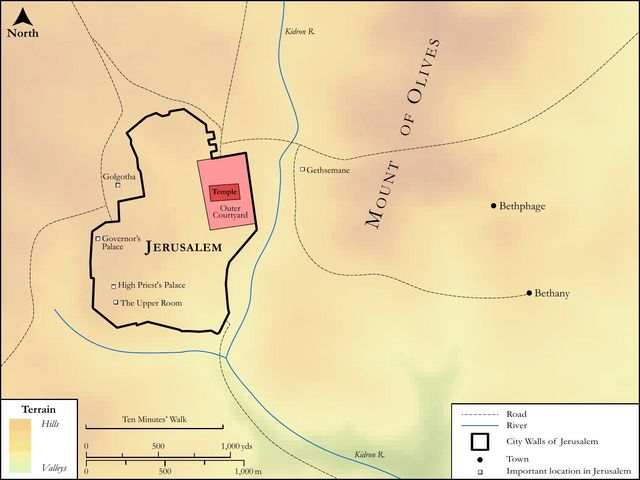
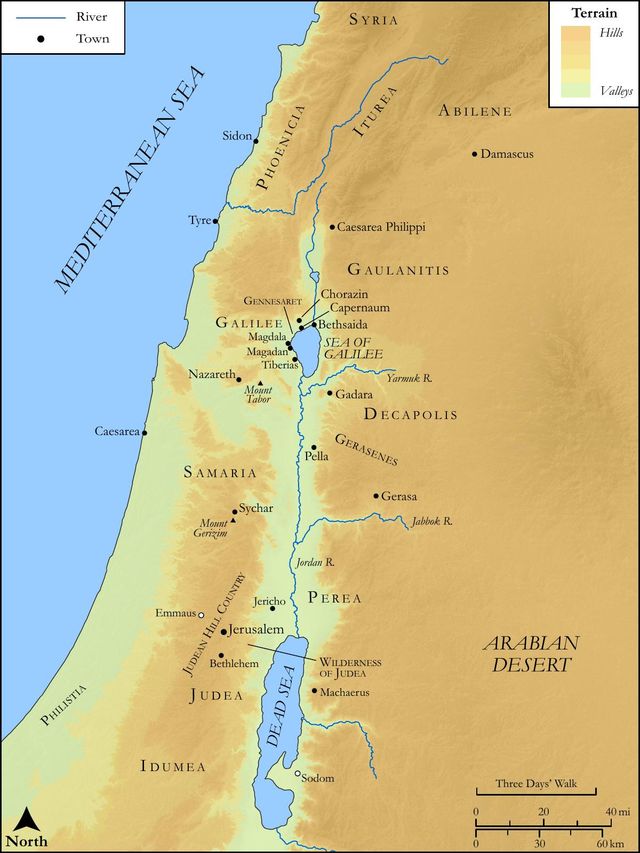
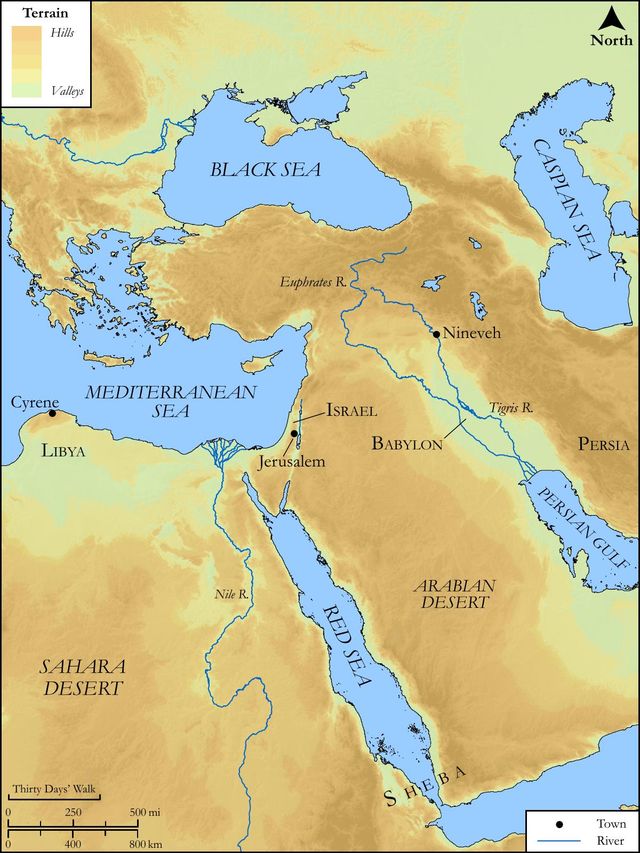
Study this verse
Public-domain commentary
Matthew Henry
From his Commentary on the Whole Bible. Henry comments on passages, not single verses — this entry covers Matthew 6:9–15. His four-level outline is real structure in the source text, so it is rendered as structure.
When Christ had condemned what was amiss, he directs to do better; for his are reproofs of instruction. Because we know not what to pray for as we ought, he here helps our infirmities, by putting words into our mouths; after this manner therefore pray ye, Mat 6:9. So many were the corruptions that had crept into this duty of prayer among the Jews, that Christ saw it needful to give a new directory for prayer, to show his disciples what must ordinarily be the matter and method of their prayer, which he gives in words that may very well be used as a form; as the summary or contents of the several particulars of our prayers. Not that we are tied up to the use of this form only, or of this always, as if this were necessary to the consecrating of our other prayers; we are here bid to pray after this manner, with these words, or to this effect. That in Luke differs from this; we do not find it used by the apostles; we are not here taught to pray in the name of Christ, as we are afterward; we are here taught to pray that the kingdom might come which did come when the Spirit was poured out: yet, without doubt, it is very good to use it as a form, and it is a pledge of the communion of saints, it having been used by the church in all ages, at least (says Dr. Whitby) from the third century. It is our Lord's prayer, it is of his composing, of his appointing; it is very compendious, yet very comprehensive, in compassion to our infirmities in praying. The matter is choice and necessary, the method instructive, and the expression very concise. It has much in a little, and it is requisite that we acquaint ourselves with the sense and meaning of it, for it is used acceptably no further than it is used with understanding and without vain repetition.
The Lord's prayer (as indeed every prayer) is a letter sent from earth to heaven. Here is the inscription of the letter, the person to whom it is directed, our Father; the where, in heaven; the contents of it in several errands of request; the close, for thine is the kingdom; the seal, Amen; and if you will, the date too, this day.
Plainly thus: there are three parts of the prayer.
I.The preface, Our Father who art in heaven.
Before we come to our business, there must be a solemn address to him with whom our business lies; Our Father. Intimating, that we must pray, not only alone and for ourselves, but with and for others; for we are members one of another, and are called into fellowship with each other. We are here taught to whom to pray, to God only, and not to saints and angels, for they are ignorant of us, are not to have the high honours we give in prayer, nor can give favours we expect. We are taught how to address ourselves to God, and what title to give him, that which speaks him rather beneficent than magnificent, for we are to come boldly to the throne of grace.
1.We must address ourselves to him as our Father, and must call him so. He is a common Father to all mankind by creation, Mal 2:10; Act 17:28. He is in a special manner a Father to the saints, by adoption and regeneration (Eph 1:5; Gal 4:6); and an unspeakable privilege it is. Thus we must eye him in prayer, keep up good thoughts of him, such as are encouraging and not affrighting; nothing more pleasing to God, nor pleasant to ourselves, than to call God Father. Christ in prayer mostly called God Father. If he be our Father, he will pity us under our weaknesses and infirmities (Psa 103:13), will spare us (Mal 3:17), will make the best of our performances, though very defective, will deny us nothing that is good for us, Luk 11:11-13. We have access with boldness to him, as to a father, and have an advocate with the Father, and the Spirit of adoption. When we come repenting of our sins, we must eye God as a Father, as the prodigal did (Luk 15:18; Jer 3:19); when we come begging for grace, and peace, and the inheritance and blessing of sons, it is an encouragement that we come to God, not as an unreconciled, avenging Judge, but as a loving, gracious, reconciled Father in Christ, Jer 3:4.
2.As our Father in heaven: so in heaven as to be every where else, for the heaven cannot contain him; yet so in heaven as there to manifest his glory, for it is his throne (Psa 103:19), and it is to believers a throne of grace: thitherward we must direct our prayers, for Christ the Mediator is now in heaven, Heb 8:1. Heaven is out of sight, and a world of spirits, therefore our converse with God in prayer must be spiritual; it is on high, therefore in prayer we must be raised above the world, and lift up our hearts, Psa 5:1. Heaven is a place of perfect purity, and we must therefore lift up pure hands, must study to sanctify his name, who is the Holy One, and dwells in that holy place, Lev 10:3. From heaven God beholds the children of men, Psa 33:13, Psa 33:14. And we must in prayer see his eye upon us: thence he has a full and clear view of all our wants and burdens and desires, and all our infirmities. It is the firmament of his power likewise, as well as of his prospect, Psa 150:1. He is not only, as a Father, able to help us, able to do great things for us, more than we can ask or think; he has wherewith to supply our needs, for every good gift is from above. He is a Father, and therefore we may come to him with boldness, but a Father in heaven, and therefore we must come with reverence, Ecc 5:2. Thus all our prayers should correspond with that which is our great aim as Christians, and that is, to be with God in heaven. God and heaven, the end of our whole conversation, must be particularly eyed in every prayer; there is the centre to which we are all tending. By prayer, we send before us thither, where we profess to be going.
II.The petitions, and those are six; the three first relating more immediately to God and his honour, the three last to our own concerns, both temporal and spiritual; as in the ten commandments, the four first teach us our duty toward God, and the last six our duty toward our neighbour. The method of this prayer teaches us to seek first the kingdom of God and his righteousness, and then to hope that other things shall be added.
1.Hallowed be thy name. It is the same word that in other places is translated sanctified. But here the old word hallowed is retained, only because people were used to it in the Lord's prayer. In these words,
(1.)We give glory to God; it may be taken not as a petition, but as an adoration; as that, the Lord be magnified, or glorified, for God's holiness is the greatness and glory of all his perfections. We must begin our prayers with praising God, and it is very fit he should be first served, and that we should give glory to God, before we expect to receive mercy and grace from him. Let him have praise of his perfections, and then let us have the benefit of them.
(2.)We fix our end, and it is the right end to be aimed at, and ought to be our chief and ultimate end in all our petitions, that God may be glorified; all our other requests must be in subordination to this, and in pursuance of it. "Father, glorify thyself in giving me my daily bread and pardoning my sins," etc. Since all is of him and through him, all must be to him and for him. In prayer our thoughts and affections should be carried out most to the glory of God. The Pharisees made their own name the chief end of their prayers (Mat 6:5, to be seen of men), in opposition to which we are directed to make the name of God our chief end; let all our petitions centre in this and be regulated by it. "Do so and so for me, for the glory of thy name, and as far as is for the glory of it." (3.) We desire and pray that the name of God, that is, God himself, in all that whereby he has made himself known, may be sanctified and glorified both by us and others, and especially by himself. "Father, let thy name be glorified as a Father, and a Father in heaven; glorify thy goodness and thy highness, thy majesty and mercy. Let thy name be sanctified, for it is a holy name; no matter what becomes of our polluted names, but, Lord, what wilt thou do to thy great name?" When we pray that God's name may be glorified,
[1.]We make a virtue of necessity; for God will sanctify his own name, whether we desire it or not; I will be exalted among the heathen, Psa 46:10.
[2.]We ask for that which we are sure shall be granted; for when our Saviour prayed, Father glorify thy name, it was immediately answered, I have glorified it, and will glorify it again.
2.Thy kingdom come. This petition has plainly a reference to the doctrine which Christ preached at this time, which John Baptist had preached before, and which he afterwards sent his apostles out to preach - the kingdom of heaven is at hand. The kingdom of your Father who is in heaven, the kingdom of the Messiah, this is at hand, pray that it may come. Note, We should turn the word we hear into prayer, our hearts should echo to it; does Christ promise, surely I come quickly? our hearts should answer, Even so, come. Ministers should pray over the word: when they preach, the kingdom of God is at hand, they should pray, Father, thy kingdom come. What God has promised we must pray for; for promises are given, not to supersede, but to quicken and encourage prayer; and when the accomplishment of a promise is near and at the door, when the kingdom of heaven is at hand, we should then pray for it the more earnestly; thy kingdom come; as Daniel set his face to pray for the deliverance of Israel, when he understood that the time of it was at hand, Dan 9:2. See Luk 19:11. It was the Jews' daily prayer to God, Let him make his kingdom reign, let his redemption flourish, and let his Messiah come and deliver his people. Dr. Whitby, ex Vitringa. "Let thy kingdom come, let the gospel be preached to all and embraced by all; let all be brought to subscribe to the record God has given in his word concerning his Son, and to embrace him as their Saviour and Sovereign. Let the bounds of the gospel-church be enlarged, the kingdom of the world be made Christ's kingdom, and all men become subjects to it, and live as becomes their character."
3.Thy will be done in earth as it is in heaven. We pray that God's kingdom being come, we and others may be brought into obedience to all the laws and ordinances of it. By this let it appear that Christ's kingdom is come, let God's will be done; and by this let is appear that it is come as a kingdom of heaven, let it introduce a heaven upon earth. We make Christ but a titular Prince, if we call him King, and do not do his will: having prayed that he may rule us, we pray that we may in every thing be ruled by him. Observe,
(1.)The thing prayed for, thy will be done; "Lord, do what thou pleasest with me and mine; Sa1 3:18. I refer myself to thee, and am well satisfied that all thy counsel concerning me should be performed." In this sense Christ prayed, not my will, but thine be done. "Enable me to do what is pleasing to thee; give me that grace that is necessary to the right knowledge of thy will, and an acceptable obedience to it. Let thy will be done conscientiously by me and others, not our own will, the will of the flesh, or the mind, not the will of men (Pe1 4:2), much less Satan's will (Joh 8:44), that we may neither displease God in any thing we do (ut nihil nostrum displiceat Deo), nor be displeased at any thing God does" (ut nihil Dei displiceat nobis).
(2.)The pattern of it, that it might be done on earth, in this place of our trial and probation (where our work must be done, or it never will be done), as it is done in heaven, that place of rest and joy. We pray that earth may be made more like heaven by the observance of God's will (this earth, which, through the prevalency of Satan's will, has become so near akin to hell), and that saints may be made more like the holy angels in their devotion and obedience. We are on earth, blessed be God, not yet under the earth; we pray for the living only, not for the dead that have gone down into silence.
4.Give us this day our daily bread. Because our natural being is necessary to our spiritual well-being in this world, therefore, after the things of God's glory, kingdom, and will, we pray for the necessary supports and comforts of this present life, which are the gifts of God, and must be asked of him, Ton arton epiousion - Bread for the day approaching, for all the remainder of our lives. Bread for the time to come, or bread for our being and subsistence, that which is agreeable to our condition in the world (Pro 30:8), food convenient for us and our families, according to our rank and station.
Every word here has a lesson in it: (1.) We ask for bread; that teaches us sobriety and temperance; we ask for bread, not dainties, not superfluities; that which is wholesome, though it be not nice. (2.) We ask for our bread; that teaches us honesty and industry: we do not ask for the bread out of other people's mouths, not the bread of deceit (Pro 20:17), not the brad of idleness (Pro 31:27), but the bread honestly gotten. (3.) We ask for our daily bread; which teaches us not to take thought for the morrow (Mat 6:34), but constantly to depend upon divine Providence, as those that live from hand to mouth. (4.) We beg of God to give it us, not sell it us, nor lend it us, but give it. The greatest of men must be beholden to the mercy of God for their daily bread, (5.) We pray, "Give it to us; not to me only, but to others in common with me." This teaches us charity, and a compassionate concern for the poor and needy. It intimates also, that we ought to pray with our families; we and our households eat together, and therefore ought to pray together. (6.) We pray that God would give us this day; which teaches us to renew the desire of our souls toward God, as the wants of our bodies are renewed; as duly as the day comes, we must pray to our heavenly Father, and reckon we could as well go a day without meat, as without prayer.
5.And forgive us our debts, as we forgive our debtors, This is connected with the former; and forgive, intimating, that unless our sins be pardoned, we can have no comfort in life, or the supports of it. Our daily bread does but feed us as lambs for the slaughter, if our sins be not pardoned. It intimates, likewise, that we must pray for daily pardon, as duly as we pray for daily bread. He that is washed, needeth to wash his feet. Here we have,
(1.)A petition; Father in heaven forgive us our debts, our debts to thee. Note,
[1.]Our sins are our debts; there is a debt of duty, which, as creatures, we owe to our Creator; we do not pray to be discharged from that, but upon the non-payment of that there arises a debt of punishment; in default of obedience to the will of God, we become obnoxious to the wrath of God; and for not observing the precept of the law, we stand obliged to the penalty. A debtor is liable to process, so are we; a malefactor is a debtor to the law, so are we.
[2.]Our hearts' desire and prayer to our heavenly Father every day should be, that he would forgive us our debts; that the obligation to punishment may be cancelled and vacated, that we may not come into condemnation; that we may be discharged, and have the comfort of it. In suing out the pardon of our sins, the great plea we have to rely upon is the satisfaction that was made to the justice of God for the sin of man, by the dying of the Lord Jesus our Surety, or rather Bail to the action, that undertook our discharge.
(2.)An argument to enforce this petition; as we forgive our debtors. This is not a plea of merit, but a plea of grace. Note, Those that come to God for the forgiveness of their sins against him, must make conscience of forgiving those who have offended them, else they curse themselves when they say the Lord's prayer. Our duty is to forgive our debtors; as to debts of money, we must not be rigorous and severe in exacting them from those that cannot pay them without ruining themselves and their families; but this means debt of injury; our debtors are those that trespass against us, that smite us (Mat 5:39, Mat 5:40), and in strictness of law, might be prosecuted for it; we must forbear, and forgive, and forget the affronts put upon us, and the wrongs done us; and this is a moral qualification for pardon and peace; it encourages to hope, that God will forgive us; for if there be in us this gracious disposition, it is wrought of God, and therefore is a perfection eminently and transcendently in himself; it will be an evidence to us that he has forgiven us, having wrought in us the condition of forgiveness.
6.And lead us not into temptation, but deliver us from evil. This petition is expressed,
(1.)Negatively: Lead us not into temptation. Having prayed that the guilt of sin may be removed, we pray, as it is fit, that we may never return again to folly, that we may not be tempted to it. It is not as if God tempted any to sin; but, "Lord, do not let Satan loose upon us; chain up that roaring lion, for he is subtle and spiteful; Lord, do not leave us to ourselves (Psa 19:13), for we are very weak; Lord, do not lay stumbling-blocks and snares before us, nor put us into circumstances that may be an occasion of falling." Temptations are to be prayed against, both because of the discomfort and trouble of them, and because of the danger we are in of being overcome by them, and the guilt and grief that then follow.
(2.)Positively: But deliver us from evil; apo tou ponērou - from the evil one, the devil, the tempter; "keep us, that either we may not be assaulted by him, or we may not be overcome by those assaults:" Or from the evil thing, sin, the worst of evils; an evil, an only evil; that evil thing which God hates, and which Satan tempts men to and destroys them by. "Lord, deliver us from the evil of the world, the corruption that is in the world through lust; from the evil of every condition in the world; from the evil of death; from the sting of death, which is sin: deliver us from ourselves, from our own evil hearts: deliver us from evil men, that they may not be a snare to us, nor we a prey to them."
III.The conclusion:
For thine is the kingdom, and the power and the glory, for ever. Amen. Some refer this to David's doxology, Ch1 29:11. Thine, O Lord, is the greatness. It is,
1.A form of plea to enforce the foregoing petitions. It is our duty to plead with God in prayer, to fill our mouth with arguments (Job 23:4) not to move God, but to affect ourselves; to encourage the faith, to excite our fervency, and to evidence both. Now the best pleas in prayer are those that are taken from God himself, and from that which he has made known of himself. We must wrestle with God in his own strength, both as to the nature of our pleas and the urging of them. The plea here has special reference to the first three petitions; "Father in heaven, thy kingdom come, for thine is the kingdom; thy will be done, for thine is the power; hallowed be thy name, for thine is the glory." And as to our own particular errands, these are encouraging: "Thine is the kingdom; thou hast the government of the world, and the protection of the saints, thy willing subjects in it;" God gives and saves like a king. "Thine is the power, to maintain and support that kingdom, and to make good all thine engagements to thy people." Thine is the glory, as the end of all that which is given to, and done for, the saints, in answer to their prayers; for their praise waiteth for him. This is matter of comfort and holy confidence in prayer.
2.It is a form of praise and thanksgiving. The best pleading with God is praising of him; it is the way to obtain further mercy, as it qualifies us to receive it. In all our addresses to God, it is fit that praise should have a considerable share, for praise becometh the saints; they are to be our God for a name and for a praise. It is just and equal; we praise God, and give him glory, not because he needs it - he is praised by a world of angels, but because he deserves it; and it is our duty to give him glory, in compliance with his design in revealing himself to us. Praise is the work and happiness of heaven; and all that would go to heaven hereafter, must begin their heaven now. Observe, how full this doxology is, The kingdom, and the power, and the glory, it is all thine. Note, It becomes us to be copious in praising God. A true saint never thinks he can speak honourably enough of God: here there should be a gracious fluency, and this for ever. Ascribing glory to God for ever, intimates an acknowledgement, that it is eternally due, and an earnest desire to be eternally doing it, with angels and saints above, Psa 71:14.
Lastly, To all this we are taught to affix our Amen, so be it. God's Amen is a grant; his fiat is, it shall be so; our Amen is only a summary desire; our fiat is, let it be so: it is in the token of our desire and assurance to be heard, that we say Amen. Amen refers to every petition going before, and thus, in compassion to our infirmities, we are taught to knit up the whole in one word, and so to gather up, in the general, what we have lost and let slip in the particulars. It is good to conclude religious duties with some warmth and vigour, that we may go from them with a sweet savour upon our spirits. It was of old the practice of good people to say, Amen, audibly at the end of every prayer, and it is a commendable practice, provided it be done with understanding, as the apostle directs (Co1 14:16), and uprightly, with life and liveliness, and inward expressions, answerable to that outward expression of desire and confidence.
Most of the petitions in the Lord's prayer had been commonly used by the Jews in their devotions, or words to the same effect: but that clause in the fifth petition, As we forgive our debtors, was perfectly new, and therefore our Saviour here shows for what reason he added it, not with any personal reflection upon the peevishness, litigiousness, and ill nature of the men of that generation, though there was cause enough for it, but only from the necessity and importance of the thing itself. God, in forgiving us, has a peculiar respect to our forgiving those that have injured us; and therefore, when we pray for pardon, we must mention our making conscience of that duty, not only to remind ourselves of it, but to bind ourselves to it. See that parable, Mat 18:23-35. Selfish nature is loth to comply with this, and therefore it is here inculcated, Mat 6:14, Mat 6:15.
1.In a promise. If ye forgive, your heavenly Father will also forgive. Not as if this were the only condition required; there must be repentance and faith, and new obedience; but as where other graces are in truth, there will be this, so this will be a good evidence of the sincerity of our other graces. He that relents toward his brother, thereby shows that he repents toward his God. Those which in the prayer are called debts, are here called trespasses, debts of injury, wrongs done to us in our bodies, goods, or reputation: trespasses is an extenuating term for offences, paraptōmata - stumbles, slips, falls. Note, It is a good evidence, and a good help of our forgiving others, to call the injuries done us by a mollifying, excusing name. Call them not treasons, but trespasses; not wilful injuries, but casual inadvertencies; peradventure it was an oversight (Gen 43:12), therefore make the best of it. We must forgive, as we hope to be forgiven; and therefore must not only bear no malice, nor mediate revenge, but must not upbraid our brother with the injuries he has done us, nor rejoice in any hurt that befalls him, but must be ready to help him and do him good, and if he repent and desire to be friends again, we must be free and familiar with him, as before.
2.In a threatening. "But if you forgive not those that have injured you, that is a bad sign you have not the other requisite conditions, but are altogether unqualified for pardon: and therefore your Father, whom you call Father, and who, as a father, offers you his grace upon reasonable terms, will nevertheless not forgive you. And if other grace be sincere, and yet you be defective greatly in forgiving, you cannot expect the comfort of your pardon, but to have your spirit brought down by some affliction or other to comply with this duty." Note, Those who would have found mercy with God must show mercy to their brethren; no can we expect that he should stretch out the hands of his favour to us, unless we lift up to him pure hands, without wrath, Ti1 2:8. If we pray in anger, we have reason to fear God will answer in anger. It has been said, Prayers made in wrath are written in gall. What reason is it that God should forgive us the talents we are indebted to him, if we forgive not our brethren the pence they are indebted to us? Christ came into the world as the great Peace-Maker, and not only to reconcile us to God, but one to another, and in this we must comply with him. It is great presumption and of dangerous consequence, for any to make a light matter of that which Christ here lays such a stress upon. Men's passions shall not frustrate God's word.
Historical interpretation
Nineteen Centuries of Reception
18 surviving comments on this verse. Each one is dated, so this reads as a timeline rather than a list.
Select a marker to jump to its quote. Markers stagger vertically where authors wrote within a few decades of each other.
But let not your fasts be with the hypocrites; for they fast on the second and fifth day of the week; but do ye fast on the fourth day and the Preparation (Friday). Neither pray as the hypocrites; but as the Lord commanded in His Gospel, thus pray: Our Father who art in heaven, hallowed be Thy name. Thy kingdom come. Thy will be done, as in heaven, so on earth. Give us to-day our daily (needful) bread, and forgive us our debt as we also forgive our debtors. And bring us not into temptation, but deliver us from the evil one (or, evil); for Thine is the power and the glory for ever. Thrice in the day thus pray.
Having considered God's generosity, we pray next for His indulgence. For, of what benefit is food if, in reality, we are bent on it like a bull on his victim? Our Lord knew that He alone was without sin. Therefore, He taught us to say in prayer: 'Forgive us our trespasses.' A prayer for pardon is an acknowledgment of sin, since one who asks for pardon confesses his guilt. Thus, too, repentance is shown to be acceptable to God, because God wills this rather than the death of the sinner.
Now, in Scripture, 'debt' is used figuratively to mean sin, because of this analogy: When a man owes something to a judge and payment is exacted from him, he does not escape the just demand unless excused from the payment of the debt, just as the master forgave the debt to that servant. Now, this is the point of the whole parable: Just as the servant was freed by his lord, but failed in turn to be merciful to his debtor and therefore, when brought before his lord, was handed over to the torturer until he paid the last penny, that is, the least and last of his faults, (Christ) intended by this parable to get us, also, to forgive our debtors.
This is expressed elsewhere under this aspect of prayer; 'Forgive,' He said, 'and you shall be forgiven.' And when Peter asked if one should forgive his brother seven times, our Lord said, 'Rather, seventy times seven times,' that He might improve upon the Law, for in Genesis vengeance was demanded of Cain seven times, of Lamech seventy times seven.
22. After this we also entreat for our sins, saying, "And forgive us our debts, as we also forgive our debtors." After the supply of food, pardon of sin is also asked for, that he who is fed by God may live in God, and that not only the present and temporal life may be provided for, but the eternal also, to which we may come if our sins are forgiven; and these the Lord calls debts, as He says in His Gospel, "I forgave thee all that debt, because thou desiredst me." And how necessarily, how providently and salutarily, are we admonished that we are sinners, since we are compelled to entreat for our sins, and while pardon is asked for from God, the soul recalls its own consciousness of sin! Lest any one should flatter himself that he is innocent, and by exalting himself should more deeply perish, he is instructed and taught that he sins daily, in that he is bidden to entreat daily for his sins. Thus, moreover, John also in his epistle warns us, and says, "If we say that we have no sin, we deceive ourselves, and the truth is not in us; but if we confess our sins, the Lord is faithful and just to forgive us our sins." In his epistle he has combined both, that we should entreat for our sins, and that we should obtain pardon when we ask. Therefore he said that the Lord was faithful to forgive sins, keeping the faith of His promise; because He who taught us to pray for our debts and sins, has promised that His fatherly mercy and pardon shall follow.
23. He has clearly joined herewith and added the law, and has bound us by a certain condition anti engagement, that we should ask that our debts be forgiven us in such a manner as we ourselves forgive our debtors, knowing that that which we seek for our sins cannot be obtained unless we ourselves have acted in a similar way in respect of our debtors. Therefore also He says in another place, "With what measure ye mete, it shall be measured to you again." And the servant who, after having had all his debt forgiven him by his master, would not forgive his fellow-servant, is cast back into prison; because he would not forgive his fellow-servant, he lost the indulgence that had been shown to himself by his lord. And these things Christ still more urgently sets forth in His precepts with yet greater power of His rebuke. "When ye stand praying," says He, "forgive if ye have aught against any, that your Father which is in heaven may forgive you your trespasses. But if ye do not forgive, neither will your Father which is in heaven forgive you your trespasses." There remains no ground of excuse in the day of judgment, when you will be judged according to your own sentence; and whatever you have done, that you also will suffer. For God commands us to be peacemakers, and in agreement, and of one mind in His house; and such as He makes us by a second birth, such He wishes us when new-born to continue, that we who have begun to be sons of God may abide in God's peace, and that, having one spirit, we should also have one heart and one mind. Thus God does not receive the sacrifice of a person who is in disagreement, but commands him to go back from the altar and first be reconciled to his brother, that so God also may be appeased by the prayers of a peace-maker. Our peace and brotherly agreement is the greater sacrifice to God,-and a people united in one in the unity of the Father, and of the Son, and of the Holy Spirit.
24. For even in the sacrifices which Abel and Cain first offered, God looked not at their gifts, but at their hearts, so that he was acceptable in his gift who was acceptable in his heart. Abel, peaceable and righteous in sacrificing in innocence to God, taught others also, when they bring their gift to the altar, thus to come with the fear of God, with a simple heart, with the law of righteousness, with the peace of concord. With reason did he, who was such in respect of God's sacrifice, become subsequently himself a sacrifice to God; so that he who first set forth martyrdom, and initiated the Lord's passion by the glory of his blood, had both the Lord's righteousness and His peace. Finally, such are crowned by the Lord, such will be avenged with the Lord in the day of judgment; but the quarrelsome and disunited, and he who has not peace with his brethren, in accordance with what the blessed apostle and the Holy Scripture testifies, even if he have been slain for the name of Christ, shall not be able to escape the crime of fraternal dissension, because, as it is written, "He who hateth his brother is a murderer" and no murderer attains to the kingdom of heaven, nor does he live with God. He cannot be with Christ, who had rather be an imitator of Judas than of Christ. How great is the sin which cannot even be washed away by a baptism of blood-how heinous the crime which cannot be expiated by martyrdom!
(Tr. vii. 15.) After supply of food, next pardon of sin is asked for, that he who is fed of God may live in God, and not only the present and passing life be provided for, but the eternal also; whereunto we may come, if we receive the pardon of our sins, to which the Lord gives the name of debts, as he speaks further on, I forgave thee all that debt, because thou desiredst me. (Mat. 18:32.) How well is it for our need, how provident and saving a thing, to be reminded that we are sinners compelled to make petition for our offences, so that in claiming God's indulgence, the mind is recalled to a recollection of its guilt. That no man may plume himself with the pretence of innocency, and perish more wretchedly through self-exaltation, he is instructed that he commits sin every day by being commanded to pray for his sins.
(ubi sup.) He then who taught us to pray for our sins, has promised us that His fatherly mercy and pardon shall ensue. But He has added a rule besides, binding us under the fixed condition and responsibility, that we are to ask for our sins to be forgiven in such sort as we forgive them that are in debt to us.
That this prayer is meant for the faithful, both the laws of the Church teach, and the beginning of the prayer which instructs us to call God Father. In thus bidding the faithful pray for forgiveness of sin, He shows that even after baptism sin can be remitted (against the Novatians.)
Then forasmuch as it comes to pass that we sin even after the washing of regeneration, He, showing His love to man to be great even in this case, commands us for the remission of our sins to come unto God who loves man, and thus to say,
"Forgive us our debts, as we also forgive our debtors."
Seest thou surpassing mercy? After taking away so great evils, and after the unspeakable greatness of His gift, if men sin again, He counts them such as may be forgiven. For that this prayer belongs to believers, is taught us both by the laws of the church, and by the beginning of the prayer. For the uninitiated could not call God Father. If then the prayer belongs to believers, and they pray, entreating that sins may be forgiven them, it is clear that not even after the laver is the profit of repentance taken away. Since, had He not meant to signify this, He would not have made a law that we should so pray. Now He who both brings sins to remembrance, and bids us ask forgiveness, and teaches how we may obtain remission and so makes the way easy; it is perfectly clear that He introduced this rule of supplication, as knowing, and signifying, that it is possible even after the font to wash ourselves from our offenses; by reminding us of our sins, persuading us to be modest; by the command to forgive others, setting us free from all revengeful passion; while by promising in return for this to pardon us also, He holds out good hopes, and instructs us to have high views concerning the unspeakable mercy of God toward man.
But what we should most observe is this, that whereas in each of the clauses He had made mention of the whole of virtue, and in this way had included also the forgetfulness of injuries (for so, that "His name be hallowed," is the exactness of a perfect conversation; and that "His will be done," declares the same thing again: and to be able to call God "Father," is the profession of a blameless life; in all which things had been comprehended also the duty of remitting our anger against them that have transgressed): still He was not satisfied with these, but meaning to signify how earnest He is in the matter, He sets it down also in particular, and after the prayer, He makes mention of no other commandment than this, saying thus:
"For if ye forgive men their trespasses, your heavenly Father also will forgive you."
So that the beginning is of us, and we ourselves have control over the judgment that is to be passed upon us. For in order that no one, even of the senseless, might have any complaint to make, either great or small, when brought to judgment; on thee, who art to give account, He causes the sentence to depend; and "in what way soever thou hast judged for thyself, in the same," saith He, "do I also judge thee." And if thou forgive thy fellow servant, thou shalt obtain the same favor from me; though indeed the one be not equal to the other. For thou forgivest in thy need, but God, having need of none: thou, thy fellow slave; God, His slave: thou liable to unnumbered charges; God, being without sin. But yet even thus doth He show forth His lovingkindness towards man.
Since He might indeed, even without this, forgive thee all thine offenses; but He wills thee hereby also to receive a benefit; affording thee on all sides innumerable occasions of gentleness and love to man, casting out what is brutish in thee, and quenching wrath, and in all ways cementing thee to him who is thine own member.
For what canst thou have to say? that thou hast wrongfully endured some ill of thy neighbor? (For these only are trespasses, since if it be done with justice, the act is not a trespass.) But thou too art drawing near to receive forgiveness for such things, and for much greater. And even before the forgiveness, thou hast received no small gift, in being taught to have a human soul, and in being trained to all gentleness. And herewith a great reward shall also be laid up for thee elsewhere, even to be called to account for none of thine offenses.
What sort of punishment then do we not deserve, when after having received the privilege, we betray our salvation? And how shall we claim to be heard in the rest of our matters, if we will not, in those which depend on us, spare our own selves?
(Vers. 11-13.) Give us this day our daily bread. And forgive us our debts, as we also have forgiven our debtors. And lead us not into temptation, but deliver us from evil. The word 'supersubstantial,' which we have expressed, is rendered in Greek as 'ἐπιούσιον,' a term that the Septuagint translators frequently translate as 'περιούσιον.' Therefore, we examined the Hebrew, and wherever they translated 'περιούσιον,' we found 'Sgolla,' which Symmachus translated as 'ἐξαίρετον,' meaning exceptional or outstanding, although he did interpret it differently in one particular instance. Therefore, when we ask that God give us extraordinary or exceptional bread, we ask for Him who says: 'I am the living bread that came down from heaven' (John 6:51). In the Gospel called according to the Hebrews, instead of 'supersubstantial bread,' I found the word 'mahar,' which means 'for tomorrow'; so the meaning is: 'Give us our bread for tomorrow,' that is, for the future, today. We can also understand the 'supersubstantial bread' in another way, referring to the bread that is above all substances and exceeds all creatures. Others simply think, according to the words of the Apostle (I Tim. VI, 8): Having food and clothing, with these we are content, that we should only be concerned with providing for the holy present food. Hence, in the following it is commanded: Do not worry about tomorrow.
Amen. The sign of the Lord's Prayer is: which the Eagle interprets faithfully: we, truly, can say.
In the Gospel, entitled The Gospel according to the Hebrews, 'supersubstantialis' is rendered 'mohar,' that is 'to-morrow's;' so that the sense would be, Give us today to-morrow's bread; i. e. for the time to come.
“Forgive us our debts, as we forgive our debtors” Is this necessary except in this life? For in the other we shall have no debts. For what are debts but sins? See, ye are on the point of being baptized; then all your sins will be blotted out: none whatever will remain. Whatever evil ye have done, in deed, or word, or desire, or thought, all will be blotted out. And yet if in the life which is after baptism there were security from sin, we should not learn such a prayer as this, “Forgive us our debts.” Only let us by all means do what comes next, “As we forgive our debtors.”
It is certainly a bargain to be reckoned with when we say, “Forgive us our trespasses as we forgive those who trespass against us.” We can be sure that we have violated that rule if we do not forgive those who ask our pardon, since we too want to be forgiven by our most generous Father with respect to those who seek pardon from us. Now, as to that commandment by which we are ordered to pray for our enemies, we are not ordered to pray for those who seek forgiveness. For such persons are not enemies. In no way, however, can someone really say that he is praying for a person he does not know. Therefore it must be said that we should forgive all sins committed against us if we want the Father to forgive what we have committed.
The fifth petition follows: And forgive us our debts, as we also forgive our debtors. It is manifest that by debts are meant sins, either from that statement which the Lord Himself makes, You shall by no means come out thence, till you have paid the uttermost farthing; or from the fact that He called those men debtors who were reported to Him as having been killed, either those on whom the tower fell, or those whose blood Herod had mingled with the sacrifice. For He said that men supposed it was because they were debtors above measure, i.e. sinners, and added I tell you, Nay: but, unless you repent, you shall all likewise die. Here, therefore, it is not a money claim that one is pressed to remit, but whatever sins another may have committed against him. For we are enjoined to remit a money claim by that precept rather which has been given above, If any man will sue you at the law, and take away your coat, let him have your cloak also; nor is it necessary to remit a debt to every money debtor; but only to him who is unwilling to pay, to such an extent that he wishes even to go to law. Now the servant of the Lord, as says the apostle, must not go to law. And therefore to him who shall be unwilling, either spontaneously or when requested, to pay the money which he owes, it is to be remitted. For his unwillingness to pay will arise from one of two causes, either that he has it not, or that he is avaricious and covetous of the property of another; and both of these belong to a state of poverty: for the former is poverty of substance, the latter poverty of disposition. Whoever, therefore, remits a debt to such an one, remits it to one who is poor, and performs a Christian work; while that rule remains in force, that he should be prepared in mind to lose what is owing to him. For if he has used exertion in every way, quietly and gently, to have it restored to him, not so much aiming at a money profit, as that he may bring the man round to what is right, to whom without doubt it is hurtful to have the means of paying, and yet not to pay; not only will he not sin, but he will even do a very great service, in trying to prevent that other, who is wishing to make gain of another's money, from making shipwreck of the faith; which is so much more serious a thing, that there is no comparison. And hence it is understood that in this fifth petition also, where we say, Forgive us our debts, the words are spoken not indeed in reference to money, but in reference to all ways in which any one sins against us, and by consequence in reference to money also. For the man who refuses to pay you the money which he owes, when he has the means of doing so, sins against you. And if you do not forgive this sin, you will not be able to say, Forgive us, as we also forgive; but if you pardon it, you see how he who is enjoined to offer such a prayer is admonished also with respect to forgiving a money debt.
That may indeed be construed in this way, that when we say, Forgive us our debts, as we also forgive, then only are we convicted of having acted contrary to this rule, if we do not forgive them who ask pardon, because we also wish to be forgiven by our most gracious Father when we ask His pardon. But, on the other hand, by that precept whereby we are enjoined to pray for our enemies, it is not for those who ask pardon that we are enjoined to pray. For those who are already in such a state of mind are no longer enemies. By no possibility, however, could one truthfully say that he prays for one whom he has not pardoned. And therefore we must confess that all sins which are committed against us are to be forgiven, if we wish those to be forgiven by our Father which we commit against Him. For the subject of revenge has been sufficiently discussed already, as I think.
(De Don. Pers. 5.) With this weapon the Pelagian heretics received their deathblow, who dare to say that a righteous man is free altogether from sin in this life, and that of such is at this present time composed a Church, having neither spot nor wrinkle.
(Serm. in Mont. ii. 8.) This is not said of debts of money only, but of all things in which any sins against us, and among these also of money, because that he sins against you, who does not return money due to you, when he has whence he can return it. Unless you forgive this sin you cannot say, Forgive us our debts, as we forgive our debtors.
(Enchir. 73.) Forasmuch as this so great goodness, namely, to forgive debts, and to love our enemies, cannot be possessed by so great a number as we suppose to be heard in the use of this prayer; without doubt the terms of this stipulation are fulfilled, though one have not attained to such proficiency as to love his enemy; yet if when he is requested by one, who has trespassed against him, that he would forgive him, he do forgive him from his heart; for he himself desires to be forgiven then at least when he asks forgiveness. And if one have been moved by a sense of his sin to ask forgiveness of him against whom he has sinned, he is no more to be thought on as an enemy, that there should be any thing hard in loving him, as there was when he was in active enmity.
Hyperichius said, ‘Snatch your neighbour from his sins, so far as you can, and refrain from condemning him, for God does not reject those who turn to him. Let no evil word about your brother stay in your mind, so that you can say, “Forgive us our debts, as we also forgive our debtors” (Mt. 7:12).’
With what hope then does he pray, who cherishes hatred against another by whom he has been wronged? As he prays with a falsehood on his lips, when he says, I forgive, and does not forgive, so he asks indulgence of God, but no indulgence is granted him. There are many who, being unwilling to forgive those that trespass against them, will not use this prayer. How foolish! First, because he who does not pray in the manner Christ taught, is not Christ's disciple; and secondly, because the Father does not readily hear any prayer which the Son has not dictated; for the Father knows the intention and the words of the Son, nor will He entertain such petitions as human presumption has suggested, but only those which Christ's wisdom has set forth.
But behold, our enemy has grievously sinned against us, inflicted losses, harmed those who helped, persecuted those who loved. These things would need to be retained if our own sins were not to be forgiven. For our Advocate has composed a prayer for us in our case; and he who is the Advocate is himself the Judge of that same case. Moreover, he inserted a condition into the prayer he composed, saying: Forgive us our debts, as we also forgive our debtors. Therefore, since he who stood forth as Advocate comes as Judge, he who made the prayer hears it. Either, then, we say without doing it, Forgive us our debts, as we also forgive our debtors, and by saying this we bind ourselves all the more; or perhaps we omit this condition in our prayer, and our Advocate does not recognize the prayer he composed, and immediately says to himself: I know what I instructed; this is not the prayer I made. What then must we do, brothers, except extend the affection of true charity to our brothers? Let no malice remain in our heart. Let almighty God consider our charity toward our neighbor, so that he may extend his mercy to our iniquities. Remember what we are admonished: Forgive, and you will be forgiven. Behold, something is owed to us, and we owe. Let us therefore forgive what is owed to us, so that what is owed by us may be forgiven. But the mind resists these things, and wants to fulfill what it hears, yet still struggles against it. We stand at the martyr's tomb, knowing by what death he reached the heavenly kingdom. If we do not lay down our body for Christ, let us at least conquer our spirit. God is appeased by this sacrifice; he approves in the judgment of his mercy the victory of our peace. For he beholds the struggle of our heart; and he who rewards the victorious afterward now helps those who are fighting, through our Lord Jesus Christ his Son, who lives and reigns with him in the unity of the Holy Spirit, God, through all ages of ages.
(Mor. x. 15.) That good which in our penitence we ask of God, we should first turn and bestow on our neighbour.
Because we sin even after our baptism, we beseech Him to forgive us. But forgive us as we forgive others: if we remember wrongs, God will not forgive us. God takes me as the pattern He will follow: what I do to another, He does to me.
"With angels and archangels and all the company of heaven." Will you believe it? It is only quite recently I made that quotation a part of my private prayers--I festoon it round "hallowed be Thy name". This, by the way, illustrates what I was saying last week about the uses of ready-made forms. They remind one. And I have found this quotation a great enrichment. One always accepted this with theoretically. But it is quite different when one brings it into consciousness at an appropriate moment and wills the association of one's own little twitter with the voice of the great saints and (we hope) of our own dear dead. They may drown some of its uglier qualities and set off any tiny value it has...
Thy kingdom come. That is, may your reign be realised here, as it is realised there. But I tend to take there on three levels. First, as in the sinless world beyond the horrors of animal and human life; in the behaviour of stars and trees and water, in sunrise and wind. May there be here (in my heart) the beginning of a like beauty. Secondly, as in the best human lives I have known: in all the people who really bear the burdens and ring true, the people we call bricks, and in the quiet, busy, ordered life of really good families and really good religious houses. May that too be "here". Finally, of course, in the usual sense: as in heaven, as among the blessed dead.
And here can of course be taken not only for "in my heart", but for "in this college"--in England--in the world in general. But prayer is not the time for pressing our own favourite social or political panacea. Even Queen Victoria didn't like "being talked to as if she were a public meeting".
Thy will be done. My festoons on this have been added gradually. At first I took it exclusively as an act of submission, attempting to do with it what Our Lord did in Gethsemane. I thought of God's will purely as something that would come upon me, something of which I should be the patient. And I also thought of it as a will which would be embodied in pains and disappointments. Not, to be sure, that I suppose God's will for me to consist entirely of disagreeables. But I thought it was only the disagreeables that called for this preliminary submission--the agreeables could look after themselves for the present. When they turned up, one could give thanks.
This interpretation is, I expect, the commonest. And so it must be. And such are the miseries of human life that it must often fill our whole mind. But at other times other meanings can be added. So I added one more.
The peg for it is, I admit, much more obvious in the English version than in the Greek or Latin. No matter: this is where the liberty of festooning comes in. "Thy will be done". But a great deal of it is to be done by God's creatures; including me. The petition, then, is not merely that I may patiently suffer God's will but also that I may vigorously do it. I must be an agent as well as a patient. I am asking that I may be enabled to do it. In the long run I am asking to be given "the same mind which was also in Christ".
Taken this way, I find the words have a more regular daily application. For there isn't always--or we don't always have reason to suspect that there is--some great affliction looming in the near future, but there are always duties to be done; usually, for me, neglected duties to be caught up with. "Thy will be done--by me--now" brings one back to brass tacks.
But more than that, I am at this very moment contemplating a new festoon. Tell me if you think it a vain subtlety. I am beginning to feel that we need a preliminary act of submission not only towards possible future afflictions but also towards possible future blessings. I know it sounds fantastic; but think it over. It seems to me that we often, almost sulkily, reject the good that God offers us because, at that moment, we expected some other good. Do you know what I mean? On every level of our life--in our religious experience, in our gastronomic, erotic, aesthetic and social experience--we are always harking back to some occasion which seemed to us to reach perfection, setting that up as a norm, and depreciating all other occasions by comparison. But these other occasions, I now suspect, are often full of their own new blessings if only we would lay ourselves open to it. God shows us a new facet of the glory, and we refuse to look at it because we're still looking for the old one. And of course we don't get that. You can't, at the twentieth reading, get again the experience of reading Lycidas for the first time. But what you do get can be in its own way as good.
This applies especially to the devotional life. Many religious people lament that the first fervours of their conversion have died away. They think--sometimes rightly, but not, I believe always--that their sins account for this. They may even try by pitiful efforts of will to revive what now seem to have been the golden days. But were those fervours--the operative word is those--ever intended to last?
It would be rash to say that there is any prayer which God never grants. But the strongest candidate is the prayer we might express in the single word encore. And how should the Infinite repeat Himself? All space and time are too little for Him to utter Himself in them once.
And the joke, or tragedy, of it all is that these golden moments in the past, which are so tormenting if we erect them into a norm, are entirely nourishing, wholesome, and enchanting if we are content to accept them for what they are, for memories. Properly bedded down in a past which we do not miserably try to conjure back, they will send up exquisite growths. Leave the bulbs alone, and the new flowers will come up. Grub them up and hope, by fondling and sniffing, to get last year's blooms, and you will get nothing. "Unless a seed die..."
I expect we all do much the same with the prayer for our daily bread. It means, doesn't it, all we need for the day--"things requisite and necessary as well for the body as for the soul." I should hate to make this clause "purely religious" by thinking of "spiritual" needs alone. One of its uses, to me, is to remind us daily that what Burnaby calls the naïf view of prayer is firmly built into Our Lord's teaching.
Forgive us... as we forgive. Unfortunately there's no need to do any festooning here. To forgive for the moment is not difficult. But to go on forgiving, to forgive the same offence again every time it recurs to the memory--there's the real tussle. My resource is to look for some action of my own which is open to the same charge as the one I'm resenting. If I still smart to remember how A let me down, I must still remember how I let B down. If I find it difficult to forgive those who bullied me at school, let me, at that very moment, remember, and pray for, those I bullied. (Not that we called it bullying of course. That is where prayer without words can be so useful. In it there are no names; therefore no aliases.)
I was never worried myself by the words lead us not into temptation, but a great many of my correspondents are. The words suggest to them what some one has called "a fiend-like conception of God," as one who first forbids us certain fruits and then lures us to taste them. But the Greek word ([Greek: peirasmos]) means "trial"--"trying circumstances"--of every sort; a far larger word than English "temptation". So that the petition essentially is, "Make straight our paths. Spare us, where possible, from all crises, whether of temptation or affliction." By the way, you yourself, though you've doubtless forgotten it, gave me an excellent gloss on it: years ago in the pub at Coton. You said it added a sort of reservation to all our preceding prayers. As if we said, "In my ignorance I have asked for A, B and C. But don't give me them if you foresee that they would in reality be to me either snares or sorrows." And you quoted Juvenal, numinibus vota exaudita malignis, "enormous prayers which heaven in vengeance grants". For we make plenty of such prayers. If God had granted all the silly prayers I've made in my life, where should I be now?
I don't often use the kingdom, the power, and the glory. When I do, I have an idea of the kingdom as sovereignty de jure; God, as good, would have a claim on my obedience even if He had no power. The power is the sovereignty de facto--He is omnipotent. And the glory is--well, the glory; the "beauty so old and new", the "light from behind the sun."
Continue studying Matthew 6:12 across the web’s major study libraries — every link below opens this exact verse, chapter, or book on the destination site.
Read & Compare
 BibleGatewayThis verse in more than 200 translations and 70 languages.
 Bible.comThe YouVersion reader — hundreds of translations, reading plans, and highlights.
 ESV.orgCrossway's official English Standard Version reader.
 NET BibleThe NET translation with 60,000+ translators' notes on every rendering decision.
 STEP BibleTyndale House's free study tool — original text, vocabulary, and scholarly resources.
 BibliaLogos Bible Software's free web reader.
 USCCBThe New American Bible (Revised Edition) with the U.S. bishops' study notes.
Commentaries
 BibleHub CommentariesDozens of classic commentaries on this verse, gathered on one page.
 StudyLightMore than 100 commentary sets — the largest collection on the web.
 BibleRefPlain-English commentary on what this verse means, verse by verse.
 Enduring WordDavid Guzik's free commentary on this chapter, widely used by Bible teachers.
 Bible Study ToolsVerse commentary alongside Greek and Hebrew study aids.
Original Language & Research
- BibleHub InterlinearThe verse word by word — original language, transliteration, and English.
- BibleHub LexiconEvery word's original-language definition and Strong's entry.
 Blue Letter BibleDeep-study tools — Strong's numbers, concordance, and word studies.
 CNTR CollationThe earliest Greek manuscripts of this verse, collated letter by letter.
Sermons, Hymns & Audio


TrulyRandomVerse is not affiliated with these sites and doesn’t control their content. They’re linked because they’re genuinely useful.
Summary
Matthew 6:12, a core petition within the Lord's Prayer, profoundly articulates the Christian's dependence on divine forgiveness while simultaneously establishing a crucial ethical imperative: the willingness to extend forgiveness to others. This verse underscores that our spiritual well-being and the authenticity of our relationship with God are inextricably linked to our horizontal relationships, particularly our readiness to release those who have wronged us from their "debts." It is a daily reminder of both God's boundless mercy and our call to mirror that mercy in our own lives.
Context
ShowHideLiterary Context
This verse is embedded within Jesus' foundational teaching on prayer, forming part of the model prayer delivered during the Sermon on the Mount. Following petitions that prioritize God's glory ("Hallowed be thy name"), His sovereign rule ("Thy kingdom come"), and daily sustenance ("Give us this day our daily bread"), this petition shifts focus to the spiritual and relational dimensions of human existence. It directly precedes Jesus' emphatic reiteration in Matthew 6:14-15, where He underscores the absolute necessity of human forgiveness for receiving divine pardon, highlighting the profound importance of this specific request within the prayer's overall structure.
Historical & Cultural Context
In ancient Jewish society, the concept of "debt" (ὀφειλήματα) extended beyond mere financial obligation to encompass moral and spiritual failings. Sins against God or others were often conceptualized as debts incurred, requiring atonement or forgiveness. Jesus' audience, primarily Jewish disciples, would have understood this terminology within the framework of covenant relationship and the Law, where transgressions created a breach that needed reconciliation. The practice of forgiveness was a central tenet of Jewish ethical teaching, though Jesus' emphasis on reciprocal forgiveness, particularly in the context of prayer, elevates its significance to a new level, challenging conventional understandings of justice and retribution.
Key Themes
ShowHideMatthew 6:12 contributes significantly to several overarching themes in Jesus' teaching. It highlights the universality of sin and humanity's constant need for divine grace, echoing sentiments like Romans 3:23. Crucially, it introduces the theme of reciprocal forgiveness, asserting that our experience of God's pardon is intimately connected to our willingness to forgive others. This is not a transactional exchange where human forgiveness earns divine forgiveness, but rather a demonstration that a heart transformed by God's grace will naturally extend that same grace. The verse also speaks to spiritual health and freedom, suggesting that harboring unforgiveness can hinder one's relationship with God and impede spiritual growth, a principle powerfully illustrated in the Parable of the Unmerciful Servant.
Exposition and Analysis
ShowHideKey Word Analysis
ShowHideThis verb, derived from "to send forth," carries a rich semantic range including "to send away," "to let go," "to release," "to permit," and "to forgive." In the context of Matthew 6:12, it signifies the act of releasing someone from an obligation or a debt, specifically a moral or spiritual one. When applied to God, it means He remits or pardons our sins, releasing us from their guilt and consequences. When applied to humans, it means we release others from the "debt" of their wrongdoings against us, letting go of resentment and the desire for retribution.
This noun literally means "something owed" or "an obligation." In a spiritual and moral context, as used here and confirmed by the parallel in Luke 11:4 which uses "sins" (ἁμαρτίας), it refers to sins, trespasses, or moral failings against God. These are "debts" because they represent a failure to meet God's righteous standards, incurring a spiritual liability.
This noun refers to an "ower" or "person indebted." Figuratively, it denotes a delinquent or, morally, a transgressor against God or against another person. In this verse, "our debtors" are those who have sinned against us, creating a "debt" of offense that we are called to forgive, mirroring the forgiveness we seek from God for our own transgressions.
Verse Breakdown
ShowHide"And forgive us our debts"
This clause represents a humble and essential plea to God. It acknowledges humanity's inherent sinfulness and inability to perfectly adhere to God's righteous standards, thus incurring "debts" or spiritual liabilities. The request is for divine pardon and release from the guilt and consequences of these transgressions. It highlights our utter dependence on God's grace and mercy for reconciliation and spiritual cleansing.
"as we forgive our debtors"
This crucial clause establishes a profound connection between our vertical relationship with God and our horizontal relationships with others. The conjunction "as" (ὡς - hōs) indicates a correspondence, comparison, or a manner. It does not imply that our forgiveness of others earns God's forgiveness, but rather that our willingness to forgive those who have wronged us is a necessary reflection, evidence, or condition of a heart that has truly grasped and received God's forgiveness. It demonstrates a transformed character that mirrors divine mercy.
Literary Devices
ShowHideMatthew 6:12 employs several potent literary devices. The primary device is Conditional Parallelism, where the second clause ("as we forgive our debtors") stands in direct correspondence to the first ("And forgive us our debts"). This parallelism is not merely structural but deeply theological, implying that the measure or reality of our experience of God's forgiveness is reflected in our capacity to extend it to others. The use of Metaphor is also evident, as "debts" and "debtors" are used metaphorically to represent sins and those who commit them. This financial imagery effectively conveys the idea of an incurred obligation or transgression that requires release or pardon. Furthermore, the verse functions as a Chiasm (though a simple one) in its thematic structure: God forgives us (A), as we forgive others (B). This structure emphasizes the reciprocal nature of forgiveness.
Theological and Thematic Connections
ShowHideThis petition is profoundly theological, articulating that divine forgiveness is not merely a transactional act but a transformative process that reshapes the believer's heart to reflect God's character. It underscores that true repentance and reception of God's grace are evidenced by a willingness to extend that same grace to others. This is not a quid pro quo, where our forgiveness of others earns God's forgiveness, but rather a spiritual reality where a lack of horizontal forgiveness reveals a fundamental misunderstanding or rejection of the vertical forgiveness received from God. It challenges believers to live out the radical mercy they have been shown, fostering reconciliation and spiritual freedom.
Reflection and Application
ShowHideMatthew 6:12 serves as a daily spiritual audit, compelling believers to examine the state of their hearts regarding forgiveness. It challenges us to confront any bitterness, resentment, or unforgiveness we may be harboring against those who have wronged us. The call is not to minimize the offense, but to release the offender from the "debt" of that offense, surrendering our right to retribution and trusting God for ultimate justice. This act of releasing others is not only an act of obedience and reflection of God's character but also a profound step towards our own spiritual and emotional liberation. It reminds us that walking in the freedom of God's forgiveness necessitates extending that freedom to others, fostering reconciliation and embodying the transformative power of the Gospel in our daily interactions.
Questions for Reflection
ShowHideFAQ
ShowHideDoes forgiving others earn God's forgiveness?
ShowHideNo, forgiving others does not earn God's forgiveness in a meritorious sense. God's forgiveness is a gift, freely given through the atoning sacrifice of Jesus Christ, received by grace through faith (Ephesians 1:7). However, Matthew 6:12 and Jesus' subsequent teaching in Matthew 6:14-15 indicate that our willingness to forgive others is a vital condition or evidence of a heart that has truly received and understood God's forgiveness. It demonstrates that we have been transformed by His grace and are willing to extend that same grace. A refusal to forgive others suggests a heart that has not genuinely grasped the magnitude of its own debt to God and the immeasurable forgiveness received.
What if I find it impossible to forgive someone who has deeply hurt me?
ShowHideForgiveness is often a process, not a single event, especially when dealing with deep wounds. It does not mean condoning the offense or forgetting the pain, nor does it necessarily mean reconciliation if the other party is unrepentant or dangerous. Instead, it means releasing the offender from the "debt" you believe they owe you, surrendering your right to retribution, and entrusting justice to God (Romans 12:19). If you are struggling, pray for God's help to soften your heart, confess your struggle to Him, and seek support from trusted spiritual mentors or counselors. Remember that God's grace is sufficient to enable you to do what seems impossible (Luke 1:37).
Christ-Centered Fulfillment
ShowHideMatthew 6:12 finds its ultimate fulfillment in the person and work of Jesus Christ. He is the one who, by His perfect life and sacrificial death, paid the ultimate "debt" of humanity's sin, making divine forgiveness possible. The shedding of His blood on the cross is the means by which our "debts" are truly forgiven and cancelled (Colossians 2:13-14). Christ not only secured our forgiveness but also perfectly exemplified it, praying for His executioners from the cross, "Father, forgive them, for they know not what they do" (Luke 23:34). As believers, we are called to forgive "even as God in Christ forgave you" (Ephesians 4:32), reflecting the very character of the One who bore our sins and became the ultimate "debtor" on our behalf (2 Corinthians 5:21). Thus, our ability and willingness to forgive others is a direct outflow of the profound forgiveness we have received through Christ, demonstrating the transformative power of His redemptive work in our lives.