


Luke 11:4
Bible text: King James Version (1769 Blayney text) · Public domain
Bible text: King James Version with Strong's numbers · Public domain
Bible text: Berean Standard Bible · Public domain
Bible text: American Standard Version (1901) · Public domain
Bible text: World English Bible, Messianic edition · Public domain
Bible text: Geneva Bible (1599) · Public domain
Bible text: Young's Literal Translation · Public domain
- καὶkaiAndG2532CONJConjunction
- ἄφεςaphesdo forgiveG863V-2AAM-2SVerb 2nd Aorist Active Imperative 2nd Singular
- ἡμῖνhēminusG3165P-1DPPersonal pronoun Dative 1st Plural
- τὰςtastheG3588T-APFDefinite article Accusative Plural Feminine
- ἁμαρτίαςhamartiassinsG266N-APFNoun Accusative Plural Feminine
- ἡμῶν·hēmōnof usG3165P-1GPPersonal pronoun Genitive 1st Plural
- καὶkaialsoG2532CONJConjunction
- γὰρgarforG1063CONJConjunction
- αὐτοὶautoiourselvesG846P-NPMPersonal pronoun Nominative Plural Masculine
- ἀφίομενaphiomenwe forgiveG863V-PAI-1PVerb Present Active Indicative 1st Plural
- παντὶpantito everyoneG3956A-DSMAdjective Dative Singular Masculine
- ὀφείλοντιopheilontiindebtedG3784V-PAP-DSMVerb Present Active Participle Dative Singular Masculine
- ἡμῖν·hēminto usG3165P-1DPPersonal pronoun Dative 1st Plural
- καὶkaiandG2532CONJConjunction
- μὴmēmay you notG3361PRT-NNegative Particle Negative
- εἰσενέγκῃςeisenegkēsleadG1533V-2AAS-2SVerb 2nd Aorist Active Subjunctive 2nd Singular
- ἡμᾶςhēmasusG3165P-1APPersonal pronoun Accusative 1st Plural
- εἰςeisintoG1519PREPPreposition
- πειρασμόνpeirasmontemptationG3986N-ASMNoun Accusative Singular Masculine
- ἀλλὰallabutG235CONJConjunction
- ῥῦσαιrhusaido deliverG4506V-ADM-2SVerb Aorist Middle Deponent Imperative 2nd Singular
- ἡμᾶςhēmasusG3165P-1APPersonal pronoun Accusative 1st Plural
- ἀπὸapofromG575PREPPreposition
- τοῦtou<the>G3588T-GSMDefinite article Genitive Singular Masculine
- πονηροῦponērouevilG4190A-GSMAdjective Genitive Singular Masculine
English is a literal word-by-word gloss of the Greek, not the KJV's wording. Why?
This is the original text the KJV's translators worked from — each Greek word with its own literal English meaning in this verse, prepared by scholars at Tyndale House, Cambridge. The KJV translates whole sentences, not word by word, so its wording differs: one Greek word can become several English words, and the KJV may choose “charity” where the gloss reads “love”. Both are faithful — they answer different questions. For the KJV's own rendering, switch to the KJV text.
Details
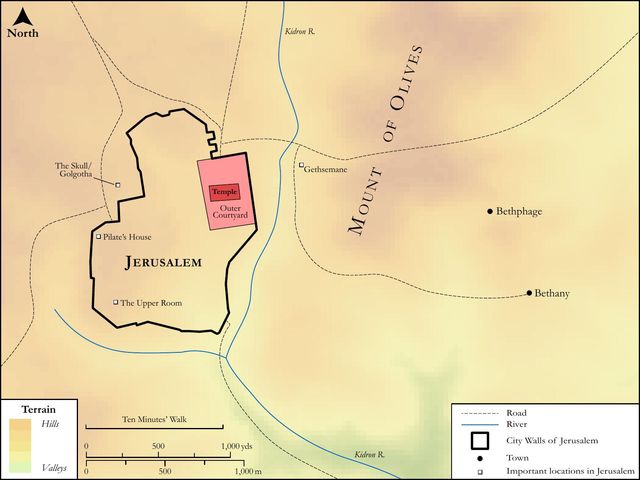
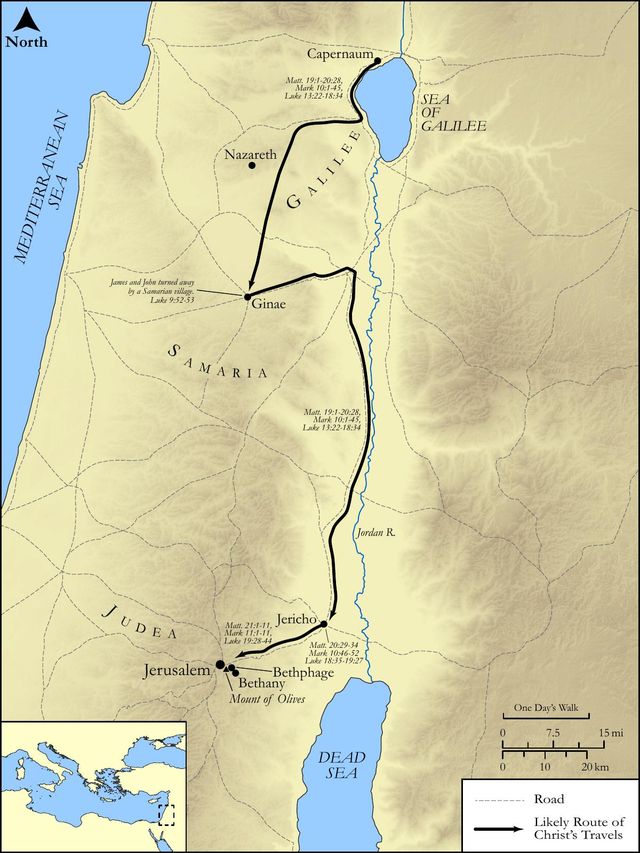
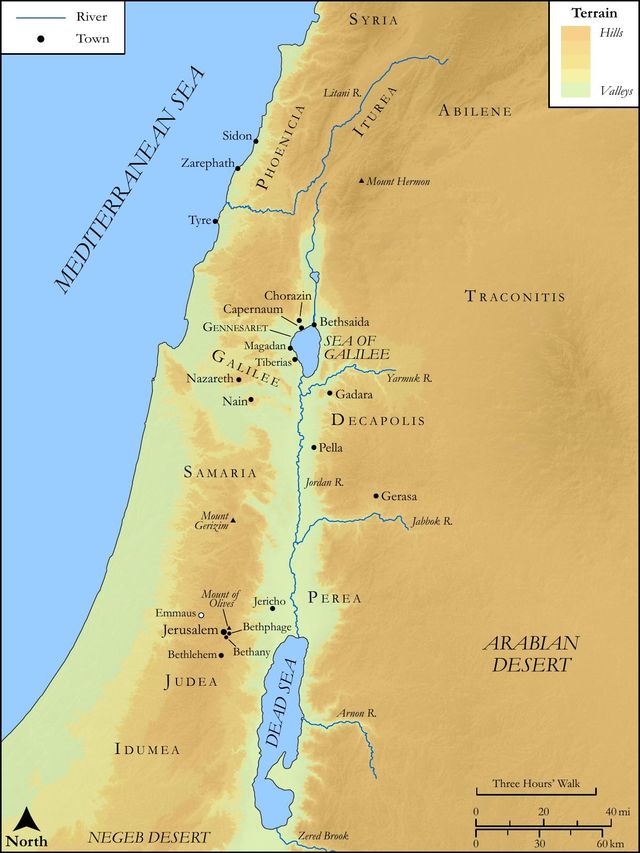
See on the biblical-era maps
Study this verse
Public-domain commentary
Matthew Henry
From his Commentary on the Whole Bible. Henry comments on passages, not single verses — this entry covers Luke 11:1–13. His four-level outline is real structure in the source text, so it is rendered as structure.
Prayer is one of the great laws of natural religion. That man is a brute, is a monster, that never prays, that never gives glory to his Maker, nor feels his favour, nor owns his dependence upon him. One great design therefore of Christianity is to assist us in prayer, to enforce the duty upon us, to instruct us in it, and encourage us to expect advantage by it. Now here,
I.We find Christ himself praying in a certain place, probably where he used to pray, Luk 11:1.
As God, he was prayed to; as man, he prayed; and, though he was a Son, yet learned he this obedience. This evangelist has taken particular notice of Christ's praying often, more than any other of the evangelists: when he was baptized (Luk 3:21), he was praying; he withdrew into the wilderness, and prayed (Luk 5:16); he went out into a mountain to pray, and continued all night in prayer (Luk 6:12); he was alone praying (Luk 9:18); soon after, he went up into a mountain to pray, and as he prayed he was transfigured (Luk 9:28, Luk 9:29); and here he was praying in a certain place. Thus, like a genuine son of David, he gave himself unto prayer, Psa 109:4. Whether Christ was now alone praying, and the disciples only knew that he was so, or whether he prayed with them, is uncertain; it is most probable that they were joining with him.
II.His disciples applied themselves to him for direction in prayer.
When he was praying, they asked, Lord, teach us to pray. Note, The gifts and graces of others should excite us to covet earnestly the same. Their zeal should provoke us to a holy imitation and emulation; why should not we do as well as they? Observe, They came to him with this request, when he ceased; for they would not disturb him when he was at prayer, no, not with this good motion. Every thing is beautiful in its season. One of his disciples, in the name of the rest, and perhaps by their appointment, said, Lord, teach us. Note, Though Christ is apt to teach, yet he will for this be enquired of, and his disciples must attend him for instruction.
Now, 1. Their request is, "Lord, teach us to pray; give us a rule or model by which to go in praying, and put words into our mouths." Note, It becomes the disciples of Christ to apply themselves to him for instruction in prayer. Lord, teach us to pray, is itself a good prayer, and a very needful one, for it is a hard thing to pray well and it is Jesus Christ only that can teach us, by his word and Spirit, how to pray. "Lord, teach me what it is to pray; Lord, excite and quicken me to the duty; Lord, direct me what to pray for; Lord, give me praying graces, that I may serve God acceptably in prayer; Lord, teach me to pray in proper words; give me a mouth and wisdom in prayer, that I may speak as I ought; teach me what I shall say."
2.Their plea is, "As John also taught his disciples. He took care to instruct his disciples in this necessary duty, and we would be taught as they were, for we have a better Master than they had." Dr. Lightfoot's notion of this is, That whereas the Jews' prayers were generally adorations, and praises of God, and doxologies, John taught his disciples such prayers as were more filled up with petitions and requests; for it is said of them that they did deēseis poiountai - make prayers, Luk 5:33. The word signifies such prayers as are properly petitionary. "Now, Lord, teach us this, to be added to those benedictions of the name of God which we have been accustomed to from our childhood." According to this sense, Christ did there teach them a prayer consisting wholly of petitions, and even omitting the doxology which had been affixed; and the Amen, which was usually said in the giving of thanks (Co1 14:16), and in the Psalms, is added to doxologies only. This disciple needed not to have urged John Baptist's example: Christ was more ready to teach than ever John Baptist was, and particularly taught to pray better than John did, or could, teach his disciples.
III.Christ gave them direction, much the same as he had given them before in his sermon upon the mount, Mat 6:9, etc.
We cannot think that they had forgotten it, but they ought to have had further and fuller instructions, and he did not, as yet, think fit to give them any; when the Spirit should be poured out upon them from on high, they would find all their requests couched in these few words, and would be able, in words of their own, to expatiate and enlarge upon them. In Matthew he had directed them to pray after this manner; here, When ye pray, say; which intimates that the Lord's prayer was intended to be used both as a form of prayer and a directory.
1.There are some differences between the Lord's prayer in Matthew and Luke, by which it appears that it was not the design of Christ that we should be tied up to these very words, for then there would have been no variation. Here is one difference in the translation only, which ought not to have been, when there is none in the original, and that is in the third petition: As in heaven, so in earth; whereas the words are the very same, and in the same order, as in Matthew. But there is a difference in the fourth petition. In Matthew we pray, "Give us daily bread this day:" here, "Give it us day by day" - kath' hēmeran. Day by day; that is, "Give us each day the bread which our bodies require, as they call for it:" not, "Give us this day bread for many days to come;" but as the Israelites had manna, "Let us have bread today for today, and tomorrow for tomorrow;" for thus we may be kept in a continual dependence upon God, as children upon their parents, and may have our mercies fresh from his hand daily, and may find ourselves under fresh obligations to do the work of every day in the day, according as the duty of the day requires, because we have from God the supplies of every day in the day, according as the necessity of the day requires. Here is likewise some difference in the fifth petition. In Matthew it is, Forgive us our debts, as we forgive: here it is, Forgive us our sins; which proves that our sins are our debts. For we forgive; not that our forgiving those that have offended us can merit pardon from God, or be an inducement to him to forgive us (he forgives for his own name's sake, and his Son's sake); but this is a very necessary qualification for forgiveness, and, if God have wrought it in us, we may plead that work of his grace for the enforcing of our petitions for the pardon of our sins: "Lord, forgive us, for thou hast thyself inclined us to forgive others." There is another addition here; we plead not only in general, We forgive our debtors, but in particular, "We profess to forgive every one that is indebted to us, without exception. We so forgive our debtors as not to bear malice or ill-will to any, but true love to all, without any exception whatsoever." Here also the doxology in the close is wholly omitted, and the Amen; for Christ would leave them at liberty to use that or any other doxology fetched out of David's psalms; or, rather, he left a vacuum here, to be filled up by a doxology more peculiar to the Christian institutes, ascribing glory to Father, Son, and Holy Ghost.
2.Yet it is, for substance, the same; and we shall therefore here only gather up some general lessons from it.
(1.)That in prayer we ought to come to God as children to a Father, a common Father to us and all mankind, but in a peculiar manner a Father to all the disciples of Jesus Christ. Let us therefore in our requests both for others and for ourselves, come to him with a humble boldness, confiding in his power and goodness.
(2.)That at the same time, and in the same petitions, which we address to God for ourselves, we should take in with us all the children of men, as God's creatures and our fellow-creatures. A rooted principle of catholic charity, and of Christian sanctified humanity, should go along with us, and dictate to us throughout this prayer, which is so worded as to be accommodated to that noble principle.
(3.)That in order to the confirming of the habit of heavenly-mindedness in us, which ought to actuate and govern us in the whole course of our conversation, we should, in all our devotions, with an eye of faith look heavenward, and view the God we pray to as our Father in heaven, that we may make the upper world more familiar to us, and may ourselves become better prepared for the future state.
(4.)That in prayer, as well as in the tenour of our lives, we must seek first the kingdom of God and the righteousness thereof, by ascribing honour to his name, his holy name, and power to his government, both that of his providence in the world and that of his grace in the church. O that both the one and the other may be more manifested, and we and others more manifestly brought into subjection to both!
(5.)That the principles and practices of the upper world, the unseen world (which therefore by faith only we are apprized of), are the great original - the archetupon, to which we should desire that the principles and practices of this lower world, both in others and in ourselves, may be more conformable. Those words, As in heaven, so on earth, refer to all the first three petitions: "Father, let thy name be sanctified and glorified, and thy kingdom prevail, and thy will be done on this earth that is now alienated from thy service, as it is in yonder heaven that is entirely devoted to thy service."
(6.)That those who faithfully and sincerely mind the kingdom of God, and the righteousness thereof, may humbly hope that all other things, as far as to Infinite Wisdom seems good, shall be added to them, and they may in faith pray for them. If our first chief desire and care be that God's name may be sanctified, his kingdom come, and his will be done, we may then come boldly to the throne of grace for our daily bread, which will then be sanctified to us when we are sanctified to God, and God is sanctified by us.
(7.)That in our prayers for temporal blessings we must moderate our desires, and confine them to a competency. The expression here used of day by day is the very same with our daily bread; and therefore some think that we must look for another signification of the word epiousios than that of daily, which we give it, and that it means our necessary bread, that bread that is suited to the craving of our nature, the fruit that is brought out of the earth for our bodies that are made of the earth and are earthly, Psa 104:14.
(8.)That sins are debts which we are daily contracting, and which therefore we should every day pray for the forgiveness of. We are not only going behind with our rent every day by omissions of duty and in duty, but are daily incurring the penalty of the law, as well as the forfeiture of our bond, by our commissions. Every day adds to the score of our guilt, and it is a miracle of mercy that we have so much encouragement given us to come every day to the throne of grace, to pray for the pardon of our sins of daily infirmity. God multiplies to pardon beyond seventy times seven.
(9.)That we have no reason to expect, nor can with any confidence pray, that God would forgive our sins against him, if we do not sincerely, and from a truly Christian principle of charity, forgive those that have at any time affronted us or been injurious to us. Though the words of our mouth be even this prayer to God, if the meditation of our heart at the same time be, as often it is, malice and revenge to our brethren, we are not accepted, nor can we expect an answer of peace.
(10.)That temptations to sin should be as much dreaded and deprecated by us as ruin by sin; and it should be as much our care and prayer to get the power of sin broken in us as to get the guilt of sin removed from us; and though temptation may be a charming, fawning, flattering thing, we must be as earnest with God that we may not be led into it as that we may not be led by that to sin, and by sin to ruin.
(11.)That God is to be depended upon, and sought unto, for our deliverance from all evil; and we should pray, not only that we may not be left to ourselves to run into evil, but that we may not be left to Satan to bring evil upon us. Dr. Lightfoot understands it of being delivered from the evil one, that is, the devil, and suggests that we should pray particularly against the apparitions of the devil and his possessions. The disciples were employed to cast out devils, and therefore were concerned to pray that they might be guarded against the particular spite he would always be sure to have against them.
IV.He stirs up and encourages importunity, fervency, and constancy, in prayer, by showing,
1.That importunity will go far in our dealings with men, Luk 11:5-8. Suppose a man, upon a sudden emergency, goes to borrow a loaf or two of bread of a neighbour, at an unseasonable time of night, not for himself, but for his friend that came unexpectedly to him. His neighbour will be loth to accommodate him, for he has wakened him with his knocking, and put him out of humour, and he has a great deal to say in his excuse. The door is shut and locked, his children are asleep in bed, in the same room with him, and, if he make a noise, he shall disturb them. His servants are asleep, and he cannot make them hear; and, for his own part, he shall catch cold if he rise to give him. But his neighbour will have no nay, and therefore he continues knocking still, and tells him he will do so till he has what he comes for; so that he must give it to him, to be rid of him: He will rise, and give him as many as he needs, because of his importunity. He speaks this parable with the same intent that he speaks that in Luk 18:1 : That men ought always to pray, and not to faint. Not that God can be wrought upon by importunity; we cannot be troublesome to him, nor by being so change his counsels. We prevail with men by importunity because they are displeased with it, but with God because he is pleased with it. Now this similitude may be of use to us,
(1.)To direct us in prayer.
[1.]We must come to God with boldness and confidence for what we need, as a man does to the house of his neighbour or friend, who, he knows, loves him, and is inclined to be kind to him.
[2.]We must come for bread, for that which is needful, and which we cannot be without.
[3.]We must come to him by prayer for others as well as for ourselves. This man did not come for bread for himself, but for his friend. The Lord accepted Job, when he prayed for his friends, Job 42:10. We cannot come to God upon a more pleasing errand than when we come to him for grace to enable us to do good, to feed many with our lips, to entertain and edify those that come to us.
[4.]We may come with the more boldness to God in a strait, if it be a strait that we have not brought ourselves into by our own folly and carelessness, but Providence has led us into it. This man would not have wanted bread if his friend had not come in unexpectedly. The care which Providence casts upon us, we may with cheerfulness cast back upon Providence.
[5.]We ought to continue instant in prayer, and watch in the same with all perseverance.
(2.)To encourage us in prayer. If importunity could prevail thus with a man who was angry at it, much more with a God who is infinitely more kind and ready to do good to us than we are to one another, and is not angry at our importunity, but accepts it, especially when it is for spiritual mercies that we are importunate. If he do not answer our prayers presently, yet he will in due time, if we continue to pray.
2.That God has promised to give us what we ask of him. We have not only the goodness of nature to take comfort fRom. but the word which he has spoken (Luk 11:9, Luk 11:10): "Ask, and it shall be given you; either the thing itself you shall ask or that which is equivalent; either the thorn in the flesh removed, or grace sufficient given in." - We had this before, Mat 7:7, Mat 7:8. I say unto you. We have it from Christ's own mouth, who knows his Father's mind, and in whom all promises are yea and amen. We must not only ask, but we must seek, in the use of means, must second our prayers with our endeavours; and, in asking and seeking, we must continue pressing, still knocking at the same door, and we shall at length prevail, not only by our prayers in concert, but by our particular prayers: Every one that asketh receiveth, even the meanest saint that asks in faith. This poor man cried, and the Lord heard him, Psa 34:6. When we ask of God those things which Christ has here directed us to ask, that his name may be sanctified, that his kingdom may come, and his will be done, in these requests we must be importunate, must never hold our peace day or night; we must not keep silence, nor give God any rest, until he establish, until he make Jerusalem a praise in the earth, Isa 62:6, Isa 62:7.
V.He gives us both instruction and encouragement in prayer from the consideration of our relation to God as a Father. Here is,
1.An appeal to the bowels of earthly fathers: "Let any of you that is a father, and knows the heart of a father, a father's affection to a child and care for a child, tell me, if his son ask bread for his breakfast, will he give him a stone to breakfast on? If he ask a fish for his dinner (when it may be a fish-day), will he for a fish give him a serpent, that will poison and sting him? Or, if he shall ask an egg for his supper (an egg and to bed), will he offer him a scorpion? You know you could not be so unnatural to your own children," Luk 11:11, Luk 11:12.
2.An application of this to the blessings of our heavenly Father (Luk 11:13): If ye then, being evil, give, and know how to give, good gifts to your children, much more shall God give you the Spirit. He shall give good things; so it is in Matthew. Observe,
(1.)The direction he gives us what to pray for. We must ask for the Holy Spirit, not only a necessary in order to our praying well, but as inclusive of all the good things we are to pray for; we need no more to make us happy, for the Spirit is the worker of spiritual life, and the earnest of eternal life. Note, The gift of the Holy Ghost is a gift we are every one of us concerned earnestly and constantly to pray for.
(2.)The encouragement he gives us to hope that we shall speed in this prayer: Your heavenly Father will give. It is in his power to give the Spirit; he has all good things to bestow, wrapped up in that one; but that is not all, it is in his promise, the gift of the Holy Ghost is in the covenant, Act 2:33, Act 2:38, and it is here inferred from parents' readiness to supply their children's needs, and gratify their desires, when they are natural and proper. If the child ask for a serpent, or a scorpion, the father, in kindness, will deny him, but not if he ask for what is needful, and will be nourishing. When God's children ask for the Spirit, they do, in effect, ask for bread; for the Spirit is the staff of life; nay, he is the Author of the soul's life. If our earthly parents, though evil, be yet so kind, if they, though weak, be yet so knowing, that they not only give, but give with discretion, give what is best, in the best manner and time, much more will our heavenly Father, who infinitely excels the fathers of our flesh both in wisdom and goodness, give us his Holy Spirit. If earthly parents be willing to lay out for the education of their children, to whom they design to leave their estates, much more will our heavenly Father give the spirit of sons to all those whom he has predestinated to the inheritance of sons.
Historical interpretation
Nineteen Centuries of Reception
23 surviving comments on this verse. Each one is dated, so this reads as a timeline rather than a list.
Select a marker to jump to its quote. Markers stagger vertically where authors wrote within a few decades of each other.
(App. Serm. 84.) The first word, how gracious is it? Thou durst not raise thy face to heaven, and suddenly thou receivest the grace of Christ. From an evil servant thou art made a good son. Boast not then of thy working, but of the grace of Christ; for therein is no arrogance, but faith. To proclaim what thou hast received is not pride, but devotion. Therefore raise thy eyes to thy Father, who begot thee by Baptism, redeemed thee by His Son. Say Father as a son, but claim no especial favour to thyself. Of Christ alone is He the especial Father, of us the common Father. For Christ alone He begot, but us he created. And therefore according to Matthew when it is said, Our Father, (Matt. 6:9.) it is added, which art in heaven, that is, in those heavens of which it was said, The heavens declare the glory of God. (Ps. 19:1.) Heaven is where sin has ceased, and where there is no sting of death.
(ubi sup.) Or it is said, Hallowed be thy name; that is, let Thy holiness be known to all the world, and let it worthily praise Thee. For praise becometh the upright, (Ps. 33.) and therefore He bids them pray for the cleansing of the whole world.
(ubi sup.) For then cometh the kingdom of God, when we have obtained His grace. For He Himself says, The kingdom of God is within you. (Luke 17:21.)
(App. Serm. 84..) In the Greek the word is ἐπιούσιον, that is, something added to the substance. (supersubstantialem) It is not that bread which goes into the body, but that bread of everlasting life, which supports the substance of our soul. But the Latins call this "daily" bread, which the Greeks call "coming to." If it is daily bread, why is it eaten a year old, as is the custom with the Greeks in the east? Take daily what profits thee for the day; so live that thou mayest daily be thought worthy to receive. The death of our Lord is signified thereby, and the remission of sins, and dost thou not daily partake of that bread of life? He who has a wound seeks to be cured; the wound is that we are under sin, the cure is the heavenly and dreadful Sacrament. If thou receivest daily, daily does "To-day" come unto thee. Christ is to thee To-day; (Heb. 13:8.) Christ rises to thee daily.
(ubi sup.) But what is the debt except sin? If thou hadst not received, thou wouldest not owe money to another. And therefore sin is imputed to you. For thou hadst money with which thou wert born rich, and made after the likeness and image of God, but thou hast lost what thou then hadst. As when thou puttest on pride thou losest the gold of humility, thou hast receipted the devil's debt which was not necessary; the enemy held the bond, but the Lord crucified it, and cancelled it with His blood. But the Lord is able, who has taken away our sins and forgiven our debts, to guard us against the snares of the devil, who is wont to produce sin in us. Hence it follows, And lead us not into temptation, such as we are not able to bear, but like the wrestler we wish only such temptation as the condition of man can sustain.
(ubi sup.) For each man seeks to be delivered from evil, that is, from his enemies and sin, but he who gives himself up to God, fears not the devil, for if God is for us, who can be against us? (Rom. 8:31.)
Neither pray as the hypocrites; but as the Lord commanded in His Gospel, thus pray: Our Father who art in heaven, hallowed be Thy name. Thy kingdom come. Thy will be done, as in heaven, so on earth. Give us to-day our daily (needful) bread, and forgive us our debt as we also forgive our debtors. And bring us not into temptation, but deliver us from the evil one (or, evil); for Thine is the power and the glory for ever. Thrice in the day thus pray.
He never remembers those who have sinned against him, but forgives them. Wherefore also he righteously prays, saying, "Forgive us; for we also forgive."
Whose kingdom shall I wish to come-his, of whom I never heard as the king of glory; or His, in whose hand are even the hearts of kings? Who shall give me my daily bread? Shall it be he who produces for me not a grain of millet-seed; or He who even from heaven gave to His people day by day the bread of angels? Who shall forgive me my trespasses? He who, by refusing to judge them, does not retain them; or He who, unless He forgives them, will retain them, even to His judgment? Who shall suffer us not to be led into temptation? He before whom the tempter will never be able to tremble; or He who from the beginning has beforehand condemned the angel tempter? If any one, with such a form, invokes another god and not the Creator, he does not pray; he only blasphemes.
The sins which are (thus) cleansed are such as a man may have committed against his brother, not against God. We profess, in short, in our prayer, that we will grant remission to our debtors; but it is not becoming to distend further, on the ground of the authority of such Scriptures, the cable of contention with alternate pull into diverse directions; so that one (Scripture) may seem to draw tight, another to relax, the reins of discipline-in uncertainty, as it were,-and the latter to debase the remedial aid of repentance through lenity, the former to refuse it through austerity.
Divine Wisdom arranged the order of this prayer with exquisite choice. After the matters that pertain to heaven—that is, after the name of God, the will of God and the kingdom of God—it should make a place for a petition for our earthly needs too! Our Lord taught us, “Seek first the kingdom, and then these things shall be given you besides.” We should rather understand “give us this day our daily bread” in a spiritual sense. For Christ is “our bread,” because Christ is life, and the life is bread. “I am,” he said, “the bread of life.” Shortly before this he said, “The bread is the word of the living God who has come down from heaven.” Then, because his body is considered to be in the bread, he said, “This is my body.” When we ask for our daily bread, we are asking to live forever in Christ and to be inseparably united with his body.
To complete the prayer which was so well arranged, Christ added that we should pray not only that our sins be forgiven but also that we should completely shun them. “Lead us not into temptation,” that is, do not allow us to be led by the tempter. God forbid that our Lord should seem to be the tempter, as if he were not aware of one’s faith or were eager to upset it! That weakness and spitefulness belongs to the devil. Even in the case of Abraham, God ordered the sacrifice of his son not to tempt his faith but to prove it. He did this to set an example for his commandment that he was later to teach that no one should hold his loved ones dearer than God. Christ himself was tempted by the devil and pointed out the subtle director of the temptation. He confirms this passage by his words to his apostles later when he says, “Pray that you may not enter into temptation.” They were tempted to desert their Lord because they had indulged in sleep instead of prayer. The phrase that balances and interprets “lead us not into temptation” is “but deliver us from evil.”
Luke says, "Forgive us our sins," since sins are associated with our debts if we have not paid them. He says the same thing as Matthew but does not seem to leave room for the person who wishes to forgive debtors only if they repent. He says that our Savior has given the law that we should add to our prayer, "For we ourselves forgive every one who is indebted to us." Surely we all have authority to forgive sins against ourselves. This is clear from "as we forgive our debtors" and from "for we ourselves forgive every one who is indebted to us." The person inspired by Jesus and known by his fruits, as the apostles were, has received the Holy Spirit. He has become spiritual by being led by the Spirit to do everything by reason as a child of God. This person forgives whatever God forgives and retains sins that cannot be healed, serving God as the prophets by not speaking his own words but those of the divine will. He also serves God who alone has authority to forgive.
“Give us our constant bread of the day.” Look, he has said, “Seek the kingdom of God, and these things over and above will be given to you as well.” He said “of the day” to teach us poverty in relation to the things of the world. It is sufficient for only our need, or else when we are anxious for a time, we might withdraw from intimacy with God. This bread of the day indicates necessity. He does not just give us only bread but also clothing and other things, as he said, “Your Father knows what your needs are before you ask him.”
(in Matt.) The disciples having seen a new way of life, desire a new form of prayer, since there were several prayers to be found in the Old Testament. Hence it follows, When he ceased, one of his disciples said to him, Lord, teach us to pray, in order that we might not sin against God in asking for one thing instead of another, or by approaching God in prayer in a manner that we ought not.
(ubi sup.) And because in the name of Jesus is the glory of God the Father, the name of the Father will be hallowed whenever Christ shall be known.
Or the bread of souls is the Divine power, bringing the everlasting life which is to come, as the bread which comes out of the earth preserves the temporal life. But by saying "daily," He signifies the Divine bread which comes and is to come, which we seek to be given to us daily, requiring a certain earnest and taste of it, seeing that the Spirit which dwells in us hath wrought a virtue surpassing all human virtues, as chastity, humility, and the rest.
(in Matt.) This also was necessarily added, for no one is found without sin, that we should not be hindered from the holy participation on account of man's guilt. For whereas we are bound to render unto Christ all manner of holiness, who maketh His Spirit to dwell in us, we are to be blamed if we keep not our temples clean for Him. But this defect is supplied by the goodness of God, remitting to human frailty the severe punishment of sin. And this act is done justly by the just God, when we forgive as it were our debtors, those, namely, who have injured us, and have not restored what was due. Hence it follows, For we also forgive every one that is indebted to us.
(ubi sup.) For it is imposible not to be tempted by the devil, but we make this prayer that we may not be abandoned to our temptations. Now that which happens by Divine permission, God is sometimes in Scripture said to do. And in this way by hindering not the increase of temptation which is above our strength, he leads us into temptation.
(Const. Monast. cap. 1.) There are two kinds of prayer, one composed of praise with humiliation, the other of petitions, and more subdued. Whenever then you pray, do not first break forth into petition; but if you condemn your inclination, supplicate God as if of necessity forced thereto. And when you begin to pray, forget all visible and invisible creatures, but commence with the praise of Him who created all things. Hence it is added, And he says unto them, When you pray, say, Our Father.
(in Reg. brev. ad inter. 252.) As if He said, For thy daily bread, namely, that which serves for our daily wants, trust not to thyself, but fly to God for it, making known to Him the necessities of thy nature.
(in reg. brev. ad inter. 221.) It does not however become us to seek by our prayers bodily afflictions. For Christ has universally commanded men every where to pray that they enter not into temptation. But when one has already entered, it is fitting to ask from the Lord the power of enduring, that we may have fulfilled in us those words, He that endureth to the end shall be saved. (Mat. 10:22.)
(Orat. Dom. Serm. 1.) He unfolds the teaching of prayer to His disciples, who wisely desire the knowledge of prayer, directing them how they ought to beseech God to hear them.
(Orat. Dom. Serm. 2.) See how great a preparation thou needest, to be able to say boldly to God, O Father, for if thou hast thy eyes fixed on worldly things, or courtest the praise of men, or art a slave to thy passions, and utterest this prayer, I seem to hear God saying, 'Whereas thou that art of a corrupt life callest the Author of the incorruptible thy Father, thou pollutest with thy defiled lips an incorruptible name. For He who commanded thee to call Him Father, gave thee not leave to utter lies. (et serm. 3.). But the highest of all good things is to glorify God's name in our lives. Hence He adds, Hallowed be thy name. For who is there so debased, as when He sees the pure life of those who believe, does not glorify the name invoked in such a life. He then who says in his prayer, Be thy name, which I call upon, hallowed in me, prays this, "May I through Thy concurring aid be made just, abstaining from all evil."
(ubi sup.) We beseech also to be delivered by the Lord from corruption, to be taken out of death. Or, according to some, Thy kingdom come, that is, May Thy Holy Spirit come upon us to purify us.
(Orat. Dom. serm. 4.) For since He says that the life of man after the resurrection will be like to that of Angels, it follows, that our life in this world should be so ordered with respect to that which we hope for hereafter, that living in the flesh we may not live according to the flesh. But hereby the true Physician of the souls destroys the nature of the disease, that those who have been seized with sickness, whereby they have departed from the Divine will, may forthwith be released from the disease by being joined to the Divine will. For the health of the soul is the due fulfilment of the will of God.
(Orat. Dom. Serm. 5.) Having taught us to take confidence through good works, He next teaches us to implore the remission of our offences, for it follows, And forgive us our sins.
For as when a man gazes upon the beauty of the heavens, he says, Glory be thee, O God; so likewise when He beholds a man's virtuous actions, seeing that the virtue of man glorifies God much more than the heavens.
As if He says, Enable us, O Lord, to follow the heavenly life, that whatever Thou willest, we may will also.
(Hom. 23. in Matt.) We must then require of God the necessities of life; not varieties of meats, and spiced wines, and the other things which please the palate, while they load thy stomach and disturb thy mind, but bread which is able to support the bodily substance, that is to say, which is sufficient only for the day, that we may take no thought of the morrow. But we make only one petition about things of sense, that the present life may not trouble us.
Considering then these things, we ought to show mercy to our debtors. For they are to us if we are wise the cause of our greatest pardon; and though we perform only a few things, we shall find many. For we owe many and great debts to the Lord, of which if the least part should be exacted from us, we should soon perish.
(in Enchirid. c. 116.) It seems according to the Evangelist Matthew, that the Lord's prayer contains seven petitions, but Luke has comprehended it in five. Nor in truth does the one disagree from the other, but the latter has suggested by his brevity how those seven are to be understood. For the name of God is hallowed in the spirit, but the kingdom of God is about to come at the resurrection of the body. Luke then, showing that the third petition is in a manner a repetition of the two former, wished to make it so understood by omitting it. He then added three others. And first, of daily bread, saying, Give us day by day our daily bread.
(in Enchirid. c. 116.) But what Matthew has placed at the end, But deliver us from evil, Luke has not mentioned, that we might understand it belongs to the former, which was spoken of temptation. He therefore says, But deliver us, not, "And deliverus," clearly proving this to be but one petition," Do not this, but this." But let every one know that he is therein delivered from evil, when he is not brought into temptation.
“Give us this day our supersubstantial bread.” Another Evangelist uses the term daily.The first expression indicates that this bread has a noble and substantial character by which its exalted splendor and holiness surpass all substances and all creatures.
With “daily” the Evangelist shows that without this bread we cannot live a spiritual life for even a day. When he says “this day,” he shows that the bread must be eaten each day. It will not be enough to have eaten yesterday unless we eat similarly today. May our daily poverty encourage us to pour out this prayer at all times, for there is no day on which it is unnecessary for us to eat this bread to strengthen the heart of the person within us.
“Daily” can also be understood as referring to our present life. That is, “give us this bread while we linger in this present world.” We know that in the time to come you will give it to whoever deserves it, but we ask that you give it to us today. He who has not received it in this life will not be able to partake of it in that next life.
He requires his disciples to be gentle and slow to anger, so that they may be able to say blamelessly in their prayers, "Forgive us our sins, for we also forgive every one that is indebted unto us." … He first commands them to ask forgiveness of the sins they commit and then to confess that they entirely forgive others. If I may say so, they ask God to imitate the patience that they practice. The same gentleness that they show to their fellow servants, they pray that they may receive in equal measure from God, who gives justly, and knows how to show mercy to everyone.…The Savior of all and Lord with good reason did not conclude this clause of the prayer at this point but commanded us to add, "For we also ourselves have forgiven every one who is indebted to us." This is fitting to say only for those who have chosen a virtuous life and are practicing without carelessness "the will of God" that, as Scripture says, "is good and acceptable and perfect." …
We must ask God for the forgiveness of the sins that we have committed. First, we must have forgiven whoever has offended us in anything. This is if their sin is against us and not against the glory of the supreme God. We are not masters over such actions but only over those that have been committed against ourselves. By forgiving the brothers what they do to us, we will then certainly find Christ, the Savior of all, gentle and ready to show us mercy.
Now whereas He possesses every good in abundance, why does He pray, since He is full, and has altogether need of nothing? To this we answer, that it befits Him, according to the manner of His dispensation in the flesh, to follow human observances at the time convenient for them. For if He eats and drinks, He rightly was used to pray, that He might teach us not to be lukewarm in this duty, but to be the more diligent and earnest in our prayers.
Since among those to whom the faith has not yet come, the name of God is still despised. But when the rays of truth shall have shined upon them, they will confess the Holy of Holies. (Dan. 9:24.)
Or they who say this seem to wish to have the Saviour of all again illuminating the world. But He has commanded us to desire in prayer that truly awful time, in order that men might know that it behoves them to live not in sloth and backwardness, lest that time bring upon them the fiery punishment, but rather honestly and according to His will, that that time may weave crowns for them. Hence it follows, according to Matthew,a Thy will be done, as in heaven, so in earth.
Now perhaps some think it unfit for saints to seek from God bodily goods, and for this reason assign to these words a spiritual sense. But granting that the chief concern of the saints should be to obtain spiritual gifts, still it becomes them to see that they seek without blame, according to our Lord's command, their common bread. For from the fact that He bids them ask for bread, that is daily food, it seems that He implies that they should possess nothing, but rather practise an honourable poverty. For it is not the part of those who have bread to seek it, but rather of those who are oppressed with want.
For He wishes, if I may so speak, to make God the imitator of the patience which men practise, that the kindness which they have shown to their fellowservants, they should in like manner seek to receive in equal balance from God, who recompenses to each man justly, and knows how to have mercy upon all men.
When we are intent in prayer, he commands us to say, "Lead us not into temptation." Luke concludes the prayer with these words, but Matthew adds, "but deliver us from the evil one." There is a certain close connection in the clauses, because when people are not being led into temptation, they are also delivered from the evil one. If anyone were perhaps to say that not being led into is the same as being delivered from it, he would not err from the truth.
But behold, our enemy has grievously sinned against us, inflicted losses, harmed those who helped, persecuted those who loved. These things would need to be retained if our own sins were not to be forgiven. For our Advocate has composed a prayer for us in our case; and he who is the Advocate is himself the Judge of that same case. Moreover, he inserted a condition into the prayer he composed, saying: Forgive us our debts, as we also forgive our debtors. Therefore, since he who stood forth as Advocate comes as Judge, he who made the prayer hears it. Either, then, we say without doing it, Forgive us our debts, as we also forgive our debtors, and by saying this we bind ourselves all the more; or perhaps we omit this condition in our prayer, and our Advocate does not recognize the prayer he composed, and immediately says to himself: I know what I instructed; this is not the prayer I made. What then must we do, brothers, except extend the affection of true charity to our brothers? Let no malice remain in our heart. Let almighty God consider our charity toward our neighbor, so that he may extend his mercy to our iniquities. Remember what we are admonished: Forgive, and you will be forgiven. Behold, something is owed to us, and we owe. Let us therefore forgive what is owed to us, so that what is owed by us may be forgiven.
(in Orat. Dom.) Or, the Lord commands us to pray, Lead us not into temptation, let us not have experience of lustful and self-induced temptations. But James teaches those who contend only for the truth, not to be unnerved by involuntary and troublesome temptations, saying, My brethren, count it all joy when ye fall into divers temptations. (James 1:2.)
After the account of the sisters, who signified the two lives of the Church, our Lord is not without reason related to have both Himself prayed, and taught His disciples to pray, seeing that the prayer which He taught contains in itself the mystery of each life, and the perfection of the lives themselves is to be obtained not by our own strength, but by prayer. Hence it is said, And it came to pass, that, as he was praying in a certain place.
But He says not, which art in heaven, as though He were confined to that place, but to raise the hearer up to heaven, and draw him away from earthly things.
"With angels and archangels and all the company of heaven." Will you believe it? It is only quite recently I made that quotation a part of my private prayers--I festoon it round "hallowed be Thy name". This, by the way, illustrates what I was saying last week about the uses of ready-made forms. They remind one. And I have found this quotation a great enrichment. One always accepted this with theoretically. But it is quite different when one brings it into consciousness at an appropriate moment and wills the association of one's own little twitter with the voice of the great saints and (we hope) of our own dear dead. They may drown some of its uglier qualities and set off any tiny value it has...
Thy kingdom come. That is, may your reign be realised here, as it is realised there. But I tend to take there on three levels. First, as in the sinless world beyond the horrors of animal and human life; in the behaviour of stars and trees and water, in sunrise and wind. May there be here (in my heart) the beginning of a like beauty. Secondly, as in the best human lives I have known: in all the people who really bear the burdens and ring true, the people we call bricks, and in the quiet, busy, ordered life of really good families and really good religious houses. May that too be "here". Finally, of course, in the usual sense: as in heaven, as among the blessed dead.
And here can of course be taken not only for "in my heart", but for "in this college"--in England--in the world in general. But prayer is not the time for pressing our own favourite social or political panacea. Even Queen Victoria didn't like "being talked to as if she were a public meeting".
Thy will be done. My festoons on this have been added gradually. At first I took it exclusively as an act of submission, attempting to do with it what Our Lord did in Gethsemane. I thought of God's will purely as something that would come upon me, something of which I should be the patient. And I also thought of it as a will which would be embodied in pains and disappointments. Not, to be sure, that I suppose God's will for me to consist entirely of disagreeables. But I thought it was only the disagreeables that called for this preliminary submission--the agreeables could look after themselves for the present. When they turned up, one could give thanks.
This interpretation is, I expect, the commonest. And so it must be. And such are the miseries of human life that it must often fill our whole mind. But at other times other meanings can be added. So I added one more.
The peg for it is, I admit, much more obvious in the English version than in the Greek or Latin. No matter: this is where the liberty of festooning comes in. "Thy will be done". But a great deal of it is to be done by God's creatures; including me. The petition, then, is not merely that I may patiently suffer God's will but also that I may vigorously do it. I must be an agent as well as a patient. I am asking that I may be enabled to do it. In the long run I am asking to be given "the same mind which was also in Christ".
Taken this way, I find the words have a more regular daily application. For there isn't always--or we don't always have reason to suspect that there is--some great affliction looming in the near future, but there are always duties to be done; usually, for me, neglected duties to be caught up with. "Thy will be done--by me--now" brings one back to brass tacks.
But more than that, I am at this very moment contemplating a new festoon. Tell me if you think it a vain subtlety. I am beginning to feel that we need a preliminary act of submission not only towards possible future afflictions but also towards possible future blessings. I know it sounds fantastic; but think it over. It seems to me that we often, almost sulkily, reject the good that God offers us because, at that moment, we expected some other good. Do you know what I mean? On every level of our life--in our religious experience, in our gastronomic, erotic, aesthetic and social experience--we are always harking back to some occasion which seemed to us to reach perfection, setting that up as a norm, and depreciating all other occasions by comparison. But these other occasions, I now suspect, are often full of their own new blessings if only we would lay ourselves open to it. God shows us a new facet of the glory, and we refuse to look at it because we're still looking for the old one. And of course we don't get that. You can't, at the twentieth reading, get again the experience of reading Lycidas for the first time. But what you do get can be in its own way as good.
This applies especially to the devotional life. Many religious people lament that the first fervours of their conversion have died away. They think--sometimes rightly, but not, I believe always--that their sins account for this. They may even try by pitiful efforts of will to revive what now seem to have been the golden days. But were those fervours--the operative word is those--ever intended to last?
It would be rash to say that there is any prayer which God never grants. But the strongest candidate is the prayer we might express in the single word encore. And how should the Infinite repeat Himself? All space and time are too little for Him to utter Himself in them once.
And the joke, or tragedy, of it all is that these golden moments in the past, which are so tormenting if we erect them into a norm, are entirely nourishing, wholesome, and enchanting if we are content to accept them for what they are, for memories. Properly bedded down in a past which we do not miserably try to conjure back, they will send up exquisite growths. Leave the bulbs alone, and the new flowers will come up. Grub them up and hope, by fondling and sniffing, to get last year's blooms, and you will get nothing. "Unless a seed die..."
I expect we all do much the same with the prayer for our daily bread. It means, doesn't it, all we need for the day--"things requisite and necessary as well for the body as for the soul." I should hate to make this clause "purely religious" by thinking of "spiritual" needs alone. One of its uses, to me, is to remind us daily that what Burnaby calls the naïf view of prayer is firmly built into Our Lord's teaching.
Forgive us... as we forgive. Unfortunately there's no need to do any festooning here. To forgive for the moment is not difficult. But to go on forgiving, to forgive the same offence again every time it recurs to the memory--there's the real tussle. My resource is to look for some action of my own which is open to the same charge as the one I'm resenting. If I still smart to remember how A let me down, I must still remember how I let B down. If I find it difficult to forgive those who bullied me at school, let me, at that very moment, remember, and pray for, those I bullied. (Not that we called it bullying of course. That is where prayer without words can be so useful. In it there are no names; therefore no aliases.)
I was never worried myself by the words lead us not into temptation, but a great many of my correspondents are. The words suggest to them what some one has called "a fiend-like conception of God," as one who first forbids us certain fruits and then lures us to taste them. But the Greek word ([Greek: peirasmos]) means "trial"--"trying circumstances"--of every sort; a far larger word than English "temptation". So that the petition essentially is, "Make straight our paths. Spare us, where possible, from all crises, whether of temptation or affliction." By the way, you yourself, though you've doubtless forgotten it, gave me an excellent gloss on it: years ago in the pub at Coton. You said it added a sort of reservation to all our preceding prayers. As if we said, "In my ignorance I have asked for A, B and C. But don't give me them if you foresee that they would in reality be to me either snares or sorrows." And you quoted Juvenal, numinibus vota exaudita malignis, "enormous prayers which heaven in vengeance grants". For we make plenty of such prayers. If God had granted all the silly prayers I've made in my life, where should I be now?
I don't often use the kingdom, the power, and the glory. When I do, I have an idea of the kingdom as sovereignty de jure; God, as good, would have a claim on my obedience even if He had no power. The power is the sovereignty de facto--He is omnipotent. And the glory is--well, the glory; the "beauty so old and new", the "light from behind the sun."
Continue studying Luke 11:4 across the web’s major study libraries — every link below opens this exact verse, chapter, or book on the destination site.
Read & Compare
 BibleGatewayThis verse in more than 200 translations and 70 languages.
 Bible.comThe YouVersion reader — hundreds of translations, reading plans, and highlights.
 ESV.orgCrossway's official English Standard Version reader.
 NET BibleThe NET translation with 60,000+ translators' notes on every rendering decision.
 STEP BibleTyndale House's free study tool — original text, vocabulary, and scholarly resources.
 BibliaLogos Bible Software's free web reader.
 USCCBThe New American Bible (Revised Edition) with the U.S. bishops' study notes.
Commentaries
 BibleHub CommentariesDozens of classic commentaries on this verse, gathered on one page.
 StudyLightMore than 100 commentary sets — the largest collection on the web.
 BibleRefPlain-English commentary on what this verse means, verse by verse.
 Enduring WordDavid Guzik's free commentary on this chapter, widely used by Bible teachers.
 Bible Study ToolsVerse commentary alongside Greek and Hebrew study aids.
Original Language & Research
- BibleHub InterlinearThe verse word by word — original language, transliteration, and English.
- BibleHub LexiconEvery word's original-language definition and Strong's entry.
 Blue Letter BibleDeep-study tools — Strong's numbers, concordance, and word studies.
 CNTR CollationThe earliest Greek manuscripts of this verse, collated letter by letter.
Sermons, Hymns & Audio


TrulyRandomVerse is not affiliated with these sites and doesn’t control their content. They’re linked because they’re genuinely useful.
Summary
Luke 11:4, a pivotal part of the prayer Jesus taught His disciples, encapsulates two essential petitions: a plea for divine forgiveness and a request for divine protection from temptation and evil. This verse profoundly underscores the believer's daily, absolute dependence on God for both spiritual cleansing and ongoing spiritual safety, highlighting the interconnectedness of receiving God's grace and extending it to others, while acknowledging the reality of spiritual warfare.
Context
ShowHideLiterary Context
This verse is embedded within Jesus' response to a disciple's earnest request, "Lord, teach us to pray." The prayer, often called the Lord's Prayer, is presented in Luke's Gospel as a model for intimate and dependent communication with God, rather than a rigid liturgy. While a more extensive version appears in Matthew 6:9-13, both accounts convey the same foundational principles: acknowledging God's holiness, seeking His kingdom, relying on Him for daily provision, confessing sin, extending forgiveness, and asking for divine protection. Luke's concise rendition emphasizes the core petitions, making them directly applicable to the daily life of a disciple.
Historical & Cultural Context
In the first-century Jewish context, prayer was a central aspect of religious life, with various formalized prayers and spontaneous petitions. Disciples often learned specific prayers from their rabbis. Jesus' teaching on prayer, therefore, was not unusual in itself, but its content was revolutionary. The concept of "debt" as a metaphor for "sin" was common, reflecting a societal understanding of obligations and transgressions. The idea of "temptation" (testing or trial) was also deeply rooted in Old Testament narratives, where God tested His people (e.g., Deuteronomy 8:2) and where humanity faced moral challenges. The pervasive belief in spiritual forces of evil, including Satan, was also a significant part of the worldview, making the petition for deliverance from evil deeply resonant.
Key Themes
ShowHideLuke 11:4 contributes significantly to several overarching themes in Luke's Gospel and the broader New Testament. It reinforces the theme of dependence on God for all spiritual needs, from forgiveness to protection. It highlights the nature of God's forgiveness as both gracious and transformative, demanding a reciprocal spirit of forgiveness towards others, a concept Jesus emphasizes elsewhere, such as in the Parable of the Unforgiving Servant. Furthermore, it addresses the reality of spiritual warfare and the struggle against sin, acknowledging the need for divine intervention to navigate the world's temptations and the influence of evil. This verse also implicitly touches upon the theme of discipleship, as it outlines a posture of humility and reliance essential for following Jesus.
Exposition and Analysis
ShowHideKey Word Analysis
ShowHideThis term literally means "missing the mark" or "falling short." In a theological context, it refers to any thought, word, or deed that deviates from God's perfect standard and will. Here, it signifies a spiritual debt or transgression against God, emphasizing humanity's inherent inability to perfectly obey God's law and our constant need for His mercy and pardon.
This word carries a dual meaning: it can refer to a "test" or "trial" designed to prove one's faith and character, or an "enticement to sin" that seeks to lead one astray. In this prayer, the petition is not to avoid all trials, which are often necessary for spiritual growth, but specifically to be protected from overwhelming trials that might lead to spiritual failure or to succumbing to enticements that lead to sin. It's a plea for God's preventative grace.
This term is significant because it can be interpreted in two ways: as a general neuter noun referring to "evil" in the abstract sense (e.g., evil circumstances, evil influences, moral wickedness) or as a masculine noun referring to "the Evil One," namely Satan. Given the New Testament's clear emphasis on spiritual warfare and Satan's role as the adversary, many scholars understand this petition primarily as a plea for deliverance from the personal agency and machinations of the devil.
Verse Breakdown
ShowHide"And forgive us our sins;"
This opening clause is a direct and humble plea for divine pardon. It acknowledges humanity's inherent sinfulness and the continuous need for God's grace to cleanse and reconcile us to Him. It recognizes that sin creates a barrier between humanity and a holy God, and only His sovereign act of forgiveness can remove it.
"for we also forgive every one that is indebted to us."
This crucial clause presents a condition or a reflection of a transformed heart. The Greek particle "for" (gár) indicates a reason or explanation. It's not a transactional "if we forgive, then God forgives," but rather an affirmation that a heart truly touched by God's forgiveness will naturally extend that grace to others. Our willingness to forgive those who have wronged us serves as evidence that we have grasped the depth of God's forgiveness towards us, and it is a prerequisite for experiencing the fullness of His pardon.
"And lead us not into temptation;"
This petition is a request for God's protective guidance. It is not an accusation that God tempts anyone to sin (as James 1:13 clarifies), but rather a plea for God to prevent us from entering into situations where we might be overwhelmed by trials or enticements that could lead to spiritual failure. It is a recognition of human weakness and a reliance on divine strength to navigate the moral complexities of life.
"but deliver us from evil."
This final plea seeks God's active rescue. Following the petition concerning temptation, it asks for liberation from the pervasive power of evil in the world and, more specifically, from the influence and attacks of "the Evil One" (Satan). It acknowledges a spiritual battle and the believer's need for God's sovereign intervention and strength to overcome spiritual adversaries and the destructive forces of wickedness.
Literary Devices
ShowHideLuke 11:4 employs several significant literary devices. Parallelism is evident in the two main petitions: "forgive us our sins" and "lead us not into temptation; but deliver us from evil," which are structurally similar in their direct address to God and their focus on spiritual needs. The phrase "for we also forgive every one that is indebted to us" functions as a conditional clause or an explanatory justification, linking human action to divine response, though not in a meritorious sense. The use of "sins" being equated with "indebtedness" is a form of metaphor, where spiritual transgression is presented as a financial or moral obligation that needs to be settled. Finally, the ambiguity of "evil" (Greek, ponērou) allows for a rich double entendre, referring to both general wickedness and the personification of evil in Satan, thereby encompassing a broad scope of spiritual danger.
Theological and Thematic Connections
ShowHideLuke 11:4 stands as a profound theological statement on the nature of God, humanity, and the spiritual life. It affirms God's character as merciful and just, willing to forgive but also expecting a transformed heart that mirrors His grace. It highlights humanity's fallen nature and constant need for redemption and protection. The petition for forgiveness underscores the New Covenant reality where sin is atoned for through Christ, yet daily confession and repentance remain vital for the believer's walk. The prayer for deliverance from temptation and evil acknowledges the ongoing spiritual warfare that believers face, emphasizing that victory is found not in self-reliance but in God's sovereign power and protection. This verse thus serves as a theological anchor for understanding Christian humility, dependence, and the call to live out the grace received.
Reflection and Application
ShowHideLuke 11:4 is far more than a set of words to be recited; it is a profound guide for a life lived in humble dependence on God. It calls us to a daily posture of self-examination, acknowledging our persistent need for God's forgiveness, not just for egregious sins but for the subtle ways we miss the mark. This verse challenges us to internalize the radical nature of God's grace by extending that same grace to others, recognizing that our willingness to forgive is a powerful indicator of our own spiritual health and our grasp of God's mercy. Furthermore, it compels us to be vigilant against the temptations and evil forces that seek to derail our faith, prompting us to actively seek God's protective hand and guidance in every situation. This prayer cultivates a deep awareness of our spiritual vulnerability and God's unwavering power, encouraging us to lean on Him for strength, wisdom, and deliverance in a world fraught with spiritual dangers.
Questions for Reflection
ShowHideFAQ
ShowHideDoes "lead us not into temptation" imply that God tempts us to sin?
ShowHideNo, this petition does not imply that God actively tempts believers to sin. The Bible explicitly states in James 1:13 that "God cannot be tempted by evil, nor does he tempt anyone." The Greek word for "temptation" (peirasmós) can mean both a "test" or "trial" and an "enticement to sin." In this context, the prayer is a plea for God's protective hand to prevent us from entering into overwhelming trials that might lead us to fall into sin, or to be overcome by enticements from our flesh, the world, or the devil. It's a request for God's guidance to steer us away from situations where our faith might be severely tested beyond our capacity, or where we might succumb to evil influences. It emphasizes our dependence on God to navigate the spiritual dangers of life.
What is the significance of forgiving others as a prerequisite for receiving God's forgiveness?
ShowHideThe phrase "for we also forgive every one that is indebted to us" is crucial. It's not a transactional exchange where our forgiveness earns God's forgiveness. Instead, it highlights that a heart truly transformed by God's grace and forgiveness will naturally be inclined to extend that same grace to others. Our willingness to forgive others is evidence that we have genuinely understood and received the vastness of God's forgiveness towards us. Jesus emphasizes this principle elsewhere, such as in the Parable of the Unforgiving Servant in Matthew 18, where the servant who received immense forgiveness refused to forgive a small debt owed to him. Our capacity to forgive others reflects the work of God's Spirit within us and is a vital component of living in right relationship with Him.
Christ-Centered Fulfillment
ShowHideLuke 11:4 finds its ultimate fulfillment in the person and work of Jesus Christ, who is the perfect embodiment of its petitions. He is the one through whom God's forgiveness is made possible, for He became the Lamb of God who takes away the sin of the world. His sacrificial death on the cross serves as the ultimate payment for our "sins" or "debts," offering complete and eternal pardon to all who believe, as Hebrews 9:22 reminds us that "without the shedding of blood there is no forgiveness." Furthermore, Jesus Himself faced and triumphed over every "temptation," including the intense trials in the wilderness (as detailed in Luke 4:1-13), demonstrating His perfect obedience and providing a model for enduring trials. He understands our weaknesses, for He was "tempted in every way, just as we are—yet he did not sin" (Hebrews 4:15). Finally, Jesus is the one who has definitively conquered "evil" and "the Evil One." Through His death and resurrection, He disarmed the powers of darkness and triumphed over Satan (Colossians 2:15). As our living Lord and High Priest, He continually intercedes for us (Romans 8:34), delivering us from evil and enabling us to walk in freedom and victory. Thus, every petition in Luke 11:4 points to Christ as the source and sustainer of our spiritual life.