


Luke 5:33
Bible text: King James Version (1769 Blayney text) · Public domain
Bible text: King James Version with Strong's numbers · Public domain
Bible text: Berean Standard Bible · Public domain
Bible text: American Standard Version (1901) · Public domain
Bible text: World English Bible, Messianic edition · Public domain
Bible text: Geneva Bible (1599) · Public domain
Bible text: Young's Literal Translation · Public domain
- οἱhoi<the>G3588T-NPMDefinite article Nominative Plural Masculine
- δὲdeAndG1161CONJConjunction
- εἶπανeipanthey saidG2036V-2AAI-3PVerb 2nd Aorist Active Indicative 3rd Plural
- πρὸςprostoG4314PREPPreposition
- αὐτόν·autonHimG846P-ASMPersonal pronoun Accusative Singular Masculine
- διὰdiathroughG1223PREPPreposition
- τίtiwhyG5101I-ASNInterrogative pronoun Accusative Singular Neuter
- οἱhoiTheG3588T-NPMDefinite article Nominative Plural Masculine
- μαθηταὶmathētaidisciplesG3101N-NPMNoun Nominative Plural Masculine
- ἸωάννουIōannouof JohnG2491N-GSM-PNoun Genitive Singular Masculine Individual
- νηστεύουσινnēsteuousinfastG3522V-PAI-3PVerb Present Active Indicative 3rd Plural
- πυκνὰpuknaoftenG4437A-APNAdjective Accusative Plural Neuter
- καὶkaiandG2532CONJConjunction
- δεήσειςdeēseisprayersG1162N-APFNoun Accusative Plural Feminine
- ποιοῦνταιpoiountaimakeG4160V-PMI-3PVerb Present Middle Indicative 3rd Plural
- ὁμοίωςhomoiōslikewiseG3668ADVAdverb
- καὶkaialsoG2532CONJConjunction
- οἱhoithoseG3588T-NPMDefinite article Nominative Plural Masculine
- τῶνtōnof theG3588T-GPMDefinite article Genitive Plural Masculine
- ΦαρισαίωνPharisaiōnPhariseesG5330N-GPM-TNoun Genitive Plural Masculine Title
- οἱhoithoseG3588T-NPMDefinite article Nominative Plural Masculine
- δὲdehoweverG1161CONJConjunction
- σοὶsoiof YouG4771S-2SNPMPossessive pronoun Nominative 2nd Singular Plural Masculine
- ἐσθίουσινesthiousineatG2068V-PAI-3PVerb Present Active Indicative 3rd Plural
- καὶkaiandG2532CONJConjunction
- πίνουσινpinousindrinkG4095V-PAI-3PVerb Present Active Indicative 3rd Plural
English is a literal word-by-word gloss of the Greek, not the KJV's wording. Why?
This is the original text the KJV's translators worked from — each Greek word with its own literal English meaning in this verse, prepared by scholars at Tyndale House, Cambridge. The KJV translates whole sentences, not word by word, so its wording differs: one Greek word can become several English words, and the KJV may choose “charity” where the gloss reads “love”. Both are faithful — they answer different questions. For the KJV's own rendering, switch to the KJV text.
Details
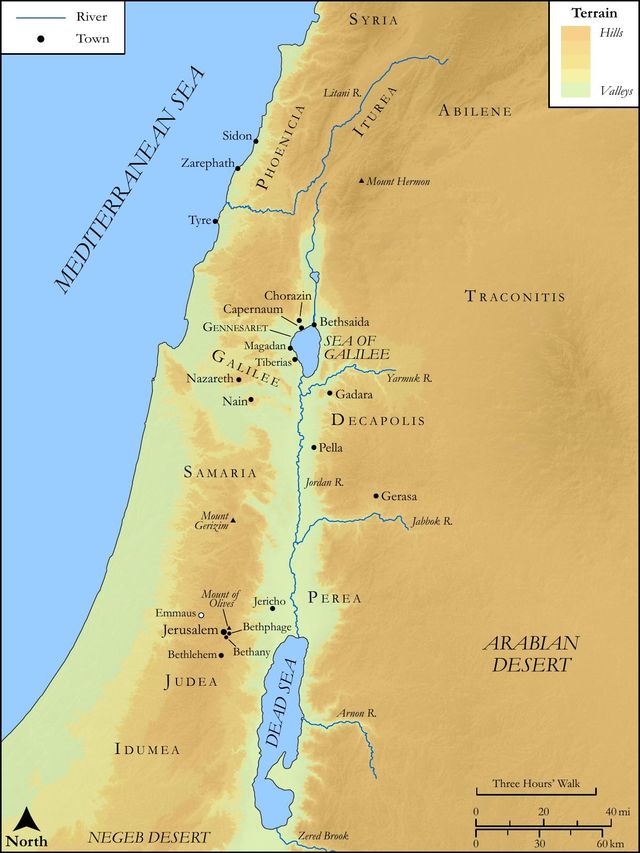
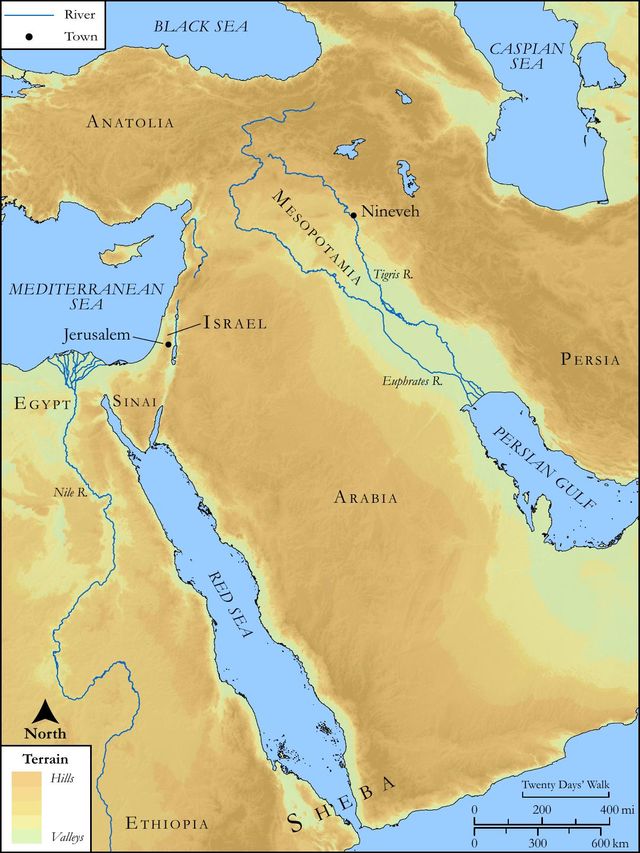
See on the biblical-era maps

Study this verse
Public-domain commentary
Matthew Henry
From his Commentary on the Whole Bible. Henry comments on passages, not single verses — this entry covers Luke 5:27–39.
All this, except the last verse, we had before in Matthew and Mark; it is not the story of any miracle in nature wrought by our Lord Jesus, but it is an account of some of the wonders of his grace, which, to those who understand things aright, are no less cogent proofs of Christ's being sent of God than the other.
I.It was a wonder of his grace that he would call a publican, from the receipt of custom, to be his disciple and follower, Luk 5:27.
It was wonderful condescension that he should admit poor fishermen to that honour, men of the lowest rank; but much more wonderful that he should admit publicans, men of the worst reputation, men of ill fame. In this Christ humbled himself, and appeared in the likeness of sinful flesh. By this he exposed himself, and got the invidious character of a friend of publicans and sinners.
II.It was a wonder of his grace that the call was made effectual, became immediately so, Luk 5:28.
This publican, though those of that employment commonly had little inclination to religion, for his religion's sake left a good place in the custom-house (which, probably, was his livelihood, and where he stood fair for better preferment), and rose up, and followed Christ. There is no heart too hard for the Spirit and grace of Christ to work upon, nor any difficulties in the way of a sinner's conversion insuperable to his power.
III.It was a wonder of his grace that he would not only admit a converted publican into his family, but would keep company with unconverted publicans, that he might have an opportunity of doing their souls good; he justified himself in it, as agreeing with the great design of his coming into the world. Here is a wonder of grace indeed, that Christ undertakes to be the Physician of souls distempered by sin, and ready to die of the distemper (he is a Healer by office, Luk 5:31) - that he has a particular regard to the sick, to sinners as his patients, convinced awakened sinners, that see their need of the Physician - that he came to call sinners, the worst of sinners, to repentance, and to assure them of pardon, upon repentance, Luk 5:32. These are glad tidings of great joy indeed.
IV.It was a wonder of his grace that he did so patiently bear the contradiction of sinners against himself and his disciples, Luk 5:30.
He did not express his resentment of the cavils of the scribes and Pharisees, as he justly might have done, but answered them with reason and meekness; and, instead of taking that occasion to show his displeasure against the Pharisees, as afterwards he did, or of recriminating upon them, he took that occasion to show his compassion to poor publicans, another sort of sinners, and to encourage them.
V.It was a wonder of his grace that, in the discipline under which he trained up his disciples, he considered their frame, and proportioned their services to their strength and standing, and to the circumstances they were in. It was objected, as a blemish upon his conduct, that he did not make his disciples to fast so often as those of the Pharisees and John Baptist did, Luk 5:33. He insisted most upon that which is the soul of fasting, the mortification of sin, the crucifying of the flesh, and the living of a life of self-denial, which is as much better than fasting and corporal penances as mercy is better than sacrifice.
VI.It was a wonder of his grace that Christ reserved the trials of his disciples for their latter times, when by his grace they were in some good measure better prepared and fitted for them than they were at first. Now they were as the children of the bride-chamber, when the bridegroom is with them, when they have plenty and joy, and every day is a festival. Christ was welcomed wherever he came, and they for his sake, and as yet they met with little or no opposition; but this will not last always. The days will come when the bridegroom shall be taken away from them, Luk 5:35. When Christ shall leave them with their hearts full of sorrow, their hands full of work, and the world full of enmity and rage against them, then shall they fast, shall not be so well fed as they are now. We both hunger and thirst and are naked, Co1 4:11. Then they shall keep many more religious fasts than they do now, for Providence will call them to it; they will then serve the Lord with fastings, Act 13:2.
VII.It was a wonder of his grace that he proportioned their exercises to their strength.
He would not put new cloth upon an old garment (Luk 5:36), nor new wine into old bottles (Luk 5:37, Luk 5:38); he would not, as soon as ever he had called them out of the world, put them upon the strictnesses and austerities of discipleship, lest they should be tempted to fly off. When God brought Israel out of Egypt, he would not bring them by the way of the Philistines, lest they should repent, when they saw war, and return to Egypt, Exo 13:17. So Christ would train up his followers gradually to the discipline of his family; for no man, having drank old wine, will of a sudden, straightway, desire new, or relish it, but will say, The old is better, because he has been used to it, Luk 5:39. The disciples will be tempted to think their old way of living better, till they are by degrees trained up to this way whereunto they are called. Or, turn it the other way: "Let them be accustomed awhile to religious exercises, and then they will abound in them as much as you do: but we must not be too hasty with them." Calvin takes it as an admonition to the Pharisees not to boast of their fasting, and the noise and show they made with it, nor to despise his disciples because they did not in like manner signalize themselves; for the profession the Pharisees made was indeed pompous and gay, like new wine that is brisk and sparkling, whereas all wise men say, The old is better; for, though it does not give its colour so well in the cup, yet it is more warming in the stomach and more wholesome. Christ's disciples, though they had not so much of the form of godliness, had more of the power of it.
Historical interpretation
Five Centuries of Reception
13 surviving comments on this verse. Each one is dated, so this reads as a timeline rather than a list.
Select a marker to jump to its quote. Markers stagger vertically where authors wrote within a few decades of each other.
" At all events, in the Gospel they think that those days were definitely appointed for fasts in which "the Bridegroom was taken away; " and that these are now the only legitimate days for Christian fasts, the legal and prophetical antiquities having been abolished: for wherever it suits their wishes, they recognise what is the meaning of" the Law and the prophets until John.
During the entire period that our Lord was in the midst of the world, he compared it with a bridal chamber and himself with the bridegroom. For the bridal guests cannot fast while the bridegroom is with them. …He called his disciples bridal guests because they are members of the church, and ministers of the feast, and heralds who invite those who sit at table.
The children of the Bridegroom also cannot fast, i. e. refuse nourishment to the soul, but live on every word which proceedeth out of the mouth of God.
(Orat. de Deit. Filii et SS.) For wine newly drawn forth, evaporates on account of the natural heat in the liquor, throwing off from itself the scum by natural action. Such wine is the new covenant, which the old skins because of their unbelief contain not, and are therefore burst by the excellence of the doctrine, and cause the grace of the Spirit to flow in vain; because into an evil soul wisdom will not enter. (Sap. 1:4.)
Then in this passage, fasting represents the old garment that the apostle thought should be taken off. He said, “Strip yourselves of the old man with his deeds,” so that we may put on the new man, which is renewed by the sanctification of baptism. Then the series of teachings is suited to the same garment, lest we mix the deeds of the old and the new man, when the physical exterior performs the works of the flesh. The inner man, which is reborn, should not have the varied appearance of old and new actions but be the same color as Christ. With zeal of mind, it should imitate him for whom he was cleansed by baptism. So let the discolored coverings of the mind, which are displeasing to the Bridegroom, be absent, for one who has not a wedding garment is displeasing to him. What can please the Bridegroom, except peace of spirit, purity of heart and clarity of mind?
“But the days will come when the Bridegroom shall be taken from them.” Which are these days in which Christ is taken from us, especially when he himself has said, “I shall be with you, even to the end of the world,” when he has said, “I will not leave you orphans"? For it is certain that if he were to leave us, we could not be saved. None can take Christ from you, unless you take yourself away. Your boasting will not take you away, nor arrogance, nor may you presume on the law for yourself. “For he came not to call the righteous, but sinners.” … The righteous are those who do not strike him who strikes them, who love their enemy. If we do not endure thus, the opposite is found. “I came not to call the righteous.” Christ does not call those who say they are righteous, for not knowing God and seeking to establish their own righteousness, they have not submitted themselves to the righteousness of God. Therefore the usurpers of righteousness are not called to grace. For if grace comes from penitence, surely one who scorns penitence renounces grace. Those who make themselves out to be holy will be wounded. The Bridegroom is taken from them. Neither Caiaphas nor Pilate took Christ from us. We cannot fast, because we have Christ, and we feast on the body and blood of Christ. For how does he who does not hunger seem to fast? How does he who does not thirst seem to fast? Then, how can he who drinks Christ thirst when he himself said, “Whosoever shall drink of the water that I will give him shall be thirsty no more”? Then what follows will declare the saying to concern the fasting of the spirit.
At the same time also is shown the difference between those who are zealous for the law and those who are for grace, that they who follow the law shall suffer eternal hunger of soul, while they who have received the word into the inmost soul, refreshed with abundance of heavenly meat and drink, can neither hunger nor thirst. And so they who fasted in soul murmured.
Or, That fast is not given up whereby the flesh is mortified, and the desires of the body chastened. (For this fast commends us to God.) But we cannot fast who have Christ, and banquet on the flesh and blood of Christ.
But when are those days, in which Christ shall be taken away from us, since He has said, I will be with you alway, even unto the end of the world? But no one can take Christ away from you, unless you take yourself away from Him.
Lastly, it is spoken of the fast of the soul, as the context shows, for it follows, But he said, No man putteth a piece of a new garment upon an old. He calleth fasting an old garment, which the Apostle thought should be taken off, saying, Put off the old man with his deeds. (Col. 3:9.) In the same manner we have a series of precepts not to mix up the actions of the old and new man.
The weakness of man's condition is exposed when our bodies arc compared to the skins of dead animals.
(Hom. 30. in Matt.) As if He should say, The present time is one of joy and gladness, sorrow must not then be mixed up with it.
(de Con. Ev. l. ii. c. 27.) Now Luke evidently relates that this was spoken not by men of themselves, but by others concerning them. How then does Matthew say, Then came unto him the disciples of John, saying, Why do we and the Pharisees fast; unless that they themselves also came, and were all eager, as far as they were able, to put the question to Him?
As soon as they have received the first answer from Christ, they proceed from one thing to another, with the intent to show that the holy disciples, and Jesus Himself with them, cared very little for the law. Hence it follows, Why do the disciples of John fast, but thine eat, &c. (Lev. 15, prævaricationis.) As if they said, Ye eat with publicans and sinners, whereas the law forbids to have any fellowship with the unclean, but compassion comes in as an excuse for your transgression; why then do ye not fast, as they are wont to do who wish to live according to the law? But holy men indeed fast, that by the mortification of their body they may quell its passions. Christ needed not fasting for the perfecting of virtue, since as God He was free from every yoke of passion. Nor again did His companions need fasting, but being made partakers of His grace without fasting they were strengthened in all holy and godly living. For when Christ fasted for forty days, it was not to mortify His passions, but to manifest to carnal men the rule of abstinence.
For the showing forth of our Saviour in this world was nothing else but a great festival, (πανήγυρις) spiritually uniting our nature to Him as His bride, that she who was formerly barren might become fruitful. The children of the Bridegroom then are found to be those who have been called by Him through a new and evangelical discipline, but not the Scribes and Pharisees, who observe only the shadow of the law.
For as long as the Bridegroom is with us we both rejoice, and can neither fast nor mourn. But when He has gone away through our sins, then a fast must be declared and mourning be enjoined.
Inasmuch as wine refreshes us within, but garments cover us without, the garments are the good works which we do abroad, by which we shine before men; wine, the fervour of faith, hope, and charity. Or, The old skins are the Scribes and Pharisees, the new piece and the new wine the precepts of the Gospel.
But to every soul which is not yet renewed, but goes on still in the old way of wickedness, the sacraments of new mysteries ought not to be given. They also who wish to mix the precepts of the Law with the Gospel, as the Galatians did, put new wine into old bottles. It follows, No man also having drank old wine straightway desireth new, for he saith, the old is better. For the Jews, imbued with the taste of their old life, despised the precepts of the new grace, and being defiled with the traditions of their ancestors, were not able to perceive the sweetness of spiritual words.
But they said to him, "Why do the disciples of John fast often, and make supplications, likewise also the Pharisees; but yours eat and drink?" Matthew reports that the disciples of John themselves said this to the Savior, whence it is clear that both groups combined to question him with this. Here, the disciples of John are especially to be reproved, not only for the boastfulness of their fasting but also because they malign what they knew to be taught by their master, and they joined with the Pharisees who they knew were condemned by him. Spiritually, however, the disciples of John and the Pharisees fast, but the disciples of Christ eat and drink, because whether one follows the works of the law or the traditions of men, or even receives the preaching of Christ with the ear of the body alone, abstaining from spiritual goods, they waste away with a fasting heart. But he who faithfully incorporates with the members of Christ out of love cannot fast, because he feasts on his flesh and blood.
Alternatively: John drinks neither wine nor strong drink; the Lord eats and drinks with publicans and sinners, because he increases merit through abstinence, where there is no strength of nature. The Lord, however, to whom it naturally belonged to forgive sins, why would he avoid those whom he could make purer by the abstainers? But Christ also fasted, so that you might not avoid the commandment. He ate with sinners, so that you might see grace and recognize power.
Continue studying Luke 5:33 across the web’s major study libraries — every link below opens this exact verse, chapter, or book on the destination site.
Read & Compare
 BibleGatewayThis verse in more than 200 translations and 70 languages.
 Bible.comThe YouVersion reader — hundreds of translations, reading plans, and highlights.
 ESV.orgCrossway's official English Standard Version reader.
 NET BibleThe NET translation with 60,000+ translators' notes on every rendering decision.
 STEP BibleTyndale House's free study tool — original text, vocabulary, and scholarly resources.
 BibliaLogos Bible Software's free web reader.
 USCCBThe New American Bible (Revised Edition) with the U.S. bishops' study notes.
Commentaries
 BibleHub CommentariesDozens of classic commentaries on this verse, gathered on one page.
 StudyLightMore than 100 commentary sets — the largest collection on the web.
 BibleRefPlain-English commentary on what this verse means, verse by verse.
 Enduring WordDavid Guzik's free commentary on this chapter, widely used by Bible teachers.
 Bible Study ToolsVerse commentary alongside Greek and Hebrew study aids.
Original Language & Research
- BibleHub InterlinearThe verse word by word — original language, transliteration, and English.
- BibleHub LexiconEvery word's original-language definition and Strong's entry.
 Blue Letter BibleDeep-study tools — Strong's numbers, concordance, and word studies.
 CNTR CollationThe earliest Greek manuscripts of this verse, collated letter by letter.
Sermons, Hymns & Audio


TrulyRandomVerse is not affiliated with these sites and doesn’t control their content. They’re linked because they’re genuinely useful.
Summary
Luke 5:33 captures a pivotal moment where religious leaders, likely scribes and Pharisees, challenge Jesus regarding the practices of His disciples. They contrast the regular fasting and prayer observed by the disciples of John the Baptist and their own followers with the apparent lack of such ascetic disciplines among Jesus' companions, who are depicted as eating and drinking. This question serves as a direct confrontation, highlighting the perceived deviation of Jesus' ministry from established religious norms and setting the stage for His profound teaching on the nature of the New Covenant.
Context
ShowHideLiterary Context
This verse is strategically placed immediately following Jesus' call of Levi (Matthew) and His subsequent controversial dinner with "publicans and sinners" at Levi's house, as recorded in Luke 5:27-32. The Pharisees and scribes had just grumbled about Jesus' association with such individuals, questioning why He ate and drank with them. The question about fasting in Luke 5:33 naturally flows from this preceding scene, extending the critique from Jesus' companions to their spiritual practices. Jesus' response to this challenge, found in Luke 5:34-39, introduces the powerful metaphors of the bridegroom, new cloth on an old garment, and new wine in new wineskins, which are essential for understanding the radical nature of His ministry.
Historical & Cultural Context
Fasting was a deeply ingrained and highly valued spiritual discipline within Judaism. While the Law of Moses only mandated one fast (on the Day of Atonement, Leviticus 23:27-32), devout Jews, particularly the Pharisees, had adopted additional voluntary fasts, often twice a week, as a sign of piety, repentance, and earnest prayer (as seen in Luke 18:12). John the Baptist's disciples were also known for their ascetic lifestyle, which included regular fasting, reflecting their prophet's call to repentance (Matthew 3:4). The question posed to Jesus, therefore, arises from a widely accepted understanding of religious devotion, making the apparent lack of fasting among His disciples seem scandalous and indicative of spiritual laxity in the eyes of the observers.
Key Themes
ShowHideThe exchange in Luke 5 highlights several crucial themes. Firstly, it underscores the clash between the Old Covenant's legalistic interpretations and the New Covenant's relational freedom. The questioners are operating within a framework of prescribed duties, while Jesus introduces a new paradigm centered on His presence. Secondly, it emphasizes the nature of Jesus' ministry as one of joy and celebration, rather than mourning or asceticism. His presence, as the "bridegroom," transforms the spiritual landscape, making traditional expressions of sorrow inappropriate for His immediate followers (Luke 5:34-35). Finally, the passage sets the stage for the theme of new wine and new wineskins (Luke 5:36-39), illustrating that the radical reality of the Kingdom of God, ushered in by Jesus, cannot be merely patched onto or contained by the rigid, outdated structures of the old religious system.
Exposition and Analysis
ShowHideKey Word Analysis
ShowHideThis interrogative adverb, meaning "through what cause?" or "wherefore?", is not merely a request for information but a challenging inquiry. It conveys a sense of bewilderment and implicit criticism, suggesting that the observed behavior of Jesus' disciples is inexplicable or even inappropriate given the prevailing religious norms. It demands a justification for their deviation from expected piety.
Derived from nēstis (not eating), this verb specifically refers to abstaining from food for religious reasons. In the context of the question, it denotes a spiritual discipline practiced for mourning, repentance, or intense prayer. The questioners highlight the absence of this revered practice among Jesus' disciples, implying a lack of spiritual earnestness or conformity.
From déomai (to beg, to pray), this noun signifies a petition, a request, or a supplication. It often accompanied fasting, indicating a deep sense of need, humility, and earnest communication with God. The mention of "prayers" alongside fasting underscores the comprehensive spiritual discipline that the questioners expected and observed in other religious groups.
Verse Breakdown
ShowHide"And they said unto him"
This opening phrase identifies the interlocutors as those who had previously been grumbling about Jesus' association with sinners—likely the scribes and Pharisees mentioned in Luke 5:30. Their direct address to Jesus signifies a formal challenge to His authority and the practices of His followers.
"Why do the disciples of John fast often, and make prayers, and likewise [the disciples] of the Pharisees;"
This clause sets up a stark contrast. It acknowledges and legitimizes the established practices of two prominent religious groups: John the Baptist's disciples, known for their asceticism, and the Pharisees, renowned for their rigorous adherence to the Law and voluntary spiritual disciplines. The inclusion of "often" and "likewise" emphasizes the regularity and conformity of these groups to accepted standards of piety, establishing a baseline against which Jesus' disciples are implicitly measured.
"but thine eat and drink?"
This is the direct accusation and the core of the challenge. The conjunction "but" (G1161, dé) highlights the sharp divergence. The phrase "eat and drink" is presented as the antithesis of fasting and prayer, implying indulgence, worldliness, or a fundamental lack of spiritual discipline. It suggests that Jesus' disciples are not living up to the expected standards of devout religious followers.
Literary Devices
ShowHideThe verse employs several significant literary devices. Most prominently, there is a clear Contrast established between the two groups of disciples—those of John and the Pharisees—who engage in fasting and prayer, and Jesus' disciples, who are perceived as "eating and drinking." This juxtaposition immediately highlights the perceived anomaly of Jesus' followers and sets up the central tension of the passage. The entire verse is framed as a Rhetorical Question ("Why do...?"). This is not merely a request for information but a veiled accusation or a challenge, implying that Jesus' disciples are in error and that their behavior requires justification. The questioners are implicitly making an Implicit Comparison, measuring Jesus' disciples against a standard of piety (fasting and prayer) that they consider universal and essential for true devotion. This comparison serves to underscore the radical nature of Jesus' ministry, which transcends and redefines conventional religious practices.
Theological and Thematic Connections
ShowHideLuke 5:33 encapsulates the fundamental tension between the old religious order, characterized by external observances and legalistic adherence, and the new reality inaugurated by Jesus Christ. The questioners, rooted in a system that valued outward displays of piety like fasting and extensive prayer, struggled to comprehend a spiritual life centered on the joyful presence of the Messiah. Jesus' ministry was not about patching up an old garment or pouring new wine into old wineskins; it was about introducing a fundamentally new covenant where the focus shifts from human effort and ritualistic performance to a transformative relationship with God through His Son. The Pharisees' concern reveals a mindset that prioritizes human traditions and rules over the divine person and purpose of Christ, failing to grasp that true righteousness and communion with God are now found in Him.
Reflection and Application
ShowHideThis passage challenges us to critically examine the motivations behind our own spiritual disciplines and our tendencies to judge others based on their outward practices. Are our prayers, fasts, or other religious observances rooted in a genuine desire to draw closer to God and honor Him, or are they performed out of obligation, tradition, or a desire to appear righteous to others? Jesus' response in the subsequent verses reveals that His presence brings a profound joy and fulfillment that redefines the spiritual life. True devotion is not found in rigid adherence to external rules but in a living, dynamic relationship with Him. We are cautioned against legalism, which can lead to spiritual pride and a critical spirit towards those whose walk with God may manifest differently. Instead, we are called to embrace the freedom and joy found in Christ, allowing His Spirit to guide our practices in ways that genuinely honor Him and build up His body.
Questions for Reflection
ShowHideFAQ
ShowHideWhy was fasting so important to the Pharisees and John's disciples?
ShowHideFasting was a deeply significant spiritual discipline in Judaism, practiced for various reasons. For the Pharisees, it was a mark of their zealous devotion and a means to express repentance, humility, and earnest prayer, often observed twice a week as a supererogatory act of piety (Luke 18:12). John the Baptist's disciples, following their master's ascetic lifestyle (Matthew 3:4), engaged in fasting as part of their call to repentance and preparation for the coming Messiah. It symbolized a seriousness about sin and a longing for God's intervention.
Did Jesus' disciples never fast?
ShowHideJesus' response in Luke 5:34-35 indicates that His disciples did not fast at that time because the "bridegroom" (Jesus Himself) was with them, making it a time of celebration, not mourning. However, He explicitly states that "when the bridegroom is taken away from them, then they will fast in those days." This foreshadows a time of mourning and intense seeking after His crucifixion and ascension, implying that fasting would become an appropriate discipline for them in the future, but always with a proper context and motivation.
What is the significance of "eating and drinking" for Jesus' disciples in this context?
ShowHideIn contrast to the fasting of others, the "eating and drinking" of Jesus' disciples symbolizes the joy, fellowship, and abundance that characterize the presence of the Kingdom of God. Jesus' ministry was often marked by meals, symbolizing inclusion, reconciliation, and the celebration of God's grace, especially as He ate with tax collectors and sinners (Luke 5:29-30). It signifies that with the Messiah's arrival, the season is one of feasting and celebration, not primarily of mourning or asceticism, as the ultimate reality of salvation has drawn near.
Christ-Centered Fulfillment
ShowHideThe question posed in Luke 5:33, though seemingly about religious practice, ultimately points to Jesus Christ as the fulfillment of all true piety and the inaugurator of a new spiritual reality. Jesus' presence fundamentally redefines the appropriate spiritual posture. He is the "bridegroom" (Luke 5:34), whose arrival signals a time of joyous celebration, making the traditional expressions of mourning and longing (like fasting) temporarily inappropriate. This highlights that the essence of the new covenant is not adherence to a set of external rules or rituals, but a vibrant, living relationship with the incarnate Son of God. Christ's ministry ushered in an era where the focus shifts from human effort to gain righteousness to receiving God's grace through faith in Him (Romans 3:21-26). The "eating and drinking" of His disciples foreshadows the spiritual feast of the Gospel and the communion believers share with Him, both in the present and eternally. His death and resurrection would indeed lead to a time when His followers would fast and pray with earnestness, but it would be in the context of His absence and the longing for His return, empowered by the Spirit He poured out, leading to worship in spirit and truth (John 4:23-24), rather than mere outward observance.