


Luke 5:39
Bible text: King James Version (1769 Blayney text) · Public domain
Bible text: Berean Standard Bible · Public domain
Bible text: American Standard Version (1901) · Public domain
Bible text: World English Bible, Messianic edition · Public domain
Bible text: Geneva Bible (1599) · Public domain
Bible text: Young's Literal Translation · Public domain
- καὶkaiAndG2532CONJConjunction
- οὐδεὶςoudeisno [one]G3762A-NSMAdjective Nominative Singular Masculine
- πιὼνpiōnhaving drunkG4095V-2AAP-NSMVerb 2nd Aorist Active Participle Nominative Singular Masculine
- παλαιὸνpalaionold [wine]G3820A-ASMAdjective Accusative Singular Masculine
- εὐθέωςeutheōsimmediatelyG2112ADVAdverb
- θέλειtheleidesiresG2309V-PAI-3SVerb Present Active Indicative 3rd Singular
- νέονneonnewG3501A-ASMAdjective Accusative Singular Masculine
- λέγειlegeihe saysG3004V-PAI-3SVerb Present Active Indicative 3rd Singular
- γάρ·garforG1063CONJConjunction
- ὁhoTheG3588T-NSMDefinite article Nominative Singular Masculine
- παλαιὸςpalaiosoldG3820A-NSMAdjective Nominative Singular Masculine
- χρηστόςchrēstosgoodG5543A-NSMAdjective Nominative Singular Masculine
- ἐστινestinisG1510V-PAI-3SVerb Present Active Indicative 3rd Singular
English is a literal word-by-word gloss of the Greek, not the KJV's wording. Why?
This is the original text the KJV's translators worked from — each Greek word with its own literal English meaning in this verse, prepared by scholars at Tyndale House, Cambridge. The KJV translates whole sentences, not word by word, so its wording differs: one Greek word can become several English words, and the KJV may choose “charity” where the gloss reads “love”. Both are faithful — they answer different questions. For the KJV's own rendering, switch to the KJV text.
Details
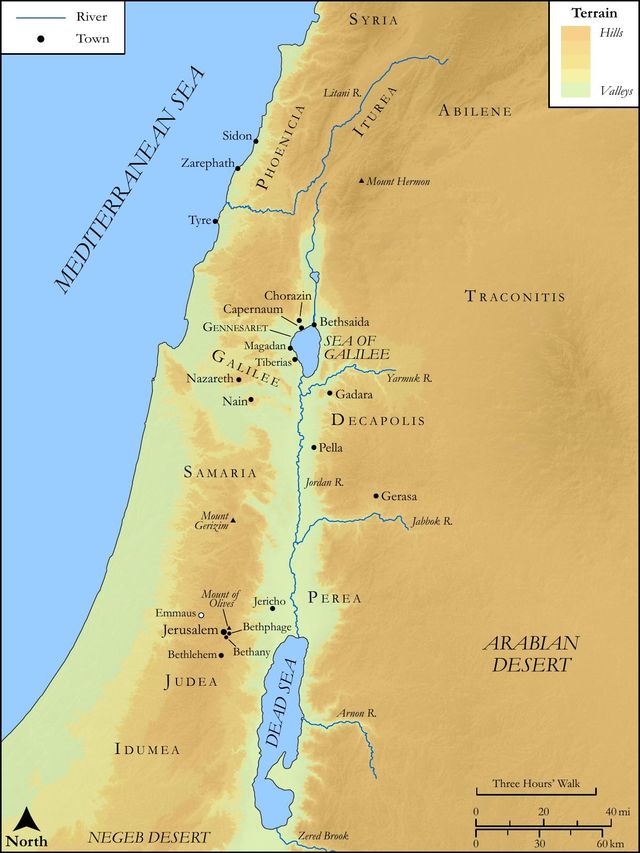
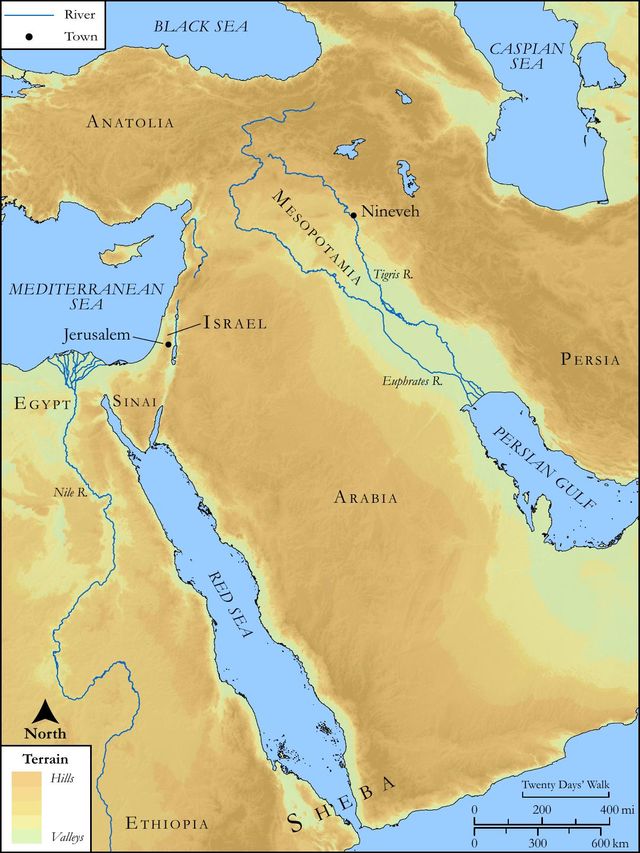
See on the biblical-era maps

Study this verse
Public-domain commentary
Matthew Henry
From his Commentary on the Whole Bible. Henry comments on passages, not single verses — this entry covers Luke 5:27–39.
All this, except the last verse, we had before in Matthew and Mark; it is not the story of any miracle in nature wrought by our Lord Jesus, but it is an account of some of the wonders of his grace, which, to those who understand things aright, are no less cogent proofs of Christ's being sent of God than the other.
I.It was a wonder of his grace that he would call a publican, from the receipt of custom, to be his disciple and follower, Luk 5:27.
It was wonderful condescension that he should admit poor fishermen to that honour, men of the lowest rank; but much more wonderful that he should admit publicans, men of the worst reputation, men of ill fame. In this Christ humbled himself, and appeared in the likeness of sinful flesh. By this he exposed himself, and got the invidious character of a friend of publicans and sinners.
II.It was a wonder of his grace that the call was made effectual, became immediately so, Luk 5:28.
This publican, though those of that employment commonly had little inclination to religion, for his religion's sake left a good place in the custom-house (which, probably, was his livelihood, and where he stood fair for better preferment), and rose up, and followed Christ. There is no heart too hard for the Spirit and grace of Christ to work upon, nor any difficulties in the way of a sinner's conversion insuperable to his power.
III.It was a wonder of his grace that he would not only admit a converted publican into his family, but would keep company with unconverted publicans, that he might have an opportunity of doing their souls good; he justified himself in it, as agreeing with the great design of his coming into the world. Here is a wonder of grace indeed, that Christ undertakes to be the Physician of souls distempered by sin, and ready to die of the distemper (he is a Healer by office, Luk 5:31) - that he has a particular regard to the sick, to sinners as his patients, convinced awakened sinners, that see their need of the Physician - that he came to call sinners, the worst of sinners, to repentance, and to assure them of pardon, upon repentance, Luk 5:32. These are glad tidings of great joy indeed.
IV.It was a wonder of his grace that he did so patiently bear the contradiction of sinners against himself and his disciples, Luk 5:30.
He did not express his resentment of the cavils of the scribes and Pharisees, as he justly might have done, but answered them with reason and meekness; and, instead of taking that occasion to show his displeasure against the Pharisees, as afterwards he did, or of recriminating upon them, he took that occasion to show his compassion to poor publicans, another sort of sinners, and to encourage them.
V.It was a wonder of his grace that, in the discipline under which he trained up his disciples, he considered their frame, and proportioned their services to their strength and standing, and to the circumstances they were in. It was objected, as a blemish upon his conduct, that he did not make his disciples to fast so often as those of the Pharisees and John Baptist did, Luk 5:33. He insisted most upon that which is the soul of fasting, the mortification of sin, the crucifying of the flesh, and the living of a life of self-denial, which is as much better than fasting and corporal penances as mercy is better than sacrifice.
VI.It was a wonder of his grace that Christ reserved the trials of his disciples for their latter times, when by his grace they were in some good measure better prepared and fitted for them than they were at first. Now they were as the children of the bride-chamber, when the bridegroom is with them, when they have plenty and joy, and every day is a festival. Christ was welcomed wherever he came, and they for his sake, and as yet they met with little or no opposition; but this will not last always. The days will come when the bridegroom shall be taken away from them, Luk 5:35. When Christ shall leave them with their hearts full of sorrow, their hands full of work, and the world full of enmity and rage against them, then shall they fast, shall not be so well fed as they are now. We both hunger and thirst and are naked, Co1 4:11. Then they shall keep many more religious fasts than they do now, for Providence will call them to it; they will then serve the Lord with fastings, Act 13:2.
VII.It was a wonder of his grace that he proportioned their exercises to their strength.
He would not put new cloth upon an old garment (Luk 5:36), nor new wine into old bottles (Luk 5:37, Luk 5:38); he would not, as soon as ever he had called them out of the world, put them upon the strictnesses and austerities of discipleship, lest they should be tempted to fly off. When God brought Israel out of Egypt, he would not bring them by the way of the Philistines, lest they should repent, when they saw war, and return to Egypt, Exo 13:17. So Christ would train up his followers gradually to the discipline of his family; for no man, having drank old wine, will of a sudden, straightway, desire new, or relish it, but will say, The old is better, because he has been used to it, Luk 5:39. The disciples will be tempted to think their old way of living better, till they are by degrees trained up to this way whereunto they are called. Or, turn it the other way: "Let them be accustomed awhile to religious exercises, and then they will abound in them as much as you do: but we must not be too hasty with them." Calvin takes it as an admonition to the Pharisees not to boast of their fasting, and the noise and show they made with it, nor to despise his disciples because they did not in like manner signalize themselves; for the profession the Pharisees made was indeed pompous and gay, like new wine that is brisk and sparkling, whereas all wise men say, The old is better; for, though it does not give its colour so well in the cup, yet it is more warming in the stomach and more wholesome. Christ's disciples, though they had not so much of the form of godliness, had more of the power of it.
Historical interpretation
Five Centuries of Reception
6 surviving comments on this verse. Each one is dated, so this reads as a timeline rather than a list.
Select a marker to jump to its quote. Markers stagger vertically where authors wrote within a few decades of each other.
"They have," says He, "Moses and Elias," -in other words, the law and the prophets, which preach Christ; as also in another place He says plainly, "Search the Scriptures, in which ye expect (to find) salvation; for they testify of me; " which will be the meaning of "Seek, and ye shall find.
The children of the Bridegroom also cannot fast, i. e. refuse nourishment to the soul, but live on every word which proceedeth out of the mouth of God.
(Orat. de Deit. Filii et SS.) For wine newly drawn forth, evaporates on account of the natural heat in the liquor, throwing off from itself the scum by natural action. Such wine is the new covenant, which the old skins because of their unbelief contain not, and are therefore burst by the excellence of the doctrine, and cause the grace of the Spirit to flow in vain; because into an evil soul wisdom will not enter. (Sap. 1:4.)
At the same time also is shown the difference between those who are zealous for the law and those who are for grace, that they who follow the law shall suffer eternal hunger of soul, while they who have received the word into the inmost soul, refreshed with abundance of heavenly meat and drink, can neither hunger nor thirst. And so they who fasted in soul murmured.
Or, That fast is not given up whereby the flesh is mortified, and the desires of the body chastened. (For this fast commends us to God.) But we cannot fast who have Christ, and banquet on the flesh and blood of Christ.
But when are those days, in which Christ shall be taken away from us, since He has said, I will be with you alway, even unto the end of the world? But no one can take Christ away from you, unless you take yourself away from Him.
Lastly, it is spoken of the fast of the soul, as the context shows, for it follows, But he said, No man putteth a piece of a new garment upon an old. He calleth fasting an old garment, which the Apostle thought should be taken off, saying, Put off the old man with his deeds. (Col. 3:9.) In the same manner we have a series of precepts not to mix up the actions of the old and new man.
The weakness of man's condition is exposed when our bodies arc compared to the skins of dead animals.
(Hom. 30. in Matt.) As if He should say, The present time is one of joy and gladness, sorrow must not then be mixed up with it.
For as long as the Bridegroom is with us we both rejoice, and can neither fast nor mourn. But when He has gone away through our sins, then a fast must be declared and mourning be enjoined.
Inasmuch as wine refreshes us within, but garments cover us without, the garments are the good works which we do abroad, by which we shine before men; wine, the fervour of faith, hope, and charity. Or, The old skins are the Scribes and Pharisees, the new piece and the new wine the precepts of the Gospel.
But to every soul which is not yet renewed, but goes on still in the old way of wickedness, the sacraments of new mysteries ought not to be given. They also who wish to mix the precepts of the Law with the Gospel, as the Galatians did, put new wine into old bottles. It follows, No man also having drank old wine straightway desireth new, for he saith, the old is better. For the Jews, imbued with the taste of their old life, despised the precepts of the new grace, and being defiled with the traditions of their ancestors, were not able to perceive the sweetness of spiritual words.
Continue studying Luke 5:39 across the web’s major study libraries — every link below opens this exact verse, chapter, or book on the destination site.
Read & Compare
 BibleGatewayThis verse in more than 200 translations and 70 languages.
 Bible.comThe YouVersion reader — hundreds of translations, reading plans, and highlights.
 ESV.orgCrossway's official English Standard Version reader.
 NET BibleThe NET translation with 60,000+ translators' notes on every rendering decision.
 STEP BibleTyndale House's free study tool — original text, vocabulary, and scholarly resources.
 BibliaLogos Bible Software's free web reader.
 USCCBThe New American Bible (Revised Edition) with the U.S. bishops' study notes.
Commentaries
 BibleHub CommentariesDozens of classic commentaries on this verse, gathered on one page.
 StudyLightMore than 100 commentary sets — the largest collection on the web.
 BibleRefPlain-English commentary on what this verse means, verse by verse.
 Enduring WordDavid Guzik's free commentary on this chapter, widely used by Bible teachers.
 Bible Study ToolsVerse commentary alongside Greek and Hebrew study aids.
Original Language & Research
- BibleHub InterlinearThe verse word by word — original language, transliteration, and English.
- BibleHub LexiconEvery word's original-language definition and Strong's entry.
 Blue Letter BibleDeep-study tools — Strong's numbers, concordance, and word studies.
 CNTR CollationThe earliest Greek manuscripts of this verse, collated letter by letter.
Sermons, Hymns & Audio


TrulyRandomVerse is not affiliated with these sites and doesn’t control their content. They’re linked because they’re genuinely useful.
Summary
Luke 5:39 concludes Jesus's parables of the new patch on an old garment and new wine in old wineskins, serving as a profound proverbial statement on human nature's inherent resistance to radical change. It observes that individuals, having grown accustomed to the familiar and established, often prefer it over what is new, even if the new offers a superior or necessary paradigm shift. This verse encapsulates the challenge Jesus faced in introducing the revolutionary truths of the Kingdom of God to a world deeply entrenched in traditional religious systems.
Context
ShowHideLiterary Context
This proverb is the culmination of a sequence of teachings by Jesus that begins with a challenge from the Pharisees and scribes regarding why His disciples do not fast, unlike those of John the Baptist (Luke 5:33). Jesus responds by explaining that it is inappropriate for wedding guests to fast while the bridegroom is present, implying His own presence as the "bridegroom" signifies a time of joy and celebration. He then introduces two parables: the new patch on an old garment (Luke 5:36) and new wine in old wineskins (Luke 5:37-38). These parables illustrate the incompatibility of His "new" message and ministry with the "old" structures and traditions of Judaism. Luke 5:39 acts as a concluding, explanatory proverb, offering a psychological rationale for why people might cling to the old, even when confronted with the new.
Historical & Cultural Context
In ancient Israel, wine production was a significant agricultural activity. New wine, freshly pressed, was still fermenting and would expand, producing gases. To contain this, it was poured into new wineskins made of animal hides, which were supple and elastic, allowing them to stretch with the fermentation process. Old wineskins, however, would have become rigid and brittle over time, making them unsuitable for new wine as they would burst under the pressure of fermentation. Old wine, having completed its fermentation, was generally smoother and more refined, often preferred for its matured taste. This cultural preference for aged wine provides the literal backdrop for Jesus's proverb, highlighting a common human tendency to value the familiar and tested over the novel and potentially disruptive.
Key Themes
ShowHideThis verse powerfully contributes to several major themes within Luke's Gospel and the broader biblical narrative. Foremost is the Incompatibility of the Old and New Covenants, where the "old wine" symbolizes the Mosaic Law and its associated traditions, and the "new wine" represents the radical, transformative message of Jesus's Kingdom and the New Covenant. It also highlights Human Resistance to Change, particularly when deeply ingrained customs or comfortable paradigms are challenged. The proverb underscores the idea that Jesus did not come merely to reform or update the existing religious system but to inaugurate something entirely new, which requires a fundamental shift in understanding and practice. This spiritual transformation cannot be merely patched onto or contained within the old, rigid frameworks, as seen in the parables of the patch and wineskins that immediately precede Luke 5:39.
Exposition and Analysis
ShowHideKey Word Analysis
ShowHideFrom pálai, meaning antique, not recent, or worn out. In this context, it refers to wine that has aged and matured, implying a settled, familiar quality. It speaks to something established by time, which, while perhaps having served its purpose, is now fixed and unyielding.
A primary word meaning "new," specifically referring to something youthful, fresh, or recently made. Figuratively, it can imply regeneration, contrasting with the aged nature of the old. It denotes something fresh, vibrant, and still undergoing development, requiring flexibility.
From chráomai, meaning employed, and by implication, useful or good. Here, it signifies that which is perceived as more agreeable, useful, or pleasant by someone accustomed to it, rather than objectively superior. This word highlights subjective preference and comfort.
Verse Breakdown
ShowHide"No man also having drunk old wine straightway desireth new:"
This clause presents a universal observation about human preference. Once a person has experienced and become accustomed to old, matured wine—which is smooth and palatable—they do not immediately or readily desire the new, unfermented, or still-fermenting wine. This reflects a natural human inclination towards comfort, familiarity, and the perceived stability of what is known.
"for he saith, The old is better."
This second clause provides the reason for the first observation. The preference for the old is not necessarily based on objective quality, but on a subjective declaration: "The old is better." This statement reveals a deep-seated bias towards the familiar, the tried-and-true, and what has proven comfortable or effective in the past, making it difficult to embrace anything that radically deviates from it.
Literary Devices
ShowHideLuke 5:39 primarily functions as a Proverbial Saying, a concise, memorable statement of a general truth or piece of advice. It employs Symbolism, where "old wine" and "new wine" stand for established religious traditions (the Law, Judaism) and the radical, transformative message of Jesus's Kingdom and the New Covenant, respectively. The verse also utilizes Contrast, setting the familiar, aged, and preferred "old" against the unfamiliar, fresh, and often initially less appealing "new." This contrast highlights the fundamental incompatibility between Jesus's revolutionary ministry and the rigid, traditional frameworks of His time.
Theological and Thematic Connections
ShowHideThis proverb encapsulates a profound theological truth about the nature of God's redemptive plan and humanity's response to it. Jesus's coming was not merely an incremental improvement upon the Old Covenant, but a fundamentally new work, a complete paradigm shift that could not be contained within the old structures. The "old wine" represents the Mosaic Law, the temple system, and the traditions of the elders, which, while divinely instituted for a time, were preparatory and incomplete. The "new wine" is the gospel of grace, the indwelling Holy Spirit, and the Kingdom of God inaugurated by Christ. The human tendency to declare "the old is better" reveals a spiritual inertia, a comfort in legalism or self-righteousness that resists the liberating and transformative power of God's new work in Christ. This challenges believers to continually examine their hearts for areas where they might be clinging to outdated forms or comfortable traditions that hinder a full embrace of God's dynamic, ever-unfolding truth.
Reflection and Application
ShowHideLuke 5:39 serves as a powerful mirror for self-reflection, urging us to examine our own openness to divine truth and transformation. It challenges the natural human inclination to cling to the familiar, even when God is doing a new thing. For the believer, this means cultivating a humble and flexible spirit, willing to shed old ways of thinking, comfortable routines, or even deeply ingrained traditions that might hinder a deeper experience of Christ's life. It calls us to be "new wineskins" for the "new wine" of the Spirit, always ready to embrace fresh revelations of God's Word and new expressions of His Kingdom. In our evangelistic efforts, this verse helps us understand why some may resist the Gospel: their "old wine" of self-sufficiency, cultural norms, or alternative beliefs feels "better" or more secure. It reminds us that true spiritual growth often involves a radical letting go of the old self and a courageous embrace of the new life offered in Christ, a life that demands a transformed heart and mind, not merely a superficial adjustment.
Questions for Reflection
ShowHideFAQ
ShowHideDoes Jesus's statement "The old is better" mean that the Old Covenant or old traditions are truly superior?
ShowHideNo, Jesus's statement in Luke 5:39 is an observation of human nature and preference, not a theological endorsement of the old as objectively superior. Contextually, He has just explained that new wine requires new wineskins because the old ones would burst (Luke 5:37-38). The "old is better" sentiment reflects a subjective comfort and familiarity with what is established and aged, compared to the potentially unsettling nature of something new and revolutionary. Jesus is highlighting the difficulty people have in letting go of the familiar, even when the new is necessary and superior for God's purposes, as His New Covenant ministry was to the Old.
Christ-Centered Fulfillment
ShowHideLuke 5:39, while a general observation on human nature, finds its deepest fulfillment in the person and work of Jesus Christ. He is the "new wine" that cannot be contained by the "old wineskins" of the Mosaic Law and the rigid traditions that had accumulated around it. His coming inaugurated a fundamentally new era, a New Covenant of grace and truth that rendered the Old Covenant obsolete, not by destroying it, but by fulfilling it (Matthew 5:17). The natural human preference for the "old" ("the old is better") explains the resistance Jesus faced from the religious establishment, who were comfortable with their established practices and found His radical claims and teachings disruptive. Yet, for those who embraced Him, Jesus offered not just a new teaching, but a new life, a new creation in Christ (2 Corinthians 5:17), where the old has passed away and the new has come. This requires a spiritual transformation, a new heart and mind, to truly receive and contain the expansive, life-giving "new wine" of the Holy Spirit and the Kingdom of God, which is freely poured out through His finished work on the cross (John 7:37-39).