


Matthew 9:17
Bible text: King James Version (1769 Blayney text) · Public domain
Bible text: King James Version with Strong's numbers · Public domain
Bible text: Berean Standard Bible · Public domain
Bible text: American Standard Version (1901) · Public domain
Bible text: World English Bible, Messianic edition · Public domain
Bible text: Geneva Bible (1599) · Public domain
Bible text: Young's Literal Translation · Public domain
- οὐδὲoudeNorG3761CONJ-NConjunction Negative
- βάλλουσινballousinpour theyG906V-PAI-3PVerb Present Active Indicative 3rd Plural
- οἶνονoinonwineG3631N-ASMNoun Accusative Singular Masculine
- νέονneonnewG3501A-ASMAdjective Accusative Singular Masculine
- εἰςeisintoG1519PREPPreposition
- ἀσκοὺςaskouswineskinsG779N-APMNoun Accusative Plural Masculine
- παλαιούς·palaiousoldG3820A-APMAdjective Accusative Plural Masculine
- εἰeilestG1487CONDConjunction
- δὲdethenG1161CONJConjunction
- μήmēexceptG3361PRT-NNegative Particle Negative
- γεgeindeedG1065PRTParticle or Disjunctive
- ῥήγνυνταιrhēgnuntaiare burstG4486V-PPI-3PVerb Present Passive Indicative 3rd Plural
- οἱhoitheG3588T-NPMDefinite article Nominative Plural Masculine
- ἀσκοίaskoiwineskinsG779N-NPMNoun Nominative Plural Masculine
- καὶkaiandG2532CONJConjunction
- ὁhotheG3588T-NSMDefinite article Nominative Singular Masculine
- οἶνοςoinoswineG3631N-NSMNoun Nominative Singular Masculine
- ἐκχεῖταιekcheitaiis poured outG1632V-PPI-3SVerb Present Passive Indicative 3rd Singular
- καὶkaiandG2532CONJConjunction
- οἱhoitheG3588T-NPMDefinite article Nominative Plural Masculine
- ἀσκοὶaskoiwineskinsG779N-NPMNoun Nominative Plural Masculine
- ἀπόλλυνταιapolluntaiare ruinedG622V-PPI-3PVerb Present Passive Indicative 3rd Plural
- ἀλλὰallaButG235CONJConjunction
- βάλλουσινballousinthey pourG906V-PAI-3PVerb Present Active Indicative 3rd Plural
- οἶνονoinonwineG3631N-ASMNoun Accusative Singular Masculine
- νέονneonnewG3501A-ASMAdjective Accusative Singular Masculine
- εἰςeisintoG1519PREPPreposition
- ἀσκοὺςaskouswineskinsG779N-APMNoun Accusative Plural Masculine
- καινούςkainousnewG2537A-APMAdjective Accusative Plural Masculine
- καὶkaiandG2532CONJConjunction
- ἀμφότεροιamphoteroibothG297A-NPMAdjective Nominative Plural Masculine
- συντηροῦνταιsuntērountaiare preservedG4933V-PPI-3PVerb Present Passive Indicative 3rd Plural
English is a literal word-by-word gloss of the Greek, not the KJV's wording. Why?
This is the original text the KJV's translators worked from — each Greek word with its own literal English meaning in this verse, prepared by scholars at Tyndale House, Cambridge. The KJV translates whole sentences, not word by word, so its wording differs: one Greek word can become several English words, and the KJV may choose “charity” where the gloss reads “love”. Both are faithful — they answer different questions. For the KJV's own rendering, switch to the KJV text.
Details
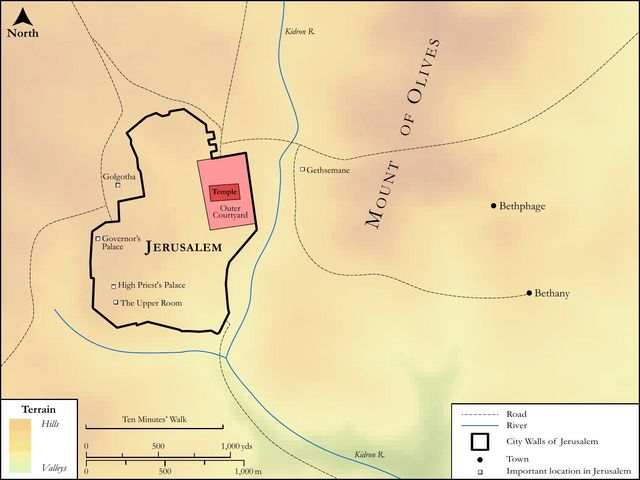
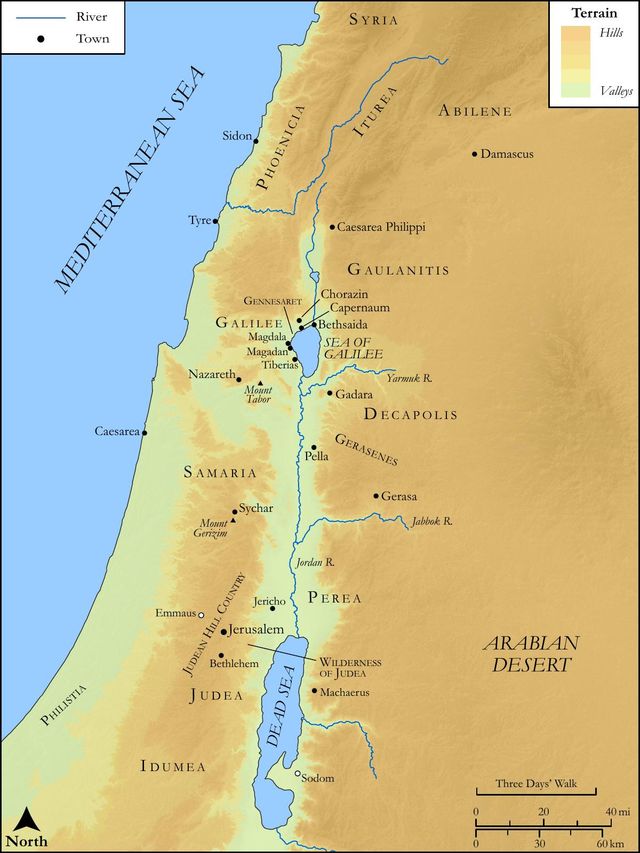
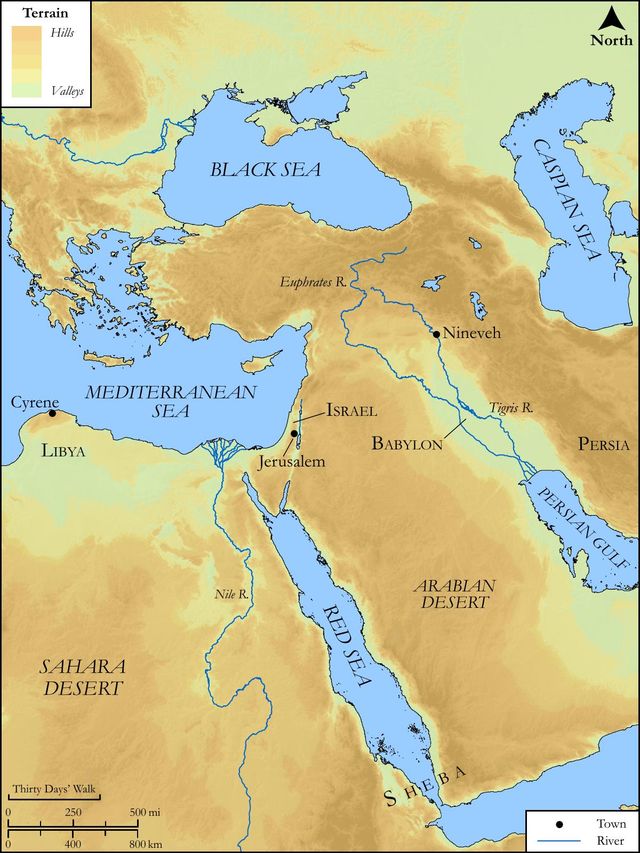
See on the biblical-era maps
Study this verse
Public-domain commentary
Matthew Henry
From his Commentary on the Whole Bible. Henry comments on passages, not single verses — this entry covers Matthew 9:14–17. His three-level outline is real structure in the source text, so it is rendered as structure.
The objections which were made against Christ and his disciples gave occasion to some of the most profitable of his discourses; thus are the interests of truth often served, even by the opposition it meets with from gainsayers, and thus the wisdom of Christ brings good out of evil. This is the third instance of it in this chapter; his discourse of his power to forgive sin, and his readiness to receive sinners, was occasioned by the cavils of the scribes and Pharisees; so here, from a reflection upon the conduct of his family, arose a discourse concerning his tenderness for it. Observe,
I.The objection which the disciples of John made against Christ's disciples, for not fasting so often as they did; which they are charged with, as another instance of the looseness of their profession, besides that of eating with publicans and sinners; and it is therefore suggested to them, that they should change that profession for another more strict. It appears by the other evangelists (Mar 2:18 and Luk 5:33) that the disciples of the Pharisees joined with them, and we have reason to suspect that they instigated them, making use of John's disciples as their spokesmen, because they, being more in favour with Christ and his disciples, could do it more plausibly. Note, It is no new thing for bad men to set good men together by the ears; if the people of God differ in their sentiments, designing men will take that occasion to sow discord, and to incense them one against another, and alienate them one from another, and so make an easy prey of them. If the disciples of John and of Jesus clash, we have reason to suspect the Pharisees have been at work underhand, blowing the coals. Now the complaint is, Why do we and the Pharisees fast often, but thy disciples fast not? It is pity the duties of religion, which ought to be the confirmations of holy love, should be made the occasions of strife and contention; but they often are so, as here; where we may observe,
1.How they boasted of their own fasting. We and the Pharisees fast often. Fasting has in all ages of the church been consecrated, upon special occasions, to the service of religion; the Pharisees were much in it; many of them kept two fast-days in a week, and yet the generality of them were hypocrites and bad men. Note, False and formal professors often excel others in outward acts of devotion, and even of mortification. The disciples of John fasted often, partly in compliance with their master's practice, for he came neither eating nor drinking (Mat 11:18); and people are apt to imitate their leaders, though not always from the same inward principle; partly in compliance with their master's doctrine of repentance. Note, The severer part of religion is often most minded by those that are yet under the discipline of the Spirit, as a Spirit of bondage, whereas, though these are good in their place, we must pass through them to that life of delight in God and dependence on him, to which these should lead. Now they come to Christ to tell him that they fasted often, at least they thought it often. Note, Most men will proclaim every one his own goodness, Pro 20:6. There is a proneness in professors to brag of their own performance in religion, especially if there by any thing extraordinary in them; nay, and not only to boast of them before men, but to plead them before God, and confide in them as a righteousness.
2.How they blamed Christ's disciples for not fasting so often as they did. Thy disciples fast not. They could not but know, that Christ had instructed his disciples to keep their fasts private, and to manage themselves so as that they might not appear unto men to fast; and, therefore, it was very uncharitable in them to conclude they did not fast, because they did not proclaim their fasts. Note, We must not judge of people's religion by that which falls under the eye and observation of the world. But suppose it was so, that Christ's disciples did not fast so often or so long as they did, why truly, they would therefore have it thought, that they had more religion in them than Christ's disciples had. Note, It is common for vain professors to make themselves a standard in religion, by which to try and measure persons and things, as if all who differed from them were so far in the wrong; as if all that did less than they, did too little, and all that did more than they, did too much, which is a plain evidence of their want of humility and charity.
3.How they brought this complaint to Christ. Note, If Christ's disciples, either by omission or commission, give offence, Christ himself will be sure to hear of it, and be reflected upon for it. O, Jesus, are these thy Christians? Therefore, as we tender the honour of Christ, we are concerned to conduct ourselves well. Observe, The quarrel with Christ was brought to the disciples (Mat 9:11), the quarrel with the disciples was brought to Christ (Mat 9:14), this is the way of sowing discord and killing love, to set people against ministers, ministers against people, and one friend against another.
II.The apology which Christ made for his disciples in this matter.
Christ might have upbraided John's disciples with the former part of their question, Why do ye fast often? "Nay, you know best why you do it; but the truth is, many abound in external instances of devotion, that scarcely do themselves know why and wherefore." But he only vindicates the practice of his disciples; whey they had nothing to say for themselves, he had something ready to say for them. Note, As it is wisdom's honour to be justified of all her children, so it is her children's happiness to be all justified of wisdom. What we do according to the precept and pattern of Christ, he will be sure to bear us out in, and we may with confidence leave it to him to clear up our integrity.
But thou shalt answer, Lord, for me.
- Herbert
Two things Christ pleads in defence of their not fasting.
1.That it was not a season proper for that duty (Mat 9:15): Can the children of the bride-chamber mourn, as long as the bridegroom is with them? Observe, Christ's answer is so framed, as that it might sufficiently justify the practice of his own disciples, and yet not condemn the institution of John, or the practice of his disciples. When the Pharisees fomented this dispute, they hoped Christ would cast blame, either on his own disciples, or on John's, but he did neither. Note, When at any time we are unjustly censured, our care must be only to clear ourselves, not to recriminate, or throw dirt upon others; and such a variety may there be of circumstances, as may justify us in our practice, without condemning those that practise otherwise.
Now his argument is taken from the common usage of joy and rejoicing during the continuance of marriage solemnities; when all instances of melancholy and sorrow are looked upon as improper and absurd, as it was at Samson's wedding, Jdg 14:17. Now, (1.) The disciples of Christ were the children of the bride-chamber, invited to the wedding-feast, and welcome there; the disciples of the Pharisees were not so, but children of the bond-woman (Gal 4:25, Gal 4:31), continuing under a dispensation of darkness and terror. Note, The faithful followers of Christ, who have the Spirit of adoption, have a continual feast, while they who have the spirit of bondage and fear, cannot rejoice for joy, as other people, Hos 9:1. (2.) The disciples of Christ had the bridegroom with them, which the disciples of John had not; their master was now cast into prison, and lay there in continual danger of his life, and therefore it was seasonable for them to fast often. Such a day would come upon the disciples of Christ, when the bridegroom should be taken from them, when they should be deprived of his bodily presence, and then should they fast. The thoughts of parting grieved them when he was going, Joh 16:6. Tribulation and affliction befell them when he was gone, and gave them occasion of mourning and praying, that is, of religious fasting. Note, [1.] Jesus Christ is the Bridegroom of his Church, and his disciples are the children of the bride-chamber. Christ speaks of himself to John's disciples under this similitude, because that John had used it, when he called himself a friend of the bridegroom, Joh 3:29. And if they would by this hint call to mind what their master then said, they would answer themselves. [2.] The condition of those who are the children of the bride-chamber is liable to many changes and alterations in this world; they sing of mercy and judgment. [3.] It is merry or melancholy with the children of the bride-chamber, according as they have more or less of the bridegroom's presence. When he is with them, the candle of God shines upon their head, and all is well; but when he is withdrawn, though but for a small moment, they are troubled, and walk heavily; the presence and nearness of the sun makes day and summer, his absence and distance, night and winter. Christ is all in all to the church's joy. [4.] Every duty is to be done in its proper season. See Ecc 7:14; Jam 5:13. There is a time to mourn and a time to laugh, to each of which we should accommodate ourselves, and bring forth fruit in due season. In fasts, regard is to be had to the methods of God's grace towards us; when he mourns to us, we must lament; and also to the dispensations of his providence concerning us; there are times when the Lord God calls to weeping and mourning; regard is likewise to be had to any special work before us, Mat 17:21; Act 13:2.
2.That they had not strength sufficient for that duty. This is set forth in two similitudes, one of putting new cloth into an old garment, which does but pull the old to pieces (Mat 9:16); the other of putting new wine into old bottles, which does but burst the bottles, Mat 9:17. Christ's disciples were not able to bear these severe exercises so well as those of John and of the Pharisees, which the learned Dr. Whitby gives this reason for: There were among the Jews not only sects of the Pharisees and Essenes, who led an austere life, but also schools of the prophets, who frequently lived in mountains and deserts, and were many of them Nazarites; they had also private academies to train men up in a strict discipline; and possibly from these many of John's disciples might come, and many of the Pharisees; whereas Christ's disciples, being taken immediately from their callings, had not been used to such religious austerities, and were unfit for them, and would by them be rather unfitted for their other work. Note,
(1.)Some duties of religion are harder and more difficult than others, like new cloth and new wine, which require most intenseness of mind, and are most displeasing to flesh and blood; such are religious fasting and the duties that attend it.
(2.)The best of Christ's disciples pass through a state of infancy; all the trees in Christ's garden are not of a growth, nor all his scholars in the same form; there are babes in Christ and grown men.
(3.)In the enjoining of religious exercises, the weakness and infirmity of young Christians ought to be considered: as the food provided for them must be such as is proper for their age (Co1 3:2; Heb 5:12), so must the work be that is cut out for them. Christ would not speak to his disciples that which they could not then bear, Joh 16:12. Young beginners in religion must not be put upon the hardest duties at first, lest they be discouraged. Such as was God's care of his Israel, when he brought them out of Egypt, not to lead them by the way of the Philistines (Exo 13:17, Exo 13:18), and such as was Jacob's care of his children and cattle, not to overdrive them (Gen 33:13), such is Christ's care of the little ones of his family, and the lambs of his flock: he gently leads them. For want of this care, many times, the bottles break, and the wine is spilled; the profession of many miscarries and comes to nothing, through indiscretion at first. Note, There may be over-doing even in well-doing, a being righteous over-much; and such an over-doing as may prove an undoing through the subtlety of Satan.
Historical interpretation
Nine Centuries of Reception
11 surviving comments on this verse. Each one is dated, so this reads as a timeline rather than a list.
Select a marker to jump to its quote. Markers stagger vertically where authors wrote within a few decades of each other.
Figuratively; This His answer, that while the Bridegroom was present with them, His disciples needed not to fast, teaches us the joy of His presence, and the sacrament of the holy food, which none shall lack, while He is present, that is, while one keeps Christ in the eye of the mind. He says, they shall fast when He is taken away from them, because all who do not believe that Christ is risen, shall not have the food of life. For in the faith of the resurrection the sacrament of the heavenly bread is received.
By these examples He shows that neither our souls nor bodies, being so weakened by inveteracy of sin, are capable of the sacraments of the new grace.
What they say comes to this, Be it that you do this as Physician of souls, but why do your disciples neglect fasting and approach such tables? And to augment the weight of their charge by comparison, they put themselves first, and then the Pharisees. They fasted as they learnt out of the Law, as the Pharisee spoke, I fast twice in the week; (Luke 18:12.) the others learnt it of John.
Or; Luke relates that the Pharisees, but Matthew that the disciples of John, said thus, because the Pharisees had taken them with them to ask the question, as they afterwards did the Herodians. Observe how when strangers, as before the Publicans, were to be defended, He accuses heavily those that blamed them; but when they brought a charge against His disciples, He makes answer with mildness. And Jesus saith unto them, Can the children of the bridegroom mourn as long as the bridegroom is with them? Before He had styled Himself Physician, now Bridegroom, calling to mind the words of John which he had said, He that hath the bride is the bridegroom. (John 3:29.)
He means this; The present is a time of joy and rejoicing; sorrow is therefore not to be now brought forward; and fasting is naturally grievous, and to all those that are yet weak; for to those that seek to contemplate wisdom, it is pleasant; He therefore speaks here according to the former opinion. He also shows that this they did was not of gluttony, but of a certain dispensation.
Here again He confirms what He has said by examples of common things; No man putteth a patch of undressed cloth into an old garment; for it taketh away its wholeness from, the garment, and the rent is made worse; which is to say, My disciples are not yet become strong, but have need of much consideration; they are not yet renewed by the Spirit. On men in such a state it is not behoveful to lay a burden of precepts. Herein He establishes a rule for His disciples, that they should receive with leniency disciples from out of the whole world.
Herein He also shows us the cause of those condescending words which He often addressed to them because of their weakness.
"Neither do men put new wine into old bottles."
Seest thou His illustrations, how like the Old Testament? the garment? the wine skins? For Jeremiah too calls the people "a girdle," and makes mention again of "bottles" and of "wine." Thus, the discourse being about gluttony and a table, He takes His illustrations from the same.
But Luke adds something more, that the new also is rent, if thou put it upon the old. Seest thou that so far from any advantage taking place, rather the mischief is increased?
And while He speaks of the present, He foretells also the future; as that they shall hereafter be new but until that come to pass, nothing austere and grievous ought to be imposed on them. For he, saith Christ, that seeks to instill the high doctrines before the proper time, thenceforth not even when the time calls will he find them to his purpose, having once for all made them unprofitable. And this comes to pass not by any fault of the wine, nor of the deceivers, but from the unseasonable act of them that put it in.
Hereby He hath taught us also the cause of those lowly expressions, which He was continually using in discourse with them. That is, by reason of their infirmity He said many things very short of His proper dignity; which John also pointing out, relates Him to have said, "I have many things to say unto you, but ye cannot bear them now." Here, that they might not suppose those things only to be which He had spoken, but might imagine to themselves others also, and far greater; He set before them their own infirmity, with a promise that when they should have become strong, He would tell them also the rest; which thing He saith here too, "Days will come, when the bridegroom shall be taken from them, and then shall they fast."
O boastful enquiry and ostentation of fasting much to be blamed, nor can John's disciples be excused for their taking part with the Pharisees who they knew had been condemned by John, and for bringing a false accusation against Him whom they knew their master had preached.
Christ is the Bridegroom and the Church the Bride. Of this spiritual union the Apostles were born; they cannot mourn so long as they see the Bridegroom in the chamber with the Bride. But when the nuptials are past, and the time of passion and resurrection is come, then shall the children of the Bridegroom fast. The days shall come when the bridegroom shall be taken from them, and then shall they fast.
Hence some think that a fast ought to follow the forty days of Passion, although the day of Pentecost and the coming of the Holy Spirit immediately bring back our joy and festival. From this text accordingly, Montanus, Prisca, and Maximilla enjoin a forty days' abstinence after Pentecost, but it is the use of the Church to come to the Lord's passion and resurrection through humiliation of the flesh, that by carnal abstinence we may better be prepared for spiritual fulness.
Otherwise; By the old garment, and old skins, we must understand the Scribes and Pharisees; and by the piece of new cloth, and new wine, the Gospel precepts, which the Jews were not able to bear; so the rent was made worse. Something such the Galatians sought to do, to mix the precepts of the Law with the Gospel, and to put new wine into old skins. The word of the Gospel is therefore to be poured into the Apostles, rather than into the Scribes and Pharisees, who, corrupted by the traditions of the elders, were unable to preserve the purity of Christ's precepts.
Or; When He has departed from us for our sins, then is a fast to be proclaimed, then is mourning to be put on.
(V. 16, 17) However, no one puts a patch of unshrunk cloth on an old garment. For the patch pulls away from the garment, and a worse tear is made. Nor do people put new wine into old wineskins; otherwise the wineskins burst, the wine is spilled, and the wineskins are ruined. But they put new wine into fresh wineskins, and both are preserved. These words were spoken by him to them. What he means is this: Until someone is born again and the old self is removed through my suffering, and he puts on a new self, he cannot bear the stricter commands of fasting and continence, lest through excessive severity he lose even the faith that he seems to possess now. But he set forth two examples, both of the old and the new, and of clothing. By the old wineskins we must understand the scribes and Pharisees. The new patch of clothing and the new wine represent the teachings of the Gospel, which the Jews cannot bear, lest a greater tear be made. The Galatians also desired to do something similar, mixing the precepts of the Gospel with the precepts of the Law, and putting the new wine into old wineskins; but the Apostle speaks to them, saying: O foolish Galatians! Who has bewitched you into not obeying the truth? (Gal. III, 1) Therefore, the word of the Gospel should be infused into the apostles rather than the Scribes and Pharisees, who were corrupted by the traditions of the elders and could not keep the sincerity of Christ's teachings. For there is a difference between the purity of a virginal soul, untouched by the contamination of previous vices, and the filth of one that has succumbed to the desires of many.
What he is saying is this: Until a person has been reborn and, having put aside the old person, puts on the new person because of my passion, he cannot observe right fasting and the precepts of temperance. Otherwise, through undue austerity one may lose even the faith one seems to possess. Christ gave two examples: the garment and the old and new wineskins. The old ones denote the scribes and Pharisees. The patch of shrunk cloth and the new wine signify the gospel precepts, which the Jews cannot observe, else a worse tear is made.
(Serm. 210. 3.) Otherwise; Every one who rightly fasts, either humbles his soul in the groaning of prayer, and bodily chastisement, or suspends the motion of carnal desire by the joys of spiritual meditation. And the Lord here makes answer respecting both kinds of fasting; concerning the first, which is in humiliation of soul, He says, The children of the bridegroom cannot mourn. Of the other which has a feast of the Spirit, He next speaks, where He says, No man putteth a patch of undressed cloth. Then we must mourn because the Bridegroom is taken away from us. And we rightly mourn if we burn with desire of Him. Blessed they to whom it was granted before His passion to have Him present with them, to enquire of Him what they would, to hear what they ought to hear. Those days the fathers before His coming sought to see, and saw them not, because they were placed in another dispensation, one in which He was proclaimed as coming, not one in which He was heard as present. For in us was fulfilled that He speaks of, The days shall come when ye shall desire to see one of these days, and shall not be able. (Luke 17:22.) Who then will not mourn this? Who will not say, My tears have been my meat day and night, while they daily say unto me, Where is now thy God? (Ps. 42:3.) With reason then did the Apostle seek to die and to be with Christ.
(De Cons. Ev. ii. 27.) That Matthew writes here mourn, where Mark and Luke write fast, shows that the Lord spake of that kind of fasting which pertains to humbling one's self in chastisement; as in the following comparisons He may be supposed to have spoken of the other kind which pertains to the joy of a mind wrapt in spiritual thoughts, and therefore averted from the food of the body; showing that those who are occupied about the body, and owing to this retain their former desires, are not fit for this kind of fasting.
By the old garment He means His disciples, who had not yet been renewed in all things. The patch of undressed, that is, of new cloth, means the new grace, that is, the Gospel doctrine, of which fasting is a portion; and it was not meet that the stricter ordinances of fasting should be entrusted to them, lest they should be broken down by their severity, and forfeit that faith which they had; as He adds, It taketh its wholeness from the garment, and the rent is made worse.
After two comparisons made, that of the wedding, and that of the undressed cloth, He adds a third concerning wine skins; Neither do men put new wine into old skins. By the old skins He means His disciples, who were not yet perfectly renewed. The new wine is the fulness of the Holy Spirit, and the depths of the heavenly mysteries, which His disciples could not then bear; but after the resurrection they became as new skins, and were filled with new wine when they received the Holy Spirit into their hearts. Whence also some said, These men are full of new wine. (Acts 2:13.)
In the call of Matthew and the Publicans is figured the faith of the Gentiles who first gaped after the gain of the world, and are now spiritually refreshed by the Lord; in the pride of the Pharisees, the jealousy of the Jews at the salvation of the Gentiles. Or, Matthew signifies the man intent on temporal gain; Jesus sees him, when He looks on him with the eyes of mercy. For Matthew is interpreted 'given,' Levi 'taken,' the penitent is taken out of the mass of the perishing, and by God's grace given to the Church. And Jesus saith unto him, Follow me, either by preaching, or by the admonition of Scripture, or by internal illumination.
For John drank neither wine, nor strong drink, increasing his merit by abstinence, because he had no power over nature. But the Lord who has power to forgive sins, why should He shun sinners that eat, since He has power to make them more righteous than those that eat not? Yet doth Christ fast, that you should not avoid the command; but He eats with sinners that you may know His grace and power.
The different comparisons all refer to the same thing, and yet are they different; the garment by which we are covered abroad signifies our good works, which we perform when we are abroad; the wine with which we are refreshed within is the fervor of faith and charity, which creates us anew within.
The disciples, He says, have not yet become strong, and therefore require forbearance. The heavy burden of commandments ought not to be laid upon them. Jesus also said these things to teach the disciples that later, when they would go out into all the world to make disciples, they too should use forbearance. The "piece of unshrunk cloth" means fasting, as does the "new wine." The "old garment" and the "old wineskins" mean the weakness of the disciples.
(ap. Anselm.) When He had replied to them respecting eating and converse with sinners, they next assault Him on the matter of food; Then came to him the disciples of John, saying, Why do we and the Pharisees fast often, but thy disciples fast not?
(ap. Anselm.) As much as to say, An undressed patch, that is, a new one, ought not to be put into an old garment, because it often takes away from the garment its wholeness, that is, its perfection, and then the rent is made worse. For a heavy burden laid on one that is untrained often destroys that good which was in him before.
(non occ.) This shows that the Apostles being hereafter to be replenished with newness of grace, ought not now to be bound to the old observances.
Continue studying Matthew 9:17 across the web’s major study libraries — every link below opens this exact verse, chapter, or book on the destination site.
Read & Compare
 BibleGatewayThis verse in more than 200 translations and 70 languages.
 Bible.comThe YouVersion reader — hundreds of translations, reading plans, and highlights.
 ESV.orgCrossway's official English Standard Version reader.
 NET BibleThe NET translation with 60,000+ translators' notes on every rendering decision.
 STEP BibleTyndale House's free study tool — original text, vocabulary, and scholarly resources.
 BibliaLogos Bible Software's free web reader.
 USCCBThe New American Bible (Revised Edition) with the U.S. bishops' study notes.
Commentaries
 BibleHub CommentariesDozens of classic commentaries on this verse, gathered on one page.
 StudyLightMore than 100 commentary sets — the largest collection on the web.
 BibleRefPlain-English commentary on what this verse means, verse by verse.
 Enduring WordDavid Guzik's free commentary on this chapter, widely used by Bible teachers.
 Bible Study ToolsVerse commentary alongside Greek and Hebrew study aids.
Original Language & Research
- BibleHub InterlinearThe verse word by word — original language, transliteration, and English.
- BibleHub LexiconEvery word's original-language definition and Strong's entry.
 Blue Letter BibleDeep-study tools — Strong's numbers, concordance, and word studies.
 CNTR CollationThe earliest Greek manuscripts of this verse, collated letter by letter.
Sermons, Hymns & Audio


TrulyRandomVerse is not affiliated with these sites and doesn’t control their content. They’re linked because they’re genuinely useful.
Summary
Matthew 9:17 presents a profound parable illustrating the incompatibility between the vibrant, expansive truth of Jesus' new covenant ministry and the rigid, worn-out forms of the old religious system. Using the common agricultural practice of winemaking, Jesus conveys that His message of grace, inner transformation, and the Kingdom of God cannot be contained within the legalistic structures and external rituals that characterized much of the Jewish religious practice of His day, without both the "wine" (His teaching) and the "bottles" (the existing framework) being destroyed. Instead, the new life He offers requires a new, pliable vessel, signifying a transformed heart and an open, receptive spirit.
Context
ShowHideLiterary Context
This verse is part of a series of interactions in Matthew 9 where Jesus confronts the prevailing religious norms and expectations. It immediately follows the parable of the new cloth on an old garment in Matthew 9:16, which conveys the same principle of incompatibility. Both parables serve as Jesus' response to the disciples of John the Baptist (and implicitly, the Pharisees) who questioned why Jesus' disciples did not fast, unlike themselves and the Pharisees (Matthew 9:14). Jesus uses these illustrations to explain that His ministry represents a radical new work of God, not merely a reform or addition to the existing religious framework. The "new wine" parable further elaborates on the impossibility of integrating His dynamic, life-giving truth into a system that is fundamentally unprepared to receive it, leading to its destruction.
Historical & Cultural Context
In Israel, "bottles" were not made of glass or clay, but predominantly from animal skins, typically goat or sheepskins, known as wineskins. These skins were cleaned, stitched, and sealed, forming flexible containers. When new wine, which was still fermenting, was poured into a fresh wineskin, the natural gases produced by fermentation would cause the skin to expand. A new, pliable wineskin could stretch and accommodate this internal pressure. However, once a wineskin had been used for fermentation, its elasticity would diminish, and it would become rigid and brittle. Pouring new, still-fermenting wine into such an old, inflexible wineskin would inevitably cause the brittle skin to burst under the pressure of the expanding wine. This would result in the loss of both the precious wine and the container itself. This common agricultural reality provided Jesus with a vivid, relatable, and easily understood metaphor for His audience, who would have been intimately familiar with these practices.
Key Themes
ShowHideThe parable of the new wine and old wineskins contributes significantly to several major themes in Matthew's Gospel and the broader New Testament. Firstly, it underscores the incompatibility of the Old and New Covenants. Jesus' ministry is not merely a patch on the Mosaic Law but a fundamentally new spiritual reality that brings fulfillment and transformation, as seen in His teaching on the Law in Matthew 5:17-20. Secondly, it highlights the dynamic and expansive nature of the Kingdom of God. The "new wine" symbolizes the vibrant, living truth of the Gospel, empowered by the Holy Spirit, which cannot be confined by rigid, external forms. This new life demands a new vessel, pointing to the necessity of spiritual transformation and openness. Those who cling to outdated traditions or a legalistic mindset, like the Pharisees often did, will be unable to receive the fullness of God's new work, leading to spiritual stagnation or even rupture. This theme resonates with the call for repentance and belief in the good news of the kingdom found in Matthew 4:17.
Exposition and Analysis
ShowHideKey Word Analysis
ShowHideThis word refers to something that is "new" in terms of age, youthfulness, or freshness. In the context of "new wine," it emphasizes its unfermented, active, and expanding state. It denotes a youthful, vigorous quality, implying the dynamic and potent nature of Jesus' teachings and the life of the Kingdom.
While also meaning "new," kainós carries the nuance of something that is new in quality, fresh, unprecedented, or superior to what existed before. When applied to "new bottles" (wineskins), it suggests a vessel that is not merely young but also fundamentally suitable and appropriate for the unique, transformative quality of the new wine. It implies a qualitative newness, a freshness that makes it fit for a new purpose.
This term specifically denotes a "leathern (or skin) bag used as a bottle," commonly known as a wineskin. Understanding this specific meaning is crucial, as the imagery of expansion and rupture is entirely dependent on the material properties of animal hides, which become brittle with age and repeated fermentation. The KJV's translation as "bottles" can obscure the vivid and accurate picture Jesus intended to convey.
Verse Breakdown
ShowHide"Neither do men put new wine into old bottles:"
This opening clause establishes the premise of the parable, drawing on a common agricultural practice. "New wine" refers to grape juice that has just begun or is still undergoing fermentation, a process that produces gases and causes expansion. "Old bottles" (wineskins) are those that have already been used, their elasticity exhausted, making them rigid and prone to cracking under pressure. The statement highlights the fundamental incompatibility between the dynamic new wine and the inflexible old wineskins.
"else the bottles break, and the wine runneth out, and the bottles perish:"
This clause describes the inevitable consequence of ignoring the principle of incompatibility. If new, fermenting wine is poured into old, brittle wineskins, the internal pressure will cause the skins to rupture. The result is a double loss: the valuable wine is spilled and wasted, and the container itself is destroyed. This vividly illustrates the destructive outcome of attempting to force the new, living truth of the Gospel into rigid, outdated, or unyielding religious forms.
"but they put new wine into new bottles, and both are preserved."
This final clause offers the correct and wise practice. New wine, with its inherent expansive nature, requires "new bottles" (fresh, pliable wineskins) that can stretch and adapt to the fermentation process. When this is done, both the wine and the wineskins are preserved. This signifies that Jesus' new covenant and the life it offers require a new, transformed spiritual framework—a heart and mind made pliable and receptive by the Holy Spirit—to be fully embraced and sustained.
Literary Devices
ShowHideMatthew 9:17 is a concise yet powerful Parable, a short, illustrative story that teaches a moral or spiritual lesson. Jesus frequently used parables to convey profound truths in an accessible manner. The core of this parable relies on Symbolism: "new wine" symbolizes the vibrant, expansive, and transformative reality of the Gospel, the New Covenant, and the life empowered by the Holy Spirit. "Old bottles" (wineskins) symbolize the rigid, legalistic, and worn-out religious system of the Old Covenant, particularly as practiced by the Pharisees, which had become inflexible and unable to accommodate new spiritual life. "New bottles" (wineskins) symbolize the transformed hearts and minds of those who embrace Jesus' teachings, receptive and pliable to the dynamic work of God. There is a clear Contrast established between the old and the new, highlighting their fundamental incompatibility. This contrast underscores the radical nature of Jesus' ministry, which was not merely an extension of the past but a distinct, new work of God. The entire statement functions as a Metaphor, where the physical properties and processes of winemaking are used to illuminate spiritual truths about the Kingdom of God and the nature of true discipleship.
Theological and Thematic Connections
ShowHideThis parable is a cornerstone for understanding the radical nature of Jesus' ministry and the inauguration of the New Covenant. It clarifies that Jesus did not come merely to patch up or slightly modify the existing religious system, but to introduce a fundamentally new way of relating to God—a way characterized by grace, inner transformation, and a living relationship rather than external ritual and legalistic adherence. The "new wine" represents the overflowing, dynamic life of the Spirit and the joyful freedom found in Christ, which cannot be contained by the rigid, brittle forms of a religion focused on external performance. This does not devalue the Old Covenant but recognizes its preparatory role, now fulfilled and superseded by Christ's redemptive work.
Reflection and Application
ShowHideMatthew 9:17 serves as a timeless call for spiritual flexibility and a willingness to embrace radical transformation. For individuals, it challenges us to examine our own "wineskins"—our hearts, minds, attitudes, and spiritual practices. Are we rigid and resistant to change, clinging to old ways of thinking or living that cannot contain the dynamic, ever-fresh work of the Holy Spirit? Or are we pliable and open, eager to receive new revelations, new challenges, and new expressions of God's grace? True spiritual life in Christ is not about simply adding a new religious layer to an unchanged self; it demands a fundamental renewal, a willingness to shed old patterns that hinder the flow of God's Spirit. For the church, this parable is a powerful reminder that while tradition is valuable, it must never become so rigid that it stifles the vibrant, living message of the Gospel. Church structures, ministries, and methods must remain adaptable and permeable, always prioritizing the dynamic truth of Christ over static forms, ensuring that the "new wine" of the Gospel can flow freely to impact new generations and cultures.
Questions for Reflection
ShowHideFAQ
ShowHideWhat do "new wine" and "old bottles" symbolize in this parable?
ShowHideIn this parable, "new wine" symbolizes the vibrant, dynamic, and expansive reality of Jesus' teachings, the Gospel, and the New Covenant he inaugurated. It represents the life-giving truth and the Spirit-empowered freedom that Jesus brings. "Old bottles" (more accurately, old wineskins) symbolize the rigid, worn-out, and legalistic religious system of the Old Covenant, particularly as it was practiced and interpreted by the Pharisees of Jesus' day. These old forms, having lost their elasticity, were incapable of containing the expansive power of the new spiritual reality without being destroyed. For a deeper understanding of the New Covenant, consider Jeremiah 31:31.
Does this parable mean the Old Testament or the Mosaic Law is irrelevant or bad?
ShowHideNo, the parable does not mean the Old Testament or the Mosaic Law is inherently bad or irrelevant. Rather, it highlights that the Old Covenant, while divinely given and serving a crucial preparatory purpose, was not designed to contain the fullness of the New Covenant inaugurated by Christ. Jesus explicitly stated that He came not to abolish the Law but to fulfill it (Matthew 5:17). The "old wineskins" represent a system that had become rigid and externalized, unable to accommodate the internal, heart-transforming nature of the New Covenant. The parable teaches that the new life in Christ requires a new spiritual framework, not a mere patching up of an old, inflexible one.
How does this parable apply to the church today?
ShowHideFor the church today, this parable serves as a vital warning and encouragement. It challenges religious institutions and individual believers to remain flexible and adaptable to the Holy Spirit's leading, rather than becoming rigid or overly reliant on outdated traditions, structures, or methods. The "new wine" of the Gospel is always fresh, dynamic, and powerful, and it requires "new wineskins"—meaning renewed hearts, innovative approaches, and a willingness to change—to effectively carry its message to new generations and contexts. The church must continually examine whether its forms are serving to preserve and spread the Gospel or if they have become brittle containers that hinder its power and flow, as emphasized in Revelation 2:4-5.
Christ-Centered Fulfillment
ShowHideMatthew 9:17 finds its ultimate fulfillment in Jesus Christ Himself, who is the "new wine" and the inaugurator of the "new bottles." Jesus is not merely a reformer of Judaism; He is the very embodiment of the New Covenant, the dynamic, life-giving reality that fulfills and transcends the Old. His coming marked a decisive shift from a covenant of external law to one of internal grace, from ritualistic observance to a Spirit-empowered relationship. The rigid "old wineskins" of Pharisaic legalism and a misunderstanding of the Law could never contain the expansive truth of His person and work. Instead, Jesus offers a radical transformation, creating "new wineskins"—hearts regenerated by the Holy Spirit, capable of receiving and containing the fullness of His life. This new creation in Christ (2 Corinthians 5:17) is the perfect vessel for the new wine of the Gospel, ensuring that both the divine truth and the transformed believer are preserved for eternity. He is the mediator of a better covenant, founded on better promises (Hebrews 8:6), making all things new through His atoning sacrifice and resurrection (Revelation 21:5).