


Matthew 6:11
Bible text: King James Version (1769 Blayney text) · Public domain
Bible text: Berean Standard Bible · Public domain
Bible text: American Standard Version (1901) · Public domain
Bible text: World English Bible, Messianic edition · Public domain
Bible text: Geneva Bible (1599) · Public domain
Bible text: Young's Literal Translation · Public domain
- τὸνtonTheG3588T-ASMDefinite article Accusative Singular Masculine
- ἄρτονartonbreadG740N-ASMNoun Accusative Singular Masculine
- ἡμῶνhēmōnof usG3165P-1GPPersonal pronoun Genitive 1st Plural
- τὸνton<the>G3588T-ASMDefinite article Accusative Singular Masculine
- ἐπιούσιονepiousiondailyG1967A-ASMAdjective Accusative Singular Masculine
- δὸςdosdo grantG1325V-2AAM-2SVerb 2nd Aorist Active Imperative 2nd Singular
- ἡμῖνhēminusG3165P-1DPPersonal pronoun Dative 1st Plural
- σήμερον·sēmerontodayG4594ADVAdverb
English is a literal word-by-word gloss of the Greek, not the KJV's wording. Why?
This is the original text the KJV's translators worked from — each Greek word with its own literal English meaning in this verse, prepared by scholars at Tyndale House, Cambridge. The KJV translates whole sentences, not word by word, so its wording differs: one Greek word can become several English words, and the KJV may choose “charity” where the gloss reads “love”. Both are faithful — they answer different questions. For the KJV's own rendering, switch to the KJV text.
Details
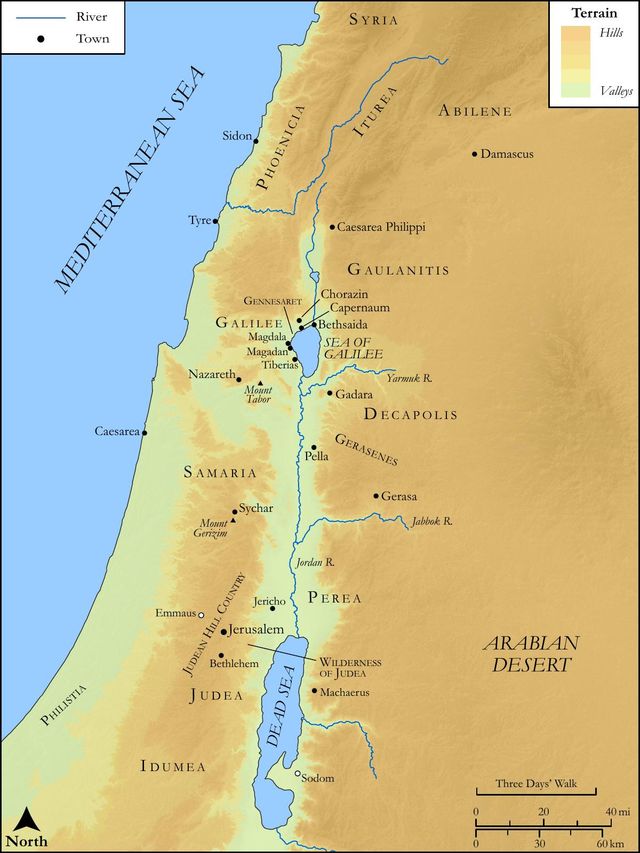
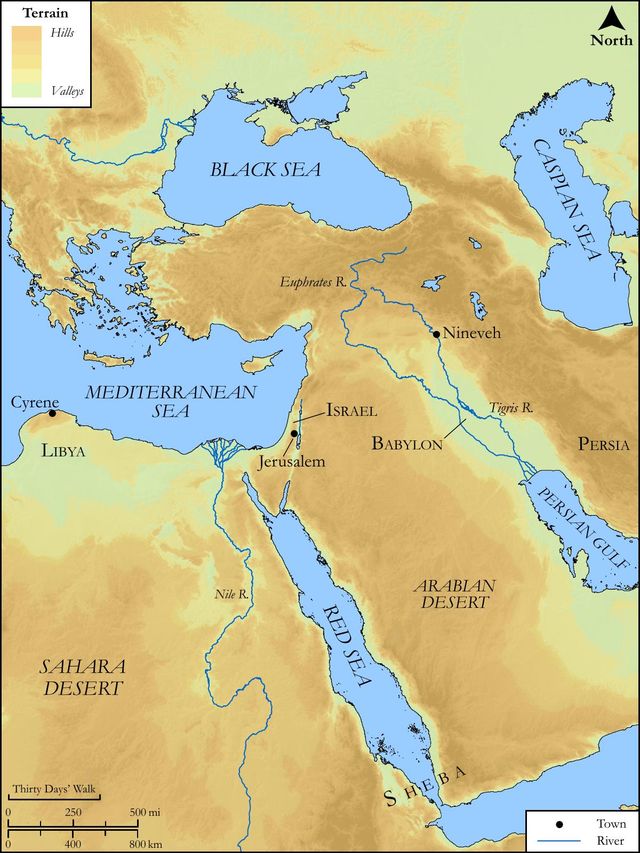
See on the biblical-era maps

Study this verse
Public-domain commentary
Matthew Henry
From his Commentary on the Whole Bible. Henry comments on passages, not single verses — this entry covers Matthew 6:9–15. His four-level outline is real structure in the source text, so it is rendered as structure.
When Christ had condemned what was amiss, he directs to do better; for his are reproofs of instruction. Because we know not what to pray for as we ought, he here helps our infirmities, by putting words into our mouths; after this manner therefore pray ye, Mat 6:9. So many were the corruptions that had crept into this duty of prayer among the Jews, that Christ saw it needful to give a new directory for prayer, to show his disciples what must ordinarily be the matter and method of their prayer, which he gives in words that may very well be used as a form; as the summary or contents of the several particulars of our prayers. Not that we are tied up to the use of this form only, or of this always, as if this were necessary to the consecrating of our other prayers; we are here bid to pray after this manner, with these words, or to this effect. That in Luke differs from this; we do not find it used by the apostles; we are not here taught to pray in the name of Christ, as we are afterward; we are here taught to pray that the kingdom might come which did come when the Spirit was poured out: yet, without doubt, it is very good to use it as a form, and it is a pledge of the communion of saints, it having been used by the church in all ages, at least (says Dr. Whitby) from the third century. It is our Lord's prayer, it is of his composing, of his appointing; it is very compendious, yet very comprehensive, in compassion to our infirmities in praying. The matter is choice and necessary, the method instructive, and the expression very concise. It has much in a little, and it is requisite that we acquaint ourselves with the sense and meaning of it, for it is used acceptably no further than it is used with understanding and without vain repetition.
The Lord's prayer (as indeed every prayer) is a letter sent from earth to heaven. Here is the inscription of the letter, the person to whom it is directed, our Father; the where, in heaven; the contents of it in several errands of request; the close, for thine is the kingdom; the seal, Amen; and if you will, the date too, this day.
Plainly thus: there are three parts of the prayer.
I.The preface, Our Father who art in heaven.
Before we come to our business, there must be a solemn address to him with whom our business lies; Our Father. Intimating, that we must pray, not only alone and for ourselves, but with and for others; for we are members one of another, and are called into fellowship with each other. We are here taught to whom to pray, to God only, and not to saints and angels, for they are ignorant of us, are not to have the high honours we give in prayer, nor can give favours we expect. We are taught how to address ourselves to God, and what title to give him, that which speaks him rather beneficent than magnificent, for we are to come boldly to the throne of grace.
1.We must address ourselves to him as our Father, and must call him so. He is a common Father to all mankind by creation, Mal 2:10; Act 17:28. He is in a special manner a Father to the saints, by adoption and regeneration (Eph 1:5; Gal 4:6); and an unspeakable privilege it is. Thus we must eye him in prayer, keep up good thoughts of him, such as are encouraging and not affrighting; nothing more pleasing to God, nor pleasant to ourselves, than to call God Father. Christ in prayer mostly called God Father. If he be our Father, he will pity us under our weaknesses and infirmities (Psa 103:13), will spare us (Mal 3:17), will make the best of our performances, though very defective, will deny us nothing that is good for us, Luk 11:11-13. We have access with boldness to him, as to a father, and have an advocate with the Father, and the Spirit of adoption. When we come repenting of our sins, we must eye God as a Father, as the prodigal did (Luk 15:18; Jer 3:19); when we come begging for grace, and peace, and the inheritance and blessing of sons, it is an encouragement that we come to God, not as an unreconciled, avenging Judge, but as a loving, gracious, reconciled Father in Christ, Jer 3:4.
2.As our Father in heaven: so in heaven as to be every where else, for the heaven cannot contain him; yet so in heaven as there to manifest his glory, for it is his throne (Psa 103:19), and it is to believers a throne of grace: thitherward we must direct our prayers, for Christ the Mediator is now in heaven, Heb 8:1. Heaven is out of sight, and a world of spirits, therefore our converse with God in prayer must be spiritual; it is on high, therefore in prayer we must be raised above the world, and lift up our hearts, Psa 5:1. Heaven is a place of perfect purity, and we must therefore lift up pure hands, must study to sanctify his name, who is the Holy One, and dwells in that holy place, Lev 10:3. From heaven God beholds the children of men, Psa 33:13, Psa 33:14. And we must in prayer see his eye upon us: thence he has a full and clear view of all our wants and burdens and desires, and all our infirmities. It is the firmament of his power likewise, as well as of his prospect, Psa 150:1. He is not only, as a Father, able to help us, able to do great things for us, more than we can ask or think; he has wherewith to supply our needs, for every good gift is from above. He is a Father, and therefore we may come to him with boldness, but a Father in heaven, and therefore we must come with reverence, Ecc 5:2. Thus all our prayers should correspond with that which is our great aim as Christians, and that is, to be with God in heaven. God and heaven, the end of our whole conversation, must be particularly eyed in every prayer; there is the centre to which we are all tending. By prayer, we send before us thither, where we profess to be going.
II.The petitions, and those are six; the three first relating more immediately to God and his honour, the three last to our own concerns, both temporal and spiritual; as in the ten commandments, the four first teach us our duty toward God, and the last six our duty toward our neighbour. The method of this prayer teaches us to seek first the kingdom of God and his righteousness, and then to hope that other things shall be added.
1.Hallowed be thy name. It is the same word that in other places is translated sanctified. But here the old word hallowed is retained, only because people were used to it in the Lord's prayer. In these words,
(1.)We give glory to God; it may be taken not as a petition, but as an adoration; as that, the Lord be magnified, or glorified, for God's holiness is the greatness and glory of all his perfections. We must begin our prayers with praising God, and it is very fit he should be first served, and that we should give glory to God, before we expect to receive mercy and grace from him. Let him have praise of his perfections, and then let us have the benefit of them.
(2.)We fix our end, and it is the right end to be aimed at, and ought to be our chief and ultimate end in all our petitions, that God may be glorified; all our other requests must be in subordination to this, and in pursuance of it. "Father, glorify thyself in giving me my daily bread and pardoning my sins," etc. Since all is of him and through him, all must be to him and for him. In prayer our thoughts and affections should be carried out most to the glory of God. The Pharisees made their own name the chief end of their prayers (Mat 6:5, to be seen of men), in opposition to which we are directed to make the name of God our chief end; let all our petitions centre in this and be regulated by it. "Do so and so for me, for the glory of thy name, and as far as is for the glory of it." (3.) We desire and pray that the name of God, that is, God himself, in all that whereby he has made himself known, may be sanctified and glorified both by us and others, and especially by himself. "Father, let thy name be glorified as a Father, and a Father in heaven; glorify thy goodness and thy highness, thy majesty and mercy. Let thy name be sanctified, for it is a holy name; no matter what becomes of our polluted names, but, Lord, what wilt thou do to thy great name?" When we pray that God's name may be glorified,
[1.]We make a virtue of necessity; for God will sanctify his own name, whether we desire it or not; I will be exalted among the heathen, Psa 46:10.
[2.]We ask for that which we are sure shall be granted; for when our Saviour prayed, Father glorify thy name, it was immediately answered, I have glorified it, and will glorify it again.
2.Thy kingdom come. This petition has plainly a reference to the doctrine which Christ preached at this time, which John Baptist had preached before, and which he afterwards sent his apostles out to preach - the kingdom of heaven is at hand. The kingdom of your Father who is in heaven, the kingdom of the Messiah, this is at hand, pray that it may come. Note, We should turn the word we hear into prayer, our hearts should echo to it; does Christ promise, surely I come quickly? our hearts should answer, Even so, come. Ministers should pray over the word: when they preach, the kingdom of God is at hand, they should pray, Father, thy kingdom come. What God has promised we must pray for; for promises are given, not to supersede, but to quicken and encourage prayer; and when the accomplishment of a promise is near and at the door, when the kingdom of heaven is at hand, we should then pray for it the more earnestly; thy kingdom come; as Daniel set his face to pray for the deliverance of Israel, when he understood that the time of it was at hand, Dan 9:2. See Luk 19:11. It was the Jews' daily prayer to God, Let him make his kingdom reign, let his redemption flourish, and let his Messiah come and deliver his people. Dr. Whitby, ex Vitringa. "Let thy kingdom come, let the gospel be preached to all and embraced by all; let all be brought to subscribe to the record God has given in his word concerning his Son, and to embrace him as their Saviour and Sovereign. Let the bounds of the gospel-church be enlarged, the kingdom of the world be made Christ's kingdom, and all men become subjects to it, and live as becomes their character."
3.Thy will be done in earth as it is in heaven. We pray that God's kingdom being come, we and others may be brought into obedience to all the laws and ordinances of it. By this let it appear that Christ's kingdom is come, let God's will be done; and by this let is appear that it is come as a kingdom of heaven, let it introduce a heaven upon earth. We make Christ but a titular Prince, if we call him King, and do not do his will: having prayed that he may rule us, we pray that we may in every thing be ruled by him. Observe,
(1.)The thing prayed for, thy will be done; "Lord, do what thou pleasest with me and mine; Sa1 3:18. I refer myself to thee, and am well satisfied that all thy counsel concerning me should be performed." In this sense Christ prayed, not my will, but thine be done. "Enable me to do what is pleasing to thee; give me that grace that is necessary to the right knowledge of thy will, and an acceptable obedience to it. Let thy will be done conscientiously by me and others, not our own will, the will of the flesh, or the mind, not the will of men (Pe1 4:2), much less Satan's will (Joh 8:44), that we may neither displease God in any thing we do (ut nihil nostrum displiceat Deo), nor be displeased at any thing God does" (ut nihil Dei displiceat nobis).
(2.)The pattern of it, that it might be done on earth, in this place of our trial and probation (where our work must be done, or it never will be done), as it is done in heaven, that place of rest and joy. We pray that earth may be made more like heaven by the observance of God's will (this earth, which, through the prevalency of Satan's will, has become so near akin to hell), and that saints may be made more like the holy angels in their devotion and obedience. We are on earth, blessed be God, not yet under the earth; we pray for the living only, not for the dead that have gone down into silence.
4.Give us this day our daily bread. Because our natural being is necessary to our spiritual well-being in this world, therefore, after the things of God's glory, kingdom, and will, we pray for the necessary supports and comforts of this present life, which are the gifts of God, and must be asked of him, Ton arton epiousion - Bread for the day approaching, for all the remainder of our lives. Bread for the time to come, or bread for our being and subsistence, that which is agreeable to our condition in the world (Pro 30:8), food convenient for us and our families, according to our rank and station.
Every word here has a lesson in it: (1.) We ask for bread; that teaches us sobriety and temperance; we ask for bread, not dainties, not superfluities; that which is wholesome, though it be not nice. (2.) We ask for our bread; that teaches us honesty and industry: we do not ask for the bread out of other people's mouths, not the bread of deceit (Pro 20:17), not the brad of idleness (Pro 31:27), but the bread honestly gotten. (3.) We ask for our daily bread; which teaches us not to take thought for the morrow (Mat 6:34), but constantly to depend upon divine Providence, as those that live from hand to mouth. (4.) We beg of God to give it us, not sell it us, nor lend it us, but give it. The greatest of men must be beholden to the mercy of God for their daily bread, (5.) We pray, "Give it to us; not to me only, but to others in common with me." This teaches us charity, and a compassionate concern for the poor and needy. It intimates also, that we ought to pray with our families; we and our households eat together, and therefore ought to pray together. (6.) We pray that God would give us this day; which teaches us to renew the desire of our souls toward God, as the wants of our bodies are renewed; as duly as the day comes, we must pray to our heavenly Father, and reckon we could as well go a day without meat, as without prayer.
5.And forgive us our debts, as we forgive our debtors, This is connected with the former; and forgive, intimating, that unless our sins be pardoned, we can have no comfort in life, or the supports of it. Our daily bread does but feed us as lambs for the slaughter, if our sins be not pardoned. It intimates, likewise, that we must pray for daily pardon, as duly as we pray for daily bread. He that is washed, needeth to wash his feet. Here we have,
(1.)A petition; Father in heaven forgive us our debts, our debts to thee. Note,
[1.]Our sins are our debts; there is a debt of duty, which, as creatures, we owe to our Creator; we do not pray to be discharged from that, but upon the non-payment of that there arises a debt of punishment; in default of obedience to the will of God, we become obnoxious to the wrath of God; and for not observing the precept of the law, we stand obliged to the penalty. A debtor is liable to process, so are we; a malefactor is a debtor to the law, so are we.
[2.]Our hearts' desire and prayer to our heavenly Father every day should be, that he would forgive us our debts; that the obligation to punishment may be cancelled and vacated, that we may not come into condemnation; that we may be discharged, and have the comfort of it. In suing out the pardon of our sins, the great plea we have to rely upon is the satisfaction that was made to the justice of God for the sin of man, by the dying of the Lord Jesus our Surety, or rather Bail to the action, that undertook our discharge.
(2.)An argument to enforce this petition; as we forgive our debtors. This is not a plea of merit, but a plea of grace. Note, Those that come to God for the forgiveness of their sins against him, must make conscience of forgiving those who have offended them, else they curse themselves when they say the Lord's prayer. Our duty is to forgive our debtors; as to debts of money, we must not be rigorous and severe in exacting them from those that cannot pay them without ruining themselves and their families; but this means debt of injury; our debtors are those that trespass against us, that smite us (Mat 5:39, Mat 5:40), and in strictness of law, might be prosecuted for it; we must forbear, and forgive, and forget the affronts put upon us, and the wrongs done us; and this is a moral qualification for pardon and peace; it encourages to hope, that God will forgive us; for if there be in us this gracious disposition, it is wrought of God, and therefore is a perfection eminently and transcendently in himself; it will be an evidence to us that he has forgiven us, having wrought in us the condition of forgiveness.
6.And lead us not into temptation, but deliver us from evil. This petition is expressed,
(1.)Negatively: Lead us not into temptation. Having prayed that the guilt of sin may be removed, we pray, as it is fit, that we may never return again to folly, that we may not be tempted to it. It is not as if God tempted any to sin; but, "Lord, do not let Satan loose upon us; chain up that roaring lion, for he is subtle and spiteful; Lord, do not leave us to ourselves (Psa 19:13), for we are very weak; Lord, do not lay stumbling-blocks and snares before us, nor put us into circumstances that may be an occasion of falling." Temptations are to be prayed against, both because of the discomfort and trouble of them, and because of the danger we are in of being overcome by them, and the guilt and grief that then follow.
(2.)Positively: But deliver us from evil; apo tou ponērou - from the evil one, the devil, the tempter; "keep us, that either we may not be assaulted by him, or we may not be overcome by those assaults:" Or from the evil thing, sin, the worst of evils; an evil, an only evil; that evil thing which God hates, and which Satan tempts men to and destroys them by. "Lord, deliver us from the evil of the world, the corruption that is in the world through lust; from the evil of every condition in the world; from the evil of death; from the sting of death, which is sin: deliver us from ourselves, from our own evil hearts: deliver us from evil men, that they may not be a snare to us, nor we a prey to them."
III.The conclusion:
For thine is the kingdom, and the power and the glory, for ever. Amen. Some refer this to David's doxology, Ch1 29:11. Thine, O Lord, is the greatness. It is,
1.A form of plea to enforce the foregoing petitions. It is our duty to plead with God in prayer, to fill our mouth with arguments (Job 23:4) not to move God, but to affect ourselves; to encourage the faith, to excite our fervency, and to evidence both. Now the best pleas in prayer are those that are taken from God himself, and from that which he has made known of himself. We must wrestle with God in his own strength, both as to the nature of our pleas and the urging of them. The plea here has special reference to the first three petitions; "Father in heaven, thy kingdom come, for thine is the kingdom; thy will be done, for thine is the power; hallowed be thy name, for thine is the glory." And as to our own particular errands, these are encouraging: "Thine is the kingdom; thou hast the government of the world, and the protection of the saints, thy willing subjects in it;" God gives and saves like a king. "Thine is the power, to maintain and support that kingdom, and to make good all thine engagements to thy people." Thine is the glory, as the end of all that which is given to, and done for, the saints, in answer to their prayers; for their praise waiteth for him. This is matter of comfort and holy confidence in prayer.
2.It is a form of praise and thanksgiving. The best pleading with God is praising of him; it is the way to obtain further mercy, as it qualifies us to receive it. In all our addresses to God, it is fit that praise should have a considerable share, for praise becometh the saints; they are to be our God for a name and for a praise. It is just and equal; we praise God, and give him glory, not because he needs it - he is praised by a world of angels, but because he deserves it; and it is our duty to give him glory, in compliance with his design in revealing himself to us. Praise is the work and happiness of heaven; and all that would go to heaven hereafter, must begin their heaven now. Observe, how full this doxology is, The kingdom, and the power, and the glory, it is all thine. Note, It becomes us to be copious in praising God. A true saint never thinks he can speak honourably enough of God: here there should be a gracious fluency, and this for ever. Ascribing glory to God for ever, intimates an acknowledgement, that it is eternally due, and an earnest desire to be eternally doing it, with angels and saints above, Psa 71:14.
Lastly, To all this we are taught to affix our Amen, so be it. God's Amen is a grant; his fiat is, it shall be so; our Amen is only a summary desire; our fiat is, let it be so: it is in the token of our desire and assurance to be heard, that we say Amen. Amen refers to every petition going before, and thus, in compassion to our infirmities, we are taught to knit up the whole in one word, and so to gather up, in the general, what we have lost and let slip in the particulars. It is good to conclude religious duties with some warmth and vigour, that we may go from them with a sweet savour upon our spirits. It was of old the practice of good people to say, Amen, audibly at the end of every prayer, and it is a commendable practice, provided it be done with understanding, as the apostle directs (Co1 14:16), and uprightly, with life and liveliness, and inward expressions, answerable to that outward expression of desire and confidence.
Most of the petitions in the Lord's prayer had been commonly used by the Jews in their devotions, or words to the same effect: but that clause in the fifth petition, As we forgive our debtors, was perfectly new, and therefore our Saviour here shows for what reason he added it, not with any personal reflection upon the peevishness, litigiousness, and ill nature of the men of that generation, though there was cause enough for it, but only from the necessity and importance of the thing itself. God, in forgiving us, has a peculiar respect to our forgiving those that have injured us; and therefore, when we pray for pardon, we must mention our making conscience of that duty, not only to remind ourselves of it, but to bind ourselves to it. See that parable, Mat 18:23-35. Selfish nature is loth to comply with this, and therefore it is here inculcated, Mat 6:14, Mat 6:15.
1.In a promise. If ye forgive, your heavenly Father will also forgive. Not as if this were the only condition required; there must be repentance and faith, and new obedience; but as where other graces are in truth, there will be this, so this will be a good evidence of the sincerity of our other graces. He that relents toward his brother, thereby shows that he repents toward his God. Those which in the prayer are called debts, are here called trespasses, debts of injury, wrongs done to us in our bodies, goods, or reputation: trespasses is an extenuating term for offences, paraptōmata - stumbles, slips, falls. Note, It is a good evidence, and a good help of our forgiving others, to call the injuries done us by a mollifying, excusing name. Call them not treasons, but trespasses; not wilful injuries, but casual inadvertencies; peradventure it was an oversight (Gen 43:12), therefore make the best of it. We must forgive, as we hope to be forgiven; and therefore must not only bear no malice, nor mediate revenge, but must not upbraid our brother with the injuries he has done us, nor rejoice in any hurt that befalls him, but must be ready to help him and do him good, and if he repent and desire to be friends again, we must be free and familiar with him, as before.
2.In a threatening. "But if you forgive not those that have injured you, that is a bad sign you have not the other requisite conditions, but are altogether unqualified for pardon: and therefore your Father, whom you call Father, and who, as a father, offers you his grace upon reasonable terms, will nevertheless not forgive you. And if other grace be sincere, and yet you be defective greatly in forgiving, you cannot expect the comfort of your pardon, but to have your spirit brought down by some affliction or other to comply with this duty." Note, Those who would have found mercy with God must show mercy to their brethren; no can we expect that he should stretch out the hands of his favour to us, unless we lift up to him pure hands, without wrath, Ti1 2:8. If we pray in anger, we have reason to fear God will answer in anger. It has been said, Prayers made in wrath are written in gall. What reason is it that God should forgive us the talents we are indebted to him, if we forgive not our brethren the pence they are indebted to us? Christ came into the world as the great Peace-Maker, and not only to reconcile us to God, but one to another, and in this we must comply with him. It is great presumption and of dangerous consequence, for any to make a light matter of that which Christ here lays such a stress upon. Men's passions shall not frustrate God's word.
Historical interpretation
Nineteen Centuries of Reception
20 surviving comments on this verse. Each one is dated, so this reads as a timeline rather than a list.
Select a marker to jump to its quote. Markers stagger vertically where authors wrote within a few decades of each other.
But let not your fasts be with the hypocrites; for they fast on the second and fifth day of the week; but do ye fast on the fourth day and the Preparation (Friday). Neither pray as the hypocrites; but as the Lord commanded in His Gospel, thus pray: Our Father who art in heaven, hallowed be Thy name. Thy kingdom come. Thy will be done, as in heaven, so on earth. Give us to-day our daily (needful) bread, and forgive us our debt as we also forgive our debtors. And bring us not into temptation, but deliver us from the evil one (or, evil); for Thine is the power and the glory for ever. Thrice in the day thus pray.
How unworthy, also, is the way in which you interpret to the favour of your own lust the fact that the Lord "ate and drank" promiscuously! But I think that He must have likewise "fasted" inasmuch as He has pronounced, not "the full; "but "the hungry and thirsty, blessed: " (He) who was wont to profess "food" to be, not that which His disciples had supposed, but "the thorough doing of the Father's work; " teaching "to labour for the meat which is permanent unto life eternal; " in our ordinary prayer likewise commanding us to request "bread," not the wealth of Attalus therewithal.
For this reason we are enjoined to ask what is sufficient for the preservation of the substance of the body: not luxury, but food, which restores what the body loses, and prevents death by hunger; not tables to inflame and drive on to pleasures, nor such things as make the body wax wanton against the soul; but bread, and that, too, not for a great number of years, but what is sufficient for us to-day.
Since some understand from this that we are commanded to pray for material bread, it will be well to refute their error here and to establish the truth about the epiousios (supersubstantial) bread. We must ask them how it could be that he who commanded us to ask for great and heavenly favors should command us to intercede with the Father for what is small and of the earth, as if he had forgotten—so they would have it—what he had taught. For the bread that is given to our flesh is neither heavenly, nor is the request for it a great request.We, on our part, following the Master himself who teaches us about the bread, shall treat the matter explicitly. In the Gospel according to John he says to those who had come to Capernaum seeking for him: “Amen, amen, I say to you, you seek me, not because you have seen miracles but because you did eat of the loaves and were filled.” One who has eaten of the bread blessed by Jesus and is filled with it tries all the more to understand the Son of God more perfectly and hastens to him. Hence his admirable command: “Labor not for the meat that perishes but for that which endures to life ever-lasting, which the Son of Man will give you.” … The “true bread” is that which nourishes the true humanity, the person created after the image of God.
18. As the prayer goes forward, we ask and say, "Give us this day our daily bread." And this may be understood both spiritually and literally, because either way of understanding it is rich in divine usefulness to our salvation. For Christ is the bread of life; and this bread does not belong to all men, but it is ours. And according as we say, "Our Father," because He is the Father of those who understand and believe; so also we call it "our bread," because Christ is the bread of those who are in union with His body. And we ask that this bread should be given to us daily, that we who are in Christ, and daily receive the Eucharist for the food of salvation, may not, by the interposition of some heinous sin, by being prevented, as withheld and not communicating, from partaking of the heavenly bread, be separated from Christ's body, as He Himself predicts, and warns, "I am the bread of life which came down from heaven. If any man eat of my bread, he shall live for ever: and the bread which I will give is my flesh, for the life of the world." When, therefore, He says, that whoever shall eat of His bread shall live for ever; as it is manifest that those who partake of His body and receive the Eucharist by the right of communion are living, so, on the other hand, we must fear and pray lest any one who, being withheld from communion, is separate from Christ's body should remain at a distance from salvation; as He Himself threatens, and says, "Unless ye eat the flesh of the Son of man, and drink His blood, ye shall have no life in you." And therefore we ask that our bread-that is, Christ-may be given to us daily, that we who abide and live in Christ may not depart from His sanctification and body.
19. But it may also be thus understood, that we who have renounced the world, and have cast away its riches and pomps in the faith of spiritual grace, should only ask for ourselves food and support, since the Lord instructs us, and says, "Whosoever forsaketh not all that he hath, cannot be my disciple." But he who has begun to be Christ's disciple, renouncing all things according to the word of his Master, ought to ask for his daily food, and not to extend the desires of his petition to a long period, as the Lord again prescribes, and says, "Take no thought for the morrow, for the morrow itself shall take thought for itself. Sufficient for the day is the evil thereof." With reason, then, does Christ's disciple ask food for himself for the day, since he is prohibited from thinking of the morrow; because it becomes a contradiction and a repugnant thing for us to seek to live long in this world, since we ask that the kingdom of God should come quickly. Thus also the blessed apostle admonishes us, giving substance and strength to the stedfastness of our hope and faith: "We brought nothing," says he, "into this world, nor indeed can we carry anything out. Having therefore food and raiment, let us be herewith content. But they that will be rich fall into temptation and a snare, and into many and hurtful lusts, which drown men in perdition and destruction. For the love of money is the root of all evil; which while some coveted after, they have made shipwreck from the faith, and have pierced themselves through with many sorrows."
20. He teaches us that riches are not only to be contemned, but that they are also full of peril; that in them is the root of seducing evils, that deceive the blindness of the human mind by a hidden deception. Whence also God rebukes the rich fool, who thinks of his earthly wealth, and boasts himself in the abundance of his overflowing harvests, saying, "Thou fool, this night thy soul shall be required of thee; then whose shall those things be which thou hast provided?" The fool who was to die that very night was rejoicing in his stores, and he to whom life already was failing, was thinking of the abundance of his food. But, on the other hand, the Lord tells us that he becomes perfect and complete who sells all his goods, and distributes them for the use of the poor, and so lays up for himself treasure in heaven. He says that that man is able to follow Him, and to imitate the glory of the Lord's passion, who, free from hindrance, and with his loins girded, is involved in no entanglements of worldly estate, but, at large and free himself, accompanies his possessions, which before have been sent to God. For which result, that every one of us may be able to prepare himself, let him thus learn to pray, and know, from the character of the prayer, what he ought to be.
21. For daily bread cannot be wanting to the righteous man, since it is written, "The Lord will not slay the soul of the righteous by hunger;" and again "I have been young and now am old, yet have I not seen the righteous forsaken, nor his seed begging their bread. And the Lord moreover promises and says, "Take no thought, saying, "What shall we eat, or what shall we drink, or wherewithal shall we be clothed? For after all these things do the nations seek. And your Father knoweth that ye have need of all these things. Seek ye first the kingdom of God and His righteousness, and alI these things shall be added unto you." To those who seek God's kingdom and righteousness, He promises that all things shall be added. For since all things are God's, nothing will be wanting to him who possesses God, if God Himself be not wanting to him. Thus a meal was divinely provided for Daniel: when he was shut up by the king's command in the den of lions, and in the midst of wild beasts who were hungry, and yet spared him, the man of God was fed. Thus Elijah in his flight was nourished both by ravens ministering to him in his solitude, and by birds bringing him food in his persecution. And-oh detestable cruelty of the malice of man!-the wild beasts spare, the birds feed, while men lay snares, and rage!
(ubi sup.) For Christ is the bread of life, and this bread belongs not to all men, but to us. This bread we pray that it be given day by day, lest we who are in Christ, and who daily receive the Eucharist for food of salvation, should by the admission of any grievous crime, and our being therefore forbidden the heavenly bread, be separated from the body of Christ. Hence then we pray, that we who abide in Christ, may not draw back from His sanctification and His body.
(Tr. vii. 14.) Justly therefore does the disciple of Christ make petition for to-day's provision, without indulging excessive longings in his prayer. It were a self-contradicting and incompatible thing for us who pray that the kingdom of God may quickly come, to be looking unto long life in the world below.
It should be thought upon how when He had delivered to us this petition, Thy will be done as in heaven so in earth, then because He spake to men in the flesh, and not like angelic natures without passion or appetite, He now descends to the needs of our bodies. And He teaches us to pray not for money or the gratification of lust, but for daily bread; and as yet further restriction, He adds, this day, that we should not trouble ourselves with thought for the coming day.
"Give us this day our daily bread."
What is "daily bread"? That for one day.
For because He had said thus, "Thy will be done in earth as it is in heaven," but was discoursing to men encompassed with flesh, and subject to the necessities of nature, and incapable of the same impassibility with the angels:-while He enjoins the commands to be practised by us also, even as they perform them; He condescends likewise, in what follows, to the infirmity of our nature. Thus, "perfection of conduct," saith He, "I require as great, not however freedom from passions; no, for the tyranny of nature permits it not: for it requires necessary food." But mark, I pray thee, how even in things that are bodily, that which is spiritual abounds. For it is neither for riches, nor for delicate living, nor for costly raiment, nor for any other such thing, but for bread only, that He hath commanded us to make our prayer. And for "daily bread," so as not to "take thought for the morrow." Because of this He added, "daily bread," that is, bread for one day.
And not even with this expression is He satisfied, but adds another too afterwards, saying, "Give us this day;" so that we may not, beyond this, wear ourselves out with the care of the following day. For that day, the intervals before which thou knowest not whether thou shalt see, wherefore dost thou submit to its cares?
This, as He proceeded, he enjoined also more fully, saying, "Take no thought for the morrow." He would have us be on every hand unencumbered and winged for flight, yielding just so much to nature as the compulsion of necessity requires of us.
(Vers. 11-13.) Give us this day our daily bread. And forgive us our debts, as we also have forgiven our debtors. And lead us not into temptation, but deliver us from evil. The word 'supersubstantial,' which we have expressed, is rendered in Greek as 'ἐπιούσιον,' a term that the Septuagint translators frequently translate as 'περιούσιον.' Therefore, we examined the Hebrew, and wherever they translated 'περιούσιον,' we found 'Sgolla,' which Symmachus translated as 'ἐξαίρετον,' meaning exceptional or outstanding, although he did interpret it differently in one particular instance. Therefore, when we ask that God give us extraordinary or exceptional bread, we ask for Him who says: 'I am the living bread that came down from heaven' (John 6:51). In the Gospel called according to the Hebrews, instead of 'supersubstantial bread,' I found the word 'mahar,' which means 'for tomorrow'; so the meaning is: 'Give us our bread for tomorrow,' that is, for the future, today. We can also understand the 'supersubstantial bread' in another way, referring to the bread that is above all substances and exceeds all creatures. Others simply think, according to the words of the Apostle (I Tim. VI, 8): Having food and clothing, with these we are content, that we should only be concerned with providing for the holy present food. Hence, in the following it is commanded: Do not worry about tomorrow.
Amen. The sign of the Lord's Prayer is: which the Eagle interprets faithfully: we, truly, can say.
In the Gospel the term used by the Hebrews to denote supersubstantial bread is maar. I found that it means “for tomorrow,” so that the meaning is “Give us this day our bread” for tomorrow, that is, the future. We can also understand supersubstantial bread in another sense: bread that is above all substances and surpasses all creatures.
The Greek word here which we render 'supersubstantialis,' is ἐπιούσιος. The LXX often make use of the word περιούσιος, by which we find, on reference to the Hebrew, they always render the word sogolac. Symmachus translates it ἐξαίρετος, that is, 'chief,' or 'excellent,' though in one place he has interpreted 'peculiar.' When then we pray God to give us our 'peculiar' or 'chief' bread, we mean Him who says in the Gospel, I am the living bread which came down from heaven. (John 6:51.)
We may also interpret the word 'supersubstantialis' otherwise, as that which is above all other substances, and more excellent than all creatures, to wit, the body of the Lord.
Others understand it literally according to that saying of the Apostle, Having food and raiment, let us therewith be content, that the saints should have care only of present food; as it follows, Take no thought for the morrow.
In the Gospel, entitled The Gospel according to the Hebrews, 'supersubstantialis' is rendered 'mohar,' that is 'to-morrow's;' so that the sense would be, Give us today to-morrow's bread; i. e. for the time to come.
(Enchir. 115.) These three things therefore which have been asked in the foregoing petitions, are begun here on earth, and according to our proficiency are increased in us; but in another life, as we hope, they shall be everlastingly possessed in perfection. In the four remaining petitions we ask for temporal blessings which are necessary to obtaining the eternal; the bread, which is accordingly the next petition in order, is a necessary.
(De Don. Pers. 4.) Here then the saints ask for perseverance of God, when they pray that they may not be separated from the body of Christ, but may abide in that holiness, committing no crime.
(Serm. in Mont. ii. 7.) There is here a difficulty created by the circumstance of there being many in the East, who do not daily communicate in the Lord's Supper. And they defend their practice on the ground of ecclesiastical authority, that they do this without offence, and are not forbidden by those who preside over the Churches. But not to pronounce any thing concerning them in either way, this ought certainly to occur to our thoughts, that we have here received of the Lord a rule for prayer which we ought not to transgress. Who then will dare to affirm that we ought to use this prayer only once? Or if twice or thrice, yet only up to that hour at which we communicate on the Lord's body? For after that we cannot say, Give us this day that which we have already received. Or will any one on this account be able to compel us to celebrate this sacrament at the close of the day?
(ubi sup.) Or by daily we may understand spiritual, namely, the divine precepts which we ought to meditate and work.
(Epist. 130. 11.) So that herein we ask for a sufficiency of all things necessary under the one name of bread.
(Serm. in Mont. ii. 7.) Some one may perhaps find a difficulty in our here praying that we may obtain necessaries of this life, such as food and raiment, when the Lord has instructed us, Be not ye careful what ye shall eat, or wherewithal ye shall be clothed. But it is impossible not to be careful about that for the obtaining which we pray.
(Epist. 130. 6.) But to wish for the necessaries of life and no more, is not improper; for such sufficiency is not sought for its own sake, but for the health of the body, and for such garb and appliances of the person, as may make us to be not disagreeable to those with whom we have to live in all good reputation. For these things we may pray that they may be had when we are in want of them, that they may be kept when we have them.
But the other four things which we ask seem to me to belong to this temporal life. And the first of them is, Give us this day our daily bread. For whether by this same thing which is called daily bread be meant spiritual bread, or that which is visible in the sacrament or in this sustenance of ours, it belongs to the present time, which He has called today, not because spiritual food is not everlasting, but because that which is called daily food in the Scriptures is represented to the soul either by the sound of the expression or by temporal signs of any kind: things all of which will certainly no more have existence when all shall be taught of God, and thus shall no longer be making known to others by movement of their bodies, but drinking in each one for himself by the purity of his mind the ineffable light of truth itself. For perhaps for this reason also it is called bread, not drink, because bread is converted into aliment by breaking and masticating it, just as the Scriptures feed the soul by being opened up and made the subject of discourse; but drink, when prepared, passes as it is into the body: so that at present the truth is bread, when it is called daily bread; but then it will be drink, when there will be no need of the labour of discussing and discoursing, as it were of breaking and masticating, but merely of drinking unmingled and transparent truth. And sins are at present forgiven us, and at present we forgive them; which is the second petition of these four that remain: but then there will be no pardon of sins, because there will be no sins. And temptations molest this temporal life; but they will have no existence when these words shall be fully realized, You shall hide them in the secret of Your presence. And the evil from which we wish to be delivered, and the deliverance from evil itself, belong certainly to this life, which as being mortal we have deserved at the hand of God's justice, and from which we are delivered by His mercy.
There remain now the petitions for this life of our pilgrimage; therefore follows, “Give us this day our daily bread.” Give us eternal things, give us things temporal. Thou hast promised a kingdom, deny us not the means of subsistence. Thou wilt give everlasting glory with Thyself hereafter, give us in this earth temporal support. Therefore is it “day by day,” and “to-day”—that is, in this present time. For when this life shall have passed away shall we ask for daily bread then? For then it will not be called “day by day,” but “to-day.” Now it is called “day by day” when one day passes away and another day succeeds. Will it be called “day by day” when there will be one eternal day? This petition for daily bread is doubtless to be understood in two ways, both for the necessary supply of our bodily food and for the necessities of our spiritual support. There is a necessary supply of bodily food for the preservation of our daily life, without which we can not live. This is food and clothing, but the whole is understood in a part. When we ask for bread we thereby understand all things. There is a spiritual food also which the faithful know; which ye too will know when ye shall receive it at the altar of God. This also is “daily bread,” necessary only for this life.
Again, what I am handling before you now is “daily bread”; and the daily lessons which ye hear in church are daily bread, and the hymns ye hear and repeat are daily bread. For all these are necessary in our state of pilgrimage. But when we shall have got to Heaven shall we hear the Word, we who shall see the Word Himself, and hear the Word Himself, and eat and drink Him as the angels do now? Do the angels need books, and interpreters, and readers? Surely not. They read in seeing, for the Truth itself they see and are abundantly satisfied from that fountain from which we obtain some few drops. Therefore, has it been said, touching our daily bread, that this petition is necessary for us in this life.
The fourth petition is, Give us this day our daily bread. Daily bread is put either for all those things which meet the wants of this life, in reference to which He says in His teaching, Take no thought for the morrow: so that on this account there is added, Give us this day: or, it is put for the sacrament of the body of Christ, which we daily receive: or, for the spiritual food, of which the same Lord says, Labour for the meat which perishes not; and again, I am the bread of life, which came down from heaven. But which of these three views is the more probable, is a question for consideration. For perhaps some one may wonder why we should pray that we may obtain the things which are necessary for this life—such, for instance, as food and clothing—when the Lord Himself says, Be not anxious what you shall eat, or what you shall put on. Can any one not be anxious for a thing which he prays that he may obtain; when prayer is to be offered with so great earnestness of mind, that to this refers all that has been said about shutting our closets, and also the command, Seek first the kingdom of God, and His righteousness; and all these things shall be added unto you? Certainly He does not say, Seek first the kingdom of God, and then seek those other things; but all these things, says He, shall be added unto you, that is to say, even though you are not seeking them. But I know not whether it can be found out, how one is rightly said not to seek what he most earnestly pleads with God that he may receive.
But with respect to the sacrament of the Lord's body (in order that they may not start a question, who, the most of them being in Eastern parts, do not partake of the Lord's supper daily, while this bread is called daily bread: in order, therefore, that they may be silent, and not defend their way of thinking about this matter even by the very authority of the Church, because they do such things without scandal, and are not prevented from doing them by those who preside over their churches, and when they do not obey are not condemned; whence it is proved that this is not understood as daily bread in these parts: for, if this were the case, they would be charged with the commission of a great sin, who do not on that account receive it daily; but, as has been said, not to argue at all to any extent from the case of such parties), this consideration at least ought to occur to those who reflect, that we have received a rule for prayer from the Lord, which we ought not to transgress, either by adding or omitting anything. And since this is the case, who is there who would venture to say that we ought only once to use the Lord's Prayer, or at least that, even if we have used it a second or a third time before the hour at which we partake of the Lord's body, afterwards we are assuredly not so to pray during the remaining hours of the day? For we shall no longer be able to say, Give us this day, respecting what we have already received; or every one will be able to compel us to celebrate that sacrament at the very last hour of the day.
It remains, therefore, that we should understand the daily bread as spiritual, that is to say, divine precepts, which we ought daily to meditate and to labour after. For just with respect to these the Lord says, Labour for the meat which perishes not. That food, moreover, is called daily food at present, so long as this temporal life is measured off by means of days that depart and return. And, in truth, so long as the desire of the soul is directed by turns, now to what is higher, now to what is lower, i.e. now to spiritual things, now to carnal, as is the case with him who at one time is nourished with food, at another time suffers hunger; bread is daily necessary, in order that the hungry man may be recruited, and he who is falling down may be raised up. As, therefore, our body in this life, that is to say, before that great change, is recruited with food, because it feels loss; so may the soul also, since by means of temporal desires it sustains as it were a loss in its striving after God, be reinvigorated by the food of the precepts. Moreover, it is said, Give us this day, as long as it is called today, i.e. in this temporal life. For we shall be so abundantly provided with spiritual food after this life unto eternity, that it will not then be called daily bread; because there the flight of time, which causes days to succeed days, whence it may be called today, will not exist. But as it is said, Today, if you will hear His voice, which the apostle interprets in the Epistle to the Hebrews, As long as it is called today; so here also the expression is to be understood, Give us this day. But if any one wishes to understand the sentence before us also of food necessary for the body, or of the sacrament of the Lord's body, we must take all three meanings conjointly; that is to say, that we are to ask for all at once as daily bread, both the bread necessary for the body, and the visible hallowed bread, and the invisible bread
(Coll. ix. 21.) In that He says, this day, He shows that it is to be daily taken, and that this prayer should be offered at all seasons, seeing there is no day on which we have not need, by the receiving of this bread, to confirm the heart of e inward man.
(ubi sup.) Though the expression to-day may be understood of this present life; thus, Give us this bread while we abide in this world.
These words, As in heaven so in earth, must be taken as common to all three preceding petitions. Observe also how carefully it is worded; He said not, Father, hallow Thy name in us, Let Thy kingdom come on us, Do Thy will in us. Nor again; Let us hallow Thy name, Let us enter into Thy kingdom, Let us do Thy will; that it should not seem to be either God's doing only, or man's doing only. But He used a middle form of speech, and the impersonal verb; for as man can do nothing good without God's aid, so neither does God work good in man unless man wills it.
PSEUDO-CHRYSOSTOM.d. Or by 'supersubstantialis' may be intended 'daily.'
We pray, Give us this day our daily bread, not only that we may have what to eat, which is common to both righteous and sinners; but that what we eat we may receive at the hand of God, which belongs only to the saints. For to him God giveth bread who earns it by righteous means; but to him who earns it by sin, the Devil it is that gives. Or that inasmuch as it is given by God, it is received sanctified; and therefore He adds our, that is, such bread as we have prepared for us, that do Thou give us, that by Thy giving it may be sanctified. Like as the Priest taking bread of the laic, sanctifies it, and then offers it to him; the bread indeed is his that brought it in offering, but that it is sanctified is the benefit from the Priest. He says Our for two reasons. First, because all things that God gives us He gives through us to others, that of what we receive of Him we may impart to the helpless. Whoso then of what he gains by his own toil bestows nothing on others, eats not his own bread only, but others' bread also. Secondly, he who eats bread got righteously, eats his own bread; but he who eats bread got with sin, eats others' bread.
And these words at first sight might seem to forbid our having it prepared for the morrow, or after the morrow. If this were so, this prayer could only suit a few; such as the Apostles who travelled hither and thither teaching—or perhaps none among us. Yet ought we so to adapt Christ's doctrine, that all men may profit in it.
Or; He adds, daily, that a man may eat so much only as natural reason requires, not as the lust of the flesh urges. For if you expend on one banquet as much as would suffice you for a hundred days, you are not eating to-day's provision, but that of many days.
(Mor. xxiv. 7.) We call it our bread, yet pray that it may be given us, for it is God's to give, and is made ours by our receiving it.
By the word "daily" He means what is sufficient for our existence, our essence, and our sustenance. Thus He teaches us not to worry about tomorrow. "Bread for our essence" is also the Body of Christ, of Which we pray that we may partake without condemnation.
"With angels and archangels and all the company of heaven." Will you believe it? It is only quite recently I made that quotation a part of my private prayers--I festoon it round "hallowed be Thy name". This, by the way, illustrates what I was saying last week about the uses of ready-made forms. They remind one. And I have found this quotation a great enrichment. One always accepted this with theoretically. But it is quite different when one brings it into consciousness at an appropriate moment and wills the association of one's own little twitter with the voice of the great saints and (we hope) of our own dear dead. They may drown some of its uglier qualities and set off any tiny value it has...
Thy kingdom come. That is, may your reign be realised here, as it is realised there. But I tend to take there on three levels. First, as in the sinless world beyond the horrors of animal and human life; in the behaviour of stars and trees and water, in sunrise and wind. May there be here (in my heart) the beginning of a like beauty. Secondly, as in the best human lives I have known: in all the people who really bear the burdens and ring true, the people we call bricks, and in the quiet, busy, ordered life of really good families and really good religious houses. May that too be "here". Finally, of course, in the usual sense: as in heaven, as among the blessed dead.
And here can of course be taken not only for "in my heart", but for "in this college"--in England--in the world in general. But prayer is not the time for pressing our own favourite social or political panacea. Even Queen Victoria didn't like "being talked to as if she were a public meeting".
Thy will be done. My festoons on this have been added gradually. At first I took it exclusively as an act of submission, attempting to do with it what Our Lord did in Gethsemane. I thought of God's will purely as something that would come upon me, something of which I should be the patient. And I also thought of it as a will which would be embodied in pains and disappointments. Not, to be sure, that I suppose God's will for me to consist entirely of disagreeables. But I thought it was only the disagreeables that called for this preliminary submission--the agreeables could look after themselves for the present. When they turned up, one could give thanks.
This interpretation is, I expect, the commonest. And so it must be. And such are the miseries of human life that it must often fill our whole mind. But at other times other meanings can be added. So I added one more.
The peg for it is, I admit, much more obvious in the English version than in the Greek or Latin. No matter: this is where the liberty of festooning comes in. "Thy will be done". But a great deal of it is to be done by God's creatures; including me. The petition, then, is not merely that I may patiently suffer God's will but also that I may vigorously do it. I must be an agent as well as a patient. I am asking that I may be enabled to do it. In the long run I am asking to be given "the same mind which was also in Christ".
Taken this way, I find the words have a more regular daily application. For there isn't always--or we don't always have reason to suspect that there is--some great affliction looming in the near future, but there are always duties to be done; usually, for me, neglected duties to be caught up with. "Thy will be done--by me--now" brings one back to brass tacks.
But more than that, I am at this very moment contemplating a new festoon. Tell me if you think it a vain subtlety. I am beginning to feel that we need a preliminary act of submission not only towards possible future afflictions but also towards possible future blessings. I know it sounds fantastic; but think it over. It seems to me that we often, almost sulkily, reject the good that God offers us because, at that moment, we expected some other good. Do you know what I mean? On every level of our life--in our religious experience, in our gastronomic, erotic, aesthetic and social experience--we are always harking back to some occasion which seemed to us to reach perfection, setting that up as a norm, and depreciating all other occasions by comparison. But these other occasions, I now suspect, are often full of their own new blessings if only we would lay ourselves open to it. God shows us a new facet of the glory, and we refuse to look at it because we're still looking for the old one. And of course we don't get that. You can't, at the twentieth reading, get again the experience of reading Lycidas for the first time. But what you do get can be in its own way as good.
This applies especially to the devotional life. Many religious people lament that the first fervours of their conversion have died away. They think--sometimes rightly, but not, I believe always--that their sins account for this. They may even try by pitiful efforts of will to revive what now seem to have been the golden days. But were those fervours--the operative word is those--ever intended to last?
It would be rash to say that there is any prayer which God never grants. But the strongest candidate is the prayer we might express in the single word encore. And how should the Infinite repeat Himself? All space and time are too little for Him to utter Himself in them once.
And the joke, or tragedy, of it all is that these golden moments in the past, which are so tormenting if we erect them into a norm, are entirely nourishing, wholesome, and enchanting if we are content to accept them for what they are, for memories. Properly bedded down in a past which we do not miserably try to conjure back, they will send up exquisite growths. Leave the bulbs alone, and the new flowers will come up. Grub them up and hope, by fondling and sniffing, to get last year's blooms, and you will get nothing. "Unless a seed die..."
I expect we all do much the same with the prayer for our daily bread. It means, doesn't it, all we need for the day--"things requisite and necessary as well for the body as for the soul." I should hate to make this clause "purely religious" by thinking of "spiritual" needs alone. One of its uses, to me, is to remind us daily that what Burnaby calls the naïf view of prayer is firmly built into Our Lord's teaching.
Forgive us... as we forgive. Unfortunately there's no need to do any festooning here. To forgive for the moment is not difficult. But to go on forgiving, to forgive the same offence again every time it recurs to the memory--there's the real tussle. My resource is to look for some action of my own which is open to the same charge as the one I'm resenting. If I still smart to remember how A let me down, I must still remember how I let B down. If I find it difficult to forgive those who bullied me at school, let me, at that very moment, remember, and pray for, those I bullied. (Not that we called it bullying of course. That is where prayer without words can be so useful. In it there are no names; therefore no aliases.)
I was never worried myself by the words lead us not into temptation, but a great many of my correspondents are. The words suggest to them what some one has called "a fiend-like conception of God," as one who first forbids us certain fruits and then lures us to taste them. But the Greek word ([Greek: peirasmos]) means "trial"--"trying circumstances"--of every sort; a far larger word than English "temptation". So that the petition essentially is, "Make straight our paths. Spare us, where possible, from all crises, whether of temptation or affliction." By the way, you yourself, though you've doubtless forgotten it, gave me an excellent gloss on it: years ago in the pub at Coton. You said it added a sort of reservation to all our preceding prayers. As if we said, "In my ignorance I have asked for A, B and C. But don't give me them if you foresee that they would in reality be to me either snares or sorrows." And you quoted Juvenal, numinibus vota exaudita malignis, "enormous prayers which heaven in vengeance grants". For we make plenty of such prayers. If God had granted all the silly prayers I've made in my life, where should I be now?
I don't often use the kingdom, the power, and the glory. When I do, I have an idea of the kingdom as sovereignty de jure; God, as good, would have a claim on my obedience even if He had no power. The power is the sovereignty de facto--He is omnipotent. And the glory is--well, the glory; the "beauty so old and new", the "light from behind the sun."
Continue studying Matthew 6:11 across the web’s major study libraries — every link below opens this exact verse, chapter, or book on the destination site.
Read & Compare
 BibleGatewayThis verse in more than 200 translations and 70 languages.
 Bible.comThe YouVersion reader — hundreds of translations, reading plans, and highlights.
 ESV.orgCrossway's official English Standard Version reader.
 NET BibleThe NET translation with 60,000+ translators' notes on every rendering decision.
 STEP BibleTyndale House's free study tool — original text, vocabulary, and scholarly resources.
 BibliaLogos Bible Software's free web reader.
 USCCBThe New American Bible (Revised Edition) with the U.S. bishops' study notes.
Commentaries
 BibleHub CommentariesDozens of classic commentaries on this verse, gathered on one page.
 StudyLightMore than 100 commentary sets — the largest collection on the web.
 BibleRefPlain-English commentary on what this verse means, verse by verse.
 Enduring WordDavid Guzik's free commentary on this chapter, widely used by Bible teachers.
 Bible Study ToolsVerse commentary alongside Greek and Hebrew study aids.
Original Language & Research
- BibleHub InterlinearThe verse word by word — original language, transliteration, and English.
- BibleHub LexiconEvery word's original-language definition and Strong's entry.
 Blue Letter BibleDeep-study tools — Strong's numbers, concordance, and word studies.
 CNTR CollationThe earliest Greek manuscripts of this verse, collated letter by letter.
Sermons, Hymns & Audio


TrulyRandomVerse is not affiliated with these sites and doesn’t control their content. They’re linked because they’re genuinely useful.
Summary
Matthew 6:11, "Give us this day our daily bread," is a pivotal petition within the Lord's Prayer, revealing a profound theological truth about humanity's complete and ongoing dependence on God's faithful provision. This concise yet comprehensive request encapsulates a posture of humility, trust, and contentment, inviting believers to align their daily needs and anxieties with the benevolent will of their Heavenly Father, who delights in sustaining His children both physically and spiritually.
Context
ShowHideLiterary Context
This verse is an integral part of Jesus' teaching on prayer, forming the fourth petition of the model prayer He provides to His disciples in Matthew 6:9-13. It immediately follows petitions that focus on God's glory and kingdom ("Hallowed be your name, your kingdom come, your will be done") and precedes requests for forgiveness, deliverance from temptation, and protection from evil. This placement suggests a natural progression from worshipping God and seeking His will to entrusting Him with our most fundamental human needs, demonstrating that even our physical sustenance is intrinsically linked to our spiritual relationship with Him. The entire prayer is framed by Jesus' earlier warnings against hypocritical public displays of piety and meaningless repetition in prayer, emphasizing sincerity and a personal relationship with God, as seen in Matthew 6:5-8.
Historical & Cultural Context
In first-century Galilee, bread was not merely a food item but the quintessential staple of life, often symbolizing all necessary provisions for existence. Daily labor was common, and many lived hand-to-mouth, making the concept of "daily bread" a literal reality for survival. Storing large quantities of food was not always feasible for the common person, and reliance on immediate, day-to-day provision was a widespread experience. Furthermore, the cultural understanding of hospitality and sharing food was paramount, reflecting a communal dependence on God's bounty. This petition would have resonated deeply with an audience acutely aware of their vulnerability and reliance on consistent divine sustenance in an agrarian society with limited resources and unpredictable harvests.
Key Themes
ShowHideMatthew 6:11 powerfully contributes to several key themes within the Sermon on the Mount and the broader Gospel of Matthew. It underscores the theme of Divine Sovereignty and Provision, asserting God as the ultimate source of all sustenance, echoing sentiments found in Matthew 6:25-34. The phrase "this day" highlights Present Dependence and Trust, encouraging believers to live without anxiety for tomorrow, a concept reinforced by Jesus' later admonition in Matthew 6:34. The request for "bread," a basic necessity, also speaks to Humility and Contentment, guiding disciples away from greed and towards gratitude for sufficiency, aligning with the call for simplicity and focus on heavenly treasures found in Matthew 6:19-21.
Exposition and Analysis
ShowHideKey Word Analysis
ShowHideThis verb signifies a direct act of bestowal, implying that the provision comes from an external, superior source—God. It carries the sense of granting, delivering, or ministering, underscoring God's active role as the provider and humanity's posture as recipient. The use of the imperative mood ("Give!") is not a command to God, but a humble yet earnest petition, reflecting the confidence of a child asking a loving parent.
This is a unique and much-debated word in the New Testament, appearing only in the Lord's Prayer (here and in Luke 11:3). While its precise etymology is uncertain, scholarly consensus leans towards two primary interpretations: "for subsistence" or "necessary for existence," emphasizing sufficiency for the present day, or "for the coming day," implying provision for immediate future needs. Both interpretations converge on the idea of timely, sufficient provision, discouraging hoarding or anxious foresight and promoting daily dependence.
Literally meaning "bread" or "a loaf," this word in ancient Near Eastern contexts often served as a metonymy for all essential provisions for life. It represents not just physical food, but everything necessary for sustenance and well-being. By asking for "bread," the petitioner expresses a need for basic, fundamental necessities rather than luxuries, fostering a spirit of contentment and trust in God for what is truly sufficient.
Verse Breakdown
ShowHide"Give us this day"
This phrase establishes the immediate and communal nature of the petition. The "us" highlights that prayer is not solely individualistic but often corporate, reflecting the shared needs of the community of faith. "This day" emphasizes the present moment, teaching believers to trust God for their current needs rather than being consumed by anxieties about the distant future. It cultivates a spirit of daily reliance and gratitude, acknowledging God's moment-by-moment care.
"our daily bread"
This clause specifies the object of the petition: the essential provisions for life. "Our" reinforces the communal aspect, suggesting that God's provision is for the collective body of believers, implying a responsibility to share. The term "daily bread," as discussed in the key word analysis, points to sufficient, timely sustenance, whether for the present day or the immediate future. It is a request for what is necessary for existence, not for excess, promoting humility and contentment with God's faithful supply.
Literary Devices
ShowHideMatthew 6:11 employs several powerful literary devices. The entire verse functions as a Petition, a direct and humble request addressed to a divine authority, characteristic of prayer. The use of "bread" serves as Metonymy and Symbolism: while literally referring to physical sustenance, it broadly symbolizes all the necessities for life—physical, emotional, and even spiritual. This allows the prayer to encompass a wide range of human needs beyond mere food. The phrase "this day" creates an Emphasis on Present Dependence, highlighting the daily, ongoing nature of God's provision and fostering a trust that alleviates anxiety about the future. The collective pronoun "us" introduces a strong element of Communal Prayer, underscoring the shared human condition of dependence on God and the solidarity of believers in their needs.
Theological and Thematic Connections
ShowHideThis petition for "daily bread" is deeply rooted in Old Testament themes of divine provision and covenant faithfulness. It echoes God's miraculous provision of manna in the wilderness, where the Israelites were instructed to gather only what was needed for "that day," teaching them daily dependence and obedience to God's word, as recorded in Exodus 16. It also reflects the wisdom tradition's emphasis on contentment and sufficiency, as seen in Agur's prayer in Proverbs 30:8-9, which asks for neither poverty nor riches, but only "daily bread." This petition transcends mere physical sustenance, pointing to the comprehensive nature of God's care for His people, encompassing all aspects of life necessary for flourishing in His will.
Reflection and Application
ShowHideMatthew 6:11 calls believers to cultivate a profound and practical posture of daily dependence on God. In a world often characterized by anxiety, consumerism, and the relentless pursuit of more, this simple prayer serves as a powerful antidote. It invites us to release our worries about tomorrow, trusting that the same God who faithfully sustained His people throughout history will provide for our needs in the present moment. This doesn't negate responsible planning or hard work, but it reorients our hearts to acknowledge God as the ultimate source of all good things. Furthermore, the communal "us" reminds us that our provision is not solely for individual consumption but implies a responsibility to share with those who lack, fostering generosity and compassion within the body of Christ and beyond. It encourages gratitude for the simple, essential blessings of life, shifting our focus from what we perceive as lacking to the abundance of God's faithful, moment-by-moment care.
Questions for Reflection
ShowHideFAQ
ShowHideDoes "daily bread" only refer to physical food, or does it have a deeper meaning?
ShowHideWhile "bread" literally refers to physical sustenance, in biblical usage, it often serves as a metonymy for all essential provisions for life. Therefore, "daily bread" encompasses everything necessary for our well-being—physical necessities like food, water, and shelter, but also spiritual sustenance, emotional strength, and the wisdom needed for each day. It is a comprehensive request for God to supply all that we truly need to live and serve Him effectively in the present moment.
Why does Jesus teach us to ask for "daily" bread, rather than for long-term provision?
ShowHideJesus teaches us to ask for "daily" bread to cultivate a spirit of continuous dependence and trust in God. This approach mirrors God's provision of manna in the wilderness, where the Israelites were instructed to gather only what was needed for each day, preventing hoarding and fostering daily reliance on God (Exodus 16:4). It is an antidote to anxiety about the future, encouraging us to live in the present, trusting God for today's needs, as Jesus further emphasizes in Matthew 6:34. This daily request builds faith and reminds us that God's faithfulness is constant and immediate.
If God already knows what we need (Matthew 6:8), why do we still need to ask for "daily bread"?
ShowHideJesus explicitly states in Matthew 6:8 that our Heavenly Father knows what we need before we ask. Therefore, the purpose of this petition is not to inform God, but to transform us. Asking for "daily bread" is an act of humility, acknowledging our dependence on God and aligning our hearts with His will. It is an expression of trust, a discipline that combats anxiety, and a reminder that all good things come from Him. It fosters a relational posture of reliance rather than self-sufficiency, deepening our communion with the Giver of all good gifts.
Christ-Centered Fulfillment
ShowHideThe petition for "daily bread" finds its ultimate and most profound fulfillment in Jesus Christ Himself. While the immediate context refers to physical sustenance, the deeper theological resonance points to Christ as the true and ultimate "bread of life." In John 6:35, Jesus declares, "I am the bread of life; whoever comes to me shall not hunger, and whoever believes in me shall never thirst." This spiritual bread, which gives life to the world, is not a temporary provision but an eternal one, satisfying the deepest longings of the human soul. Just as physical bread sustains the body, Christ's sacrifice and His indwelling Spirit sustain believers spiritually, providing daily grace, truth, and strength. The Eucharist, or Holy Communion, where believers partake of bread and wine, serves as a tangible reminder of Christ's body broken for us, symbolizing the ongoing spiritual nourishment we receive from Him (1 Corinthians 10:16). Thus, when we pray for "daily bread," we are not only asking for physical necessities but implicitly for a deeper communion with the One who is our ultimate sustenance, our very life, and our hope for eternity, continually drawing from the inexhaustible well of His grace and truth (John 6:51).