


Matthew 6:8
- μὴmēNotG3361PRT-NNegative Particle Negative
- οὖνounthereforeG3767CONJConjunction
- ὁμοιωθῆτεhomoiōthētemay be likeG3666V-APS-2PVerb Aorist Passive Subjunctive 2nd Plural
- αὐτοῖς·autoisto themG846P-DPMPersonal pronoun Dative Plural Masculine
- οἶδενoidenhas knownG1492V-RAI-3SVerb Perfect Active Indicative 3rd Singular
- γὰρgarforG1063CONJConjunction
- ὁhotheG3588T-NSMDefinite article Nominative Singular Masculine
- πατὴρpatērFatherG3962N-NSM-TNoun Nominative Singular Masculine Title
- ὑμῶνhumōnof youG4771P-2GPPersonal pronoun Genitive 2nd Plural
- ὧνhōnof what thingsG3739R-GPNRelative pronoun Genitive Plural Neuter
- χρείανchreianneedG5532N-ASFNoun Accusative Singular Feminine
- ἔχετεecheteyou haveG2192V-PAI-2PVerb Present Active Indicative 2nd Plural
- πρὸprobeforeG4253PREPPreposition
- τοῦtou<the>G3588T-GSNDefinite article Genitive Singular Neuter
- ὑμᾶςhumasyourG4771P-2APPersonal pronoun Accusative 2nd Plural
- αἰτῆσαιaitēsaiaskingG154V-AANVerb Aorist Active Infinitive
- αὐτόνautonHimG846P-ASMPersonal pronoun Accusative Singular Masculine
English is a literal word-by-word gloss of the Greek, not the KJV's wording. Why?
This is the original text the KJV's translators worked from — each Greek word with its own literal English meaning in this verse, prepared by scholars at Tyndale House, Cambridge. The KJV translates whole sentences, not word by word, so its wording differs: one Greek word can become several English words, and the KJV may choose “charity” where the gloss reads “love”. Both are faithful — they answer different questions. For the KJV's own rendering, switch to the KJV text.
Details
See on the biblical-era maps
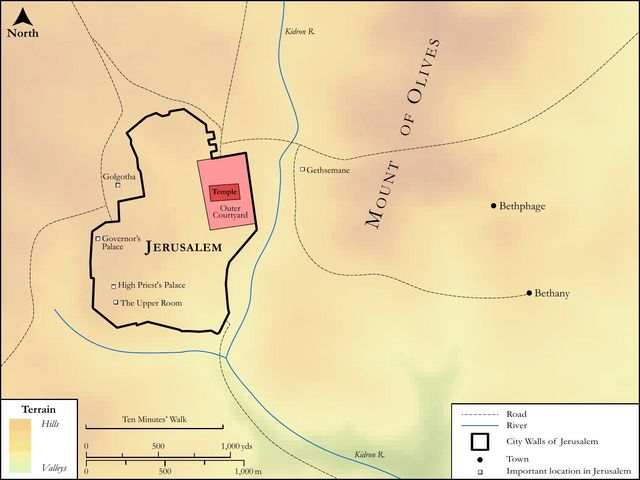
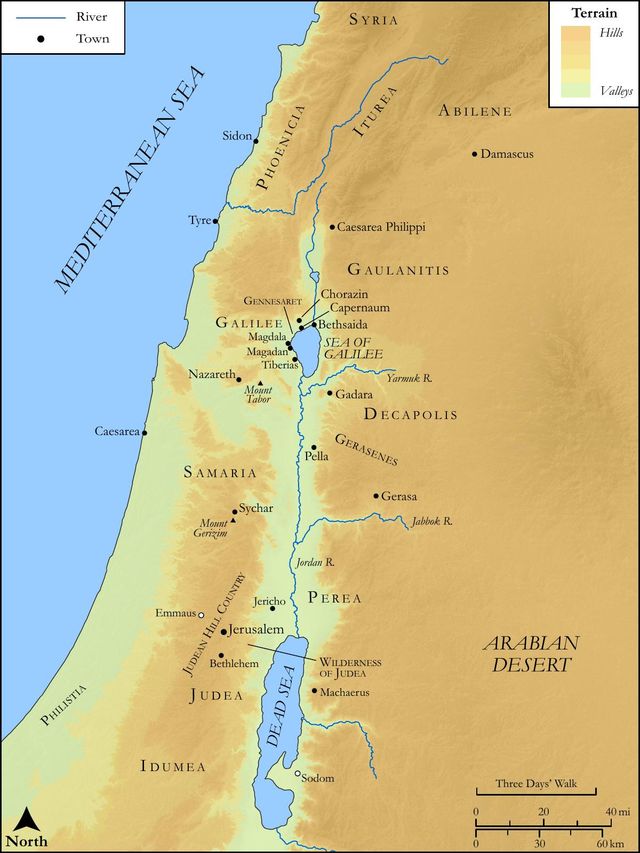
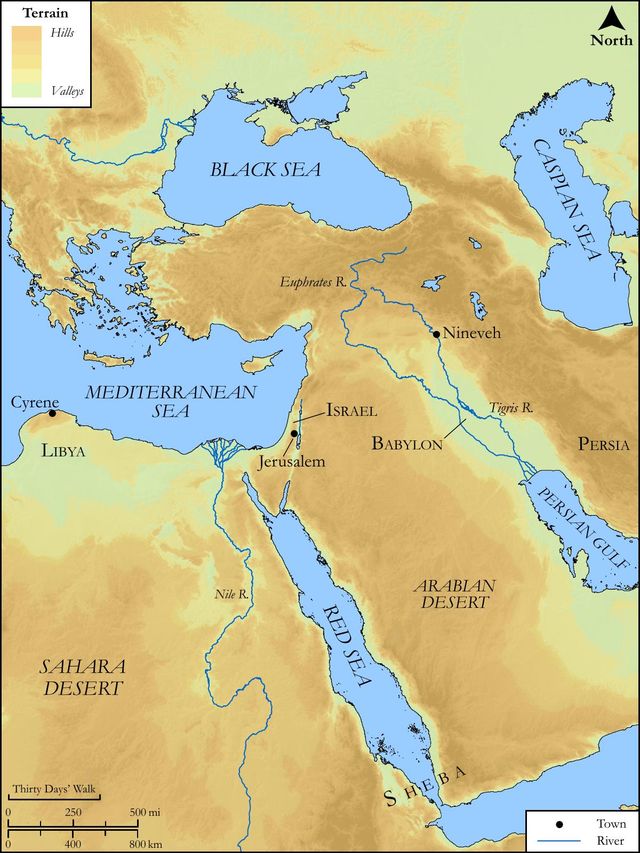
Study this verse
Public-domain commentary
Matthew Henry
From his Commentary on the Whole Bible. Henry comments on passages, not single verses — this entry covers Matthew 6:5–8. His four-level outline is real structure in the source text, so it is rendered as structure.
In prayer we have more immediately to do with God than in giving alms, and therefore are yet more concerned to be sincere, which is what we are here directed to. When thou prayest (Mat 6:5). It is taken for granted that all the disciples of Christ pray. As soon as ever Paul was converted, behold he prayeth. You may as soon find a living man that does not breathe, as a living Christian that does not pray. For this shall every one that is godly pray. If prayerless, then graceless. "Now, when thou prayest, thou shalt not be as the hypocrites are, nor do as they do," Mat 6:2. Note, Those who would not do as the hypocrites do in their ways and actions must not be as the hypocrites are in their frame and temper. He names nobody, but it appears by Mat 23:13, that by the hypocrites here he means especially the scribes and Pharisees.
Now there were two great faults they were guilty of in prayer, against each of which we are here cautioned - vain-glory (Mat 6:5, Mat 6:6); and vain repetitions, Mat 6:7, Mat 6:8.
I.We must not be proud and vain-glorious in prayer, nor aim at the praise of men. And here observe,
1.What was the way and practice of the hypocrites. In all their exercises of devotion, it was plain, the chief thing they aimed at was to be commended by their neighbours, and thereby to make an interest for themselves. When they seemed to soar upwards in prayer (and if it be right, it is the soul's ascent toward God), yet even then their eye was downwards upon this as their prey. Observe,
(1.)What the places were which they chose for their devotions; they prayed in the synagogues, which were indeed proper places for public prayer, but not for personal. They pretended hereby to do honour to the place of their assemblies, but intended to do honour to themselves. They prayed in the corners of the streets, the broad streets (so the word signifies), which were most frequented. They withdrew thither, as if they were under a pious impulse which would not admit delay, but really it was to cause themselves to be taken notice of. There, where two streets met, they were not only within view of both, but every passenger turning close upon them would observe them, and hear what they said.
(2.)The posture they used in prayer; they prayed standing; this is a lawful and proper posture for prayer (Mar 11:25, When ye stand praying), but kneeling being the more humble and reverent gesture, Luk 22:41; Act 7:60; Eph 3:14, their standing seemed to savour of pride and confidence in themselves (Luk 18:11), The Pharisee stood and prayed.
(3.)Their pride in choosing these public places, which is expressed in two things:
[1.]They love to pray there. They did not love prayer for its own sake, but they loved it when it gave them an opportunity of making themselves noticed. Circumstances may be such, that our good deeds must needs be done openly, so as to fall under the observation of others, and be commended by them; but the sin and danger is when we love it, and are pleased with it, because it feeds the proud humour.
[2.]It is that they may be seen of men; not that God might accept them, but that men might admire and applaud them; and that they might easily get the estates of widows and orphans into their hands (who would not trust such devout, praying men?) and that, when they had them, they might devour them without being suspected (Mat 23:14); and effectually carry on their public designs to enslave the people.
(4.)The product of all this, they have their reward; they have all the recompence they must ever expect from God for their service, and a poor recompence it is. What will it avail us to have the good word of our fellow-servants, if our Master do not say, Well done? But if in so great a transaction as is between us and God, when we are at prayer, we can take in so poor a consideration as the praise of men is, it is just that that should be all our reward. They did it to be seen of men, and they are so; and much good may it do them. Note, Those that would approve themselves to God by their integrity in their religion, must have to regard to the praise of men; it is not to men that we pray, nor from them that we expect an answer; they are not to be our judges, they are dust and ashes like ourselves, and therefore we must not have our eye to them: what passes between God and our own souls must be out of sight. In our synagogue-worship, we must avoid every thing that tends to make our personal devotion remarkable, as they that caused their voice to be heard on high, Isa 58:4. Public places are not proper for private solemn prayer.
2.What is the will of Jesus Christ in opposition to this. Humility and sincerity are the two great lessons that Christ teaches us; Thou, when thou prayest, do so and so (Mat 6:6); thou in particular by thyself, and for thyself. Personal prayer is here supposed to be the duty and practice of all Christ's disciples.
Observe, (1.) The directions here given about it.
[1.]Instead of praying in the synagogues and in the corners of the streets, enter into thy closet, into some place of privacy and retirement. Isaac went into the field (Gen 24:63), Christ to a mountain, Peter to a housetop. No place amiss in point of ceremony, if it do but answer the end. Note, Secret prayer is to be performed in retirement, that we may be unobserved, and so may avoid ostentation; undisturbed, and so may avoid distraction; unheard, and so may use greater freedom; yet if the circumstances be such that we cannot possibly avoid being taken notice of, we must not therefore neglect the duty, lest the omission be a greater scandal than the observation of it.
[2.]Instead of doing it to be seen of men, pray to thy Father who is in secret; to me, even to me, Zac 7:5, Zac 7:6. The Pharisees prayed rather to men than to God; whatever was the form of their prayer, the scope of it was to beg the applause of men, and court their favours. "Well, do thou pray to God, and let that be enough for thee. Pray to him as a Father, as thy Father, ready to hear and answer, graciously inclined to pity, help, and succour thee. Pray to thy Father who is in secret." Note, In secret prayer we must have an eye to God, as present in all places; he is there in thy closet when no one else is there; there especially nigh to thee in what thou callest upon him for. By secret prayer we give God the glory of his universal presence (Act 17:24), and may take to ourselves the comfort of it.
(2.)The encouragements here given us to it.
[1.]Thy Father seeth in secret; his eye is upon thee to accept thee, when the eye of no man is upon thee to applaud thee; under the fig-tree, I saw thee, said Christ to Nathaniel, Joh 1:48. He saw Paul at prayer in such a street, at such a house, Act 9:11. There is not a secret, sudden breathing after God, but he observes it.
[2.]He will reward thee openly; they have their reward that do it openly, and thou shalt not lose thine for thy doing it in secret. It is called a reward, but it is of grace, not of debt; what merit can there be in begging? The reward will be open; they shall not only have it, but have it honourably: the open reward is that which hypocrites are fond of, but they have not patience to stay for it; it is that which the sincere are dead to, and they shall have it over and above. Sometimes secret prayers are rewarded openly in this world by signal answers to them, which manifests God's praying people in the consciences of their adversaries; however, at the great day there will be an open reward, when all praying people shall appear in glory with the great Intercessor. The Pharisees ha their reward before all the town, and it was a mere flash and shadow; true Christians shall have theirs before all the world, angels and men, and it shall be a weight of glory.
II.We must not use vain repetitions in prayer, Mat 6:7, Mat 6:8.
Though the life of prayer lies in lifting up the soul and pouring out the heart, yet there is some interest which words have in prayer, especially in joint prayer; for in that, words are necessary, and it should seem that our Saviour speaks here especially of that; for before he said, when thou prayest, he here, when ye pray; and the Lord's prayer which follows is a joint prayer, and in that, he that is the mouth of others is most tempted to an ostentation of language and expression, against which we are here warned; use not vain repetitions, either alone or with others: the Pharisees affected this, they made long prayers (Mat 23:14), all their care was to make them long. Now observe,
1.What the fault is that is here reproved and condemned; it is making a mere lip-labour of the duty of prayer, the service of the tongue, when it is not the service of the soul. This is expressed here by two words, Battologia, polulogia.
(1.)Vain repetitions - tautology, battology, idle babbling over the same words again and again to no purpose, like Battus, Sub illis montibus erant, erant sub montibus illis; like that imitation of the wordiness of a fool, Ecc 10:14, A man cannot tell what shall be; and what shall be after him who can tell? which is indecent and nauseous in any discourse, much more in speaking to God. It is not all repetition in prayer that is here condemned, but vain repetitions. Christ himself prayed, saying the same words (Mat 26:44), out of more than ordinary fervour and zeal, Luk 22:44. So Daniel, Dan 9:18, Dan 9:19. And there is a very elegant repetition of the same words, Ps. 136. It may be of use both to express our own affections, and to excite the affections of others. But the superstitious rehearsing of a tale of words, without regard to the sense of them, as the papists saying by their beads so many Ave-Marys and Paternosters; or the barren and dry going over of the same things again and again, merely to drill out the prayer to such a length, and to make a show of affection when really there is none; these are the vain repetitions here condemned. When we would fain say much, but cannot say much to the purpose; this is displeasing to God and all wise men.
(2.)Much speaking, an affectation of prolixity in prayer, either out of pride or superstition, or an opinion that God needs either to be informed or argued with by us, or out of mere folly and impertinence, because men love to hear themselves talk. Not that all long prayers are forbidden; Christ prayed all night, Luk 6:12. Solomon's was a long prayer. There is sometimes need of long prayers when our errands and our affections are extraordinary; but merely to prolong the prayer, as if it would make it more pleasing or more prevailing with God, is that which is here condemned; it is not much praying that is condemned; no, we are bid to pray always, but much speaking; the danger of this error is when we only say our prayers, and not when we pray them. This caution is explained by that of Solomon (Ecc 5:2), Let thy words be few, considerate and well weighed; take with you words (Hos 14:2), choose out words (Job 9:14), and do not say every thing that comes uppermost.
2.What reasons are given against this.
(1.)This is the way of the heathen, as the heathen do; and it ill becomes Christians to worship their God as the Gentiles worship theirs. The heathen were taught by the light of nature to worship God; but becoming vain in their imaginations concerning the object of their worship, no wonder they became so concerning the manner of it, and particularly in this instance; thinking God altogether such a one as themselves, they thought he needed many words to make him understand what was said to him, or to bring him to comply with their requests; as if he were weak and ignorant, and hard to be entreated. Thus Baal's priests were hard at it from morning till almost night with their vain repetitions; O Baal, hear us; O Baal, hear us; and vain petitions they were; but Elijah, in a grave, composed frame, with a very concise prayer, prevailed for fire from heaven first, and then water, Kg1 18:26, Kg1 18:36. Lip-labour in prayer, though ever so well laboured, if that be all, is but lost labour.
(2.)"It need not be your way, for your Father in heaven knoweth what things ye have need of before ye ask him, and therefore there is no occasion for such abundance of words. It does not follow that therefore ye need not pray; for God requires you by prayer to own your need of him and dependence on him, and to please his promises; but therefore you are to open your case, and pour out your hearts before him, and then leave it with him." Consider,
[1.]The God we pray to is our Father by creation, by covenant; and therefore our addresses to him should be easy, natural, and unaffected; children do not use to make long speeches to their parents when they want any thing; it is enough to say, my head, my head. Let us come to him with the disposition of children, with love, reverence, and dependence; and then they need not say many words, that are taught by the Spirit of adoption to say that one aright, Abba, Father.
[2.]He is a Father that knows our case and knows our wants better than we do ourselves. He knows what things we have need of; his eyes run to and fro through the earth, to observe the necessities of his people (Ch2 16:9), and he often gives before we call (Isa 65:24), and more than we ask for (Eph 3:20), and if he do not give his people what they ask, it is because he knows they do not need it, and that it is not for their good; and of that he is fitter to judge for us than we for ourselves. We need not be long, nor use many words in representing our case; God knows it better than we can tell him, only he will know it from us (what will ye that I should do unto you?); and when we have told him what it is, we must refer ourselves to him, Lord, all my desire is before thee, Psa 38:9. So far is God from being wrought upon by the length or language of our prayers, that the most powerful intercessions are those which are made with groanings that cannot be uttered, Rom 8:26. We are not to prescribe, but subscribe to God.
Historical interpretation
Twelve Centuries of Reception
14 surviving comments on this verse. Each one is dated, so this reads as a timeline rather than a list.
Select a marker to jump to its quote. Markers stagger vertically where authors wrote within a few decades of each other.
But let not your fasts be with the hypocrites; for they fast on the second and fifth day of the week; but do ye fast on the fourth day and the Preparation (Friday). Neither pray as the hypocrites; but as the Lord commanded in His Gospel, thus pray: Our Father who art in heaven, hallowed be Thy name. Thy kingdom come. Thy will be done, as in heaven, so on earth. Give us to-day our daily (needful) bread, and forgive us our debt as we also forgive our debtors. And bring us not into temptation, but deliver us from the evil one (or, evil); for Thine is the power and the glory for ever. Thrice in the day thus pray.
Since, however, the Lord, the Foreseer of human necessities, said separately, after delivering His Rule of Prayer, "Ask, and ye shall receive; " and since there are petitions which are made according to the circumstances of each individual; our additional wants have the right-after beginning with the legitimate and customary prayers as a foundation, as it were-of rearing an outer superstructure of petitions, yet with remembrance of the Master's precepts.
For this reason we are enjoined to ask what is sufficient for the preservation of the substance of the body: not luxury, but food, which restores what the body loses, and prevents death by hunger; not tables to inflame and drive on to pleasures, nor such things as make the body wax wanton against the soul; but bread, and that, too, not for a great number of years, but what is sufficient for us to-day.
He said not 'shall freely give thee,' but, shall reward thee; thus He constitutes Himself your debtor.
Hereby He dissuades from empty speaking in prayer; as, for example, when we ask of God things improper, as dominions, fame, overcoming of our enemies, or abundance of wealth. He commands then that our prayers should not be long; long, that is, not in time, but in multitude of words. For it is right that those who ask should persevere in their asking; being instant in prayer, as the Apostle instructs; but does not thereby enjoin us to compose a prayer of ten thousand verses, and speak it all; which He secretly hints at, when He says, Do not ye use many words.
You do not then pray in order to teach God your wants, but to move Him, that you may become His friend by the importunity of your applications to Him, that you may be humbled, that you may be reminded of your sins.
Then He speaks even the very words of the prayer.
"When ye pray," saith He, "use no vain repetitions, even as the heathen do."
You see that when He was discoursing of almsgiving, He removed only that mischief which comes of vainglory, and added nothing more; neither did He say whence one should give alms; as from honest labor, and not from rapine nor covetousness: this being abundantly acknowledged among all. And also before that, He had thoroughly cleared up this point, when He blessed them "that hunger after righteousness."
But touching prayer, He adds somewhat over and above; "not to use vain repetitions." And as there He derides the hypocrites, so here the heathen; shaming the hearer everywhere most of all by the vileness of the persons. For since this, in most cases, is especially biting and stinging, I mean our appearing to be likened to outcast persons; by this topic He dissuades them; calling frivolousness, here, by the name of "vain repetition:" as when we ask of God things unsuitable, kingdoms, and glory, and to get the better of enemies, and abundance of wealth, and in general what does not at all concern us.
"For He knoweth," saith He, "what things ye have need of."
And herewith He seems to me to command in this place, that neither should we make our prayers long; long, I mean, not in time, but in the number and length of the things mentioned. For perseverance indeed in the same requests is our duty: His word being, "continuing instant in prayer."
And He Himself too, by that example of the widow, who prevailed with the pitiless and cruel ruler, by the continuance of her intercession; and by that of the friend, who came late at night time, and roused the sleeper from his bed, not for his friendship's, but for his importunity's sake; what did He, but lay down a law, that all should continually make supplication unto Him? He doth not however bid us compose a prayer of ten thousand clauses, and so come to Him and merely repeat it. For this He obscurely signified when He said, "They think that they shall be heard for their much speaking."
"For He knoweth," saith He, "what things ye have need of." And if He know, one may say, what we have need of, wherefore must we pray? Not to instruct Him, but to prevail with Him; to be made intimate with Him, by continuance in supplication; to be humbled; to be reminded of thy sins.
On this there starts up a heresy of certain Philosophers who taught the mistaken dogma, that If God knows for what we shall pray, and, before we ask, knows what we need, our prayer is needlessly made to one who has such knowledge. (Epicureans.) To such we shortly reply, That in our prayers we do not instruct, but entreat; it is one thing to inform the ignorant, another to beg of the understanding: the first were to teach; the latter is to perform a service of duty.
(V. 8.) For your Father knows what you need before you ask him. So you will pray like this. In this place, a certain heresy arises, as well as a perverse doctrine of philosophers, who say: If God knows what we pray for, and before we ask, he knows what we need, then we speak in vain to the one who knows. To these it must be briefly answered, we are not storytellers, but askers. For it is one thing to tell the ignorant, another to ask the one who knows. In that, there is evidence; here, there is obedience. There, we faithfully indicate; here, we miserably beseech.
(ubi sup.) As the hypocrites use to set themselves so as to be seen in their prayers, whose reward is to be acceptable to men; so the Ethnici (that is, the Gentiles) use to think that they shall be heard for their much speaking; therefore He adds, When ye pray, do not ye use many words.
(Epist. 130, 10.) Yet to continue long in prayer is not, as some think, what is here meant, by using many words. For much speaking is one thing, and an enduring fervency another. For of the Lord Himself it is written, that He continued a whole night in prayer, and prayed at great length, setting an example to us. The brethren in Egypt are said to use frequent prayers, but those very short, and as it were hasty ejaculations, lest that fervency of spirit, which is most behoveful for us in prayer, should by longer continuance be violently broken off. Herein themselves sufficiently show, that this fervency of spirit, as it is not to be forced if it cannot last, so if it has lasted is not to be violently broken off. Let prayer then be without much speaking, but not without much entreaty, if this fervent spirit can be supported; for much speaking in prayer is to use in a necessary matter more words than necessary. But to entreat much, is to importune with enduring warmth of heart Him to whom our entreaty is made; for often is this business effected more by groans than words, by weeping more than speech.
(ubi sup.) And truly all superfluity of discourse has come from the Gentiles, who labour rather to practise their tongues than to cleanse their hearts, and introduce this art of rhetoric into that wherein they need to persuade God.
(ubi sup.) For we use many words then when we have to instruct one who is in ignorance, what need of them to Him who is Creator of all things; Your heavenly Father knoweth what ye have need of before you ask Him.
(ubi sup.) Nor ought we to use words in seeking to obtain of God what we would, but to seek with intense and fervent application of mind, with pure love, and suppliant spirit.
(Epist. 130, 9.) But even with words we ought at certain periods to make prayer to God, that by these signs of things we may keep ourselves in mind, and may know what progress we have made in such desire, and may stir up ourselves more actively to increase this desire, that after it have begun to wax warm, it may not be chilled and utterly frozen up by divers cares, without our continual care to keep it alive. Words therefore are needful for us that we should be moved by them, that we should understand clearly what it is we ask, not that we should think that by them the Lord is either instructed or persuaded.
(Serm. in Mont. ii. 3.) Still it may be asked, what is the use of prayer at all, whether made in words or in meditation of things, if God knows already what is necessary for us. The mental posture of prayer calms and purifies the soul, and makes it of more capacity to receive the divine gifts which are poured into it. For God does not hear us for the prevailing force of our pleadings; He is at all times ready to give us His light, but we are not ready to receive it, but prone to other things. There is then in prayer a turning of the body to God, and a purging of the inward eye, whilst those worldly things which we desired are shut out, that the eye of the mind made single might be able to bear the single light, and in it abide with that joy with which a happy life is perfected.
(Collat. ix. 36.) We should indeed pray often, but in short form, lest if we be long in our prayers, the enemy that lies in wait for us, might suggest something for our thoughts.
Some brothers asked Macarius, ‘How should we pray?’ He said, ‘There is no need to talk much in prayer. Reach out your hands often, and say, “Lord have mercy on me, as you will and as you know.” But if conflict troubles you, say, “Lord, help me.” He knows what is best for us, and has mercy.’
And it should be noted what He says to the blind man as he approaches: "What do you want Me to do for you?" Did He who was able to restore light not know what the blind man wanted? But He wishes to be asked for that which He foreknows both that we will ask and that He will grant. For He urges us persistently to prayer, and yet says: "For your heavenly Father knows what you need before you ask Him." Therefore He requires to be asked for this reason: He requires it in order to arouse the heart to prayer.
(Mor. xxxiii. 23.) True prayer consists rather in the bitter groans of repentance, than in the repetition of set forms of words.
It is not to inform God of anything that we make our petitions, but instead, that we may detach ourselves from the cares of life and receive benefit by conversing with God.
(ord.) What He condemns is many words in praying that come of want of faith; as the Gentiles do. For a multitude of words were needful for the Gentiles, seeing the dæmons could not know for what they petitioned, until instructed by them; they think they shall be heard for their much speaking.
Continue studying Matthew 6:8 across the web’s major study libraries — every link below opens this exact verse, chapter, or book on the destination site.
Read & Compare
 BibleGatewayThis verse in more than 200 translations and 70 languages.
 Bible.comThe YouVersion reader — hundreds of translations, reading plans, and highlights.
 ESV.orgCrossway's official English Standard Version reader.
 NET BibleThe NET translation with 60,000+ translators' notes on every rendering decision.
 STEP BibleTyndale House's free study tool — original text, vocabulary, and scholarly resources.
 BibliaLogos Bible Software's free web reader.
 USCCBThe New American Bible (Revised Edition) with the U.S. bishops' study notes.
Commentaries
 BibleHub CommentariesDozens of classic commentaries on this verse, gathered on one page.
 StudyLightMore than 100 commentary sets — the largest collection on the web.
 BibleRefPlain-English commentary on what this verse means, verse by verse.
 Enduring WordDavid Guzik's free commentary on this chapter, widely used by Bible teachers.
 Bible Study ToolsVerse commentary alongside Greek and Hebrew study aids.
Original Language & Research
- BibleHub InterlinearThe verse word by word — original language, transliteration, and English.
- BibleHub LexiconEvery word's original-language definition and Strong's entry.
 Blue Letter BibleDeep-study tools — Strong's numbers, concordance, and word studies.
 CNTR CollationThe earliest Greek manuscripts of this verse, collated letter by letter.
Sermons, Hymns & Audio


TrulyRandomVerse is not affiliated with these sites and doesn’t control their content. They’re linked because they’re genuinely useful.
Summary
Matthew 6:8, a pivotal verse within Jesus' Sermon on the Mount, offers profound insight into the nature of true prayer and God's intimate character. It directly follows Jesus' warnings against hypocritical and verbose prayer, asserting that our Heavenly Father, in His divine omniscience and paternal care, already knows our needs even before we articulate them. This truth fundamentally redefines prayer, shifting its purpose from informing or persuading God to fostering a relationship of trust, dependence, and heartfelt communion.
Context
ShowHideLiterary Context
This verse is strategically placed within Jesus' extensive teaching on righteousness in the Sermon on the Mount, specifically within the section addressing private spiritual disciplines in Matthew 6. Immediately preceding it, Jesus critiques two flawed approaches to prayer: the public display of the hypocrites seeking human applause (Matthew 6:5) and the "vain repetitions" of the Gentiles who believe their many words will make them heard (Matthew 6:7). The command "Be not ye therefore like unto them" serves as a direct prohibition against these practices, setting the stage for the profound theological truth that follows: God's pre-knowledge of our needs. This verse acts as the foundational premise for the model prayer, commonly known as the Lord's Prayer, which Jesus provides immediately afterward, demonstrating how to pray authentically in light of this truth.
Historical & Cultural Context
In first-century Jewish society, prayer was a central part of religious life, often performed publicly and with specific formulas. The Pharisees, for example, were known for their elaborate public prayers. Concurrently, the Greco-Roman world, with its polytheistic beliefs, often viewed prayer as a means to appease or manipulate deities through elaborate rituals, sacrifices, and repetitive incantations. People believed that the gods needed to be informed of human desires or persuaded to act. Jesus' teaching in Matthew 6:8 directly challenges both the performative piety of some Jewish leaders and the superstitious, transactional view of prayer prevalent among the Gentiles. By emphasizing God's inherent knowledge and His identity as "Father," Jesus introduces a revolutionary understanding of prayer as an intimate, relational dialogue rather than a formal, informative ritual.
Key Themes
ShowHideMatthew 6:8 powerfully contributes to several overarching themes in Jesus' teaching and the broader book of Matthew. First, it underscores Divine Omniscience and Providence, highlighting God's complete and perfect knowledge of all things, including the deepest needs and desires of His children. This truth offers immense comfort and security, as seen in passages like Luke 12:30, where Jesus assures His disciples that their Heavenly Father knows their needs for food and clothing. Second, it promotes Authenticity and Sincerity in Prayer, contrasting genuine communion with God against outward display or mechanical repetition. Since God already knows, the purpose of prayer shifts from informing Him to expressing trust, dependence, and aligning one's will with His. This aligns with the call for inner righteousness found throughout the Sermon on the Mount. Finally, it profoundly emphasizes God's Paternal Character, portraying Him not as a distant, demanding deity but as a loving, caring Father who intimately understands and anticipates the needs of His children, echoing the relational emphasis found in Matthew 7:9-11.
Exposition and Analysis
ShowHideKey Word Analysis
ShowHideThis particle of qualified negation is crucial here. Unlike ou, which expresses an absolute denial, mḗ conveys a prohibition or a warning against a certain action or state. In this context, it reinforces the imperative "Be not ye therefore like unto them," indicating that disciples are to actively choose a different, non-hypocritical and non-repetitive approach to prayer, understanding that their Father's nature makes such prayer unnecessary and inappropriate.
This verb signifies an intuitive, inherent, and complete knowledge, rather than knowledge gained through observation or learning. It implies a deep, experiential awareness on God's part. God's knowledge of our needs is not acquired; it is intrinsic to His being. This underscores His omniscience and His intimate understanding of His creation, particularly His children.
This verb means "to ask" in a general sense, encompassing begging, craving, desiring, or requiring. It refers to the act of making a request or petition. The contrast here is significant: God knows our needs before we even articulate them through this act of asking, highlighting that prayer is not about informing God but about expressing our dependence and aligning our hearts with His will.
Verse Breakdown
ShowHide"Be not ye therefore like unto them:"
This is a direct imperative and prohibition. "Them" refers to the hypocrites who pray to be seen by others (Matthew 6:5) and the Gentiles who use "vain repetitions" (Matthew 6:7). Jesus commands His disciples to adopt a fundamentally different approach to prayer, one rooted in authenticity and a proper understanding of God's character, rather than human performance or superstitious ritual.
"for your Father knoweth what things ye have need of,"
This clause provides the theological rationale for the preceding command. The conjunction "for" (Greek, gár) introduces the reason. The core truth is God's inherent knowledge ("knoweth") of our needs. The term "your Father" emphasizes the intimate, personal, and benevolent relationship God has with His children, contrasting with the distant deities of paganism or the impersonal God perceived by some religious practitioners. This knowledge is not partial or acquired but complete and intuitive.
"before ye ask him."
This final phrase underscores the depth and completeness of God's knowledge. It highlights the pre-emptive nature of His understanding. He does not need to be informed of our needs, nor does He need to be persuaded by the quantity or eloquence of our words. This truth liberates believers from the burden of trying to "convince" God and instead invites them into a relationship of trust where prayer becomes an expression of dependence and communion, rather than an informational exchange.
Literary Devices
ShowHideThe verse employs several significant literary devices. Apostrophe is used in the direct address "Be not ye therefore like unto them," speaking directly to the disciples. Contrast is central, as Jesus sharply differentiates the prayer practices of His followers from those of the hypocrites and Gentiles, setting up a clear dichotomy between authentic and inauthentic prayer. The phrase "your Father knoweth" serves as a powerful metaphor for God's intimate, caring, and all-knowing nature, likening Him to a loving human father who anticipates his children's needs. This personification of God as a knowing and caring parent is foundational to Jesus' teaching on prayer. Furthermore, the verse uses rhetorical argumentation, where the command ("Be not ye therefore like unto them") is immediately followed by a logical "for" clause that provides the compelling reason for the command, demonstrating the theological basis for proper prayer.
Theological and Thematic Connections
ShowHideMatthew 6:8 profoundly shapes our understanding of prayer, moving it from a transactional act to a relational encounter. The core theological truth is God's perfect omniscience and His benevolent, paternal nature. Because God already knows our needs, prayer is not about informing Him, but about aligning our hearts with His will, expressing our dependence, and deepening our communion with Him. This truth liberates believers from anxiety about "getting prayer right" or using specific formulas, fostering instead a spirit of humble trust and sincere conversation with a Father who deeply cares. It emphasizes that the efficacy of prayer does not lie in the eloquence or quantity of words, but in the heart's posture of faith towards an all-knowing and loving God.
Reflection and Application
ShowHideMatthew 6:8 offers immense freedom and comfort to the believer. It dismantles the performance-based mindset often associated with prayer, reminding us that God is not impressed by our eloquence or the length of our petitions. Instead, He desires a genuine, open-hearted relationship. Knowing that our Heavenly Father already comprehends our deepest needs—even those unspoken or unrecognized by ourselves—should cultivate a profound sense of peace and trust. This truth encourages us to approach God with authenticity, laying bare our hearts without fear of judgment or the need to impress. Our prayers become less about "asking for things" and more about acknowledging God's sovereignty, expressing gratitude, confessing our reliance, and seeking His will. This understanding transforms prayer from a duty into a delightful communion with the One who knows us intimately and cares for us infinitely.
Questions for Reflection
ShowHideFAQ
ShowHideDoes this verse mean we don't need to pray if God already knows everything?
ShowHideNo, this verse does not negate the need for prayer; rather, it redefines its purpose. The point is not that God needs to be informed, but that prayer is primarily about relationship and dependence. By praying, we express our trust in God, align our will with His, and participate in His work in the world. Prayer is an act of communion, not merely a request for information. Jesus immediately follows this verse with the Lord's Prayer, demonstrating that prayer is essential, but its foundation is God's knowledge, not our persuasion. It's about acknowledging our reliance on Him and engaging in a loving dialogue with our Heavenly Father.
Christ-Centered Fulfillment
ShowHideMatthew 6:8 finds its ultimate Christ-centered fulfillment in the person and work of Jesus, who perfectly embodies the intimate relationship with the Father that this verse describes and invites us into. As the Son, Jesus always knew the Father's will and operated in perfect communion with Him, demonstrating a life of prayer not as a means to inform God, but as an expression of absolute dependence and unity, as seen in His prayers in John 17. Furthermore, it is through Christ that we gain access to this very Father. Jesus teaches us to call God "Father" (Matthew 6:9), a privilege made possible by His atoning sacrifice, which reconciles us to God (Romans 5:10-11). The Holy Spirit, the Spirit of adoption, cries out "Abba, Father!" within us (Romans 8:15), confirming our new identity as children of God, whose needs are intimately known and cared for by our Heavenly Father. Thus, the knowledge God has of our needs is not a cold, distant omniscience, but the warm, paternal care of a Father who has brought us into His family through His Son, Jesus Christ, the one through whom all of God's promises are "Yes" and "Amen" (2 Corinthians 1:20).