


Matthew 6:32
- πάνταpantaAllG3956A-APNAdjective Accusative Plural Neuter
- γὰρgarforG1063CONJConjunction
- ταῦταtautathese thingsG3778D-APNDemonstrative pronoun Accusative Plural Neuter
- τὰtatheG3588T-NPNDefinite article Nominative Plural Neuter
- ἔθνηethnēGentilesG1484N-NPNNoun Nominative Plural Neuter
- ἐπιζητοῦσιν·epizētousinseek afterG1934V-PAI-3PVerb Present Active Indicative 3rd Plural
- οἶδενoidenknowsG1492V-RAI-3SVerb Perfect Active Indicative 3rd Singular
- γὰρgarforG1063CONJConjunction
- ὁhotheG3588T-NSMDefinite article Nominative Singular Masculine
- πατὴρpatērFatherG3962N-NSM-TNoun Nominative Singular Masculine Title
- ὑμῶνhumōnof youG4771P-2GPPersonal pronoun Genitive 2nd Plural
- ὁho<the>G3588T-NSMDefinite article Nominative Singular Masculine
- οὐράνιοςouraniosHeavenlyG3770A-NSMAdjective Nominative Singular Masculine
- ὅτιhotithatG3754CONJConjunction
- χρῄζετεchrēzeteyou needG5535V-PAI-2PVerb Present Active Indicative 2nd Plural
- τούτωνtoutōnof themG3778D-GPNDemonstrative pronoun Genitive Plural Neuter
- ἁπάντωνhapantōnallG537A-GPNAdjective Genitive Plural Neuter
English is a literal word-by-word gloss of the Greek, not the KJV's wording. Why?
This is the original text the KJV's translators worked from — each Greek word with its own literal English meaning in this verse, prepared by scholars at Tyndale House, Cambridge. The KJV translates whole sentences, not word by word, so its wording differs: one Greek word can become several English words, and the KJV may choose “charity” where the gloss reads “love”. Both are faithful — they answer different questions. For the KJV's own rendering, switch to the KJV text.
Details
See on the biblical-era maps

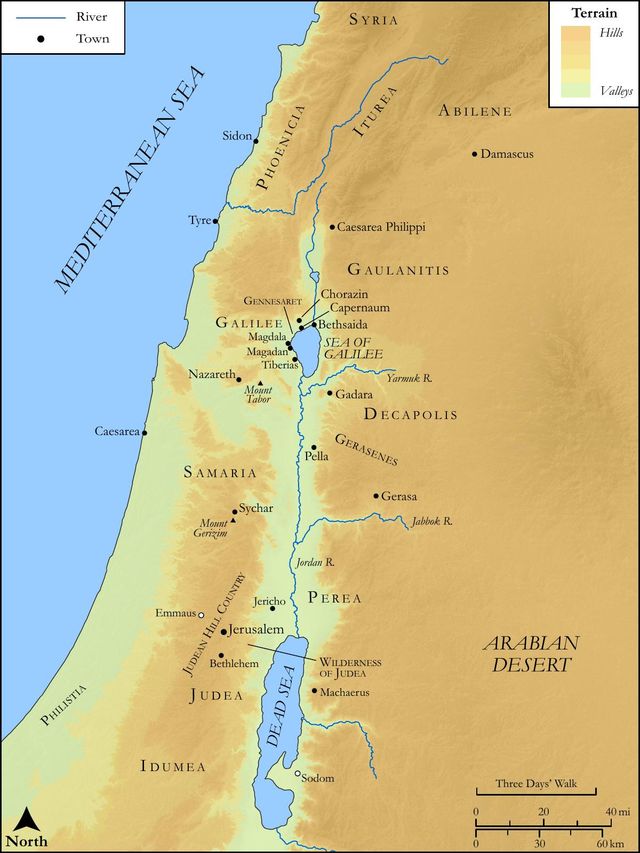
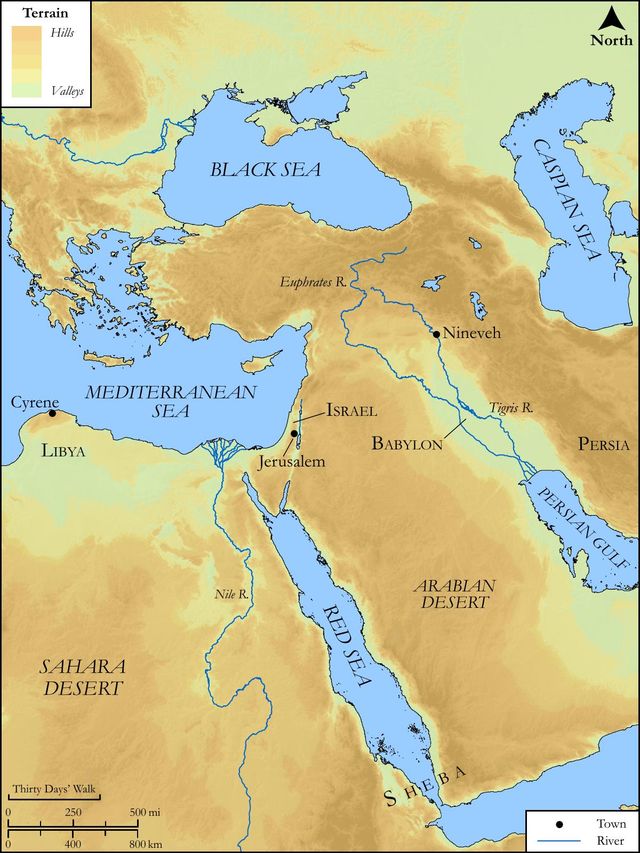
Study this verse
Public-domain commentary
Matthew Henry
From his Commentary on the Whole Bible. Henry comments on passages, not single verses — this entry covers Matthew 6:25–34. His four-level outline is real structure in the source text, so it is rendered as structure.
There is scarcely any one sin against which our Lord Jesus more largely and earnestly warns his disciples, or against which he arms them with more variety of arguments, than the sin of disquieting, distracting, distrustful cares about the things of life, which are a bad sign that both the treasure and the heart are on the earth; and therefore he thus largely insists upon it. Here is,
I.The prohibition laid down.
It is the counsel and command of the Lord Jesus, that we take no thought about the things of this world; I say unto you. He says it as our Lawgiver, and the Sovereign of our hearts; he says it as our Comforter, and the Helper of our joy. What is it that he says? It is this, and he that hath ears to hear, let him hear it. Take no thought for your life, nor yet for your body (Mat 6:25). Take no thought, saying, What shall we eat? (Mat 6:31) and again (Mat 6:34), Take no thought, mē merimnate - Be not in care. As against hypocrisy, so against worldly cares, the caution is thrice repeated, and yet no vain repetition: precept must be upon precept, and line upon line, to the same purport, and all little enough; it is a sin which doth so easily beset us. It intimates how pleasing it is to Christ, and of how much concern it is to ourselves, that we should live without carefulness. It is the repeated command of the Lord Jesus to his disciples, that they should not divide and pull in pieces their own minds with care about the world. There is a thought concerning the things of this life, which is not only lawful, but duty, such as is commended in the virtuous woman. See Pro 27:23. The word is used concerning Paul's care of the churches, and Timothy's care for the state of souls, Co2 11:28; Phi 2:20.
But the thought here forbidden is, 1. A disquieting, tormenting thought, which hurries the mind hither and thither, and hangs it in suspense; which disturbs our joy in God, and is a damp upon our hope in him; which breaks the sleep, and hinders our enjoyment of ourselves, of our friends, and of what God has given us. 2. A distrustful, unbelieving thought. God has promised to provide for those that are his all things needful for life as well as godliness, the life that now is, food and a covering: not dainties, but necessaries. He never said, "They shall be feasted," but, "Verily, they shall be fed." Now an inordinate care for time to come, and fear of wanting those supplies, spring from a disbelief of these promises, and of the wisdom and goodness of Divine Providence; and that is the evil of it. As to present sustenance, we may and must use lawful means to get it, else we tempt God; we must be diligent in our callings, and prudent in proportioning our expenses to what we have, and we must pray for daily bread; and if all other means fail, we may and must ask relief of those that are able to give it. He was none of the best of men that said, To beg I am ashamed (Luk 16:3); as he was, who (Luk 16:21) desired to be fed with the crumbs; but for the future, we must cast our care upon God, and take no thought, because it looks like a jealousy of God, who knows how to give what we want when we know not now to get it. Let our souls dwell at ease in him! This gracious carelessness is the same with that sleep which God gives to his beloved, in opposition to the worldling's toil, Psa 127:2. Observe the cautions here,
(1.)Take no thought for your life. Life is our greatest concern for this world; All that a man has will he give for his life; yet take no thought about it.
[1.]Not about the continuance of it; refer it to God to lengthen or shorten it as he pleases; my times are in thy hand, and they are in a good hand.
[2.]Not about the comforts of this life; refer it to God to embitter or sweeten it as he pleases. We must not be solicitous, no not about the necessary support of this life, food and raiment; these God has promised, and therefore we may more confidently expect; say not, What shall we eat? It is the language of one at a loss, and almost despairing; whereas, though many good people have the prospect of little, yet there are few but have present support.
(2.)Take no thought for the morrow, for the time to come. Be not solicitous for the future, how you shall live next year, or when you are old, or what you shall leave behind you. As we must not boast of tomorrow, so we must not care for tomorrow, or the events of it.
II.The reasons and arguments to enforce this prohibition.
One would think the command of Christ was enough to restrain us from this foolish sin of disquieting, distrustful care, independently of the comfort of our own souls, which is so nearly concerned; but to show how much the heart of Christ is upon it, and what pleasures he takes in those that hope in his mercy, the command is backed with the most powerful arguments. If reason may but rule us, surely we shall ease ourselves of these thorns. To free us from anxious thoughts, and to expel them, Christ here suggests to us comforting thoughts, that we may be filled with them. It will be worth while to take pains with our own hearts, to argue them out of their disquieting cares, and to make ourselves ashamed of them. They may be weakened by right reason, but it is by an active faith only that they can be overcome. Consider then,
1.Is not the life more than meat, and the body than raiment? Mat 6:25. Yes, no doubt it is; so he says who had reason to understand the true value of present things, for he made them, he supports them, and supports us by them; and the thing speaks for itself. Note,
(1.)Our life is a greater blessing than our livelihood. It is true, life cannot subsist without a livelihood; but the meat and raiment which are here represented as inferior to the life and body are such as are for ornament and delight; for about such as are for ornament ad delight; for about such we are apt to be solicitous. Meat and raiment are in order to life, and the end is more noble and excellent than the means. The daintiest food and finest raiment are from the earth, but life from the breath of God. Life is the light of men; meat is but the oil that feeds that light: so that the difference between rich and poor is very inconsiderable, since, in the greatest things, they stand on the same level, and differ only in the less.
(2.)This is an encouragement to us to trust God for food and raiment, and so to ease ourselves of all perplexing cares about them. God has given us life, and given us the body; it was an act of power, it was an act of favour, it was done without our care: what cannot he do for us, who did that? - what will he not? If we take care about our souls and eternity, which are more than the body, and its life, we may leave it to God to provide for us food and raiment, which are less. God has maintained our lives hitherto; if sometimes with pulse and water, that has answered the end; he has protected us and kept us alive. He that guards us against the evils we are exposed to, will supply us with the good things we are in need of. If he had been pleased to kill us, to starve us, he would not so often have given his angels a charge concerning us to keep us.
2.Behold the fowls of the air, and consider the lilies of the field. Here is an argument taken from God's common providence toward the inferior creatures, and their dependence, according to their capacities, upon that providence. A fine pass fallen man has come to, that he must be sent to school to the fowls of the air, and that they must teach him! Job 12:7, Job 12:8.
(1.)Look upon the fowls, and learn to trust God for food (Mat 6:26), and disquiet not yourselves with thoughts what you shall eat.
[1.]Observe the providence of God concerning them. Look upon them, and receive instruction. There are various sorts of fowls; they are numerous, some of them ravenous, but they are all fed, and fed with food convenient for them; it is rare that any of them perish for want of food, even in winter, and there goes no little to feed them all the year round. The fowls, as they are least serviceable to man, so they are least within his care; men often feed upon them, but seldom feed them; yet they are fed, we know not how, and some of them fed best in the hardest weather; and it is your heavenly Father that feeds them; he knows all the wild fowls of the mountains, better than you know the tame ones at your own barn-door, Psa 50:11. Not a sparrow lights to the ground, to pick up a grain of corn, but by the providence of God, which extends itself to the meanest creatures. But that which is especially observed here is, that they are fed without any care or project of their own; they sow not, neither do they reap, nor gather into barns. The ant indeed does, and the bee, and they are set before us as examples of prudence and industry; but the fowls of the air do not; they make no provision for the future themselves, and yet every day, as duly as the day comes, provision is made for them, and their eyes wait on God, that great and good Housekeeper, who provides food for all flesh.
[2.]Improve this for your encouragement to trust in God. Are ye not much better than they? Yes, certainly you are. Note, The heirs of heaven are much better than the fowls of heaven; nobler and more excellent beings, and, by faith, they soar higher; they are of a better nature and nurture, wiser than the fowls of heaven (Job 35:11): though the children of this world, that know not the judgment of the Lord, are not so wise as the stork, and the crane, and the swallow (Jer 8:7), you are dearer to God, and nearer, though they fly in the open firmament of heaven. He is their Master and Lord, their Owner and Master; but besides all this, he is your Father, and in his account ye are of more value than many sparrows; you are his children, his first-born; now he that feeds his birds surely will not starve his babes. They trust your Father's providence, and will not you trust it? In dependence upon that, they are careless for the morrow; and being so, they live the merriest lives of all creatures; they sing among the branches (Psa 104:12), and, to the best of their power, they praise their Creator. If we were, by faith, as unconcerned about the morrow as they are, we should sing as cheerfully as they do; for it is worldly care that mars our mirth and damps our joy, and silences our praise, as much as any thing.
(2.)Look upon the lilies, and learn to trust God for raiment. That is another part of our care, what we shall put on; for decency, to cover us; for defence, to keep us warm; yea, and, with many, for dignity and ornament, to make them look great and fine; and so much concerned are they for gaiety and variety in their clothing, that this care returns almost as often as that for their daily bread. Now to ease us of this care, let us consider the lilies of the field; not only look upon them (every eyes does that with pleasure), but consider them. Note, There is a great deal of good to be learned from what we see every day, if we would but consider it, Pro 6:6; Pro 24:32.
[1.]Consider how frail the lilies are; they are the grass of the field. Lilies, though distinguished by their colours, are still but grass. Thus all flesh is grass: though some in the endowments of body and mind are as lilies, much admired, still they are grass; the grass of the field in nature and constitution; they stand upon the same level with others. Man's days, at best, are as grass, as the flower of the grass Pe1 1:24. This grass today is, and tomorrow is cast into the oven; in a little while the place that knows us will know us no more. The grave is the oven into which we shall be cast, and in which we shall be consumed as grass in the fire, Psa 49:14. This intimates a reason why we should not take thought for the morrow, what we shall put on, because perhaps, by tomorrow, we may have occasion for our grave-clothes.
[2.]Consider how free from care the lilies are: they toil not as men do, to earn clothing; as servants, to earn their liveries; neither do they spin, as women do, to make clothing. It does not follow that we must therefore neglect, or do carelessly, the proper business of this life; it is the praise of the virtuous woman, that she lays her hand to the spindle, makes fine linen and sells it, Pro 31:19, Pro 31:24. Idleness tempts God, instead of trusting him; but he that provides for inferior creatures, without their labour, will much more provide for us, by blessing our labour, which he has made our duty. And if we should, through sickness, be unable to toil and spin, God can furnish us with what is necessary for us.
[3.]Consider how fair, how fine the lilies are; how they grow; what they grow from. The root of the lily or tulip, as other bulbous roots, is, in winter, lost and buried under ground, yet, when spring returns, it appears, and starts up in a little time; hence it is promised to God's Israel, that they should grow as the lily, Hos 14:5. Consider what they grow to. Out of that obscurity in a few weeks they come to be so very gay, that even Solomon, in all his glory, was not arrayed like one of these. The array of Solomon was very splendid and magnificent: he that had the peculiar treasure of kings and provinces, and studiously affected pomp and gallantry, doubtless had the richest clothing, and the best made up, that could be got; especially when he appeared in his glory on high days. And yet, let him dress himself as fine as he could, he comes far short of the beauty of the lilies, and a bed of tulips outshines him. Let us, therefore, be ambitious of the wisdom of Solomon, in which he was outdone by none (wisdom to do our duty in our places), rather than the glory of Solomon, in which he was outdone by the lilies. Knowledge and grace are the perfection of man, not beauty, much less fine clothes. Now God is here said thus to clothe the grass of the field. Note, All the excellences of the creature flow from God, the Fountain and spring of them. It was he that gave the horse his strength, and the lily its beauty; every creature is in itself, as well as to us, what he makes it to be.
[4.]Consider how instructive all this is to us, Mat 6:30.
First, As to fine clothing, this teaches us not to care for it at all, not to covet it, nor to be proud of it, not to make the putting on of apparel our adorning, for after all our care in this the lilies will far outdo us; we cannot dress so fine as they do, why then should we attempt to vie with them? Their adorning will soon perish, and so will ours; they fade - are today, and tomorrow are cast, as other rubbish, into the oven; and the clothes we are proud of are wearing out, the gloss is soon gone, the color fades, the shape goes out of fashion, or in awhile the garment itself is worn out; such is man in all his pomp (Isa 40:6, Isa 40:7), especially rich men (Jam 1:10); they fade away in their ways.
Secondly, As to necessary clothing; this teaches us to cast the care of it upon God - Jehovah-jireh; trust him that clothes the lilies, to provide for you what you shall put on. If he give such fine clothes to the grass, much more will he give fitting clothes to his own children; clothes that shall be warm upon them, not only when he quieteth the earth with the south wind, but when he disquiets it with the north wind, Job 37:17. He shall much more clothe you: for you are nobler creatures, of a more excellent being; if so he clothe the short-lived grass, much more will he clothe you that are made for immortality. Even the children of Nineveh are preferred before the gourd (Jon 4:10, Jon 4:11), much more the sons of Zion, that are in covenant with God. Observe the title he gives them (Mat 6:30), O ye of little faith. This may be taken, 1. As an encouragement to truth faith, though it be but weak; it entitles us to the divine care, and a promise of suitable supply. Great faith shall be commended, and shall procure great things, but little faith shall not be rejected, even that shall procure food and raiment. Sound believers shall be provided for, though they be not strong believers. The babes in the family are fed and clothed, as well as those that are grown up, and with a special care and tenderness; say not, I am but a child, but a dry tree (Isa 56:3, Isa 56:5), for though poor and needy yet the Lord thinketh on thee. Or, 2. It is rather a rebuke to weak faith, though it be true, Mat 14:31. It intimates what is at the bottom of all our inordinate care and thoughtfulness; it is owing to the weakness of our faith, and the remains of unbelief in us. If we had but more faith, we should have less care.
3.Which of you, the wisest, the strongest of you, by taking thought, can add one cubit to his stature? (Mat 6:27) to his age, so some; but the measure of a cubit denotes it to be meant of the stature, and the age at longest is but a span, Psa 39:5. Let us consider,
(1.)We did not arrive at the stature we are of by our own care and thought, but by the providence of God. An infant of a span long has grown up to be a man of six feet, and how was one cubit after another added to his stature? not by his own forecast or contrivance; he grew he knew not how, by the power and goodness of God. Now he that made our bodies, and made them of such size, surely will take care to provide for them. Note, God is to be acknowledged in the increase of our bodily strength and stature, and to be trusted for all needful supplies, because he has made it to appear, that he is mindful for the body. The growing age is the thoughtless, careless age, yet we grow; and shall not he who reared us to this, provide for us now we are reared?
(2.)We cannot alter the stature we are of, if we would: what a foolish and ridiculous thing would it be for a man of low stature to perplex himself, to break his sleep, and beat his brains, about it, and to be continually taking thought how he might be a cubit higher; when, after all, he knows he cannot effect it, and therefore he had better be content and take it as it is! We are not all of a size, yet the difference in stature between one and another is not material, nor of any great account; a little man is ready to wish he were as tall as such a one, but he knows it is to no purpose, and therefore does as well as he can with it. Now as we do in reference to our bodily stature, so we should do in reference to our worldly estate.
[1.]We should not covet an abundance of the wealth of this world, any more than we would covet the addition of a cubit to one's stature, which is a great deal in a man's height; it is enough to grow by inches; such an addition would but make one unwieldy, and a burden to one's self.
[2.]We must reconcile ourselves to our state, as we do to our stature; we must set the conveniences against the inconveniences, and so make a virtue of necessity: what cannot be remedied must be made the best of. We cannot alter the disposals of Providence, and therefore must acquiesce in them, accommodate ourselves to them, and relieve ourselves, as well as we can, against inconveniences, as Zaccheus against the inconvenience of his stature, by climbing into the tree.
4.After all these things do the Gentiles seek, Mat 6:32. Thoughtfulness about the world is a heathenish sin, and unbecoming Christians. The Gentiles seek these things, because they know not better things; they are eager for this world, because they are strangers to a better; they seek these things with care and anxiety, because they are without God in the world, and understand not his providence. They fear and worship their idols, but know not how to trust them for deliverance and supply, and, therefore, are themselves full of care; but it is a shame for Christians, who build upon nobler principles, and profess a religion which teaches them not only that there is a Providence, but that there are promises made to the good of the life that now is, which teaches them a confidence in God and a contempt of the world, and gives such reasons for both; it is a shame for them to walk as Gentiles walk, and to fill their heads and hearts with these things.
5.Your heavenly Father knows ye have need of all these things; these necessary things, food and raiment; he knows our wants better than we do ourselves; though he be in heaven, and his children on earth, he observes what the least and poorest of them has occasion for (Rev 2:9), I know thy poverty. You think, if such a good friend did not but know your wants and straits, you would soon have relief: your God knows them; and he is your Father that loves you and pities you, and is ready to help you; your heavenly Father, who has wherewithal to supply all your needs: away, therefore, with all disquieting thoughts and cares; go to thy Father; tell him, he knows that thou has need of such and such things; he asks you, Children, have you any meat? Joh 21:5. Tell him whether you have or have not. Though he knows our wants, he will know them from us; and when we have opened them to him, let us cheerfully refer ourselves to his wisdom, power, and goodness, for our supply. Therefore, we should ease ourselves of the burthen of care, by casting it upon God, because it is he that careth for us (Pe1 5:7), and what needs all this ado? If he care, why should be care?
6.Seek first the kingdom of God, and his righteousness, and all these things shall be added unto you. Mat 6:33. Here is a double argument against the sin of thoughtfulness; take no thought for your life, the life of the body; for,
(1.)You have greater and better things to take thought about, the life of your soul, your eternal happiness; that is the one thing needful (Luk 10:42), about which you should employ your thoughts, and which is commonly neglected in those hearts wherein worldly cares have the ascendant. If we were but more careful to please God, and to work out our own salvation, we should be less solicitous to please ourselves, and work out an estate in the world. Thoughtfulness for our souls in the most effectual cure of thoughtfulness for the world.
(2.)You have a surer and easier, a safer and more compendious way to obtain the necessaries of this life, than by carking, and caring, and fretting about them; and that is, by seeking first the kingdom of God, and making religion your business: say not that this is the way to starve, no, it is the way to be well provided for, even in this world. Observe here,
[1.]The great duty required: it is the sum and substance of our whole duty: "Seek first the kingdom of God, mind religion as your great and principle concern." Our duty is to seek; to desire, pursue, and aim at these things; it is a word that has in it much of the constitution of the new covenant in favour of us; though we have not attained, but in many things fail and come short, sincere seeking (a careful concern and an earnest endeavor) is accepted. Now observe, First, The object of this seeking; The kingdom of God, and his righteousness; we must mind heaven as our end, and holiness as our way. "Seek the comforts of the kingdom of grace and glory as your felicity. Aim at the kingdom of heaven; press towards it; give diligence to make it sure; resolve not to take up short of it; seek for this glory, honour, and immortality; prefer heaven and heavenly blessings far before earth and earthly delights." We make nothing of our religion, if we do not make heaven of it. And with the happiness of this kingdom, seek the righteousness of it; God's righteousness, the righteousness which he requires to be wrought in us, and wrought by us, such as exceeds that of the scribes and Pharisees; we must follow peace and holiness, Heb 12:14. Secondly, The order of it. Seek first the kingdom of God. Let your care for your souls and another world take the place of all other cares: and let all the concerns of this life be made subordinate to those of the life to come: we must seek the things of Christ more than our own things; and if every they come in competition, we must remember to which we are to give the preference. "Seek these things first; first in thy days: let the morning of thy youth be dedicated to God. Wisdom must be sought early; it is good beginning betimes to be religious. Seek the first every day; let waking thoughts be of God." Let this be our principle, to do that first which is most needful, and let him that is the First, have the first.
[2.]The gracious promise annexed; all these things, the necessary supports of life, shall be added unto you; shall be given over and above; so it is in the margin. You shall have what you seek, the kingdom of God and his righteousness, for never any sought in vain, that sought in earnest; and besides that, you shall have food and raiment, by way of overplus; as he that buys goods has paper and packthread given him in the bargain. Godliness has the promise of the life that now is, Ti1 4:8. Solomon asked wisdom, and had that and other things added to him, Ch2 1:11, Ch2 1:12. O what a blessed change would it make in our hearts and lives, did we but firmly believe this truth, that the best way to be comfortably provided for in this world, is to be most intent upon another world! We then begin at the right end of our work, when we begin with God. If we give diligence to make sure to ourselves the kingdom of God and the righteousness thereof, as to all the things of this life, Jehovah-jireh - the Lord will provide as much of them as he sees good for us, and more we would not wish for. Have we trusted in him for the portion of our inheritance at our end, and shall we not trust him for the portion of our cup, in the way to it? God's Israel were not only brought to Canaan at last, but had their charges borne through the wilderness. O that we were more thoughtful about the things that are not seen, that are eternal, and then the less thoughtful we should be, and the less thoughtful we should need to be, about the things that are seen, that are temporal! Also regard not your stuff, Gen 45:20, Gen 45:23.
7.The morrow shall take thought for the things of itself: sufficient unto the day is the evil thereof, Mat 6:34. We must not perplex ourselves inordinately about future events, because every day brings along with it its own burthen of cares and grievances, as, if we look about us, and suffer not our fears to betray the succours which grace and reason offer, it brings along with it its own strength and supply too. So that we are here told,
(1.)That thoughtfulness for the morrow is needless; Let the morrow take thought for the things of itself. If wants and troubles be renewed with the day, there are aids and provisions renewed likewise; compassions, that are new every morning, Lam 3:22, Lam 3:23. The saints have a Friend that is their arm every morning, and gives out fresh supplies daily (Isa 33:2), according as the business of every day requires (Ezr 3:4), and so he keeps his people in constant dependence upon him. Let us refer it therefore to the morrow's strength, to do the morrow's work, and bear the morrow's burthen. Tomorrow, and the things of it, will be provided for without us; why need we anxiously care for that which is so wisely cared for already? This does not forbid a prudent foresight, and preparation accordingly, but a perplexing solicitude, and a prepossession of difficulties and calamities, which may perhaps never come, or if they do, may be easily borne, and the evil of them guarded against. The meaning is, let us mind present duty, and then leave events to God; do the work of the day in its day, and then let tomorrow bring its work along with it.
(2.)That thoughtfulness for the morrow is one of those foolish and hurtful lusts, which those that will be rich fall into, and one of the many sorrows, wherewith they pierce themselves through. Sufficient unto the day is the evil thereof. This present day has trouble enough attending it, we need not accumulate burthens by anticipating our trouble, nor borrow perplexities from tomorrow's evils to add to those of this day. It is uncertain what tomorrow's evils may be, but whatever they be, it is time enough to take thought about them when they come. What a folly it is to take that trouble upon ourselves this day by care and fear, which belongs to another day, and will be never the lighter when it comes? Let us not pull that upon ourselves all together at once, which Providence has wisely ordered to be borne by parcels. The conclusion of this whole matter then is, that it is the will and command of the Lord Jesus, that his disciples should not be their own tormentors, nor make their passage through this world more dark and unpleasant, by their apprehension of troubles, than God has made it by the troubles themselves. By our daily prayers we may procure strength to bear us up under our daily troubles, and to arm us against the temptations that attend them, and then let none of these things move us.
Historical interpretation
Eleven Centuries of Reception
12 surviving comments on this verse. Each one is dated, so this reads as a timeline rather than a list.
Select a marker to jump to its quote. Markers stagger vertically where authors wrote within a few decades of each other.
But, because that word is admissible in a carnal sense too, it cannot be so used without the religious remembrance withal of spiritual Discipline; for (the Lord) commands that bread be prayed for, which is the only food necessary for believers; for "all other things the nations seek after." The like lesson He both inculcates by examples, and repeatedly handles in parables, when He says, "Doth a father take away bread from his children, and hand it to dogs? " and again, "Doth a father give his son a stone when he asks for bread? " For He thus shows what it is that sons expect from their father.
(De Nat. Hom. 42.) That there is a Providence, is shown by such signs as the following; The continuance of all things, of those things especially which are in a state of decay and reproduction, and the place and order of all things that exist is ever preserved in one and the same state; and how could this be done unless by some presiding power? But some affirm that God does indeed care for the general continuance of all things in the universe, and provides for this, but that all particular events depend on contingency. Now there are but three reasons that can be alleged for God exercising no providence of particular events; either God is ignorant that it is good to have knowledge of particular things; or He is unwilling; or He is unable. But ignorance is altogether alien from blessed substance; for how shall God not know what every wise man knows, that if particulars were destroyed, the whole would be destroyed? But nothing prevents all individuals from perishing; when no power watches over them. If, again, He be unwilling, this must be from one of two reasons; inactivity, or the meanness of the occupation. But inactivity is produced by two things; either we are drawn aside by some pleasure, or hindered by some fear, neither of which can be piously supposed of God. If they affirm that it would be unbecoming, for that it is beneath such blessedness to stoop to things so trifling, how is it not inconsistent that a workman overseeing the whole of any machine, leaves no part however insignificant without attention, knowing the whole is but made up of the parts, and thus pronounce God the Creator of all things to be less wise than craftsmen? But if it be that He is unable, then is He unable to bestow benefits on us. But if we are unable to comprehend the manner of special Providence, we have not therefore any right to deny its operation; we might as well say that, because we did not know the number of mankind, therefore there were no men.
"Therefore take no thought, saying, what shall we eat? or, what shall we drink? or, wherewithal shall we be clothed? For after all these things do the nations of the world seek."
Seest thou how again He hath both shamed them the more, and hath also shown by the way, that He had commanded nothing grievous nor burdensome? As therefore when He said, "If ye love them which love you," it is nothing great which ye practise, for the very Gentiles do the same; by the mention of the Gentiles He was stirring them up to something greater: so now also He brings them forward to reprove us, and to signify that it is a necessary debt which He is requiring of us. For if we must show forth something more than the Scribes or Pharisees, what can we deserve, who so far from going beyond these, do even abide in the mean estate of the Gentiles, and emulate their littleness of soul?
He doth not however stop at the rebuke, but having by this reproved and roused them, and shamed them with all strength of expression, by another argument He also comforts them, saying, "For your Heavenly Father knoweth that ye have need of all these things." He said not, "God knoweth," but, "your Father knoweth;" to lead them to a greater hope. For if He be a Father, and such a Father, He will not surely be able to overlook His children in extremity of evils; seeing that not even men, being fathers, bear to do so.
And He adds along with this yet another argument. Of what kind then is it? That "ye have need" of them. What He saith is like this. What! are these things superfluous, that He should disregard them? Yet not even in superfluities did He show Himself wanting in regard, in the instance of the grass: but now are these things even necessary. So that what thou considerest a cause for thy being anxious, this I say is sufficient to draw thee from such anxiety. I mean, if thou sayest, "Therefore I must needs take thought, because they are necessary;" on the contrary, I say, "Nay, for this self-same reason take no thought, because they are necessary." Since were they superfluities, not even then ought we to despair, but to feel confident about the supply of them; but now that they are necessary, we must no longer be in doubt. For what kind of father is he, who can endure to fail in supplying to his children even necessaries? So that for this cause again God will most surely bestow them.
For indeed He is the artificer of our nature, and He knows perfectly the wants thereof. So that neither canst thou say, "He is indeed our Father, and the things we seek are necessary, but He knows not that we stand in need of them." For He that knows our nature itself, and was the framer of it, and formed it such as it is; evidently He knows its need also better than thou, who art placed in want of them: it having been by His decree, that our nature is in such need. He will not therefore oppose Himself to what He hath willed, first subjecting it of necessity to so great want, and on the other hand again depriving it of what it wants, and of absolute necessaries.
Let us not therefore be anxious, for we shall gain nothing by it, but tormenting ourselves. For whereas He gives both when we take thought, and when we do not, and more of the two, when we do not; what dost thou gain by thy anxiety, but to exact of thyself a superfluous penalty? Since one on the point of going to a plentiful feast, will not surely permit himself to take thought for food; nor is he that is walking to a fountain anxious about drink. Therefore seeing we have a supply more copious than either any fountain, or innumerable banquets made ready, the providence of God; let us not be beggars, nor little minded.
For together with what hath been said, He puts also yet another reason for feeling confidence about such things, saying, "Seek ye the kingdom of Heaven, and all these things shall be added unto you."
Thus when He had set the soul free from anxiety, then He made mention also of Heaven. For indeed He came to do away with the old things, and to call us to a greater country. Therefore He doeth all, to deliver us from things unnecessary, and from our affection for the earth. For this cause He mentioned the heathens also, saying that "the Gentiles seek after these things;" they whose whole labor is for the present life, who have no regard for the things to come, nor any thought of Heaven. But to you not these present are the chief things, but other than these. For we were not born for this end, that we should eat and drink and be clothed, but that we might please God, and attain unto the good things to come. Therefore as things here are secondary in our labor, so also in our prayers let them be secondary. Therefore He also said, "Seek ye the kingdom of Heaven, and all these things shall be added unto you."
And He said not, "shall be given," but "shall be added," that thou mightest learn, that the things present are no great part of His gifts, compared with the greatness of the things to come. Accordingly, He doth not bid us so much as ask for them, but while we ask for other things, to have confidence, as though these also were added to those. Seek then the things to come, and thou wilt receive the things present also; seek not the things that are seen, and thou shalt surely attain unto them. Yea, for it is unworthy of thee to approach thy Lord for such things. And thou, who oughtest to spend all thy zeal and thy care for those unspeakable blessings, dost greatly disgrace thyself by consuming it on the desire of transitory things.
"How then?" saith one, "did He not bid us ask for bread?" Nay, He added, "daily," and to this again, "this day," which same thing in fact He doth here also. For He said not, "Take no thought," but, "Take no thought for the morrow," at the same time both affording us liberty, and fastening our soul on those things that are more necessary to us.
For to this end also He bade us ask even those, not as though God needed reminding by us, but that we might learn that by His help we accomplish whatever we do accomplish, and that we might be made more His own by our continual prayer for these things.
He said not 'God knoweth,' but, Your Father knoweth, in order to lead them to higher hope; for if He be their Father, He will not endure to forget his children, since not even human fathers could do so. He says, That ye have need of all these things, in order that for that very reason, because they are necessary, ye may the more lay aside all anxiety. For he who denies his son bare necessaries, after what fashion is he a father? But for superfluities they have no right to look with the like confidence.
And He said not, Shall be given, but, Shall be added, that you may learn that the things that are now, are nought to the greatness of the things that shall be.
(Verse 31 and following) Do not be anxious, saying: What shall we eat, or what shall we drink, or with what shall we be clothed? For all these things the Gentiles seek. For your Father knows that you need all these things. But seek first the kingdom of God and His righteousness, and all these things will be added to you. Therefore, do not be anxious about tomorrow, for tomorrow will be anxious for itself. Each day has enough trouble of its own. Therefore, it has granted that those who forbid thinking about the future should be anxious about the present. And so the Apostle says: 'Working night and day with our hands, so as not to burden any of you' (1 Thess. 2:9). Tomorrow is understood as a future time in the Scriptures, as Jacob says: 'And my righteousness shall answer for me tomorrow' (Gen. 30:33). And in Samuel's vision, the witch speaks to Saul: 'Tomorrow you will be with me' (1 Sam. 28:19).
(De Trin. xv. 13.) God did not gain this knowledge at any certain time, but before all time, without beginning of knowledge, foreknew that the things of the world would be, and among others, both what and when we should ask of Him.
(De Civ. Dei, xii. 18.) As to what some say that these things are so many that they cannot be compassed by the knowledge of God; they ought with like reason to maintain further that God cannot know all numbers which are certainly infinite. But infinity of number is not beyond the compass of His understanding, who is Himself infinite. Therefore if whatever is compassed by knowledge, is bounded by the compass of him that has the knowledge, then is all infinity in a certain unspeakable way bounded by God, because it is not incomprehensible by His knowledge.
Since their belief is that it is Fortune and not Providence that has place in human affairs, and think not that their lives are directed by God's counsel, but follow the uncertain chance, they accordingly fear and despair, as having none to guide them. But he who believes that he is guided by God's counsel, entrusts his provision of food to God's hand; as it follows, for your Father knoweth that ye have need of these things.
Thus then let him who believes himself to be under the rule of God's counsel, commit his provision into God's hand; but let him meditate of good and evil, which if he do not, he will neither shun the evil, nor lay hold of the good. Therefore it is added, Seek ye first the kingdom of God, and his righteousness. The kingdom of God is the reward of good works; His righteousness is the way of piety by which we go to that kingdom. If then you consider how great is the glory of the Saints, you will either through fear of punishment depart from evil, or through desire of glory hasten to good. And if you consider what is the righteousness of God, what He loves, and what He hates, the righteousness itself will show you His ways, as it attends on those that love it. And the account we shall have to render is not whether we have been poor or rich, but whether we have done well or ill, which is in our own power.
The earth for man's sin is accursed that it should not put forth fruit, according to that in Genesis, Cursed is the ground in thy works; but when we do well, then it is blessed. (Gen. 3:17.) Seek righteousness therefore, and thou shalt not lack food. Wherefore it follows, and all these things shall be added unto you.
Spiritually, by the birds of the air are meant the Saints who are born again in the water of holy Baptisme; and by devotion raise themselves above the earth and seek the skies. The Apostles are said to be of more value than these, because they are the heads of the Saints. By the lilies also may be understood the Saints, who without the toil of legal ceremonies pleased God by faith alone; of whom it is said, My Beloved, who feedeth among the lilies. (Cant. 2:16.) Holy Church also is understood by the lilies, because of the whiteness of its faith, and the odour of its good conversation, of which it is said in the same place, As the lily among the thorns. By the grass are denoted the unbelievers, of whom it is said, The grass hath dried up, and the flowers thereof faded. (Is. 40:7.) By the oven eternal damnation; so that the sense be, If God bestows temporal goods on the unbelievers, how much more shall He bestow on you eternal goods!
The Lord repeated this, that He might show how highly necessary this precept is, and that He might inculcate it more strongly on our hearts.
It should be observed that He does not say, Do not ye seek, or be thoughful for, food, drink, and raiment, but what ye shall eat, what ye shall drink, or wherewithal ye shall be clothed. Wherein they seem to me to be convicted, who, using themselves the usual food and clothing, require of those with whom they live either greater sumptuousness, or greater austerity in both.
He does not forbid us to eat, but to say, "What shall we eat?" The rich say in the evening, "What shall we eat tomorrow?" See that it is luxury and excess that He forbids.
The kingdom of God is the enjoyment of all that is good. This comes through righteousness. To him who seeks after spiritual things God in His generosity adds what is needed for physical life.
(non occ.) Having thus expressly cut off all anxiety concerning food and raiment, by an argument drawn from observation of the inferior creation, He follows it up by a further prohibition; Be not ye therefore careful, saying, What shall we eat, what shall we drink, or wherewithal shall we be clothed?
(non occ.) There is also a further needless solicitude wherein men sin, when they lay by of produce or money more than necessity requires, and leaving spiritual things, are intent on these things, as though despairing of the goodness of God; this is what is forbidden; for after all these things do the Gentiles seek.
(interlin.) Or, He says his righteousness, as though He were to say, 'Ye are made righteous through Him, and not through yourselves.'
Continue studying Matthew 6:32 across the web’s major study libraries — every link below opens this exact verse, chapter, or book on the destination site.
Read & Compare
 BibleGatewayThis verse in more than 200 translations and 70 languages.
 Bible.comThe YouVersion reader — hundreds of translations, reading plans, and highlights.
 ESV.orgCrossway's official English Standard Version reader.
 NET BibleThe NET translation with 60,000+ translators' notes on every rendering decision.
 STEP BibleTyndale House's free study tool — original text, vocabulary, and scholarly resources.
 BibliaLogos Bible Software's free web reader.
 USCCBThe New American Bible (Revised Edition) with the U.S. bishops' study notes.
Commentaries
 BibleHub CommentariesDozens of classic commentaries on this verse, gathered on one page.
 StudyLightMore than 100 commentary sets — the largest collection on the web.
 BibleRefPlain-English commentary on what this verse means, verse by verse.
 Enduring WordDavid Guzik's free commentary on this chapter, widely used by Bible teachers.
 Bible Study ToolsVerse commentary alongside Greek and Hebrew study aids.
Original Language & Research
- BibleHub InterlinearThe verse word by word — original language, transliteration, and English.
- BibleHub LexiconEvery word's original-language definition and Strong's entry.
 Blue Letter BibleDeep-study tools — Strong's numbers, concordance, and word studies.
 CNTR CollationThe earliest Greek manuscripts of this verse, collated letter by letter.
Sermons, Hymns & Audio


TrulyRandomVerse is not affiliated with these sites and doesn’t control their content. They’re linked because they’re genuinely useful.
Summary
Matthew 6:32 serves as a foundational theological statement within Jesus's Sermon on the Mount, providing the rationale for His earlier exhortations against anxiety regarding material needs. It sharply contrasts the anxious, materialistic pursuit characteristic of those without God with the secure knowledge that the heavenly Father, who intimately knows His children's every need, will provide. This verse underscores divine providence and invites believers into a life of trust rather than worry, liberating them to prioritize spiritual realities.
Context
ShowHideLiterary Context
This verse is strategically positioned within the larger discourse on worry and material possessions in Matthew 6:25-34. It follows Jesus's illustrative examples of God's care for birds and lilies, which are presented as reasons not to be anxious about food, drink, or clothing. Matthew 6:32 functions as a crucial explanatory clause, providing the theological bedrock for the entire section. It directly precedes the climactic command to "seek ye first the kingdom of God, and his righteousness" in Matthew 6:33, making the Father's knowledge of needs the prerequisite for kingdom-focused living. The entire Sermon on the Mount (Matthew 5-7) establishes the radical ethics and priorities of the Kingdom of Heaven, and this verse powerfully defines a core aspect of Kingdom citizenship: trust in God's provision.
Historical & Cultural Context
Jesus's audience, primarily Jewish, lived in an agrarian society where daily sustenance was often precarious. Famine, drought, and economic instability were real threats, making anxiety over basic necessities a pervasive reality. The distinction between "Jew" and "Gentile" (nations/pagans) was fundamental to Jewish identity. Gentiles, lacking the covenantal promises and the revealed knowledge of Yahweh as a personal, providing God, were perceived as living by their own strength, driven by the anxieties of survival. This verse highlights a stark contrast in worldviews: one rooted in self-reliance and worry, the other in divine trust. The concept of God as "Father" was not entirely new in Judaism, but Jesus's emphasis on "your heavenly Father" conveyed an unprecedented intimacy and personal care, inviting His disciples into a profoundly secure relationship.
Key Themes
ShowHideMatthew 6:32 contributes significantly to several overarching themes in Matthew's Gospel and the Sermon on the Mount. It reinforces the theme of Divine Providence and Care, asserting God's active and intimate involvement in the lives of His children, a concept echoed in Matthew 10:29-31. It develops the theme of Trust versus Anxiety, presenting trust in God as the antidote to worldly worry, a direct challenge to the human tendency to fret over material things, as seen in Matthew 6:25. Furthermore, it establishes a clear Distinction between Kingdom Citizens and the World, highlighting that the priorities and approach to life for believers should radically differ from those who do not know God. This distinction sets the stage for the call to prioritize the Kingdom of God, which is a central theme throughout the Sermon on the Mount and the entire book of Matthew.
Exposition and Analysis
ShowHideKey Word Analysis
ShowHideThis term refers to the non-Jewish nations, often carrying the connotation of pagan or those outside the covenant relationship with Israel's God. In this context, it describes those whose worldview is characterized by a frantic and anxious pursuit of material possessions because they lack the knowledge of a benevolent, providing heavenly Father. Their "seeking" is therefore driven by a fundamental insecurity.
This verb is an intensified form of "to seek," implying a diligent, earnest, and often anxious pursuit or craving. It suggests a life consumed by the quest for basic necessities—food, drink, clothing—because there is no underlying faith in a divine provider. This intense seeking highlights a spiritual emptiness and a lack of peace concerning the future.
Derived from a primary verb meaning "to see," in the perfect tense, it signifies a settled, complete, and intimate knowledge. It's not merely intellectual awareness but a deep, comprehensive understanding of every detail. When applied to God, it speaks of His omniscience and His profound, caring awareness of His children's needs, even before they are articulated. This knowledge is the basis for His provision and the antidote to human anxiety.
Verse Breakdown
ShowHide"For after all these things do the Gentiles seek:"
This clause explains the preceding exhortation not to worry. It identifies the "Gentiles" (non-believers, those without a covenant relationship with God) as those whose lives are defined by an anxious, consuming pursuit of material necessities—food, drink, and clothing. Their seeking is characterized by a lack of faith in a divine provider, leading to a life driven by worldly concerns and anxieties.
"for your heavenly Father knoweth"
This is the pivotal counter-argument. The conjunction "for" introduces the reason why believers should not seek these things like the Gentiles. It grounds their security in the character of God, specifically as their "heavenly Father." The term "heavenly" emphasizes His supreme authority and unlimited resources, while "Father" highlights His intimate, loving, and personal relationship with His children. The verb "knoweth" signifies His perfect, comprehensive, and caring awareness of their situation.
"that ye have need of all these things."
This final clause specifies the object of the Father's knowledge: He knows precisely what His children require for their sustenance and well-being. The phrase "all these things" refers back to the material necessities mentioned previously (food, drink, clothing). This divine knowledge is not passive; it implies active, benevolent provision, assuring believers that their essential needs are already known and will be met by a loving Father.
Literary Devices
ShowHideThe primary literary device at play in Matthew 6:32 is Contrast. Jesus sharply contrasts the behavior and worldview of the "Gentiles" (those who do not acknowledge God's providence) with the secure reality for His disciples. The Gentiles "seek" these things with anxiety, implying a life consumed by material pursuits, while the disciples are assured that their "heavenly Father knoweth" their needs, implying a life of trust and peace. This contrast serves to highlight the distinct nature of the Kingdom of God and its citizens' relationship with their Father. Furthermore, the verse employs Emphasis through the repetition of "all these things," underscoring the comprehensive nature of both the Gentiles' pursuit and the Father's knowledge regarding material provisions. The structure itself functions as an Explanatory Clause, providing the theological justification for the preceding commands against worry.
Theological and Thematic Connections
ShowHideMatthew 6:32 is a profound statement on divine providence and the nature of God as a benevolent Father. It teaches that God's knowledge of our needs is not merely intellectual but an active, caring awareness that undergirds His commitment to provide. This truth liberates believers from the anxieties that consume those who do not know God, allowing them to live distinctively, prioritizing spiritual realities over material concerns. It underscores that true security is found not in accumulating possessions or frantic striving, but in resting in the omniscient and loving care of a Father who anticipates and meets the needs of His children.
Reflection and Application
ShowHideMatthew 6:32 calls believers to a radical reorientation of their priorities and a profound trust in God's fatherly care. In a world often driven by consumerism, insecurity, and the anxious pursuit of wealth and status, this verse offers a liberating truth: our heavenly Father knows our every need. This knowledge should dismantle our worries and free us from the frantic striving that characterizes those who live without God. When we truly grasp that the Creator of the universe, who clothes the lilies and feeds the birds, is our personal Father who knows our needs, we are empowered to live with peace, generosity, and a singular focus on His Kingdom. Our distinct approach to material possessions and life's uncertainties becomes a powerful testimony to the world, demonstrating the reality of God's faithful provision and the peace that surpasses understanding.
Questions for Reflection
ShowHideFAQ
ShowHideWhat does "Gentiles" mean in this context?
ShowHideIn Matthew 6:32, "Gentiles" (Greek: éthnos) refers to the non-Jewish nations or peoples. In the Jewish worldview of Jesus's time, this term often carried the connotation of those who did not worship the God of Israel and therefore lived without the covenantal promises or the revealed knowledge of God's personal care and provision. Jesus uses them as a contrast to His disciples, highlighting that their anxious pursuit of material things stems from a lack of faith in a divine provider.
How does "your heavenly Father knoweth" provide comfort?
ShowHideThe phrase "your heavenly Father knoweth" is profoundly comforting because it assures believers of God's intimate, comprehensive, and caring awareness of their every need. The term "heavenly" emphasizes His supreme power and limitless resources, while "Father" highlights His personal, loving relationship with His children. His knowing is not passive; it implies active, benevolent provision. This truth means believers do not need to worry or strive anxiously for basic necessities, as their needs are already perfectly understood and will be met by a loving, all-sufficient God. This is a foundational truth for trusting God's providence, as seen in passages like Psalm 139:1-4 and 1 Peter 5:7.
Christ-Centered Fulfillment
ShowHideMatthew 6:32 finds its ultimate fulfillment and deepest meaning in Jesus Christ. He is the very embodiment of the Father's knowing and providing love, revealing the Father's character in a way previously unimaginable. Jesus, as the Son, perfectly demonstrates what it means to live in complete dependence on the Father, trusting His provision even unto death on the cross, as prophesied in Isaiah 53:5. Through His life, teachings, and ultimately His atoning sacrifice, Jesus invites humanity into the very relationship with the "heavenly Father" that He Himself enjoys. He is the one who delivers us from the anxious "seeking" of the Gentiles, not by providing material abundance, but by offering the true riches of the Kingdom of God and His righteousness (Matthew 6:33). In Christ, our deepest need—reconciliation with God and eternal life—is met, and from this spiritual provision flows the assurance that if God has given us His Son, He will also graciously give us all other things (Romans 8:32). Thus, Jesus is the ultimate proof that our heavenly Father truly "knoweth" and provides for our every need, both spiritual and physical.