


Luke 12:30
Bible text: King James Version (1769 Blayney text) · Public domain
Bible text: Berean Standard Bible · Public domain
Bible text: American Standard Version (1901) · Public domain
Bible text: World English Bible, Messianic edition · Public domain
Bible text: Geneva Bible (1599) · Public domain
Bible text: Young's Literal Translation · Public domain
- ταῦταtautathese thingsG3778D-APNDemonstrative pronoun Accusative Plural Neuter
- γὰρgarforG1063CONJConjunction
- πάνταpantaallG3956A-APNAdjective Accusative Plural Neuter
- τὰtatheG3588T-NPNDefinite article Nominative Plural Neuter
- ἔθνηethnēnationsG1484N-NPNNoun Nominative Plural Neuter
- τοῦtouof theG3588T-GSMDefinite article Genitive Singular Masculine
- κόσμουkosmouworldG2889N-GSMNoun Genitive Singular Masculine
- ἐπιζητοῦσιν·epizētousinseek forG1934V-PAI-3PVerb Present Active Indicative 3rd Plural
- ὑμῶνhumōnof youG4771P-2GPPersonal pronoun Genitive 2nd Plural
- δὲdenowG1161CONJConjunction
- ὁhotheG3588T-NSMDefinite article Nominative Singular Masculine
- πατὴρpatērFatherG3962N-NSM-TNoun Nominative Singular Masculine Title
- οἶδενoidenknowsG1492V-RAI-3SVerb Perfect Active Indicative 3rd Singular
- ὅτιhotithatG3754CONJConjunction
- χρῄζετεchrēzeteyou have needG5535V-PAI-2PVerb Present Active Indicative 2nd Plural
- τούτωνtoutōnof theseG3778D-GPNDemonstrative pronoun Genitive Plural Neuter
English is a literal word-by-word gloss of the Greek, not the KJV's wording. Why?
This is the original text the KJV's translators worked from — each Greek word with its own literal English meaning in this verse, prepared by scholars at Tyndale House, Cambridge. The KJV translates whole sentences, not word by word, so its wording differs: one Greek word can become several English words, and the KJV may choose “charity” where the gloss reads “love”. Both are faithful — they answer different questions. For the KJV's own rendering, switch to the KJV text.
Details
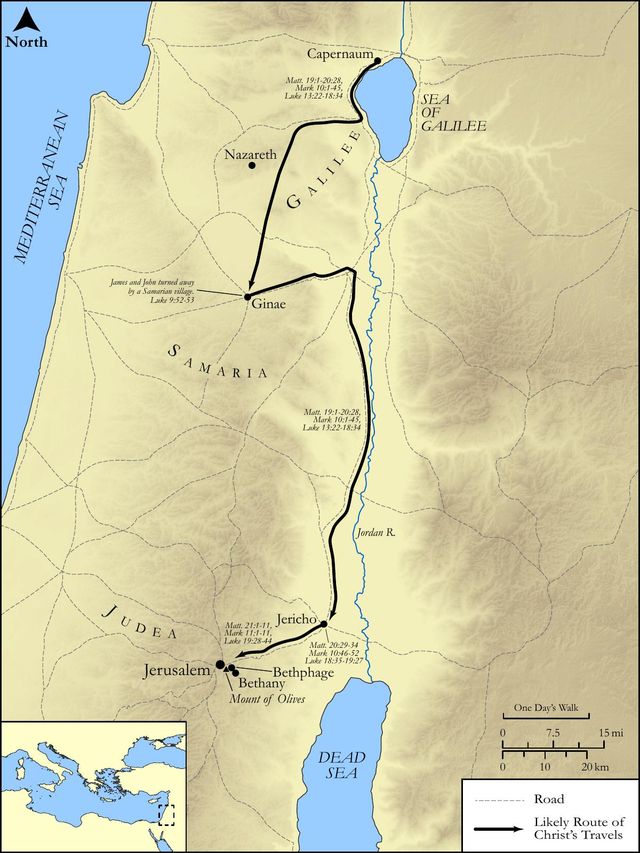
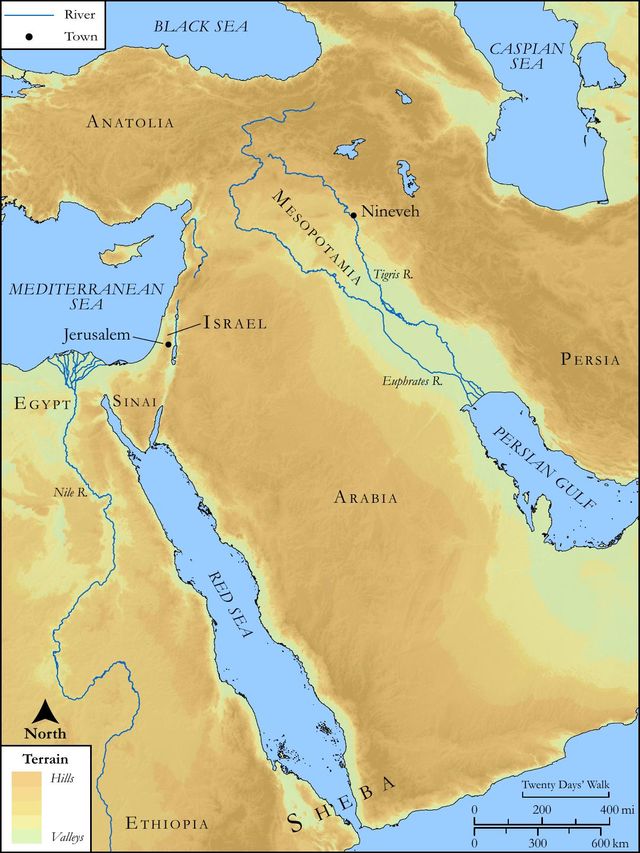
See on the biblical-era maps

Study this verse
Public-domain commentary
Matthew Henry
From his Commentary on the Whole Bible. Henry comments on passages, not single verses — this entry covers Luke 12:22–40. His four-level outline is real structure in the source text, so it is rendered as structure.
Our Lord Jesus is here inculcating some needful useful lessons upon his disciples, which he had before taught them, and had occasion afterwards to press upon them; for they need to have precept upon precept, and line upon line: "Therefore, because there are so many that are ruined by covetousness, and an inordinate affection to the wealth of this world, I say unto you, my disciples, take heed of it." Thou, O man of God, flee these things, as well as thou, O man of the world, Ti1 6:11.
I.He charges them not to afflict themselves with disquieting perplexing cares about the necessary supports of life:
Take no thought for your life, Luk 12:22. In the foregoing parable he had given us warning against that branch of covetousness of which rich people are most in danger; and that is, a sensual complacency in the abundance of this world's goods. Now his disciples might think they were in no danger of this, for they had no plenty or variety to glory in; and therefore he here warns them against another branch of covetousness, which they are most in temptation to that have but a little of this world, which was the case of the disciples at best and much more now that they had left all to follow Christ, and that was, an anxious solicitude about the necessary supports of life: "Take no thought for your life, either for the preservation of it, if it be in danger, or for the provision that is to be made for it, either of food or clothing, what ye shall eat or what ye shall put on." This is the caution he had largely insisted upon, Mat 6:25, etc.; and the arguments here used are much the same, designed for our encouragement to cast all our care upon God, which is the right way to ease ourselves of it. Consider then,
1.God, who has done the greater for us, may be depended upon to do the less. He has, without any care or forecast of our own, given us life and a body, and therefore we may cheerfully leave it to him to provide meat for the support of that life, and raiment for the defence of that body.
2.God, who provides for the inferior creatures, may be depended upon to provide for good Christians. "Trust God for meat, for he feeds the ravens (Luk 12:24); they neither sow nor reap, they take neither care nor pains beforehand to provide for themselves, and yet they are fed, and never perish for want. Now consider how much better ye are than the fowls, than the ravens. Trust God for clothing, for he clothes the lilies (Luk 12:27, Luk 12:28); they make no preparation for their own clothing, they toil not, they spin not, the root in the ground is a naked thing, and without ornament, and yet, as the flower grows up, it appears wonderfully beautified. Now, if God has so clothed the flowers, which are fading perishing things, shall he not much more clothe you with such clothing as is fit for you, and with clothing suited to your nature, as theirs is?" When God fed Israel with manna in the wilderness, he also took care for their clothing; for though he did not furnish them with new clothes, yet (which came all to one) he provided that those they had should not wax old upon them, Deu 8:4. Thus will he clothe his spiritual Israel; but then let them not be of little faith. Note, Our inordinate cares are owing to the weakness of our faith; for a powerful practical belief of the all-sufficiency of God, his covenant-relation to us as a Father, and especially his precious promises, relating both to this life and that to come, would be mighty, through God, to the pulling down of the strong holds of these disquieting perplexing imaginations.
3.Our cares are fruitless, vain, and insignificant, and therefore it is folly to indulge them. They will not gain us our wishes, and therefore ought not to hinder our repose (Luk 12:25): "Which of you by taking thought can add to his stature one cubit, or one inch, can add to his age one year or one hour? Now if ye be not able to do that which is least, if it be not in your power to alter your statures, why should you perplex yourselves about other things, which are as much out of your power, and about which it is necessary that we refer ourselves to the providence of God?" Note, As in our stature, so in our state, it is our wisdom to take it as it is, and make the best of it; for fretting and vexing, carping and caring, will not mend it.
4.An inordinate anxious pursuit of the things of this world, even necessary things, very ill becomes the disciples of Christ (Luk 12:29, Luk 12:30): "Whatever others do, seek not ye what ye shall eat, or what ye shall drink; do not you afflict yourselves with perplexing cares, nor weary yourselves with constant toils; do not hurry hither and thither with enquiries what you shall eat or drink, as David's enemies, that wandered up and down for meat (Psa 59:15), or as the eagle that seeks the prey afar off, Job 39:29. Let not the disciples of Christ thus seek their food, but ask it of God day by day; let them not be of doubtful mind; mē meteōrizesthe - Be not as meteors in the air, that are blown hither and thither with every wind; do not, like them, rise and fall, but maintain a consistency with yourselves; be even and steady, and have your hearts fixed; live not in careful suspense; let not your minds be continually perplexed between hope and fear, ever upon the rack." Let not the children of God make themselves uneasy; for,
(1.)This is to make themselves like the children of this world: "All these things do the nations of the world seek after, Luk 12:30. They that take care for the body only, and not for the soul, for this world only, and not for the other, look no further than what they shall eat and drink; and, having no all-sufficient God to seek to and confide in, they burden themselves with anxious cares about those things. But it ill becomes you to do so. You, who are called out of the world, ought not to be thus conformed to the world, and to walk in the way of this people," Isa 8:11, Isa 8:12. When inordinate cares prevail over us, we should think, "What am I, a Christian or a heathen? Baptized or not baptized? If a Christian, if baptized, shall I rank myself with Gentiles, and join with them in their pursuits?"
(2.)It is needless for them to disquiet themselves with care about the necessary supports of life; for they have a Father in heaven who does and will take care for them: "Your Father knows that you have need of these things, and considers it, and will supply your needs according to his riches in glory; for he is your Father, who made you subject to these necessities, and therefore will suit his compassions to them: your Father, who maintains you, educates you, and designs an inheritance for you, and therefore will take care that you want no good thing."
(3.)They have better things to mind and pursue (Luk 12:31): "But rather seek ye the kingdom of God, and mind this, you, my disciples, who are to preach the kingdom of God; let your hearts be upon your work, and your great care how to do that well, and this will effectually divert your thoughts from inordinate care about things of the world. And let all that have souls to save seek the kingdom of God, in which only they can be safe. Seek admission into it, seek advancement in it; seek the kingdom of grace, to be subjects in that; the kingdom of glory, to be princes in that; and then all these things shall be added to you. Mind the affairs of your souls with diligence and care, and then trust God with all your other affairs."
(4.)They have better things to expect and hope for: Fear not, little flock, Luk 12:32. For the banishing of inordinate cares, it is necessary that fears should be suppressed. When we frighten ourselves with an apprehension of evil to come, we put ourselves upon the stretch of care how to avoid it, when after all perhaps it is but the creature of our own imagination. Therefore fear not, little flock, but hope to the end; for it is your Father's good pleasure to give you the kingdom. This comfortable word we had not in Matthew. Note,
[1.]Christ's flock in this world is a little flock; his sheep are but few and feeble. The church is a vineyard, a garden, a small spot, compared with the wilderness of this world; as Israel (Kg1 20:27), who were like two little flocks of kids, when the Syrians filled the country.
[2.]Though it be a little flock, quite over-numbered, and therefore in danger of being overpowered, by its enemies, yet it is the will of Christ that they should not be afraid: "Fear not, little flock, but see yourselves safe under the protection and conduct of the great and good Shepherd, and lie easy." [3.] God has a kingdom in store for all that belong to Christ's little flock, a crown of glory (Pe1 5:4), a throne of power (Rev 3:21), unsearchable riches, far exceeding the peculiar treasures of kings and provinces. The sheep on the right hand are called to come and inherit the kingdom; it is theirs for ever; a kingdom for each. [4.] The kingdom is given according to the good pleasure of the Father; It is your Father's good pleasure; it is given not of debt, but of grace, free grace, sovereign grace; even so, Father, because it seemed good unto thee. The kingdom is his; and may he not do what he will with his own? [5.] The believing hopes and prospects of the kingdom should silence and suppress the fears of Christ's little flock in this world. "Fear no trouble; for, though it should come, it shall not come between you and the kingdom, that is sure, it is near." (That is not an evil worth trembling at the thought of which cannot separate us from the love of God). "Fear not the want of any thing that is good for you; for, if it be your Father's good pleasure to give you the kingdom, you need not question but he will bear your charges thither."
II.He charged them to make sure work for their souls, by laying up their treasure in heaven, Luk 12:33, Luk 12:34. Those who have done this may be very easy as to all the events of time.
1."Sit loose to this world, and to all your possessions in it: Sell that ye have, and give alms," that is, "rather than want wherewith to relieve those that are truly necessitous, sell what you have that is superfluous, all that you can spare from the support of yourselves and families, and give it to the poor. Sell what you have, if you find it a hindrance fRom. or incumbrance in, the service of Christ. Do not think yourselves undone, if by being fined, imprisoned, or banished, for the testimony of Jesus, you be forced to sell your estates, thought they be the inheritance of your fathers. Do not sell to hoard up the money, or because you can make more of it by usury, but sell and give alms; what is given in alms, in a right manner, is put out to the best interest, upon the best security."
2."Set your hearts upon the other world, and your expectations from that world. Provide yourselves bags that wax not old, that wax not empty, not of gold, but of grace in the heart and good works in the life; these are the bags that will last." Grace will go with us into another world, for it is woven in the soul; and our good works will follow us, for God is not unrighteous to forget them. These will be treasures in heaven, that will enrich us to eternity.
(1.)It is treasure that will not be exhausted; we may spend upon it to eternity, and it will not be at all the less; there is no danger of seeing the bottom of it.
(2.)It is treasure that we are in no danger of being robbed of, for no thief approaches near it; what is laid up in heaven is out of reach of enemies.
(3.)It is treasure that will not spoil with keeping, any more than it will waste with spending; the moth does not corrupt it, as it does our garments which we now wear. Now by this it appears that we have laid up our treasure in heaven if our hearts be there while we are here (Luk 12:34), if we think much of heaven and keep our eye upon it, if we quicken ourselves with the hopes of it and keep ourselves in awe with the fear of falling short of it. But, if your hearts be set upon the earth and the things of it, it is to be feared that you have your treasure and portion in it, and are undone when you leave it.
III.He charges them to get ready, and to keep in a readiness for Christ's coming, when all those who have laid up their treasure in heaven shall enter upon the enjoyment of it, Luk 12:35, etc.
1.Christ is our Master, and we are his servants, not only working servants, but waiting servants, servants that are to do him honour, in waiting on him, and attending his motions: If any man serve me, let him follow me. Follow the Lamb whithersoever he goes. But that is not all: they must do him honour in waiting for him, and expecting his return. We must be as men that wait for their Lord, that sit up late while he stays out late, to be ready to receive him.
2.Christ our Master, though now gone from us, will return again, return from the wedding, from solemnizing the nuptials abroad, to complete them at home. Christ's servants are now in a state of expectation, looking for their Master's glorious appearing, and doing every thing with an eye to that, and in order to that. He will come to take cognizance of his servants, and, that being a critical day, they shall either stay with him or be turned out of doors, according as they are found in that day.
3.The time of our Master's return is uncertain; it will be in the night, it will be far in the night, when he has long deferred his coming, and when many have done looking for him; in the second watch, just before midnight, or in the third watch, next after midnight, Luk 12:38. His coming to us, at our death, is uncertain, and to many it will be a great surprise; for the Son of Man cometh at an hour that ye think not (Luk 12:40), without giving notice beforehand. This bespeaks not only the uncertainty of the time of his coming, but the prevailing security of the greatest part of men, who are unthinking, and altogether regardless of the notices given them, so that, whenever he comes, it is in an hour that they think not.
4.That which he expects and requires from his servants is that they be ready to open to him immediately, whenever he comes (Luk 12:36), that is, that they be in a frame fit to receive him, or rather to be received by him; that they be found as his servants, in the posture that becomes them, with their loins girded about, alluding to the servants that are ready to go whither their master sends them, and do what their master bids them, having their long garments tucked up (which otherwise would hang about them, and hinder them), and their lights burning, with which to light their master into the house, and up to his chamber.
5.Those servants will be happy who shall be found ready, and in a good frame, when their Lord shall come (Luk 12:37): Blessed are those servants who, after having waited long, continue in a waiting frame, until the hour that their Lord comes, and are then found awake and aware of his first approach, of his first knock; and again (Luk 12:38): Blessed are those servants, for then will be the time of their preferment. Here is such an instance of honour done them as is scarcely to be found among men: He will make them sit down to meat, and will serve them. For the bridegroom to wait upon his bride at table is not uncommon, but to wait upon his servants is not the manner of men; yet Jesus Christ was among his disciples as one that served, and did once, to show his condescension, gird himself, and serve them, when he washed their feet (Joh 13:4, Joh 13:5); it signified the joy with which they shall be received into the other world by the Lord Jesus, who is gone before, to prepare for them, and has told them that his Father will honour them, Joh 12:26.
6.We are therefore kept at uncertainty concerning the precise time of his coming that we may be always ready; for it is no thanks to a man to be ready for an attack, if he know beforehand just the time when it will be made: The good man of the house, if he had known what hour the thief would have come, though he were ever so careless a man, would yet have watched, and have frightened away the thieves, Luk 12:39. But we do not know at what hour the alarm will be given us, and therefore are concerned to watch at all tines, and never to be off our guard. Or this may intimate the miserable case of those who are careless and unbelieving in this great matter. If the good man of the house had had notice of his danger of being robbed such a night, he would have sat up, and saved his house; but we have notice of the day of the Lord's coming, as a thief in the night, to the confusion and ruin of all secure sinners, and yet do not thus watch. If men will take such care of their houses, O let us be thus wise for our souls: Be ye therefore ready also, as ready as the good man of the house would be if he knew what hour the thief would come.
Historical interpretation
Nine Centuries of Reception
12 surviving comments on this verse. Each one is dated, so this reads as a timeline rather than a list.
Select a marker to jump to its quote. Markers stagger vertically where authors wrote within a few decades of each other.
"For your Father knoweth that ye have need of all these things." "But seek first the kingdom of heaven, and its righteousness," for these are the great things, and the things which are small and appertain to this life "shall be added to you."
Meanwhile, how is it that He chides them as being "of little faith? " What faith? Does He mean that faith which they were as yet unable to manifest perfectly in a god who has hardly yet revealed, and whom they were in process of learning as well as they could; or that faith which they for this express reason owed to the Creator, because they believed that He was of His own will supplying these wants of the human race, and therefore took no thought about them? Now, when He adds, "For all these things do the nations of the world seek after," even by their not believing in God as the Creator and Giver of all things, since He was unwilling that they should be like these nations, He therefore upbraided them as being defective of faith in the same God, in whom He remarked that the Gentiles were quite wanting in faith. When He further adds, "But your Father knoweth that ye have need of these things," I would first ask, what Father Christ would have to be here understood? If He points to their own Creator, He also affirms Him to be good, who knows what His children have need of; but if He refers to that other god, how does he know that food and raiment are necessary to man, seeing that he has made no such provision for him? For if he had known the want, he would have made the provision.
But if a man wishes to be adorned with precious raiment, let him observe closely how even down to the flowers which spring from the earth God extends His manifold wisdom, adorning them with divers colours, so adapting to the delicate membranes of the flowers dyes far superior to gold and purple, that under no luxurious king, not even Solomon himself, who was renowned among the ancients for his riches as for his wisdom and pleasures, has so exquisite a work been devised; and hence it follows, But I say unto you, that Solomon in all his glory was not arrayed like one of these.
And that you may understand an elation of this kind, remember the vanity of your own youth; if at any time while by yourself you have thought about life and promotions, passing rapidly from one dignity to another, have grasped riches, have built palaces, benefitted friends, been revenged upon enemies. Now such abstraction is sin, for to have our delights fixed upon useless things, leads away from the truth. Hence He goes on to add, For all these things do the nations of the world seek after, &c.
But with respect to the necessaries of life, He adds, And your Father knoweth that ye have need of these things.
(in Orat. Dom. Serm. 1.) Some have obtained dominion and honours and riches by praying for them, how then dost thou forbid us to seek such things in prayer? And indeed that all these things belong to the Divine counsel is plain to every one, yet are they conferred by God upon those that seek them, in order that by learning that God listens to our lower petitions, we may be raised to the desire of higher things; just as we see in children, who as soon as they are born cling to their mother's breasts, but when the child grows up it despises the milk, and seeks after a necklace or some such thing with which the eye is delighted; and again when the mind has advanced together with the body, giving up all childish desires, he seeks from his parents those things which are adapted to a perfect life.
(ubi sup.) For to be careful about visible things is the part of those who possess no hope of a future life, no fear of judgment to come.
Nor does it seem of light moment, that a flower is either compared to man, or even almost more than to man is preferred to Solomon, to make us conceive the glory expressed, from the brightness of the colour to be that of the heavenly angels; who are truly the flowers of the other world, since by their brightness the world is adorned, and they breathe forth the pure odour of sanctification, who shackled by no cares, employed in no toilsome task, cherish the grace of the Divine bounty towards them, and the gifts of their heavenly nature. Therefore well also is Solomon hero described to be clothed in his own glory, and in another place to he veiled, because the frailty of his bodily nature be clothed as it were by the powers of his mind to the glory of his works. But the Angels, whose diviner nature remains free from bodily injury, are rightly preferred, although he be the greatest man. We should not however despair of God's mercy to us, to whom by the grace of His resurrection He promises the likeness of angels.
But He goes on to show, that neither at the present time, nor hereafter, will grace be lacking to the faithful, if only they who desire heavenly things seek not earthly; for it is unworthy for men to care for meats, who fight for a kingdom. The king knoweth wherewithal he shall support and clothe his own family. Therefore it follows, But seek ye first the kingdom of God, and all these things shall be added unto you.
(Hom. 22. in Matt.) As our Lord had before given instruction about food, so now also about raiment, saying, Consider the lilies of the field how they grow; they toil not, neither do they spin, that is, to make themselves clothing. Now as above when our Lord said, the birds sow not, He did not reprove sowing, but all superfluous trouble; so when He said, They toil not, neither do they spin, He does not put an end to work, but to all anxiety about it.
(Hom. 22. in Matt.) He does not here employ the example of the birds, making mention of a swan or a peacock, but the lilies, for he wishes to give force to the argument on both sides, that is to say, both from the meanness of the things which have obtained such honour, and from the excellence of the honour conferred upon them; and hence a little after He does not call them lilies, but grass, as it is added, If then God so clothe the grass, which to-day is, He says not, which to-morrow is not, but to-morrow is cast into the oven; nor does He say simply, God clothe, but He says, God so clothe, which has much meaning, and adds, how much more you, which expresses His estimation and care of the human race. Lastly, when it behoves Him to find fault, He deals here also with mildness, reproving them not for unbelief, but for littleness of faith, adding, O ye of little faith, that He may so the more rouse us up to believe in His words, that we should not only take no thought about our apparel, but not even admire elegance in dress.
(Hom. 22. in Matt.) He said not "God," but your Father, to incite them to greater confidence. For who is a father, and would not allow the want of his children to be supplied? But He adds another thing also; for you could not say that He is indeed a father, yet knoweth not that we are in need of these things. For He who has created our nature, knoweth its wants.
(ubi sup.) Now Christ promises not only a kingdom, but also riches with it; for if we rescue from cares those who neglecting their own concerns are diligent about ours, much more will God.
For it is sufficient to the prudent for the sake of necessity only, to have a suitable garment, and moderate food, not exceeding what is enough. To the saints it is sufficient even to have those spiritual delights which are in Christ, and the glory that comes after.
it were strange for the disciples, who ought to set before others the rule and pattern of life, to fall into those things, which it was their duty to advise men to renounce; and therefore our Lord adds, And seek not what, ye shall eat, &c. Herein also our Lord strongly recommends the study of holy preaching, bidding His disciples to cast away all human cares.
The flock is little in the eyes of the world, but great in the eyes of God. It is little—because he calls glorious those whom he has trained to the innocence of sheep and to Christian meekness. The flock is little, not as the remnant of a big one, but as one which has grown from small beginnings. This little flock denotes the infancy of his newborn church, and immediately he promises that through the blessings of heaven this church will soon have the dignity of his kingdom.
For all these things the nations of the world seek. But your Father knows that you need them. Nevertheless, seek the kingdom of God, and all these things will be added to you. Here he most evidently shows that these are not to be sought as our ultimate goods, for the sake of which we should do good if we do anything, but that they are necessary. For what is the difference between a good which ought to be sought, and a necessity which ought to be used, he declared by this saying, when he said: Nevertheless, seek the kingdom of God, and all these things shall be added unto you. Therefore, the kingdom of God is our good and it is to be sought, and therein we should establish our end, for which purpose we should do all things whatever we do. But because in this life we struggle, that we may be able to reach that kingdom, which life cannot be lived without these necessities, He says, These things shall be added unto you, but you seek the kingdom of God. For he did not say, They shall be given, but they shall be added, surely indicating that there is another thing which is primarily given, another thing which is superadded. Because eternity should be in our intention, and temporality in our use, and that is given, and this is unquestionably superadded from abundance.
It must however be observed, that He says not, Do not seek or take thought about meat, or drink, or raiment, but what ye shall eat or drink, in which He seems to me to reprove those who, despising the common food and clothing, seek for themselves either more delicate or coarser food and clothing than theirs with whom they live.
For He declares that there is one thing which is primarily given, another which is superadded; that we ought to make eternity our aim, the present life our business.
Or by being lifted up he means nothing else but an unsteady motion of the mind, meditating first one thing, then another, and jumping from this to that, and imagining lofty things.
Continue studying Luke 12:30 across the web’s major study libraries — every link below opens this exact verse, chapter, or book on the destination site.
Read & Compare
 BibleGatewayThis verse in more than 200 translations and 70 languages.
 Bible.comThe YouVersion reader — hundreds of translations, reading plans, and highlights.
 ESV.orgCrossway's official English Standard Version reader.
 NET BibleThe NET translation with 60,000+ translators' notes on every rendering decision.
 STEP BibleTyndale House's free study tool — original text, vocabulary, and scholarly resources.
 BibliaLogos Bible Software's free web reader.
 USCCBThe New American Bible (Revised Edition) with the U.S. bishops' study notes.
Commentaries
 BibleHub CommentariesDozens of classic commentaries on this verse, gathered on one page.
 StudyLightMore than 100 commentary sets — the largest collection on the web.
 BibleRefPlain-English commentary on what this verse means, verse by verse.
 Enduring WordDavid Guzik's free commentary on this chapter, widely used by Bible teachers.
 Bible Study ToolsVerse commentary alongside Greek and Hebrew study aids.
Original Language & Research
- BibleHub InterlinearThe verse word by word — original language, transliteration, and English.
- BibleHub LexiconEvery word's original-language definition and Strong's entry.
 Blue Letter BibleDeep-study tools — Strong's numbers, concordance, and word studies.
 CNTR CollationThe earliest Greek manuscripts of this verse, collated letter by letter.
Sermons, Hymns & Audio


TrulyRandomVerse is not affiliated with these sites and doesn’t control their content. They’re linked because they’re genuinely useful.
Summary
Luke 12:30 serves as a profound explanation within Jesus' broader discourse on anxiety, revealing the stark contrast between the world's relentless pursuit of material security and the secure, divinely provided-for life of a believer. Jesus reassures His disciples that their Heavenly Father possesses an intimate, experiential knowledge of their legitimate needs, thereby invalidating the need for the anxious striving characteristic of those who do not yet know God. This verse anchors the call to trust in God's paternal care as the ultimate antidote to worry.
Context
ShowHideLiterary Context
This verse is deeply embedded within Jesus' extensive teaching on worry and divine provision, which begins in Luke 12:22 and extends through Luke 12:34. Following His illustrations of God's meticulous care for ravens and lilies (Luke 12:24-28), Jesus states that disciples should not be anxious about food, drink, or clothing, as the "nations of the world" do. Verse 30 provides the reason for this distinction, explaining that the non-believing world anxiously seeks these things because they lack the assurance of a knowing and providing Father. It then sets the stage for the positive command in Luke 12:31 to seek God's kingdom instead, with the promise that all necessary things will be added.
Historical & Cultural Context
Jesus' audience, primarily His disciples but also a larger crowd (as indicated in Luke 12:1), lived in a society where daily provision was a constant concern. Economic instability, vulnerability to famine, and the absence of provisions for the needy meant that securing basic necessities was a pressing, often anxiety-inducing, endeavor. The "nations of the world" (Greek: ethne tou kosmou) refers to Gentiles or non-Jewish peoples, who, from a Jewish perspective, lived outside the covenant promises of God and therefore relied solely on their own efforts and anxieties for survival. Jesus' teaching directly challenges this prevailing worldview, offering a radical alternative based on divine trust rather than human striving.
Key Themes
ShowHideThe verse powerfully contributes to several overarching themes in Luke's Gospel and Jesus' teaching. Foremost is the theme of Divine Provision and Paternal Care, emphasizing God's character as a loving "Father" who intimately knows and cares for His children's needs. This ties into the broader theme of Trust vs. Anxiety, where Jesus calls His followers to abandon the debilitating grip of worry by placing their confidence in God's unfailing faithfulness, as exemplified by His care for creation (Luke 12:24). Furthermore, it highlights Kingdom Priorities, contrasting the worldly pursuit of material possessions with the spiritual pursuit of God's kingdom and righteousness, which Jesus encourages in the subsequent verse (Luke 12:31).
Exposition and Analysis
ShowHideKey Word Analysis
ShowHideThis term, often translated as "Gentiles" or "heathen," refers to people groups outside the covenant relationship with God. In this context, it signifies those whose worldview is primarily focused on earthly concerns and who lack the assurance of a personal, providing God, leading them to an anxious pursuit of material security.
This verb denotes an earnest, diligent, and often anxious or craving pursuit. It suggests a focused, perhaps even desperate, effort to acquire or secure something, highlighting the intensity of the world's preoccupation with material needs.
Derived from a verb meaning "to see," this word, used here in the perfect tense, implies a deep, experiential, and intimate knowledge, not merely intellectual awareness. It underscores God's omniscience combined with His personal, relational understanding of His children's needs, assuring them that their Father is fully cognizant of their every requirement.
Verse Breakdown
ShowHide"For all these things do the nations of the world seek after:"
This clause provides the rationale for Jesus' preceding exhortation against worry. "All these things" refers to the basic necessities of life—food, drink, and clothing—mentioned in Luke 12:22-29. Jesus points out that the defining characteristic of those who do not know God is their anxious and consuming pursuit of these very things, driven by a lack of divine assurance.
"and your Father knoweth that ye have need of these things."
This is the counterpoint and the profound reassurance. The emphasis is on the intimate, personal relationship ("your Father") and His omniscient, caring awareness ("knoweth"). Unlike the "nations," believers have a Heavenly Father who is not only aware of their legitimate needs but is also committed to meeting them. This knowledge should fundamentally alter their approach to life, replacing anxiety with trust.
Literary Devices
ShowHideThe primary literary device at play in Luke 12:30 is Contrast. Jesus deliberately sets up a dichotomy between "the nations of the world" and "your Father." This contrast highlights two fundamentally different worldviews and ways of life: one characterized by anxious, self-reliant striving for material security, and the other by confident, filial trust in a benevolent, omniscient God. This juxtaposition serves to underscore the radical nature of kingdom living. Additionally, there is an element of Assurance or Reassurance, as the verse functions as a powerful statement of comfort and divine promise, designed to alleviate the disciples' fears and redirect their focus.
Theological and Thematic Connections
ShowHideLuke 12:30 is a cornerstone for understanding the nature of God's fatherly care and the distinct priorities of the Kingdom of God. It reveals a God who is not distant or uncaring, but intimately involved in the daily lives of His children, possessing a perfect knowledge of their needs. This theological truth liberates believers from the endless cycle of striving and anxiety that characterizes a life lived apart from God. It calls for a radical shift from self-reliance to a confident dependence on divine provision, recognizing that God's awareness of our needs precedes and supersedes our anxious pursuit of them. This understanding fundamentally redefines what it means to be secure, shifting the foundation from earthly possessions to heavenly relationship.
Reflection and Application
ShowHideIn a world increasingly driven by consumerism, economic anxieties, and the relentless pursuit of security through material accumulation, Luke 12:30 offers a profound counter-cultural message. It challenges us to examine the true source of our security and the object of our deepest desires. Are we living like "the nations of the world," constantly striving, worrying, and accumulating, or are we resting in the confident assurance that our Heavenly Father knows our needs? This verse invites us to cultivate a posture of radical trust, prioritizing our relationship with God and His kingdom above all else. It reminds us that true freedom from anxiety comes not from having more, but from trusting the One who already knows our every need and is committed to providing for us. This trust allows us to live generously, serve selflessly, and pursue spiritual growth, knowing that our physical well-being is in the hands of a loving Father.
Questions for Reflection
ShowHideFAQ
ShowHideWho are "the nations of the world" that Jesus refers to?
ShowHideIn this context, "the nations of the world" (Greek: ethne tou kosmou) primarily refers to the Gentiles, or non-Jewish peoples, who were generally considered to be outside of God's covenant relationship with Israel. More broadly, it signifies those who do not know God as their Heavenly Father and therefore live without the assurance of His divine provision. Their lives are characterized by a worldview focused on earthly concerns, material acquisition, and self-reliance, often leading to anxiety and a restless pursuit of security.
What does "your Father knoweth" imply about God's character and our relationship with Him?
ShowHideThe phrase "your Father knoweth" is incredibly rich with theological implications. Firstly, it highlights God's omniscience – He is fully aware of every detail of our lives, including our legitimate needs, before we even articulate them. Secondly, the use of "Father" emphasizes a deep, personal, and paternal relationship with believers, implying His love, care, and commitment to His children. This "knowing" is not merely intellectual but experiential and intimate, assuring us that God's provision flows from His very nature as a loving parent. It means we have a God who is not only powerful enough to provide but also caring enough to desire our well-being and meet our every necessity, fostering a relationship of confident trust rather than anxious striving, as also seen in Matthew 6:8.
Christ-Centered Fulfillment
ShowHideLuke 12:30 finds its ultimate fulfillment and deepest meaning in Jesus Christ. He is the very embodiment of the Father's knowing and providing love. Jesus doesn't just teach about the Father's care; He perfectly demonstrates it through His life, ministry, and ultimate sacrifice. As the Lamb of God who takes away the sin of the world, He addresses humanity's greatest need—spiritual redemption and reconciliation with God—a need far surpassing any material requirement. His own life, marked by dependence on the Father and a lack of earthly possessions (Luke 9:58), serves as the supreme example of living free from worldly anxiety. Through His atoning work, Jesus grants us access to this very Father, enabling us to become children of God (John 1:12) and inherit the promises of divine provision. He is the bread of life, the living water, and the Good Shepherd who ensures His sheep lack nothing. In Christ, we not only understand that our Father knows our needs, but we also receive the ultimate provision for both our temporal and eternal well-being, transforming our anxious striving into confident, Christ-centered trust.