


Luke 12:35
Bible text: King James Version (1769 Blayney text) · Public domain
Bible text: Berean Standard Bible · Public domain
Bible text: American Standard Version (1901) · Public domain
Bible text: World English Bible, Messianic edition · Public domain
Bible text: Geneva Bible (1599) · Public domain
Bible text: Young's Literal Translation · Public domain
- ἜστωσανEstōsanshould beG1510V-PAM-3PVerb Present Active Imperative 3rd Plural
- ὑμῶνhumōnyourG4771P-2GPPersonal pronoun Genitive 2nd Plural
- αἱhai<the>G3588T-NPFDefinite article Nominative Plural Feminine
- ὀσφύεςosphueswaistG3751N-NPFNoun Nominative Plural Feminine
- περιεζωσμέναιperiezōsmenaigirdedG4024V-RPP-NPFVerb Perfect Passive Participle Nominative Plural Feminine
- καὶkaiandG2532CONJConjunction
- οἱhoitheG3588T-NPMDefinite article Nominative Plural Masculine
- λύχνοιluchnoilampsG3088N-NPMNoun Nominative Plural Masculine
- καιόμενοιkaiomenoiburningG2545V-PPP-NPMVerb Present Passive Participle Nominative Plural Masculine
English is a literal word-by-word gloss of the Greek, not the KJV's wording. Why?
This is the original text the KJV's translators worked from — each Greek word with its own literal English meaning in this verse, prepared by scholars at Tyndale House, Cambridge. The KJV translates whole sentences, not word by word, so its wording differs: one Greek word can become several English words, and the KJV may choose “charity” where the gloss reads “love”. Both are faithful — they answer different questions. For the KJV's own rendering, switch to the KJV text.
Details
See on the biblical-era maps

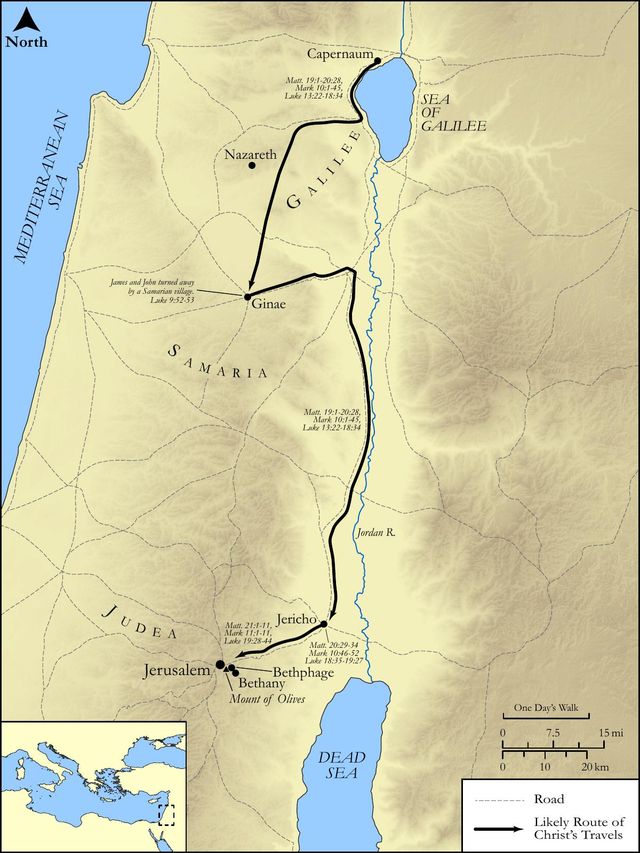
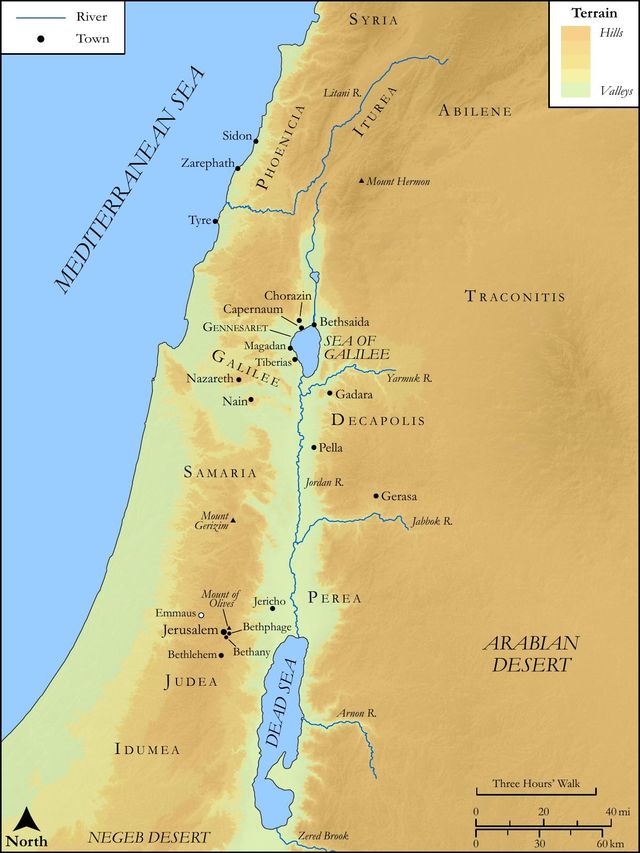
Study this verse
Public-domain commentary
Matthew Henry
From his Commentary on the Whole Bible. Henry comments on passages, not single verses — this entry covers Luke 12:22–40. His four-level outline is real structure in the source text, so it is rendered as structure.
Our Lord Jesus is here inculcating some needful useful lessons upon his disciples, which he had before taught them, and had occasion afterwards to press upon them; for they need to have precept upon precept, and line upon line: "Therefore, because there are so many that are ruined by covetousness, and an inordinate affection to the wealth of this world, I say unto you, my disciples, take heed of it." Thou, O man of God, flee these things, as well as thou, O man of the world, Ti1 6:11.
I.He charges them not to afflict themselves with disquieting perplexing cares about the necessary supports of life:
Take no thought for your life, Luk 12:22. In the foregoing parable he had given us warning against that branch of covetousness of which rich people are most in danger; and that is, a sensual complacency in the abundance of this world's goods. Now his disciples might think they were in no danger of this, for they had no plenty or variety to glory in; and therefore he here warns them against another branch of covetousness, which they are most in temptation to that have but a little of this world, which was the case of the disciples at best and much more now that they had left all to follow Christ, and that was, an anxious solicitude about the necessary supports of life: "Take no thought for your life, either for the preservation of it, if it be in danger, or for the provision that is to be made for it, either of food or clothing, what ye shall eat or what ye shall put on." This is the caution he had largely insisted upon, Mat 6:25, etc.; and the arguments here used are much the same, designed for our encouragement to cast all our care upon God, which is the right way to ease ourselves of it. Consider then,
1.God, who has done the greater for us, may be depended upon to do the less. He has, without any care or forecast of our own, given us life and a body, and therefore we may cheerfully leave it to him to provide meat for the support of that life, and raiment for the defence of that body.
2.God, who provides for the inferior creatures, may be depended upon to provide for good Christians. "Trust God for meat, for he feeds the ravens (Luk 12:24); they neither sow nor reap, they take neither care nor pains beforehand to provide for themselves, and yet they are fed, and never perish for want. Now consider how much better ye are than the fowls, than the ravens. Trust God for clothing, for he clothes the lilies (Luk 12:27, Luk 12:28); they make no preparation for their own clothing, they toil not, they spin not, the root in the ground is a naked thing, and without ornament, and yet, as the flower grows up, it appears wonderfully beautified. Now, if God has so clothed the flowers, which are fading perishing things, shall he not much more clothe you with such clothing as is fit for you, and with clothing suited to your nature, as theirs is?" When God fed Israel with manna in the wilderness, he also took care for their clothing; for though he did not furnish them with new clothes, yet (which came all to one) he provided that those they had should not wax old upon them, Deu 8:4. Thus will he clothe his spiritual Israel; but then let them not be of little faith. Note, Our inordinate cares are owing to the weakness of our faith; for a powerful practical belief of the all-sufficiency of God, his covenant-relation to us as a Father, and especially his precious promises, relating both to this life and that to come, would be mighty, through God, to the pulling down of the strong holds of these disquieting perplexing imaginations.
3.Our cares are fruitless, vain, and insignificant, and therefore it is folly to indulge them. They will not gain us our wishes, and therefore ought not to hinder our repose (Luk 12:25): "Which of you by taking thought can add to his stature one cubit, or one inch, can add to his age one year or one hour? Now if ye be not able to do that which is least, if it be not in your power to alter your statures, why should you perplex yourselves about other things, which are as much out of your power, and about which it is necessary that we refer ourselves to the providence of God?" Note, As in our stature, so in our state, it is our wisdom to take it as it is, and make the best of it; for fretting and vexing, carping and caring, will not mend it.
4.An inordinate anxious pursuit of the things of this world, even necessary things, very ill becomes the disciples of Christ (Luk 12:29, Luk 12:30): "Whatever others do, seek not ye what ye shall eat, or what ye shall drink; do not you afflict yourselves with perplexing cares, nor weary yourselves with constant toils; do not hurry hither and thither with enquiries what you shall eat or drink, as David's enemies, that wandered up and down for meat (Psa 59:15), or as the eagle that seeks the prey afar off, Job 39:29. Let not the disciples of Christ thus seek their food, but ask it of God day by day; let them not be of doubtful mind; mē meteōrizesthe - Be not as meteors in the air, that are blown hither and thither with every wind; do not, like them, rise and fall, but maintain a consistency with yourselves; be even and steady, and have your hearts fixed; live not in careful suspense; let not your minds be continually perplexed between hope and fear, ever upon the rack." Let not the children of God make themselves uneasy; for,
(1.)This is to make themselves like the children of this world: "All these things do the nations of the world seek after, Luk 12:30. They that take care for the body only, and not for the soul, for this world only, and not for the other, look no further than what they shall eat and drink; and, having no all-sufficient God to seek to and confide in, they burden themselves with anxious cares about those things. But it ill becomes you to do so. You, who are called out of the world, ought not to be thus conformed to the world, and to walk in the way of this people," Isa 8:11, Isa 8:12. When inordinate cares prevail over us, we should think, "What am I, a Christian or a heathen? Baptized or not baptized? If a Christian, if baptized, shall I rank myself with Gentiles, and join with them in their pursuits?"
(2.)It is needless for them to disquiet themselves with care about the necessary supports of life; for they have a Father in heaven who does and will take care for them: "Your Father knows that you have need of these things, and considers it, and will supply your needs according to his riches in glory; for he is your Father, who made you subject to these necessities, and therefore will suit his compassions to them: your Father, who maintains you, educates you, and designs an inheritance for you, and therefore will take care that you want no good thing."
(3.)They have better things to mind and pursue (Luk 12:31): "But rather seek ye the kingdom of God, and mind this, you, my disciples, who are to preach the kingdom of God; let your hearts be upon your work, and your great care how to do that well, and this will effectually divert your thoughts from inordinate care about things of the world. And let all that have souls to save seek the kingdom of God, in which only they can be safe. Seek admission into it, seek advancement in it; seek the kingdom of grace, to be subjects in that; the kingdom of glory, to be princes in that; and then all these things shall be added to you. Mind the affairs of your souls with diligence and care, and then trust God with all your other affairs."
(4.)They have better things to expect and hope for: Fear not, little flock, Luk 12:32. For the banishing of inordinate cares, it is necessary that fears should be suppressed. When we frighten ourselves with an apprehension of evil to come, we put ourselves upon the stretch of care how to avoid it, when after all perhaps it is but the creature of our own imagination. Therefore fear not, little flock, but hope to the end; for it is your Father's good pleasure to give you the kingdom. This comfortable word we had not in Matthew. Note,
[1.]Christ's flock in this world is a little flock; his sheep are but few and feeble. The church is a vineyard, a garden, a small spot, compared with the wilderness of this world; as Israel (Kg1 20:27), who were like two little flocks of kids, when the Syrians filled the country.
[2.]Though it be a little flock, quite over-numbered, and therefore in danger of being overpowered, by its enemies, yet it is the will of Christ that they should not be afraid: "Fear not, little flock, but see yourselves safe under the protection and conduct of the great and good Shepherd, and lie easy." [3.] God has a kingdom in store for all that belong to Christ's little flock, a crown of glory (Pe1 5:4), a throne of power (Rev 3:21), unsearchable riches, far exceeding the peculiar treasures of kings and provinces. The sheep on the right hand are called to come and inherit the kingdom; it is theirs for ever; a kingdom for each. [4.] The kingdom is given according to the good pleasure of the Father; It is your Father's good pleasure; it is given not of debt, but of grace, free grace, sovereign grace; even so, Father, because it seemed good unto thee. The kingdom is his; and may he not do what he will with his own? [5.] The believing hopes and prospects of the kingdom should silence and suppress the fears of Christ's little flock in this world. "Fear no trouble; for, though it should come, it shall not come between you and the kingdom, that is sure, it is near." (That is not an evil worth trembling at the thought of which cannot separate us from the love of God). "Fear not the want of any thing that is good for you; for, if it be your Father's good pleasure to give you the kingdom, you need not question but he will bear your charges thither."
II.He charged them to make sure work for their souls, by laying up their treasure in heaven, Luk 12:33, Luk 12:34. Those who have done this may be very easy as to all the events of time.
1."Sit loose to this world, and to all your possessions in it: Sell that ye have, and give alms," that is, "rather than want wherewith to relieve those that are truly necessitous, sell what you have that is superfluous, all that you can spare from the support of yourselves and families, and give it to the poor. Sell what you have, if you find it a hindrance fRom. or incumbrance in, the service of Christ. Do not think yourselves undone, if by being fined, imprisoned, or banished, for the testimony of Jesus, you be forced to sell your estates, thought they be the inheritance of your fathers. Do not sell to hoard up the money, or because you can make more of it by usury, but sell and give alms; what is given in alms, in a right manner, is put out to the best interest, upon the best security."
2."Set your hearts upon the other world, and your expectations from that world. Provide yourselves bags that wax not old, that wax not empty, not of gold, but of grace in the heart and good works in the life; these are the bags that will last." Grace will go with us into another world, for it is woven in the soul; and our good works will follow us, for God is not unrighteous to forget them. These will be treasures in heaven, that will enrich us to eternity.
(1.)It is treasure that will not be exhausted; we may spend upon it to eternity, and it will not be at all the less; there is no danger of seeing the bottom of it.
(2.)It is treasure that we are in no danger of being robbed of, for no thief approaches near it; what is laid up in heaven is out of reach of enemies.
(3.)It is treasure that will not spoil with keeping, any more than it will waste with spending; the moth does not corrupt it, as it does our garments which we now wear. Now by this it appears that we have laid up our treasure in heaven if our hearts be there while we are here (Luk 12:34), if we think much of heaven and keep our eye upon it, if we quicken ourselves with the hopes of it and keep ourselves in awe with the fear of falling short of it. But, if your hearts be set upon the earth and the things of it, it is to be feared that you have your treasure and portion in it, and are undone when you leave it.
III.He charges them to get ready, and to keep in a readiness for Christ's coming, when all those who have laid up their treasure in heaven shall enter upon the enjoyment of it, Luk 12:35, etc.
1.Christ is our Master, and we are his servants, not only working servants, but waiting servants, servants that are to do him honour, in waiting on him, and attending his motions: If any man serve me, let him follow me. Follow the Lamb whithersoever he goes. But that is not all: they must do him honour in waiting for him, and expecting his return. We must be as men that wait for their Lord, that sit up late while he stays out late, to be ready to receive him.
2.Christ our Master, though now gone from us, will return again, return from the wedding, from solemnizing the nuptials abroad, to complete them at home. Christ's servants are now in a state of expectation, looking for their Master's glorious appearing, and doing every thing with an eye to that, and in order to that. He will come to take cognizance of his servants, and, that being a critical day, they shall either stay with him or be turned out of doors, according as they are found in that day.
3.The time of our Master's return is uncertain; it will be in the night, it will be far in the night, when he has long deferred his coming, and when many have done looking for him; in the second watch, just before midnight, or in the third watch, next after midnight, Luk 12:38. His coming to us, at our death, is uncertain, and to many it will be a great surprise; for the Son of Man cometh at an hour that ye think not (Luk 12:40), without giving notice beforehand. This bespeaks not only the uncertainty of the time of his coming, but the prevailing security of the greatest part of men, who are unthinking, and altogether regardless of the notices given them, so that, whenever he comes, it is in an hour that they think not.
4.That which he expects and requires from his servants is that they be ready to open to him immediately, whenever he comes (Luk 12:36), that is, that they be in a frame fit to receive him, or rather to be received by him; that they be found as his servants, in the posture that becomes them, with their loins girded about, alluding to the servants that are ready to go whither their master sends them, and do what their master bids them, having their long garments tucked up (which otherwise would hang about them, and hinder them), and their lights burning, with which to light their master into the house, and up to his chamber.
5.Those servants will be happy who shall be found ready, and in a good frame, when their Lord shall come (Luk 12:37): Blessed are those servants who, after having waited long, continue in a waiting frame, until the hour that their Lord comes, and are then found awake and aware of his first approach, of his first knock; and again (Luk 12:38): Blessed are those servants, for then will be the time of their preferment. Here is such an instance of honour done them as is scarcely to be found among men: He will make them sit down to meat, and will serve them. For the bridegroom to wait upon his bride at table is not uncommon, but to wait upon his servants is not the manner of men; yet Jesus Christ was among his disciples as one that served, and did once, to show his condescension, gird himself, and serve them, when he washed their feet (Joh 13:4, Joh 13:5); it signified the joy with which they shall be received into the other world by the Lord Jesus, who is gone before, to prepare for them, and has told them that his Father will honour them, Joh 12:26.
6.We are therefore kept at uncertainty concerning the precise time of his coming that we may be always ready; for it is no thanks to a man to be ready for an attack, if he know beforehand just the time when it will be made: The good man of the house, if he had known what hour the thief would have come, though he were ever so careless a man, would yet have watched, and have frightened away the thieves, Luk 12:39. But we do not know at what hour the alarm will be given us, and therefore are concerned to watch at all tines, and never to be off our guard. Or this may intimate the miserable case of those who are careless and unbelieving in this great matter. If the good man of the house had had notice of his danger of being robbed such a night, he would have sat up, and saved his house; but we have notice of the day of the Lord's coming, as a thief in the night, to the confusion and ruin of all secure sinners, and yet do not thus watch. If men will take such care of their houses, O let us be thus wise for our souls: Be ye therefore ready also, as ready as the good man of the house would be if he knew what hour the thief would come.
Historical interpretation
Twelve Centuries of Reception
23 surviving comments on this verse. Each one is dated, so this reads as a timeline rather than a list.
Select a marker to jump to its quote. Markers stagger vertically where authors wrote within a few decades of each other.
Watch for your life's sake. Let not your lamps be quenched, nor your loins unloosed; but be ye ready, for ye know not the hour in which our Lord cometh.
"Let your loins, therefore, be girded about, and your lights burning, and ye like to men who wait for their lord, when he shall return from the wedding."
And, "Let your loins be girded about, and your lamps burning, and ye like unto men that wait for their Lord, when He returns from the wedding, that when He cometh and knocketh, they may open to Him. Blessed is that servant whom his Lord, when He cometh, shall find so doing."
For it is said, "Let your loins be girt about, and your lamps burning; and ye yourselves like to men that watch for their lord, that when he returns from the marriage, and comes and knocks, they may straightway open to him. Blessed are those servants whom the Lord, when He cometh, shall find watching."
We are servants because we have a Lord in our God. We ought "to have our loins girded: " in other words, we are to be free from the embarrassments of a perplexed and much occupied life; "to have our lights burning," that is, our minds kindled by faith, and resplendent with the works of truth.
For He will be girded about His loins with righteousness.
That he who has attained to trust, having put off the former man, ought to regard only celestial and spiritual things, and to give no heed to the world which he has already renounced. In Isaiah: "Seek ye the Lord; and when ye have found Him, call upon Him. But when He hath come near unto you, let the wicked forsake his ways, and the unrighteous man his thoughts: and let him be turned unto the Lord, and he shall obtain mercy, because He will plentifully pardon your sins." Of this same thing in Solomon: "I have seen all the works which are done under the sun; and, lo, all are vanity." Of this same thing in Exodus: "But thus shall ye eat it; your loins girt, and your shoes on your feet, and your staves in your hands: and ye shall eat it in haste, for it is the Lord's passover." Of this same thing in the Gospel according to Matthew: "Take no thought, saying, What shall we eat? or, What shall we drink? or, Wherewith shall we be clothed? for these things the nations seek after. But your Father knoweth that ye have need of all these things. Seek first the kingdom of God, and His righteousness; and all these things shall be added unto you." Likewise in the same place: "Think not for the morrow, for the morrow shall take thought for itself. Sufficient unto the day is its own evil." Likewise in the same place: "No one looking back, and putting his hands to the plough, is fit for the kingdom of God." Also in the same place: "Behold the fowls of the heaven: for they sow not, nor reap, nor gather into barns; and your heavenly Father feedeth them. Are not ye of more value than they? " Concerning this same thing, according to Luke: "Let your loins be girded, and your lamps burning; and ye like unto men that wait for their lord, when he cometh from the wedding; that, when he cometh and knocketh, they may open to him. Blessed are those servants, whom their lord, when he cometh, shall find watching." Of this same thing in Matthew: "The foxes have holes, and the birds of the heaven have nests; but the Son of man hath not where He may lay His head." Also in the same place: "Whoso forsaketh not all that he hath, cannot be my disciple." Of this same thing in the first to the Corinthians: "Ye are not your own, for ye are bought with a great price. Glorify and bear God in your body." Also in the same place: "The time is limited. It remaineth, therefore, that both they who have wives be as though they have them not, and they who lament as they that lament not, and they that rejoice as they that rejoice not, and they who buy as they that buy not, and they who possess as they who possess not, and they who use this world as they that use it not; for the fashion of this world passeth away." Also in the same place: "The first man is of the clay of the earth, the second man from heaven. As he is of the clay, such also are they who are of the clay; and as is the heavenly, such also are the heavenly. Even as we have borne the image of him who is of the clay, let us bear His image also who is from heaven." Of this same matter to the Philippians: "All seek their own, and not those things which are Christ's; whose end is destruction, whose god is their belly, and their glory is to their confusion, who mind earthly things. For our conversation is in heaven, whence also we expect the Saviour, our Lord Jesus Christ, who shall transform the body of our humiliation conformed to the body of His glory." Of this very matter to Galatians: "But be it far from me to boast, except in the cross of our Lord Jesus Christ, by whom the world is crucified unto me, and I unto the world." Concerning this same thing to Timothy: "No man that warreth for God bindeth himself with worldly annoyances, that he may please Him to whom he hath approved himself. But and if a man should contend, he will not be crowned unless he fight lawfully." Of this same thing to the Colossians: "If ye be dead with Christ froth I the elements of the world, why still, as if living in the world, do ye follow vain things? " Also concerning this same thing: "If ye have risen together with Christ, seek those things which are above, where Christ is sitting on the right hand of God. Give heed to the things that are above, not to those things which are on the earth; for ye are dead, and your life is hidden with Christ in God. But when Christ your life shall appear, then shall ye also appear with Him in glory." Of this same thing to the Ephesians: Put off the old man of the former conversation, who is corrupted, according to the lusts of deceit. But be ye renewed in the spirit of your mind, and put on the new man, him who according to God is ordained in righteousness, and holiness, and truth." Of this same thing in the Epistle of Peter: "As strangers and pilgrims, abstain from fleshly lusts, which war against the soul; but having a good conversation among the Gentiles, that while they detract from you as if from evildoers, yet, beholding your good works, they may magnify God." Of this same thing in the Epistle of John: "He who saith he abideth in Christ, ought himself also to walk even as He walked." Also in the same place: "Love not the world, neither the things that are in the world. If any man loveth the world, the love of the Father is not in him. Because everything which is in the world is lust of the flesh, and lust of the eyes, and the ambition of this world, which is not of the Father, but of the lust of this world. And the world shall pass away with its lust. But he that doeth the will of God abideth for ever, even as God abideth for ever." Also in the first Epistle of Paul to the Corinthians: "Purge out the old leaven, that ye may be a new dough, as ye are unleavened. For also Christ our passover is sacrificed. Therefore let us celebrate the feast, not in the old leaven, nor in the leaven of malice and wickedness, but in the unleavened bread of sincerity and truth."
That we must press on and persevere in faith and virtue, and in completion of heavenly and spiritual grace, that we may attain to the palm and the crown. In the book of Chronicles: "The Lord is with you so long as ye also are with Him; but if ye forsake Him, He will forsake you." In Ezekiel also: "The righteousness of the righteous shall not deliver him in what day soever he may transgress." Moreover, in the Gospel the Lord speaks, and says: "He that shall endure to the end, the same shall be saved." And again: "If ye shall abide in my word, ye shall be my disciples indeed; and ye shall know the truth, and the truth shall make you free." Moreover, forewarning us that we ought always to be ready, and to stand firmly equipped and armed, He adds, and says: "Let your loins be girded about, and your lamps burning, and ye yourselves like unto men that wait for their lord when he shall return from the wedding, that when he cometh and knocketh they may open unto him. Blessed are those servants whom their lord, when he cometh, shall find watching." Also the blessed Apostle Paul, that our faith may advance and grow, and attain to the highest point, exhorts us, saying: "Know ye not, that they which run in a race run all indeed, yet one receiveth the prize? So run, that ye may obtain. And they, indeed, that they may receive a corruptible crown; but ye an incorruptible." And again: "No man that warreth for God binds himself to anxieties of this world, that he may be able to please Him to whom he hath approved himself. Moreover, also, if a man should contend, he will not be crowned unless he have fought lawfully." And again: "Now I beseech you, brethren, by the mercy of God, that ye constitute your bodies a living sacrifice, holy, acceptable unto God; and be not conformed to this world, but be ye transformed in the renewing of your spirit, that ye may prove what is the will of God, good, and acceptable, and perfect." And again: "We are children of God: but if children, then heirs; heirs indeed of God, but joint-heirs with Christ, if we suffer together, that we may also be glorified together." And in the Apocalypse the same exhortation of divine preaching speaks, saying, "Hold fast that which thou hast, lest another take thy crown; " which example of perseverance and persistence is pointed out in Exodus, when Moses, for the overthrow of Ama-lek, who bore the type of the devil, raised up his open hands in the sign and sacrament of the cross, and could not conquer his adversary unless when he had stedfastly persevered in the sign with hands continually lifted up. "And it came to pass," says he, "when Moses raised up his hands, Israel prevailed; but when he let down his hands, Amalek grew mighty. And they took a stone and placed it under him, and he sate thereon. And Aaron and Hur held up his hands on the one side and on the other side, and Moses' hands were made steady even to the going down of the sun. Anti Jesus routed Amalek and all his people. And the Lord said unto Moses, Write this, and let it be a memorial in a book, and tell it in the ears of Jesus; because in destroying I will destroy the remembrance of Amalek from under heaven."
That Christ is the Bridegroom, having the Church as His bride, from which spiritual children were to be born. In Joel: "Blow with the trumpet in Sion; sanctify a fast, and call a healing; assemble the people, sanctify the Church, gather the elders, collect the little ones that suck the breast; let the Bridegroom go forth of His chamber, and the bride out of her closet." Also in Jeremiah: "And I will take away from the cities of Judah, and from the streets of Jerusalem, the voice of the joyous, and the voice of the glad; the voice of the bridegroom, and the voice of the bride." Also in the eighteenth Psalm: "And he is as a bridegroom going forth from his chamber; he exulted as a giant to run his course. From the height of heaven is his going forth, and his circuit even to the end of it; and there is nothing which is hid from his heat." Also in the Apocalypse: "Come, I will show thee the new bride, the Lamb's wife. And he took me in the Spirit to a great mountain, and he showed me the holy city Jerusalem descending out of heaven from God, having the glory of God." Also in the Gospel according to John: "Ye are my witnesses, that I said to them who were sent from Jerusalem to me, that I am not the Christ, but that I am sent before Him. For he who has the bride is the bridegroom; but the friend of the bridegroom is he who standeth and heareth him with joy, and rejoiceth because of the voice of the bridegroom." The mystery of this matter was shown in Jesus the son of Nave, when he was bidden to put his shoes from off him, doubt less because he himself was not the bridegroom. For it was in the law, that whoever should refuse marriage should put off his shoe, but that he should be shod who was to be the bridegroom: "And it happened, when Jesus was in Jericho, he looked around with his eyes, and saw a man standing before his face, and holding a javelin in his hand, and said, Art thou for us or for our enemies? And he said, I am the leader of the host of the Lord; now draw near. And Jesus fell on his rice to the earth, and said to him, Lord, what dost Thou command unto Thy servant. And the leader of the Lord's host said, Loose thy shoe from thy feet, for the place whereon thou standest is holy ground." Also, in Exodus, Moses is bidden to put off his shoe, because he, too, was not the bridegroom: "And there appeared unto him the angel of the Lord in a flame of fire out of a bush; and he saw that the bush burned with fire, but the bush was not consumed. And Moses said, I will pass over and see this great sight, why the bush is not consumed. But when He saw that he drew near to see, the Lord God called him from the bush, saying, Moses, Moses. And he said, What is it? And He said, Draw not nigh hither, unless thou hast loosed thy shoe from off thy feet; for the place on which thou standest is holy ground. And He said unto him, I am the God of thy father, the God of Abraham, and the God of Isaac, and the God of Jacob." This was also made plain in the Gospel according to John: "And John answered them, I indeed baptize with water, but there standeth One in the midst of you whom ye know not: He it is of whom I said, The man that cometh after me is made before me, the latchet of whose shoe I am not worthy to unloose." Also according to Luke: "Let your loins be girt, and your lamps burning, and ye like to men that wait for their master when he shall come from the wedding, that when he cometh and knocketh, they may open unto him. Blessed are those servants whom their Lord, when He cometh, shall find watching." Also in the Apocalypse: "The Lord God omnipotent reigneth: let us be glad and rejoice, and let us give to Him the honour of glory; for the marriage of the Lamb is come, and His wife hath made herself ready."
Let us, beloved brethren, arouse ourselves as much as we can; and breaking the slumber of our ancient listlessness, let us be watchful to observe and to do the Lord's precepts. Let us be such as He Himself has bidden us to be, saying, "Let your loins be girt, and your lamps burning; and ye yourselves like unto men that wait for their Lord, when He shall come from the wedding, that when He cometh and knocketh, they may open to Him. Blessed are those servants whom their Lord, when He cometh, shall find watching." We ought to be girt about, lest, when the day of setting forth comes, it should find us burdened and entangled. Let our light shine in good works, and glow in such wise as to lead us from the night of this world to the daylight of eternal brightness. Let us always with solicitude and caution wait for the sudden coming of the Lord, that when He shall knock, our faith may be on the watch, and receive from the Lord the reward of our vigilance. If these commands be observed, if these warnings and precepts be kept, we cannot be overtaken in slumber by the deceit of the devil; but we shall reign with Christ in His kingdom as servants that watch.
Blessed are ye, when he shall make you sit down, and shall come and serve you. And if he come in the second, or in the third watch, ye are blessed."
(Hom. 11. in Cant..) Or else, when the wedding was celebrated and the Church received into the secret bridal chamber, the angels were expecting the return of the King to His own natural blessedness. And after their example we order our life, that as they living together without evil, are prepared to welcome their Lord's return, so we also, keeping watch at the door, should make ourselves ready to obey Him when He comes knocking; for it follows, that when he cometh and knocketh, they may open to him immediately.
(ubi sup.) For the sake then of keeping watch, our Lord advised above that our loins should be girded, and our lamps burning, for light when placed before the eyes drives away sleep. The loins also when tied with a girdle, make the body incapable of sleep. For he who is girt about with chastity, and illuminated by a pure conscience, continues wakeful.
Therefore, let us not be constantly with women, nor with maidens. For this is not profitable for those who truly wish to "gird up their loins." [Luke 12:35] For it is required that we love the sisters in all purity and chasteness, and with all curbing of thought, in the fear of God, not associating constantly with them, nor finding access to them at every hour.
(de Qu. Ev. lib. ii. q. 25.) Or, He teaches us also to gird our loins for the sake of keeping ourselves from the love of the things of this world, and to have our lamps burning, that this thing may be done with a true end and right intention.
The girding of our loins signifies the readiness of the mind to work hard in every thing praiseworthy. Those who apply themselves to bodily labors and are engaged in strenuous toil have their loins girded. The lamp apparently represents the wakefulness of the mind and intellectual cheerfulness. We say that the human mind is awake when it repels any tendency to slumber off into that carelessness that often is the means of bringing it into subjection to every kind of wickedness. When sunk in stupor, the heavenly light within the mind is liable to be endangered, or even already is in danger from a violent and impetuous blast of wind. Christ commands us to be awake. To this, his disciple also arouses us by saying, “Be awake. Be watchful.” Further on, the very wise Paul also says, “Awake, O sleeper, and arise from the dead: and Christ shall give you light.”
Or, to be girded, signifies activity and readiness to undergo evils from regard to Divine love. But the burning of the lamp signifies that we should not suffer any to live in the darkness of ignorance.
Now consider that He comes from the wedding as from a festival, which God is ever keeping; for nothing can cause sadness to the Incorruptible Nature.
When then our Lord coming shall find us awake and girded, having our hearts enlightened, He will then pronounce us blessed, for it follows, Verily I say unto you, that he shall gird himself; from which we perceive that He will recompense us in like manner, seeing that He will gird Himself with those that are girded. (Isa. 11:5.)
He will then make them to sit down as a refreshment to the weary, setting before them spiritual enjoyments, and ordering a sumptuous table of His gifts.
Our Lord knew the proneness of human infirmity to sin, but because He is merciful, He docs not allow us to despair, but rather has compassion, and gives us repentance as a saving remedy. And therefore He adds, And if he shall come in the second watch, &c. For they who keep watch on the walls of cities, or observe the attacks of the enemy, divide the night into three or four watches.
Of the first watch, however, he makes no mention, for childhood is not punished by God, but obtains pardon; but the second and third age owe obedience to God, and the leading of an honest life according to His will.
(Dion. in Ep. ad Tit.) The "sitting down" is taken to be the repose from many labours, a life without annoyance, the divine conversation of those that dwell in the region of light enriched with all holy affections, and an abundant pouring forth of all gifts, whereby they are filled with joy. For the reason why Jesus makes them to sit down, is that He might give them perpetual rest, and distribute to them blessings without number. Therefore it follows, And will pass over (transiens) and serve them.
(Hom. 13. in Evang.) Or else, we gird our loins when by continence we control the lusts of the flesh. For the lust of men is in their loins, and of women in their womb; by the name of loins, therefore, from the principal sex, lust is signified. But because it is a small thing not to do evil, unless also men strive to labour in good works, it is added, And your lamps burning in your hands; for we hold burning lamps in our hands, when by good works we show forth bright examples to our neighbours.
(ubi sup.) But if a man has both of these, whosoever he be, nothing remains for him but that he should place his whole expectation on the coming of the Redeemer. Therefore it is added, And be ye like to men that wait for their Lord, when he will return from the wedding, &c. For our Lord went to the wedding, when ascending up into heaven as the Bridegroom He joined to Himself the heavenly multitude of angels.
(ubi sup.) For He comes when He hastens to judgment, but He knocks, when already by the pain of sickness He denotes that death is at hand; to whom we immediately open if we receive Him with love. For he who trembles to depart from the body, has no wish to open to the Judge knocking, and dreads to see that Judge whom he remembers to have despised. But he who rests secure concerning his hope and works, immediately opens to Him that knocks; for when he is aware of the time of death drawing near, he grows joyful, because of the glory of his reward; and hence it is added, Blessed are the servants whom the Lord when he cometh shall find watching. He watches who keeps the eyes of his mind open to behold the true light; who by his works maintains that which he beholds, who drives from himself the darkness of sloth and carelessness.
(Hom. 13. in Ev.) By which He girds Himself, that is, prepares for judgment.
(Hom. 13. in Ev.) But He is said to be passing over, when He returns from the judgment to His kingdom. Or the Lord passes to us after the judgment, and raises us from the form of His humanity to a contemplation of His divinity.
(ubi sup.) The first watch then is the earliest time of our life, that is, childhood, the second youth and manhood, but the third represents old age. He then who is unwilling to watch in the first, let him keep even the second. And he who is unwilling in the second, let him not lose the remedies of the third watch, that he who has neglected conversion in childhood, may at least in the time of youth or old age recover himself.
(ubi sup.) But to shake off the sloth of our minds, even our external losses are by a similitude set before us. For it is added, And this know, that if the goodman of the house had known what hour the thief would come.
(Hom. 13. in Ev.) Or else; unknown to the master the thief breaks into the house, because while the spirit sleeps instead of guarding itself, death comes unexpectedly, and breaks into the dwelling place of our flesh. But he would resist the thief if he were watching, because being on his guard against the coming of the Judge, who secretly seizes his soul, he would by repentance go to meet Him, lest he should perish impenitent. But the last hour our Lord wishes to be unknown to us, in order as we cannot foresee it, we may be unceasingly preparing for it.
That lust resides in the loins in men and in the navel in women, the Lord testifies when speaking of the devil to blessed Job, saying: "His strength is in his loins, and his power is in the navel of his belly." Therefore, by the principal sex, lust is designated by the name of loins, when the Lord says: "Let your loins be girded." For we gird our loins when we restrain the lust of the flesh through continence. But because it is not enough to refrain from evil unless one also strives to labor in good works, it is immediately added: "And have burning lamps in your hands." For we hold burning lamps in our hands when through good works we show examples of light to our neighbors. Concerning these works the Lord indeed says: "Let your light shine before men, that they may see your good works and glorify your Father who is in heaven." Now two things are commanded: both to restrain the loins and to hold lamps, so that there may be both the purity of chastity in the body and the light of truth in action. For one without the other can in no way please our Redeemer, whether he who does good has not yet abandoned the defilements of lust, or he who excels in chastity does not yet exercise himself in good works. Neither is chastity great without good work, nor is any work good without chastity.
Or, he teaches us to keep our lamps burning, by prayer and contemplation and spiritual love.
Let your loins be girded, and lamps burning in your hands: and you be like unto men waiting for their lord. For he had shown many, either those subject to the world in all things, or those serving the Lord with a view to worldly benefit, beautifully and briefly he instructs his own, both to gird their loins for the sake of abstaining from the love of worldly things, and to have burning lamps, so that they may do this with true purpose and right intention. Otherwise, we gird our loins when we restrain the luxury of the flesh through abstinence. And we hold burning lamps in our hands, when through good works we show examples of light to our neighbors. For to our Redeemer, one without the other can by no means be pleasing, if either the one who does good yet has not abandoned the impurities of luxury, or the one who excels in chastity has not yet exercised himself in good works. But if both are done, it remains for any such person to strive with hope toward the heavenly homeland, by no means restraining himself from vices for the sake of this world’s honor, but placing all his hope in the coming of his Redeemer. Hence it immediately follows:
Now this must not only be felt concerning love of money, but all the passions. Luxurious feasts are treasures; also the sports of the gay and the desires of the lover,
Our Lord having taught His disciples moderation, taking from them all care and conceit of this life, now leads them on to serve and obey, saying, Let your loins be girded, that is, always ready to do the work of your Lord, and your lamps burning, that is, do not lead a life in darkness, but have with you the light of reason, showing you what to do and what to avoid. For this world is the night, but they have their loins girded, who follow a practical or active life. For such is the condition of servants who must have with them also lamps burning; that is, the gift of discernment, that the active man may be able to distinguish not only what he ought to do, but in what way; otherwise men rush down the precipice of pride. But we must observe, that He first orders our loins to be girded, secondly, our lamps to be burning. For first indeed comes action, then reflection, which is an enlightening of the mind. Let us then strive to exercise the virtues, that we may have two lamps burning, that is, the conception of the mind ever shining forth in the soul, by which we are ourselves enlightened, and learning, whereby we enlighten others.
Daily also in the heavens He betroths the souls of the Saints, whom Paul or another offers to Him, as a chaste virgin. (2 Cor 11:2.) But He returns from the celebration of the heavenly marriage, perhaps to all at the end of the whole world, when He shall come from heaven in the glory of the Father; perhaps also every hour standing suddenly present at the death of each individual.
Or, He will gird Himself, in that He imparts not the whole fulness of blessings, but confines it within a certain measure. For who can comprehend God how great He is? Therefore are the Seraphims said to veil their countenance, because of the excellence of the Divine brightness. It follows, and will make them to sit down; for as a man sitting down causes his whole body to rest, so in the future coming the Saints will have complete rest; for here they have not rest for the body, but there together with their souls their spiritual bodies partaking of immortality will rejoice in perfect rest.
That is, Give back to them, as it were, an equal return, that as they served Him, so also He will serve them.
Or since the watches are the hours of the night which lull men to sleep, you must understand that there are also in our life certain hours which make us happy if we are found awake. Does any one seize your goods? Are your children dead? Are you accused? But if at these times you have done nothing against the commandments of God, He will find you watching in the second and third watch, that is, at the evil time, which brings destructive sleep to idle souls.
Some understand this thief to be the devil, the house, the soul, the goodman of the house, man. This interpretation, however, does not seem to agree with what follows. For the Lord's coming is compared to the thief as suddenly at hand, according to the word of the Apostle, The day of the Lord so cometh as a thief in the night. (1 Thess. 5:2.) And hence also it is here added, Be ye also ready, for the Son of man cometh at an hour when ye think not.
(Severus.) Or, to the first watch belong those who live more carefully, as having gained the first step, but to the second, those who keep the measure of a moderate conversation, but to the third, those who are below these. And the same must be supposed of the fourth, and if it should so happen also of the fifth. For there are different measures of life, and a good rewarder metes out to every man according to his deserts.
Continue studying Luke 12:35 across the web’s major study libraries — every link below opens this exact verse, chapter, or book on the destination site.
Read & Compare
 BibleGatewayThis verse in more than 200 translations and 70 languages.
 Bible.comThe YouVersion reader — hundreds of translations, reading plans, and highlights.
 ESV.orgCrossway's official English Standard Version reader.
 NET BibleThe NET translation with 60,000+ translators' notes on every rendering decision.
 STEP BibleTyndale House's free study tool — original text, vocabulary, and scholarly resources.
 BibliaLogos Bible Software's free web reader.
 USCCBThe New American Bible (Revised Edition) with the U.S. bishops' study notes.
Commentaries
 BibleHub CommentariesDozens of classic commentaries on this verse, gathered on one page.
 StudyLightMore than 100 commentary sets — the largest collection on the web.
 BibleRefPlain-English commentary on what this verse means, verse by verse.
 Enduring WordDavid Guzik's free commentary on this chapter, widely used by Bible teachers.
 Bible Study ToolsVerse commentary alongside Greek and Hebrew study aids.
Original Language & Research
- BibleHub InterlinearThe verse word by word — original language, transliteration, and English.
- BibleHub LexiconEvery word's original-language definition and Strong's entry.
 Blue Letter BibleDeep-study tools — Strong's numbers, concordance, and word studies.
 CNTR CollationThe earliest Greek manuscripts of this verse, collated letter by letter.
Sermons, Hymns & Audio


TrulyRandomVerse is not affiliated with these sites and doesn’t control their content. They’re linked because they’re genuinely useful.
Summary
Luke 12:35 serves as a potent exhortation from Jesus to His disciples, urging them to maintain a state of spiritual readiness and vigilance. Through two vivid, culturally resonant metaphors—"girded loins" and "burning lights"—Jesus calls His followers to be prepared for active service and constant watchfulness, particularly in anticipation of His return or any moment of divine encounter and accountability. This verse encapsulates a timeless call to diligent living, emphasizing an active, alert faith rather than passive waiting.
Context
ShowHideLiterary Context
This verse is strategically placed within a larger discourse by Jesus in Luke 12. It immediately follows Jesus' teachings on anxiety and covetousness, where He encourages His disciples to seek God's kingdom above all else and to trust in divine provision (Luke 12:22-34). The call to be "girded about" and to have "lights burning" then transitions seamlessly into the Parable of the Waiting Servants, which further illustrates the blessedness of those found vigilant when the master returns. This entire section underscores themes of stewardship, accountability, and the urgency of living faithfully in light of the Lord's eventual coming.
Historical & Cultural Context
The imagery employed in Luke 12:35 is deeply embedded in the daily life and customs of ancient Palestine. People wore long, flowing outer garments, which, while practical for modesty and climate, were cumbersome for strenuous activity. To work, run, or travel efficiently, one would "gird up their loins" by gathering the loose folds of their tunic and tucking them into a belt, thus shortening the garment and allowing for freedom of movement. This action was a common symbol of preparedness for action, alertness, and readiness for a journey or demanding task. Similarly, "lights burning" refers to the essential oil lamps used for illumination after sunset. A burning lamp signified wakefulness, vigilance, and readiness for a visitor, contrasting sharply with the darkness of sleep or unpreparedness. The need for oil and a lit wick was a constant consideration for those who relied on lamps for light.
Key Themes
ShowHideThe central theme permeating Luke 12:35 and the surrounding passages is Vigilance and Readiness. Jesus consistently emphasizes the importance of being spiritually alert and prepared for His unexpected return, whether at the end of the age or at a personal call to accountability. This readiness is not passive but active, demanding Diligence and Service. The imagery of "girded loins" speaks to a posture of readiness for work and ministry, while "lights burning" symbolizes an active faith, a vibrant spiritual life, and a readiness to bear witness. Ultimately, these themes converge on the Anticipation of Christ's Return, motivating believers to live lives of holiness, purpose, and faithful stewardship, as further elaborated in the parables of the faithful and unfaithful servants in Luke 12:42-48.
Exposition and Analysis
ShowHideKey Word Analysis
ShowHideReferring to the hip or waist area, this term, when used figuratively, can also denote procreative power. In the context of "girding," it refers to the physical region around which one would tighten a belt to secure clothing for action. Spiritually, it signifies the core of one's being, the seat of strength and readiness.
From peri (around) and zōnnumi (to gird), this verb means "to gird all around" or "to fasten on one's belt." It implies preparing oneself for activity by securing loose garments. The passive voice ("be girded about") suggests a state that is to be maintained, a continuous posture of readiness.
This term refers to a portable lamp or other illuminator, typically an oil lamp. It is used both literally and figuratively. In this context, it literally refers to the lamps that would provide light in a home, but figuratively, it symbolizes spiritual illumination, witness, or the inner life of faith.
Verse Breakdown
ShowHide"Let your loins be girded about"
This imperative command calls for a state of active preparedness and readiness for spiritual service. Just as a servant or traveler would physically prepare for strenuous activity by tucking up their long robes, believers are to be spiritually prepared, shedding anything that would hinder their walk, work, or readiness to respond to the Master's call. It implies a disciplined, alert posture, ready to move or act at any moment.
"and your lights burning"
This second imperative complements the first, emphasizing spiritual vigilance and a vibrant, active faith. A burning lamp signifies wakefulness, a ready supply of oil (often symbolic of the Holy Spirit or spiritual vitality), and the ability to provide illumination. It speaks to maintaining one's spiritual witness, keeping one's faith alive and visible, and being constantly aware of the Lord's presence and potential return, rather than being caught in spiritual darkness or slumber.
Literary Devices
ShowHideLuke 12:35 primarily employs Metaphor and Symbolism to convey its profound spiritual message. The physical act of "girding up one's loins" is a metaphor for spiritual readiness, alertness, and preparedness for action or service. It symbolizes shedding spiritual sluggishness and embracing a disciplined, active posture in one's faith. Similarly, "lights burning" is a metaphor for spiritual vitality, a vibrant faith, and the ongoing witness of a believer. The Symbolism of light often represents truth, life, and divine presence, contrasting with the darkness of ignorance or spiritual death. The use of the Imperative Mood ("Let your loins be girded... and your lights burning") underscores the urgency and directness of Jesus' command, making it a non-negotiable call to action for His disciples.
Theological and Thematic Connections
ShowHideLuke 12:35 stands as a foundational text for understanding Christian eschatology and the call to active discipleship. It underscores the theological truth that believers are to live in constant anticipation of the Lord's return, not with fear, but with hopeful and diligent expectation. This readiness is not merely an internal state but manifests in practical service and a visible witness. The imagery points to the necessity of spiritual discipline and dependence on God's sustaining grace, ensuring that one's faith remains vibrant and effective until the Master appears. It connects the present call to vigilance with the future hope of glory, emphasizing that how we live now directly impacts our readiness for eternity.
Reflection and Application
ShowHideLuke 12:35 is a timeless summons to live with intentionality and spiritual alertness in a world prone to distraction and complacency. To have our "loins girded about" means to be ready for God's work, prepared to serve, to share the Gospel, and to endure trials without being bogged down by spiritual laziness or worldly entanglements. It calls us to a disciplined life, where we actively shed anything that hinders our walk with Christ. Simultaneously, "lights burning" challenges us to maintain a vibrant, active faith—a faith that is evident to others and fueled by consistent communion with God through prayer, diligent study of His Word, and reliance on the Holy Spirit. This dual command encourages a lifestyle of active expectation, reminding us that every day is an opportunity to live faithfully and purposefully, anticipating the Lord's return or His call to our eternal home.
Questions for Reflection
ShowHideFAQ
ShowHideWhat does it mean for Christians today to have their "loins girded about" and their "lights burning"?
ShowHideFor contemporary Christians, "girding up your loins" metaphorically means being spiritually prepared, alert, and ready for action. It implies a disciplined life, free from spiritual laziness or anything that would hinder your service to God. This could involve being ready to share your faith, serve in your community, or respond to God's call in unexpected ways. To have your "lights burning" means to maintain a vibrant, active faith and a clear witness. Just as an oil lamp needs a continuous supply of oil to burn, your spiritual life needs consistent nourishment through prayer, Bible study, and fellowship with other believers. It signifies being spiritually awake, discerning, and shining the light of Christ in a dark world, as Jesus Himself commanded in Matthew 5:16.
Christ-Centered Fulfillment
ShowHideLuke 12:35, with its call to vigilance and readiness, finds its ultimate fulfillment and deepest meaning in the person and work of Jesus Christ. He is the Master for whom His servants wait, the Bridegroom whose return is anticipated (Matthew 25:1-13). Jesus Himself perfectly embodied the "girded loins" of a servant, demonstrating unparalleled readiness to fulfill His Father's will, even to the point of suffering and death (Philippians 2:7-8). He is also the true "Light of the World" (John 8:12), whose life and teachings illuminate the path to God. Believers are called to have their "lights burning" because they have received His light and are now called to reflect it, empowered by the Holy Spirit whom Christ sent (John 14:16-17). Thus, our readiness is not merely for an abstract event, but for the glorious return of the One who has already secured our salvation through His first coming, and who will complete it at His second (Hebrews 9:28). Living with girded loins and burning lights is therefore a Christ-centered response to His finished work and His promised return, eagerly awaiting the consummation of His kingdom.