


Matthew 18:14
- οὕτωςhoutōsThusG3779ADVAdverb
- οὐκouknotG3756PRT-NNegative Particle Negative
- ἔστινestinit isG1510V-PAI-3SVerb Present Active Indicative 3rd Singular
- θέλημαthelēma[the] willG2307N-NSNNoun Nominative Singular Neuter
- ἔμπροσθενemprosthenofG1715PREPPreposition
- τοῦtoutheG3588T-GSMDefinite article Genitive Singular Masculine
- πατρὸςpatrosFatherG3962N-GSM-TNoun Genitive Singular Masculine Title
- ὑμῶνhumōnof youG4771P-2GPPersonal pronoun Genitive 2nd Plural
- τοῦtouwho [is]G3588T-GSMDefinite article Genitive Singular Masculine
- ἐνeninG1722PREPPreposition
- οὐρανοῖςouranois[the] heavensG3772N-DPMNoun Dative Plural Masculine
- ἵναinathatG2443CONJConjunction
- ἀπόληταιapolētaimay perishG622V-2AMS-3SVerb 2nd Aorist Middle Subjunctive 3rd Singular
- ἓνhenoneG1520A-NSNAdjective Nominative Singular Neuter
- τῶνtōnof theG3588T-GPNDefinite article Genitive Plural Neuter
- μικρῶνmikrōnlittle onesG3398A-GPNAdjective Genitive Plural Neuter
- τούτωνtoutōnof theseG3778D-GPNDemonstrative pronoun Genitive Plural Neuter
English is a literal word-by-word gloss of the Greek, not the KJV's wording. Why?
This is the original text the KJV's translators worked from — each Greek word with its own literal English meaning in this verse, prepared by scholars at Tyndale House, Cambridge. The KJV translates whole sentences, not word by word, so its wording differs: one Greek word can become several English words, and the KJV may choose “charity” where the gloss reads “love”. Both are faithful — they answer different questions. For the KJV's own rendering, switch to the KJV text.
Details
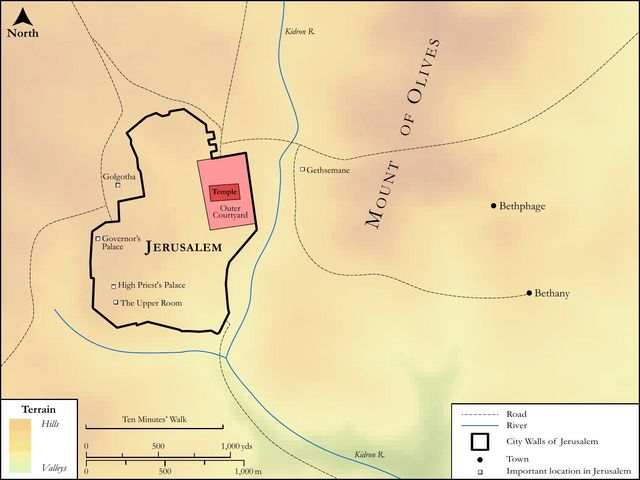
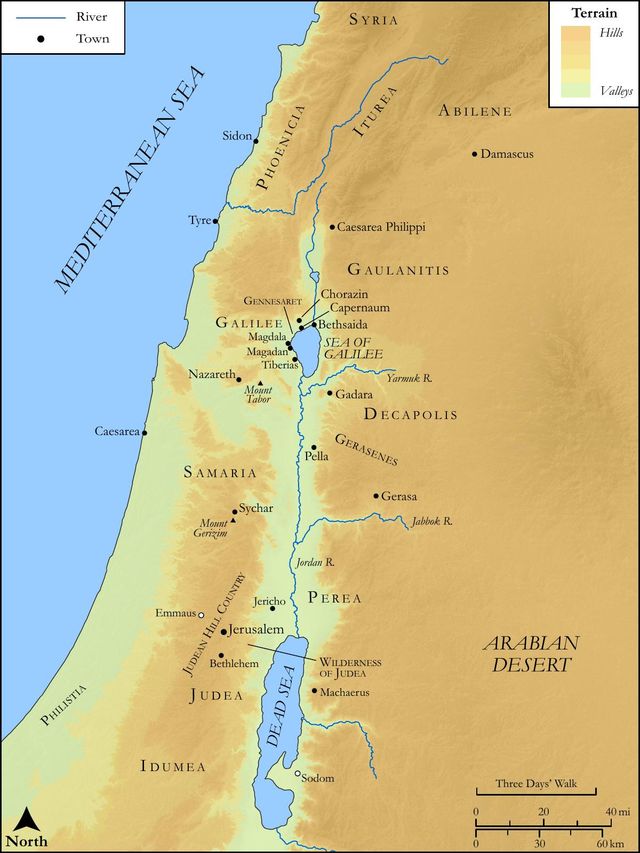
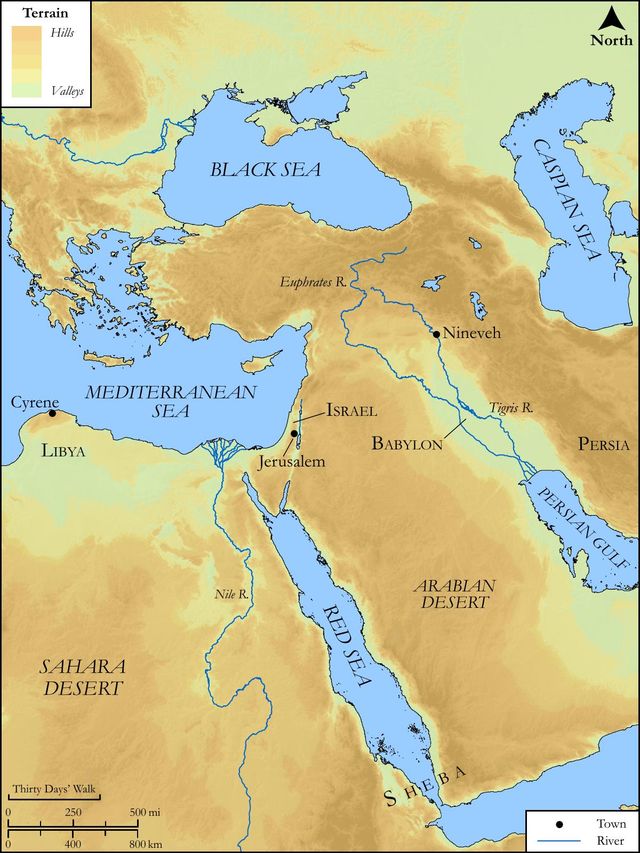
See on the biblical-era map
Study this verse
Public-domain commentary
Matthew Henry
From his Commentary on the Whole Bible. Henry comments on passages, not single verses — this entry covers Matthew 18:1–35. His four-level outline is real structure in the source text, so it is rendered as structure.
As there never was a greater pattern of humility, so there never was a greater preacher of it, than Christ; he took all occasions to command it, to commend it, to his disciples and followers.
I.The occasion of this discourse concerning humility was an unbecoming contest among the disciples for precedency; they came to him, saying, among themselves (for they were ashamed to ask him, Mar 9:34), Who is the greatest in the kingdom of heaven? They mean not, who by character (then the question had been good, that they might know what graces and duties to excel in), but who by name. They had heard much, and preached much, of the kingdom of heaven, the kingdom of the Messiah, his church in this world; but ass yet they were so far from having any clear notion of it, that they dreamt of a temporal kingdom, and the external pomp and power of it. Christ had lately foretold his sufferings, and the glory that should follow, that he should rise again, from whence they expected his kingdom would commence; and now they thought it was time to put in for their places in it; it is good, in such cases, to speak early. Upon other discourses of Christ to that purport, debates of this kind arose (Mat 20:19, Mat 20:20; Luk 22:22, Luk 22:24); he spoke many words of his sufferings, but only one of his glory; yet they fasten upon that, and overlook the other; and, instead of asking how they might have strength and grace to suffer with him, they ask him, "Who shall be highest in reigning with him." Note, Many love to hear and speak of privileges and glory, who are willing to pass by the thoughts of work and trouble. They look so much at the crown, that they forget the yoke and the cross. So the disciples here did, when they asked, Who is the greatest in the kingdom of heaven?
1.They suppose that all who have a place in that kingdom are great, for it is a kingdom of priests. Note, Those are truly great who are truly good; and they will appear so at last, when Christ shall own them as his, though ever so mean and poor in the world.
2.They suppose that there are degrees in this greatness. All the saints are honourable, but not all alike so; one star differs from another star in glory. All David's officers were not worthies, nor all his worthies of the first three.
3.They suppose it must be some of them, that must be prime ministers of state. To whom should King Jesus delight to do honour, but to them who had left all for him, and were now his companions in patience and tribulation?
4.They strive who it should be, each having some pretence or other to it. Peter was always the chief speaker, and already had the keys given him; he expects to be lord-chancellor, or lord-chamberlain of the household, and so to be the greatest. Judas had the bag, and therefore he expects to be lord-treasurer, which, though now he come last, he hopes, will then denominate him the greatest. Simon and Jude are nearly related to Christ, and they hope to take place of all the great officers of state, as princes of the blood. John is the beloved disciple, the favourite of the Prince, and therefore hopes to be the greatest. Andrew was first called, and why should not he be first preferred? Note, We are very apt to amuse and humour ourselves with foolish fancies of things that will never be.
II.The discourse itself, which is a just rebuke to the question, Who shall be greatest? We have abundant reason to think, that if Christ ever intended that Peter and his successors at Rome should be heads of the church, and his chief vicars on earth, having so fair an occasion given him, he would now have let his disciples know it; but so far is he from this, that his answer disallows and condemns the thing itself. Christ will not lodge such an authority or supremacy any where in his church; whoever pretend to it are usurpers; instead of settling any of the disciples in this dignity, he warns them all not to put in for it.
Christ here teacheth them to be humble,
1.By a sign (Mat 18:2); He called a little child to him, and set him in the midst of them. Christ often taught by signs or sensible representations (comparisons to the eye), as the prophets of old. Note, Humility is a lesson so hardly learned, that we have need by all ways and means to be taught it. When we look upon a little child, we should be put in mind of the use Christ made of this child. Sensible things must be improved to spiritual purposes. He set him in the midst of them; not that they might play with him, but that they might learn by him. Grown men, and great men, should not disdain the company of little children, or think it below them to take notice of them. They may either speak to them, and give instruction to them; or look upon them, and receive instruction from them. Christ himself, when a child, was in the midst of the doctors, Luk 2:46.
2.By as sermon upon this sign; in which he shows them and us,
(1.)The necessity of humility, Mat 18:3. His preface is solemn, and commands both attention and assent; Verily I say unto you, I, the Amen, the faithful Witness, say it, Except ye be converted, and become as little children, ye shall not enter into the kingdom of heaven. Here observe,
[1.]What it is that he requires and insists upon.
First, "You must be converted, you must be of another mind, and in another frame and temper, must have other thoughts, both of yourselves and of the kingdom of heaven, before you be fit for a place in it. The pride, ambition, and affectation of honour and dominion, which appear in you, must be repented of, mortified, and reformed, and you must come to yourselves." Note, Besides the first conversion of a soul from a state of nature to a state of grace, there are after-conversions from particular paths of backsliding, which are equally necessary to salvation. Every step out of the way by sin, must be a step into it again by repentance. When Peter repented of his denying his Master, he was converted. Secondly, You must become as little children. Note, Converting grace makes us like little children, not foolish as children (Co1 14:20), nor fickle (Eph 4:14), nor playful (Mat 11:16); but, as children, we must desire the sincere milk of the word (Pe1 2:2); as children, we must be careful for nothing, but leave it to our heavenly Father to care for us (Mat 6:31); we must, as children, be harmless and inoffensive, and void of malice (Co1 14:20), governable, and under command (Gal 4:2); and (which is here chiefly intended) we must be humble as little children, who do not take state upon them, nor stand upon the punctilios of honour; the child of a gentleman will play with the child of a beggar (Rom 12:16), the child in rags, if it have the breast, is well enough pleased, and envies not the gaiety of the child in silk; little children have no great aims at great places, or projects to raise themselves in the world; they exercise not themselves in things too high for them; and we should in like manner behave, and quiet ourselves, Psa 131:1, Psa 131:2. As children are little in body and low in stature, so we must be little and low in spirit, and in our thoughts of ourselves. This is a temper which leads to other good dispositions; the age of childhood is the learning age.
[2.]What stress he lays upon this; Without this, you shall not enter into the kingdom of heaven. Note, Disciples of Christ have need to be kept in awe by threatenings, that they may fear lest they seem to come short, Heb 4:1. The disciples, when they put that question (Mat 18:1), thought themselves sure of the kingdom of heaven; but Christ awakens them to be jealous of themselves. They were ambitious of being greatest in the kingdom of heaven; Christ tells them, that, except they came to a better temper, they should never come thither. Note, many that set up for great ones in the church, prove not only little, but nothing, and are found to have no part or lot in the matter. Our Lord designs here to show the great danger of pride and ambition; whatever profession men make, if they allow themselves in this sin, they will be rejected both from God's tabernacle and from his holy hill. Pride threw the angels that sinned out of heaven, and will keep us out, if we be not converted from it. They that are lifted up with pride, fall into the condemnation of the devil; to prevent this, we must become as little children, and, in order to do that, must be born again, must put on the new man, must be like the holy child Jesus; so he is called, even after his ascension, Act 4:27.
(2.)He shows the honour and advancement that attend humility (Mat 18:4), thus furnishing a direct but surprising answer to their question. He that humbles himself as a little child, though he may fear that hereby he will render himself contemptible, as men of timid minds, who thereby throw themselves out of the way of preferment, yet the same is greatest in the kingdom of heaven. Note, The humblest Christians are the best Christians, and most like to Christ, and highest in his favour; are best disposed for the communications of divine grace, and fittest to serve God in this world, and enjoy him in another. They are great, for God overlooks heaven and earth, to look on such; and certainly those are to be most respected and honoured in the church that are most humble and self-denying; for, though they least seek it, they best deserve it.
(3.)The special care Christ takes for those that are humble; he espouses their cause, protects them, interests himself in their concerns, and will see that they are not wronged, without being righted.
Those that thus humble themselves will be afraid,
[1.]That nobody will receive them; but (Mat 18:5), Whoso shall receive one such little child in my name, receiveth me. Whatever kindnesses are done to such, Christ takes as done to himself. Whoso entertains a meek and humble Christian, keeps him in countenance, will not let him lose by his modesty, takes him into his love and friendship, and society and care, and studies to do him a kindness; and doth this in Christ's name, for his sake, because he bears the image of Christ, serves Christ, and because Christ has received him; this shall be accepted and recompensed as an acceptable piece of respect to Christ. Observe, Though it be but one such little child that is received in Christ's name, it shall be accepted. Note, The tender regard Christ has to his church extends itself to every particular member, even the meanest; not only to the whole family, but to every child of the family; the less they are in themselves, to whom we show kindness, the more there is of good will in it to Christ; the less it is for their sakes, the more it is for his; and he takes it accordingly. If Christ were personally among us, we think we should never do enough to welcome him; the poor, the poor in spirit, we have always with us, and they are his receivers. See Mat 25:35-40.
[2.]They will be afraid that every body will abuse them; the basest men delight to trample upon the humble; Vexat censura columbas - Censure pounces on doves. This objection he obviates (Mat 18:6), where he warns all people, as they will answer it at their utmost peril, not to offer any injury to one of Christ's little ones. This word makes a wall of fire about them; he that touches them, touches the apple of God's eye.
Observe, First, The crime supposed; offending one of these little ones that believe in Christ. Their believing in Christ, though they be little ones, unites them to him, and interests him in their cause, so that, as they partake of the benefit of his sufferings, he also partakes in the wrong of theirs. Even the little ones that believe have the same privileges with the great ones, for they have all obtained like precious faith. There are those that offend these little ones, by drawing them to sin (Co1 8:10, Co1 8:11), grieving and vexing their righteous souls, discouraging them, taking occasion from their mildness to make a prey of them in their persons, families, goods, or good name. Thus the best men have often met with the worst treatment in this world.
Secondly, The punishment of this crime; intimated in that word, Better for him that he were drowned in the depth of the sea. The sin is so heinous, and the ruin proportionably so great, that he had better undergo the sorest punishments inflicted on the worst of malefactors, which can only kill the body. Note, 1. Hell is worse than the depth of the sea; for it is a bottomless pit, and it is a burning lake. The depth of the sea is only killing, but hell is tormenting. We meet with one that had comfort in the depth of the sea, it was Jonah (Jon 2:2, Jon 2:4, Jon 2:9); but never any had the least grain or glimpse of comfort in hell, nor will have to eternity. 2. The irresistible irrevocable doom of the great Judge will sink sooner and surer, and bind faster, than a mill-stone hanged about the neck. It fixes a great gulf, which can never be broken through, Luk 16:26. Offending Christ's little ones, though by omission, is assigned as the reason of that dreadful sentence, Go ye cursed, which will at last be the doom of proud persecutors.
Historical interpretation
Nine Centuries of Reception
13 surviving comments on this verse. Each one is dated, so this reads as a timeline rather than a list.
Select a marker to jump to its quote. Markers stagger vertically where authors wrote within a few decades of each other.
The Angels offer daily to God the prayers of those that are to be saved by Christ; it is therefore perilous to despise him whose desires and requests are conveyed to the eternal and invisible God, by the service and ministry of Angels.
But by the one sheep is to be understood one man, and under this one man is comprehended the whole human race. He that seeks man is Christ, and the ninety and nine are the host of the heavenly glory which He left.
The sheep that became lost is the sinner lost from the flock of a hundred. This could refer to the number of the heavenly powers. These powers are capable of speech and reasoning. The one sheep is counted as being among the flock, a part of a great number, as if among “a hundred sheep.” His wandering is the consequence of Adam’s fall. He is searched for. He is of like nature to those who stay at God’s side. He is necessary for their full complement, so that the shepherd may not be deficient and wanting. The summing up of what Paul calls “the whole in Christ” involves the regaining of the deficient part, since the composition of the whole in Christ is not complete because of the deficient and absent one.
Or otherwise; As to shun the evil, so to honour the good, has great recompense. Above then He had bid them to cut off the friendships of those that gave offence, here He teaches them to show honour and service to the saints.
Or because the perfect are esteemed of many as little ones, as poor, namely, and despicable.
Here He is speaking not of any Angels, but of the higher sort; for when He says, Behold the face of my Father, He shows that their presence before God is free and open, and their honour great.
He gives yet another reason weightier than the foregoing, why the little ones are not to be despised, For the Son of Man is come to save that which was lost.
And to this reasoning He adds a parable, in which He sets forth the Father as seeking the salvation of men, and saying, What think you, If a man have a hundred sheep.
"Take heed that ye despise not one of these little ones; for I say unto you, that their angels do always behold the face of my Father which is in Heaven."
He calleth little ones not them that are really little, but them that are so esteemed by the multitude, the poor, the objects of contempt, the unknown (for how should he be little who is equal in value to the whole world; how should he be little, who is dear to God?); but them who in the imagination of the multitude are so esteemed.
And He speaks not of many only, but even of one, even by this again warding off the hurt of the many offenses. For even as to flee the wicked, so also to honor the good, hath very great gain, and would be a twofold security to him who gives heed, the one by rooting out the friendships with them that offend, the other from regarding these saints with respect and honor.
Then in another way also He makes them objects of reverence, saying, "That their angels do always behold the face of my Father which is in Heaven."
Hence it is evident, that the saints have angels, or even all men. For the apostle too saith of the woman, "That she ought to have power on her head because of the angels." And Moses, "He set the bounds of the nations according to the number of the angels of God."
But here He is discoursing not of angels only, but rather of angels that are greater than others. But when He saith, "The face of my Father," He means nothing else than their fuller confidence, and their great honor.
"For the Son of Man is come to save that which was lost."
Again, He is putting another reason stronger than the former, and connects with it a parable, by which He brings in the Father also as desiring these things. "For how think ye?" saith He; "If a man have an hundred sheep, and one of them be gone astray, doth he not leave the ninety and nine, and goeth into the mountains, and seeketh that which is gone astray? And if so be that he find it, he rejoiceth over it more than over the ninety and nine, which went not astray. Even so it is not will before your Father, that one of these little ones should perish."
Seest thou by how many things He is urging to the care of our mean brethren. Say not then, "Such a one is a blacksmith, a shoemaker, he is a ploughman, he is a fool," and so despise him. For in order that thou shouldest not feel this, see by how many motives He persuades thee to practise moderation, and presses thee into a care for these. He set a little child, and saith, "Be ye as little children." And, "Whosoever receiveth such a little child receiveth me;" and, "Whosoever shall offend," shall suffer the utmost penalties. And He was not even satisfied with the comparison of the "millstone," but added also His "woe," and commanded us to cut off such, though they be in the place of hands and eyes to us. And by the angels again that are entrusted with these same mean brethren, He makes them objects of veneration, and from His own will and passion (for when He said, "The Son of Man is come to save that which was lost," He signifies even the cross, like as Paul saith, speaking of a brother, "For whom Christ died"); and from the Father, for that neither to Him doth it seem good that one should perish; and from common custom, because the shepherd leaves them that are safe, and seeks what is lost; and when he hath found what was gone astray, he is greatly delighted at the finding and the saving of this.
If then God thus rejoices over the little one that is found, how dost thou despise them that are the objects of God's earnest care, when one ought to give up even one's very life for one of these little ones? But is he weak and mean? Therefore for this very cause most of all, one ought to do everything in order to preserve him. For even He Himself left the ninety and nine sheep, and went after this, and the safety of so many availed not to throw into the shade the loss of one. But Luke saith, that He even brought it on his shoulders, and that "There was greater joy over one sinner that repenteth, than over ninety and nine just persons" And from His forsaking those that were saved for it, and from His taking more pleasure in this one, He showed His earnestness about it to be great.
Let us not then be careless about such souls as these. For all these things are said for this object. For by threatening, that he who has not become a little child should not so much as at all set foot in the Heavens, and speaking of "the millstone," He hath brought down the haughtiness of the boastful; for nothing is so hostile to love as pride; and by saying, "It must needs be that offenses come," He made them to be wakeful; and by adding, "Woe unto him by whom the offense cometh," He hath caused each to endeavor that it be not by him. And while by commanding to cut off them that offend He made salvation easy; by enjoining not to despise them, and not merely enjoining, but with earnestness (for "take heed," saith He, "that ye despise not one of these little ones"), and by saying, "Their angels behold the face of my Father," and, "For this end am I come," and "my Father willeth this," He hath made those who should take care of them more diligent.
Seest thou what a wall He hath set around them, and what earnest care He taketh of them that are contemptible and perishing, at once threatening incurable ills to them that make them fall, and promising great blessings to them that wait upon them, and take care of them, and bringing an example from Himself again and from the Father?
Him let us also imitate, refusing none of the tasks that seem lowly and troublesome for our brethren's sake; but though we have to do service, though he be small, though he be mean for whom this is done, though the work be laborious, though we must pass over mountains and precipices, let all things be held endurable for the salvation of our brother. For a soul is an object of such earnest care to God, that "He spared not His own Son."
(Verse 14) So it is not the will of your Father who is in heaven that one of these little ones should perish. He refers to the previously stated proposition, of which he said: See that you do not despise one of these little ones; and he teaches this by means of a placed parable, so that the little ones may not be despised. And in what he says: It is not the will of your Father that one of these little ones should perish: whenever one of these little ones perishes, it is shown that it is not by the will of the Father.
The Lord had said, under the type of hand, foot, and eye, that all kin and connection which could afford scandal must be cut off. The harshness of this declaration He accordingly tempers with the following precept, saying, Take heed that ye despise not one of these little ones; i. e. As far as you may avoid despising them, but next to your own salvation seek also to heal them. But if ye see that they hold to their sins, it is better that ye be saved, than that ye perish in much company.
High dignity of souls, that each from its birth has an Angel set in charge over it!
Others think that by the ninety and nine sheep are understood the number of the righteous, and by the one sheep the sinners, according to that said in another place, I am not come to call the righteous but sinners to repentance. (Matt. 9:13.)
What follows, Even so it is not the will, &c. is to be referred to what was said above, Take heed that ye despise not one of these little ones; and so He shows that this parable was set forth to enforce that same saying. Also in saying, It is not the will of my Father which is in heaven that one of these little ones should perish, He shows that so oft as one of these little ones does perish, it is not by the Father's will that it perishes.
As much as to say, Despise not little ones, for I also for men condescended to become man. By that which was lost, understand the human race; for all the elements have kept their place, but man was lost, because he has broken his ordained place.
We must consider, my brothers, why the Lord declares there is more joy in heaven over converted sinners than over the just who stand firm, unless it is what we ourselves know through daily experience of observation: that very often those who know themselves weighed down by no burden of sins do indeed stand in the way of justice, commit no unlawful acts, yet do not anxiously long for the heavenly homeland, and grant themselves as much use of lawful things as they remember having committed no unlawful ones. And very often they remain sluggish in practicing the highest goods, because they are quite secure in themselves that they have committed no graver evils. But on the contrary, sometimes those who remember having done certain unlawful things, pierced with compunction by their very grief, burn ardently with love of God, and exercise themselves in great virtues, seek out all the difficulties of holy struggle, abandon all worldly things, flee honors, rejoice when insults are received, burn with desire, long for the heavenly homeland; and because they consider that they have strayed from God, they compensate for preceding losses with subsequent gains. Therefore there is greater joy in heaven over a converted sinner than over a just person standing firm, because a commander in battle also loves more that soldier who, returning after flight, vigorously presses the enemy, than the one who never showed his back, and never performed any deed of valor. So too the farmer loves more that land which after thorns brings forth abundant crops, than that which never had thorns and never produces a fertile harvest.
(Hom. in Ev. 34. 12) But Dionysius says, that it is from the ranks of the lesser Angels that these are sent to perform this ministry, either visibly or invisibly, for that those higher ranks have not the employment of an outward ministry.
(Mor. ii. 3.) And therefore the Angels always behold the face of the Father, and yet they come to us, for by a spiritual presence they come forth to us, and yet by internal contemplation keep themselves there whence they come forth; for they come not so forth from the divine vision, as to hinder the joys of inward contemplation.
(Hom. in Ev. xxxiv. 3.) This refers to the Creator of man Himself; for a hundred is a perfect number, and He had a hundred sheep when He created the substance of Angels and men.
(ubi sup.) The Evangelist says they were left on the mountains, to signify that the sheep which were not lost abode on high.
(ubi sup.) We must consider whence it is that the Lord declares that He has joy rather over the converted sinners, than over the righteous that stand. Because these last are often slothful and slack to practise the greater good works, as being very secure within themselves, for that they have committed none of the heavier sins. While on the other hand those who have their wicked deeds to remember, do often through the compunction of sorrow glow with the more heat in their love of God, and when they think how they have strayed from Him, they replace their former losses by gains following. So the general in a battle loves best that soldier who turns in his flight and courageously presses the enemy, than him who never turned his back, yet never did any valorous deed. Yet there be some righteous over whom is joy so great, that no penitent can be preferred before them, those, who though not conscious to themselves of sins, yet reject things lawful, and humble themselves in all things. How great is the joy when the righteous mourns, and humbles himself, if there be joy when the unrighteous condemns himself wherein he has done amiss?
(ap. Anselm.) The Lord found the sheep when He restored man, and over that sheep that is found there is more joy in heaven than over the ninety and nine, because there is a greater matter for thanksgiving to God in the restoration of man than in the creation of the Angels. Wonderfully are the Angels made, but more wonderfully man restored.
(ap. Anselm.)f; Or, By the ninety-nine sheep, which He left on the mountains, are signified the proud to whom a unit is still wanting for perfection. When then He has found the sinner, He rejoices over him, that is, He makes his own to rejoice over him, rather than over the false righteous.
Note, that nine wants only one to make it ten, and ninety and nine the same to be a hundred. Thus members which want one only to be perfect, may be larger or smaller, but yet the unit remaining invariable, when it is added makes the rest perfect. And that the number of sheep might be made up perfect in heaven, lost man was sought on earth.
. What man had a hundred sheep? Christ. For all of the reason-endowed creation, both angels and men, are the hundred sheep, of which Christ is the shepherd, not another sheep. For He is not a creature but the Son of God. So He left the ninety and nine in the heavens, and taking on the form of a servant He came to seek the one sheep, which is the fallen human nature. And He rejoices more over it than over the steadfastness of the angels. This shows in a few words how diligently God pursues the conversion of sinners, and rejoices more over them than over those who are constant in virtue.
(ap. Anselm.) Or otherwise; Because so great evils come of brethren being scandalized, Take heed that ye despise not one of these little ones.
(ap. Anselm.) Therefore are they not to be despised for that they are so dear to God, that Angels are deputed to be their guardians; For I say unto you, that in heaven their Angels do always behold the face of my Father which is in heaven.
Continue studying Matthew 18:14 across the web’s major study libraries — every link below opens this exact verse, chapter, or book on the destination site.
Read & Compare
 BibleGatewayThis verse in more than 200 translations and 70 languages.
 Bible.comThe YouVersion reader — hundreds of translations, reading plans, and highlights.
 ESV.orgCrossway's official English Standard Version reader.
 NET BibleThe NET translation with 60,000+ translators' notes on every rendering decision.
 STEP BibleTyndale House's free study tool — original text, vocabulary, and scholarly resources.
 BibliaLogos Bible Software's free web reader.
 USCCBThe New American Bible (Revised Edition) with the U.S. bishops' study notes.
Commentaries
 BibleHub CommentariesDozens of classic commentaries on this verse, gathered on one page.
 StudyLightMore than 100 commentary sets — the largest collection on the web.
 BibleRefPlain-English commentary on what this verse means, verse by verse.
 Enduring WordDavid Guzik's free commentary on this chapter, widely used by Bible teachers.
 Bible Study ToolsVerse commentary alongside Greek and Hebrew study aids.
Original Language & Research
- BibleHub InterlinearThe verse word by word — original language, transliteration, and English.
- BibleHub LexiconEvery word's original-language definition and Strong's entry.
 Blue Letter BibleDeep-study tools — Strong's numbers, concordance, and word studies.
 CNTR CollationThe earliest Greek manuscripts of this verse, collated letter by letter.
Sermons, Hymns & Audio


TrulyRandomVerse is not affiliated with these sites and doesn’t control their content. They’re linked because they’re genuinely useful.
Summary
Matthew 18:14 stands as a profound declaration of God's benevolent and active will, revealing the Heavenly Father's deep desire that not even one of His "little ones"—those who are humble, vulnerable, or new in faith—should ever be lost to spiritual ruin. This verse encapsulates the divine heart of redemption, emphasizing the immeasurable value God places on every individual soul and His relentless pursuit to preserve them within His kingdom.
Context
ShowHideLiterary Context
This verse concludes a significant section of Jesus' teaching in Matthew 18, often referred to as the "Discourse on Humility and Forgiveness." The chapter begins with the disciples' question about who is greatest in the kingdom of heaven, prompting Jesus to call a child and declare that greatness is found in humility and childlike faith (Matthew 18:1-4). Following this, Jesus issues a severe warning against causing these "little ones" to stumble (Matthew 18:6-9). The immediate precursor to verse 14 is the Parable of the Lost Sheep, where a shepherd leaves ninety-nine sheep to search for one that has gone astray, rejoicing greatly when it is found. Matthew 18:14 serves as the interpretive key and theological summation of this parable, directly linking the shepherd's diligent search to the Father's divine will for the salvation of the vulnerable.
Historical & Cultural Context
In the first-century Jewish world, children generally held a low social status and possessed little to no legal standing. They were dependent and often overlooked. By using a child as an example of humility and then extending the term "little ones" to encompass vulnerable believers, Jesus subverts conventional societal values. His teaching elevates the status of the lowly and highlights God's particular care for those whom society might deem insignificant. The imagery of a shepherd and his flock was also deeply resonant in an agrarian society, and it carried rich Old Testament connotations of God as the Shepherd of His people, providing, protecting, and seeking out the lost (e.g., Psalm 23 or Ezekiel 34). This context underscores the radical nature of Jesus' emphasis on the value of every individual, especially the vulnerable.
Key Themes
ShowHideThis verse powerfully contributes to several overarching themes in Matthew and the broader biblical narrative. Firstly, it highlights God's Divine Will for Salvation, asserting that the Father's ultimate desire is for the preservation and salvation of His people, not their destruction. This echoes the sentiment found in 2 Peter 3:9, where it states that the Lord is "not willing that any should perish, but that all should come to repentance." Secondly, it underscores the Immense Value of Every Individual in God's eyes. The parable of the lost sheep, immediately preceding this verse, vividly illustrates that even one "little one" is worth the diligent pursuit of the Shepherd, reflecting the profound love of God for each soul. Finally, it implicitly calls for the Protection of the Vulnerable within the community of faith. The warning against causing these "little ones" to stumble (Matthew 18:6) combined with the Father's will for their preservation, places a clear responsibility on believers to nurture and safeguard those who are spiritually young, weak, or easily led astray.
Exposition and Analysis
ShowHideKey Word Analysis
ShowHideThis word signifies a determination, purpose, decree, or volition. In this context, it refers to God the Father's active, benevolent, and fixed purpose. It is not merely a passive desire but an intentional, sovereign resolve concerning the destiny of His "little ones." This "will" is foundational to His character and redemptive plan.
Meaning small in size, quantity, number, or figuratively, dignity. While it can literally refer to children, in the broader context of Matthew 18, it extends to those who are humble, vulnerable, new in faith, or considered insignificant by the world. It encompasses disciples who are weak, easily influenced, or prone to stumbling, highlighting their dependence and need for care.
Meaning to destroy fully, to perish, or to lose, literally or figuratively. In this theological context, "perish" does not refer to physical death but to spiritual ruin, eternal separation from God, or being ultimately lost from His presence. It signifies a state of spiritual destruction and eternal damnation, emphasizing the seriousness of the Father's desire for their salvation and preservation.
Verse Breakdown
ShowHide"Even so it is not the will of your Father which is in heaven,"
This opening clause establishes the divine decree and the source of this profound truth. "Even so" (G3779, hoútō) links directly back to the preceding parable of the lost sheep, indicating that just as the shepherd rejoices over finding one lost sheep, so too does the Heavenly Father. The phrase "not the will" (G3756, ou + G2307, thélēma) is a strong negation, asserting definitively that God's purpose is contrary to the perishing of His children. The identification of God as "your Father which is in heaven" (G3962, patḗr + G1722, en + G3772, ouranós) emphasizes His personal relationship with believers, His supreme authority, and His perfect, loving nature.
"that one of these little ones should perish."
This clause specifies the object and outcome of the Father's will. "That" (G2443, hína) introduces the purpose or result. "One of these little ones" (G1520, heîs + G5130, toútōn + G3398, mikrós) highlights the individual value God places on each person, no matter how humble or vulnerable. The use of "one" underscores the meticulous care and attention God gives to each soul. The verb "should perish" (G622, apóllymi) describes the dire spiritual consequence that God actively wills against, confirming His desire for their eternal well-being and salvation rather than their spiritual destruction.
Literary Devices
ShowHideMatthew 18:14 employs several powerful literary devices to convey its profound message. The most prominent is Emphasis through Negation, where Jesus states what is not the Father's will ("not the will") to underscore what is His will—the preservation of the little ones. This creates a strong, unambiguous declaration. There is also clear Anthropomorphism, attributing human-like volition and desire ("will," "not willing") to God the Father, making His divine purpose relatable and understandable to human listeners. The phrase "one of these little ones" uses Synecdoche, where "one" represents the whole category of vulnerable believers, emphasizing the individual significance within the larger group. Finally, the verse functions as a Theological Statement that interprets the preceding parable, drawing a direct theological conclusion from the narrative action of the shepherd, thus elevating the parable's practical lesson to a divine principle.
Theological and Thematic Connections
ShowHideMatthew 18:14 is a cornerstone verse that illuminates the very character of God, portraying Him as a loving, compassionate Father who actively desires the eternal well-being of His children. It underscores the profound truth that God's redemptive purpose is inclusive and extends to the most vulnerable, reflecting His boundless grace and mercy. This divine will for salvation is not merely a passive hope but an active, sovereign commitment that shapes His interaction with humanity and forms the basis for the mission of the church to seek and save the lost. The verse challenges any notion of a distant or indifferent deity, instead presenting a God who is intimately concerned with the destiny of every individual soul, particularly those who might be overlooked or deemed insignificant by the world.
Reflection and Application
ShowHideMatthew 18:14 offers immense comfort and a profound challenge to believers. For those who feel small, overlooked, or even lost in their faith journey, this verse is a powerful assurance that the Heavenly Father sees them, values them, and actively desires their spiritual flourishing and eternal salvation. It reminds us that our worth is not determined by worldly standards of greatness or strength, but by God's infinite love and His specific will for our preservation. This truth should instill deep confidence and peace, knowing that we are held securely in His divine purpose.
Beyond personal comfort, this verse calls the church and individual Christians to embody the Father's heart. We are mandated to extend radical care and protection to the "little ones" among us—new converts, those struggling with doubt, the lowly, and the vulnerable. This means actively working against anything that might cause them to stumble, providing nurturing discipleship, offering compassionate support, and relentlessly pursuing those who have strayed, just as the shepherd sought the one lost sheep. Our actions within the community of faith should reflect God's unwavering commitment to prevent spiritual loss, ensuring that no one perishes due to neglect, harshness, or lack of guidance.
Questions for Reflection
ShowHideFAQ
ShowHideWho are the "little ones" Jesus refers to in Matthew 18:14?
ShowHideThe "little ones" (Greek: mikroi) in Matthew 18 primarily refer to those who are humble in spirit, childlike in their faith, or vulnerable within the community of believers. While the chapter begins with Jesus using an actual child as an example of humility (Matthew 18:2-4), the term quickly expands to include new converts, those weak in faith, or any disciple who is easily overlooked, despised, or susceptible to being led astray. It encompasses anyone who, in their spiritual journey, is dependent and in need of protection and nurturing, reflecting a spiritual state rather than solely a physical age.
Does this verse imply universal salvation, meaning everyone will ultimately be saved?
ShowHideNo, Matthew 18:14 does not teach universal salvation. While it clearly states that it is "not the will of your Father... that one of these little ones should perish," this refers specifically to "these little ones"—those who are already identified as belonging to God's flock, those who are humble and vulnerable within the community of faith. The verse emphasizes God's active desire for the preservation of His children and the diligence with which He seeks to prevent their spiritual ruin. It highlights His character and redemptive purpose for those He has called, rather than asserting that all humanity, regardless of faith, will ultimately be saved. Other scriptures consistently affirm the necessity of faith and repentance for salvation (John 3:16-18, Acts 4:12).
What does it mean for God's "will" that one should "perish"?
ShowHideThe "will" (Greek: thélēma) of God here refers to His benevolent and active purpose or desire. It means that God the Father does not intend or decree the spiritual destruction (Greek: apóllymi, to perish or be lost eternally) of those who are His. Instead, His will is for their salvation, preservation, and eternal life. This verse underscores God's deep compassion and His commitment to His covenant people. It contrasts God's loving desire with the tragic reality of spiritual loss, highlighting His active pursuit to prevent such an outcome for His "little ones." This divine will is perfectly aligned with His character as a loving Shepherd who seeks to gather and protect His flock.
Christ-Centered Fulfillment
ShowHideMatthew 18:14 finds its ultimate and most profound fulfillment in the person and work of Jesus Christ. He is the embodiment of the Father's will, the very manifestation of God's desire that not one of His "little ones" should perish. Jesus is the Good Shepherd, who not only leaves the ninety-nine to seek the one lost sheep, but is the one who lays down His life for the sheep (John 10:15). His entire earthly ministry was a relentless pursuit of the lost, the lowly, and the vulnerable—the very "little ones" His Father wills to preserve. From His incarnation, humbling Himself to become one of us (Philippians 2:6-8), to His compassionate healing and teaching of the crowds, Jesus consistently sought out those whom society deemed insignificant. Ultimately, His atoning death on the cross and His resurrection are the supreme acts by which the Father's will is accomplished, providing the means by which "little ones" are rescued from perishing and granted eternal life (Romans 5:8). Through Christ, the Father's will to save is not merely a desire but a glorious, accomplished reality, ensuring that all who come to Him will never be lost (John 6:39).