


1 Peter 4:4
Bible text: King James Version (1769 Blayney text) · Public domain
Bible text: Berean Standard Bible · Public domain
Bible text: American Standard Version (1901) · Public domain
Bible text: World English Bible, Messianic edition · Public domain
Bible text: Geneva Bible (1599) · Public domain
Bible text: Young's Literal Translation · Public domain
- ἐνenWith respect toG1722PREPPreposition
- ᾧhōthisG3739R-DSNRelative pronoun Dative Singular Neuter
- ξενίζονταιxenizontaithey think it strangeG3579V-PPI-3PVerb Present Passive Indicative 3rd Plural
- μὴmēnotG3361PRT-NNegative Particle Negative
- συντρεχόντωνsuntrechontōnrunning with [them]G4936V-PAP-GPMVerb Present Active Participle Genitive Plural Masculine
- ὑμῶνhumōnof youG4771P-2GPPersonal pronoun Genitive 2nd Plural
- εἰςeisintoG1519PREPPreposition
- τὴνtēntheG3588T-ASFDefinite article Accusative Singular Feminine
- αὐτὴνautēnsameG846P-ASFPersonal pronoun Accusative Singular Feminine
- τῆςtēs<the>G3588T-GSFDefinite article Genitive Singular Feminine
- ἀσωτίαςasōtiasof debaucheryG810N-GSFNoun Genitive Singular Feminine
- ἀνάχυσινanachusinoverflowG401N-ASFNoun Accusative Singular Feminine
- βλασφημοῦντεςblasphēmountesdenigrating [you]G987V-PAP-NPMVerb Present Active Participle Nominative Plural Masculine
English is a literal word-by-word gloss of the Greek, not the KJV's wording. Why?
This is the original text the KJV's translators worked from — each Greek word with its own literal English meaning in this verse, prepared by scholars at Tyndale House, Cambridge. The KJV translates whole sentences, not word by word, so its wording differs: one Greek word can become several English words, and the KJV may choose “charity” where the gloss reads “love”. Both are faithful — they answer different questions. For the KJV's own rendering, switch to the KJV text.
Details
See on the biblical-era maps

Study this verse
Public-domain commentary
Matthew Henry
From his Commentary on the Whole Bible. Henry comments on passages, not single verses — this entry covers 1 Peter 4:4–6. His three-level outline is real structure in the source text, so it is rendered as structure.
I.Here you have the visible change wrought in those who in the foregoing verse were represented as having been in the former part of their life very wicked. They no longer run on in the same courses, or with the same companions, as they used to do. Hereupon observe the conduct of their wicked acquaintance towards them.
1.They think it strange, they are surprised and wonder at it, as at something new and unusual, that their old friends should be so much altered, and not run with as much violence as they used to do to the same excess of riot, to the same sottish excesses and luxury which before they had greedily and madly followed.
2.They speak evil of them. Their surprise carries them to blasphemy. They speak evil of their persons, of their way, their religion, and their God. Learn,
(1.)Those that are once really converted will not return to their former course of life, though ever so much tempted by the frowns or flatteries of others to do so. Neither persuasion nor reproach will prevail with them to be or to do as they were wont to do.
(2.)The temper and behaviour of true Christians seem very strange to ungodly men. That they should despise that which every one else is fond of, that they should believe many things which to others seem incredible, that they should delight in what is irksome and tedious, be zealous where they have no visible interest to serve, and depend so much upon hope, is what the ungodly cannot comprehend.
(3.)The best actions of religious people cannot escape the censures and slanders of those who are irreligious. Those actions which cost a good man the most pains, hazard, and self-denial, shall be most censured by the uncharitable and ill-natured world; they will speak evil of good people, though they themselves reap the fruits of their charity, piety, and goodness.
II.For the comfort of the servants of God, it is here added,
1.That all wicked people, especially those who speak evil of such as are not as bad as themselves, shall give an account, and be put to give a reason of their behaviour, to him who is ready to judge, who is both able and duly authorized, and who will ere long judge and pass sentence upon all who shall then be found alive, and all such as being dead shall then be raised again, Jam 5:8, Jam 5:9; Pe2 3:7. Observe, The malignant world shall in a little time give an account to the great God of all their evil speeches against his people, Jde 1:14, Jde 1:15. They will soon be called to a sad account for all their curses, their foolish jests, their slanders and falsehoods, uttered against the faithful people of God.
2.That for this cause was the gospel preached also to those that are dead, that they might be judged according to men in the flesh, but live according to God in the Spirit, Pe1 4:6. Some understand this difficult place thus: For this cause was the gospel preached to all the faithful of old, who are now dead in Christ, that thereby they might be taught and encouraged to bear the unrighteous judgments and persecutions which the rage of men put upon them in the flesh, but might live in the Spirit unto God. Others take the expression, that they might be judged according to men in the flesh, in a spiritual sense, thus: The gospel was preached to them, to judge them, condemn them, and reprove them, for the corruption of their natures, and the viciousness of their lives, while they lived after the manner of the heathen or the mere natural man; and that, having thus mortified their sins, they might live according to God, a new and spiritual life. Take it thus; and thence learn, 1. The mortifying of our sins and living to God are the expected effects of the gospel preached to us. 2. God will certainly reckon with all those who have had the gospel preached to them, but without these good effects produced by it. God is ready to judge all those who have received the gospel in vain. 3. It is no matter how we are judged according to men in the flesh, if we do but live according to God in the Spirit.
Historical interpretation
Five Centuries of Reception
3 surviving comments on this verse. Each one is dated, so this reads as a timeline rather than a list.
Select a marker to jump to its quote. Markers stagger vertically where authors wrote within a few decades of each other.
These people are surprised and put off when they see us turning toward what is good rather than going along with them. And not only do they not seek the good, they fall away even into blasphemy.
In which they marvel, not running with you, etc. Because (he says) you have crucified your flesh with its passions and desires, it follows indeed that although they blaspheme you on account of their own infidelity, as separated from their company, yet in your behavior they always see works of justice and piety, which they rightfully marvel at and for which they rightly praise and revere the Christian faith.
For we have spent enough of our past lifetime in doing the will of the Gentiles, when we walked in filthiness, lusts, drunkenness, festivities, drinking parties, and abominable idolatries. Therefore, it seems strange to them that you do not run with them in the same flood of degeneracy. They will give an account to Him who is ready to judge the living and the dead.
"For we have spent." Whether we have abundantly operated the will of the Gentiles in our past life: that is, we have lived in a Gentile manner, walking according to the customs of the Gentiles. Therefore, the Gentiles now marvel at this.
"For we have spent." As if Peter were saying: But what? Is it not enough for you that for such a long time you have indulged in lust? Have you not lived in a similarly reckless manner as the Gentiles? And what those filthiness and obscenities were, he specifically mentions, confusing them.
"With drunkenness," with immoderate desires for wine.
"Therefore, it seems strange to them." They are amazed, that is, they admire. This is what he says: When you have once renounced the pursuits of the Gentiles, which you once lived by, you adhere to the honorable life that you have assumed. For even the Gentiles admire you, that you do not rush into a similar outpouring or confusion of impiety. And therefore, they not only admire and marvel at your strange transformation, not only are they ashamed, but they also slander you, that is, they mock you. For divine worship is an abomination to the sinner. However, they will not bear such slander unpunished, but will give an account to the judge of all, who sits unchallengeable and firmly for this very purpose: for this is what it signifies in this place to be prepared: just as when it is said, "Preparing mountains in your strength," (Ps. 65:6) and, "Your throne is prepared." (Ps. 93:2) Therefore, those who slander you will give an account to him who judges the living and the dead unchangeably and firmly. How he is the judge of the living and the dead will be made manifest in due course.
Continue studying 1 Peter 4:4 across the web’s major study libraries — every link below opens this exact verse, chapter, or book on the destination site.
Read & Compare
 BibleGatewayThis verse in more than 200 translations and 70 languages.
 Bible.comThe YouVersion reader — hundreds of translations, reading plans, and highlights.
 ESV.orgCrossway's official English Standard Version reader.
 NET BibleThe NET translation with 60,000+ translators' notes on every rendering decision.
 STEP BibleTyndale House's free study tool — original text, vocabulary, and scholarly resources.
 BibliaLogos Bible Software's free web reader.
 USCCBThe New American Bible (Revised Edition) with the U.S. bishops' study notes.
Commentaries
 BibleHub CommentariesDozens of classic commentaries on this verse, gathered on one page.
 StudyLightMore than 100 commentary sets — the largest collection on the web.
 BibleRefPlain-English commentary on what this verse means, verse by verse.
 Enduring WordDavid Guzik's free commentary on this chapter, widely used by Bible teachers.
 Bible Study ToolsVerse commentary alongside Greek and Hebrew study aids.
Original Language & Research
- BibleHub InterlinearThe verse word by word — original language, transliteration, and English.
- BibleHub LexiconEvery word's original-language definition and Strong's entry.
 Blue Letter BibleDeep-study tools — Strong's numbers, concordance, and word studies.
 CNTR CollationThe earliest Greek manuscripts of this verse, collated letter by letter.
Sermons, Hymns & Audio


TrulyRandomVerse is not affiliated with these sites and doesn’t control their content. They’re linked because they’re genuinely useful.
Summary
First Peter 4:4 describes the bewildered and hostile reaction of unbelievers to the transformed lives of Christians. Having previously participated in the same sinful excesses, these individuals now find it "strange" that believers no longer join their dissolute lifestyle, leading them to slander and revile those who have chosen a path of righteousness in Christ. This verse highlights the inevitable social friction and opposition that arises when a believer's commitment to God's will starkly contrasts with the world's unbridled pursuits.
Context
ShowHideLiterary Context
This verse is deeply embedded within Peter's broader exhortation to believers regarding their identity and conduct in light of Christ's suffering and impending judgment. In 1 Peter 4:1-3, Peter urges Christians to "arm yourselves with the same mind" as Christ, meaning to adopt a mindset prepared for suffering in the flesh, thereby ceasing from sin. He explicitly states that believers have already spent "enough time" living according to the desires of the Gentiles, engaging in various forms of sensuality, lusts, drunkenness, revelries, carousing, and abominable idolatries. Verse 1 Peter 4:4 directly follows this declaration, explaining the social consequences of this radical break from a former pagan lifestyle. It sets the stage for Peter's subsequent encouragement to live for God's will and to be prepared for the fiery trials that test their faith, as seen in 1 Peter 4:7-19.
Historical & Cultural Context
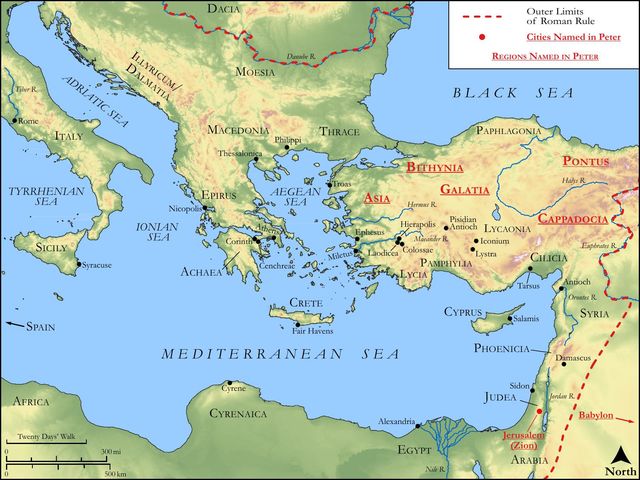
First Peter was written to Christians scattered throughout Asia Minor, many of whom were Gentile converts living in a predominantly pagan Roman society. This society was characterized by widespread polytheism, emperor worship, and a range of social practices that often involved public festivals, lavish banquets, and unrestrained revelry, often accompanied by sexual immorality and excessive drinking. For a new convert, abandoning these societal norms and participating in distinctively Christian gatherings (which were often misunderstood or viewed with suspicion) meant a significant break from their former social circles and cultural expectations. The "excess of riot" (ἀσωτία, asōtía) mentioned in the verse would have been a common feature of the pagan lifestyle, encompassing dissolute conduct, wasteful extravagance, and a general lack of moral restraint. Christians' refusal to participate in these activities would have been highly noticeable and seen as an affront to social cohesion, leading to bewilderment and hostility.
Key Themes
ShowHide1 Peter 4:4 contributes significantly to several key themes in the epistle. Firstly, it underscores the theme of Distinctive Christian Living and Separation from the World. Believers are called to a radical transformation that sets them apart from the prevailing culture, reflecting their new identity in Christ. This separation is not merely abstention but a positive commitment to God's will, as outlined in 1 Peter 4:2. Secondly, the verse highlights the theme of Suffering for Righteousness' Sake. Peter consistently prepares his readers for the reality that living a godly life will inevitably invite misunderstanding, ridicule, and even persecution from those who do not share their faith. This is a recurring motif, from 1 Peter 2:19-21 to 1 Peter 3:13-17. Finally, it touches on the theme of Divine Judgment and Accountability, as those who "speak evil" will "give account to Him who is ready to judge the living and the dead" (1 Peter 4:5).
Exposition and Analysis
ShowHideKey Word Analysis
ShowHideMeaning "to be a host (passively, a guest); by implication, be (make, appear) strange." In this context, it conveys the idea of being surprised, shocked, or bewildered. The unbelievers find it utterly alien and incomprehensible that their former companions no longer participate in their dissolute activities. It implies a sense of alienation or foreignness from the perspective of the world.
Meaning "properly, effusion, i.e. (figuratively) license." This word denotes an overflowing, a pouring out, or an unrestrained indulgence. When paired with "riot," it paints a vivid picture of unbridled, uncontrolled behavior, signifying a life lived without moral boundaries or self-control.
Meaning "properly, unsavedness, i.e. (by implication) profligacy." This term describes a life of wasteful extravagance, dissolute conduct, and utter profligacy. It signifies a reckless abandonment to sensual pleasures and a lack of moral restraint, often leading to ruin. It implies a state of being "unsaved" or beyond salvation in a moral sense, characterized by debauchery.
Meaning "to vilify; specially, to speak impiously." This word goes beyond mere disagreement; it implies active slander, defamation, reviling, or speaking abusively. It suggests malicious attacks on the character or reputation of believers, often accompanied by false accusations or insults designed to damage their standing in society.
Verse Breakdown
ShowHide"Wherein they think it strange"
This phrase refers to the specific lifestyle Peter has just described—the cessation of sinful practices by believers. The "they" are the unbelievers, the "Gentiles" from 1 Peter 4:3. Their reaction is one of astonishment and incomprehension. They cannot fathom why someone would willingly abandon such a life of pleasure and indulgence. This "strangeness" highlights the radical nature of Christian conversion and the stark contrast between the values of the world and the values of the kingdom of God.
"that ye run not with [them] to the same excess of riot"
This clause describes the specific behavior that causes the unbelievers' astonishment. The metaphor of "running with them" vividly portrays participation in their unrestrained, dissolute lifestyle. The "excess of riot" (ἀνάχυσις ἀσωτίας, anáchysis asōtías) refers to an overflowing, unrestrained indulgence in profligacy and debauchery. Believers, having been transformed, no longer join in these wild, immoral pursuits, marking a clear break from their past and from the prevailing societal norms. This refusal to conform is perceived as an act of rejection by their former companions.
"speaking evil of [you]:"
This final clause reveals the consequence of the unbelievers' bewilderment and rejection. Their incomprehension escalates into active hostility. "Speaking evil" (βλασφημοῦντες, blasphēmoúntes) implies not just criticism but slander, defamation, and reviling. They malign Christians, perhaps accusing them of being anti-social, disloyal, or even immoral (ironically, given their own practices). This verbal abuse serves as a form of social persecution, designed to ostracize and discredit believers for their distinct way of life.
Literary Devices
ShowHidePeter employs several Literary Devices to convey his message in 1 Peter 4:4. The most prominent is Contrast, as he starkly juxtaposes the former sinful life of believers with their new, transformed conduct. This contrast is further emphasized by the reaction of the unbelievers, who find the Christian lifestyle "strange," highlighting the deep chasm between the two ways of living. There is also an element of Irony in the unbelievers "speaking evil" of Christians for their moral uprightness, while they themselves are engaged in "excess of riot." The world condemns what is good, while embracing what is destructive. Finally, the phrase "run not with them" uses Metaphor, picturing the collective, headlong rush into sin. By refusing to "run" with them, believers are depicted as breaking away from the stream of worldly indulgence, choosing a different path that is slower, more deliberate, and aligned with God's will.
Theological and Thematic Connections
ShowHideThe theological implications of 1 Peter 4:4 are profound, underscoring the radical nature of Christian conversion and the inevitable tension between the kingdom of God and the kingdom of this world. When individuals are genuinely transformed by the gospel, their values, priorities, and behaviors fundamentally shift, leading to a distinct way of life that stands in stark contrast to the prevailing culture. This distinctiveness often provokes misunderstanding, ridicule, and outright hostility from those who remain immersed in worldly patterns. The world, unable to comprehend a life lived for God's will rather than human passions, resorts to slander and condemnation. This verse serves as a sober reminder that faithfulness to Christ may come at a social cost, yet it simultaneously affirms the divine imperative for believers to live set apart, trusting that their ultimate vindication rests with God.
Reflection and Application
ShowHideFirst Peter 4:4 remains remarkably relevant for believers in every age, serving as a powerful reminder of the cost and call of discipleship. In a world increasingly defined by self-indulgence, moral relativism, and the pursuit of fleeting pleasures, the Christian commitment to holiness and self-control will inevitably appear "strange" or even offensive to those who do not share our faith. This verse challenges us to examine our own lives: are we truly living distinctively, or are we subtly conforming to the "excess of riot" that characterizes much of contemporary culture, whether it be in entertainment, consumption, or relational patterns? Peter's words prepare us for the reality that our refusal to participate in worldly excesses may lead to misunderstanding, mockery, or even active slander. Rather than being surprised or discouraged by such reactions, we are called to stand firm, remembering that our ultimate audience is God. Our consistent, godly conduct, even when reviled, serves as a powerful, albeit silent, testimony to the transforming power of Christ and the superior joy found in living for His glory.
Questions for Reflection
ShowHideFAQ
ShowHideWhat does "excess of riot" mean in modern terms?
ShowHideIn modern terms, "excess of riot" (Greek: anáchysis asōtías) refers to any form of unrestrained, wasteful, and dissolute living. This could include excessive partying, substance abuse, promiscuity, reckless spending, gambling, or any behavior characterized by a lack of self-control, moral abandon, and a pursuit of immediate gratification without regard for consequences or divine standards. It speaks to a life lived without moral boundaries, often leading to personal ruin and societal decay.
Why do unbelievers "think it strange" that Christians don't participate in their former lifestyle?
ShowHideUnbelievers "think it strange" because they operate from a different worldview and set of values. From their perspective, the pursuit of pleasure and self-gratification is normal and desirable. When Christians, who once shared in these activities, suddenly abandon them, it challenges the unbelievers' own choices and worldview. This change is incomprehensible because they lack the spiritual understanding of new birth and the indwelling Holy Spirit that empowers believers to live differently. It's a fundamental clash of kingdoms—the kingdom of light versus the kingdom of darkness, as seen in Ephesians 5:8-11.
How should Christians respond when people "speak evil" of them for their faith?
ShowHidePeter himself provides guidance on this. While 1 Peter 4:4 describes the problem, he later instructs believers to "sanctify Christ as Lord in your hearts, always being ready to make a defense to everyone who asks you to give an account for the hope that is in you, yet with gentleness and reverence" (1 Peter 3:15). We are to respond with grace, gentleness, and respect, allowing our good conduct to speak for itself (1 Peter 2:12). We are called to bless those who persecute us (Romans 12:14) and entrust ourselves to God, who judges righteously (1 Peter 4:19).
Christ-Centered Fulfillment
ShowHideFirst Peter 4:4 finds its ultimate fulfillment and meaning in the person and work of Jesus Christ. The very "strangeness" and "speaking evil" that believers experience for living a distinct life are reflections of the opposition Christ Himself faced. Jesus lived a life of perfect righteousness, utterly set apart from the "excess of riot" of His generation, and for this, He was constantly misunderstood, slandered, and ultimately condemned by the world. He was called a glutton and a drunkard (Matthew 11:19), accused of blasphemy (Mark 2:7), and reviled on the cross (Matthew 27:39-44). His example, as the one who "suffered in the flesh" (1 Peter 4:1), is the pattern for His followers. Moreover, it is through Christ's atoning sacrifice that believers are empowered to cease from sin and live for the will of God (1 Peter 4:2). The Holy Spirit, given by Christ, enables believers to resist the world's allure and embrace a life of holiness, even when it draws the world's scorn. Thus, the believer's experience of being "thought strange" and "spoken evil of" is a participation in the suffering of Christ, a testament to their union with Him, and a foreshadowing of the ultimate vindication that will come when Christ, the righteous Judge, returns (1 Peter 4:5).