


Isaiah 8:11
- כִּיkiforH3588PrtParticle Conditional
- כֹהkhohthusH3541AdvAdverb
- אָמַר'a·Marhe saidH559V-Qal-Perf-3msVerb Qal Perfect 3rd Singular Masculine
- יְהוָהYah·wehYahwehH3068N-properNoun Proper Title
- אֵלַי'e·Laito meH413Prep ¦ 1csPrepositionאֵלַtoיme
- כְּחֶזְקַתke·chez·Kataccording to [the] strength ofH2393Prep-k ¦ N-fscNoun Singular Feminine Constructכְּaccording toחֶזְקַת[the] strength of
- הַיָּדhai·Yadthe handH3027Art ¦ N-csNoun Singular common gender Absoluteהַtheיָּדhand
- וְיִסְּרֵנִיve·yi·se·Re·niand he will instruct meH3256Conj-w ¦ V-Piel-ConsecPerf-3ms ¦ 1csVerb Piel Consecutive Perfect 3rd Singular Masculineוְandיִסְּרֵhe will instructנִיme
- מִלֶּכֶתmi·Le·khetfrom walkingH1980Prep-m ¦ V-Qal-InfVerb Qal Infinitive Constructמִfromלֶּכֶתwalking
- בְּדֶרֶךְbe·De·rekhin [the] way ofH1870Prep-b ¦ N-cscNoun Singular common gender Constructבְּinדֶרֶךְ[the] way of
- הָעָםha·'omthe peopleH5971Art ¦ N-msNoun Singular Masculine Absoluteהָtheעָםpeople
- הַזֶּהha·Zeh<the> thisH2088Art ¦ PrtParticle Demonstrativeהַ<the>זֶּהthis
- לֵאמֹרle·Mor<to> sayingH559Prep-l ¦ V-Qal-InfVerb Qal Infinitive Constructלֵ<to>אמֹרsaying
English is a literal word-by-word gloss of the Hebrew, not the KJV's wording. Why?
This is the original text the KJV's translators worked from — each Hebrew word with its own literal English meaning in this verse, prepared by scholars at Tyndale House, Cambridge. The KJV translates whole sentences, not word by word, so its wording differs: one Hebrew word can become several English words, and the KJV may choose “the LORD” where the gloss reads “Yahweh”. Both are faithful — they answer different questions. For the KJV's own rendering, switch to the KJV text.
Details
See on the biblical-era map
Study this verse
Public-domain commentary
Matthew Henry
From his Commentary on the Whole Bible. Henry comments on passages, not single verses — this entry covers Isaiah 8:9–15. His four-level outline is real structure in the source text, so it is rendered as structure.
The prophet here returns to speak of the present distress that Ahaz and his court and kingdom were in upon account of the threatening confederacy of the ten tribes and the Syrians against them. And in these verses,
I.He triumphs over the invading enemies, and, in effect, sets them at defiance, and bids them do their worst (Isa 8:9, Isa 8:10):
"O you people, you of far countries, give ear to what the prophet says to you in God's name." 1. "We doubt not but you will now make your utmost efforts against Judah and Jerusalem. You associate yourselves in a strict alliance. You gird yourselves, and again you gird yourselves; you prepare for action; you address yourselves to it with resolution; you gird on your swords; you gird up your loins. You animate and encourage yourselves and one another with all the considerations you can think of: you take counsel together, call councils of war, and all heads are at work about the proper methods for making yourselves masters of the land of Judah. You speak the word; you come to resolutions concerning it, and are not always deliberating; you determine what to do, and are very confident of the success of it, that the matter will be accomplished with a word's speaking." Note, It is with a great deal of policy, resolution, and assurance, that the church's enemies carry on their designs against it; and abundance of pains they take to roll a stone that will certainly return upon them. 2. "This is to let you know that all your efforts will be ineffectual. You cannot, you shall not, gain your point, nor carry the day: You shall be broken in pieces. Though you associate yourselves, though you gird yourselves, though you proceed with all the policy and precaution imaginable, yet, I tell you again and again, all your projects shall be baffled, you shall be broken in pieces. Nay, not only shall your attempts be ruined, but your attempts shall be your ruin; you shall be broken by those designs you have formed against Jerusalem: Your counsels shall come to nought; for there is no wisdom nor counsel against the Lord. Your resolves will not be put in execution; they shall not stand. You speak the word, but who is he that saith, and it cometh to pass, if the Lord commandeth it not? What sets up itself against God, and his cause and counsel, cannot stand, but must inevitably fall. For God is with us" (this refers to the name of Immanuel - God with us); "the Messiah is to be born among us, and a people designed for such an honour cannot be given up to utter ruin. We have now the special presence of God with us in his temple, his oracles, his promises, and these are our defence. God is with us; he is on our side, to take our part and fight for us; and, if God be for us, who can be against us?" Thus does the daughter of Zion despise them.
II.He comforts and encourages the people of God with the same comforts and encouragements which he himself had received.
The attempt made upon them was very formidable; the house of David, the court and royal family, were at their wits' end (Isa 7:2), and then no marvel if the people were in a consternation. Now,
1.The prophet tells us how he was himself taught of God not to give way to such amazing fears as the people were disturbed with, nor to run into the same measures with them (Isa 8:11): "The Lord spoke to me with a strong hand not to walk in the way of this people, not to say as they say nor do as they do, not to entertain the same frightful apprehensions of things nor to approve of their projects of making peace upon any terms, or calling in the help of the Assyrians." God instructed the prophet not to go down the stream. Note,
(1.)There is a proneness in the best of men to be frightened at threatening clouds, especially when fears are epidemic. We are all too apt to walk in the way of the people we live among, though it be not a good way.
(2.)Those whom God loves and owns he will instruct and enable to swim against the stream of common corruptions, particularly of common fears. He will find ways to teach his own people not to walk in the way of other people, but in a sober singularity.
(3.)Corruption is sometimes so active in the hearts even of good men that they have need to be taught their duty with a strong hand, and it is God's prerogative to teach so, for he only can give an understanding and overpower the contradiction of unbelief and prejudice. He can teach the heart; and herein none teaches like him.
(4.)Those that are to teach others have need to be themselves well instructed in their duty, and then they teach most powerfully when they teach experimentally. The word that comes from the heart is most likely to reach to the heart; and what we are ourselves by the grace of God instructed in we should, as we are able, teach others also.
2.Now what is it that he says to God's people?
(1.)He cautions them against a sinful fear, Isa 8:12. It seems it was the way of this people at this time, and fear is catching. He whose heart fails him makes his brethren's heart to fail, like his heart (Deu 20:8); therefore Say you not, A confederacy, to all those to whom this people shall say, A confederacy; that is, [1.] "Be not associated with them in the confederacies they are projecting and forecasting for. Do not join with those that, for the securing of themselves, are for making a league with the Assyrians, through unbelief, and distrust of God and their cause. Do not come into any such confederacy." Note, It concerns us, in time of trouble, to watch against all such fears as put us upon taking any indirect courses for our own security. [2.] "Be not afraid of the confederacies they frighten themselves and one another with. Do not distress yourselves with the apprehension of a confederacy upon every thing that stirs, nor, when any little thing is amiss, cry out presently, There is a plot, a plot. When they talk what dismal news there is, Syria is joined with Ephraim, what will become of us? must we fight, or must we flee, or must we yield? do not you fear their fear: Be not afraid of the signs of heaven, as the heathen are, Jer 10:2. Be not afraid of evil tidings on earth, but let your hearts be fixed. Fear not that which they fear, nor be afraid as they are. Be not put into such a fright as causes trembling and shaking;" so the word signifies. Note, When the church's enemies have sinful confederacies on foot the church's friends should watch against the sinful fears of those confederacies.
(2.)He advises them to a gracious religious fear: But sanctify the Lord of hosts himself, Isa 8:13. Note, The believing fear of God is a special preservative against the disquieting fear of man; see Pe1 3:14, Pe1 3:15, where this is quoted, and applied to suffering Christians.
[1.]We must look upon God as the Lord of hosts, that has all power in his hand and all creatures at his beck.
[2.]We must sanctify him accordingly, give him the glory due to that name, and behave towards him as those that believe him to be a holy God.
[3.]We must make him our fear, the object of our fear, and make him our dread, keep up a reverence of his providence and stand in awe of his sovereignty, be afraid of his displeasure and silently acquiesce in all his disposals. Were we but duly affected with the greatness and glory of God, we should see the pomp of our enemies eclipsed and clouded, and all their power restrained and under check; see Neh 4:14. Those that are afraid of the reproach of men forget the Lord their Maker, Isa 51:12, Isa 51:13. Compare Luk 12:4, Luk 12:5.
(3.)He assures them of a holy security and serenity of mind in so doing (Isa 8:14): "He shall be for a sanctuary; make him your fear, and you shall find him your hope, your help, your defence, and your mighty deliverer. He will sanctify and preserve you. He will be for a sanctuary," [1.] "To make you holy. He will be your sanctification;" so some read it. If we sanctify God by our praises, he will sanctify us by his grace. [2.] "To make you easy. He will be your sanctuary," to which you may flee for safety, and where you are privileged form all the arrests of fear; you shall find an inviolable refuge and security in him, and see yourselves our of the reach of danger. Those that truly fear God shall not need to fear any evil.
III.He threatens the ruin of the ungodly and unbelieving, both in Judah and Israel.
They have no part nor lot in the foregoing comforts; that God who will be a sanctuary to those who trust in him will be a stone of stumbling, and a rock of offence, to those who leave these waters of Shiloah, and rejoice in Rezin and Remaliah's son, (Isa 8:6), who make the creature their fear and their hope, Isa 8:14, Isa 8:15. The prophet foresees that the greatest part of both the houses of Israel would not sanctify the Lord of hosts, and to them he would be for a gin and a snare; he would be a terror to them, as he would be a support and stay to those that trusted in him. Instead of profiting by the word of God, they should be offended at it; and the providences of God, instead of leading them to him, would drive them from him. What was a savour of life unto life to others would be a savour of death unto death to them. "So that many among them shall stumble and fall; they shall fall both into sin and into ruin; they shall fall by the sword, shall be taken prisoners, and go into captivity." Note, If the things of God be an offence to us, they will be an undoing to us. Some apply this to the unbelieving Jews, who rejected Christ, and to whom he became a stone of stumbling; for the apostle quotes this scripture with application to all those who persisted in their unbelief of the gospel of Christ (Pe1 2:8); to them he is a rock of offence, because, being disobedient to the word, they stumble at it.
Historical interpretation
Historical reception
1 surviving comment on this verse from the historical church.
(Verse 11 onwards) For thus says the Lord to me: As He has taught me with His mighty hand, so that I do not walk in the way of this people, saying: Do not say, 'conspiracy'; everything this people says is a conspiracy, and do not fear what they fear or be afraid. Sanctify the Lord of hosts Himself, let Him be your fear and let Him be your dread. And He will be a sanctuary for you, but for the two houses of Israel, He will be a stone of stumbling and a rock of offense. And many among them will stumble, fall, be broken, snared, and taken captive. The Septuagint translates this passage as follows: Thus says the Lord: they have departed from the path of this people speaking with strong hand lest they say, It is difficult. For everything that this people speaks is harsh; but do not fear their fear, nor be troubled. Sanctify the Lord of hosts himself, and he will be your fear; and if you trust in him, he will be your sanctification, and you will not encounter him as a stumbling block, nor as a falling rock. But the house of Jacob will be in a snare and in a valley to those sitting in Jerusalem: therefore many will be weak in them, and they will fall and be broken, and they will come near, and they will be captured. And what follows, men in defense, it must be noted that it differs greatly between the Hebrew and the Vulgate Edition: therefore we have included both. And first, we must discuss the Hebrew. The Lord spoke this to me. Because of good works and the grace which I have obtained through good works, whether he instructed me and taught me with his mighty hand, so that I would not walk in the way of this people, and be held captive by the same error: or certainly he made me depart from the most wicked way of this people, and said to me: do not fear the conspiracy of the two kings; but consider this more, that every word which this people speaks against me is a conspiracy; and according to Symmachus, who interpreted it, it will become a rebellion against me. But you, the Prophet, and those who are with you, do not fear the plots of the people, but fear the Lord, and let Him be your fear. For the beginning of wisdom is the fear of the Lord (Prov. 1:7; Ps. 110:9). He will be a sanctuary to those who believe, but a stone of stumbling and a rock of offense to the unbelieving, namely the houses of Judah and Israel. Especially to those who dwell in Jerusalem, it will be a snare and a trap, where many will stumble, fall and be broken, and those ensnared by their own sins will be led into captivity. There are two houses, which the Nazarenes (who receive Christ in such a way that they do not omit the observances of the Old Law) interpret as two families, Sammai and Hillel, from whom the Scribes and Pharisees are descended, whose school Akibas embraced, whom the proselytes consider a master, and after him Meir, who was succeeded by the son of Zachai, and after him Eliezer, and in order Telphon, and again Joseph of Galilee, and up to the captivity of Jerusalem Josue. Therefore, Sammai and Hillel were born in Judaea, not long before the Lord's birth. Sammai is interpreted as a dissipater, while Hillel is considered profane because he dissipated and defiled the precepts of the Law through his traditions and additions. And it is said that these two houses did not receive the Savior, and he became a cause of their ruin and downfall. According to the Septuagint, the people of God resisted with a strong hand (or will resist) and said that all the commandments of the Lord are harsh, as we read in the Gospel: 'This is a hard saying; who can hear it?' (John 6:61). Where it is commanded to them to listen to the Lord and fear Him alone. For if they have trusted in Him, they will have Him for sanctification, and they will not stumble like a stone of scandal, and like a rock of ruin. Of this passage, the Apostle takes testimony, that Christ has become a stumbling block to the Jews: but to the Gentiles foolishness (1 Corinthians 1:23). And again: Israel, by following the law of righteousness, has not attained to the law of righteousness (Romans 9:31). Why? Because they stumbled not in faith, but as if stumbling in the works of the law. As it is written: 'Behold, I lay in Zion a stone of stumbling and a rock of offense: and he that believes on Him shall not be confounded' (Ibid., 33). Therefore, those who did not receive Emmanuel, but became to them a stone of stumbling and a rock of offense, shall be crushed and led captive. And what he says: 'But the house of Jacob shall be a snare and a trap' to those who sit in Jerusalem signifies that they shall not dwell in high places nor engage in lofty discussions of the Scriptures; but that they should always understand the humble, joining sins to sins, and being bound by the cords of transgressions.
Continue studying Isaiah 8:11 across the web’s major study libraries — every link below opens this exact verse, chapter, or book on the destination site.
Read & Compare
 BibleGatewayThis verse in more than 200 translations and 70 languages.
 Bible.comThe YouVersion reader — hundreds of translations, reading plans, and highlights.
 ESV.orgCrossway's official English Standard Version reader.
 NET BibleThe NET translation with 60,000+ translators' notes on every rendering decision.
 STEP BibleTyndale House's free study tool — original text, vocabulary, and scholarly resources.
 BibliaLogos Bible Software's free web reader.
 USCCBThe New American Bible (Revised Edition) with the U.S. bishops' study notes.
Commentaries
 BibleHub CommentariesDozens of classic commentaries on this verse, gathered on one page.
 StudyLightMore than 100 commentary sets — the largest collection on the web.
 BibleRefPlain-English commentary on what this verse means, verse by verse.
 Enduring WordDavid Guzik's free commentary on this chapter, widely used by Bible teachers.
 Bible Study ToolsVerse commentary alongside Greek and Hebrew study aids.
Original Language & Research
- BibleHub InterlinearThe verse word by word — original language, transliteration, and English.
- BibleHub LexiconEvery word's original-language definition and Strong's entry.
 Blue Letter BibleDeep-study tools — Strong's numbers, concordance, and word studies.
 SefariaThe Hebrew text with Rashi and centuries of Jewish commentary.
Sermons, Hymns & Audio


TrulyRandomVerse is not affiliated with these sites and doesn’t control their content. They’re linked because they’re genuinely useful.
Summary
Isaiah 8:11 records a pivotal moment in the prophet's ministry, where the sovereign Lord imparts a compelling and divinely-imposed directive. Amidst Judah's profound national crisis and widespread spiritual compromise, God forcefully instructs Isaiah to maintain a distinct and resolute separation from the prevailing attitudes, fears, and unfaithful practices of the people, thereby establishing an enduring standard for prophetic integrity and unwavering obedience to divine truth in a time of widespread apostasy.
Context
ShowHideLiterary Context
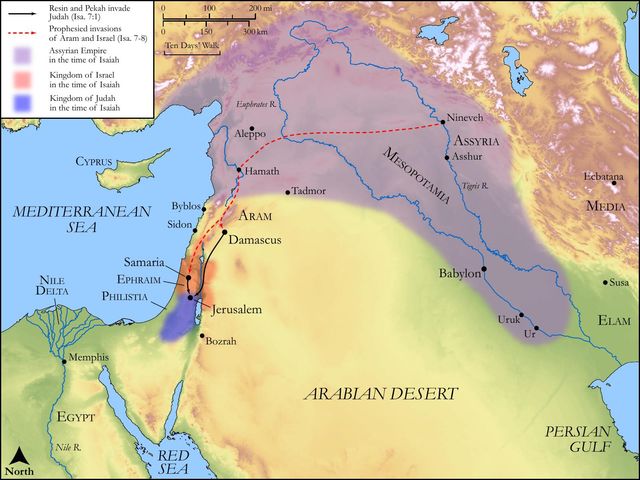
This verse is strategically placed within a crucial prophetic sequence in Isaiah, specifically Isaiah 7-8, which primarily addresses the tumultuous Syro-Ephraimitic War (c. 734-732 BC). Following King Ahaz's defiant refusal to seek a sign from the Lord in Isaiah 7:10-12 and the subsequent prophecy of Immanuel, God continues to unveil His plan concerning the impending Assyrian threat and Judah's pervasive faithlessness. The immediate preceding verses in Isaiah 8 detail the symbolic birth of Maher-Shalal-Hash-Baz, a prophetic sign signifying the swift and devastating judgment awaiting both Damascus and Samaria. Verse 11 serves as a critical transition, introducing a direct, forceful divine command that fundamentally shapes Isaiah's subsequent messages of warning against fear and idolatry, and his urgent call to place exclusive trust in the Lord, as powerfully articulated in Isaiah 8:12-13.
Historical & Cultural Context
The historical backdrop is the deeply volatile reign of King Ahaz in Judah. Confronted by a formidable alliance between Aram (Syria) and the northern kingdom of Israel (Ephraim) that gravely threatened Jerusalem, Ahaz, despite Isaiah's repeated counsel to trust in God's protection, chose instead to forge a precarious political alliance with the formidable Assyrian Empire (2 Kings 16:7-9). This fateful decision was symptomatic of a pervasive national spiritual malaise characterized by a profound lack of faith, widespread spiritual apostasy, and an over-reliance on human wisdom and military might rather than on the covenant-keeping God, Yahweh. The phrase "the way of this people" pointedly refers to their prevailing national mindset: a crippling fear, deep-seated unbelief, rampant idolatrous practices, and a readiness to compromise divine principles for perceived political and economic security. Isaiah's instruction to not "walk in the way of this people" was thus a direct, counter-cultural, and divinely-imposed mandate in a society rapidly descending into spiritual decline and moral compromise.
Key Themes
ShowHideIsaiah 8:11 masterfully encapsulates several profound and enduring theological themes. Firstly, it powerfully underscores Divine Authority and Revelation, emphasizing that God's communication to Isaiah was not a mere suggestion but an undeniable, compelling, and divinely-imposed mandate. The phrase "with a strong hand" stresses the absolute certainty, power, and irresistible nature of His word, demanding immediate and complete obedience. Secondly, it highlights Prophetic Separation and Non-Conformity, calling Isaiah to distinguish himself sharply and unequivocally from the ungodly attitudes, practices, and spiritual compromises of the majority in Judah, who were characterized by fear, unbelief, and a reliance on human alliances rather than divine protection. This theme resonates deeply with the broader biblical call for God's people to be set apart and holy, as seen in Leviticus 11:45 and Deuteronomy 7:6. Thirdly, it speaks to God's Guidance Amidst Crisis, demonstrating that even in times of profound national turmoil, spiritual confusion, and societal apostasy, God provides clear, unambiguous direction for His faithful servants, guiding them away from worldly compromise and towards a path of unwavering trust, steadfast obedience, and prophetic integrity.
Exposition and Analysis
ShowHideKey Word Analysis
ShowHideH3068 - This is the sacred, covenantal name of God, "the self-Existent or Eternal; Jehovah." Its deliberate use here emphasizes that the command originates from the sovereign, unchanging, and eternally faithful God who remains true to His promises, even when His people are profoundly unfaithful. It underscores the ultimate divine authority and unchallengeable nature behind the instruction given to Isaiah.
H2393 - Derived from a root meaning "to prevail" or "to be strong," this feminine noun describes the nature of the "hand" with which the Lord spoke to Isaiah. It signifies a prevailing, compelling, and irresistible power. When combined with "hand" (yâd), it conveys an overwhelming divine influence, a powerful spiritual grip, or an intense prophetic burden placed upon the prophet, ensuring the message's reception, its undeniable clarity, and the prophet's complete and compelled obedience.
H1870 - Literally meaning "a road (as trodden)," this word is used figuratively in this context to denote "a course of life or mode of action." It refers comprehensively to the collective lifestyle, prevailing beliefs, societal norms, and spiritual practices of the people of Judah, which were characterized by fear, unbelief, reliance on human strength, and seeking alliances apart from God. Isaiah was commanded not to adopt or conform to this prevailing societal and spiritual path.
Verse Breakdown
ShowHide"For the LORD spake thus to me with a strong hand"
This opening clause powerfully establishes the divine origin and the compelling, undeniable nature of the message received by Isaiah. The phrase "with a strong hand" (בְּחֶזְקַת יָד, b'chezkath yad) signifies far more than a mere verbal communication; it denotes an overwhelming, intense spiritual influence or a profound, palpable compulsion exerted by God upon Isaiah. It implies a divine grip or an irresistible prophetic burden that ensured Isaiah fully grasped the Lord's instruction with absolute clarity and was divinely moved to obey it, leaving no room for doubt, resistance, or misinterpretation.
"and instructed me"
This phrase clarifies the precise purpose and authoritative nature of God's interaction with Isaiah. The Hebrew term for "instructed" (יָסַר, yasar) implies a firm, authoritative teaching, often carrying a connotation of correction, discipline, or even chastisement. God was not simply informing Isaiah; He was actively guiding, shaping, and even reforming his understanding and conduct, ensuring that the prophet would act in complete accordance with the divine will, setting himself apart from the nation's prevailing unfaithfulness and spiritual compromise.
"that I should not walk in the way of this people, saying,"
This is the core and most critical command, articulating the specific and radical instruction Isaiah received. To "walk in the way" is a well-established Hebrew idiom signifying the adoption of a particular lifestyle, a set of beliefs, a moral trajectory, or a specific course of action. "This people" refers pointedly to the majority of Judahites who, in their fear, unbelief, and spiritual apostasy, were characterized by seeking worldly alliances, engaging in idolatry, and failing to trust in the Lord's protection and promises. Isaiah was commanded to maintain a radical, divinely-mandated separation from their prevailing attitudes, practices, and spiritual inclinations, embodying a counter-cultural faithfulness and unwavering commitment to God's truth.
Literary Devices
ShowHideThe verse employs several potent literary devices to convey its profound message with clarity and force. Metaphor is prominently featured in the phrase "with a strong hand," where God's "hand" serves as a powerful symbol and metaphor for His overwhelming power, irresistible authority, and compelling spiritual influence upon the prophet. It is not a literal physical touch, but a spiritual force that profoundly impresses the divine will upon Isaiah's mind and spirit. There is a clear and stark Contrast established between "the way of this people" (characterized by fear, unbelief, and worldly reliance) and the distinct path of faith, obedience, and prophetic integrity that God commands Isaiah to follow. This contrast highlights the profound spiritual chasm between divine truth and human folly, and the necessity of choosing God's path. Furthermore, the term "way" functions as a powerful Metonymy or Synecdoche, representing not merely a physical path but an entire course of life, a comprehensive set of behaviors, beliefs, and societal norms that God's prophet must resolutely reject and stand apart from.
Theological and Thematic Connections
ShowHideIsaiah 8:11 profoundly illustrates the enduring biblical principle of divine calling and separation, a recurring and foundational theme woven throughout the fabric of Scripture. Just as God called Israel to be a distinct people, holy unto Him, set apart from the nations around them, He calls His prophets and, by extension, all believers, to live a life consecrated and set apart from the world's values, practices, and prevailing ideologies. This divine instruction to Isaiah underscores that true faithfulness often necessitates a deliberate, divinely-empowered non-conformity to prevailing cultural norms and societal pressures, especially when those norms directly contradict God's righteous character and His revealed path. It is a timeless call to maintain spiritual integrity and a clear prophetic witness in a compromising world, prioritizing God's truth and His kingdom above popular opinion, political expediency, or the fleeting wisdom of humanity.
Reflection and Application
ShowHideIsaiah 8:11 offers timeless and profound wisdom for believers navigating the complexities and challenges of the contemporary world. Just as Isaiah was divinely called to be distinct from the prevailing culture of fear, unbelief, and compromise in his time, Christians are likewise called to live by a fundamentally different standard—one rooted in God's unchanging truth and eternal principles, rather than worldly values, fleeting trends, or popular consensus. This imperative demands active and prayerful discernment of societal influences, courageous conviction to stand apart when popular opinion or cultural pressures contradict biblical principles, and an unwavering reliance on divine instruction above human wisdom or political expediency, especially in times of uncertainty, crisis, or moral ambiguity. True faithfulness demands a deliberate and often counter-cultural walk, empowered by the indwelling Holy Spirit, ensuring that our lives authentically reflect God's righteousness and holiness rather than conforming to "the way of this people" when that way deviates from God's perfect path.
Questions for Reflection
ShowHideFAQ
ShowHideWhat does "with a strong hand" mean in this context?
ShowHideIn Isaiah 8:11, the phrase "with a strong hand" (Hebrew: b'chezkath yad) signifies more than a mere verbal message from the Lord. It conveys an overwhelming, compelling divine influence or a powerful, spiritual grip exerted by God upon Isaiah. It implies a profound prophetic experience where God's power was palpably felt, ensuring that Isaiah fully grasped the message with undeniable clarity and was divinely compelled to obey it. It is not physical coercion, but rather a deep, authoritative spiritual impression that left no room for doubt, resistance, or misunderstanding on the part of the prophet. This phrase is often used elsewhere in the Old Testament to describe God's mighty acts of deliverance, such as bringing Israel out of Egypt Exodus 13:9, but here it specifically denotes the irresistible force and clarity of His revelation to His chosen prophet.
What was "the way of this people" that Isaiah was to avoid?
ShowHide"The way of this people" refers to the prevailing attitudes, beliefs, and actions of the majority in Judah during the tumultuous period of the Syro-Ephraimitic War. This encompassed their widespread fear and panic in the face of political and military threats, their profound lack of faith in God's protection and covenant promises, and their pervasive tendency to seek worldly alliances (such as with Assyria, as seen in Isaiah 7:3-6 and Isaiah 30:1-5) rather than relying on the Lord. It also included their general spiritual apostasy, engagement in idolatrous practices, and a reliance on human wisdom, political maneuvering, and military strength instead of divine counsel and sovereign intervention. Isaiah was commanded to maintain a distinct and radical separation from this national mindset of unbelief, compromise, and spiritual declension.
Christ-Centered Fulfillment
ShowHideIsaiah's divinely commanded separation from "the way of this people" finds its ultimate, perfect, and most profound fulfillment in the person and ministry of Jesus Christ. While Isaiah was called to be distinct, Jesus perfectly embodied a life utterly set apart, walking in complete and unwavering obedience to the Father's will, even when it directly contradicted the prevailing "ways" of His own people, the religious authorities, and the worldly systems of His day. He consistently challenged the legalism, hypocrisy, and self-righteousness of the Pharisees (Matthew 23), the political aspirations of His followers (John 6:15), and the worldly wisdom that sought power and prestige. His entire ministry, from His revolutionary teachings in the Sermon on the Mount to His ultimate, self-sacrificial act on the cross, was a radical departure from "the way of this world" (John 15:19). As the Lamb of God who takes away the sin of the world, He provided the singular, true "way" back to God (John 14:6). Believers, united with Christ through faith, are now empowered by His Spirit to also "walk in newness of life" (Romans 6:4), becoming a distinct people—a "chosen race, a royal priesthood, a holy nation" (1 Peter 2:9)—who are called to follow His way, not the way of the world.