


Job 35:6
- אִם'imifH518PrtParticle Conditional
- חָטָאתָCha·ta·tayou have sinnedH2398V-Qal-Perf-2msVerb Qal Perfect 2nd Singular Masculine
- מַהmahwhat?H4100InterrogPronoun Interrogative
- תִּפְעָלtif·'oldo you doH6466V-Qal-Imperf-2msVerb Qal Imperfect 2nd Singular Masculine
- בּוֹboin himPrep-b ¦ 3msSuffix Personal 3rd Singular Masculineבּinוֹhim
- וְרַבּוּve·ra·Buand they have been manyH7231Conj-w ¦ V-Qal-ConsecPerf-3cpVerb Qal Consecutive Perfect 3rd Plural common genderוְandרַבּוּthey have been many
- פְשָׁעֶיךָfe·sha·'Ei·khayour transgressionsH6588N-mpc ¦ 2msNoun Plural Masculine Constructפְשָׁעֶיtransgressionsךָyour
- מַהmahwhat?H4100InterrogPronoun Interrogative
- תַּעֲשֶׂהta·'a·sehdo you doH6213V-Qal-Imperf-2msVerb Qal Imperfect 2nd Singular Masculine
- לּוֹloto himPrep-l ¦ 3msSuffix Personal 3rd Singular Masculineלּtoוֹhim
English is a literal word-by-word gloss of the Hebrew, not the KJV's wording. Why?
This is the original text the KJV's translators worked from — each Hebrew word with its own literal English meaning in this verse, prepared by scholars at Tyndale House, Cambridge. The KJV translates whole sentences, not word by word, so its wording differs: one Hebrew word can become several English words, and the KJV may choose “the LORD” where the gloss reads “Yahweh”. Both are faithful — they answer different questions. For the KJV's own rendering, switch to the KJV text.
Details
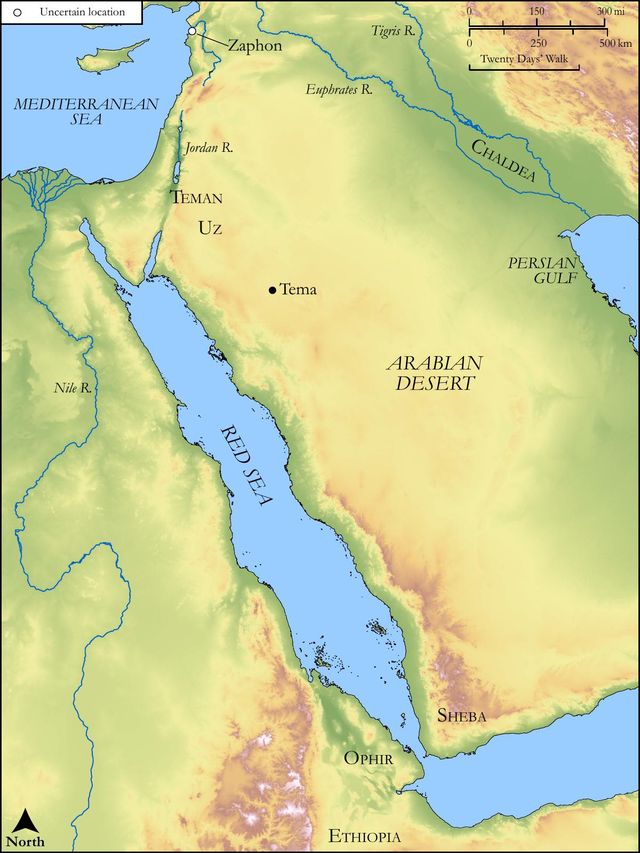
See on the biblical-era map
Study this verse
Public-domain commentary
Matthew Henry
From his Commentary on the Whole Bible. Henry comments on passages, not single verses — this entry covers Job 35:1–8. His four-level outline is real structure in the source text, so it is rendered as structure.
We have here,
I.The bad words which Elihu charges upon Job, Job 35:2, Job 35:3.
To evince the badness of them he appeals to Job himself, and his own sober thoughts, in the reflection: Thinkest thou this to be right? This intimates Elihu's confidence that the reproof he now gave was just, for he could refer the judgment of it even to Job himself. Those that have truth and equity on their side sooner or later will have every man's conscience on their side. It also intimates his good opinion of Job, that he thought better than he spoke, and that, though he had spoken amiss, yet, when he perceived his mistake, he would not stand to it. When we have said, in our haste, that which was not right, it becomes us to own that our second thoughts convince us that it was wrong. Two things Elihu here reproves Job for: - 1. For justifying himself more than God, which was the thing that first provoked him, Job 32:2. "Thou hast, in effect, said, My righteousness is more than God's," that is, "I have done more for God than ever he did for me; so that, when the accounts are balanced, he will be brought in debtor to me." As if Job thought his services had been paid less than they deserved and his sins punished more than they deserved, which is a most unjust and wicked thought for any man to harbour and especially to utter. When Job insisted so much upon his own integrity, and the severity of God's dealings with him, he did in effect say, My righteousness is more than God's; whereas, though we be ever so good and our afflictions ever so great, we are chargeable with unrighteousness and God is not. 2. For disowning the benefits and advantages of religion because he suffered these things: What profit shall I have if I be cleansed from my sin? Job 35:3. This is gathered from Job 9:30, Job 9:31. Though I make my hands ever so clean, what the nearer am I? Thou shalt plunge me in the ditch. And Job 10:15, If I be wicked, woe to me; but, if I be righteous, it is all the same. The psalmist, when he compared his own afflictions with the prosperity of the wicked, was tempted to say, Verily I have cleansed my heart in vain, Psa 73:13. And, if Job said so, he did in effect say, My righteousness is more than God's (Job 35:9); for, if he got nothing by his religion, God was more beholden to him than he was to God. But, though there might be some colour for it, yet it was not fair to charge these words upon Job, when he himself had made them the wicked words of prospering sinners (Job 21:15, What profit shall we have if we pray to him?) and had immediately disclaimed them. The counsel of the wicked is far from me, Job 21:16. It is not a fair way of disputing to charge men with those consequences of their opinions which they expressly renounce.
II.The good answer which Elihu gives to this (Job 35:4):
"I will undertake to answer thee, and thy companions with thee," that is, "all those that approve thy sayings and are ready to justify thee in them, and all others that say as thou sayest: "I have that to offer which will silence them all." To do this he has recourse to his old maxim (Job 33:12), that God is greater than man. This is a truth which, if duly improved, will serve many good purposes, and particularly this to prove that God is debtor to no man. The greatest of men may be a debtor to the meanest; but such is the infinite disproportion between God and man that the great God cannot possibly receive any benefit by man, and therefore cannot be supposed to lie under any obligation to man; for, if he be obliged by his purpose and promise, it is only to himself. That is a challenge which no man can take up (Rom 11:35), Who hath first given to God, let him prove it, and it shall be recompensed to him again. Why should we demand it, as a just debt, to gain by our religion (as Job seemed to do), when the God we serve does not gain by it?
1.Elihu needs not prove that God is above man; it is agreed by all; but he endeavours to affect Job and us with it, by an ocular demonstration of the height of the heavens and the clouds, Job 35:5. They are far above us, and God is far above them; how much then is he set out of the reach either of our sins or of our services! Look unto the heavens, and behold the clouds. God made man erect, coelumque tueri jussit - and bade him look up to heaven. Idolaters looked up, and worshipped the hosts of heaven, the sun, moon, and stars; but we must look up to heaven, and worship the Lord of those hosts. They are higher than we, but God is infinitely above them. His glory is above the heavens (Psa 8:1) and the knowledge of him higher than heaven, Job 11:8.
2.But hence he infers that God is not affected, either one way or other, by any thing that we do.
(1.)He owns that men may be either bettered or damaged by what we do (Job 35:8): Thy wickedness, perhaps, may hurt a man as thou art, may occasion him trouble in his outward concerns. A wicked man may wound, or rob, or slander his neighbour, or may draw him into sin and so prejudice his soul. Thy righteousness, thy justice, thy charity, thy wisdom, thy piety, may perhaps profit the son of man. Our goodness extends to the saints that are in the earth, Psa 16:3. To men like ourselves we are in a capacity either of doing injury or of showing kindness; and in both these the sovereign Lord and Judge of all will interest himself, will reward those that do good and punish those that do hurt to their fellow-creatures and fellow-subjects. But,
(2.)He utterly denies that God can really be either prejudiced or advantaged by what any, even the greatest men of the earth, do, or can do.
[1.]The sins of the worst sinners are no damage to him (Job 35:6): "If thou sinnest wilfully, and of malice prepense, against him, with a high hand, nay, if thy transgressions be multiplied, and the acts of sin be ever so often repeated, yet what doest thou against him?" This is a challenge to the carnal mind, and defies the most daring sinner to do his worst. It speaks much for the greatness and glory of God that it is not in the power of his worst enemies to do him any real prejudice. Sin is said to be against God because so the sinner intends it and so God takes it, and it is an injury to his honour; yet it cannot do any thing against him. The malice of sinners is impotent malice: it cannot destroy his being or perfections, cannot dethrone him from his power and dominion, cannot disturb his peace and repose, cannot defeat his counsels and designs, nor can it derogate from his essential glory. Job therefore spoke amiss in saying What profit is it that I am cleansed from my sin? God was no gainer by his reformation; and who then would gain if he himself did not?
[2.]The services of the best saints are no profit to him (Job 35:7): If thou be righteous, what givest thou to him? He needs not our service; or, if he did want to have the work done, he has better hands than ours at command. Our religion brings no accession at all to his felicity. He is so far from being beholden to us that we are beholden to him for making us righteous and accepting our righteousness; and therefore we can demand nothing from him, nor have any reason to complain if we have not what we expect, but to be thankful that we have better than we deserve.
Historical interpretation
Two Centuries of Reception
2 surviving comments on this verse. Each one is dated, so this reads as a timeline rather than a list.
Select a marker to jump to its quote. Markers stagger vertically where authors wrote within a few decades of each other.
If you look at the heavens and contemplate the clouds, you will understand that you sinned. And what do you need to do? It is necessary that you approach the high priest and implore him to offer a victim for you. “If any one does sin, we have an advocate with the Father, Jesus Christ the righteous; and he is the expiation of our sins.” If you will do this, you will dissolve your numerous sins. And for those irremediable sins from which we cannot be cured, Jesus Christ came from heaven to cure what was irremediable, and so that it might happen that “blessed are they whose transgressions are forgiven and whose sins are covered.”
These words mean, you will do no wrong to him, and you will not be more useful to him by being righteous. In fact, he said, “If I have sinned, what shall I be able to do?” What shall I do to you? Elihu says, Why did you say that? Does God care about the fact that you sinned, as if he is the victim of an injustice or as if he is suffering damage?
Continue studying Job 35:6 across the web’s major study libraries — every link below opens this exact verse, chapter, or book on the destination site.
Read & Compare
 BibleGatewayThis verse in more than 200 translations and 70 languages.
 Bible.comThe YouVersion reader — hundreds of translations, reading plans, and highlights.
 ESV.orgCrossway's official English Standard Version reader.
 NET BibleThe NET translation with 60,000+ translators' notes on every rendering decision.
 STEP BibleTyndale House's free study tool — original text, vocabulary, and scholarly resources.
 BibliaLogos Bible Software's free web reader.
 USCCBThe New American Bible (Revised Edition) with the U.S. bishops' study notes.
Commentaries
 BibleHub CommentariesDozens of classic commentaries on this verse, gathered on one page.
 StudyLightMore than 100 commentary sets — the largest collection on the web.
 BibleRefPlain-English commentary on what this verse means, verse by verse.
 Enduring WordDavid Guzik's free commentary on this chapter, widely used by Bible teachers.
 Bible Study ToolsVerse commentary alongside Greek and Hebrew study aids.
Original Language & Research
- BibleHub InterlinearThe verse word by word — original language, transliteration, and English.
- BibleHub LexiconEvery word's original-language definition and Strong's entry.
 Blue Letter BibleDeep-study tools — Strong's numbers, concordance, and word studies.
 SefariaThe Hebrew text with Rashi and centuries of Jewish commentary.
Sermons, Hymns & Audio


TrulyRandomVerse is not affiliated with these sites and doesn’t control their content. They’re linked because they’re genuinely useful.
Summary
Job 35:6, articulated within Elihu's discourse, serves as a profound assertion of God's absolute transcendence and unchangeable nature. Elihu argues that human actions, whether the deepest sins or the most righteous deeds, do not fundamentally impact, diminish, or enhance the divine essence, power, or glory of God. This rhetorical challenge aims to correct Job's perceived self-righteousness and the friends' limited theological understanding, emphasizing that God's majesty is inherent and entirely independent of humanity's moral choices, though sin still carries severe consequences for the sinner and the created order.
Context
ShowHideLiterary Context
Job 35:6 is embedded within the extensive speeches of Elihu, a younger man who emerges after Job and his three companions (Eliphaz, Bildad, and Zophar) have exhausted their arguments (Job 32-37). Elihu positions himself as a more insightful mediator, intent on rectifying what he views as Job's presumptuous claims of innocence and the friends' rigid, unhelpful theological frameworks. Specifically, chapter 35 directly addresses Job's lament that God does not consistently reward righteousness or punish wickedness, implying divine indifference or that human actions are inconsequential to the Almighty. Elihu's argument here is a direct counter to Job's earlier expressions of frustration, such as his desire for a mediator in Job 9:32-33 and his questioning of the prosperity of the wicked in Job 21:7-15. Elihu endeavors to re-establish God's unassailable greatness and His independence from human influence, thereby preparing the theological ground for God's climactic speeches from the whirlwind in Job 38.
Historical & Cultural Context
The Book of Job is set in the land of Uz, generally understood to be during the patriarchal period, and reflects the broader ancient Near Eastern (ANE) wisdom traditions. While many ANE deities were often depicted as anthropomorphic, susceptible to human influence, and even dependent on human sustenance or actions, the God of Israel is consistently portrayed as utterly transcendent and self-sufficient. Elihu's argument in Job 35:6 aligns perfectly with this distinctive Israelite theological understanding, standing in stark contrast to pagan notions of gods who could be manipulated, appeased, or diminished by human behavior. The concept of divine aseity—God's existence being entirely independent of any external cause—is a foundational tenet of biblical theology. Elihu, though not speaking with perfect divine authority, articulates this crucial aspect of God's nature, which would have been a radical departure from the prevailing polytheistic views of the time, where human rituals and sacrifices were frequently seen as necessary to "feed" or "propitiate" the gods.
Key Themes
ShowHideThis verse profoundly contributes to several core themes within the Book of Job and the broader tapestry of biblical theology. Firstly, it powerfully underscores God's absolute transcendence and sovereignty, emphasizing that His being, glory, and power are inherent and not contingent upon human actions. Our sin does not diminish Him, nor does our righteousness enhance Him. This truth resonates with passages like Isaiah 55:8-9, which declares God's ways and thoughts to be infinitely higher than humanity's. Secondly, the verse clarifies the nature of sin's impact, asserting that while sin unequivocally offends God's holiness and justly incurs His wrath, its primary detrimental effect is upon the sinner themselves and other human beings, rather than upon God's intrinsic being. Elihu's rhetorical questions ("what doest thou against him?" and "what doest thou unto him?") implicitly convey that God does not suffer or gain from human moral choices in the same way humans do. This reinforces God's self-sufficiency and independence, countering any notion that God is somehow needy or dependent on His creation for His existence or perfection.
Exposition and Analysis
ShowHideKey Word Analysis
ShowHideThis verb (H2398) fundamentally means "to miss the mark" or "to err." In a moral and theological context, it signifies deviating from God's perfect standard, failing to fulfill one's obligations, or acting contrary to divine will. Elihu uses it here to refer to any act of moral wrongdoing by Job or humanity in general.
This noun (H6588) carries a stronger connotation than châṭâʼ', often meaning "revolt," "rebellion," or a deliberate breaking of a covenant or relationship. It implies a more willful and defiant act against God's authority. The KJV's "multiplied" suggests an abundance or accumulation of such rebellious acts, intensifying the hypothetical scenario.
The KJV uses "doest" twice, representing two distinct Hebrew verbs. The first "doest" comes from pâʻal (H6466), meaning "to do or make systematically and habitually," often implying practice or accomplishment. The second "doest" comes from ʻâsâh (H6213), a broader term meaning "to do or make in the broadest sense and widest application," encompassing actions, accomplishments, or even giving. Elihu's rhetorical questions, "what do you accomplish against Him?" and "what do you give Him?", underscore his point that human actions, whether sinful or righteous, have no substantive effect on God's inherent being, power, or glory. They do not add to or subtract from His perfection.
Verse Breakdown
ShowHide"If thou sinnest"
This opening clause establishes a hypothetical premise. Elihu is not levying a specific accusation against Job but invites him to consider the general case of human wrongdoing. The conditional "if" sets up a thought experiment regarding the implications of human actions.
"what doest thou against him?"
This is the first rhetorical question, directly probing the impact of human sin on God. Elihu's implied answer is "nothing of consequence to His being." Sin harms the sinner and others, but it does not diminish God's power, glory, or existence. It does not "damage" or "affect" God's intrinsic nature.
"or [if] thy transgressions be multiplied"
This clause intensifies the hypothetical scenario, moving from a single act of sin to a proliferation of rebellious acts. The mention of "multiplied" transgressions emphasizes the extensive nature of human depravity or defiance, yet the core question regarding God's unaffected nature remains constant.
"what doest thou unto him?"
This second rhetorical question, utilizing a different Hebrew verb for "doest" (ʻâsâh), powerfully reinforces the first. It asks what benefit or detriment human actions, even abundant and rebellious transgressions, could possibly "give" or "impart" to God. Again, the implied answer is "nothing." God is not in need of anything from humanity, nor can humanity impose anything upon Him that would alter His divine essence or perfection.
Literary Devices
ShowHideJob 35:6 primarily employs Rhetorical Question and Parallelism. The entire verse is structured as a pair of rhetorical questions, designed not to elicit an answer but to make a forceful, undeniable point: human actions, whether sinful or righteous, have no intrinsic effect on God's transcendent being. This technique compels the listener (Job) to confront the vast, unbridgeable chasm between human finitude and divine infinitude. Furthermore, the verse exhibits Synonymous Parallelism, where the second half of the verse ("or [if] thy transgressions be multiplied, what doest thou unto him?") reiterates and intensifies the thought of the first half ("If thou sinnest, what doest thou against him?"). "Sinnest" is paralleled by "transgressions be multiplied," and "what doest thou against him?" is paralleled by "what doest thou unto him?" This repetition with variation serves to underscore Elihu's central argument about God's unassailable transcendence and complete independence from human influence.
Theological and Thematic Connections
ShowHideElihu's assertion in Job 35:6 articulates a profound theological truth about God's nature, often termed His aseity or self-existence. God does not depend on anything outside Himself for His being, glory, or power. Our sin, while a grievous offense against His holy character and a violation of His moral law, does not diminish Him in any way. Similarly, our righteousness, though pleasing to Him and a reflection of His image, does not add to His inherent perfection. This truth cultivates profound humility, reminding us that our obedience is not for God's benefit in terms of His being, but for our own good, the good of others, and as an act of worship that acknowledges His supreme worth. It underscores that God's engagement with humanity, His commands, and His offer of redemption stem not from need, but from His overflowing love and sovereign will.
Reflection and Application
ShowHideJob 35:6 serves as a powerful corrective to any human-centered theology that might inadvertently place humanity at the center of God's universe or suggest that God is somehow dependent on our actions. It compels us to recognize the infinite qualitative difference between the Creator and the created. This understanding should evoke a deep sense of reverence and humility. Our sin is not merely a personal failing; it is an affront to the transcendent, self-existent God, yet it does not diminish His being. This paradox highlights the immensity of God's grace: He, who needs nothing from us, chooses to engage with us, to be offended by our sin, and to offer a path to reconciliation. Our obedience, therefore, is not a transaction to "help" God, but a grateful response to His inherent worth and a demonstration of our love and submission, which ultimately benefits us and brings glory to His name. It frees us from the burden of thinking our actions can make God "more God" or "less God," allowing us to focus on living in faithful response to His revealed will.
Questions for Reflection
ShowHideFAQ
ShowHideDoes this verse imply that God doesn't care about sin, since it doesn't affect Him?
ShowHideNo, absolutely not. While Job 35:6 emphasizes that sin does not diminish God's inherent being or power, it does not suggest divine indifference. God's holiness means He is utterly separate from and opposed to sin. Sin offends His character, violates His just laws, and breaks the covenant relationship He desires with humanity. The verse clarifies that the impact of sin is primarily on the sinner and the created order, not on God's divine essence. God's response to sin—His grief, wrath, and provision for atonement—demonstrates His profound concern, even though His being remains immutable. For example, Genesis 6:6 speaks of God being "grieved" by human wickedness, showing His emotional response to sin, even as His nature remains unaffected.
Christ-Centered Fulfillment
ShowHideJob 35:6, though spoken by Elihu, profoundly foreshadows the Christ-centered understanding of God's transcendence and humanity's relationship to Him. The verse highlights that no human sin, no matter how multiplied, can diminish the glory or being of God, who is eternally self-existent and perfect. This truth finds its ultimate expression in Jesus Christ, who is the very embodiment of this transcendent God, being the Word who was with God and was God (John 1:1-3) and through whom all things were created and sustained (Colossians 1:16-17). Christ, being God, needed nothing from humanity; He was not diminished by our rebellion nor enhanced by our obedience. Yet, out of His infinite love and sovereign will, this transcendent God, in Christ, chose to enter into human history. The profound consequence of sin, which Elihu notes affects humanity rather than God's being, is fully borne by Christ on the cross. He "became sin for us" (2 Corinthians 5:21), not because God needed His essence to be changed, but because humanity needed a propitiation for sin that only a perfect, divine-human mediator could provide. Thus, the truth of God's independence from human actions in Job 35:6 magnifies the incredible grace of the incarnation and atonement: God, who is utterly sufficient in Himself, chose to provide the ultimate solution for sin, demonstrating His love for a humanity that could offer Him nothing to improve His being, yet desperately needed His intervention (Romans 5:8).