


Matthew 23:37
Bible text: King James Version (1769 Blayney text) · Public domain
Bible text: King James Version with Strong's numbers · Public domain
Bible text: Berean Standard Bible · Public domain
Bible text: American Standard Version (1901) · Public domain
Bible text: World English Bible, Messianic edition · Public domain
Bible text: Geneva Bible (1599) · Public domain
Bible text: Young's Literal Translation · Public domain
- ἸερουσαλὴμIerousalēmJerusalemG2419N-VSF-LNoun Vocative Singular Feminine
- ἸερουσαλὴμIerousalēmJerusalemG2419N-VSF-LNoun Vocative Singular Feminine
- ἡhēyou who [are]G3588T-VSFDefinite article Vocative Singular Feminine
- ἀποκτείνουσαapokteinousakillingG615V-PAP-VSFVerb Present Active Participle Vocative Singular Feminine
- τοὺςtoustheG3588T-APMDefinite article Accusative Plural Masculine
- προφήταςprophētasprophetsG4396N-APMNoun Accusative Plural Masculine
- καὶkaiandG2532CONJConjunction
- λιθοβολοῦσαlithobolousastoningG3036V-PAP-VSFVerb Present Active Participle Vocative Singular Feminine
- τοὺςtousthoseG3588T-APMDefinite article Accusative Plural Masculine
- ἀπεσταλμένουςapestalmenoussentG649V-RPP-APMVerb Perfect Passive Participle Accusative Plural Masculine
- πρὸςprostoG4314PREPPreposition
- αὐτήνautēnher!G846P-ASFPersonal pronoun Accusative Singular Feminine
- ποσάκιςposakisHow oftenG4212ADVAdverb
- ἠθέλησαēthelēsaI wantedG2309V-AAI-1SVerb Aorist Active Indicative 1st Singular
- ἐπισυναγαγεῖνepisunagageinto gathered togetherG1996V-2AANVerb 2nd Aorist Active Infinitive
- τὰtatheG3588T-APNDefinite article Accusative Plural Neuter
- τέκναteknachildrenG5043N-APNNoun Accusative Plural Neuter
- σουsouof youG4771P-2GSPersonal pronoun Genitive 2nd Singular
- ὃνhonin whichG3739R-ASMRelative pronoun Accusative Singular Masculine
- τρόπονtroponwayG5158N-ASMNoun Accusative Singular Masculine
- ὄρνιςornisa henG3733N-NSFNoun Nominative Singular Feminine
- ἐπισυνάγειepisunageigathers togetherG1996V-PAI-3SVerb Present Active Indicative 3rd Singular
- τὰtatheG3588T-APNDefinite article Accusative Plural Neuter
- νοσσίαnossiachicksG3556N-APNNoun Accusative Plural Neuter
- αὐτῆςautēsof herG846P-GSFPersonal pronoun Genitive Singular Feminine
- ὑπὸhupounderG5259PREPPreposition
- τὰςtastheG3588T-APFDefinite article Accusative Plural Feminine
- πτέρυγαςpterugaswingsG4420N-APFNoun Accusative Plural Feminine
- καὶkaiandG2532CONJConjunction
- οὐκouknotG3756PRT-NNegative Particle Negative
- ἠθελήσατε;ēthelēsateyou were willing?G2309V-AAI-2PVerb Aorist Active Indicative 2nd Plural
English is a literal word-by-word gloss of the Greek, not the KJV's wording. Why?
This is the original text the KJV's translators worked from — each Greek word with its own literal English meaning in this verse, prepared by scholars at Tyndale House, Cambridge. The KJV translates whole sentences, not word by word, so its wording differs: one Greek word can become several English words, and the KJV may choose “charity” where the gloss reads “love”. Both are faithful — they answer different questions. For the KJV's own rendering, switch to the KJV text.
Details
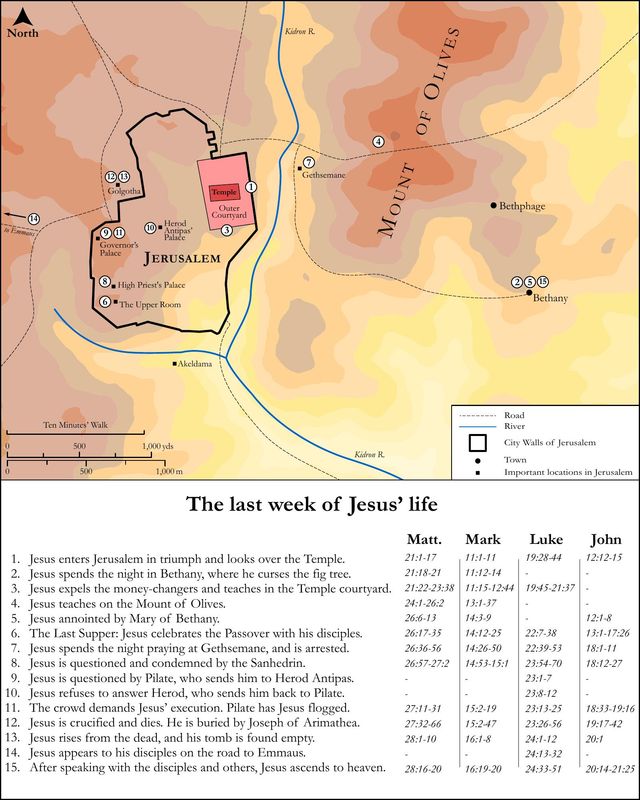
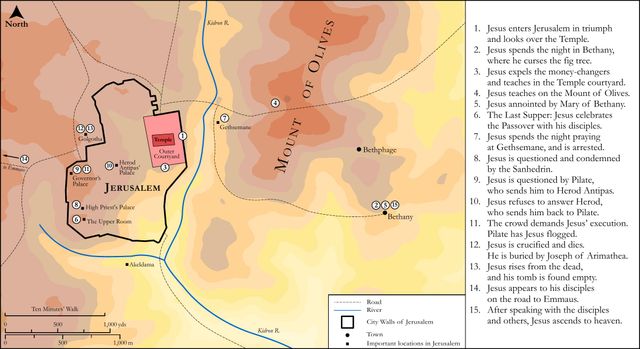
See on the biblical-era maps

Study this verse
Historical interpretation
Six Centuries of Reception
10 surviving comments on this verse. Each one is dated, so this reads as a timeline rather than a list.
Select a marker to jump to its quote. Markers stagger vertically where authors wrote within a few decades of each other.
Admonition, then, is the censure of loving care and produces understanding. Such is Christ the Educator in his admonitions, as when he says in the Gospel, “How often would I have gathered your children, as a bird gathers her young ones under her wings, and you would not!” And again, the Scripture admonishes, saying, “And they committed adultery with wood and stone and burned incense to Baal.” For it is a very great proof of his love, that, though knowing well the shamelessness of the people that had kicked and bounded away, he notwithstanding exhorts them to repentance and says by Ezekiel, “Son of man, you live among scorpions. Nevertheless, speak to them. Perhaps they will hear.” Further, to Moses he says, “Go and tell Pharaoh to send my people forth; but I know that he will not send them forth.” For he shows both things: both his divinity in his foreknowledge of what would take place and his love in affording an opportunity for repentance to the self-determination of the soul. He admonishes also by Isaiah, in his care for the people, when he says, “This people honor me with their lips, but their heart is far from me.” What follows is reproving censure: “In vain do they worship me, teaching for doctrines the commandments of people.” Here his loving care, having shown their sin, shows salvation side by side with repentance.
He calls them children of Jerusalem, just as we call each generation of citizens the sons of the preceding generation. And He says, How often, though it is well known that once only did He teach the Jews in the body, because Christ was ever present in Moses, and in the Prophets, and in the Angels, ministering to human salvation in every generation. Whosoever shall not have been gathered in by Him shall be judged, as though he had refused to be gathered in.
He was soon to rain calamitous blows on Jerusalem because of its bloodthirsty nature. For that very reason Jesus accuses it of possessing a murderous disposition. For he says it kills the prophets and stones the ones sent to it. So often [the city] could have obtained mercy, but it does not desire it. How many times he demonstrated this, on many occasions and to many descendants, as when he brought back the people from captivity. But through their sins they continually scattered themselves. By speaking of wings and shelter Jesus teaches in a way appropriate for God and illustrates the meaning of Moses’ words through a human comparison. “He spread his wings and welcomed them.” And David: “But the children of men take refuge in the shadow of your wings.” For when Satan scattered them on one side into idolatry and on the other into a love for pleasure, he sent prophets to them. Then through himself he came that he might gather them together “into one.” But they could not bear to remain under his protection. “For I,” he says, “like a loving hen always held you to draw you to myself, but you had no desire for this. You scattered yourself through your constant sinning and drew away from God.” But this is a prolific hen who has many children. She ardently loves and cares for her children and willingly gives herself for them.
For he who having seen many sinning yet remains uncorrected, but rather does the same or worse, is obnoxious to heavier punishment.
The Lord next turns to address the city, desiring to instruct His hearers thereby. O Jerusalem, Jerusalem: this repetition of the name is a mark of compassion and intense love.
Having thus addressed her, and spoken of her cruel murders, He said, as justifying Himself, How often would I have gathered thy children together? as much as to say, Notwithstanding, these thy murders have not alienated Me from thee, but I would have taken thee to Me, not once or twice, but many times. The strength of His affection He shows by the comparison of a hen.
Then He threatens the punishment of which they were ever in fear, to wit, the overthrow of the city and temple, saying, Behold, your house is left unto you desolate.
Otherwise; In this He covertly alludes to His second coming, when surely they shall worship Him. Henceforth, means from the time of His crucifixion.
Then He directs His speech unto the city, in this way too being minded to correct His hearers, and saith, "O Jerusalem, Jerusalem!" What meaneth the repetition? this is the manner of one pitying her, and bemoaning her, and greatly loving her. For, like as unto a woman beloved, herself indeed ever loved, but who had despised Him that loved her, and therefore on the point of being punished, He pleads, being now about to inflict the punishment. Which He doth in the prophets also, using these words, "I said, Turn thou unto me, and she returned not."
Then having called her, He tells also her blood-stained deeds, "Thou that killest the prophets, and stonest them that are sent unto thee, how often would I have gathered thy children together, and ye would not," in this way also pleading for His own dealings; not even with these things hast thou turned me aside, nor withdrawn me from my great affection toward thee, but it was my desire even so, not once or twice, but often to draw thee unto me. "For how often would I have gathered your children together, even as a hen gathereth her chickens, and ye would not." And this He saith, to show that they were ever scattering themselves by their sins. And His affection He indicates by the similitude; for indeed the creature is warm in its love towards its brood. And everywhere in the prophets is this same image of the wings, and in the song of Moses and in the Psalms, indicating His great protection and care.
"But ye would not," He saith. "Behold your house is left desolate," stripped of the succor which cometh from me. Surely it was the same, who also was before protecting them, and holding them together, and preserving them; surely it was He who was ever chastening them. And He appoints a punishment, which they had ever dreaded exceedingly; for it declared the entire overthrow of their polity. "For I say unto you, Ye shall not see me henceforth, till ye shall say, Blessed is He that cometh in the name of the Lord." And this is the language of one that loves earnestly, earnestly drawing them unto Him by the things to come, not merely warning them by the past; for of the future day of His second coming doth He here speak.
What then? Did they not see Him from that time? But it is not that hour which He meaneth in saying, Henceforth, but the time up to His crucifixion.
For since they were forever accusing Him of this, that He was a kind of rival God, and a foe to God, He moves them to love Him by this, namely, by showing Himself to be of one accord with His Father; and He indicates Himself to be the same that was in the prophets. Wherefore also He uses the same words as did the prophets.
And by these He intimated both His resurrection, and His second coming, and made it plain even to the utterly unbelieving, that then most surely they should worship Him. And how did He make this plain? By speaking of many things that were first to be, that He should send prophets, that they should kill them; that it should be in the synagogues; that they should suffer the utmost extremities; that their house should be left desolate; that they should undergo things more grievous than any, and such as never were undergone before. For all these things are enough to furnish even to the most senseless and contentious a clear proof of that which should come to pass at His coming.
For I will ask them, Did He send the prophets and wise men? Did they slay them in their synagogue? Was their house left desolate? Did all the vengeance come upon that generation? It is quite plain that it was so, and no man gainsays it. As then all these things came to pass, so shall those also come to pass, and most surely they shall submit then.
But they shall derive thence no advantage in the way of defense, as neither will they who repent of their course of life then.
By Jerusalem He means not the stones and buildings, but the dwellers there, over whom He laments with the feeling of a Father.
I say unto you, Ye shall not see Me, &c. That is to say, Unless ye shall do penitence, and shall confess that I am He of whom the Prophets have spoken, the Son of the Almighty Father, ye shall not see My face. Thus the Jews have a time allowed for their repentance. Let them confess Him blessed who cometh in the name of the Lord, and they shall then behold Christ's face.
(Verse 37.) Jerusalem, Jerusalem, you who kill the prophets and stone those sent to you: how often I have longed to gather your children together, as a hen gathers her chicks under her wings, but you were unwilling! Jerusalem, He calls not the stones and buildings of the city, but the inhabitants, whom He mourns for with a fatherly affection, as we also read in another place that He wept upon seeing her (Luke 19). And in saying, how often I have longed to gather your children together, He testifies that all the prophets sent by Himself were rejected. We also read in the song of Deuteronomy the image of a chicken gathering its chicks under its wings: As an eagle protects its nest and desires its young, spreading its wings, it receives and carries them on its feathers (Deut. XXXII, 11).
(Quaest. Ev. i. 36.) This species has the greatest affection for its brood, insomuch that when they are sick the mother sickens also; and what you will hardly find in any other animal, it will fight against the kite, protecting its young with its wings. In like manner our mother, the Wisdom of God, sickened as it were in the putting on the flesh, according to that of the Apostle, The weakness of God is stronger than men, (1 Cor. 1:25.) protects our weakness, and resists the Devil that he should not make us his prey.
(Ench. 97.) Where is that omnipotence, by the which He did whatsoever pleased Him both in heaven and in earth, if He would have gathered the children of Jerusalem and did not? Was it not that she would not that her children should be gathered by Him, and yet He did, notwithstanding, gather those of her children whom He would?
Foreseeing the destruction of the city, and the blow it would receive from the Romans, He called to mind the blood of the saints which had been, and should yet be, shed in it. Thou killedst Esaias who was sent unto thee, and stonedst my servant Jeremias; thou dashedst out the brains of Ezechiel by dragging him over stones; how shalt thou be saved, which wilt not suffer a physician to come nigh thee? And He said not, Didst kill and stone; but, Killest, and Stonest; that is, This is a common and natural practice with thee to kill and stone the saints. She did to the Apostles the same things which she had once done to the Prophets.
As the body, when the spirit departs, first becomes cold, and then decays and decomposes; so also your temple, when God's Spirit shall have withdrawn, shall be first filled with strife and anarchy, and after shall come to ruin.
(non occ.) Let heretics then cease to assign to Christ a beginning from the Virgin; let them leave off to preach one God of the Law and another of the Prophets.
Continue studying Matthew 23:37 across the web’s major study libraries — every link below opens this exact verse, chapter, or book on the destination site.
Read & Compare
 BibleGatewayThis verse in more than 200 translations and 70 languages.
 Bible.comThe YouVersion reader — hundreds of translations, reading plans, and highlights.
 ESV.orgCrossway's official English Standard Version reader.
 NET BibleThe NET translation with 60,000+ translators' notes on every rendering decision.
 STEP BibleTyndale House's free study tool — original text, vocabulary, and scholarly resources.
 BibliaLogos Bible Software's free web reader.
 USCCBThe New American Bible (Revised Edition) with the U.S. bishops' study notes.
Commentaries
 BibleHub CommentariesDozens of classic commentaries on this verse, gathered on one page.
 StudyLightMore than 100 commentary sets — the largest collection on the web.
 BibleRefPlain-English commentary on what this verse means, verse by verse.
 Enduring WordDavid Guzik's free commentary on this chapter, widely used by Bible teachers.
 Bible Study ToolsVerse commentary alongside Greek and Hebrew study aids.
Original Language & Research
- BibleHub InterlinearThe verse word by word — original language, transliteration, and English.
- BibleHub LexiconEvery word's original-language definition and Strong's entry.
 Blue Letter BibleDeep-study tools — Strong's numbers, concordance, and word studies.
 CNTR CollationThe earliest Greek manuscripts of this verse, collated letter by letter.
Sermons, Hymns & Audio


TrulyRandomVerse is not affiliated with these sites and doesn’t control their content. They’re linked because they’re genuinely useful.
Summary
In this poignant lament, Jesus expresses profound sorrow over Jerusalem's persistent rejection of God's messengers throughout history, culminating in their refusal of His own protective, redemptive embrace. Employing the tender imagery of a hen gathering her chicks, He reveals His deep desire to offer safety and intimate care, contrasting it sharply with the city's stubborn unwillingness to accept His divine love and protection, foreshadowing the tragic consequences of their rejection.
Context
ShowHideLiterary Context
This verse serves as the climactic and emotional culmination of Jesus' public ministry in Jerusalem, particularly following His scathing pronouncements against the scribes and Pharisees in Matthew 23. Having exposed their hypocrisy and spiritual blindness (e.g., Matthew 23:13), Jesus shifts from direct confrontation with the religious leaders to a heartbroken lament over the city itself, which symbolizes the entire nation of Israel. This transition from denunciation to lament underscores the depth of His divine grief, positioning this verse as a sorrowful farewell before His passion. The immediate subsequent verse, Matthew 23:38, announces the desolation of Jerusalem, making the lament in Matthew 23:37 a final, tender appeal before judgment.
Historical & Cultural Context
Jerusalem, as the capital and religious center of Israel, held immense symbolic significance as the dwelling place of God's presence and the heart of the covenant people. Throughout its history, as chronicled in the Old Testament, Jerusalem and its inhabitants had a recurring pattern of rejecting the prophets sent by God, often persecuting or even killing them (e.g., 2 Chronicles 24:19-21, Nehemiah 9:26). This historical trajectory of rebellion against divine messengers forms the backdrop of Jesus' lament. The imagery of a hen gathering her chicks was a common and relatable agricultural scene, immediately conveying a sense of tender, protective care, which would have resonated deeply with an agrarian society.
Key Themes
ShowHideThis verse encapsulates several profound theological and narrative themes. Firstly, it highlights Divine Lament and Compassion, revealing God's emotional pain and sorrow over humanity's persistent sin and rejection of His love, even in the face of impending judgment. Secondly, it underscores the Historical Pattern of Rejection, emphasizing Israel's long history of resisting God's overtures and persecuting His prophets, a theme echoed in Stephen's sermon in Acts 7:51-53. Thirdly, the verse beautifully portrays God's Protective Desire, using the maternal imagery of a hen to illustrate His fervent longing to provide safety, refuge, and nurturing care for His people, reminiscent of passages like Psalm 91:4. Finally, and most tragically, it confronts the theme of Human Free Will and Responsibility, as Jerusalem's ultimate refusal ("and ye would not!") demonstrates humanity's capacity to reject even the most tender and persistent divine invitations, bearing the consequences of that choice.
Exposition and Analysis
ShowHideKey Word Analysis
ShowHideThis word, repeated for emphasis, refers to the capital city of Palestine, which served as the spiritual and political heart of the Jewish nation. In this context, it functions as a metonymy for the entire nation and its people, embodying their collective history, identity, and, tragically, their pattern of rebellion against God. The repetition underscores Jesus' deep emotional anguish and direct address to the city personified.
Derived from "upon" and "to collect," this verb signifies "to collect upon the same place" or "to gather together." It conveys Jesus' active, repeated, and earnest effort to bring the people of Jerusalem into a state of unity, safety, and spiritual protection under His care. The imperfect tense in "would I have gathered" suggests a continuous, habitual desire and attempt on Jesus' part over time.
The verb thélō signifies a strong, active desire, will, or determination, implying a choice or preference stemming from subjective impulse. When combined with the negative particle ou (not), it powerfully denotes a deliberate, conscious refusal or unwillingness. This phrase highlights the agency and responsibility of Jerusalem in actively rejecting Jesus' repeated, loving overtures, despite His genuine desire to protect them.
Verse Breakdown
ShowHide"O Jerusalem, Jerusalem, thou that killest the prophets, and stonest them which are sent unto thee"
This opening phrase is a lament, a mournful cry directed at the city. The repetition of "Jerusalem" emphasizes the depth of Jesus' sorrow and direct address. The accusations that follow ("killest the prophets, and stonest them which are sent unto thee") refer to a long, tragic history of Israel's rejection and persecution of God's messengers, from Old Testament prophets (e.g., Elijah, Jeremiah, Zechariah) to John the Baptist, and ultimately, Jesus Himself. This highlights a persistent pattern of rebellion against divine authority and truth.
"how often would I have gathered thy children together, even as a hen gathereth her chickens under her wings"
Jesus expresses His profound, persistent desire to protect and nurture the people of Jerusalem. "How often" indicates a repeated, earnest effort over time. The imagery of a "hen gathereth her chickens under her wings" is a tender and vivid metaphor for protective, maternal care, offering refuge, warmth, and safety from danger. It speaks to Jesus' deep compassion and His longing to bring His people into a secure relationship with Him, shielded from harm.
"and ye would not!"
This short, stark phrase delivers the tragic core of the verse. Despite Jesus' fervent desire and repeated attempts to offer protection and salvation, the people of Jerusalem deliberately and actively refused His invitation. The emphasis is on their free will and their conscious decision to reject the divine overture, leading to the heartbreaking outcome. This phrase underscores human autonomy and the profound consequences of rejecting God's grace.
Literary Devices
ShowHideMatthew 23:37 is rich with powerful literary devices that amplify its emotional and theological impact. The most prominent is Anaphora, the repetition of "O Jerusalem, Jerusalem," which serves to emphasize the direct address, heighten the emotional intensity, and convey Jesus' profound sorrow and lament over the city. This repetition transforms the statement into a mournful cry. The verse also employs a vivid Metaphor and Simile when Jesus compares Himself to a "hen gathereth her chickens under her wings." This imagery is a tender and universally understood symbol of maternal protection, warmth, and security. It vividly illustrates Jesus' fervent desire to shield His people from danger and provide refuge, contrasting sharply with their unwillingness. Furthermore, the city of Jerusalem is subjected to Personification, addressed as if it were a conscious entity capable of killing prophets and making choices ("thou that killest... and ye would not!"). This device imbues the city with moral agency, holding it accountable for its historical and ongoing rejection of God's messengers. Finally, the stark contrast between Jesus' desire to "gather" and Jerusalem's refusal, "ye would not," creates a powerful Antithesis, highlighting the tragic tension between divine love and human stubbornness.
Theological and Thematic Connections
ShowHideMatthew 23:37 stands as a profound testament to God's persistent love and patience, even in the face of human rebellion. It reveals a God who grieves over the choices of His people, longing for their protection and salvation. This lament underscores the tragic reality of human free will, demonstrating that divine love, however fervent, does not override human autonomy. The "gathering" imagery connects to the broader biblical theme of God's desire to gather His scattered people, a motif found throughout the Old Testament promises of restoration and the New Testament's call to unity in Christ. The rejection of prophets and God's messengers is a recurring pattern in Israel's history, culminating in the rejection of Jesus Himself, which ultimately leads to judgment. Yet, even in judgment, there is an underlying current of divine compassion, highlighting that the desolation is a consequence of their choice, not a desire of God.
Reflection and Application
ShowHideMatthew 23:37 serves as a poignant mirror for our own hearts, inviting us to consider our response to God's persistent invitation. Jesus' lament reveals a Savior who deeply desires to protect, nurture, and provide refuge for us, much like a hen diligently gathers her vulnerable chicks under her wings. This imagery speaks to the tender, intimate care God offers, a sanctuary from the dangers and anxieties of the world. The crucial question for us, then, is not whether God desires to gather us, but whether "we would." Are there areas in our lives where we are resisting His protective embrace, choosing our own path over His loving guidance? This verse reminds us that while God's love is unconditional, His protective care is often contingent on our willingness to receive it. It challenges us to surrender our stubbornness, pride, or self-sufficiency, and instead, humbly come under the wings of His grace, finding true safety and peace in His presence. The tragic outcome for Jerusalem serves as a solemn warning: persistent rejection of God's overtures leads to spiritual desolation.
Questions for Reflection
ShowHideFAQ
ShowHideWhy does Jesus lament over Jerusalem, and what does it signify?
ShowHideJesus' lament over Jerusalem in Matthew 23:37 signifies His profound sorrow and grief over the city's persistent spiritual rebellion and rejection of God's messengers throughout history, culminating in their refusal to accept Him as their Messiah. It's not merely a statement of judgment but a deeply emotional expression of divine compassion. The lament highlights God's personal pain when His love and protective overtures are spurned, and it serves as a solemn farewell before the city's impending desolation, as prophesied in Matthew 23:38. It underscores that while God desires to gather and protect His people, He respects their free will, and their rejection carries tragic consequences.
What is the significance of the "hen gathering her chickens" metaphor?
ShowHideThe metaphor of a "hen gathering her chickens under her wings" is a powerful and tender image of protective, maternal care. In a world where chicks are vulnerable to predators and harsh weather, the hen's wings offer warmth, safety, and refuge. Jesus uses this imagery to convey His fervent desire to provide complete protection, security, and nurturing care to the people of Jerusalem. It speaks to God's tender, mother-like love and His constant invitation for His people to find refuge and intimate fellowship in Him. This imagery is deeply rooted in Old Testament passages that describe God's protective care, such as Psalm 91:4 and Ruth 2:12.
Christ-Centered Fulfillment
ShowHideJesus' lament over Jerusalem, while expressing the heartbreak of rejection, simultaneously foreshadows and illuminates the ultimate Christ-centered fulfillment found in His redemptive work. The very "gathering" that Jerusalem rejected finds its ultimate and universal expression in the cross and resurrection. Though the historical Jerusalem refused His protective wings, Jesus, as the true "Lamb of God" (John 1:29), offered Himself as the ultimate refuge for all who would believe. His sorrow over Jerusalem's unwillingness to be gathered under His wings becomes the catalyst for a new, spiritual gathering of believers from every nation, tribe, and tongue (Revelation 7:9). Through His atoning sacrifice, Jesus established a New Covenant, inviting all people, Jew and Gentile alike, to find eternal safety and spiritual nourishment in Him. He is the true "shepherd of the sheep" (John 10:11) who lays down His life to gather His flock, ensuring that none who come to Him will be lost (John 6:37). Thus, the rejected "gathering" of Matthew 23:37 is superseded by the victorious and inclusive gathering of the church, united under the protective and life-giving reign of Christ, the resurrected Lord (Ephesians 1:10).