


Matthew 23:13
Bible text: King James Version (1769 Blayney text) · Public domain
Bible text: King James Version with Strong's numbers · Public domain
Bible text: Berean Standard Bible · Public domain
Bible text: American Standard Version (1901) · Public domain
Bible text: World English Bible, Messianic edition · Public domain
Bible text: Geneva Bible (1599) · Public domain
Bible text: Young's Literal Translation · Public domain
- ΟὐαὶOuaiWoeG3759INJInterjection
- ὑμῖνhuminto youG4771P-2DPPersonal pronoun Dative 2nd Plural
- γραμματεῖςgrammateisscribesG1122N-VPMNoun Vocative Plural Masculine
- καὶkaiandG2532CONJConjunction
- ΦαρισαῖοιPharisaioiPhariseesG5330N-VPM-TNoun Vocative Plural Masculine Title
- ὑποκριταίhupokritaihypocrites!G5273N-VPMNoun Vocative Plural Masculine
- ὅτιhotiForG3754CONJConjunction
- κλείετεkleieteyou shut upG2808V-PAI-2PVerb Present Active Indicative 2nd Plural
- τὴνtēntheG3588T-ASFDefinite article Accusative Singular Feminine
- βασιλείανbasileiankingdomG932N-ASFNoun Accusative Singular Feminine
- τῶνtōnof theG3588T-GPMDefinite article Genitive Plural Masculine
- οὐρανῶνouranōnheavensG3772N-GPMNoun Genitive Plural Masculine
- ἔμπροσθενemprosthenbeforeG1715PREPPreposition
- τῶνtōn<the>G3588T-GPMDefinite article Genitive Plural Masculine
- ἀνθρώπων·anthrōpōnmenG444N-GPMNoun Genitive Plural Masculine
- ὑμεῖςhumeisYou yourselvesG4771P-2NPPersonal pronoun Nominative 2nd Plural
- γὰρgarforG1063CONJConjunction
- οὐκoukneitherG3756PRT-NNegative Particle Negative
- εἰσέρχεσθεeiserchestheenterG1525V-PNI-2PVerb Present Middle Or Passive Deponent Indicative 2nd Plural
- οὐδὲoudenor evenG3761CONJ-NConjunction Negative
- τοὺςtousthoseG3588T-APMDefinite article Accusative Plural Masculine
- εἰσερχομένουςeiserchomenousenteringG1525V-PNP-APMVerb Present Middle Or Passive Deponent Participle Accusative Plural Masculine
- ἀφίετεaphietedo you allowG863V-PAI-2PVerb Present Active Indicative 2nd Plural
- εἰσελθεῖνeiseltheinto go inG1525V-2AANVerb 2nd Aorist Active Infinitive
English is a literal word-by-word gloss of the Greek, not the KJV's wording. Why?
This is the original text the KJV's translators worked from — each Greek word with its own literal English meaning in this verse, prepared by scholars at Tyndale House, Cambridge. The KJV translates whole sentences, not word by word, so its wording differs: one Greek word can become several English words, and the KJV may choose “charity” where the gloss reads “love”. Both are faithful — they answer different questions. For the KJV's own rendering, switch to the KJV text.
Details
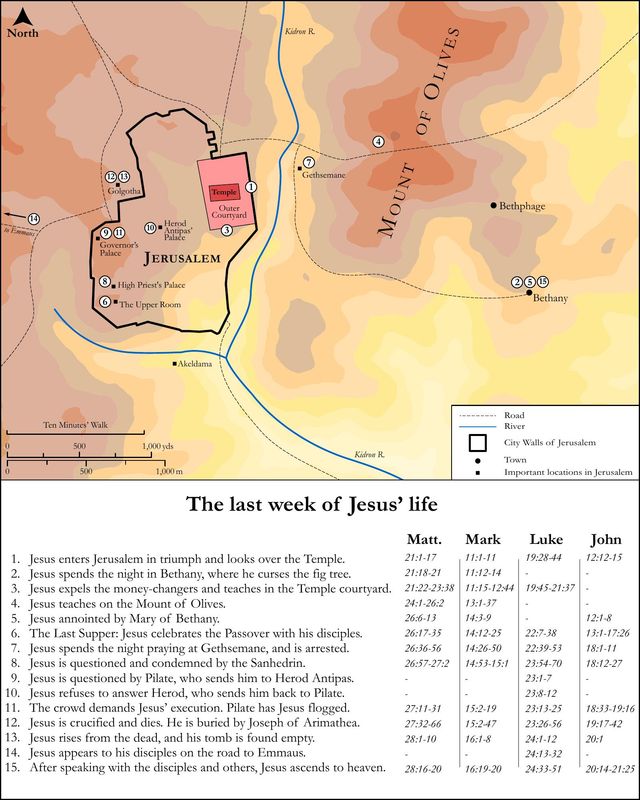
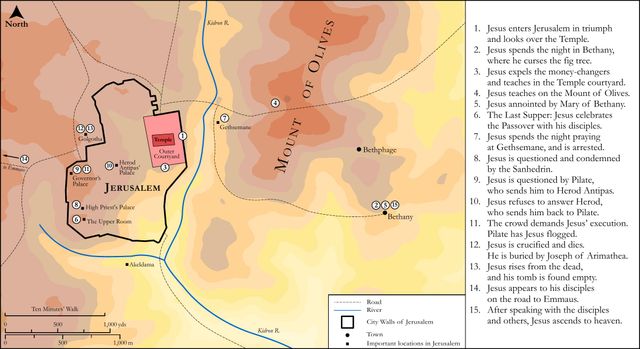
See on the biblical-era maps

Study this verse
Historical interpretation
Nine Centuries of Reception
8 surviving comments on this verse. Each one is dated, so this reads as a timeline rather than a list.
Select a marker to jump to its quote. Markers stagger vertically where authors wrote within a few decades of each other.
Christ is truly the Son of that God Who gave the Law; after the example of the blessings pronounced in the Law, did Himself pronounce the blessings of them that are saved; and also after the cursings of the Law, He now sets forth a woe against sinners; Woe unto you, Scribes and Pharisees, hypocrites. They who allow that it is compatible with goodness to utter these denunciations against sinners, should understand that the purpose of God is the same in the cursings of the Law. Both the cursing there and the woe here fall upon the sinner not from Him who denounces, but from themselves who commit the sins which are denounced, and worthily bring upon themselves the inflictions of God's discipline, appointed for the turning of men to good. So a father rebuking a son utters words of cursing, but does not desire that he should become deserving of those curses, but rather that he should turn himself from them. He adds the cause of this woe, Ye shut up the kingdom of heaven against men; for ye neither go in yourselves, nor suffer them that are entering to go in. These two commandments are by nature inseparable; because not to suffer others to enter in, is of itself enough to keep the hinderer out.
The Pharisees and the Scribes then would neither enter in, nor hear Him who said, By me if any man enter in he shall be saved; (John 10:9.) nor would they suffer those to enter in, who were able to have believed through the things which had been spoken before by the Law and the Prophets concerning Christ, but shut up the door with every kind of device to deter men from entering. Also they detracted from His teaching, denied all prophecy concerning Him, and blasphemed every miracle as deceitful, or wrought by the Devil. All who in their evil conversation set an example of sinning to the people, and who commit injustice, offending the weak, seem to shut up the kingdom of heaven before men. And this sin is found among the people, and chiefly among the doctors, when they teach men what the Gospel righteousness requires of them, but do not what they teach. But those who both teach and live well open to men the kingdom of heaven, and both enter in themselves, and invite others to enter in. Many also will not suffer those who are willing to enter into the kingdom of heaven, when they without reason excommunicate out of jealousy others who are better than themselves; thus they refuse them entrance, but these of sober spirit, overcoming by their patience this tyranny, although forbidden, yet enter in and inherit the kingdom. Also they who with much rashness have set themselves to the profession of teaching before they have learned, and following Jewish fables, detract from those who search out the higher things of Scripture; these do, as far as in them lies, shut out men from the kingdom of heaven.
There are those who dare to say that God is not good because of the curses in his law that he places against their sin. And yet the one who is truly the Son of God who gave that same law is also the same one who put blessings into the law. The same God who provides blessings for those who are saved in a similar way applies curses which he placed in the law against sinners. “Woe,” he says. Woe to you and to those hearing these things who plead the God of the law and yet do not understand that these words were spoken by God in a kindly way. So we understand why Jesus said, “Woe to you, scribes and Pharisees.” They believe that it is in fact a good thing to pronounce these curses against sinners. They consider the arrangement of the law’s curses to be a part of God’s design. The chiding father frequently urges his advice on his son for his improvement—advice that may seem to be a curse. He does not wish the curses to be actualized, however, but rather he desires to avert him from even more such curses.
“Woe” is a voice of sorrowing. For this reason he says that they close the kingdom of heaven, because they hide in the law the consolation of his truth. They lost sight of the advent expected by the prophets. Through deceptive teachings, they do not allow others to go to heaven either. They do not adorn the way of eternity.
"Woe unto you, for ye shut up the kingdom against men; for ye neither go in yourselves, neither suffer ye them that are entering to go in." But if to profit no one be a charge against a man, even to hurt and hinder, what plea hath that? But what means, "them that are entering in?" Them that are fit for it. For when they were to lay injunctions on others, they used to make the burdens intolerable, but when they themselves were to do any of the things required, on the contrary, so far from doing anything, they went much beyond this in wickedness, they even used to corrupt others. These are they that are called pests, who make their employment the ruin of others, standing right contrary to teachers. For if it be the part of a teacher to save that which is perishing, to destroy that which is on the point of being saved is that of a destroyer.
(Ver. 13, 14.) But woe to you, scribes and Pharisees, hypocrites! For you shut the kingdom of heaven in people's faces. For you neither enter yourselves nor allow those who would enter to go in. Woe to you, scribes and Pharisees, hypocrites! For you devour widows' houses and for a pretense you make long prayers; therefore you will receive the greater condemnation. The scribes and Pharisees have knowledge of the Law and the Prophets, and they know that Christ is the Son of God; they are not ignorant that He was born of a Virgin. But while they seek to prey on the subject people, they themselves do not enter the kingdom of heaven, nor do they allow those who could enter to do so. This is what the Prophet Hosea accuses: The priests have hidden the way, they have murdered Shechem (Hosea 6:9). And again: The priests have not said, 'Where is the Lord?' (Hosea 4). Indeed, every teacher who scandalizes his disciples with evil deeds shuts the kingdom of heaven before them.
By the kingdom of heaven is meant the Scriptures, because in them the kingdom of heaven is lodged; the understanding of these is the door. Or the kingdom of heaven is the blessedness of heaven, and the door thereof Christ, by Whom men enter in. The door-keepers are the Priests, to whom is committed the word of teaching or interpreting Scripture, by which the door of truth is opened to men. The opening of this door is right interpretation. And observe that He said not, Woe unto you, for ye open, but, for ye shut up; the Scriptures then are not shut up, though they are obscure.
Which means that every one who thinks highly of his own deserts, shall be humbled before God; and every one who humbles himself concerning his good deeds, shall be exalted with God.
Not only, He says, are you unbelievers who lead a corrupt life, but you teach others not to believe in Me and you corrupt them by your life and example. For the people are apt to become like their rulers, especially if they see them inclined towards evil. See, therefore, that "woe" is the reward of every teacher and ruler whose evil life obstructs others in progress towards good.
Continue studying Matthew 23:13 across the web’s major study libraries — every link below opens this exact verse, chapter, or book on the destination site.
Read & Compare
 BibleGatewayThis verse in more than 200 translations and 70 languages.
 Bible.comThe YouVersion reader — hundreds of translations, reading plans, and highlights.
 ESV.orgCrossway's official English Standard Version reader.
 NET BibleThe NET translation with 60,000+ translators' notes on every rendering decision.
 STEP BibleTyndale House's free study tool — original text, vocabulary, and scholarly resources.
 BibliaLogos Bible Software's free web reader.
 USCCBThe New American Bible (Revised Edition) with the U.S. bishops' study notes.
Commentaries
 BibleHub CommentariesDozens of classic commentaries on this verse, gathered on one page.
 StudyLightMore than 100 commentary sets — the largest collection on the web.
 BibleRefPlain-English commentary on what this verse means, verse by verse.
 Enduring WordDavid Guzik's free commentary on this chapter, widely used by Bible teachers.
 Bible Study ToolsVerse commentary alongside Greek and Hebrew study aids.
Original Language & Research
- BibleHub InterlinearThe verse word by word — original language, transliteration, and English.
- BibleHub LexiconEvery word's original-language definition and Strong's entry.
 Blue Letter BibleDeep-study tools — Strong's numbers, concordance, and word studies.
 CNTR CollationThe earliest Greek manuscripts of this verse, collated letter by letter.
Sermons, Hymns & Audio


TrulyRandomVerse is not affiliated with these sites and doesn’t control their content. They’re linked because they’re genuinely useful.
Summary
In Matthew 23:13, Jesus pronounces the first of seven "woes" against the scribes and Pharisees, condemning their profound hypocrisy and spiritual malpractice. He indicts them for actively obstructing access to the "kingdom of heaven," not only by refusing to enter themselves but also by hindering others who sought to enter, thereby revealing their failure as spiritual guides and the severe consequences of their self-righteous legalism.
Context
ShowHideLiterary Context
This verse initiates a scathing series of condemnations, known as the "seven woes," delivered by Jesus in Jerusalem during the final week of His earthly ministry, just prior to His passion. Positioned within Matthew 23, this discourse represents Jesus' most direct and public confrontation with the religious establishment—the scribes and Pharisees. It follows His triumphal entry and several parables that subtly critiqued the Jewish leadership (e.g., the parable of the wicked tenants in Matthew 21:33-46). This specific woe sets the thematic foundation for the subsequent pronouncements, establishing the core charge of their spiritual obstructionism.
Historical & Cultural Context
The scribes were experts in the Mosaic Law, responsible for interpreting and teaching it, often holding positions of significant influence. The Pharisees were a prominent Jewish religious sect known for their strict adherence to the Law, oral traditions, and a zealous pursuit of ritual purity and righteousness. While outwardly pious and respected, Jesus consistently challenged their legalistic interpretations and their emphasis on external observance over internal transformation. Jerusalem, at this time, was the spiritual and political heart of Judaism, and the Temple was central to Jewish life. Jesus' public denunciation of these leaders in such a prominent setting underscores the gravity of their spiritual abuses and His direct challenge to their authority, which ultimately contributed to their desire for His crucifixion.
Key Themes
ShowHideThe central theme in Matthew 23 is the unveiling of hypocrisy. Jesus labels the scribes and Pharisees as "hypocrites," exposing the stark contrast between their outward religious performance and their inward spiritual corruption. This woe highlights their exclusion from the kingdom, as they not only reject the true path to God's reign themselves but actively prevent others from entering. Their actions demonstrate a profound failure of spiritual leadership, transforming them from guides to stumbling blocks. This spiritual obstruction is further elaborated in Luke 11:52, where Jesus condemns them for taking away "the key of knowledge," implying they withheld the true understanding necessary for entering the kingdom. The concept of the "kingdom of heaven" itself is a major theme throughout Matthew, referring to God's active, saving reign, inaugurated by Jesus, which demands repentance and faith for entry, as seen in Matthew 4:17.
Exposition and Analysis
ShowHideKey Word Analysis
ShowHideThis is a powerful interjection expressing intense grief, lamentation, or a pronouncement of impending judgment. It is not merely an expression of sorrow but a solemn declaration of divine condemnation and the dire consequences awaiting those addressed. Its use here underscores the gravity of the scribes' and Pharisees' spiritual state and actions.
Derived from a term for an actor or stage-player, this word literally means "one who answers from behind a mask." In this context, it vividly describes individuals who present a false outward appearance of piety, righteousness, or moral integrity while their true character or motives are hidden and corrupt. Jesus uses this term to expose the fundamental deception at the heart of their religious practice.
This verb means "to close" or "to bar," whether literally or figuratively. Here, it is used metaphorically to describe the act of obstructing or preventing access. The scribes and Pharisees are accused of actively blocking the entrance to the kingdom of heaven, implying a deliberate and harmful action that denies others the opportunity to experience God's saving reign.
Verse Breakdown
ShowHide"But woe unto you, scribes and Pharisees, hypocrites!"
Jesus begins with a strong adversative "But" (G1161, dé), signaling a sharp contrast to previous teachings or a direct confrontation. The exclamation "woe" (G3759, ouaí) is a solemn pronouncement of judgment. Addressing the "scribes and Pharisees" (G1122, grammateús and G5330, Pharisaîos) directly, Jesus immediately labels them "hypocrites" (G5273, hypokritḗs), setting the tone for the entire discourse by exposing their pretense.
"for ye shut up the kingdom of heaven against men:"
The conjunction "for" (G3754, hóti) introduces the reason for the "woe." The core accusation is that they "shut up" (G2808, kleíō) the "kingdom of heaven" (G932, basileía and G3772, ouranós) "against men" (G1715, émprosthen and G444, ánthrōpos). This metaphor powerfully conveys their active obstruction of humanity's access to God's saving reign and spiritual blessings.
"for ye neither go in [yourselves], neither suffer ye them that are entering to go in."
Another "for" (G1063, gár) provides further explanation. This clause details the two-fold nature of their obstruction. First, "ye neither go in [yourselves]" (G3761, oudé and G1525, eisérchomai) highlights their personal rejection of the kingdom's true nature and requirements. Second, "neither suffer ye them that are entering to go in" (G3756, ou and G863, aphíēmi and G1525, eisérchomai) accuses them of actively preventing or hindering others who are genuinely seeking to enter, through their burdensome legalism, false teachings, and opposition to Jesus.
Literary Devices
ShowHideMatthew 23:13 employs several potent literary devices to convey Jesus' condemnation. The most prominent is Condemnation, expressed through the repeated "woe" (G3759, ouaí), which functions as a prophetic lament and a divine judgment. Metaphor is central to the accusation that they "shut up the kingdom of heaven," vividly portraying their spiritual obstruction as if they were barring a physical gate. This is further amplified by Irony, as those who were supposed to be spiritual guides and gatekeepers to God's truth are instead depicted as actively preventing access. The structure of the accusation, detailing both their personal failure ("neither go in yourselves") and their hindrance of others ("neither suffer ye them that are entering to go in"), utilizes a form of Parallelism or Antithesis, emphasizing the comprehensive nature of their spiritual malpractice.
Theological and Thematic Connections
ShowHideMatthew 23:13 profoundly underscores the theological truth that true entry into God's kingdom is not achieved through outward religious observance or human merit, but through genuine faith and repentance, which the scribes and Pharisees rejected and obscured. Their actions reveal a fundamental misunderstanding of God's grace and the nature of His reign, replacing a relationship with God with a system of burdensome rules. This verse highlights the severe accountability of spiritual leaders, whose primary role is to lead people to God, not to create barriers. Their hypocrisy stands in stark contrast to the genuine righteousness that God desires, which begins in the heart and leads to transformed living.
Reflection and Application
ShowHideMatthew 23:13 serves as a timeless and sobering warning against religious pretense and the dangers of spiritual leadership that misleads rather than guides. For believers today, this passage calls for a deep and honest self-examination of our own hearts and motives. Are we pursuing a genuine relationship with God, characterized by inward transformation and humble obedience, or are we merely performing outward religious duties to gain human approval or maintain a facade of piety? Furthermore, it challenges us to consider how our lives, words, and actions might inadvertently create barriers for others seeking to know God. We are called to be conduits of grace, pointing people to the simplicity and accessibility of the gospel, rather than adding unnecessary burdens or fostering an exclusive, judgmental spirit. Our mission is to open the door to the kingdom, not to shut it.
Questions for Reflection
ShowHideFAQ
ShowHideWhat does Jesus mean by "shut up the kingdom of heaven"?
ShowHideWhen Jesus says the scribes and Pharisees "shut up the kingdom of heaven," He is using a powerful metaphor. The "kingdom of heaven" refers to God's sovereign rule and saving activity, which was breaking into the world through Jesus' ministry (see Matthew 4:17). The scribes and Pharisees, through their rigid legalism, emphasis on external rituals over internal transformation, and their rejection of Jesus as the Messiah, were effectively blocking people from experiencing God's true reign and salvation. They presented a distorted view of God's requirements, making it impossible for ordinary people to find genuine access to Him. This is echoed in Luke 11:52, where Jesus states they "have taken away the key of knowledge."
Why does Jesus call the scribes and Pharisees "hypocrites"?
ShowHideJesus calls them "hypocrites" (Greek: hypokritḗs) because their outward religious performance did not match their inward spiritual reality. The term originally referred to an actor wearing a mask, playing a role. The scribes and Pharisees meticulously observed religious laws and traditions, often in public, to appear righteous and devout (as seen in Matthew 6:1-6). However, their hearts were filled with pride, self-righteousness, and a lack of genuine love for God or neighbor. Their actions, such as devouring widows' houses or neglecting justice and mercy (mentioned in Matthew 23:14, 23), exposed their pretense. Jesus condemned this spiritual deception that prioritized outward show over inward transformation.
Christ-Centered Fulfillment
ShowHideMatthew 23:13, with its stark condemnation of those who shut up the kingdom of heaven, powerfully foreshadows the ultimate work of Christ as the sole true "door" and "way" to God's kingdom. While the scribes and Pharisees obstructed access through their legalism and hypocrisy, Jesus declares Himself to be the one who opens the way. He states in John 10:9 that He is "the door; if anyone enters through Me, he will be saved." Furthermore, in John 14:6, Jesus unequivocally asserts, "I am the way, and the truth, and the life; no one comes to the Father but through Me." His death on the cross tears the temple veil (as described in Matthew 27:51), symbolizing the removal of all barriers between God and humanity, making direct access to the Father possible through His atoning sacrifice. Thus, the very kingdom that the Pharisees shut up is now opened wide by Christ, inviting all to enter by grace through faith in Him, fulfilling the promise of a new and living way (as seen in Hebrews 10:19-20).