


Matthew 23:36
Bible text: King James Version (1769 Blayney text) · Public domain
Bible text: Berean Standard Bible · Public domain
Bible text: American Standard Version (1901) · Public domain
Bible text: World English Bible, Messianic edition · Public domain
Bible text: Geneva Bible (1599) · Public domain
Bible text: Young's Literal Translation · Public domain
- ἀμὴνamēnAmenG281INJ-HEBInterjection
- λέγωlegōI sayG3004V-PAI-1SVerb Present Active Indicative 1st Singular
- ὑμῖν·huminto youG4771P-2DPPersonal pronoun Dative 2nd Plural
- ἥξειhēxeiwill comeG2240V-FAI-3SVerb Future Active Indicative 3rd Singular
- ταῦταtautathese thingsG3778D-NPNDemonstrative pronoun Nominative Plural Neuter
- πάνταpantaallG3956A-NPNAdjective Nominative Plural Neuter
- ἐπὶepiuponG1909PREPPreposition
- τὴνtēn<the>G3588T-ASFDefinite article Accusative Singular Feminine
- γενεὰνgeneangenerationG1074N-ASFNoun Accusative Singular Feminine
- ταύτηνtautēnthisG3778D-ASFDemonstrative pronoun Accusative Singular Feminine
English is a literal word-by-word gloss of the Greek, not the KJV's wording. Why?
This is the original text the KJV's translators worked from — each Greek word with its own literal English meaning in this verse, prepared by scholars at Tyndale House, Cambridge. The KJV translates whole sentences, not word by word, so its wording differs: one Greek word can become several English words, and the KJV may choose “charity” where the gloss reads “love”. Both are faithful — they answer different questions. For the KJV's own rendering, switch to the KJV text.
Details
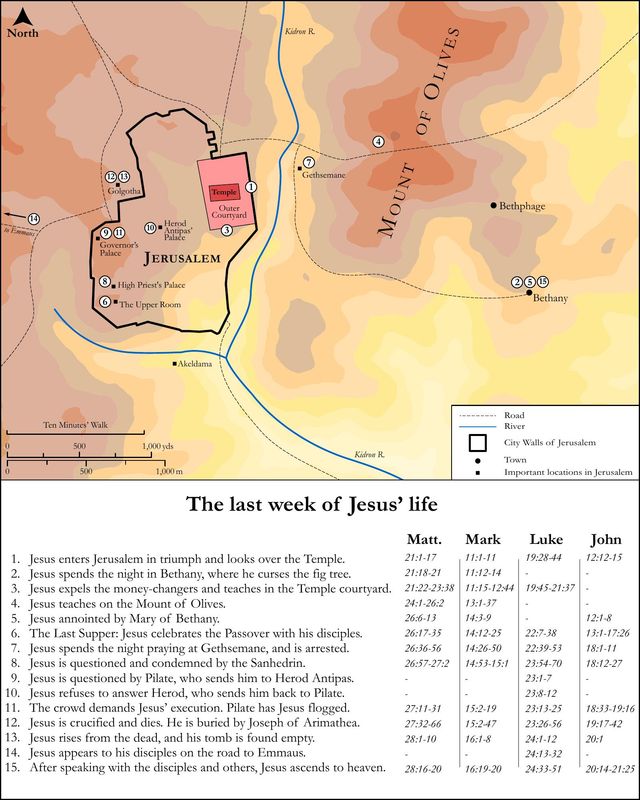
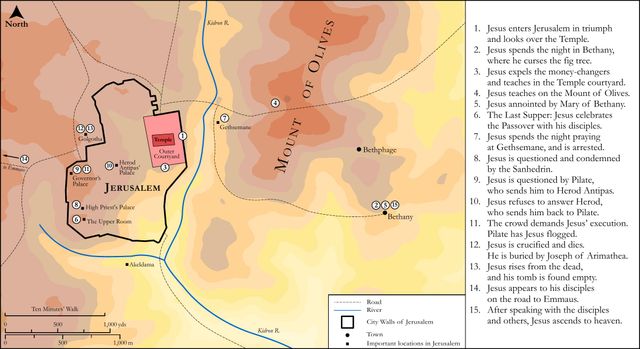
See on the biblical-era maps

Study this verse
Historical interpretation
Nine Centuries of Reception
10 surviving comments on this verse. Each one is dated, so this reads as a timeline rather than a list.
Select a marker to jump to its quote. Markers stagger vertically where authors wrote within a few decades of each other.
Because then they will fill up the measure of their fathers' purposes, therefore are they serpents, and an offspring of vipers.
That is, the Apostles, who, as foretelling things to come, are Prophets; as having knowledge of Christ, are wise men; as understanding the Law, are Scribes.
Then, because He was searching their temper of mind, which is to the more part obscure, He doth, from those things also which they were about to perpetrate, which would be manifest to all, establish His words. For, because He had said, "Wherefore ye be witnesses unto yourselves that ye are the children of them which killed the prophets," making it evident, that of their affinity in wickedness He is speaking, and that it was a pretense to say, "We should not have been partakers with them," He added, "Fill ye up therefore the measure of your fathers," not commanding, but declaring beforehand, what was to be, that is, His own murder.
Therefore, having brought in their refutation, and having shown that they were pretenses which they said in their own defense, as, for instance, "We would not have been partakers with them," (for they who refrain not from the Lord, how should they have refrained from the servants), He makes after this His language more condemnatory, calling them "serpents, and generation of vipers," and saying, "How shall ye escape the damnation of hell," at once perpetrating such things, and denying them, and dissembling your purpose?
Then rebuking them more exceedingly from another cause also, He Saith, "I will send unto you prophets, and wise men, and scribes, and some of them shall ye kill and crucify, and some of them shall ye scourge in your synagogues." For that they should not say, "Though we crucified the Lord, yet from the servants we should have refrained, if we had been then;" "Behold," He saith, "I send servants also to you, prophets likewise themselves, and neither will ye spare them." But these things He saith, showing that it was nothing strange, that He should be murdered by those sons, being both murderous and deceitful, and having much guile, and surpassing their fathers in their outrages.
And besides what hath been said, He shows them to be also exceedingly vainglorious. For when they say, "If we had been in the days of our fathers, we should not have been partakers with them," they spake out of vainglory, and were practising virtue in words only, but in their works doing the contrary.
Ye serpents, ye generation of vipers, that is, wicked sons of wicked men, and more wicked than those who begat them. For He showeth that they are committing greater crimes, both by their committing them after those others, and by their doing much more grievous things than they, and this, while positively affirming that they never would have fallen into the same. For they add that which is both the end and the crown of their evil deeds. For the others slew them that came to the vineyard, but these, both the son, and them that were bidding them to the wedding.
But these things He saith, to separate them off from the affinity to Abraham, and to show that they had no advantage from thence, unless they followed his works; wherefore also He adds, "How can ye flee from the damnation of hell," when following them that have committed such acts?
And here He recalls to their remembrance John's accusation, for he too called them by this name, and reminded them of the judgment to come. Then, because they are nothing alarmed by judgment and hell, by reason of their not believing them, and because the thing is future, He awes them by the things present, and saith, "Wherefore, behold, I send unto you prophets and scribes: and some of them shall ye kill and crucify, and scourge; that upon you may come all the righteous blood shed upon the earth, from the blood of righteous Abel, unto the blood of Zacharias the son of Barschias, whom ye slew between the temple and the altar. Verily I say unto you, that all these things shall come upon this generation."
See by how many things He has warned them. He said, Ye condemn your fathers, in that ye say, "We would not have been partakers with them;" and this is no little thing to shame them. He said, While ye condemn them, ye do worse things, even ye yourselves; and this is sufficient to cover them with disgrace. He said, These things shall not be without punishment; and hence he implants in them fear beyond words. He hath reminded them at least of hell. Then because that was to come, He brought home to them the terrors as even present. "For all these things shall come," He saith, "upon this generation."
He added also unspeakable severity to the vengeance, saying, that they shall suffer more grievous things than all; yet by none of these things did they become better. But if any one say, And why do they suffer more grievously than all? we would say, Because they have first committed more grievous things than all, and by none of the things that have been done to them have they been brought to a sound mind.
Heardest thou not Lamech saying, "Of Lamech vengeance shall be taken seventy times sevenfold;" that is, "I am deserving of more punishment than Cain." Why could this be? Yet he did not slay his brother; but because not even by his example was he brought to a better mind. And this is what God saith elsewhere, "Requiting the sins of fathers upon children for the third and fourth generation of them that hate me." Not as though one were to suffer punishment for the crimes committed by others, but inasmuch as they who, after many sin and have been punished, yet have not grown better, but have committed the same offenses, are justly worthy to suffer their punishments also.
But see how seasonably he also mentioned Abel, indicating that this murder likewise is of envy. What then have ye to say? Know ye not what Cain suffered? Did God hold His peace at his deeds? Did He not exact the severest penalty? Heard ye not what things your fathers suffered, when they slew the prophets; were they not delivered over to punishments, and inflictions of vengeance without number? How then did ye not become better? And why do I speak of the punishments of your fathers, and what they suffered? Thou who thyself condemnest thy fathers, how is it thou doest worse? For moreover even ye yourselves have declared that "He will miserably destroy those wicked men." What favor then will ye have after this, committing such things after such a sentence?
But who is this Zacharias? Some say, the father of John; some, the prophet; some, a priest with two different names, whom the Scripture also calls, the son of Jehoiada.
But do thou mark this, that the outrage was twofold. For not only did they slay holy men, but also in a holy place. And saying these things, He did not only alarm them, but also comfort His disciples, showing that the righteous men also who were before them suffered these things. But these He alarmed, foretelling that like as they paid their penalty, even so should these too suffer the utmost extremities. Therefore He calls them "prophets, and wise men, and scribes," even hereby again taking away every plea of theirs. "For ye cannot say," He saith, "Thou didst send from among the Gentiles, and therefore we were offended;" but they were led on unto this by being murderous, and thirsting for blood. Wherefore He also said beforehand, "For this cause do I send prophets and scribes." This did the prophets also lay to their charge, saying, "They mingle blood with blood," and that they are men of blood. Therefore also did He command the blood to be offered to Him, showing that if in a brute it be thus precious, much more in a man. Which He saith to Noah likewise, "I will require all blood that is shed." And ten thousand other such things might one find Him enjoining with regard to their not committing murder; wherefore He commanded them not even to eat that which was strangled.
Oh the love of God towards man! that though He foreknew they would profit nothing, He still doeth His part. For I will send, He saith, and this knowing they would be slain. So that even hereby they were convicted of saying vainly, "We should not have been partakers with our fathers." For these too slew prophets even in their synagogues, and reverenced neither the place, nor the dignity of the persons. For not merely ordinary persons did they slay, but prophets and wise men, such that they had nothing to lay to their charge. And by these He meaneth the apostles, and those after them, for, indeed, many prophesied. Then, willing to aggravate their fears, He saith, "Verily, verily I say unto you, All these things shall come upon this generation;" that is, I will bring all upon your heads, and will make the vengeance sore. For he that knew many to have sinned, and was not sobered, but himself hath committed the same sins again, and not the same only, but also far more grievous, would justly deserve to suffer a far more grievous punishment than they. For like as, if he had been minded, he would have gained greatly, had he grown better by their examples, even so, since he continued without amendment, he is liable to a heavier vengeance, as having had the benefit of more warning by them who had sinned before and been punished, and having reaped no advantage.
He had said against the Scribes and Pharisees, that they were the children of those who killed the Prophets; now therefore He shows that they were like them in wickedness, and that that was false that they said, If we had been in the days of our fathers, we would not have been partakers with them in the blood of the Prophets. Wherefore He now says, Fill ye up the measure of your fathers. This is not a command, but a prophecy of what is to be.
Then to show them that they should not do this without punishment, He holds out an unspeakable terror over them, That upon you may come all the righteous blood.
Moreover, He names Abel, to show that it would be out of envy that they would kill Christ and His disciples. He names Zacharias, because there was a twofold resemblance in his case, the sacred place, as well as the sacred person.
And to take away all excuse from them that they might not say, Because you sent them to the Gentiles thereat were we offended, He foretels that His disciples should be sent to them, and it is of their punishment that He adds, Verily I say unto you, all these things shall come upon this generation.
Otherwise; Because He delayed the punishment of hell which He had threatened them with, He pronounces against them threats of present evil, saying, All these things shall come upon this generation.
For he who having seen many sinning yet remains uncorrected, but rather does the same or worse, is obnoxious to heavier punishment.
The same had been said by John the Baptist. Wherefore as of vipers are born vipers, so of your fathers who were murderers are you born murderers.
Or, as the Apostle writes to the Corinthians (1 Cor. 12.) that there are various gifts among Christ's disciples; some Prophets, who foretel things to come; some wise men, who know when they ought to speak; others Scribes taught in the Law; of whom Stephen was stoned, Paul killed, Peter crucified, and the disciples of the Apostles beaten, in the Acts; and they persecuted them from city to city, driving them out of Judæa, that they might go to the Gentiles.
Concerning the Abel here spoken of, there is no doubt that it is he whom his brother Cain murdered. He is proved to have been righteous, not only by this judgment of the Lord, but by the passage in Genesis, which says that his offerings were accepted by God. But we must enquire who is this Zacharias, son of Barachias, because we read of many Zachariases; and that we might not mistake, here it is added, whom ye slew between the temple and the altar. Some say that it is that Zacharias who is the eleventh among the twelve Prophets, and his father's name agrees to this, but when he was slain between the temple and the altar, Scripture does not mention; but above all, in his time there were scarce 'even the ruins of the temple. Others will have it to be Zacharias the father of John.
But as this has no Scripture authority, it is as readily despised as offered. Others will have it to be that Zacharias who was killed by Joas, king of Judah, between the temple and the altar, that is, in the court of the temple. (2 Chron. 24:21.) But that Zacharias was not the son of Barachias, but of Jehoiada the Priest. But Barachias in our language is interpreted 'Blessed of the Lord,' so that the righteousness of Joiada the Priest is expressed by this Hebrew word. But in the Gospel which the Nazarenes use, we find written 'son of Joiada' instead of son of Barachias.
The rule of the Scriptures is only to know two generations, one of good the other of bad. Of the generation of the good it is said, The generation of the righteous shall be blessed. (Ps. 112:2.) And of the bad it is said in the present passage, Generation of vipers. These then, because they did against the Apostles like things as Cain and Joas, are described as of one generation.
(Verses 35, 36.) So that upon you may come all the righteous blood shed on earth, from the blood of righteous Abel to the blood of Zechariah son of Barachiah, whom you murdered between the temple and the altar. Truly I tell you, all these things will come upon this generation. Regarding Abel, there is no doubt that he is the one whom his brother Cain killed. But the righteousness of Zechariah is not only confirmed now by the judgment of the Lord, but also by the testimony of Genesis (Gen. IV), where the offerings accepted by God are narrated. We inquire who this Zacharias son of Barachiah is, because we have read of many Zachariases. And so that no opportunity for error might be given, it has been added: whom you have killed between the temple and the altar. Different things are read in different places, and I ought to present the opinions of different authors. Some say that it is Zacharias son of Barachiah, who is the eleventh among the twelve prophets, and that the name of the father agrees with him; but where he was killed between the temple and the altar, Scripture does not speak: especially since during his time there were hardly any ruins of the temple. Some suggest that Zacharias is the father of John, approving this based on certain apocryphal dreams, stating that he was killed because he preached the coming of the Savior. However, since this does not have authority from the Scriptures, it is dismissed with the same ease with which it is proven. Others believe this Zacharias to be the one who was killed by King Joash of Judah between the temple and the altar, as the history of the Kings narrates. But it should be noted that this Zacharias is not the son of Barachiah, but the son of Jehoiada the priest. And Scripture also reports: He did not remember the kindness Joash, his father, had shown him (2 Chronicles 24:22). Therefore, if we consider Zachariah and the place where he was killed, we wonder why he is called the son of Barachiah and not Joiada. Barachiah in our language means blessed by the Lord, and the righteousness of the priest Joiada is demonstrated in the Hebrew language. In the Gospel used by the Nazarenes, we find written that he is the son of Joiada instead of Barachiah. The simpler brethren among the ruins of the temple and the altar, or at the exits of the gates that lead to Siloam, pointing to the red stones, consider them to be polluted with the blood of Zechariah. We do not condemn the error that stems from hatred of the Jews and devotion to the faith. Let us briefly explain why the blood of the righteous Abel to the son of Barachiah is sought from that generation, even though neither of them killed him. The rule of the Scriptures is to present two generations, of the good or the evil, that is, one for each individual. Let us take examples of good things: Who shall ascend into the mountain of the Lord? or who shall rest in his holy mountain? (Ps. 23:3) And when he has described those who are going to ascend into the mountain of the Lord, who were of different ages, afterward he adds: This is the generation of them that seek the Lord, that seek the face of the God of Jacob. And in another place concerning all the saints: The generation of the righteous shall be blessed. (Ps. 112:2) But concerning the wicked, as in the present place: The generation of vipers. And all things will be required from this generation. And in Ezekiel, when he described the sins of the land, the prophetic word added: If Noah, and Job, and Daniel were found there, I will not forgive the sins of that land (Ezek. 14:14): All the righteous who would be like them in virtues, by Noah and Job and Daniel, wanting to be understood. Therefore, those who have done similar things to Cain and Joash against the apostles are referred to as being from the same generation.
He foretels, that as their fathers killed the Prophets, so they also should kill Christ, and the Apostles, and other holy men. As suppose you had a quarrel with some one, you might say to your adversary, Do to me what you are about to do; but you do not therein bid him do it, but show him that you are aware of his manæuvres. And in fact they went beyond the measure of their fathers; for they put to death only men, these crucified God. But because He stooped to death of His own free choice, He does not lay on them the sin of His death, but only the death of the Apostles and other holy men. Whence also He said, Fill up, and not Fill over; for a just and merciful Judge overlooks his own wrongs, and only punishes those done to others.
He calls them offspring of vipers, because the nature of vipers is such that the young burst the womb of their dam, and so come forth; and in like manner the Jews condemned their fathers, finding fault with their deeds. He says, How shall ye escape the damnation of hell? By building the tombs of the saints? But the first step of piety is to love holiness, the next, to love the saints; for it is not reasonable in him to honour the righteous, who despises righteousness. The saints cannot be friends to those to whom God is an enemy. Shall ye be saved by a mere name, because ye seem to be among God's people! Forasmuch as an open enemy is better than a false friend, so is he more hateful to God, who calls himself the servant of God, and does the commands of the Devil. Indeed, before God he who has resolved to kill a worm is a murderer before the deed is done, for it is the will that is rewarded for good, or punished for evil. Deeds are evidence of the will. God then does not require deeds on His own account that He may know how to judge, but for the sake of other men, that they may perceive that God is righteous. And God affords the opportunity of sin to the wicked, not to make them sin, but to manifest the sinner; and also to the good He gives opportunity to show the purpose of their will. In this way then He gave the Scribes and Pharisees opportunity of showing their purposes, Behold, I send unto you Prophets, and wise men, and Scribes.
As all the good things which had been merited by all the saints in each generation since the foundation of the world were bestowed upon that last generation which received Christ; so all the evil that all the wicked in every generation from the foundation of the world had deserved to suffer, came upon that last generation of the Jews which rejected Christ. Or thus; Assail the righteous of former saints, yea, of all the saints, could not merit that so great grace as was given to men in Christ; so the sins of all the wicked could not deserve so much evil as came upon the Jews, that they should suffer such things as these suffered from the Romans, and that in after time every generation of them to the end of the world should be cast off from God, and be made a mock by all the Gentiles. For what is there worse than to reject and in such sort to put to death the Son coming in mercy and lowliness! Or thus; Nations and states when they sin are not thereupon immediately punished by God, but He waits for many generations; but when He sees fit to destroy that state or nation, He then seems to visit upon them the sins of all former generations, and one generation suffers the accumulation of all that former generations have deserved. Thus this generation of the Jews seems to have been punished for their fathers; but in truth they suffered not for others, but on their own account.
It should be enquired too how He says, to the blood of Zacharias, since the blood of many more saints was afterwards shed. This is thus explained. Abel a keeper of sheep was killed in the field, Zacharias a priest was slain in the court of the temple. The Lord therefore names these two, because by these all holy martyrs are denoted, both of lay and priestly order.
That is, all the vengeance due for the shedding of the blood of the righteous.
. He says that upon the Jews then alive shall come all the blood shed unrighteously. For they shall be punished more severely than their fathers because they did not amend their lives after receiving such examples. For Lamech too was punished more than Cain, although he had not killed a brother, because he did not learn from the example of Cain (Gen. 4:23-24). All blood, He says, from Abel to Zachariah shall come upon you. It was appropriate that He mentioned Abel, for as Abel was slain out of envy, so Christ too was envied. Which Zachariah is mentioned here? Some say that it is he who is numbered among the twelve prophets; others say that he is the father of the Forerunner. For there is an account handed down to us, according to which Zachariah, when he was high priest, had Mary the Mother of God stand in the temple in the place of the virgins even after she had given birth to Christ. The Jews were vexed at this and killed him for ranking among the virgins a woman who had given birth. But it is nothing to be wondered at if the father of the Forerunner also had a father named Baruch, as did one of the twelve prophets who was called the son of Baruch. For it is likely that just as they shared the same name, so did their fathers.
(ord.) He means not only those there present, but the whole generation before and after, for all were one city and one body of the Devil.
Continue studying Matthew 23:36 across the web’s major study libraries — every link below opens this exact verse, chapter, or book on the destination site.
Read & Compare
 BibleGatewayThis verse in more than 200 translations and 70 languages.
 Bible.comThe YouVersion reader — hundreds of translations, reading plans, and highlights.
 ESV.orgCrossway's official English Standard Version reader.
 NET BibleThe NET translation with 60,000+ translators' notes on every rendering decision.
 STEP BibleTyndale House's free study tool — original text, vocabulary, and scholarly resources.
 BibliaLogos Bible Software's free web reader.
 USCCBThe New American Bible (Revised Edition) with the U.S. bishops' study notes.
Commentaries
 BibleHub CommentariesDozens of classic commentaries on this verse, gathered on one page.
 StudyLightMore than 100 commentary sets — the largest collection on the web.
 BibleRefPlain-English commentary on what this verse means, verse by verse.
 Enduring WordDavid Guzik's free commentary on this chapter, widely used by Bible teachers.
 Bible Study ToolsVerse commentary alongside Greek and Hebrew study aids.
Original Language & Research
- BibleHub InterlinearThe verse word by word — original language, transliteration, and English.
- BibleHub LexiconEvery word's original-language definition and Strong's entry.
 Blue Letter BibleDeep-study tools — Strong's numbers, concordance, and word studies.
 CNTR CollationThe earliest Greek manuscripts of this verse, collated letter by letter.
Sermons, Hymns & Audio


TrulyRandomVerse is not affiliated with these sites and doesn’t control their content. They’re linked because they’re genuinely useful.
Summary
Matthew 23:36 serves as a climactic and sobering declaration by Jesus, pronouncing an imminent divine judgment upon the contemporary generation of Jewish leaders and the nation for their persistent rejection of God's messengers, culminating in their rejection of the Messiah himself. This verse encapsulates the cumulative guilt of centuries of disobedience and prophetic persecution, warning that the full weight of these transgressions would fall upon those living at that time, signifying a pivotal moment in salvation history.
Context
ShowHideLiterary Context
This verse concludes Jesus' searing denunciation of the scribes and Pharisees, recorded in Matthew chapter 23. Preceding this verse, Jesus delivers a series of seven "woes," systematically exposing the hypocrisy, spiritual blindness, and oppressive legalism of these religious leaders (Matthew 23:13-33). He condemns their outward show of piety, their heavy burdens placed on the people, and their ultimate rejection and persecution of God's prophets throughout history, culminating in their impending rejection of Jesus himself (Matthew 23:34-35). The phrase "All these things" directly refers to the cumulative guilt and judgment detailed in these preceding woes. Immediately following this pronouncement, Jesus laments over Jerusalem, foreshadowing its desolation due to its persistent rejection of His gracious invitation (Matthew 23:37-39). Thus, Matthew 23:36 acts as the solemn climax of Jesus' public ministry and prophetic warnings before His passion.
Historical & Cultural Context
Jesus' discourse in Matthew 23 takes place in Jerusalem during the final week of His earthly ministry, just before His crucifixion. The city was the religious and political heart of Judea, and the Temple was the center of Jewish worship. The scribes and Pharisees were the dominant religious authorities, revered by the people but often criticized by Jesus for their legalism and hypocrisy. The historical backdrop includes centuries of Israel's covenant unfaithfulness, marked by a pattern of rejecting God's prophets and embracing idolatry or self-righteousness. Jesus' words echo earlier prophetic warnings of judgment for disobedience (e.g., Deuteronomy 28:15-68). The "generation" Jesus addresses refers to the contemporary population, particularly its leadership, who were perpetuating this historical pattern of rebellion and were about to commit the ultimate act of rejection by crucifying the Messiah. This prophecy found its historical fulfillment approximately 40 years later with the Roman destruction of Jerusalem and its Temple in A.D. 70, a catastrophic event that ended the Jewish sacrificial system and dispersed the Jewish people.
Key Themes
ShowHideMatthew 23:36 contributes significantly to several key themes within Matthew's Gospel and biblical theology. Firstly, it underscores the theme of Divine Judgment and Accountability. Jesus' pronouncement highlights the certainty of God's righteous judgment upon those who persistently reject His truth, persecute His messengers, and cling to self-righteousness. It emphasizes that there will be an immediate and tangible accountability for spiritual rebellion and hypocrisy, not just a future, eschatological reckoning. Secondly, the verse reinforces the Consequences of Rejection. The "all these things" refers to the cumulative guilt of Israel's history of rejecting God's prophets, now brought to a head by their rejection of the Messiah. This culmination of sin would result in severe consequences falling upon "this generation," signifying a historical turning point. Thirdly, it functions as a profound Prophetic Warning. Jesus' words serve as a stark and solemn warning that the spiritual state of the nation had reached a critical point, and the time for divine reckoning was imminent. This prophecy, fulfilled in A.D. 70, illustrates God's justice and the inevitable outcome of rejecting His ultimate revelation in Christ.
Exposition and Analysis
ShowHideKey Word Analysis
ShowHideThis adverb, derived from a Hebrew word meaning "firm" or "trustworthy," is Jesus' characteristic way of introducing a statement with absolute truth, certainty, and divine authority. It functions as a solemn affirmation, underscoring the gravity and infallibility of the pronouncement that follows. When Jesus says "Verily," He is stamping His divine seal of truth on the declaration.
This verb signifies "to arrive" or "to be present." In this context, it denotes the certain and imminent arrival or manifestation of the judgment previously described. It's not a mere possibility but a definite, impending event, emphasizing the inevitability of the consequences that will befall "this generation."
This term refers to a group of people living at a particular time, an age, or a contemporary population. In Matthew 23:36, it specifically denotes the contemporary group of people, particularly the leaders and the populace who were actively participating in or condoning the rejection of God's prophets and, crucially, the Messiah. It highlights their direct culpability for the culmination of Israel's historical rebellion.
Verse Breakdown
ShowHide"Verily I say unto you,"
This opening phrase, "Amen lego hymin" in Greek, is a hallmark of Jesus' teaching, signifying the absolute truth and divine authority of His words. It is not merely a statement but a solemn, binding declaration, emphasizing the certainty and gravity of what He is about to pronounce. It demands attention and belief, establishing the prophetic nature of the subsequent warning.
"All these things shall come"
"All these things" refers comprehensively to the cumulative guilt and judgment detailed in the preceding "woes" (e.g., Matthew 23:13-33). This includes the blood of all the righteous prophets and martyrs, from Abel to Zechariah, whom Israel had persecuted throughout its history (Matthew 23:35). The phrase "shall come" (hḗkō) underscores the certainty and imminence of this judgment. It is not a hypothetical scenario but a definite, impending reality, a divine reckoning that is about to manifest.
"upon this generation."
"This generation" refers specifically to the people living at the time Jesus spoke these words, particularly the religious leaders and the nation of Israel that was about to reject and crucify their Messiah. The judgment would fall directly upon them because they were perpetuating and culminating the historical pattern of rejecting God's messengers, and their ultimate rejection of Jesus would seal their fate. This prophecy was fulfilled with the catastrophic destruction of Jerusalem and its Temple by the Romans in A.D. 70, approximately forty years after Jesus' pronouncement.
Literary Devices
ShowHideMatthew 23:36 employs several powerful literary devices. The phrase "Verily I say unto you" functions as a Solemn Declaration, a characteristic rhetorical device of Jesus that emphasizes the absolute truth and divine authority of His pronouncements, demanding immediate and serious attention from His audience. The entire verse is a direct Prophecy, foretelling a future event—the divine judgment and desolation of Jerusalem—which would occur within the lifetime of "this generation." This prophetic element underscores Jesus' omniscience and His role as the ultimate revealer of God's will. Furthermore, the verse serves as a Summation and Climax, bringing to a dramatic conclusion the series of "woes" and indictments against the scribes and Pharisees in Matthew chapter 23. It gathers the cumulative weight of historical and contemporary sin, pronouncing a definitive judgment that marks a turning point in the narrative of God's dealings with Israel.
Theological and Thematic Connections
ShowHideMatthew 23:36 stands as a stark reminder of the principle of divine accountability and the cumulative nature of sin and rejection. Theologically, it underscores God's justice, demonstrating that persistent rebellion against His revealed truth and the persecution of His messengers will inevitably lead to judgment. The "blood of all the righteous" falling upon "this generation" signifies that while each generation is accountable for its own actions, there is also a corporate responsibility and a culmination of historical guilt that can reach a tipping point, leading to a decisive divine intervention. This specific judgment on Jerusalem and its leaders serves as a powerful historical example of the consequences of rejecting God's ultimate revelation in His Son. It highlights the transition from the old covenant era, marked by Israel's unfaithfulness, to the inauguration of a new covenant through Christ's sacrifice, which would open the way for a new people of God, comprised of both Jews and Gentiles.
Reflection and Application
ShowHideWhile Matthew 23:36 speaks to a specific historical judgment upon a particular generation, its underlying principles resonate with timeless spiritual truths that hold profound implications for believers today. It serves as a potent reminder that God is a God of justice, and His patience, though vast and merciful, is not infinite. We are challenged to examine our own hearts and lives, ensuring that our faith is not merely an outward show of piety but a genuine, transformative relationship with God. Are we truly living in humble obedience to His Word, or are we guilty of spiritual hypocrisy, prioritizing human traditions or self-righteousness over the true demands of the Gospel? This verse compels us to heed God's warnings, recognizing that His pronouncements, whether of blessing or judgment, are given out of love and a desire for repentance, and ignoring them inevitably leads to consequences. Ultimately, it calls for a sincere embrace of Christ's teachings and a readiness to respond to His call, acknowledging our individual and collective accountability before Him for how we receive His truth and His messengers.
Questions for Reflection
ShowHideFAQ
ShowHideWhat does "this generation" mean in Matthew 23:36?
ShowHideIn Matthew 23:36, "this generation" (Greek: geneá) refers primarily to the contemporary generation of people living at the time Jesus spoke these words, particularly the Jewish leaders and the populace who were actively rejecting Him. It is not an indefinite period of time, but a specific group of people who would witness and experience the fulfillment of Jesus' prophecy of judgment. This interpretation is supported by the historical fulfillment of the prophecy with the destruction of Jerusalem and its Temple by the Romans in A.D. 70, which occurred within approximately 40 years of Jesus' pronouncement, well within a single generation's lifespan.
What are "all these things" that shall come upon this generation?
ShowHide"All these things" refers to the cumulative guilt and judgment that Jesus had just detailed in His series of "woes" against the scribes and Pharisees in Matthew chapter 23. Specifically, it encompasses the blood of all the righteous prophets and martyrs whom Israel had persecuted throughout its history, from Abel to Zechariah (Matthew 23:35). This generation was held accountable because they were perpetuating this historical pattern of rejecting God's messengers and were about to commit the ultimate act of rejecting and crucifying the Messiah. The fulfillment of "all these things" is widely understood to be the catastrophic destruction of Jerusalem and its Temple in A.D. 70, a divine judgment for their persistent rebellion and rejection of God's ultimate revelation in Jesus Christ.
Christ-Centered Fulfillment
ShowHideMatthew 23:36, while a pronouncement of judgment, finds its ultimate Christ-centered fulfillment not only in the historical destruction of Jerusalem but more profoundly in the person and work of Jesus Himself. The "blood of all the righteous" that falls upon "this generation" highlights the cumulative sin of humanity's rebellion against God, a rebellion that Jesus, as the perfect Lamb of God, would fully bear. His crucifixion, orchestrated by the very generation He condemned, was the ultimate act of rejection, yet it was also the divine means by which the curse of sin was absorbed. Through His atoning sacrifice on the cross, Jesus became the one upon whom the wrath for "all these things"—the accumulated sin of humanity—was poured out (Romans 3:25). For those who believe, the judgment prophesied in Matthew 23:36 is averted, as Christ has borne the full weight of God's just wrath. He is the ultimate Prophet, whose warnings are true, and the ultimate King, whose judgment is righteous. The destruction of Jerusalem, therefore, serves as a powerful historical type, foreshadowing the final judgment that awaits all who ultimately reject the saving grace offered through the crucified and resurrected Christ (John 3:18). In Jesus, God's justice and mercy perfectly converge, offering salvation to those who turn from their own "generation's" rebellion and embrace Him as Lord and Savior (Acts 2:38-40).