


Matthew 23:35
Bible text: King James Version (1769 Blayney text) · Public domain
Bible text: King James Version with Strong's numbers · Public domain
Bible text: Berean Standard Bible · Public domain
Bible text: American Standard Version (1901) · Public domain
Bible text: World English Bible, Messianic edition · Public domain
Bible text: Geneva Bible (1599) · Public domain
Bible text: Young's Literal Translation · Public domain
- ὅπωςhopōsso thatG3704CONJConjunction
- ἔλθῃelthēmay comeG2064V-2AAS-3SVerb 2nd Aorist Active Subjunctive 3rd Singular
- ἐφ᾽eph᾽uponG1909PREPPreposition
- ὑμᾶςhumasyouG4771P-2APPersonal pronoun Accusative 2nd Plural
- πᾶνpanall [the]G3956A-NSNAdjective Nominative Singular Neuter
- αἷμαhaimabloodG129N-NSNNoun Nominative Singular Neuter
- δίκαιονdikaionrighteousG1342A-NSNAdjective Nominative Singular Neuter
- ἐκχυννόμενονekchunnomenonbeing poured outG1632V-PPP-NSNVerb Present Passive Participle Nominative Singular Neuter
- ἐπὶepiuponG1909PREPPreposition
- τῆςtēstheG3588T-GSFDefinite article Genitive Singular Feminine
- γῆςgēsearthG1093N-GSFNoun Genitive Singular Feminine
- ἀπὸapofromG575PREPPreposition
- τοῦtoutheG3588T-GSNDefinite article Genitive Singular Neuter
- αἵματοςaimatosbloodG129N-GSNNoun Genitive Singular Neuter
- ἍβελHabelof AbelG6N-GSM-PNoun Genitive Singular Masculine Individual
- τοῦtoutheG3588T-GSMDefinite article Genitive Singular Masculine
- δικαίουdikaiourighteousG1342A-GSMAdjective Genitive Singular Masculine
- ἕωςhe'ōsuntilG2193PREPPreposition
- τοῦtoutheG3588T-GSNDefinite article Genitive Singular Neuter
- αἵματοςaimatosbloodG129N-GSNNoun Genitive Singular Neuter
- ΖαχαρίουZachariouof ZechariahG2197N-GSM-PNoun Genitive Singular Masculine Individual
- υἱοῦhuiousonG5207N-GSMNoun Genitive Singular Masculine
- ΒαραχίουBarachiouof BerekiahG914N-GSM-PNoun Genitive Singular Masculine Individual
- ὃνhonwhomG3739R-ASMRelative pronoun Accusative Singular Masculine
- ἐφονεύσατεephoneusateyou murderedG5407V-AAI-2PVerb Aorist Active Indicative 2nd Plural
- μεταξὺmetaxubetweenG3342PREPPreposition
- τοῦtoutheG3588T-GSMDefinite article Genitive Singular Masculine
- ναοῦnaoutempleG3485N-GSMNoun Genitive Singular Masculine
- καὶkaiandG2532CONJConjunction
- τοῦtoutheG3588T-GSNDefinite article Genitive Singular Neuter
- θυσιαστηρίουthusiastērioualtarG2379N-GSNNoun Genitive Singular Neuter
English is a literal word-by-word gloss of the Greek, not the KJV's wording. Why?
This is the original text the KJV's translators worked from — each Greek word with its own literal English meaning in this verse, prepared by scholars at Tyndale House, Cambridge. The KJV translates whole sentences, not word by word, so its wording differs: one Greek word can become several English words, and the KJV may choose “charity” where the gloss reads “love”. Both are faithful — they answer different questions. For the KJV's own rendering, switch to the KJV text.
Details
See on the biblical-era maps

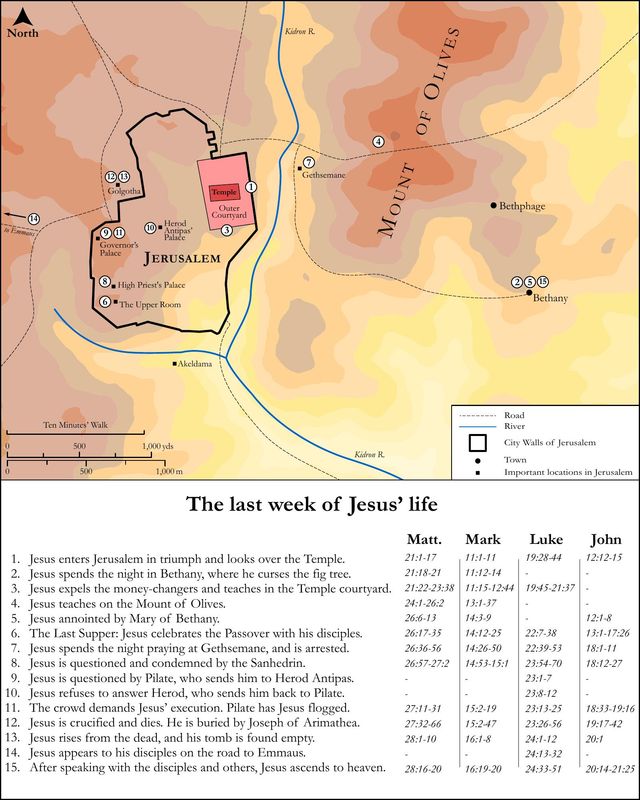
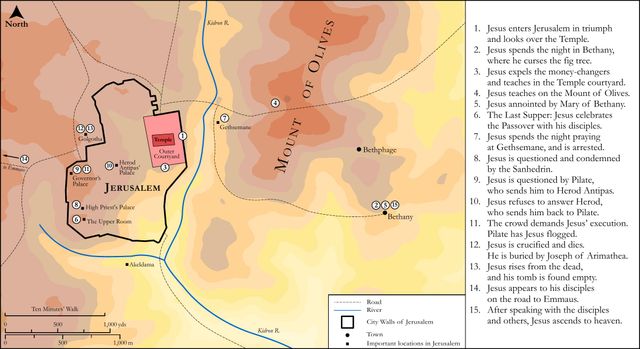
Study this verse
Historical interpretation
Ten Centuries of Reception
11 surviving comments on this verse. Each one is dated, so this reads as a timeline rather than a list.
Select a marker to jump to its quote. Markers stagger vertically where authors wrote within a few decades of each other.
A tradition has come down to us, that there was one place in the temple in which virgins were allowed to worship God, married women being forbidden to stand there. And Mary, after the Saviour's birth, going into the temple, stood to pray in this place of the virgins. And when they who knew that she had borne a Son were hindering her, Zacharias said, that forasmuch as she was still a virgin, she was worthy of the place of the virgins. Whereupon, as though he manifestly were contravening the Law, he was slain there between the temple and the altar by the men of that generation; and thus this word of Christ is true which He spake to those who were standing there, whom ye slew.
Zacharias is interpreted 'The memory of God.' Whosoever then hastes to obliterate the memory of God, seems to those to whom he gives offence to shed the blood of Zacharias the son of Barachias. For it is by the blessing of God that we retain the memory of God. Also the memory of God is slain by the wicked, when the Temple of God is polluted by the lustful, and His altar defiled by the carelessness of prayers. Abel is interpreted 'mourning.' He then who does not receive that, Blessed are they that mourn, sheds the blood of Abel, that is, puts away the truth of wholesome mourning. Some also shed, as it were, the blood of the Scriptures by putting aside their truth, for all Scripture, if it is not understood according to its truth, is dead.
Because then they will fill up the measure of their fathers' purposes, therefore are they serpents, and an offspring of vipers.
That is, the Apostles, who, as foretelling things to come, are Prophets; as having knowledge of Christ, are wise men; as understanding the Law, are Scribes.
Then, because He was searching their temper of mind, which is to the more part obscure, He doth, from those things also which they were about to perpetrate, which would be manifest to all, establish His words. For, because He had said, "Wherefore ye be witnesses unto yourselves that ye are the children of them which killed the prophets," making it evident, that of their affinity in wickedness He is speaking, and that it was a pretense to say, "We should not have been partakers with them," He added, "Fill ye up therefore the measure of your fathers," not commanding, but declaring beforehand, what was to be, that is, His own murder.
Therefore, having brought in their refutation, and having shown that they were pretenses which they said in their own defense, as, for instance, "We would not have been partakers with them," (for they who refrain not from the Lord, how should they have refrained from the servants), He makes after this His language more condemnatory, calling them "serpents, and generation of vipers," and saying, "How shall ye escape the damnation of hell," at once perpetrating such things, and denying them, and dissembling your purpose?
Then rebuking them more exceedingly from another cause also, He Saith, "I will send unto you prophets, and wise men, and scribes, and some of them shall ye kill and crucify, and some of them shall ye scourge in your synagogues." For that they should not say, "Though we crucified the Lord, yet from the servants we should have refrained, if we had been then;" "Behold," He saith, "I send servants also to you, prophets likewise themselves, and neither will ye spare them." But these things He saith, showing that it was nothing strange, that He should be murdered by those sons, being both murderous and deceitful, and having much guile, and surpassing their fathers in their outrages.
And besides what hath been said, He shows them to be also exceedingly vainglorious. For when they say, "If we had been in the days of our fathers, we should not have been partakers with them," they spake out of vainglory, and were practising virtue in words only, but in their works doing the contrary.
Ye serpents, ye generation of vipers, that is, wicked sons of wicked men, and more wicked than those who begat them. For He showeth that they are committing greater crimes, both by their committing them after those others, and by their doing much more grievous things than they, and this, while positively affirming that they never would have fallen into the same. For they add that which is both the end and the crown of their evil deeds. For the others slew them that came to the vineyard, but these, both the son, and them that were bidding them to the wedding.
But these things He saith, to separate them off from the affinity to Abraham, and to show that they had no advantage from thence, unless they followed his works; wherefore also He adds, "How can ye flee from the damnation of hell," when following them that have committed such acts?
And here He recalls to their remembrance John's accusation, for he too called them by this name, and reminded them of the judgment to come. Then, because they are nothing alarmed by judgment and hell, by reason of their not believing them, and because the thing is future, He awes them by the things present, and saith, "Wherefore, behold, I send unto you prophets and scribes: and some of them shall ye kill and crucify, and scourge; that upon you may come all the righteous blood shed upon the earth, from the blood of righteous Abel, unto the blood of Zacharias the son of Barschias, whom ye slew between the temple and the altar. Verily I say unto you, that all these things shall come upon this generation."
See by how many things He has warned them. He said, Ye condemn your fathers, in that ye say, "We would not have been partakers with them;" and this is no little thing to shame them. He said, While ye condemn them, ye do worse things, even ye yourselves; and this is sufficient to cover them with disgrace. He said, These things shall not be without punishment; and hence he implants in them fear beyond words. He hath reminded them at least of hell. Then because that was to come, He brought home to them the terrors as even present. "For all these things shall come," He saith, "upon this generation."
He added also unspeakable severity to the vengeance, saying, that they shall suffer more grievous things than all; yet by none of these things did they become better. But if any one say, And why do they suffer more grievously than all? we would say, Because they have first committed more grievous things than all, and by none of the things that have been done to them have they been brought to a sound mind.
Heardest thou not Lamech saying, "Of Lamech vengeance shall be taken seventy times sevenfold;" that is, "I am deserving of more punishment than Cain." Why could this be? Yet he did not slay his brother; but because not even by his example was he brought to a better mind. And this is what God saith elsewhere, "Requiting the sins of fathers upon children for the third and fourth generation of them that hate me." Not as though one were to suffer punishment for the crimes committed by others, but inasmuch as they who, after many sin and have been punished, yet have not grown better, but have committed the same offenses, are justly worthy to suffer their punishments also.
But see how seasonably he also mentioned Abel, indicating that this murder likewise is of envy. What then have ye to say? Know ye not what Cain suffered? Did God hold His peace at his deeds? Did He not exact the severest penalty? Heard ye not what things your fathers suffered, when they slew the prophets; were they not delivered over to punishments, and inflictions of vengeance without number? How then did ye not become better? And why do I speak of the punishments of your fathers, and what they suffered? Thou who thyself condemnest thy fathers, how is it thou doest worse? For moreover even ye yourselves have declared that "He will miserably destroy those wicked men." What favor then will ye have after this, committing such things after such a sentence?
But who is this Zacharias? Some say, the father of John; some, the prophet; some, a priest with two different names, whom the Scripture also calls, the son of Jehoiada.
But do thou mark this, that the outrage was twofold. For not only did they slay holy men, but also in a holy place. And saying these things, He did not only alarm them, but also comfort His disciples, showing that the righteous men also who were before them suffered these things. But these He alarmed, foretelling that like as they paid their penalty, even so should these too suffer the utmost extremities. Therefore He calls them "prophets, and wise men, and scribes," even hereby again taking away every plea of theirs. "For ye cannot say," He saith, "Thou didst send from among the Gentiles, and therefore we were offended;" but they were led on unto this by being murderous, and thirsting for blood. Wherefore He also said beforehand, "For this cause do I send prophets and scribes." This did the prophets also lay to their charge, saying, "They mingle blood with blood," and that they are men of blood. Therefore also did He command the blood to be offered to Him, showing that if in a brute it be thus precious, much more in a man. Which He saith to Noah likewise, "I will require all blood that is shed." And ten thousand other such things might one find Him enjoining with regard to their not committing murder; wherefore He commanded them not even to eat that which was strangled.
Oh the love of God towards man! that though He foreknew they would profit nothing, He still doeth His part. For I will send, He saith, and this knowing they would be slain. So that even hereby they were convicted of saying vainly, "We should not have been partakers with our fathers." For these too slew prophets even in their synagogues, and reverenced neither the place, nor the dignity of the persons. For not merely ordinary persons did they slay, but prophets and wise men, such that they had nothing to lay to their charge. And by these He meaneth the apostles, and those after them, for, indeed, many prophesied. Then, willing to aggravate their fears, He saith, "Verily, verily I say unto you, All these things shall come upon this generation;" that is, I will bring all upon your heads, and will make the vengeance sore. For he that knew many to have sinned, and was not sobered, but himself hath committed the same sins again, and not the same only, but also far more grievous, would justly deserve to suffer a far more grievous punishment than they. For like as, if he had been minded, he would have gained greatly, had he grown better by their examples, even so, since he continued without amendment, he is liable to a heavier vengeance, as having had the benefit of more warning by them who had sinned before and been punished, and having reaped no advantage.
He had said against the Scribes and Pharisees, that they were the children of those who killed the Prophets; now therefore He shows that they were like them in wickedness, and that that was false that they said, If we had been in the days of our fathers, we would not have been partakers with them in the blood of the Prophets. Wherefore He now says, Fill ye up the measure of your fathers. This is not a command, but a prophecy of what is to be.
Then to show them that they should not do this without punishment, He holds out an unspeakable terror over them, That upon you may come all the righteous blood.
Moreover, He names Abel, to show that it would be out of envy that they would kill Christ and His disciples. He names Zacharias, because there was a twofold resemblance in his case, the sacred place, as well as the sacred person.
And to take away all excuse from them that they might not say, Because you sent them to the Gentiles thereat were we offended, He foretels that His disciples should be sent to them, and it is of their punishment that He adds, Verily I say unto you, all these things shall come upon this generation.
Otherwise; Because He delayed the punishment of hell which He had threatened them with, He pronounces against them threats of present evil, saying, All these things shall come upon this generation.
For he who having seen many sinning yet remains uncorrected, but rather does the same or worse, is obnoxious to heavier punishment.
The same had been said by John the Baptist. Wherefore as of vipers are born vipers, so of your fathers who were murderers are you born murderers.
Or, as the Apostle writes to the Corinthians (1 Cor. 12.) that there are various gifts among Christ's disciples; some Prophets, who foretel things to come; some wise men, who know when they ought to speak; others Scribes taught in the Law; of whom Stephen was stoned, Paul killed, Peter crucified, and the disciples of the Apostles beaten, in the Acts; and they persecuted them from city to city, driving them out of Judæa, that they might go to the Gentiles.
Concerning the Abel here spoken of, there is no doubt that it is he whom his brother Cain murdered. He is proved to have been righteous, not only by this judgment of the Lord, but by the passage in Genesis, which says that his offerings were accepted by God. But we must enquire who is this Zacharias, son of Barachias, because we read of many Zachariases; and that we might not mistake, here it is added, whom ye slew between the temple and the altar. Some say that it is that Zacharias who is the eleventh among the twelve Prophets, and his father's name agrees to this, but when he was slain between the temple and the altar, Scripture does not mention; but above all, in his time there were scarce 'even the ruins of the temple. Others will have it to be Zacharias the father of John.
But as this has no Scripture authority, it is as readily despised as offered. Others will have it to be that Zacharias who was killed by Joas, king of Judah, between the temple and the altar, that is, in the court of the temple. (2 Chron. 24:21.) But that Zacharias was not the son of Barachias, but of Jehoiada the Priest. But Barachias in our language is interpreted 'Blessed of the Lord,' so that the righteousness of Joiada the Priest is expressed by this Hebrew word. But in the Gospel which the Nazarenes use, we find written 'son of Joiada' instead of son of Barachias.
The rule of the Scriptures is only to know two generations, one of good the other of bad. Of the generation of the good it is said, The generation of the righteous shall be blessed. (Ps. 112:2.) And of the bad it is said in the present passage, Generation of vipers. These then, because they did against the Apostles like things as Cain and Joas, are described as of one generation.
(Verses 35, 36.) So that upon you may come all the righteous blood shed on earth, from the blood of righteous Abel to the blood of Zechariah son of Barachiah, whom you murdered between the temple and the altar. Truly I tell you, all these things will come upon this generation. Regarding Abel, there is no doubt that he is the one whom his brother Cain killed. But the righteousness of Zechariah is not only confirmed now by the judgment of the Lord, but also by the testimony of Genesis (Gen. IV), where the offerings accepted by God are narrated. We inquire who this Zacharias son of Barachiah is, because we have read of many Zachariases. And so that no opportunity for error might be given, it has been added: whom you have killed between the temple and the altar. Different things are read in different places, and I ought to present the opinions of different authors. Some say that it is Zacharias son of Barachiah, who is the eleventh among the twelve prophets, and that the name of the father agrees with him; but where he was killed between the temple and the altar, Scripture does not speak: especially since during his time there were hardly any ruins of the temple. Some suggest that Zacharias is the father of John, approving this based on certain apocryphal dreams, stating that he was killed because he preached the coming of the Savior. However, since this does not have authority from the Scriptures, it is dismissed with the same ease with which it is proven. Others believe this Zacharias to be the one who was killed by King Joash of Judah between the temple and the altar, as the history of the Kings narrates. But it should be noted that this Zacharias is not the son of Barachiah, but the son of Jehoiada the priest. And Scripture also reports: He did not remember the kindness Joash, his father, had shown him (2 Chronicles 24:22). Therefore, if we consider Zachariah and the place where he was killed, we wonder why he is called the son of Barachiah and not Joiada. Barachiah in our language means blessed by the Lord, and the righteousness of the priest Joiada is demonstrated in the Hebrew language. In the Gospel used by the Nazarenes, we find written that he is the son of Joiada instead of Barachiah. The simpler brethren among the ruins of the temple and the altar, or at the exits of the gates that lead to Siloam, pointing to the red stones, consider them to be polluted with the blood of Zechariah. We do not condemn the error that stems from hatred of the Jews and devotion to the faith. Let us briefly explain why the blood of the righteous Abel to the son of Barachiah is sought from that generation, even though neither of them killed him. The rule of the Scriptures is to present two generations, of the good or the evil, that is, one for each individual. Let us take examples of good things: Who shall ascend into the mountain of the Lord? or who shall rest in his holy mountain? (Ps. 23:3) And when he has described those who are going to ascend into the mountain of the Lord, who were of different ages, afterward he adds: This is the generation of them that seek the Lord, that seek the face of the God of Jacob. And in another place concerning all the saints: The generation of the righteous shall be blessed. (Ps. 112:2) But concerning the wicked, as in the present place: The generation of vipers. And all things will be required from this generation. And in Ezekiel, when he described the sins of the land, the prophetic word added: If Noah, and Job, and Daniel were found there, I will not forgive the sins of that land (Ezek. 14:14): All the righteous who would be like them in virtues, by Noah and Job and Daniel, wanting to be understood. Therefore, those who have done similar things to Cain and Joash against the apostles are referred to as being from the same generation.
Because we read about so many Zechariahs in Scripture, we need to inquire into the identity of this particular Zechariah, the son of Barachiah. Lest we mistake him for another, the Gospel specifies “whom you killed between the sanctuary and the altar.” Yet there remains a variety of diverse opinions on this question, each of which ought to be considered. Some say that this Zechariah the son of Barachiah is the eleventh of the twelve minor prophets. Although their fathers share the same name, however, they cannot be the same persons because the prophet Zechariah was never said to have been killed between the sanctuary and the altar and especially because the temple had just recently been destroyed in the prophet’s time. Others want us to believe that this Zechariah is the father of John the Baptist, killed because he proclaimed the advent of the Savior on the basis of something he had dreamed. Because this theory doesn’t have the authority of Scripture, however, it can be disproven as easily as it can be proven. Still others maintain that this is the Zechariah who was killed between the sanctuary and the altar by Joash the king of Judah, as is chronicled in the book of Kings. But that Zechariah was the son of Jehoida the priest, not Barachiah, as the Scripture relates: “Joash did not remember the good which Jehoida, Zechariah’s father, had done for him.”
He foretels, that as their fathers killed the Prophets, so they also should kill Christ, and the Apostles, and other holy men. As suppose you had a quarrel with some one, you might say to your adversary, Do to me what you are about to do; but you do not therein bid him do it, but show him that you are aware of his manæuvres. And in fact they went beyond the measure of their fathers; for they put to death only men, these crucified God. But because He stooped to death of His own free choice, He does not lay on them the sin of His death, but only the death of the Apostles and other holy men. Whence also He said, Fill up, and not Fill over; for a just and merciful Judge overlooks his own wrongs, and only punishes those done to others.
He calls them offspring of vipers, because the nature of vipers is such that the young burst the womb of their dam, and so come forth; and in like manner the Jews condemned their fathers, finding fault with their deeds. He says, How shall ye escape the damnation of hell? By building the tombs of the saints? But the first step of piety is to love holiness, the next, to love the saints; for it is not reasonable in him to honour the righteous, who despises righteousness. The saints cannot be friends to those to whom God is an enemy. Shall ye be saved by a mere name, because ye seem to be among God's people! Forasmuch as an open enemy is better than a false friend, so is he more hateful to God, who calls himself the servant of God, and does the commands of the Devil. Indeed, before God he who has resolved to kill a worm is a murderer before the deed is done, for it is the will that is rewarded for good, or punished for evil. Deeds are evidence of the will. God then does not require deeds on His own account that He may know how to judge, but for the sake of other men, that they may perceive that God is righteous. And God affords the opportunity of sin to the wicked, not to make them sin, but to manifest the sinner; and also to the good He gives opportunity to show the purpose of their will. In this way then He gave the Scribes and Pharisees opportunity of showing their purposes, Behold, I send unto you Prophets, and wise men, and Scribes.
As all the good things which had been merited by all the saints in each generation since the foundation of the world were bestowed upon that last generation which received Christ; so all the evil that all the wicked in every generation from the foundation of the world had deserved to suffer, came upon that last generation of the Jews which rejected Christ. Or thus; Assail the righteous of former saints, yea, of all the saints, could not merit that so great grace as was given to men in Christ; so the sins of all the wicked could not deserve so much evil as came upon the Jews, that they should suffer such things as these suffered from the Romans, and that in after time every generation of them to the end of the world should be cast off from God, and be made a mock by all the Gentiles. For what is there worse than to reject and in such sort to put to death the Son coming in mercy and lowliness! Or thus; Nations and states when they sin are not thereupon immediately punished by God, but He waits for many generations; but when He sees fit to destroy that state or nation, He then seems to visit upon them the sins of all former generations, and one generation suffers the accumulation of all that former generations have deserved. Thus this generation of the Jews seems to have been punished for their fathers; but in truth they suffered not for others, but on their own account.
It should be enquired too how He says, to the blood of Zacharias, since the blood of many more saints was afterwards shed. This is thus explained. Abel a keeper of sheep was killed in the field, Zacharias a priest was slain in the court of the temple. The Lord therefore names these two, because by these all holy martyrs are denoted, both of lay and priestly order.
That is, all the vengeance due for the shedding of the blood of the righteous.
(ord.) He means not only those there present, but the whole generation before and after, for all were one city and one body of the Devil.
Continue studying Matthew 23:35 across the web’s major study libraries — every link below opens this exact verse, chapter, or book on the destination site.
Read & Compare
 BibleGatewayThis verse in more than 200 translations and 70 languages.
 Bible.comThe YouVersion reader — hundreds of translations, reading plans, and highlights.
 ESV.orgCrossway's official English Standard Version reader.
 NET BibleThe NET translation with 60,000+ translators' notes on every rendering decision.
 STEP BibleTyndale House's free study tool — original text, vocabulary, and scholarly resources.
 BibliaLogos Bible Software's free web reader.
 USCCBThe New American Bible (Revised Edition) with the U.S. bishops' study notes.
Commentaries
 BibleHub CommentariesDozens of classic commentaries on this verse, gathered on one page.
 StudyLightMore than 100 commentary sets — the largest collection on the web.
 BibleRefPlain-English commentary on what this verse means, verse by verse.
 Enduring WordDavid Guzik's free commentary on this chapter, widely used by Bible teachers.
 Bible Study ToolsVerse commentary alongside Greek and Hebrew study aids.
Original Language & Research
- BibleHub InterlinearThe verse word by word — original language, transliteration, and English.
- BibleHub LexiconEvery word's original-language definition and Strong's entry.
 Blue Letter BibleDeep-study tools — Strong's numbers, concordance, and word studies.
 CNTR CollationThe earliest Greek manuscripts of this verse, collated letter by letter.
Sermons, Hymns & Audio


TrulyRandomVerse is not affiliated with these sites and doesn’t control their content. They’re linked because they’re genuinely useful.
Summary
In Matthew 23:35, Jesus pronounces a profound and somber judgment upon the scribes and Pharisees, declaring that the cumulative guilt for all righteous blood shed throughout history, from Abel to Zacharias, will fall upon their generation. This culminates Jesus' series of "woes," highlighting the spiritual bankruptcy and historical pattern of rejecting God's messengers by the religious leaders of Israel, foreshadowing their ultimate rejection and crucifixion of the Messiah.
Context
ShowHideLiterary Context
This verse serves as the climactic pronouncement within Jesus' final and most severe public discourse, recorded in Matthew chapter 23. Preceding this verse, Jesus has delivered seven "woes" (or eight, depending on how one counts), each beginning with "Woe to you, scribes and Pharisees, hypocrites!" These woes systematically expose their hypocrisy, legalism, spiritual blindness, and persecution of God's prophets. The discourse begins with Jesus warning the crowds and disciples about their practices (Matthew 23:1-12), then transitions into the direct condemnations. Matthew 23:34 immediately precedes verse 35, where Jesus states He will send prophets, wise men, and scribes, whom they will persecute and kill, setting the stage for the declaration of cumulative judgment. The entire chapter functions as a powerful indictment against a religious system that had become corrupt and resistant to divine truth, culminating in the tragic rejection of God's final and greatest messenger, Jesus Himself.
Historical & Cultural Context
Jesus' audience consisted primarily of Jewish people living under Roman occupation, with the scribes and Pharisees holding significant religious and social authority. The Pharisees were a prominent Jewish sect known for their strict adherence to the Mosaic Law and oral traditions, while the scribes were experts in the Law, often associated with the Pharisees. Despite their outward piety, Jesus consistently condemned them for prioritizing human traditions over God's commands, for their love of public acclaim, and for their spiritual pride. The concept of corporate guilt was understood in Jewish thought, where the actions of a generation could be seen as a continuation or culmination of past sins, leading to a collective reckoning. The history of Israel, as recorded in the Old Testament, is replete with instances of prophets being rejected, persecuted, and even killed by the very people they were sent to warn or guide (e.g., 1 Kings 18:4, Jeremiah 26:20-23). Jesus' indictment taps into this long-standing pattern of rebellion against God's direct revelation through His chosen messengers.
Key Themes
ShowHideThis verse powerfully contributes to several overarching themes within Matthew's Gospel and biblical theology. Firstly, it underscores the theme of Cumulative Guilt and Divine Judgment. Jesus asserts that the generation he addresses will bear the weight of all righteous blood shed from the beginning of history, indicating a corporate responsibility for perpetuating a spirit of rebellion against God's truth and His messengers. This is not merely individual guilt for ancient acts, but a reckoning for their persistent rejection of divine revelation, culminating in their imminent rejection of Christ. Secondly, the verse highlights the consistent theme of the Persecution of the Righteous. From Abel, the first martyr in the biblical narrative (Genesis 4:8), to Zacharias, whose martyrdom is described as occurring "between the temple and the altar" (2 Chronicles 24:20-21), the verse traces a tragic lineage of those who suffered for their faithfulness to God. This theme foreshadows the persecution that Jesus' own disciples would face (Matthew 10:16-23) and the ultimate suffering of Christ himself. Finally, it emphasizes the Rejection of God's Messengers, a recurring motif in Israel's history. The refusal to heed God's warnings and accept His prophets ultimately led to national judgment, culminating in the rejection of Jesus, God's ultimate messenger and Son (John 1:11).
Exposition and Analysis
ShowHideKey Word Analysis
ShowHideThis word (G1342) denotes someone who is equitable in character or act, innocent, or holy. When applied to the blood shed, it emphasizes the blamelessness and uprightness of the victims, highlighting that their suffering was not due to their own wrongdoing but because of their faithfulness to God and their prophetic witness. Their "righteousness" stood in stark contrast to the unrighteousness of their persecutors.
This term (G129) refers literally to the life-giving fluid, but in this context, it signifies violent death, specifically murder, and by extension, the guilt associated with such acts. The phrase "righteous blood" carries the weight of innocent lives unjustly taken, crying out for justice, as seen from Abel's blood speaking from the ground (Genesis 4:10).
This verb (G1632) means "to pour forth" or "to spill." It vividly describes the violent act of taking a life, where blood is spilled out, emphasizing the brutality and finality of the murders committed against God's messengers. The use of this word underscores the active and deliberate nature of the persecution.
Verse Breakdown
ShowHide"That upon you may come all the righteous blood shed upon the earth"
This clause pronounces a severe judgment, indicating that the current generation of Jewish leaders will be held accountable for the cumulative guilt of all innocent lives taken throughout history due to their faithfulness to God. The phrase "upon you may come" signifies a divine reckoning, a just consequence for a persistent pattern of rebellion and rejection of God's truth, culminating in their own actions. The scope "all the righteous blood shed upon the earth" emphasizes the comprehensive nature of this judgment, encompassing the entire history of humanity's opposition to God's righteous ones.
"from the blood of righteous Abel"
This establishes the starting point of the historical lineage of martyrs. Abel, the son of Adam and Eve, was the first recorded victim of murder in the Bible, slain by his jealous brother Cain because his offering was acceptable to God (Genesis 4:8). His inclusion here signifies the earliest instance of a righteous person suffering for their faith, setting a precedent for all subsequent persecutions.
"unto the blood of Zacharias son of Barachias"
This marks the culmination of the historical period of martyrdoms referenced by Jesus. While there is scholarly debate, the most widely accepted identification is with Zechariah son of Jehoiada, who was stoned to death in the temple court at the command of King Joash (2 Chronicles 24:20-21). His death is significant as it is the last recorded martyrdom in the historical books of the Hebrew canon (which ended with Chronicles), thus encompassing the entire span of Old Testament history from Genesis to Chronicles.
"whom ye slew between the temple and the altar"
This phrase vividly describes the sacrilegious location of Zacharias's murder, emphasizing the profound impiety of the act. Being slain in the sacred space of the temple court, specifically "between the temple and the altar" (likely referring to the altar of burnt offering in the outer court), underscored the extreme contempt for God's presence and His messenger. This detail highlights the audacity and spiritual blindness of those who perpetrated such violence in the very place dedicated to God's worship.
Literary Devices
ShowHideMatthew 23:35 employs several powerful Literary Devices to convey Jesus' profound indictment. Hyperbole is evident in the phrase "all the righteous blood shed upon the earth," which, while not literally meaning every single drop of innocent blood, functions as a rhetorical exaggeration to emphasize the vast scope and cumulative weight of the historical persecution of God's people. This hyperbole underscores the severity of the judgment. The verse also makes extensive use of Allusion by referencing "righteous Abel" and "Zacharias son of Barachias." These are specific historical figures from the Old Testament, representing the beginning and end of the Old Testament's record of martyrs, creating a comprehensive historical sweep. This Historical Allusion serves to connect the present generation's actions to a long-standing pattern of rebellion against God, demonstrating a continuity of spiritual hostility. Furthermore, there is a strong element of Irony in Jesus' condemnation, as the very religious leaders who prided themselves on their adherence to the Law and their spiritual heritage are revealed as perpetuating the same murderous spirit as those who persecuted the prophets of old. Their outward piety masks an inward murderous intent, a classic example of the hypocrisy Jesus condemns throughout the chapter.
Theological and Thematic Connections
ShowHideMatthew 23:35 is a profound statement on divine justice, corporate responsibility, and the persistent human rejection of God's truth. It reveals that there is a cumulative spiritual account for generations that reject God's messengers and perpetuate a spirit of opposition to divine revelation. While individuals are judged for their own sins, Jesus here pronounces a corporate judgment upon a generation that not only continued the pattern of their ancestors but brought it to its ultimate climax by rejecting and ultimately crucifying the Messiah. This verse highlights God's unwavering commitment to justice and the severe consequences of persistent rebellion against His will and His chosen instruments. It underscores the sanctity of innocent life and the gravity of persecuting those who speak God's truth.
Reflection and Application
ShowHideMatthew 23:35 serves as a sobering reminder of the profound consequences of spiritual blindness and hardened hearts that resist God's truth and persecute His messengers. While this specific judgment was pronounced upon a particular generation in Israel, its principles resonate with timeless relevance for believers today. It calls us to examine our own hearts and ensure that we are not perpetuating a spirit of resistance to God's Word or His chosen servants in our own time. We are called to be receptive to truth, to honor those who faithfully proclaim it, and to avoid the pitfalls of hypocrisy and self-righteousness that characterized the scribes and Pharisees. The verse also implicitly reminds us of the cost of discipleship; throughout history, faithfulness to God has often invited opposition and persecution. We are encouraged to stand firm in our convictions, even when it means facing adversity, knowing that our ultimate vindication comes from God. Furthermore, it challenges us to consider our collective responsibility as the church to uphold truth and justice, ensuring we do not contribute to the suffering of the innocent or the suppression of the gospel.
Questions for Reflection
ShowHideFAQ
ShowHideWhy does Jesus mention Abel and Zacharias specifically?
ShowHideJesus mentions Abel and Zacharias to encompass the entire scope of Old Testament martyrdom, from the very first recorded murder of a righteous person to the last recorded martyrdom in the Hebrew canonical order. Abel's murder by Cain (Genesis 4:8) is found in Genesis, the first book of the Hebrew Bible. Zacharias son of Barachias is widely identified with Zechariah son of Jehoiada, whose stoning is recorded in 2 Chronicles 24:20-21. In the traditional Hebrew canon, Chronicles is the final book. By citing these two figures, Jesus is essentially saying "from A to Z" of Old Testament righteous blood, highlighting the long and consistent pattern of rejecting and killing God's messengers throughout Israel's history, culminating in the generation He was addressing.
Does this mean the generation Jesus was speaking to was personally guilty of Abel's or Zacharias's murder?
ShowHideNo, it does not mean they were personally guilty of those specific ancient murders. Instead, Jesus is pronouncing a corporate judgment based on their perpetuation of the same spirit of rebellion and rejection that led to the deaths of Abel, Zacharias, and other prophets. Their actions—their spiritual blindness, hypocrisy, and imminent rejection and crucifixion of Jesus and His future messengers (Matthew 23:34)—demonstrated that they were the culmination of this historical pattern. They were filling up the measure of their fathers' iniquity (Matthew 23:32), bringing the accumulated guilt of centuries of rejecting God's truth to a head in their own generation.
Christ-Centered Fulfillment
ShowHideMatthew 23:35, while a severe judgment, finds its ultimate Christ-centered fulfillment in the person and work of Jesus Christ. The "righteous blood" shed throughout history, from Abel to Zacharias, foreshadows the ultimate shedding of the perfect, righteous blood of Jesus himself. The pattern of rejecting God's messengers culminates in the rejection of God's own Son, who is the Prophet par excellence (Deuteronomy 18:15). The very generation upon whom this cumulative judgment falls are those who would soon cry out, "His blood be on us and on our children!" (Matthew 27:25). Yet, paradoxically, the blood of Christ, unlike the blood of Abel which cried out for vengeance (Genesis 4:10), speaks a better word—a word of forgiveness and atonement (Hebrews 12:24). Through His sacrifice on the cross, Jesus bore the full weight of humanity's sin, including the sin of rejecting God's messengers and shedding innocent blood, offering redemption to all who believe. Thus, the historical pattern of righteous blood shed, which brought judgment, is ultimately swallowed up and transformed by the saving power of Christ's own blood, which brings grace and reconciliation (Colossians 1:20).